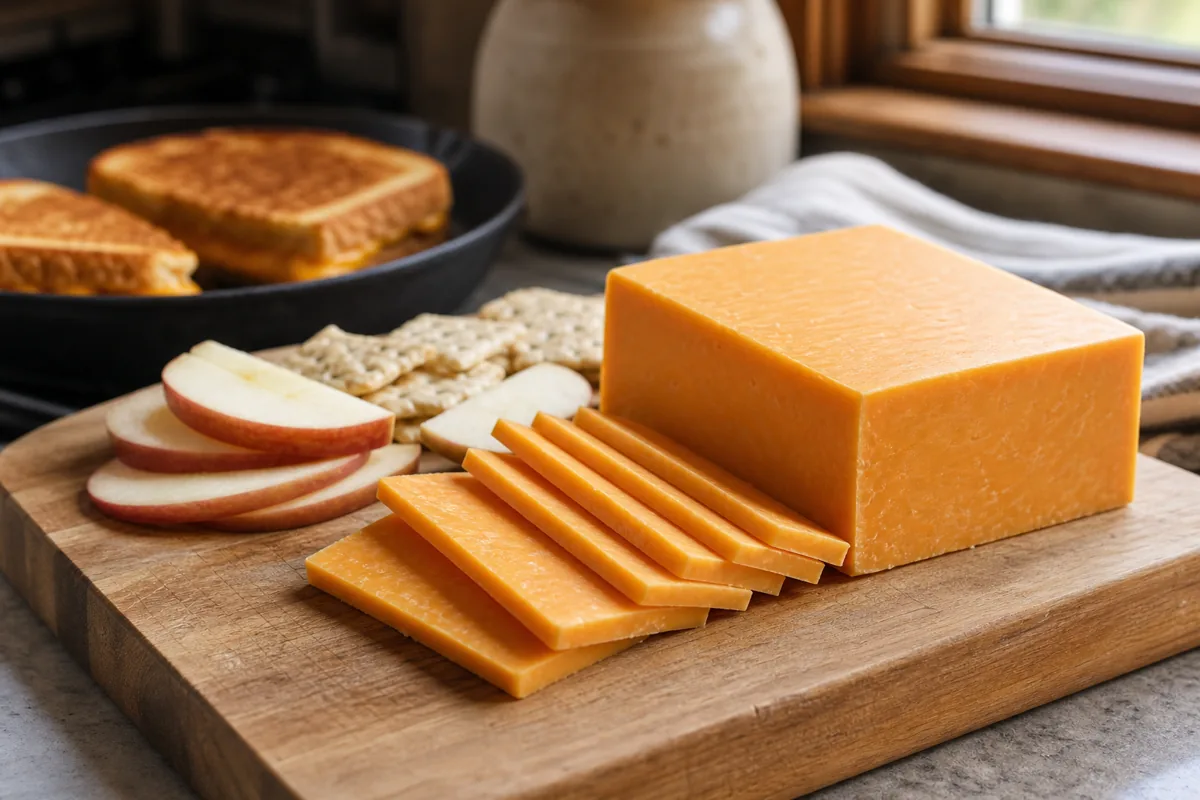
Colby cheese is best understood as washed-curd American cheese, not young cheddar under another name. In the broader cheese guide, its job is milder, moister, more open in texture, and better suited to gentle melt than to sharp cheese flavor.
That matters because this cheese often hides inside supermarket marbled blends. Tasting it alone shows what the orange half contributes: sweetness, springy bite, and a mild melt that families use in sandwiches, burgers, casseroles, and snack boards.
Colby is not cheddar: the open paste changes the bite, and it beats sharper cheeses in some everyday cooking.
In This Article
Is Colby Just Young Cheddar?
The washed-curd method defines a pasteurized cow's milk cheese invented in 1885 in Colby, Wisconsin by Joseph Steinwand. His father Ambrose built the first cheese factory in Clark County, and Joseph developed a new process that distinguished Colby from the English cheddar that dominated American cheese production at the time.
The key innovation was the washed-curd technique. After cutting the curd, Steinwand drained the whey and washed the curds with cold water.
This step rinses out lactose and lactic acid, producing a milder, sweeter flavor and a more open, springy texture than cheddar.
- Origin -- Colby, Clark County, Wisconsin, 1885. Named after the town.
- Inventor -- Joseph Steinwand at his father's cheese factory, first batch made November 1885
- Method -- washed-curd, which distinguishes Colby from cheddar at the production level
- Protected status -- none; any US producer can label cheese "Colby"
- Texture signature -- open, springy paste with irregular small holes unlike cheddar's closed structure
Unlike stacked-curd cheddar, Colby does not undergo the cheddaring process, where the curd is stacked and turned to expel whey and develop acidity. The washed-curd method keeps acidity low and moisture higher.
This produces a softer, more open paste that is visually and texturally distinct from cheddar.
No geographic protection governs the name, so Wisconsin-made blocks and nationally produced blocks are legally identical. Artisan Wisconsin producers like Hook's Cheese Company and Widmer's Cheese Cellars make a noticeably more complex product than commodity block Colby.
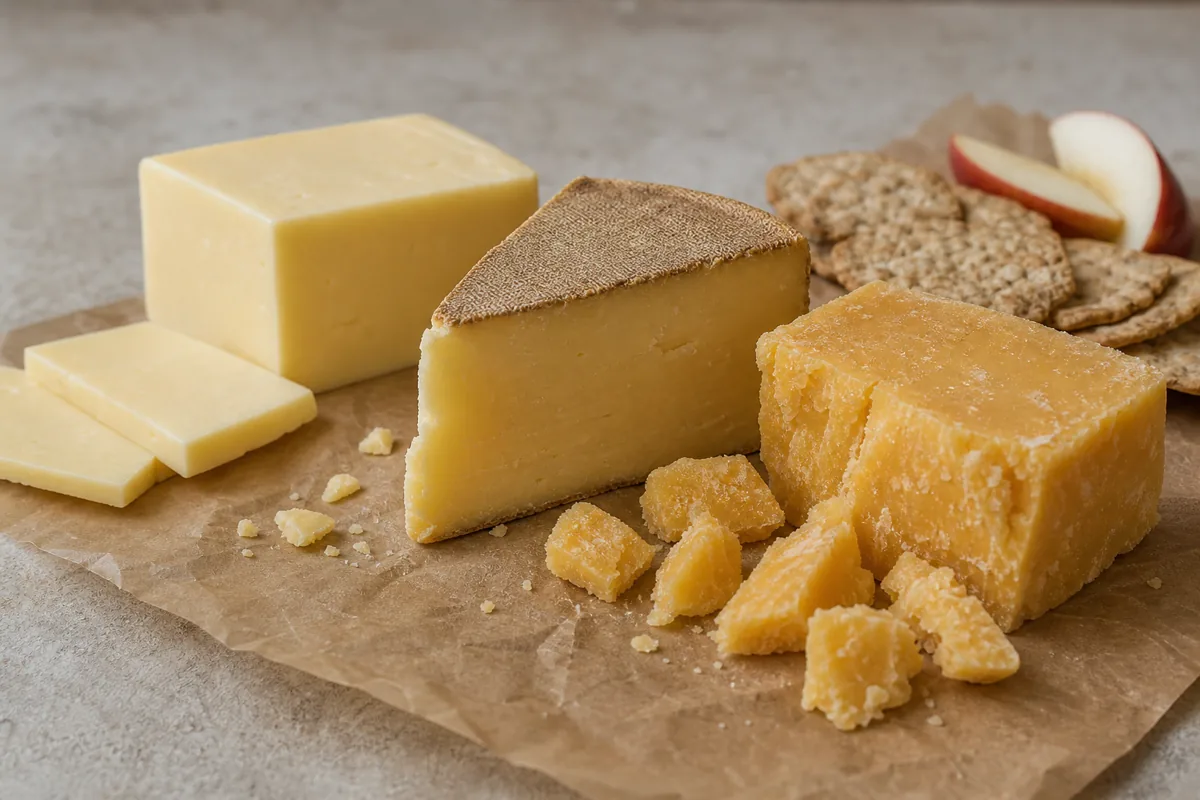
Colby and cheddar look similar in block form but are made by different processes. Cheddar uses the cheddaring step, which layers and turns the curd to build acidity and a dense, closed paste. Colby skips that step and washes the curd with cold water instead. The result is a milder, moister, more open-textured cheese that does not age the same way cheddar does. True aged Colby is almost never sold commercially.
Why Is Colby Softer Than Cheddar?
The flavor lands in a mild, slightly sweet, buttery zone with less tang than young cheddar and less neutrality than young Monterey Jack. It sits in a pleasant middle ground that makes it highly approachable for people who find sharp cheddar too assertive.
The texture is the real distinguishing feature. Colby's open, springy paste has irregular small holes that give it a slightly softer, more cushioned bite than the dense, closed paste of cheddar.
It tears slightly rather than snapping when bent, unlike aged cheddar which crumbles.
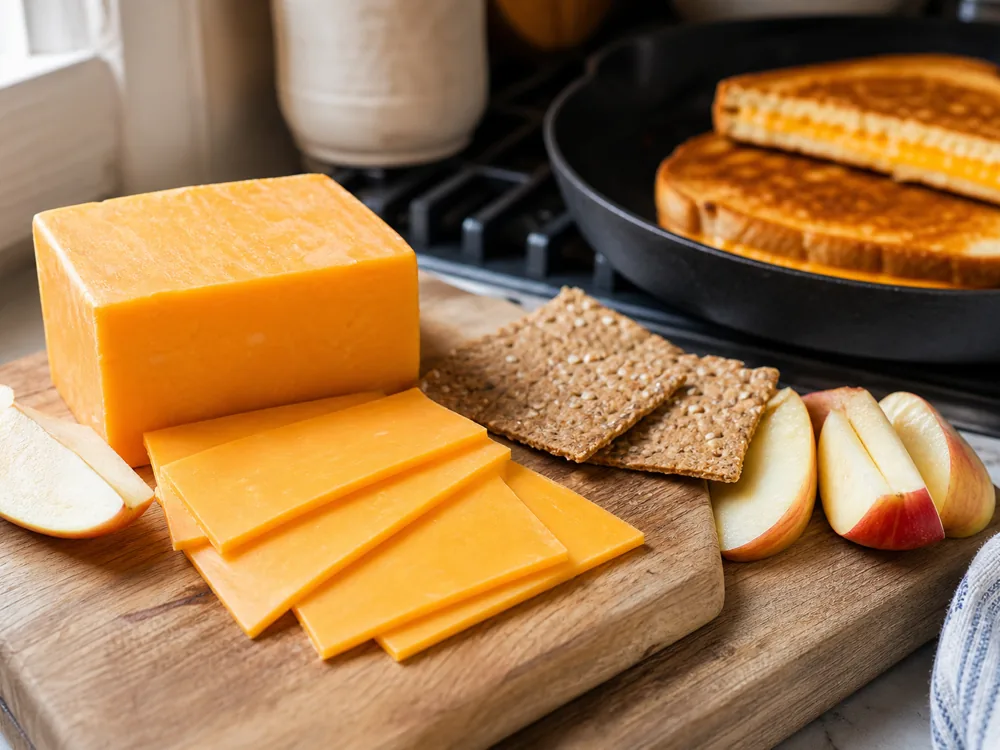
This describes standard commercially available Colby at 1-3 months of age. True aged Colby, which is rarely sold commercially, tastes more savory and saltier as moisture drops.
Colby has a noticeably more open, moist paste than cheddar or Gruyere.
Most commercial blocks are sold at 30-45 days of aging. The flavor window is intentionally narrow because the cheese does not benefit from the extended aging that defines cheddar.
If it ages too long without proper conditions, it dries out and loses the springy texture that defines it.
- Flavor: mild, sweet, slightly tangy, noticeably less sharp than any cheddar variety
- Texture: semi-soft, open, springy with small irregular holes, more give than cheddar
- Rind: none -- sold waxed or vacuum-sealed, no rind development
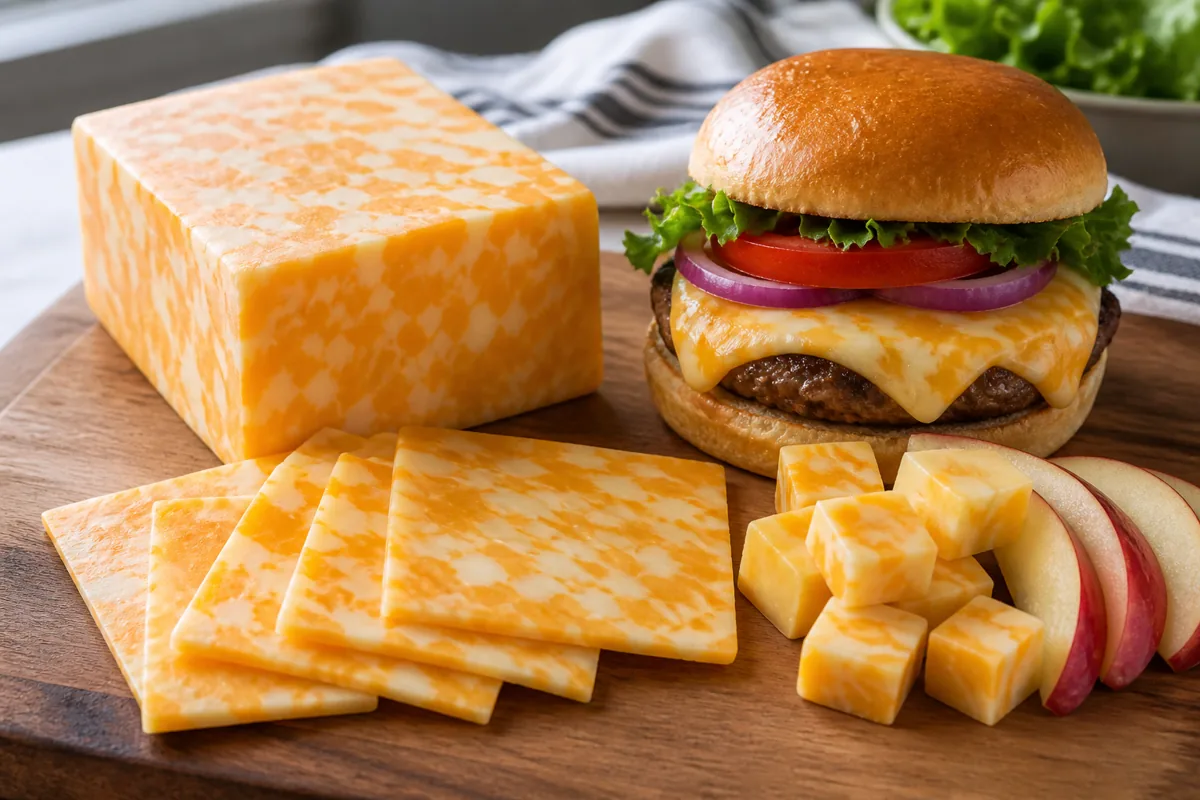
- Color: typically orange from annatto coloring, though white Colby is available
Colby's open paste absorbs surrounding flavors more readily than closed-paste cheeses. In a cold sandwich, it picks up flavor from adjacent meats and condiments within minutes.
This permeability is a feature in sandwiches and a liability in cheese boards where you want the cheese to stand alone.
Does Colby Melt Better Than Cheddar?
The melt is smooth and even, similar to young Monterey Jack. The higher moisture content compared to cheddar means it flows at moderate temperatures without the protein tightening that can make cheddar sauces grainy.
The open texture of Colby means it softens and spreads before it fully melts, creating a creamy pool rather than the stringy pull of mozzarella.
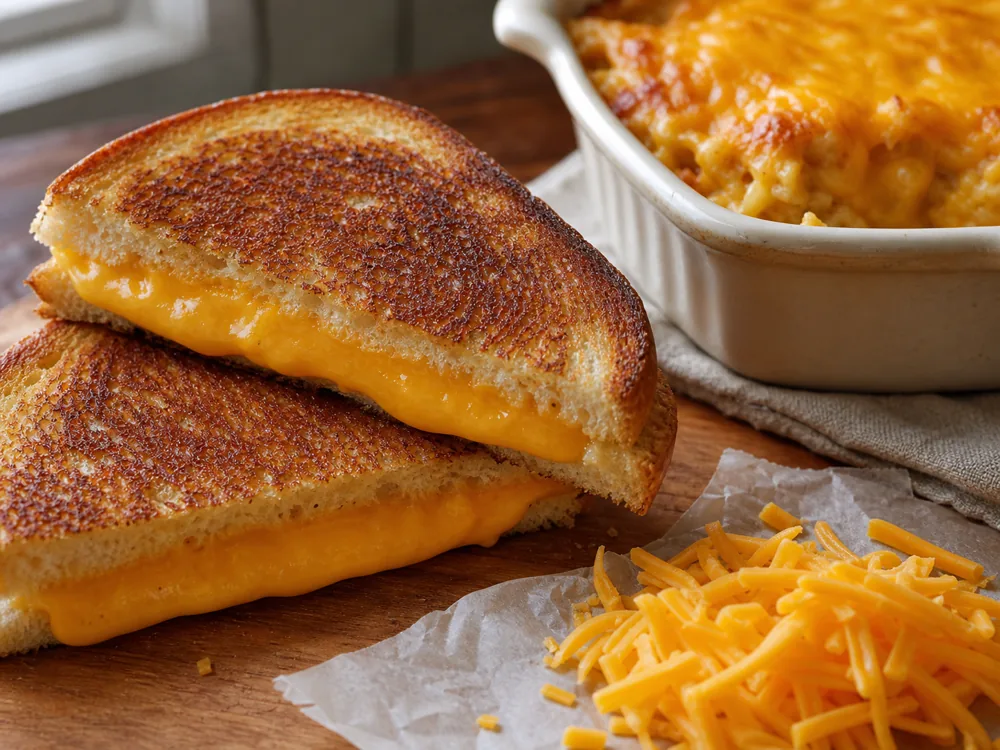
Colby melts cleanly on a griddle. It is a little stiffer than Monterey Jack, because most commercial versions carry slightly less moisture, and it is far easier to melt than aged cheddar at the same price.
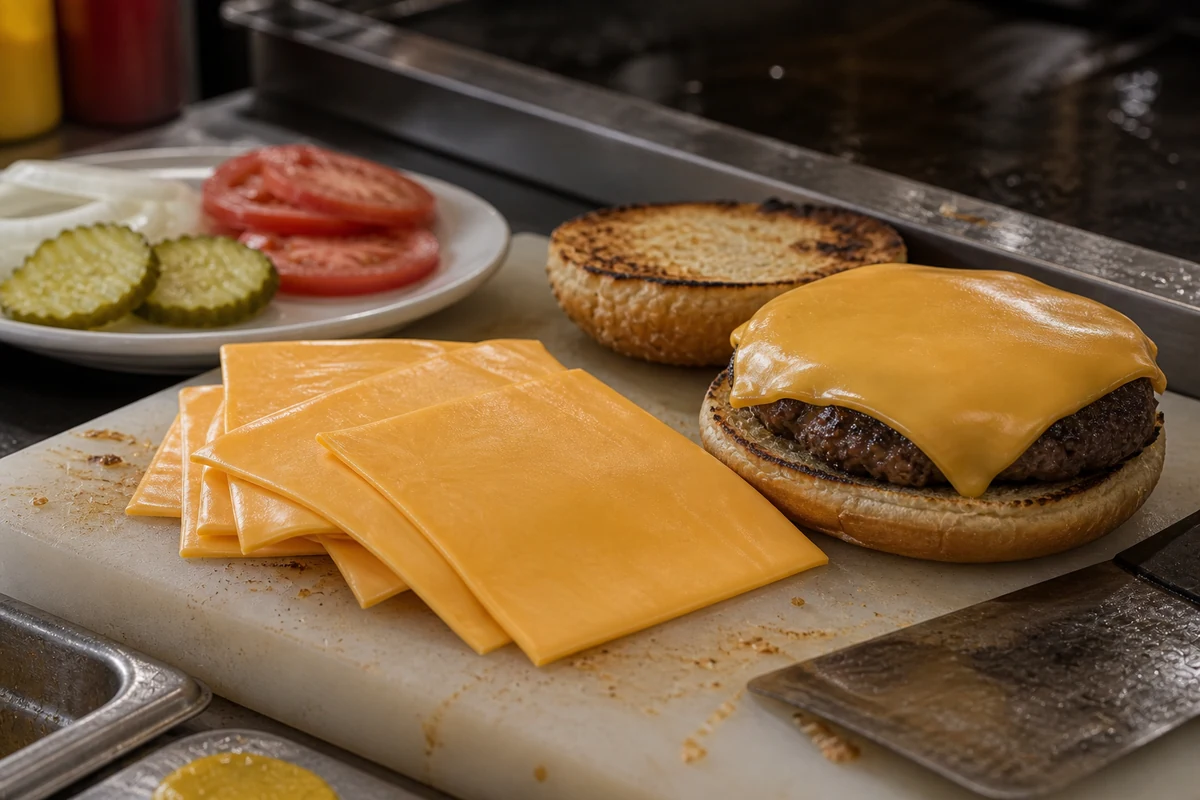
Slice thickness does more for the melt than heat does. A quarter-inch slab holds together as it softens on a burger, while thin deli slices go to liquid and run off the patty before the bun lands.
What it will not give you is a browned crisp edge. Colby softens and pools rather than frying against the pan, so the lacy skirt around a smash burger has to come from a drier cheese in the mix.
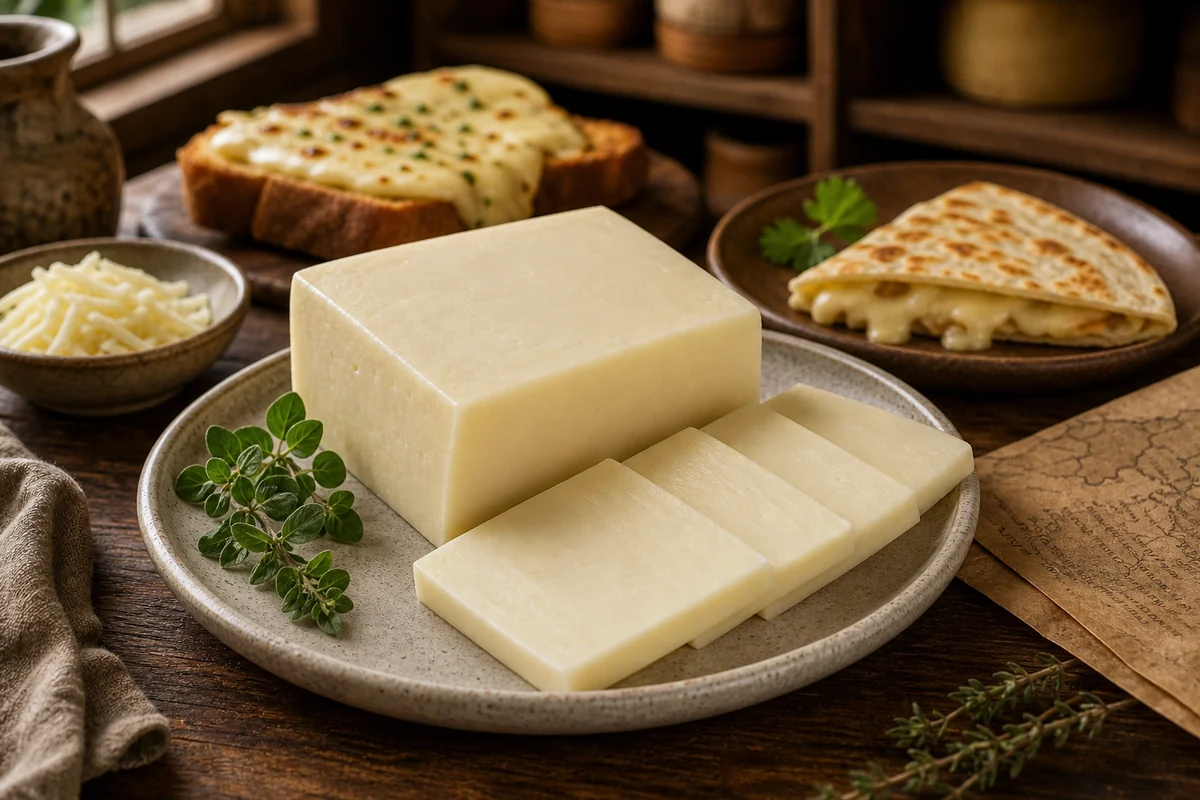
Its mildness makes it a strong griddle sandwich melter. The same soft melt also makes sense in kid-friendly baked macaroni where sharp cheddar would dominate.
- Melts at low heat -- Colby softens at 130-140 F, easy to control on a griddle
- No protein tightening -- higher moisture prevents the grainy sauce texture cheddar can produce
- Shreds cleanly -- cold Colby shreds without clumping, ready for direct use
- Blend for depth -- half Colby, half sharp cheddar gives smooth melt with flavor
What Should You Cook With Colby?
Mild flavor and good melt behavior make it the utility cheese of American home cooking. It is rarely the hero of a dish but almost always performs reliably in a supporting role.
Its approachability for children makes it a practical choice for family cooking where a mild, smooth, non-assertive cheese is preferred.
| Use | How It Works |
|---|---|
| Sandwiches and Deli Slices | Colby is the most common deli-sliced cheese in US markets because its mild, sweet flavor offends no one and pairs with any protein or condiment. The standard non-confrontational cheese for cold sandwiches and wraps. |
| Grilled Cheese | Melts evenly without oil separation at low-medium griddle heat. For a richer, more flavorful result, combine with sharp cheddar at a 1:1 ratio. Colby alone produces a very mild result. |
| Cheeseburgers | Melts cleanly over a patty at medium heat. Mild enough not to overpower a quality beef patty. A better choice than American singles when you want actual cheese flavor without sharp cheddar's intensity. |
| Cheese and Crackers | Colby on a snack board for family or mixed audiences. Its mild, approachable flavor works for people who find strong cheeses challenging. Pair with mild accompaniments rather than assertive jams or honeys. |
| Mac and Cheese | Melts smoothly into bechamel without breaking. The mild flavor means the dish reads as creamy rather than cheesy. Combine with sharp cheddar for color and flavor. Colby alone makes a very mild mac. |
| Casseroles and Baked Dishes | Colby melts uniformly through baked fillings without creating greasy pockets. Its neutral flavor stays in the background. Standard for potato casseroles and egg bakes in Midwestern cooking traditions. |
- Deli sandwiches -- the standard mild slice for everyday cold sandwiches
- Grilled cheese -- melts cleanly, best combined with sharp cheddar for flavor
- Cheeseburgers -- mild melt without overpowering quality beef
- Mac and cheese -- smooth melt into sauce, combine with cheddar for flavor
- Casseroles -- uniform melt with no greasiness in baked dishes
Sodium is where Colby quietly changes a recipe. A sauce built on it reads flatter than the cook expected, and the fix is more salt in the base rather than more cheese on top.
Cube it rather than shred it for baked dishes carrying a lot of liquid. Shreds vanish into a casserole in the first ten minutes, while half-inch cubes stay as soft pockets you can still find on the plate.
Cold uses earn as much of the block as hot ones. Cut into batons it goes into a lunchbox and comes back out intact, which is a large part of why it sits in so many American refrigerators.
Midwestern and Wisconsin cooking traditions use it often because mild, approachable cheese is culturally preferred. Bars and taverns across Wisconsin serve fried cheese curds that are sometimes Colby-style rather than cheddar.
For the best grilled cheese with Colby, use a combination of Colby and sharp Wisconsin cheddar in equal parts. The Colby provides melt structure and keeps the sandwich from getting greasy; the sharp cheddar provides color and the flavor complexity that Colby lacks on its own. Butter the bread with real butter and cook on medium-low for even browning.
What Goes With Colby?
Low-acid, approachable wines and light foods fit the mild, slightly sweet character. It does not have enough flavor depth to match structured wines the way aged cheddar or Gruyere can.
The best Colby pairings lean into its Wisconsin origins: beer, Midwest-style charcuterie, and fresh fruits work better than European wine-and-cheese traditions.
| Pairing | Type | Why It Works |
|---|---|---|
| American Lager or Amber Ale | Beer | The most natural pairing for Wisconsin Colby. The light bitterness and carbonation of a domestic lager cut Colby's fat without competing. An amber ale adds malt sweetness that mirrors Colby's mild sweetness. |
| Pinot Gris (Oregon or Alsace) | Wine | The best wine match for mild Colby. Pinot Gris has enough body to complement dairy fat but low enough tannin and acid not to overwhelm the mild flavor. Oregon Pinot Gris works particularly well given the regional connection to American cheese. |
| Light Zinfandel | Wine | A fruity, low-tannin American red that matches Colby's mild sweetness without crushing it. Full-bodied, tannic reds make Colby taste flat. Light, fruity Zinfandel is a practical choice for Colby on a casual board. |
| Apple Slices | Food | The sweetness and crunch of fresh apple against Colby's mild creaminess is a classic American combination. Works particularly well with Honeycrisp or Fuji varieties where the apple sweetness matches Colby's own. |
| Mild Salami | Food | Low-spice salami with Colby is the cheese plate equivalent of comfort food. The gentle salt and fat of mild salami align with Colby's character without overpowering it. Standard pairing for everyday boards. |
| Whole-Grain Crackers | Food | Mild, nutty whole-grain crackers complement Colby's slight sweetness without adding competing flavors. More interesting than plain white crackers. Avoid strongly flavored crackers, which overpower the mild cheese. |
- American lager or amber ale -- the most natural Wisconsin pairing, carbonation cuts the fat
- Pinot Gris -- enough body to complement fat, low enough acid not to overwhelm
- Apple slices -- sweetness and crunch contrast with mild creaminess
- Mild salami -- gentle salt and fat alignment for everyday boards
- Whole-grain crackers -- mild nuttiness complements Colby's slight sweetness
- Lunchbox board: apple slices, whole-grain crackers, and mild salami keep Colby in its comfort zone.
- Beer-first snack plate: lager or amber ale works better than tannic red wine.
- Family sandwich night: pair Colby with turkey, ham, or tomato rather than spicy cured meats.
- Casual cheese tray: keep stronger blues and washed-rind cheeses off the same plate.
Serve it cooler than you would serve a board cheese. Colby loses its spring as it warms and the paste goes slack, so cut it from the refrigerator and put it out shortly before people eat.
Cut it thick while you are at it. Thin shavings of a mild cheese give the mouth almost nothing, and a half-inch cube carries enough of the sweet, springy bite to register beside a cracker.
Colby does not perform well as the centerpiece of a serious cheese board. Its mild flavor gets lost beside assertive blue cheeses, aged cheddars, or washed-rind cheeses.
It works best in casual settings where approachability matters more than complexity.
How Do You Keep Colby From Absorbing Odours?
A rindless, high-moisture block needs tight wrapping. Exposed cut faces dry out and develop surface mold faster than harder, aged cheeses with protective rinds.
The open, porous texture of Colby also absorbs refrigerator odors more readily than closed-paste cheeses. Keep it away from strong-smelling foods.
- Plastic pressed against cut face -- prevents air contact that dries and molds the surface
- Sealed zip bag -- secondary barrier extends life from days to weeks
- Cheese drawer at consistent temperature -- temperature swings cause moisture to sweat on the surface
- Away from strong-smelling foods -- open texture absorbs odors faster than hard cheeses
Surface mold on Colby follows the same rule as Monterey Jack: cut away at least one inch around any mold spot and use the remainder promptly. If mold covers a large area or the paste smells sour, discard.
The open texture of Colby means surface mold can penetrate faster than it would in a hard, dense cheese.
Colby's open, porous texture makes it absorb refrigerator odors faster than most cheeses. Do not store it in the same sealed container as leftover fish, onions, or any strongly scented food. Even a few hours of co-storage in a shared container will noticeably affect the flavor. Use a dedicated sealed bag.
The same wrapping principles apply to Colby as to Monterey Jack. Block-cheese wrapping keeps Colby from drying at the cut face or absorbing refrigerator aromas.
Block or Pre-Sliced Colby?
Every US supermarket sells this cheese in block, sliced deli, and pre-shredded formats. For a better product, seek out Wisconsin artisan producers at specialty cheese counters.
Hook's Cheese Company and Widmer's Cheese Cellars in Wisconsin produce Colby with noticeably more flavor complexity than commodity block versions. If you want a marbled supermarket option, orange-and-white Colby-Jack trades that regional character for maximum mildness.
Look at the cut face before you read the label. Fresh Colby shows a matte, even paste with small irregular openings, and a face that has gone glossy or wet has been sitting cut for longer than it should have.
Buy the smallest block you will actually finish. A rindless, high-moisture cheese loses more of itself to the cut face than a hard block does, so a large economy piece often gives back in trimmed edges what it saved per pound.
If you do buy it sliced, ask for it thicker than the machine default. Standard deli thickness on a cheese this mild leaves a sandwich tasting of the bread and the mustard, and one thick slice beats two thin ones.
How Calorie-Dense Is Colby?
The nutrition profile is close to Monterey Jack, with slightly lower fat due to the production method. High moisture means lower calorie density than hard aged cheeses.
- Moderate calories -- 110 per ounce, similar to Monterey Jack
- Decent protein -- 6.7g per ounce for a mild semi-soft cheese
- Useful calcium -- 194mg per ounce, 15% of daily value
- Higher carbs than hard cheeses -- 0.7g per ounce due to higher residual lactose in the young paste
The slightly higher carbohydrate figure (0.7g vs. 0.2g in young Jack) reflects Colby's washed-curd production. The cold water wash removes some lactose, but the short aging leaves more residual carbohydrate than a longer-aged cheese would.
An ounce is a small piece of a cheese this soft. Two cubes cut off a block sit closer to two ounces than one, which puts a casual snack near 224 calories and 18g of fat rather than the single line on the label.
The carbohydrate figure is worth reading twice if milk sugar matters to you. Even at the high end for a cheese, 0.7g an ounce is a small absolute amount, so a normal serving carries very little of it.
Nutritional data from the USDA FoodData Central database for standard commercial Colby.
Colby is one of the most reliably mild, approachable cheeses in American grocery stores. Its washed-curd production sets it apart from cheddar in texture and flavor, but most buyers never notice the distinction because they are eating it in blends. Colby on its own is worth experiencing. For everyday cooking, buy Wisconsin block Colby and grate or slice as needed. For a step up, find Hook's or Widmer's at a specialty shop and taste what artisan production does to this underrated American original.
SOURCES & REFERENCES
Do You Have More Colby Questions?
The questions people ask most often about Colby, from how it differs from cheddar to storage and substitution.
The key difference is the production method. Cheddar uses the cheddaring process, where cut curds are stacked and turned to build acidity and create a dense, closed paste.
Colby uses the washed-curd method, where cold water is used to rinse the curds after cutting, removing lactose and lactic acid. The result is a milder, sweeter, moister, more open-textured cheese.
Colby does not age the same way cheddar does and is almost always sold young.
Yes, with a flavor adjustment in mind. Colby melts more smoothly than cheddar and has milder, sweeter flavor.
In cooked dishes where you want mild melt and no sharpness, Colby works at a 1:1 ratio. In dishes where sharp cheddar flavor is the point, such as a sharp cheddar sauce or a strong cheese toast, Colby will produce a noticeably blander result.
Combine half Colby and half sharp cheddar for a middle ground that melts well and has more flavor than Colby alone.
Colby-Jack (also called Co-Jack) is a marbled blend of Colby and Monterey Jack cheese. The two cheeses are made separately and then combined before pressing, creating the distinctive orange-and-white marbled appearance.
The flavor is milder than either cheese alone because the blending dilutes the individual characters of both. It is the most widely sold mild blended cheese in American supermarkets.
Yes. Colby is a good melter due to its high moisture content and semi-soft texture.
It flows smoothly at moderate heat without separating into greasy oil and rubbery protein. It melts at similar temperatures to young Monterey Jack.
For the best results, shred cold Colby directly from the block and use immediately rather than relying on pre-shredded with anti-caking agents.
Colby was invented in Colby, Wisconsin in 1885 and Wisconsin remains the primary production state for quality Colby. Because there is no geographic protection, Colby can legally be made anywhere in the US.
Artisan producers in Wisconsin -- particularly Hook's Cheese Company and Widmer's Cheese Cellars -- produce the most distinctive versions. Most supermarket block Colby comes from large commodity dairies in Wisconsin, California, and the Midwest.