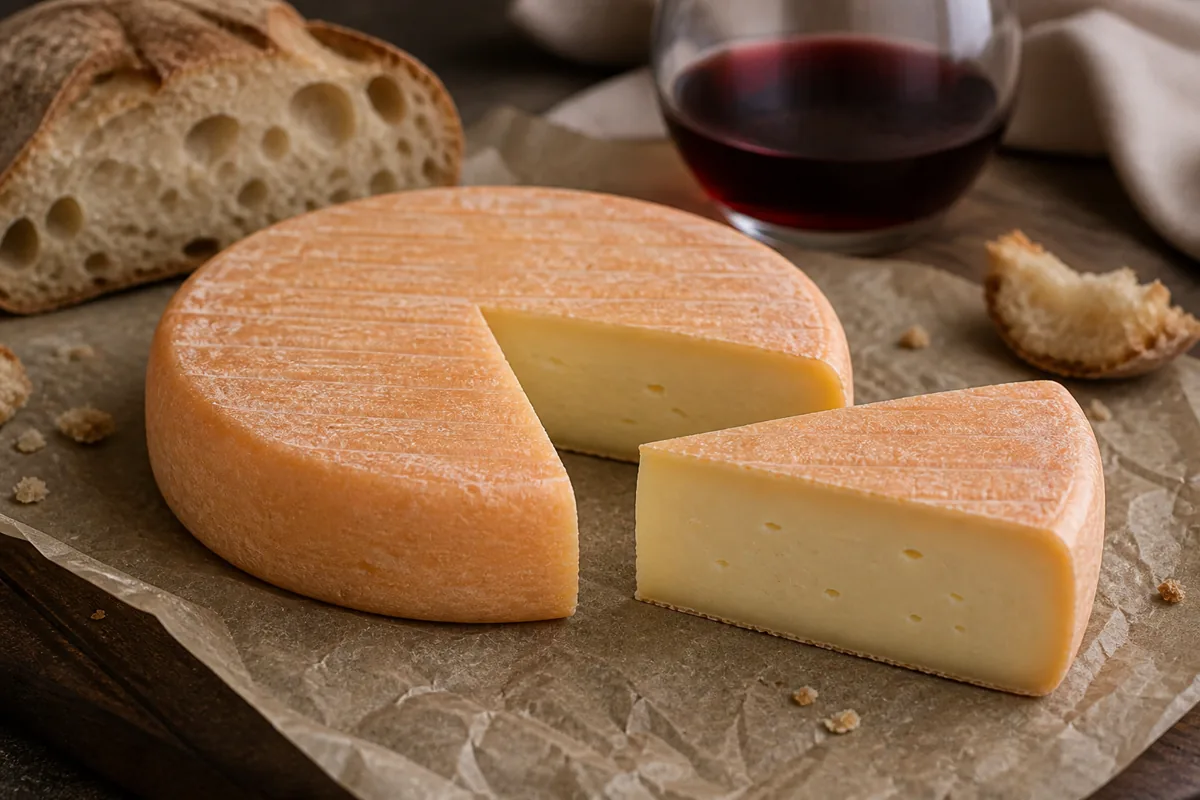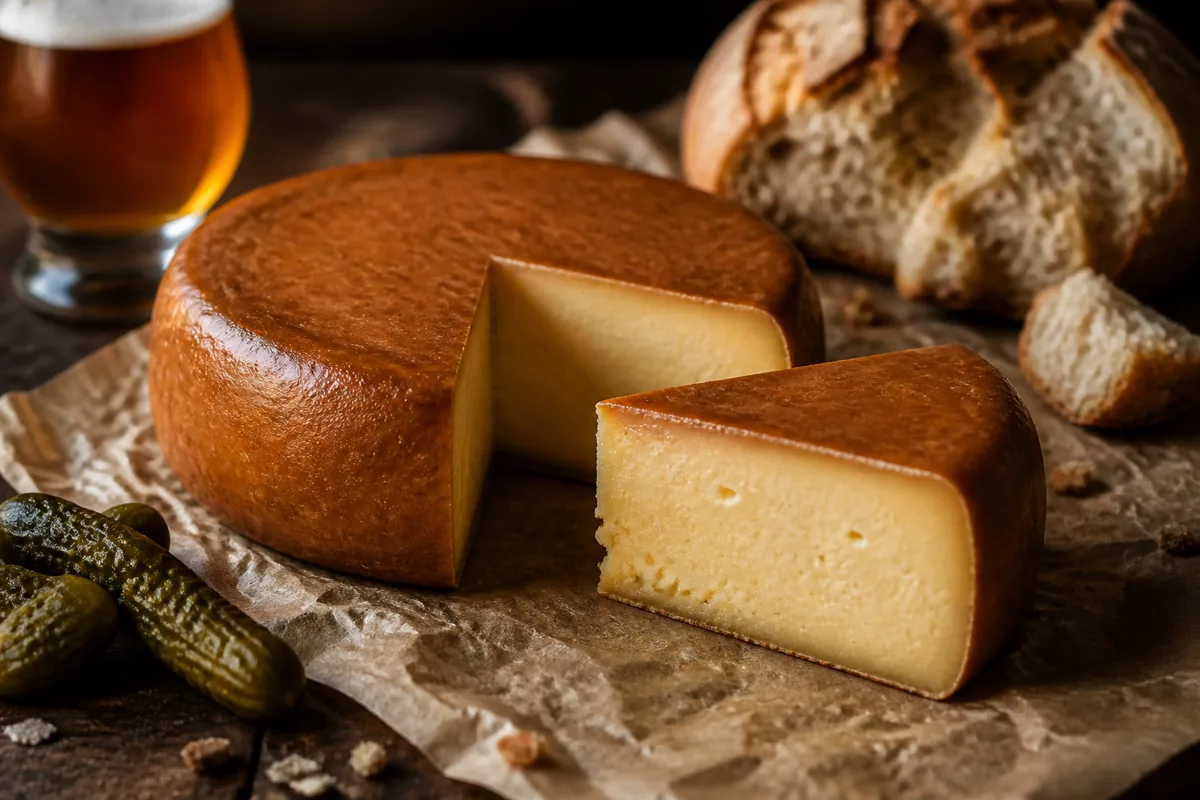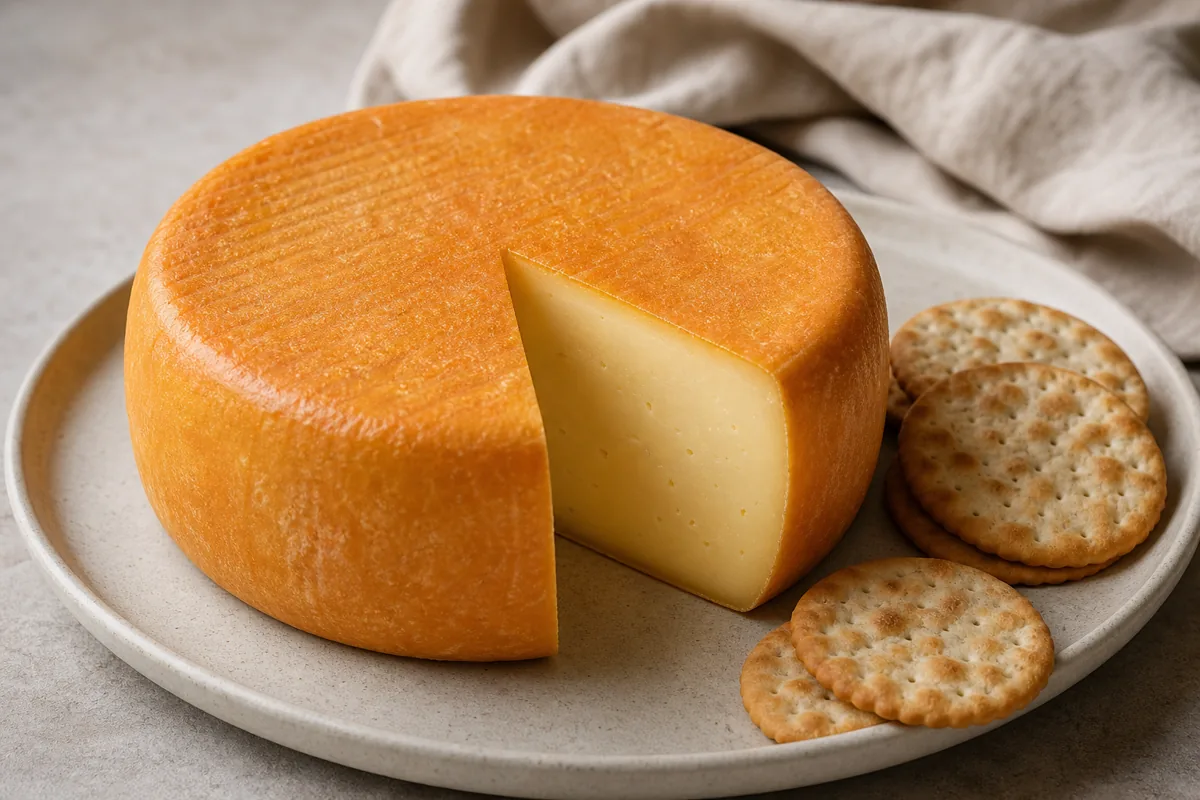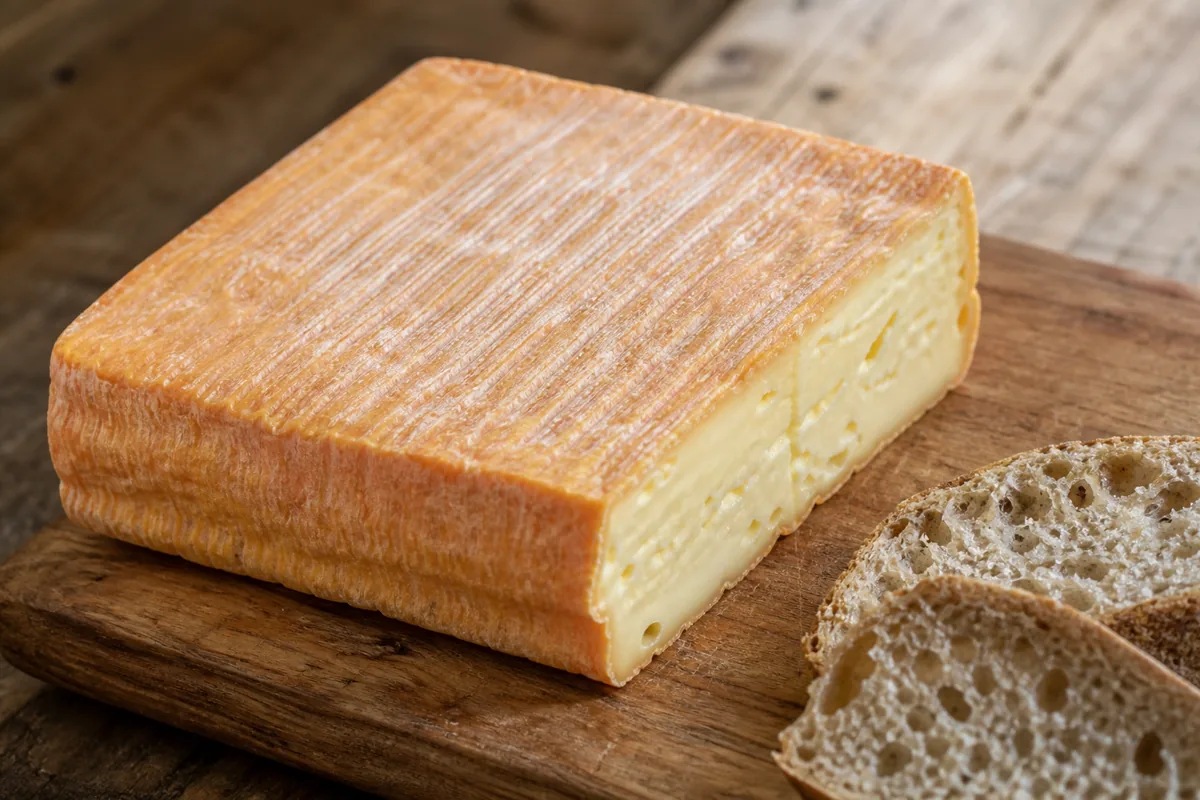
Abbaye de Timadeuc usually refers to Trappe de Timadeuc, the mild orange-rind cheese. Timanoix comes from the same cheesemaking story but receives a walnut-wine treatment that changes its rind, aroma, and pairings.
Check the exact name before buying. Plain Timadeuc fits cider, bread, buckwheat galettes, and mild charcuterie, while Timanoix brings a darker nut aroma that needs a different plate.
In This Article
What Is Plain Trappe de Timadeuc?
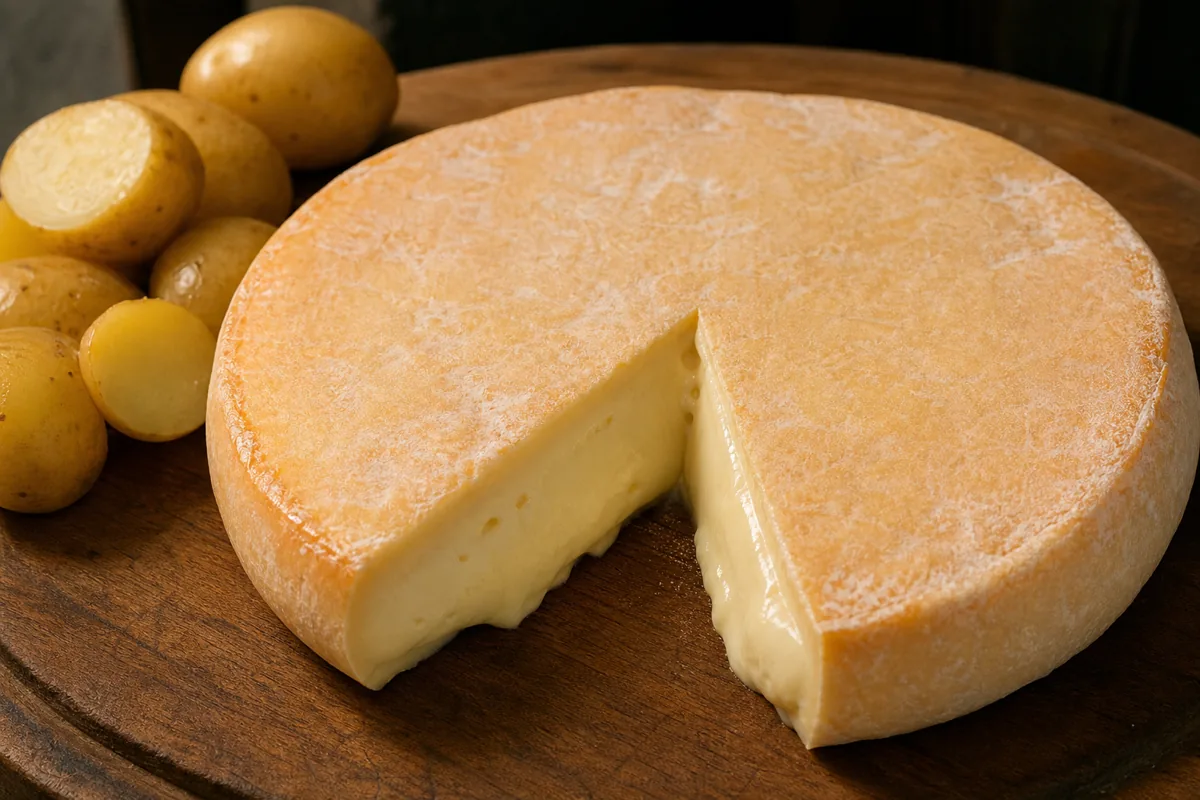
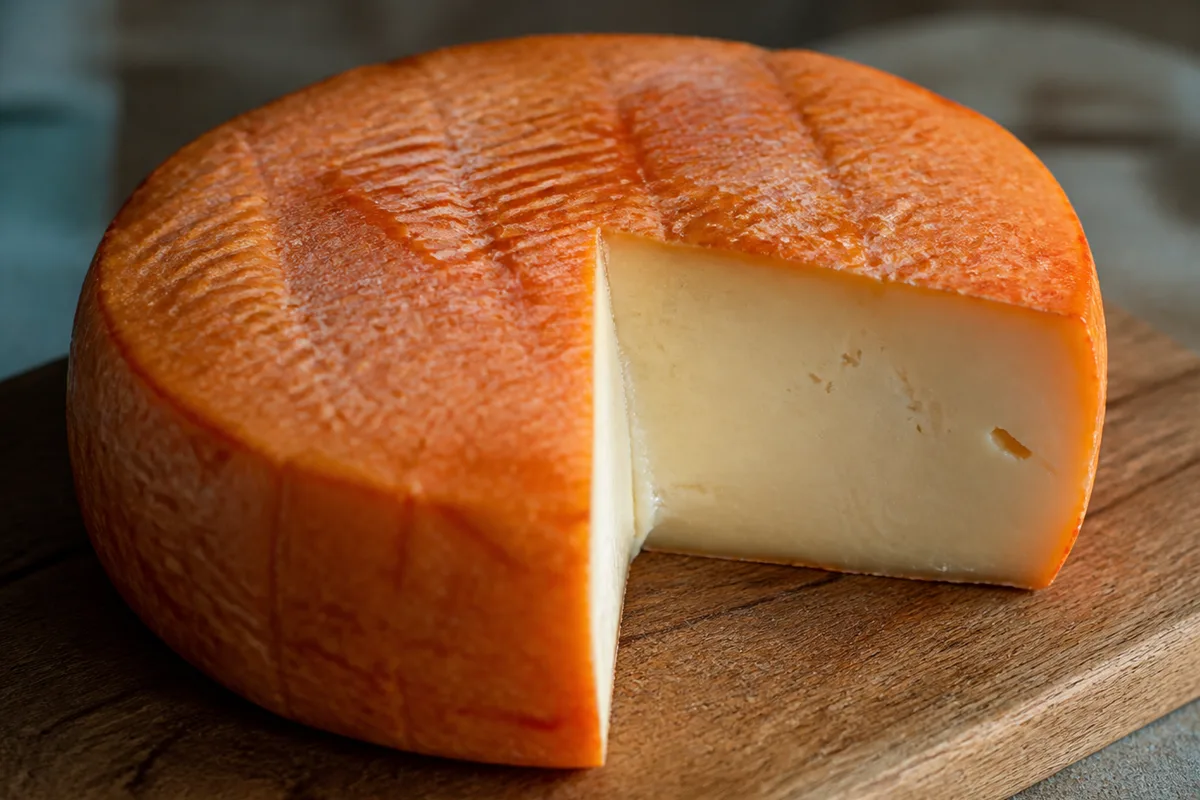
Trappe de Timadeuc belongs to the Port-Salut family of uncooked pressed cheeses. The abbey traces its method to monks from Port-du-Salut in Mayenne, which explains the orange rind, elastic paste, and restrained flavor.
The cheese comes from the Timadeuc monastic community at Bréhan in Morbihan. Breton cow milk is pressed without cooking the curd, then the wheel matures in the abbey cellar until the surface develops its fine orange color.
Current official information describes a mild, balanced cheese made for the table and kitchen. The useful expectation is a supple slice with restrained cellar aroma, not the runny paste or forceful smell associated with stronger washed rinds.
Pressing removes enough whey to make clean slices, while the uncooked curd preserves a softer, more yielding body than a hard mountain cheese. That combination explains why Timadeuc can sit on a table, fold into bread, and soften in a galette without behaving like a runny soft cheese.
The word abbey can suggest a strong cellar aroma, but Timadeuc stays comparatively gentle. If you want a forceful washed-rind cheese, Pont-l'Évêque moves farther in that direction.
How Are Trappe de Timadeuc and Timanoix Different?
No. Trappe de Timadeuc is the plain orange-rind cheese, while Timanoix is matured with walnut wine and develops a darker rind with clear walnut aromas.
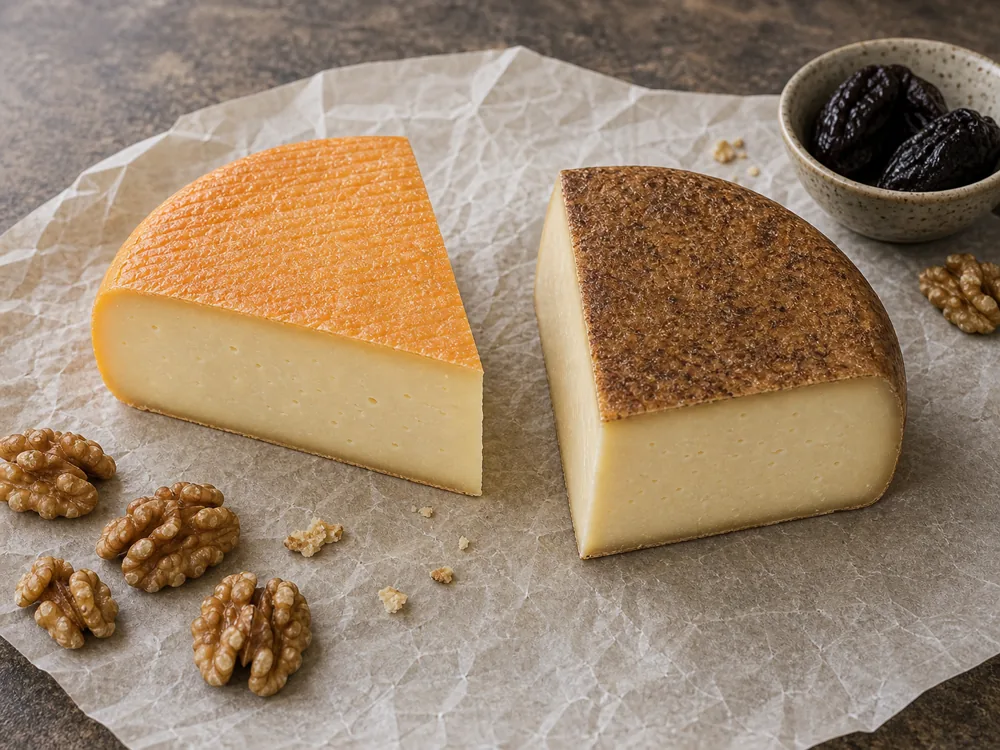
The distinction began in 2003, when Timadeuc adapted knowledge associated with Abbaye d'Échourgnac to create Timanoix. The abbey still presents both cheeses as separate products, and records a 2026 silver medal for Timanoix.
The shared producer and similar shape can cause confusion, but the surface treatment changes how each cheese tastes and pairs.
Does Timanoix Contain Walnut?
Timanoix is sold as cheese matured with walnut wine, and the current producer ingredient information also lists natural walnut flavor. A person avoiding walnuts should read the exact Timanoix label instead of assuming that a surface treatment cannot affect the ingredient or allergen decision.
The producer listing also names a caramel color made with ammonium sulfite and the surface preservative natamycin. Those details belong to Timanoix product verification and should not be copied onto plain Trappe de Timadeuc without its own label evidence.
| Question | Trappe de Timadeuc | Timanoix |
|---|---|---|
| Rind | Fine orange washed rind | Darker walnut-wine-treated rind |
| Main aroma | Mild dairy, light cellar, gentle salt | Walnut and deeper toasted notes |
| Best partners | Cider, buckwheat, apple, mild ham | Walnuts, darker fruit, fuller bread |
| Best reason to buy | Approachable Breton table cheese | Distinct nut-led finish |
Choose Timadeuc when you want the milk and orange rind to remain clear. Choose Timanoix when walnut aroma is part of the dish, then reduce other nuts and sweet preserves so the finish does not become crowded.
Who Makes Timadeuc Cheese Now?
The production story changed again in 2025. The official Timadeuc site says Cellier des Monastères communities resumed cheesemaking, allowing the monks to oversee the process from manufacture through affinage.
This replaces older descriptions that split production and abbey ripening between separate operators.
When a retailer repeats the earlier arrangement, use the current producer information for a new purchase.
Current official information says monastic communities resumed manufacture in 2025. Older articles may still describe an earlier production handoff, so check the date of the source.
The update matters because Timadeuc's identity rests on more than a recipe name. The cheese is again presented as a continuous monastic production and ripening process.
Manufacture sets the curd moisture, salt, and wheel structure. Affinage then controls the rind and texture, so bringing both stages back under the monastic communities affects the whole cheese rather than only its final label.
What Does Timadeuc Taste Like?
The ivory paste tastes mild, creamy, lightly salty, and faintly tangy. A thin slice bends before it breaks, which makes the cheese feel closer to Port-Salut than to a crumbly British farmhouse cheese.
The orange rind adds the savory cellar note. Eat a narrow strip with the paste when it smells clean and tastes balanced, then trim it if bitterness, sourness, or ammonia overwhelms the center.
Taste the ivory center first, then take a second bite with a narrow strip of rind. The contrast shows whether the wheel is still balanced or whether the surface has moved beyond the strength you enjoy.
Let a serving portion rest for 20 to 30 minutes. Cold makes the paste seem rubbery, while a short warm-up reveals its milk sweetness and shows whether the rind remains in balance.
Timadeuc should smell clean and lightly aromatic. Wet sourness, strong ammonia, or a slippery rind points to poor condition rather than the intended washed-rind character.
Can You Eat the Rind on Trappe de Timadeuc?
A clean thin strip of the orange rind can be eaten with the paste when the product label does not tell you to remove it. The useful test is sensory: the rind should add a gentle savory cellar note without turning the whole bite bitter, chemical, or sharply ammoniated.
Start with the ivory center, then try a second slice containing only a narrow edge. This keeps the rind from dominating and reveals whether you enjoy the intended contrast or would rather trim it for the rest of the serving.
| What you notice | Best response |
|---|---|
| Dry fine orange surface and clean aroma | Try a narrow strip with the paste. |
| Pleasant savory edge but stronger than the center | Keep less rind on each slice. |
| Harsh bitterness or ammonia limited to the surface | Trim the rind and reassess the center. |
| Wet slippage, sour liquid, or breakdown into the paste | Reject the wedge rather than trimming around the defect. |
Rind edibility and rind condition are separate questions. A surface can be technically edible yet unpleasant to you, while a wet deteriorating rind is a buying defect rather than a matter of personal taste.
How Does Timadeuc Work in the Kitchen?
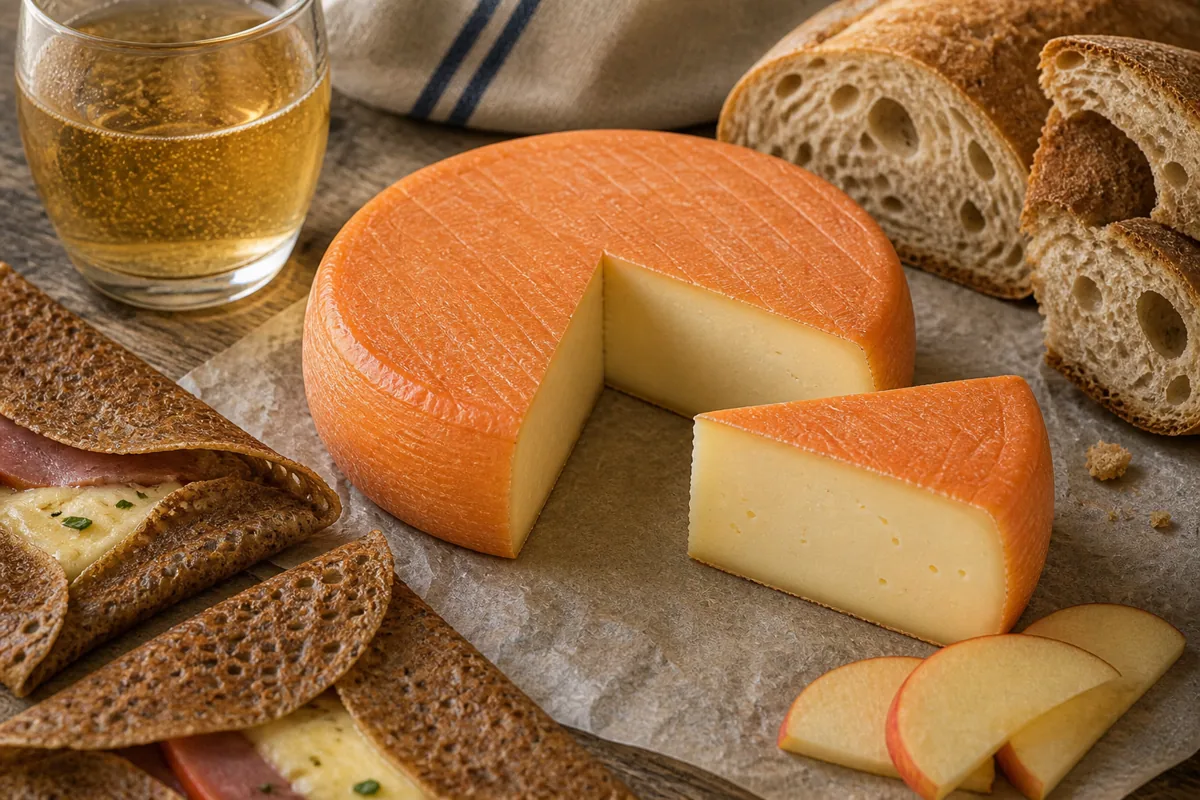
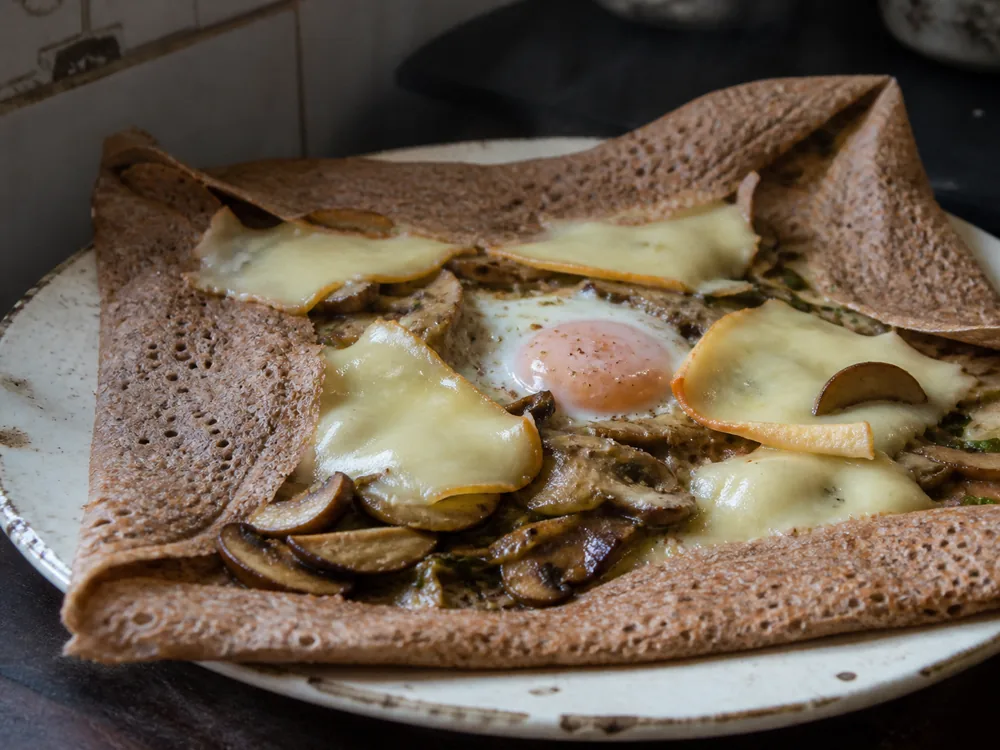
Timadeuc softens evenly enough for a buckwheat galette, tartine, omelet, or mild sandwich. Use thin slices so the rind distributes through the filling and the paste melts before the buckwheat dries.
| Use | How It Works |
|---|---|
| Buckwheat galette | Layer thin slices with egg, mushrooms, potato, or mild ham. |
| Tartine | Warm briefly over country bread until the paste relaxes. |
| Omelet | Add near the end so the rind does not dominate the eggs. |
| Sandwich | Use a thin layer with apple or pickles for acidity. |
Avoid boiling the cheese into a long-cooked sauce.
Prolonged heat can separate the fat and make the rind taste more bitter than it does at the table.
For stronger stretch, choose a cheese from the melting-cheese group and keep Timadeuc as the flavor layer. Its strength is a supple blanket, not a dramatic cheese pull.
Add the slices after the first side of the galette has cooked, then fold as soon as their edges relax. This timing preserves the tender buckwheat center and prevents the rind from spending too long over direct heat.
What Pairs with Plain Timadeuc?
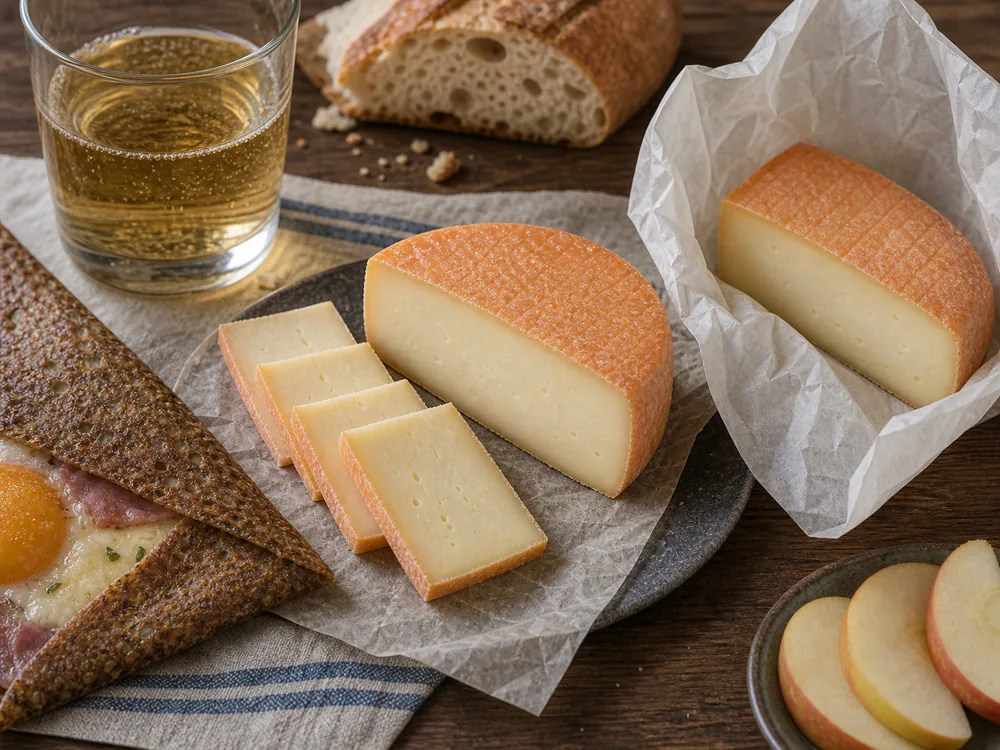
Dry Breton cider is the clearest drink match because apple acidity refreshes the paste and the gentle fruit does not bury the rind. Light red wine or a malty amber beer also works when bitterness and tannin stay moderate.
| Pairing | Type | Why It Works |
|---|---|---|
| Dry cider | Drink | Apple acidity fits the Breton table and clears the supple paste. |
| Buckwheat bread or galette | Food | Earthy grain supports the rind without adding sweetness. |
| Apple or pear | Food | Fresh fruit keeps the mild cheese lively. |
| Mild ham | Food | A restrained cured-meat partner adds savor without smoke overload. |
On a mixed cheese board, place Timadeuc after fresh cheeses and before strong blues or pungent washed rinds.
Bread, apple, and one pickle are more useful than several jams.
If you bought Timanoix instead, move toward walnuts and darker fruit. That adjustment lets the walnut finish guide the plate rather than forcing both cheeses into the same pairing pattern.
Plan roughly 30 to 40 grams per person when Timadeuc shares a board, or about 60 grams when it is the main cheese with bread and fruit. A modest portion leaves room to taste the rind without letting its aroma cover the cider.
How Should You Buy and Store Timadeuc?
Read the full product name first. Then choose a wedge with an even orange rind, a smooth springy paste, and no wet breakdown between rind and center.
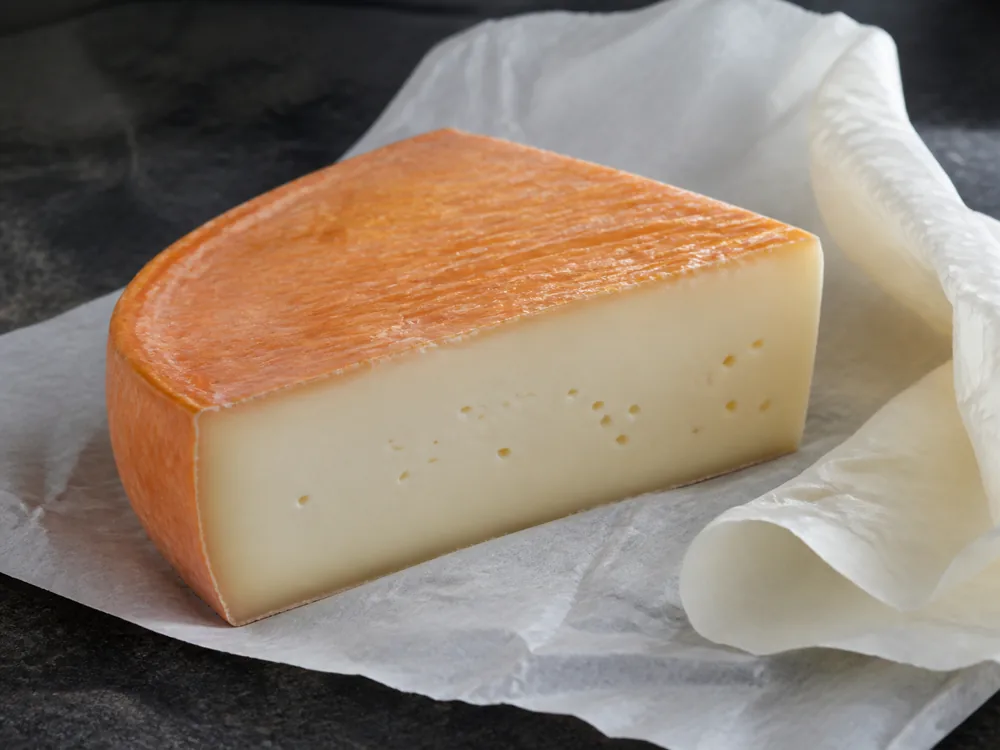
Wrap the cut face with cheese paper or parchment and keep the wedge in a loose container away from delicate fresh cheese. Open the wrapping briefly if moisture collects against the rind.
Ask a counter seller for Trappe de Timadeuc when you want the mild version, and say Timanoix when the walnut finish is essential. For direct purchases, match the name and rind description on the producer listing before comparing price or pack size.
French dairy references list pasteurized cow milk, but the pack in your hand remains the authority. Pasteurization answers only the milk-treatment question; use the current pregnancy cheese guidance for cheese style, cut-counter handling, serving conditions, and your jurisdiction.
What Is the Best Substitute for Timadeuc?
Port-Salut is the closest family substitute when you need a mild orange-rind slice that softens under heat.
It loses the specific Breton and monastic context but preserves the most useful texture and flavor role.
Saint-Paulin offers another mild pressed-paste direction. Reblochon brings a softer, richer table experience, while Pont-l'Évêque moves toward stronger washed-rind aroma.
No substitute turns into Timanoix by adding walnuts beside it. If the walnut-wine rind is the reason for the dish, look for Timanoix itself or another clearly walnut-finished cheese.