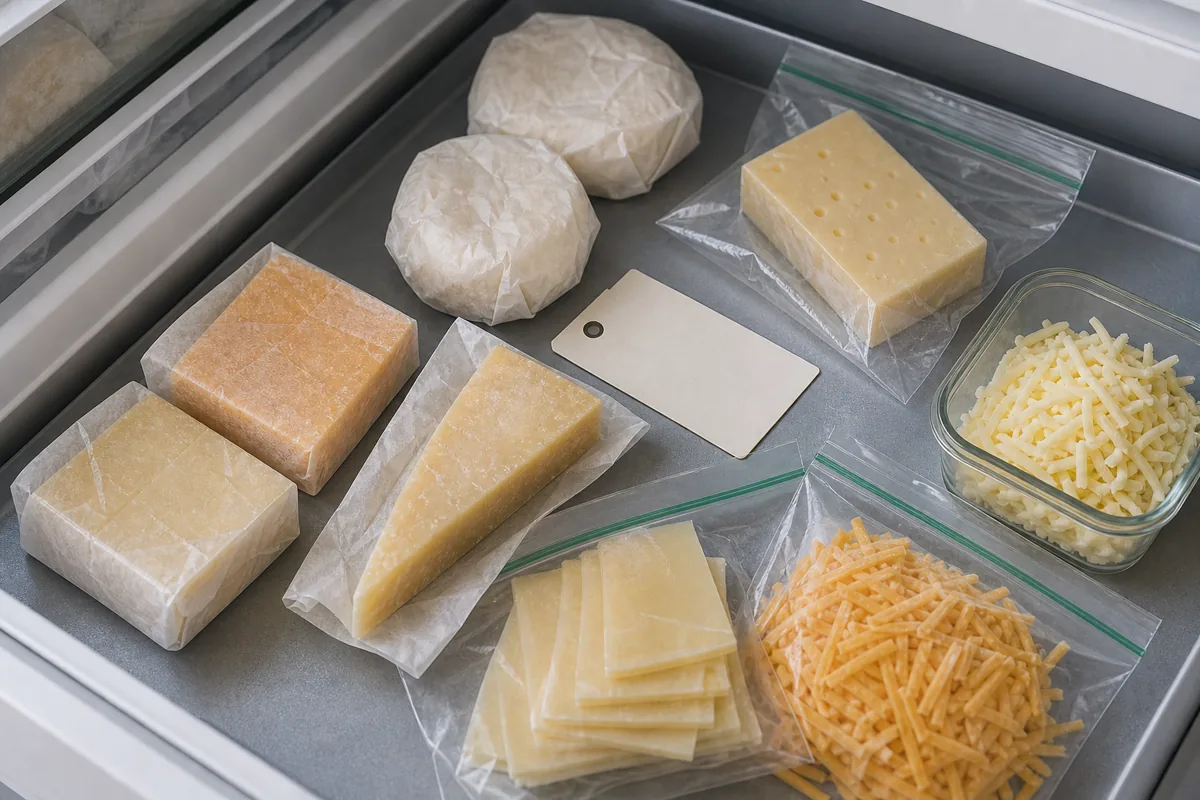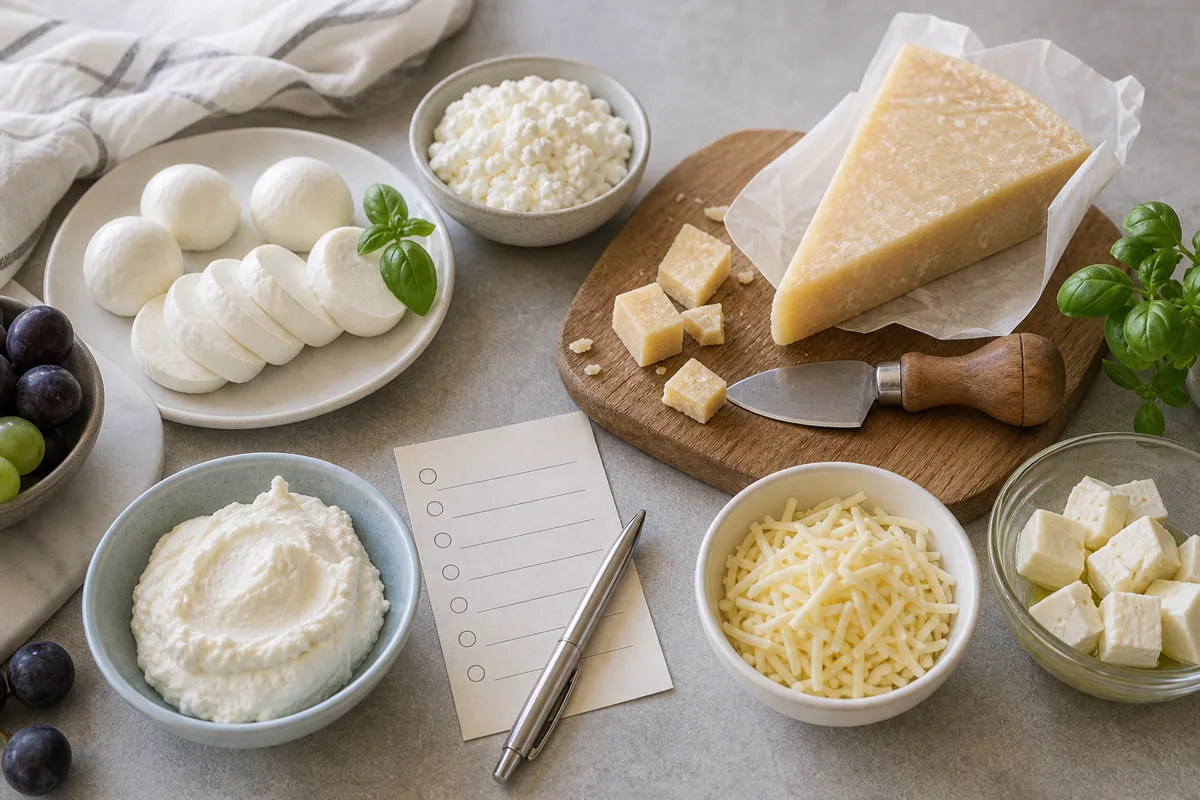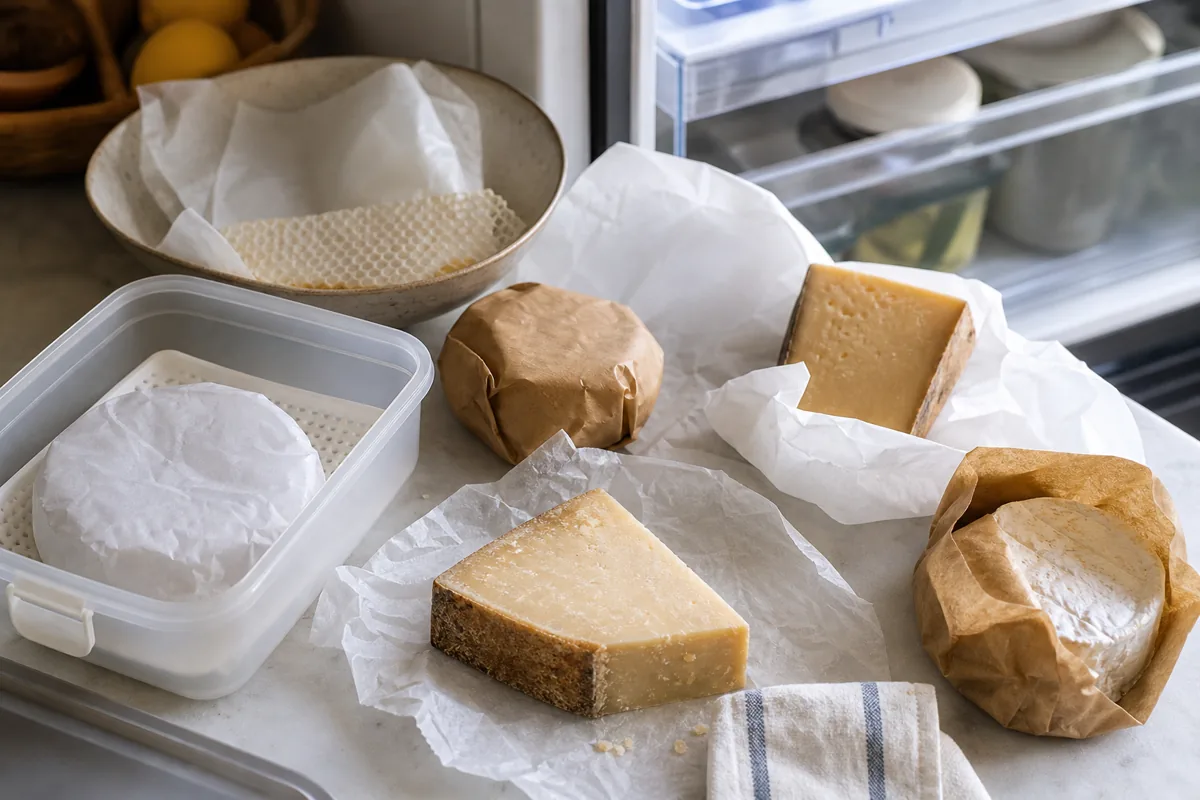
Refrigerate, wrap and date cheese according to its type
Keep cheese that needs refrigeration at 40 F (4 C) or below, protect it in its original packaging or a clean wrapper, and follow its after-opening instructions.
A soft cheese such as Brie needs a shorter storage window than an opened block of Cheddar.
Wrapping protects texture and keeps odors out.
It cannot make cheese safe after too much time in a warm kitchen, and a normal smell cannot prove that the cold chain was maintained.
In This Article
What do you need to store cheese?
A refrigerator thermometer, clean wrapping materials, containers and a date label cover the main jobs.
Keep the original pack until the cheese is finished so you retain its use-by date and storage instructions.
- Original wrapping or cheese paper: useful for cut wedges and bloomy rinds.
- A clean bag or container: protects the wrapped cheese from other food and strong odors.
- A covered tub: keeps ricotta, cottage cheese and cream cheese contained. These do not need added brine.
- A thermometer: checks the actual temperature where the cheese sits, rather than the fridge dial setting.
Paper is an option for an unwrapped wedge, not a reason to discard intact factory packaging.
A maker may specify a sealed tub, film or foil for its particular product.
How should you wrap and refrigerate cheese?
Keep unopened cheese in its packaging. Once opened, handle the portion you need with a clean knife and put the remaining cheese back promptly.
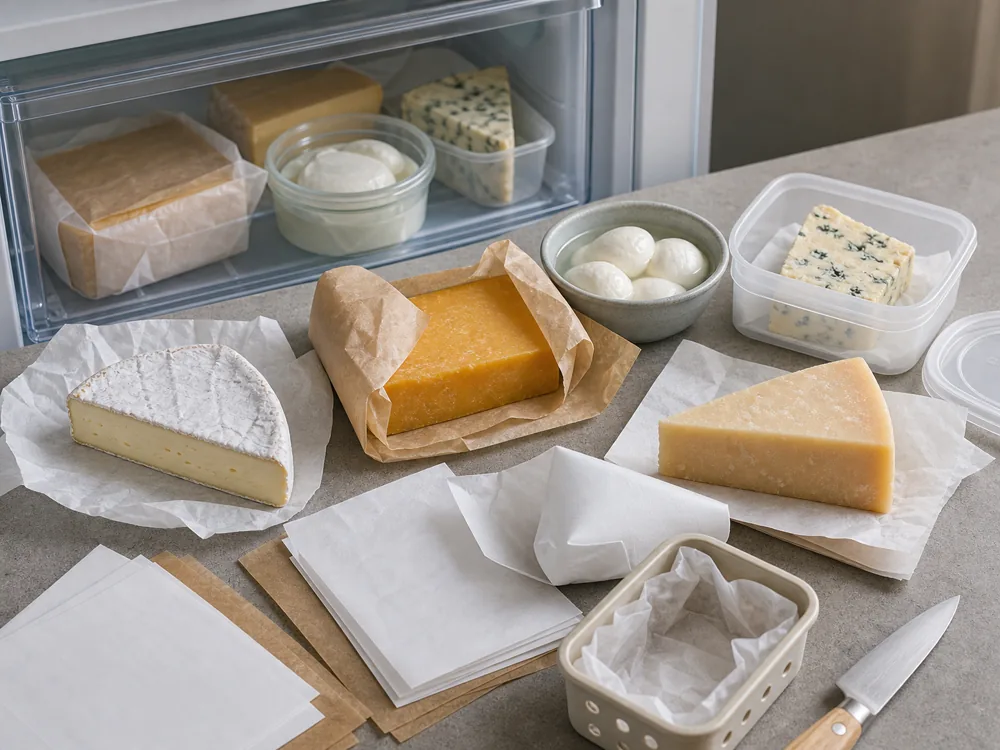
If a wedge dries at its cut face, you can remove a dry edge for texture. Dryness and mold are different problems, so do not apply that simple trimming advice to a moldy soft cheese.
For mozzarella sold in brine, keep the original liquid and follow the manufacturer's directions. Adding homemade salt water does not establish a new safe storage period.
How long does cheese keep in the fridge?
USDA gives approximate refrigerator times of one week for soft cheeses such as Brie, cottage cheese and ricotta, and three to four weeks for an opened block of hard cheese. These are category guides, not extensions to a shorter package instruction.
| Cheese and package state | USDA refrigerator guide | How to apply it |
|---|---|---|
| Soft cheese, including Brie, ricotta and cottage cheese | About 1 week | Follow any shorter use-by or after-opening instruction. |
| Cream cheese | About 2 weeks | Keep covered and use a clean utensil. |
| Hard cheese block, unopened | About 6 months | Keep the original package intact and check its date. |
| Hard cheese block, opened | 3-4 weeks | Protect the cut surface and keep refrigerated. |
Do not apply the hard-block allowance to every sliced, shredded, crumbled or semi-soft cheese. A bag of grated cheese has much more exposed surface than the block it came from, and its own storage instructions matter.
If you cannot finish a large block in time, divide it into portions and freeze cheese intended for cooking while it is still in good condition. Portioning helps you use it efficiently, but does not reset the opening date.
Which cheeses need different wrapping?
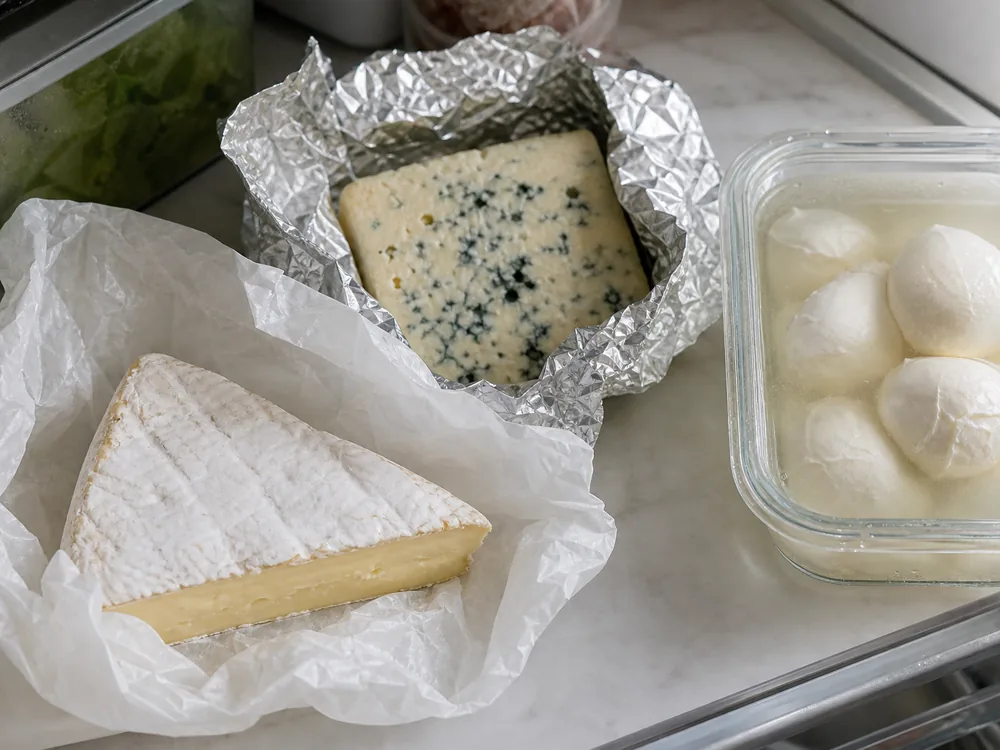
How Should You Wrap Brie and Bloomy Rinds?
For Brie and Camembert, the U.S. cheese handling manual recommends the original wrapper or wax paper, kept away from strongly flavored foods.
Preserve the cut surface as well as the rind.
Do not leave the cheese on the counter to continue aging. A short serving period softens cold fat, but it is not a substitute for controlled cheesemaking conditions.
How Do You Store Cheese Sold in Tubs or Liquid?
Ricotta, cottage cheese and cream cheese belong in covered containers.
Use a clean spoon or knife rather than dipping in a utensil that has touched another food.
Cheese sold in liquid needs the packaging instructions for that product. Do not assume every fresh cheese should be submerged, or that every brine has the same salt content.
How Do You Wrap Blue Cheese and Hard Wedges?
Keep blue cheese wrapped and separate from mild foods to limit odor transfer. Original foil or wrapping inside a container is more useful than leaving a strong wedge exposed in the fridge.
For a hard wedge such as Cheddar or Parmigiano Reggiano, cover the cut faces to reduce drying. Replace a dirty wrapper, and check the remaining cheese each time you cut a portion.
Can you cut mold off cheese?
The answer depends on the cheese's structure. USDA allows a small mold spot to be cut from hard cheese with a margin of at least 1 inch around and below the spot, keeping the knife out of the mold.
Put the remaining cheese in fresh wrapping.
Discard moldy soft, sliced, shredded or crumbled cheese, where contamination can extend beyond what you see.
The intentional white rind on Brie and blue veins in blue cheese are part of those products. They do not make additional, unexpected mold harmless, and soft mold-ripened cheese should be discarded if other mold develops.
White crystals on aged cheese can be different from fuzzy mold, but color alone is not enough to identify an unfamiliar patch. If you cannot distinguish a normal feature from spoilage, do not taste it as a test.
How long can cheese sit out for serving?
FDA household guidance limits foods needing refrigeration to two hours at room temperature, or one hour when the air is above 90 F (32 C).
Preparation and serving both use that time, so bring out small portions and keep the rest cold.
FSANZ's separate food-business rule counts all time between 5 C and 60 C: under two hours permits refrigeration again, two to four hours means use immediately, and more than four hours means discard. It does not extend the FDA household limit.
Brie and fresh cheese left out overnight should be discarded. Refrigerating or baking them afterward does not undo unsafe storage.
Hard cheeses have different moisture levels, but that does not make a mixed cheese platter shelf-stable.
Apply the limit to the perishable foods on the board, including soft cheeses and any other refrigerated ingredients.