Cheddar is one of the world's most widely made cow's milk cheeses, yet most people have only tasted a fraction of what it can be. Aged varieties share almost nothing in flavor with the mild yellow block sold for sandwiches.
Among aged hard cheeses, Cheddar sits at the top by volume and by variety.
The cheese takes its name from the village of Cheddar in Somerset, England, where cave systems provided the cool, humid conditions needed for long aging. Today, Cheddar is made on every inhabited continent.
The name has no legal protection outside the UK's PDO for West Country Farmhouse Cheddar, which means the word "cheddar" describes a method as much as a place.
- Buy mild Cheddar for easy melt and softer everyday cooking.
- Buy clothbound or older Cheddar when the point is tang, crumble, and board flavor.
- Read the age cue first because "sharp" and "extra sharp" mean very different things by brand.
In This Article
What Is Cheddar Cheese?
One production step gives this cheese its name. It is a cow's milk cheese defined by: cheddaring.
After the curd is cut and heated, the drained slabs are stacked, flipped, and restacked repeatedly over 90 to 120 minutes.
This step expels whey, knits the curd together, and builds the elastic, close-grained texture that no other cheese style replicates.
Without cheddaring, you don't have Cheddar. You have a pressed cow's milk cheese that might taste similar at a young age, but it will not develop the same way as it matures.
The protein structure laid down by the cheddaring process is what allows the paste to firm, crack, and crystallize correctly during extended aging.
The only cheese with a protected name linked to this method in England is West Country Farmhouse Cheddar PDO. It must be made from milk sourced in Somerset, Devon, Cornwall, or Dorset, and it must be cloth-bound and aged on the farm where it was produced.
American Cheddar, Irish Cheddar, and Australian Cheddar all use the cheddaring process but carry no geographic obligation.
Cheddar sits in the cheddar-style family of cheeses, which includes Colby, Monterey Jack, and Longhorn. None of those replicate aged Cheddar's flavor, but they share the same curd-handling process and work as mild substitutes in cooking.
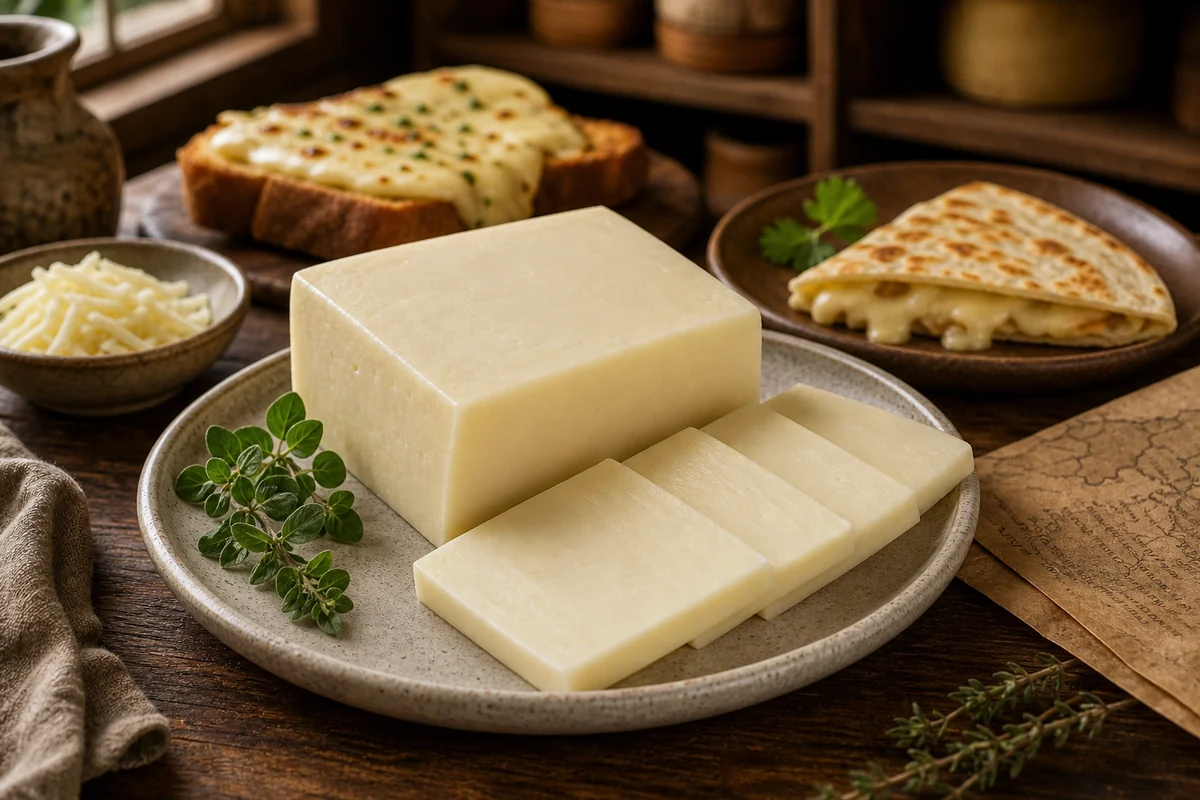
Colby's higher moisture keeps it gentler than Cheddar. Monterey Jack's mild paste makes it better for quick-melting Tex-Mex dishes.
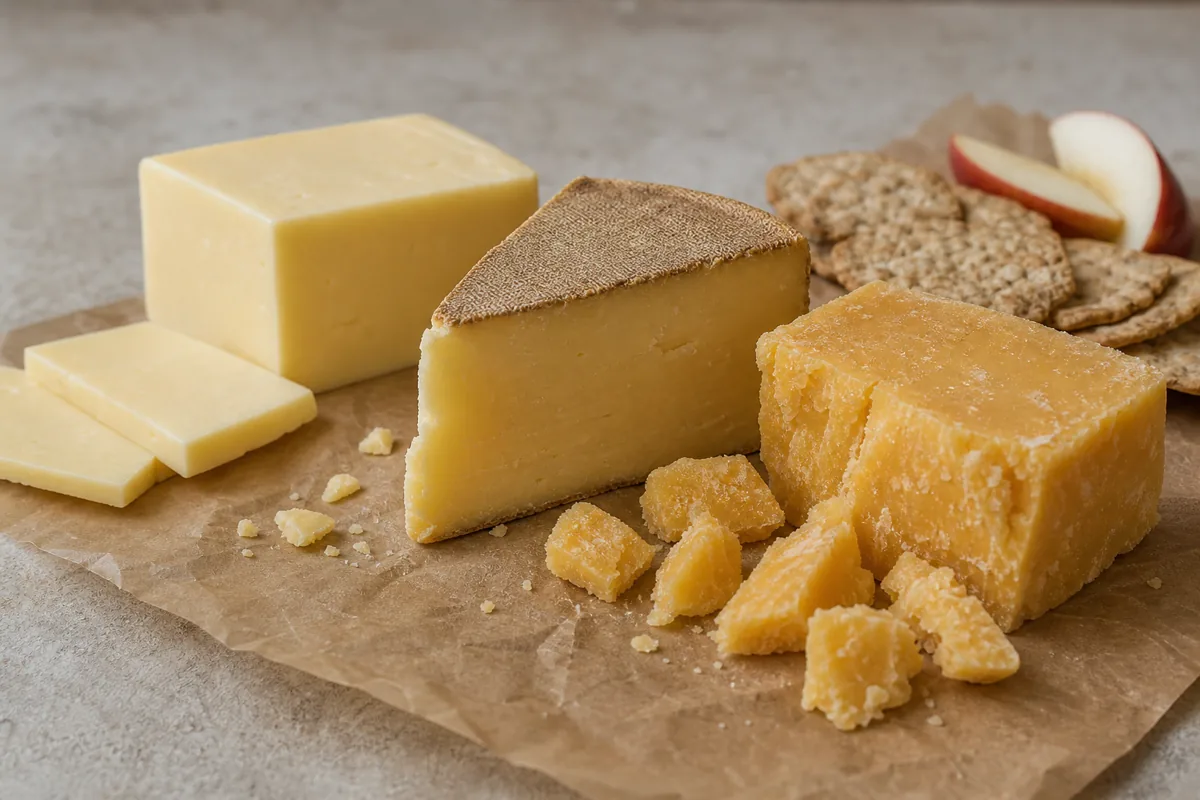
Cloth-bound wheels develop a natural rind as they age, which allows slow moisture loss and a more complex paste over time. Waxed block Cheddar is sealed to retain moisture, producing a creamier, more uniform texture but limiting the flavor depth that slow, open-air aging creates.
How Does Age Change Cheddar?
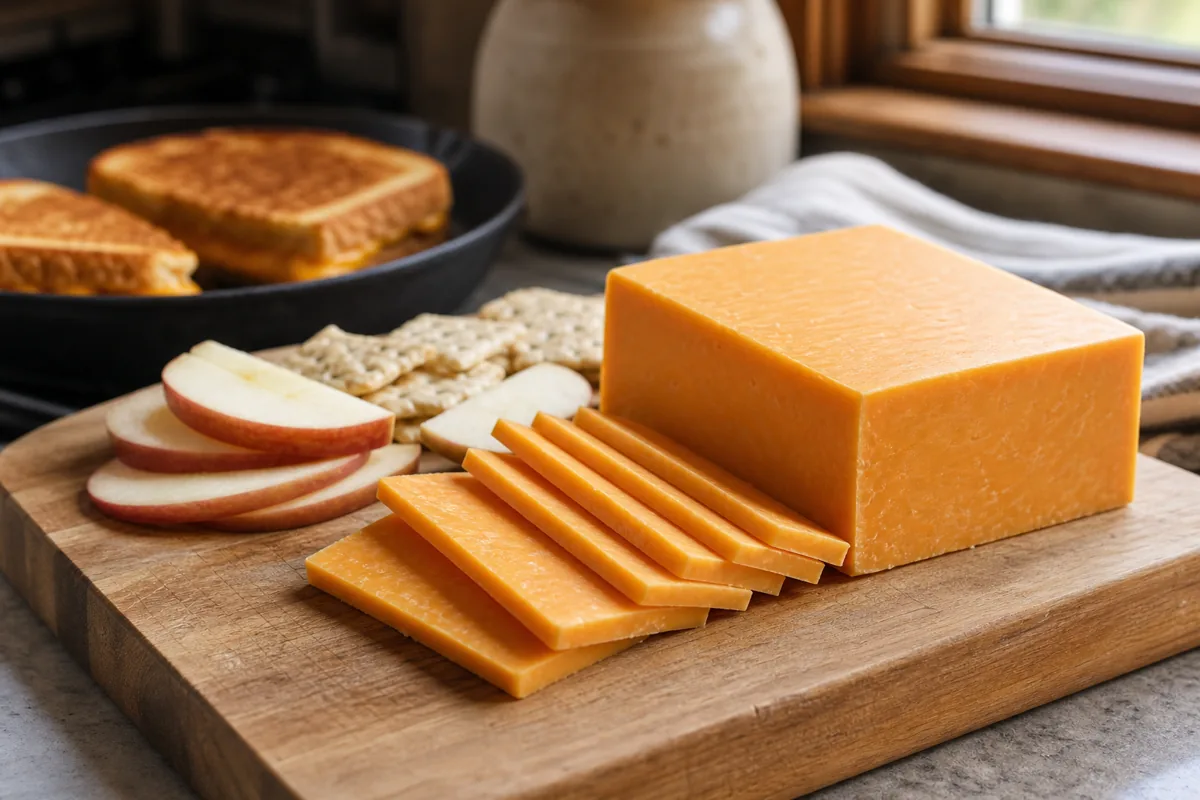
Mild Cheddar is buttery, slightly tangy, and approachable. It melts smoothly and has a soft, elastic texture with no brittleness.
This is what most people encounter first, and it suits cooking well because it blends into dishes without overpowering them.
As Cheddar ages, it changes fundamentally. The moisture drops, the paste firms, and the edges begin to crack.
Lactic acid accumulates and pushes the flavor toward sharp, tangy, and acidic.
At 12 months, the cheese tastes noticeably different from its 3-month self. At 24 months, the flavor is intense enough to season a dish with a small amount.
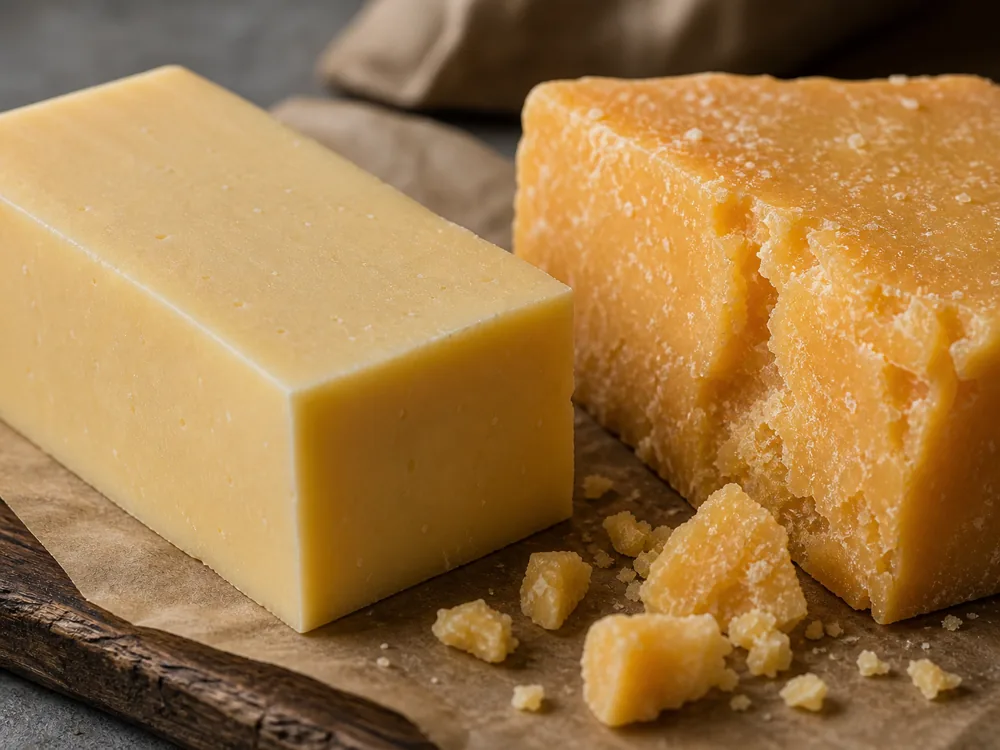
This describes a 24-month aged Cheddar. A mild Cheddar tastes far creamier and much less sour and savory.
The flavor profile shifts more dramatically between age grades of Cheddar than it does between most other cheese styles.
Most named Cheddar variations still belong inside these age and format lanes. Aged British Cheddar, extra mature Cheddar, vintage Cheddar, cave-aged Cheddar, mild Cheddar, and colored mild Cheddar describe age, producer, rind, or color decisions, not separate cheese families.
Brand and creamery names such as Davidstow, Wookey Hole, Orkney, Bega, Black Bob, Hook's, Maffra, Isle of Man, or flavored products such as Abbot's Gold are useful buying signals only after you know the age grade and format. Treat processed Cheddar and flavored truckles as commercial formats unless the label gives a real maturation and make style.
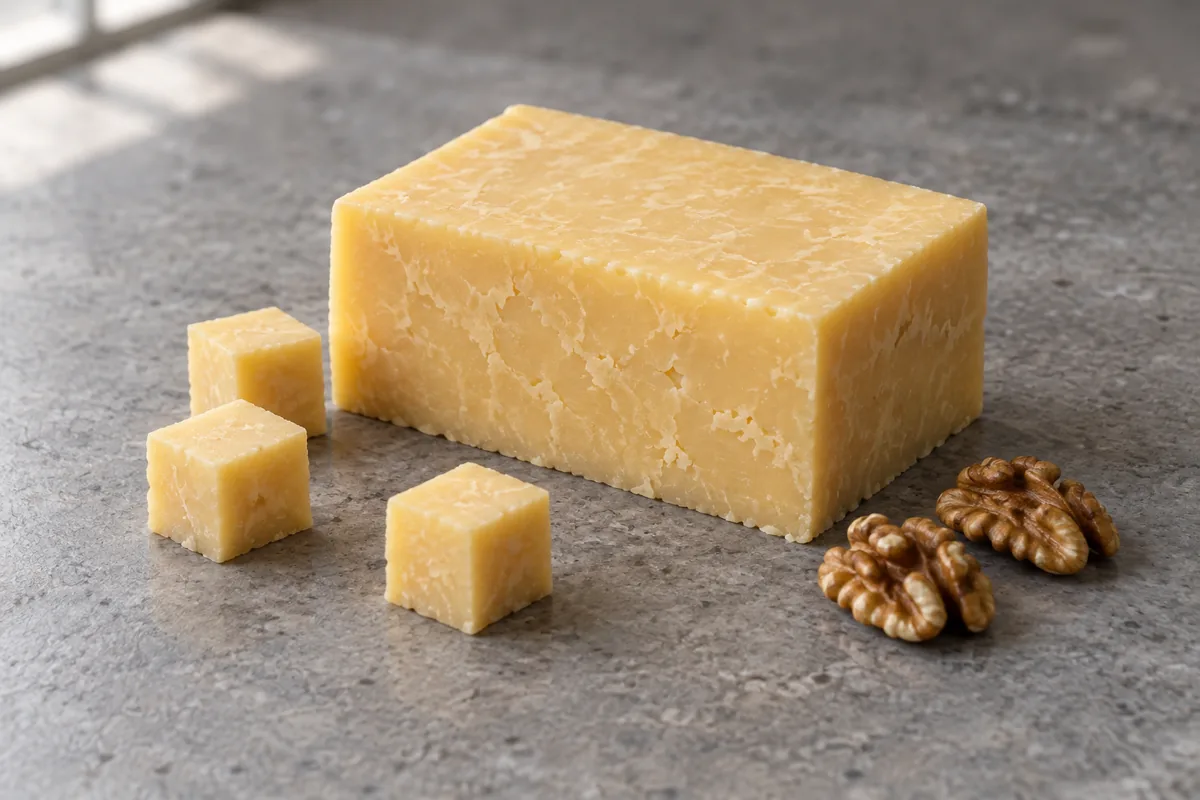
One texture feature specific to Cheddar: calcium lactate crystals form on the surface of aged wheels as lactic acid combines with calcium near the cut face. They appear as white flecks or a powdery bloom and are a sign of proper aging, not spoilage.
Inside the paste, the crystals present are primarily tyrosine, the same amino acid deposits found in aged Parmesan and Gouda. Together these give well-aged Cheddar its characteristic crumbly snap and faint mineral crunch that no young cheese can replicate.
- Mild (1-3 months): Buttery, smooth, and elastic. Mild tang, very gentle acidity.
- Medium (3-6 months): More pronounced tang and a slightly firmer bite throughout.
- Sharp (6-12 months): Distinct acidic bite, some crumbling at the edges, earthier notes.
- Extra Sharp or Vintage (12-36 months): Intense tang, fully crumbly, crystalline, and complex.
Cloth-bound wheels in the sharp to vintage range often carry hazelnut, apple, and grassy notes picked up from the bandaging and the natural humidity of the aging cave or cellar. Waxed block Cheddar at the same age tends to taste sharper and more uniformly acidic, without those secondary aromas.
How Do Cheesemakers Cheddar the Curd?
The opening steps are unremarkable. Production begins like most hard cheeses: warm the milk, add a starter culture to begin acidification, then add rennet to coagulate the milk into a gel.
The curd is cut into small pieces and stirred while the temperature rises.
This step, called scalding, firms the curds and expels additional whey before the cheddaring stage begins.
Once enough whey has drained, the cheesemaker pushes the curd mass to the sides of the vat, where it mats together into slabs. Those slabs are cut into blocks, stacked two or three high, and flipped repeatedly over 90 to 120 minutes.
Each flip presses more whey out and increases acidity. This is cheddaring.
The blocks grow denser, more elastic, and noticeably smoother-grained as the process continues. No other mainstream cheese style uses this technique.
After cheddaring, the blocks are milled into small chips, salted by hand, and pressed into moulds for 24 hours. Cloth-bound wheels come out of the mould, get wrapped in cheesecloth rubbed with lard, and go into a cave or humidity-controlled aging room.
Industrial blocks skip the cloth entirely and go directly into sealed wax or vacuum plastic packaging.
The repeated stacking and turning under the weight of the curd slabs aligns the protein structure in a way no other pressing method replicates. This alignment is why Cheddar has that particular elastic bite when young and that clean, sharp crumble when aged, while a moulded-and-pressed cheese like Gouda ages differently even from the same milk.
Aging times vary by producer. The UK's Specialist Cheesemakers Association recognizes a spectrum from mild, at under 3 months, through vintage at over 12 months.
Some artisan producers age wheels for 24 to 36 months, producing an extremely sharp, crystalline cheese that bears almost no resemblance to the mild supermarket block most people grew up eating.
Which Cheddar Should You Cook With?
Mild Cheddar melts reliably because its higher moisture content lets the proteins relax without separating. Extra sharp Cheddar has lower moisture and higher fat, which means it can break or turn greasy if overheated in a sauce.
Match the age grade to the cooking method and you'll get consistently better results with less effort.
| Use | How It Works |
|---|---|
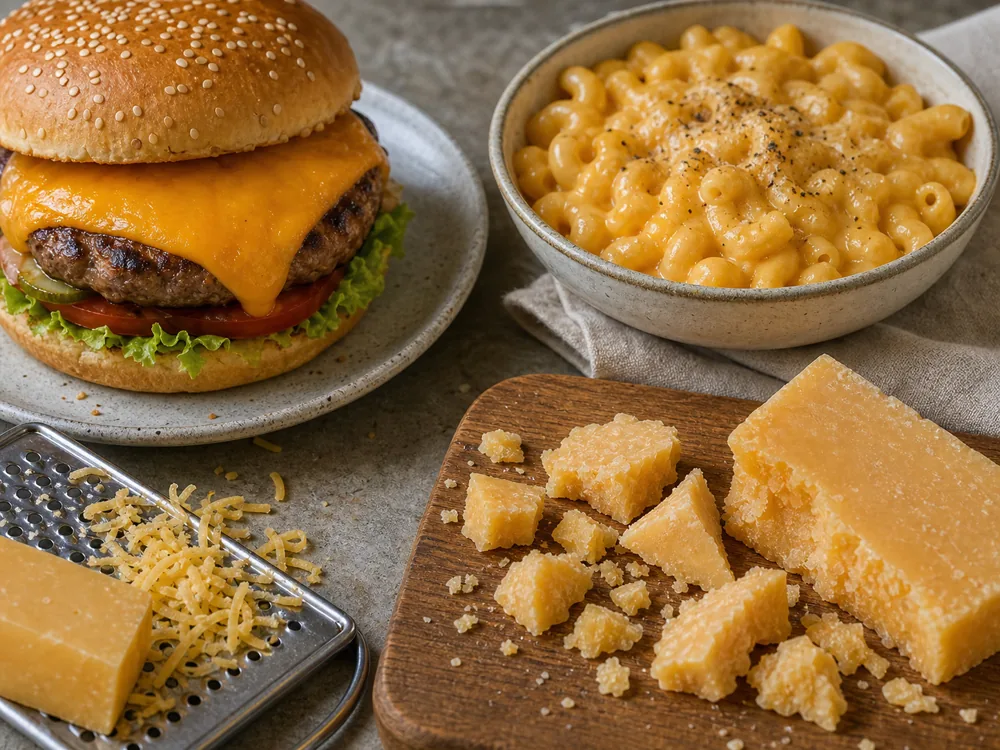
| Burger | Sharp Cheddar (9-12 months): melts evenly under a broiler, flavor holds up to beef |
| Mac And Cheese | Mild or medium: smooth melt, creamy sauce without graininess or separation |
| Grilled Cheese | Medium Cheddar: enough flavor to stand on its own, melts without breaking |
| Cheese Board | Extra Sharp or Vintage: slices cleanly at room temperature, pairs with fruit and nuts |
| Baking | Mild Cheddar: incorporates into batter and dough without releasing excess fat |
| Soup | Sharp Cheddar: enough flavor intensity to season the dish with a modest amount |
One thing that surprises people: extra sharp Cheddar handles high heat better than mild Cheddar, because the lower moisture means it doesn't sweat or pool liquid as quickly at room temperature. Serve it in smaller pieces so the intensity is manageable.
Grilled cheese sandwiches need a younger Cheddar or a blend because vintage Cheddar can break before the bread browns.
For any cooked application, shred your own Cheddar from a block rather than buying pre-shredded. Pre-shredded cheese contains cellulose or potato starch as an anti-caking agent.
Those coatings prevent smooth melting and leave a slightly grainy texture in finished sauces and gratins.
Which Drinks and Foods Suit Cheddar?
Acidity and fat together make it one of the most pairing-friendly cheeses available at any price point. The tang in aged Cheddar cuts through fat and sweetness equally well, which is why it bridges dry wine, sweet fruit, and malty beer without conflict.
| Pairing | Why It Works |
|---|---|
| Crisp Apple | The malic acid in apple echoes Cheddar's lactic tang. Braeburn and Cox varieties work best with sharp and extra sharp grades. |
| Traditional Ale or West Country Cider | English ales with biscuity malt balance sharp Cheddar without overwhelming it. West Country cider is the historic regional pairing. |
| Cabernet Sauvignon | Tannins from Cab Sav bind to Cheddar's fat, softening both the wine and the cheese. Choose a 2-4 year vintage for the best balance. |
| Fruit Chutney | Mango or apple chutney alongside extra sharp Cheddar is the core of the British ploughman's lunch: sweet and acidic against salty and crumbly. |
| Dark Honey | Buckwheat or chestnut honey adds a bitter sweetness that works with aged Cheddar's savory intensity without competing with it. |
Mild Cheddar needs a lighter partner. A pale ale or a dry Riesling works better than a full tannic red at that age grade.
The cheese simply doesn't have the structural intensity to hold its own against heavy tannins or bold spirits.
Dry cider with sharp Cheddar works because acidity matches Cheddar's tang without adding harsh tannin.
Why Does Cheddar Crack or Mould?
The main storage risk is moisture fluctuation. When the surface dries out, the paste cracks and the exposed interior oxidizes faster.
When it gets too wet, surface mold accelerates. The goal is a stable, slightly humid environment with a breathable wrap that protects the cut face without sealing moisture against it.
Wax paper is the correct first layer against the cut surface because it lets the cheese breathe slightly while protecting it from direct air exposure. Plastic wrap alone traps moisture against the paste, which accelerates mold growth and makes the surface slimy rather than firm.
Surface mold on a firm, aged Cheddar is not a discard situation. Hard cheeses have low enough moisture that mold stays near the surface and does not penetrate the paste.
Firm cheese mold trimming is safer than the same move on fresh or soft cheeses.
How Do You Pick a Good Cheddar?
The label tells you more than you might expect. Age grade, format (cloth-bound versus waxed block), and origin all affect what you'll taste.
Ten seconds reading the label before you buy will meaningfully change the outcome.
Cloth-bound wheels are wrapped in cheesecloth that has been rubbed with lard. The cloth lets the rind breathe, which concentrates flavor and creates the earthy, cave-like complexity that distinguishes artisan Cheddar from the industrial block.
A wedge of cloth-bound Cheddar from Neal's Yard Dairy or Jasper Hill Farm in Vermont shows what this cheese is genuinely capable of at its best.
Age grade labeling is not standardized across countries. In the UK, "mature" typically means 6 to 9 months and "extra mature" or "vintage" means 12 months or more.
In the US, "sharp" and "extra sharp" are brand-specific terms with no legal minimum aging requirement.
An extra sharp from one brand may be aged less than a competing sharp. Look for a production date on the label if you want a reliable guide to actual aging time.
West Country Farmhouse Cheddar PDO is the only Cheddar with a legally protected name in the UK. It must carry the PDO seal and must be made in Somerset, Devon, Cornwall, or Dorset.
Outside the UK, no producer can use that protected designation, though several make high-quality equivalents using the same cloth-bound, cave-aged method.
- Choose mild Cheddar for burgers, casseroles, and sauces that need easy melt.
- Choose extra sharp Cheddar for boards, biscuits, and dishes where tang matters.
- Choose clothbound Cheddar when you want earthy rind flavor and crumbly texture.
- For smooth sauces: start with mild or medium block Cheddar and grate it yourself.
- For cheese boards: buy a clothbound wedge or a clearly dated aged Cheddar.
- For lunchbox slices: choose a waxed block with enough moisture to stay flexible.
- For protected-origin buying: look for West Country Farmhouse Cheddar PDO, not just a British flag on the label.
Gouda and Cheddar texture diverges most clearly with age because Gouda stays sweeter while Cheddar turns sharper.
What Replaces Cheddar in a Melt?
If you need a Cheddar replacement, the right choice depends on what you're making. For melting applications like mac and cheese or burgers, Colby or Monterey Jack both work without needing any ratio adjustment.
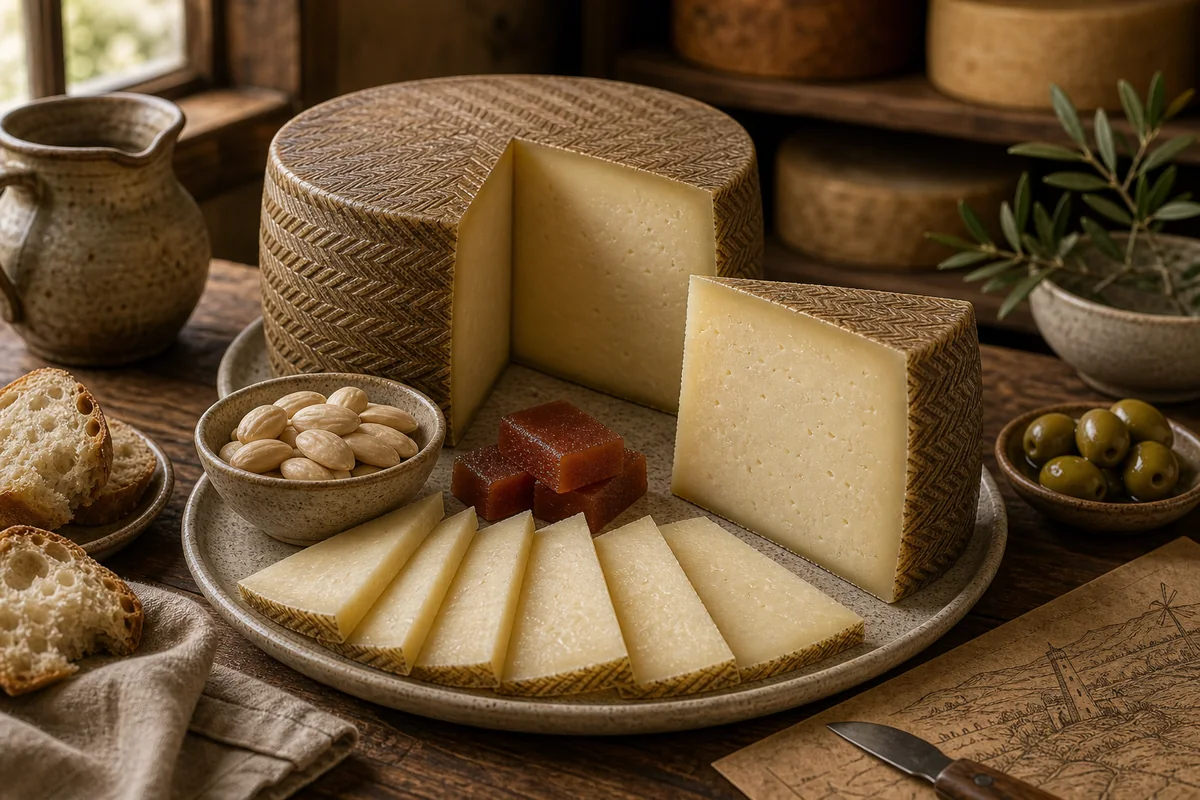
For flavor on a cheese board, a young Manchego at 3 months or a firm Gouda at 12 months comes closest to the sharp-tangy profile of aged Cheddar.
None of these substitutes replicate the calcium lactate crystals or the specific acidity that extended cheddaring creates in a well-aged wheel. They are practical alternatives, not equivalents.
Cheddar swap ratios vary by use case: melting, baking, raw eating, and cheese boards.
How Much Protein and Calcium Does Cheddar Carry?
Aged Cheddar is calorie-dense and high in saturated fat compared with fresh or young cheeses. It is also one of the stronger cheese sources of protein and calcium available at everyday prices.
Because the flavor is intense, you naturally use less of it in cooking, which keeps actual calorie intake lower than the per-ounce number suggests.
Aged Cheddar contains very low levels of lactose because the cheesemaking process and extended aging give bacteria ample time to consume nearly all of it. People with mild lactose intolerance often tolerate extra sharp Cheddar without symptoms, though this varies by individual and by the specific cheese.
For lactose, the practical rule is broader than one database entry. NIDDK tells lactose-intolerant readers that hard cheeses such as Cheddar and Swiss are usually lower in lactose than many other milk products, but personal tolerance still varies.
For people watching sodium, note that Cheddar is salted by hand after cheddaring, and the amount varies by producer and by age grade. Aged varieties tend to taste saltier because the moisture loss concentrates all soluble compounds including salt.
Check the nutrition panel if sodium is a concern, since levels vary between mild and vintage grades of the same brand.
How Do We Source Cheddar Claims?
For Cheddar identity and protected-origin claims, we use UK government PDO records and the West Country Farmhouse Cheddar product specification before producer marketing. Those sources define the protected name, the eligible counties, the minimum maturation rule, and the traditional cheddaring process.
For nutrition and lactose guidance, we separate general cheese nutrition from digestion advice. USDA FoodData Central supports the nutrition snapshot, while NIDDK supports the practical point that hard cheeses such as Cheddar are usually lower in lactose than many other dairy foods.
- Use PDO sources first for protected-name, region, milk, and process claims.
- Use nutrition databases for serving-size numbers, not for broad health promises.
- Use medical sources when the claim involves lactose tolerance or symptoms.
SOURCES & REFERENCES
The five questions below cover what we hear most often from readers buying or cooking with Cheddar for the first time.
Which Cheddar Questions Come Up Most?
The orange color in commercial Cheddar comes from annatto, a natural dye made from the seeds of the achiote tree. Cheesemakers added it historically to create a consistent color year-round, because summer milk from grass-fed cows is naturally more yellow than winter milk.
White Cheddar contains no annatto, and the flavor of white and orange Cheddar is identical at the same age grade.
Age is the main variable. Sharp Cheddar is typically aged 6 to 12 months, while extra sharp or vintage Cheddar is aged over 12 months.
Because age-grade labeling is not regulated in the US, the most reliable guide is the production date printed on the label or a direct taste comparison before buying a large piece.
Yes. Extra sharp and aged Cheddar freeze well for up to 6 months when wrapped tightly in wax paper and sealed in a freezer bag.
The texture becomes more crumbly after thawing, so frozen Cheddar is better for cooking than for eating raw on a board.
Yes. The white flecks and powdery bloom on aged Cheddar are usually calcium lactate crystals on the surface and tyrosine crystals within the paste.
They are safe to eat and point to aging activity, not mold.
West Country Farmhouse Cheddar PDO is made only in Somerset, Devon, Cornwall, or Dorset, using milk from cows on the same farm where the cheese is produced. It must be cloth-bound and aged on site, so the geographic limits, small-batch work, and labor-intensive cloth binding all raise the cost.