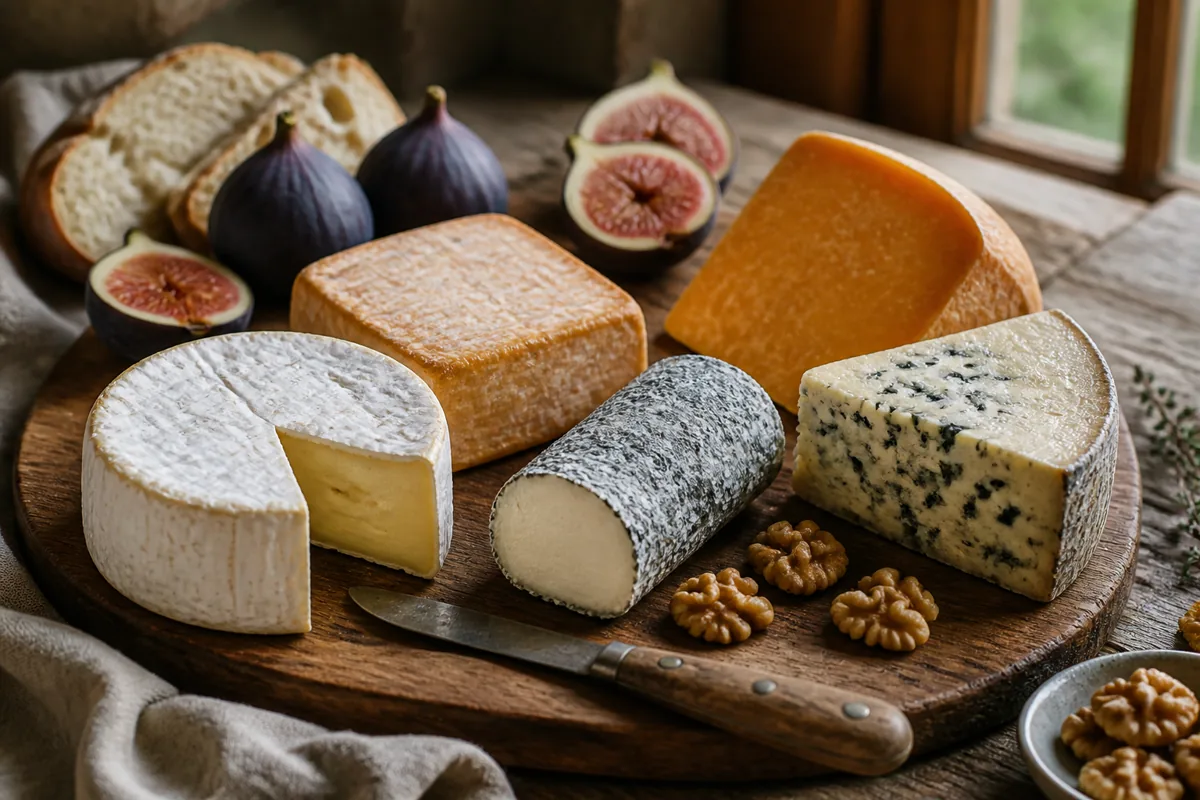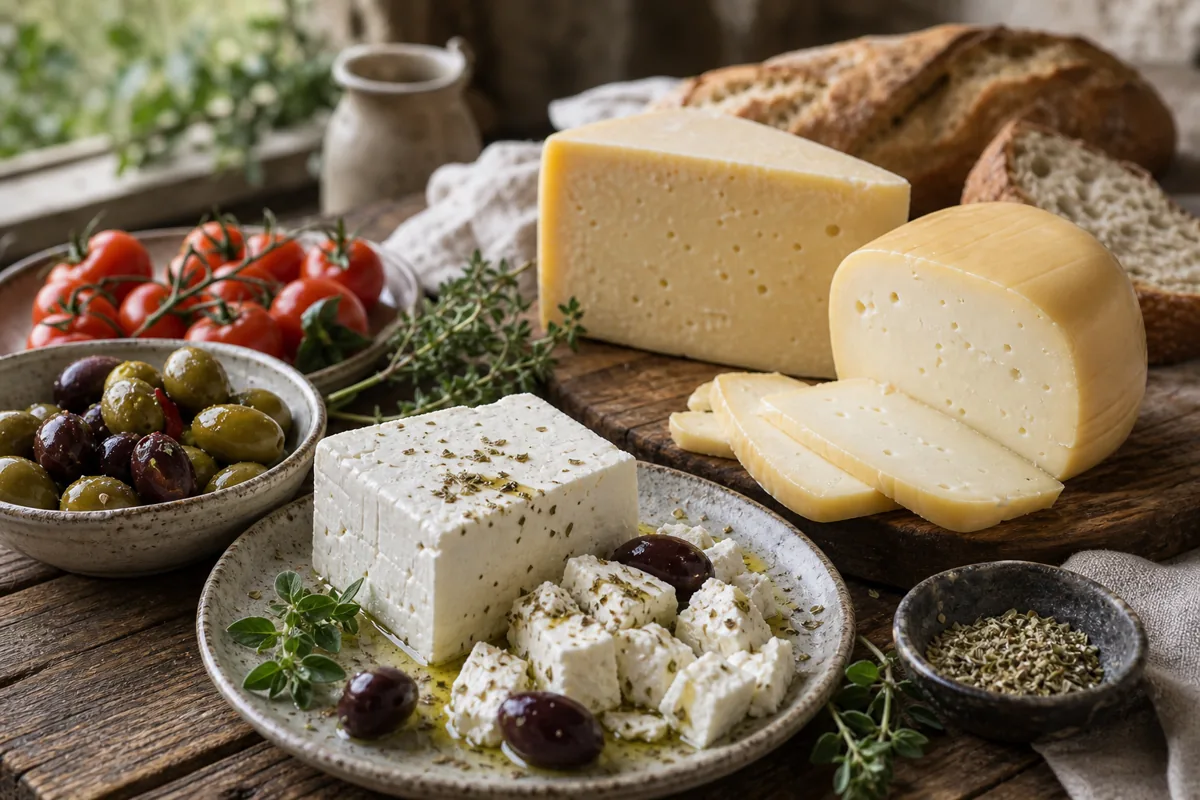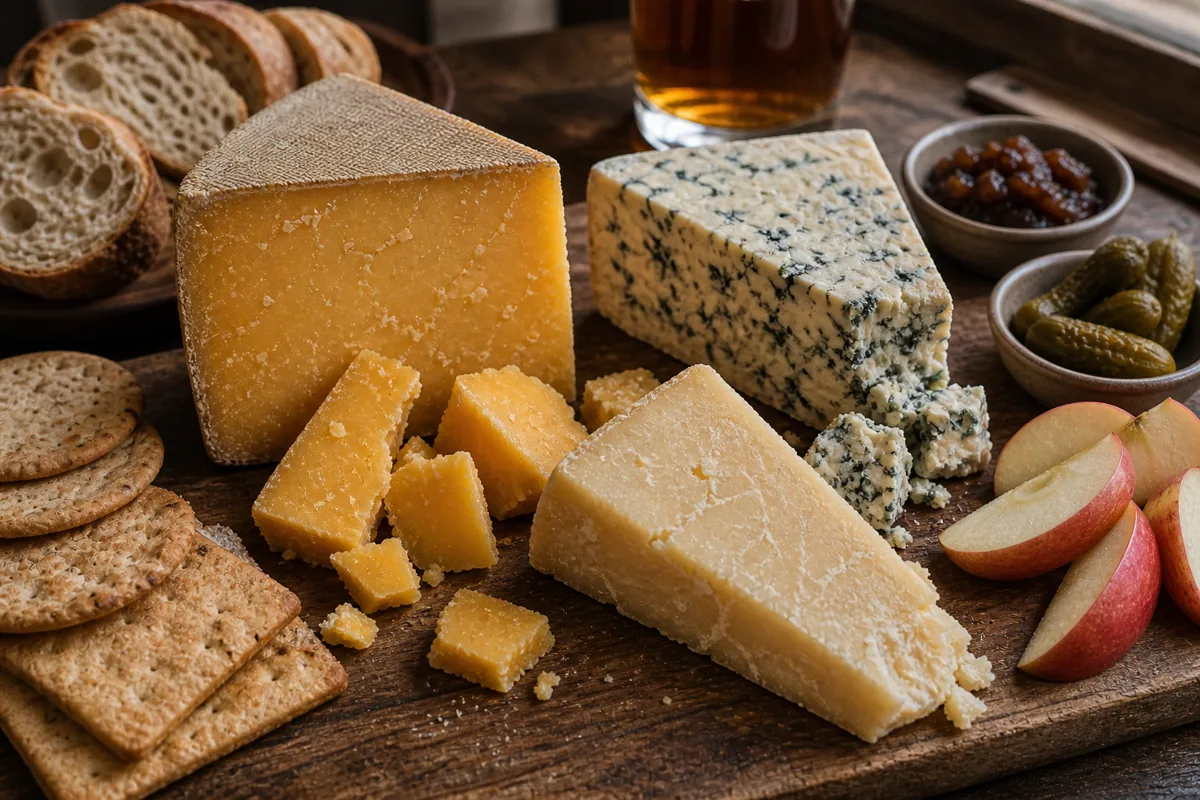
This part of the regional shelf covers Cheddar, the crumbly Caerphilly, Cheshire, Wensleydale and Lancashire, Red Leicester and Double Gloucester, and blue Stilton.
In This Article
What Does a Protected Name Tell You About a British Cheese?
It tells you where the cheese was made, because each protected food name in the table below fixes one area of Wales or England. The milk rule differs: Traditional Welsh Caerphilly and Yorkshire Wensleydale may be made from raw or pasteurised milk, while Blue Stilton must be made from pasteurised milk.
| Cheese | Protected name | Where it must be made | Milk and age under the name |
|---|---|---|---|
| Caerphilly | Traditional Welsh Caerphilly or Traditional Welsh Caerffili (PGI) | Wales, from milk produced on Welsh farms | Raw or pasteurised milk; 10 days to 6 months old |
| Wensleydale | Yorkshire Wensleydale (PGI, awarded 2013) | The defined Wensleydale area of North Yorkshire, centred on Hawes | Raw or pasteurised milk; sold from two weeks to 12 months |
| Lancashire | Beacon Fell Traditional Lancashire Cheese (PDO) | The ceremonial county of Lancashire, with milk from the same county | Sold from 1 month; fully mature at about 6 months |
| Cheddar | West Country Farmhouse Cheddar (PDO) | Somerset, Devon, Cornwall or Dorset | Matured for at least 9 months |
| Stilton | Blue Stilton (PDO) | Derbyshire, Leicestershire or Nottinghamshire | Pasteurised cow's milk from local herds |
Much Caerphilly comes from England, including Gorwydd from Somerset, which is sold as Caerphilly under its own name and not as Traditional Welsh Caerphilly.
Plain Wensleydale is made across the United Kingdom, and Crumbly Lancashire is made outside the county. On all three, the words Traditional Welsh, Yorkshire or Beacon Fell are the part of the label that places the make.
How Do Caerphilly, Cheshire, Wensleydale and Lancashire Differ?
Caerphilly is the Welsh one: its PGI specification calls Traditional Welsh Caerphilly the only native cheese of Wales. Cheshire is the oldest named British cheese in the Academy of Cheese's heritage project, Wensleydale does not melt like other cheese by its creamery's account, and Lancashire comes in three styles named Creamy, Tasty and Crumbly.
| Cheese | How it is described | Uses given for it |
|---|---|---|
| Caerphilly | Smooth, close and flaky, with a mild, slightly lemony taste (PGI specification) | Cooking Glamorgan sausages (judges quoted in the PGI specification) |
| Cheshire | Moist and crumbly, with zesty and mineral notes, for cloth-bound wheels (Academy of Cheese); light and crumbly with hints of fresh citrus for Belton Farm's | Crumbled into sandwiches and salads, or a slice with apple pie (Belton Farm) |
| Wensleydale | Open and crumbly, mild, clean and slightly sweet, with a honeyed end (Yorkshire Wensleydale specification) | Crumbled over warm salads and tarts rather than melted (Wensleydale Creamery) |
| Lancashire | Loose and open with a buttery feel; clean and mellow young, quite sharp and tangy mature (Beacon Fell specification) | Cheese on toast with Creamy Lancashire, which does not turn stringy when melted (Wikipedia) and keeps a smooth, even consistency (British Cheese Board) |
Lancashire's styles differ in the make: Creamy and Tasty blend curd from different days, while Crumbly is made from a single day's milk.
The Academy of Cheese points Wensleydale buyers to Cheshire, Caerphilly and Lancashire among other cheeses, but it says Wensleydale's citrusy sharpness and freshness set it apart from those three.
On Caerphilly, Lancashire and Cheshire, factory versions are described as drier than farmhouse ones, but not always as more crumbly. The Welsh Cheese Company calls industrial Caerphilly young, bland, dry and crumbly beside a moister handmade cheese, and The Courtyard Dairy calls modern Crumbly Lancashire a drier, more crumbly, tart cheese.
For Cheshire, Wikipedia says industrial versions tend to be drier and less crumbly, more like a mild cheddar. The Academy of Cheese adds that factory Cheshire tastes very similar to other mass-produced sharp, crumbly territorial cheeses such as Wensleydale.
For any of the three, ask whether your piece is farmhouse or factory before you judge its texture by the name.
How Do Cheddar, Red Leicester and Double Gloucester Differ?
The Dairy UK code of practice for named British cheeses sets them apart by water, texture and colour. Cheddar may hold up to 39% water, Red Leicester up to 42% and Double Gloucester up to 44%, and in the UK a cheese may carry one of these names only when its water and fat stay inside the code's limits and its character matches the description.
| Question | Cheddar | Leicester | Double Gloucester |
|---|---|---|---|
| Maximum moisture | 39% | 42% | 44% |
| Minimum fat in dry matter | 48% | 48% | 48% |
| Colour | White to yellow | White or bright orange-red to deep orange-red | Pale straw to pale tangerine and orange |
| Texture | Generally waxy, breaks down smoothly | Generally loose and rather flaky | Close and firm, some recipes flakier |
| Flavour | Clean, creamy and mellow when young, more pronounced with age | Clean, creamy, mellow, delicately sweet, slightly nutty | Full, clean and mellow with a nutty character and slight tang |
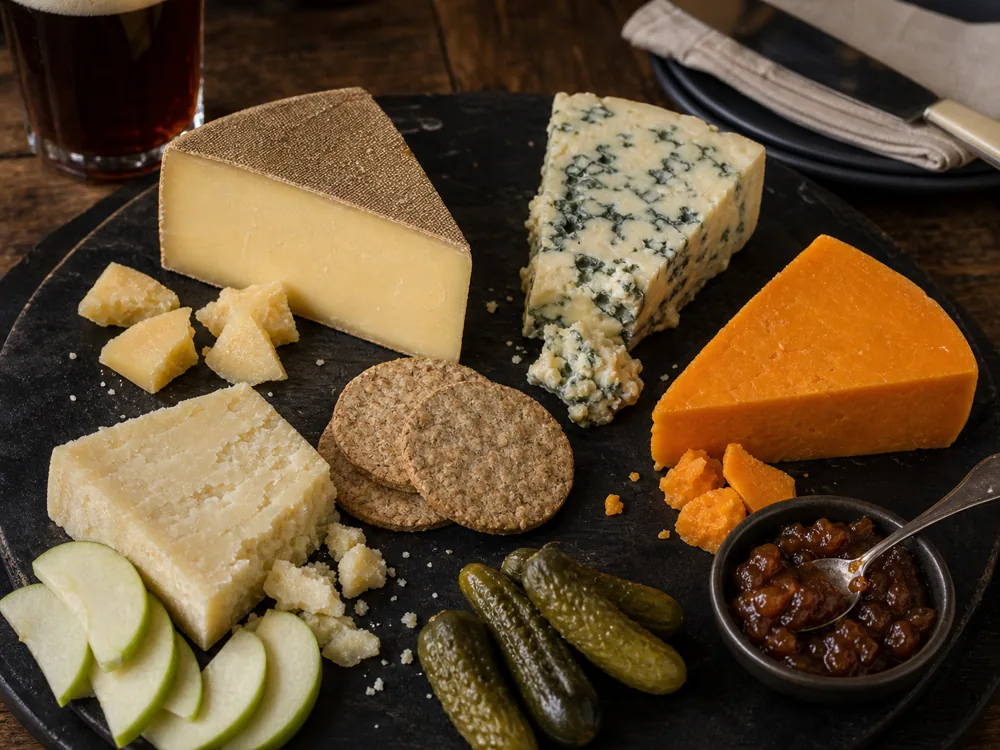
Red Leicester began on Leicestershire farms as a use for milk left over from Stilton making, and its orange colour has come from annatto since the 18th century.
The name no longer places the cheese. The Dairy UK code treats Leicester as a customary name with no place where it must be made, and Neal's Yard Dairy says more Red Leicester is now made outside Leicestershire than inside it.
Which British Cheeses Come in Blue Besides Stilton?
Besides Stilton, Cheshire and Wensleydale both have blue cheese versions. Wikipedia describes Blue Cheshire as having blue veins like Stilton while being less creamy, and says its production stopped in the late 1980s and has recently been revived.
Blue is the older style of Wensleydale and is rarely seen today. Wikipedia says the early cheese, made with a little ewes' milk in the mix, was almost always blue.
What Do British Makers and Shops Serve with These Cheeses?
For a British cheese board, ale is named for Lancashire, Cheshire, Wensleydale and Red Leicester, and sweet bakes come up for three of them: Eccles and Chorley cakes with Lancashire, Christmas cake with Wensleydale and apple pie with Cheshire.
| Cheese | Drinks and foods | Named by |
|---|---|---|
| Tasty Lancashire | Real ale, pickle and crusty bread, in a ploughman's lunch | British Cheese Board |
| Lancashire | Eccles cakes and Chorley cakes, the traditional partners | Wikipedia; Culture magazine |
| Cloth-bound Cheshire | Hoppy pale ale; Côtes du Rhône or Rioja | Academy of Cheese |
| Belton Farm Cheshire | Classic pale ale; Chardonnay, Riesling or Beaujolais; a slice with apple pie | Belton Farm |
| Yorkshire Wensleydale | Cider; Sauvignon Blanc or Pinot Noir; crackers, bread, apples and grapes | Wensleydale Creamery |
| Yorkshire Wensleydale | Light ale, golden ale or mild bitter; apple chutney and water biscuits | Cheese Etc. |
| Wensleydale | Hoppy IPA; rich, moist Christmas cake | Academy of Cheese |
| Red Leicester | Amber ale; full-bodied white wine or Muscadet | Cheese.com |
| Sparkenhoe Red Leicester | Brown ale | Culture magazine |
| Gorwydd Caerphilly | Pickles and a pint | The Cheese Society |
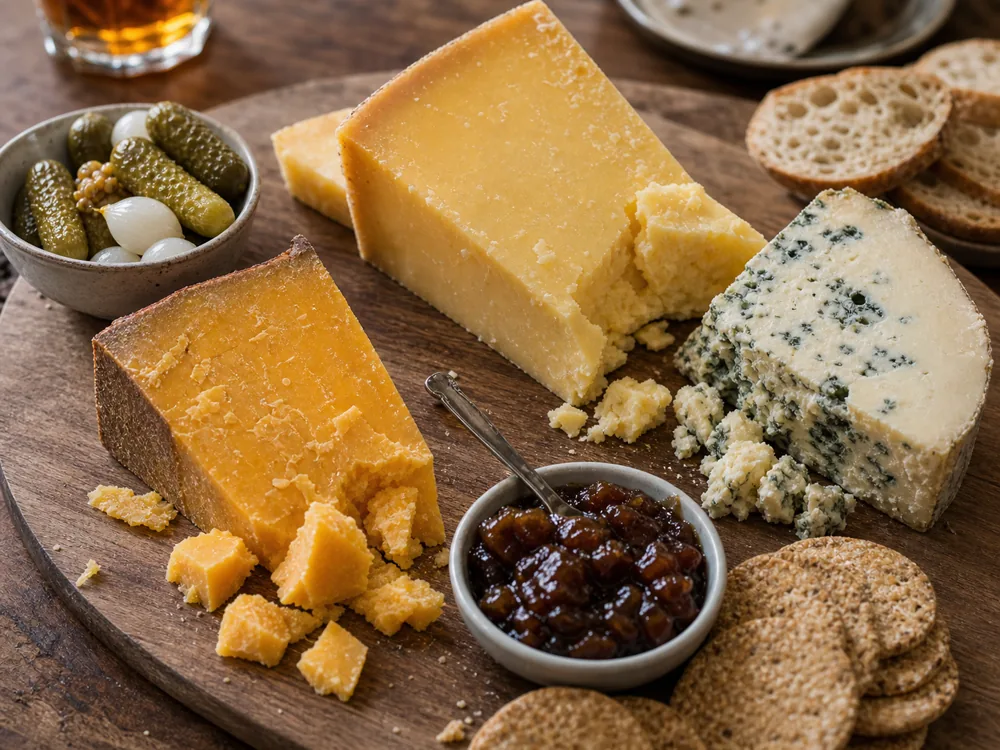
For a rich fruit cake, Andy Swinscoe of The Courtyard Dairy picks a crumbly cheese about 2 to 3 months old, and he names Cheshire, Lancashire and Caerphilly alongside Wensleydale.
How Do British Makers and Shops Say to Keep These Cheeses?
Belton Farm, Cheese Etc. and The Cheese Society all say to keep the cheese in the fridge. The time limits start from different points: 10 to 14 days from opening for Cheese Etc., two weeks from delivery for The Courtyard Dairy, and a normal guarantee of 4 weeks for a Wensleydale Creamery pack.
| Cheese and holder | What the holder says |
|---|---|
| Yorkshire Wensleydale, Wensleydale Creamery | Normally guaranteed for 4 weeks (28 days), with each pack carrying its own storage instructions and best-before date; portions wrapped in tin foil can be frozen for up to three months and defrosted in the fridge |
| Yorkshire Wensleydale, Cheese Etc. | Once opened, eat within 10 to 14 days and keep it refrigerated in waxed paper or cling film; take it out of the fridge a good hour before eating |
| Cheshire, Belton Farm | Keep refrigerated; take it out 20 to 30 minutes before serving |
| Gorwydd Caerphilly, The Cheese Society | Keep it in the fridge in the breathable waxed paper it comes in, avoiding plastic wrap |
| Kirkham's Lancashire, The Courtyard Dairy | Two weeks of shelf life from the delivery date |
| Vintage Sparkenhoe Red Leicester, The Courtyard Dairy | Two weeks of shelf life from the delivery date |
The shops differ on pre-cut wedge wrapping. The Cheese Society says to avoid plastic wrap because cheese needs to breathe, while Cheese Etc. allows cling film for opened Wensleydale.
Which British Cheeses Have Their Own Profile Here?
The list below links British cheeses that have their own profile here. Type a name, or pick a country, milk or style, to narrow it.
60 cheese profiles
- Acorn
- Admiral Collingwood
- Anster
- Applewood
- Auld Lochnagar
- Auld Reekie
- Barkham Blue
- Baron Bigod
- Bath Blue
- Bath Soft
- Beauvale
- Berkswell
- Bix
- Black Bomber Cheddar
- Blacksticks Blue
- Bluebell
- Bosworth Ash Log
- Buxton Blue
- Caboc
- Caerphilly
- Cheddar
- Cheshire
- Coastal Cheddar
- College White With Truffles
- Colston Bassett Stilton
- Cornish Blue
- Cornish Yarg
- Cotherstone
- Cotswold
- Crowdie
- Crumbly Lancashire
- Derby
- Devon Blue
- Doddington
- Double Gloucester
- Driftwood
- Dunlop
- Finn
- Five Counties
- Golden Cross
- Graceburn
- Green Thunder
- Hafod
- Huntsman
- Isle of Mull
- Keen's Cheddar
- Keltic Gold
- Kidderton Ash
- Kirkham's Lancashire
- Lancashire
- Lincolnshire Poacher
- Marble Cheddar
- Minger
- Oxford Blue
- Oxford Isis
- Perl Wen
- Red Leicester
- Sparkenhoe Red Leicester
- Stilton
- Wensleydale
The British Cheese Directory lists Acorn under Little Acorn in Bethania and classes it as a hard cheese made from unpasteurised sheep milk.
SOURCES & REFERENCES
What Else Do People Ask About British Cheese?
Both have a protected form: West Country Farmhouse Cheddar and Blue Stilton are PDO names, as is Beacon Fell Traditional Lancashire Cheese. Traditional Welsh Caerphilly and Yorkshire Wensleydale are PGI names, and each of the five ties the cheese to one area of Wales or England.
The Academy of Cheese says factory Cheshire tastes very similar to other mass-produced sharp, crumbly territorial cheeses such as Wensleydale. Caerphilly and Lancashire are among the other British cheeses it points Wensleydale buyers to.
No. Much Caerphilly is made in England and plain Wensleydale is made across the UK, while Traditional Welsh Caerphilly must be made in Wales and Yorkshire Wensleydale in the defined Wensleydale area.
The British Cheese Board puts Tasty Lancashire in a ploughman's lunch with pickle, crusty bread and real ale. Eccles and Chorley cakes are the traditional partners for Lancashire, and the Academy of Cheese pairs Wensleydale with rich Christmas cake.
Belton Farm, Cheese Etc. and The Cheese Society say to keep it in the fridge, and The Cheese Society adds that cut Gorwydd should stay in its waxed paper, away from plastic wrap. Cheese Etc. says to eat opened Wensleydale within 10 to 14 days, and The Courtyard Dairy gives Kirkham's Lancashire two weeks of shelf life from the delivery date.