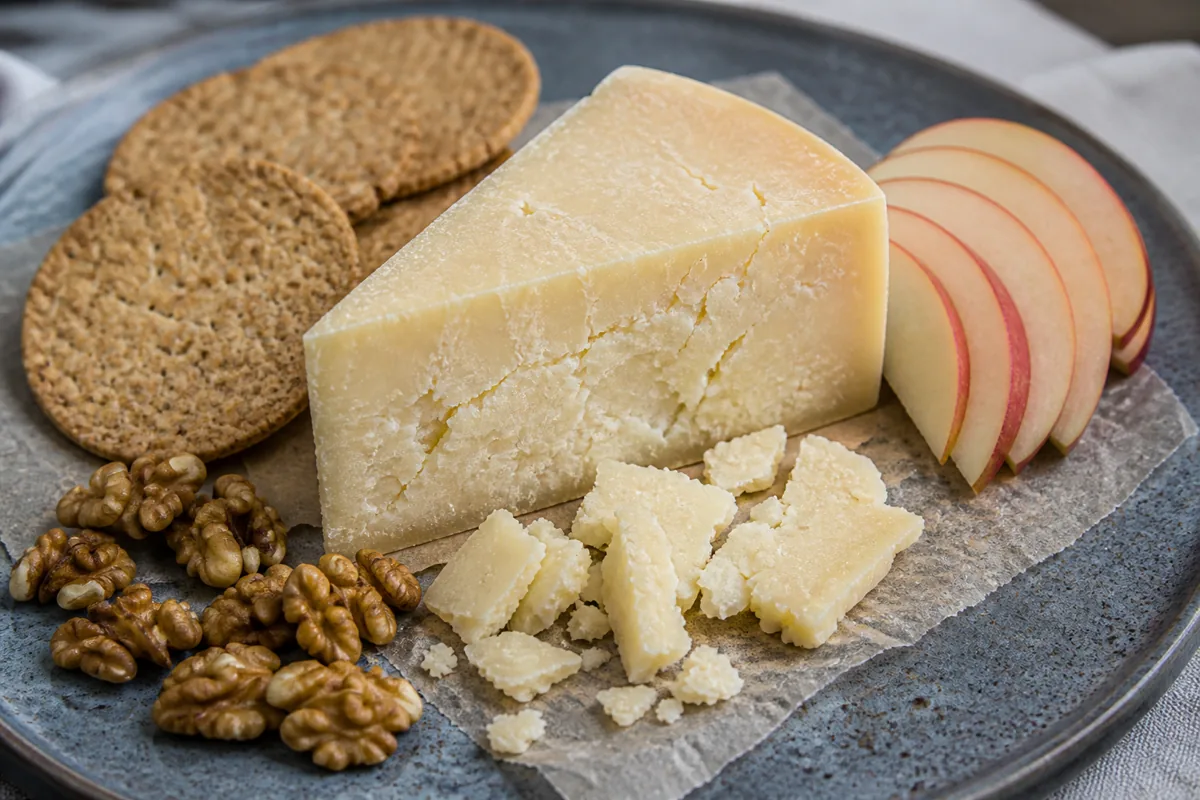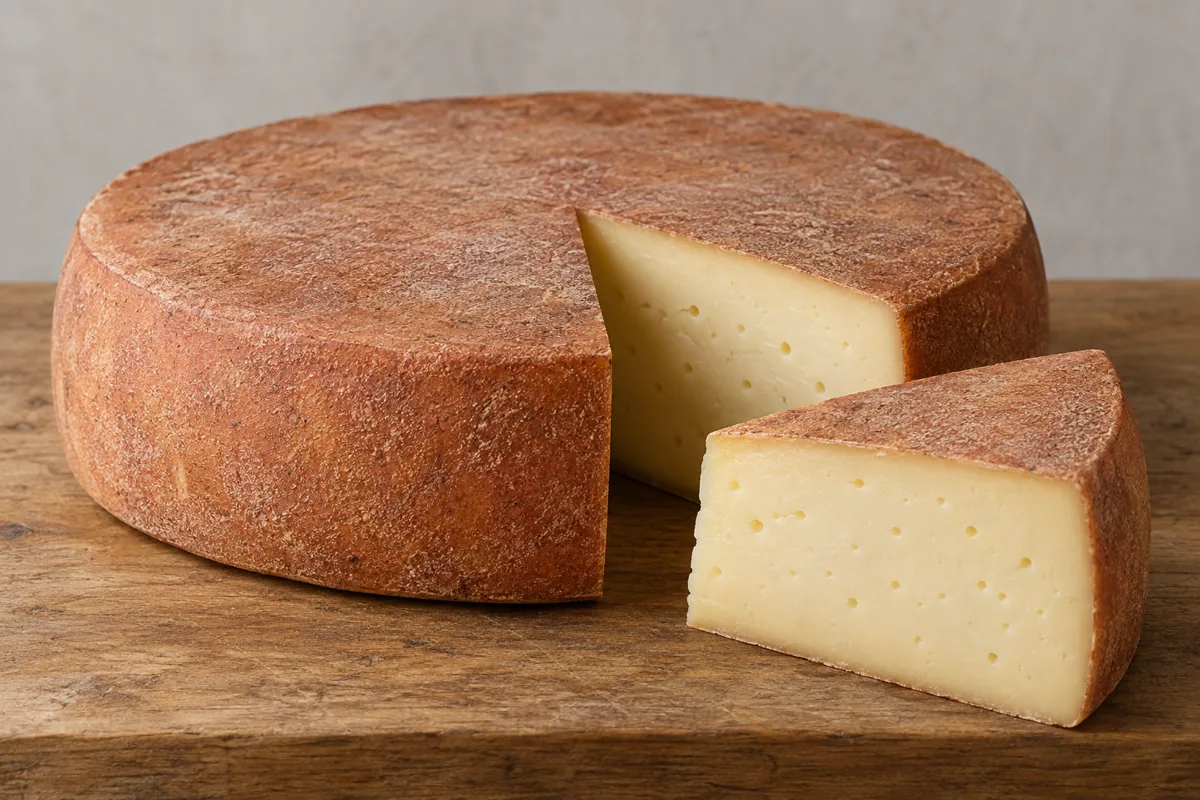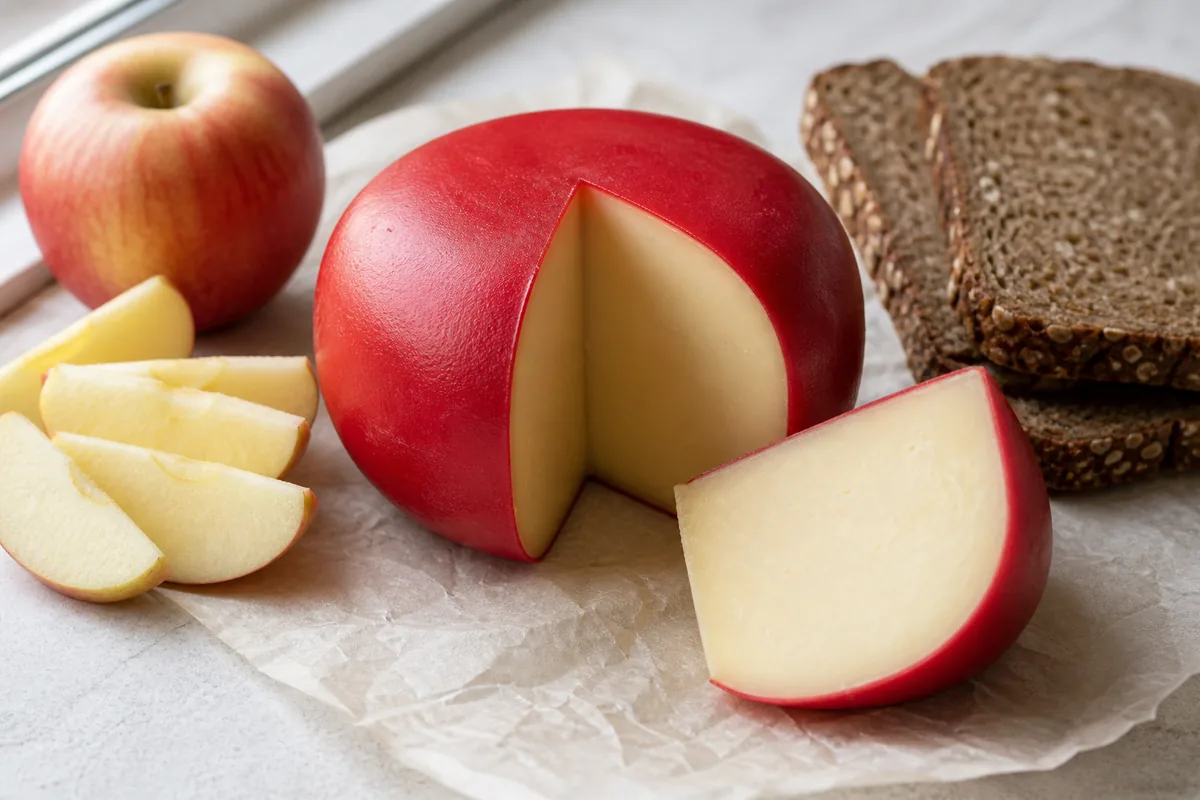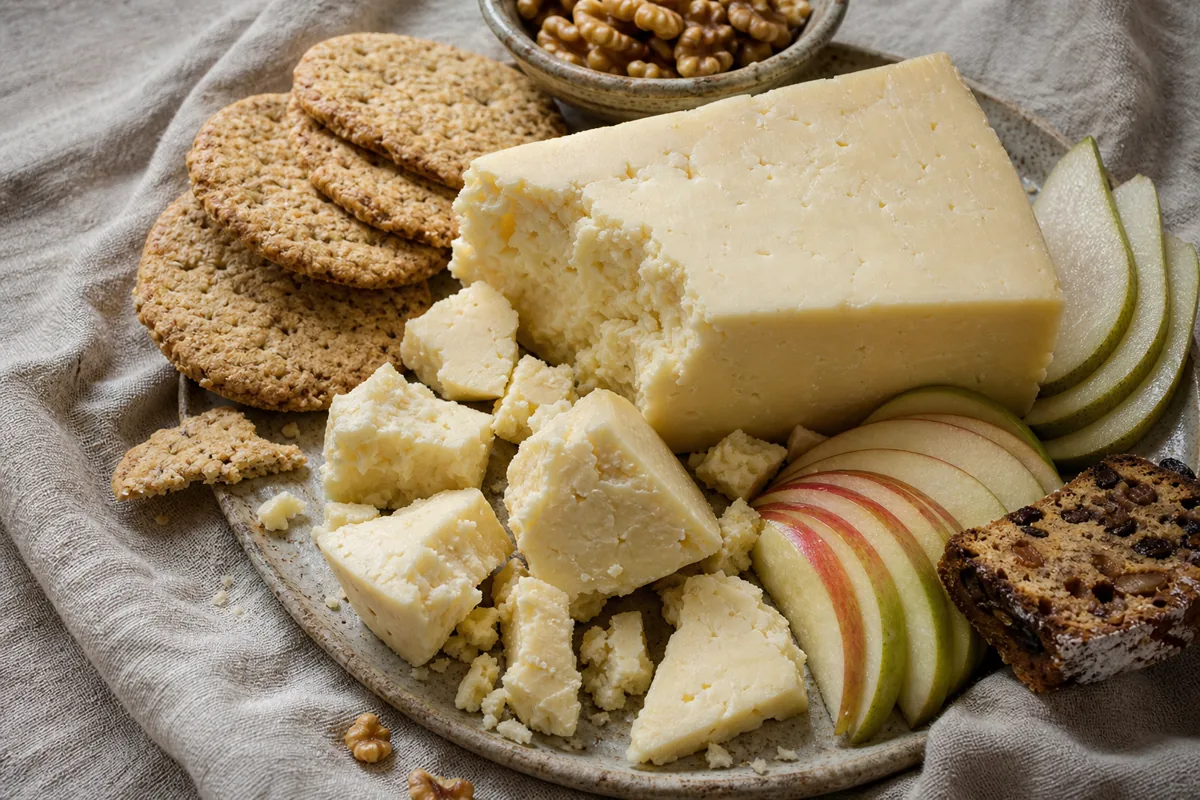
Wensleydale is a pressed, crumbly cheese made from cow's milk in the Yorkshire Dales. Only cheese made in the defined Wensleydale area of North Yorkshire, centred on Hawes and running from Sedbergh in the west to the A1 in the east, may use the name Yorkshire Wensleydale, which gained Protected Geographical Indication status in 2013.
Its product specification describes a creamy-white cheese with an open, crumbly texture and a mild, clean, slightly sweet flavour that ends on a honeyed note.
Plain Wensleydale is also made outside that area, and Wikipedia says most of it now comes from large commercial creameries across the United Kingdom.
In This Article
Moist Crumble Is the Quality Signal
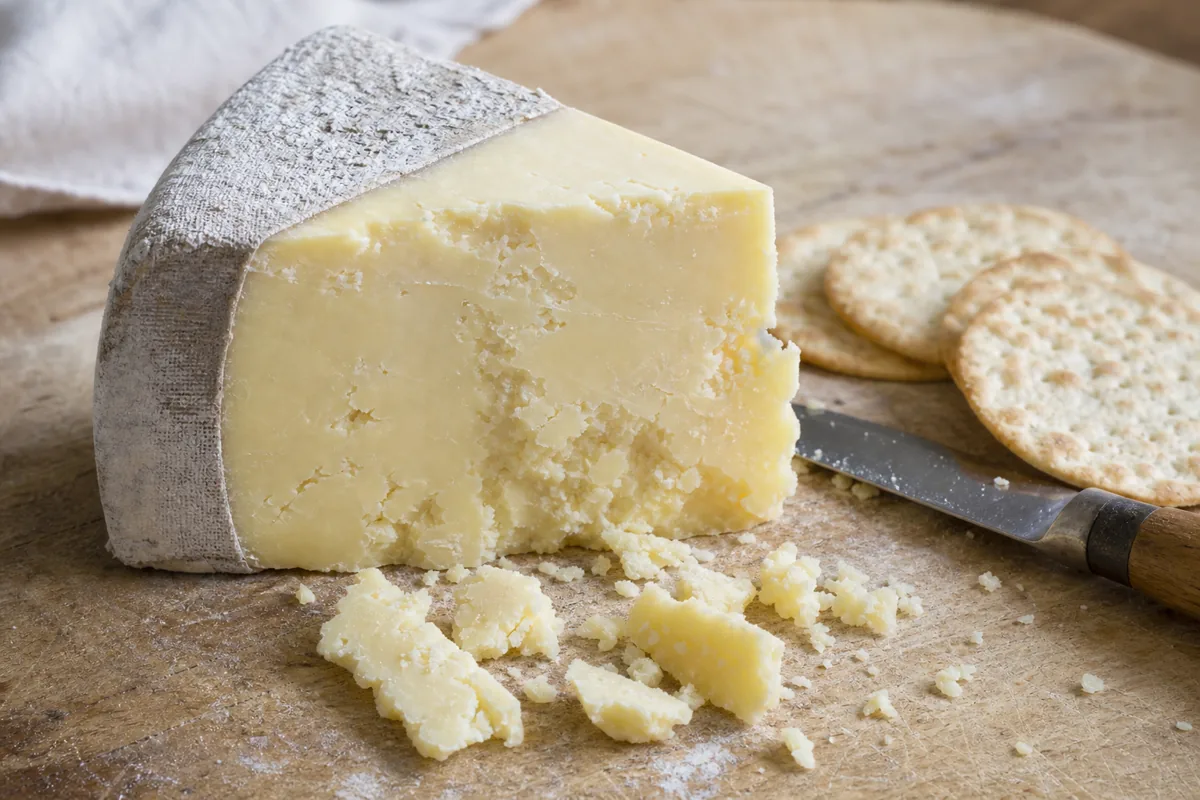
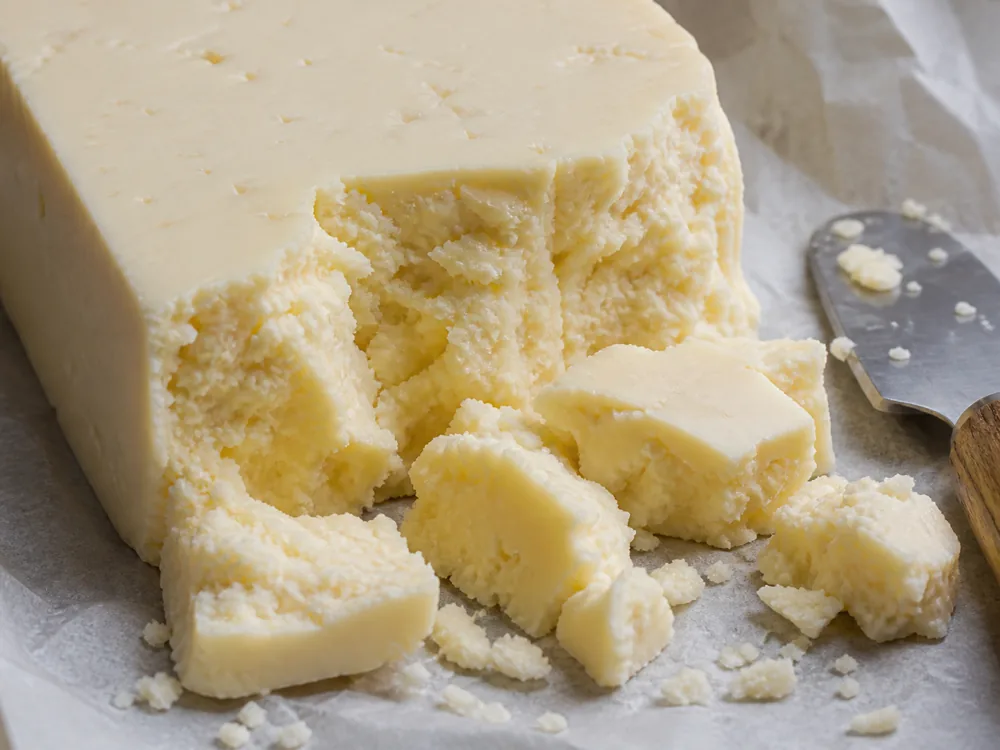
The specification sets the target texture as firm but slightly crumbly and flaky, milky white and slightly open, and crumblier and less dense than similar cheeses.
It credits that texture to the creamery's own bulk starter cultures, the handwork in the make and the local milk.
The same document says a Wensleydale made with a direct-vat starter instead may be denser and more solid, feel drier, and taste flat and uncomplex beside the milky flavour of the traditional make. It still lets the creamery use direct-vat cultures when its bulk starter fails, or add some strains alongside it.
The Academy of Cheese describes the good version from the eating side: a firm body that breaks into moist, flaky pieces.
The specification also sets measurable limits for the protected cheese, and the Wensleydale Creamery's label shows where its own Yorkshire Wensleydale lands.
| Measure | PGI specification | Creamery label, per 100 g |
|---|---|---|
| Fat | At least 48% of the dry matter | 31.8 g, of which saturates 21.1 g |
| Salt | Sodium chloride at most 2.2% | 1.3 g |
| Dry matter | At least 54% | Not stated |
| pH | 4.4 to 5.4 | Not stated |
| Protein | Not set | 23.7 g |
| Energy | Not set | 381 kcal |
The label's 1.3 g of salt sits well inside the 2.2% ceiling, and its carbohydrate and sugar are each 0.1 g.
Read together, the two columns also bracket how much water the cheese holds. A minimum of 54% dry matter leaves at most 46% water.
Because the specification wants fat to be at least 48% of the dry matter, the label's 31.8 g of fat caps the dry matter near 66 g per 100 g, so by our arithmetic the creamery's cheese is roughly 34% to 46% water.
How Is a Vat of Wensleydale Made and Graded?
Fresh milk reaches the creamery within a few hours of milking, and the specification says every delivery is tested before it is accepted. The vat is then filled, bulk starter is stirred through a ripening period, and rennet is added so the milk sets.
The specification gives the starter the most attention. It calls the bulk starter, a mix of acid-producing and flavour-producing bacteria, one of the two main contributors to flavour and texture, with the milk as the other.
The cultures keep working while the cheese matures, the specification adds, so they go on shaping flavour, texture and appearance long after the vat is emptied.
The specification says the creamery runs 18 mother cultures in three groups of six on a three-day cycle, and each day it picks three by age and vitality, usually one young, one middle-aged and one older, and blends them just before cheesemaking.
Running them as separate cultures lets each build its own strengths and immunity to phage, the viruses that attack starter bacteria, in what the specification calls a unique and complex system.
After the milk sets, the curd is cut, scalded with heat from the sides of the vat and stirred until it settles and the whey can drain. The curd is then blocked, turned, cut again and stirred, which the specification calls a very important stage that depends on the cheesemaker's skill to get the texture right.
Salt is added by hand, which the specification calls a skilled job that needs even distribution, and the salted curd is milled finer before the moulds are filled and pressed for 12 to 48 hours.
Because the cultures are alive, one day's make may differ from the next, and a make can run fast or slow. The cheesemaker answers by adjusting ripening times, turning, scald temperature, how quickly the whey is released and how large the curd pieces are cut.
Every vat is then graded by sight, smell, touch and taste, and the specification says an experienced grader, usually a former cheesemaker, can tell what grade a cheese will be as soon as the cheese iron goes in.
Extra grading by flavour and age profile happens before cheese is picked for customers, and the specification says cheese that misses the required standard will not be sold under the protected name.
Young, Clothbound, Blue or With Fruit: Which Wensleydale Is It?
Age changes the cheese most. The specification lets Yorkshire Wensleydale be sold young at two weeks or aged for up to 12 months, and says the flavour grows fuller and deeper as it matures.
| Source | What it says |
|---|---|
| Yorkshire Wensleydale specification | Sold from two weeks, matured for up to 12 months, with some cheese picked for 6 to 12 months |
| Academy of Cheese | Can be sold after a week; most eaten young, at 1 to 2 months in one passage and 2 to 3 months in another; some aged 6 to 12 months |
| Wikipedia | 3 to 6 months |
The Academy of Cheese says younger cheeses taste bright and lively, while more mature ones develop nuttier undertones.
The specification describes the same arc in its own terms: a slightly acidic, mellow flavour with the honeyed aftertaste when young, and in a well-aged cheese a strong, flavoursome taste with strong aroma notes that last.
The other sources describe the young cheese in fresher words. The Academy of Cheese names a delicate, buttery flavour with a clean citrus sharpness, and Cheese Etc. lists a milky start, a gentle lactic tang, lemony brightness and delicate grassy notes under a little sweetness.
The specification puts the sweetness in the aftertaste, while the Academy of Cheese says the gentle acidity is what makes the cheese refreshing and easy to pair.
Cloth is the next visible difference. The specification says some cheeses are bound in muslin and dried on shelves before they mature, and that the outside of the cheese is more yellow than the creamy-white centre.
The specification calls that uneven colour the hallmark of a truly handmade cheese, particularly a cloth-bound one, and says mass-produced versions do not show it.
The muslin and the drying room shape flavour too, since the specification says the cheeses pick up additional flavours from the creamery itself there. The Academy of Cheese describes the cloth rind as soft and velvety, mottled brown and grey as it matures.
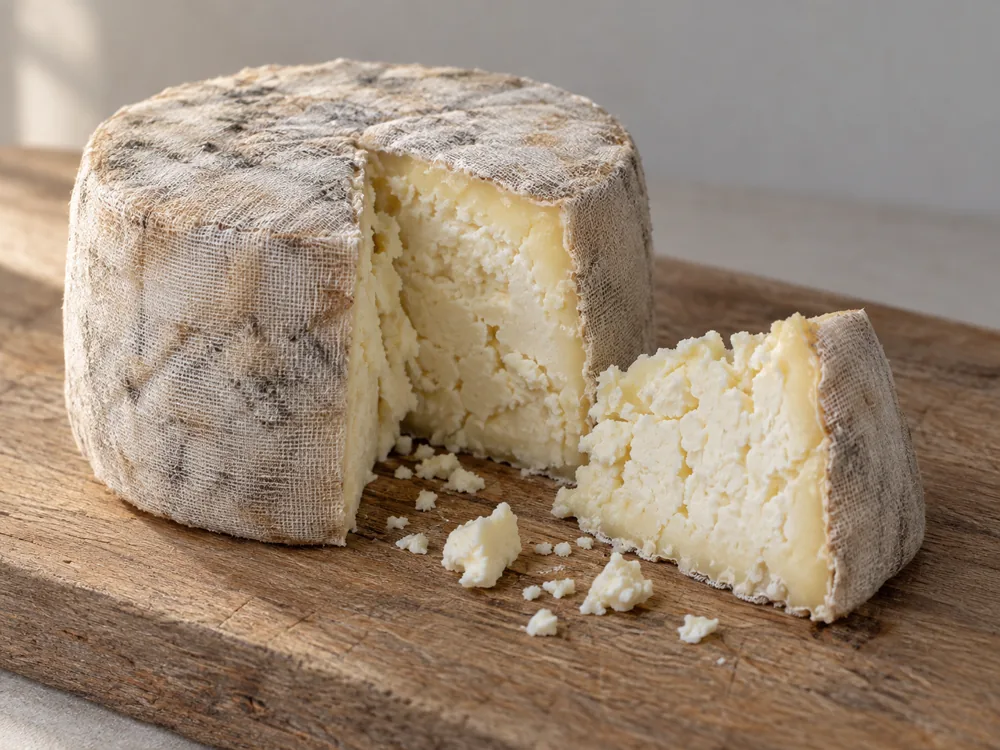
Other cheeses go straight from the press to the store, and the specification lets finished Yorkshire Wensleydale be cut and sold waxed, flow-wrapped or vacuum-packed.
Sizes differ by source. The specification lists traditional truckles starting at 500 g and 20 kg block moulds, the Academy of Cheese says a typical wheel is 5 kg, and Cheese Etc. sells a wheel of about 2.5 kg beside 100 g and 500 g wedges.
Farmhouse makers add a split in the milk. The Academy of Cheese lists raw-milk Wensleydales such as Yoredale from Curlew Dairy, which is clothbound and matured for up to four months, while it calls the Wensleydale Creamery the largest maker of pasteurised Wensleydale.
Blue is the older style, and Wikipedia says blue Wensleydale is rarely seen today.
The Academy of Cheese introduces Stonebeck and Fellstone as makers' own versions beside the protected cheese, so each carries its own milk and age.
Stonebeck is made seasonally from the unpasteurised milk of a very small herd of rare Northern Dairy Shorthorn cows at Low Riggs Farm in Upper Nidderdale. Fellstone is made from raw milk by Tom and Clare Noblet at Whin Yeats Farm and is often called Whin Yeats Wensleydale.
Fruit is the most common addition today. The Academy of Cheese names Wensleydale with cranberries and with apricots, and the creamery sells Yorkshire Wensleydale & Cranberries.
What Does the Yorkshire Wensleydale Name Actually Cover?
The specification credits the local milk as one source of the flavour, alongside the starter and the cheesemaker's skill, and explains it through the land.
It describes upland farmland with thin soil over limestone and a cold, wet northern climate, which it says gives a different mix of plants from neighbouring areas with similar geology but a kinder climate. Farming is mostly extensive, and the fields include wildflower-rich hay meadows, dale-bottom pastures and open heather moorland.
Much of the area is an Environmentally Sensitive Area where chemicals, artificial fertiliser and nitrogen are restricted, and the specification says the milk comes mainly from local farms inside the Yorkshire Dales National Park.
Proof of origin rests on records. Each farm's milk volume and temperature are logged, and each vat gets a batch code made from the day and month of production and the vat number, which lets the creamery trace a cheese back to the tanker load and its farms.
The name leaves several choices open that matter at the counter: the milk treatment, the age, whether the cheese has a cloth rind, the pack format and the rennet.
When the specification was written, only two sites still made Yorkshire Wensleydale, Hawes and Kirkby Malzeard, and the creamery was the only company producing it in the defined area, though any producer inside the area may make it to the specification.
How Did Wensleydale Move From Monks to Farms to a Creamery?
Wikipedia says French Cistercian monks from the Roquefort region settled in the dale and brought a recipe for sheep's milk cheese, and that cows' milk replaced it from the 14th century.
A little ewes' milk stayed in the mix, Wikipedia adds, because it gave a more open texture and let blue mould develop, and at that time the cheese was almost always blue.
After the monastery was dissolved in 1540, Wikipedia says, local farmers kept making the cheese, and the specification says they did it as a way of preserving surplus milk.
Wikipedia says farm cheesemaking carried on until the Second World War, when most UK milk went into government cheddar, and that after rationing ended in 1954 making never returned to pre-war levels.
The first creamery to make Wensleydale commercially opened in Hawes in 1897, when the corn and provisions merchant Edward Chapman began buying milk from local farms, according to the specification.
His dairy faced closure in the 1930s depression, the specification says, and was rescued by Kit Calvert, who persuaded the creditors to back him. He then built a business over about 30 years with sites at Hawes, Kirkby Malzeard, Masham and Coverham, and sold it to the Milk Marketing Board in 1966.
Did Wallace and Gromit Really Save Wensleydale?
They helped a creamery that its own managers had already bought out once. Wikipedia says Wensleydale production sank from the mid-1980s to the early 1990s, and the product specification records that the Hawes creamery closed in 1992 with its cheesemaking due to move to Lancashire.
A management buyout reopened it, and cheesemaking at Hawes resumed in November 1992.
Sales stayed weak, and Wikipedia says that during the 1990s making the cheese in Wensleydale itself was at risk. Then Wallace named Wensleydale as a favourite in the 1995 short A Close Shave.
Wikipedia says the company also contacted Aardman Animations about a licence for a special brand, Wallace & Gromit Wensleydale, which sold well.
Wikipedia credits the series with a boost in popularity and says sales of Wensleydale cheeses rose by 23% when The Curse of the Were-Rabbit came out in 2005.
The sources differ on why Nick Park picked the cheese. Wikipedia says he chose it only because the name would be interesting to animate the lip sync to, and not because of its northern origins. Cheese Etc. says he reportedly chose it partly because he liked how the word sounded when Wallace said it.
Wikipedia adds that Park did not know about the company's money troubles when he chose the name.
Why Wensleydale and Fruit Cake Became a Christmas Thing
The habit may go back to the farm calendar, according to The Courtyard Dairy cheese shop. Wensleydale was once made only in spring and summer and collected from the farms in autumn, so it reached full maturity at Christmas and counted as a special cheese for the season.
The earliest written reference the shop cites is Joseph Lucas's Studies in Nidderdale, published in 1871: "On Christmas Eve one Yule Cake is given to each member of the family, along with a piece of Christmas cheese."
The same post says Yorkshire food historian Peter Brears traced the pairing back at least to Victorian times.
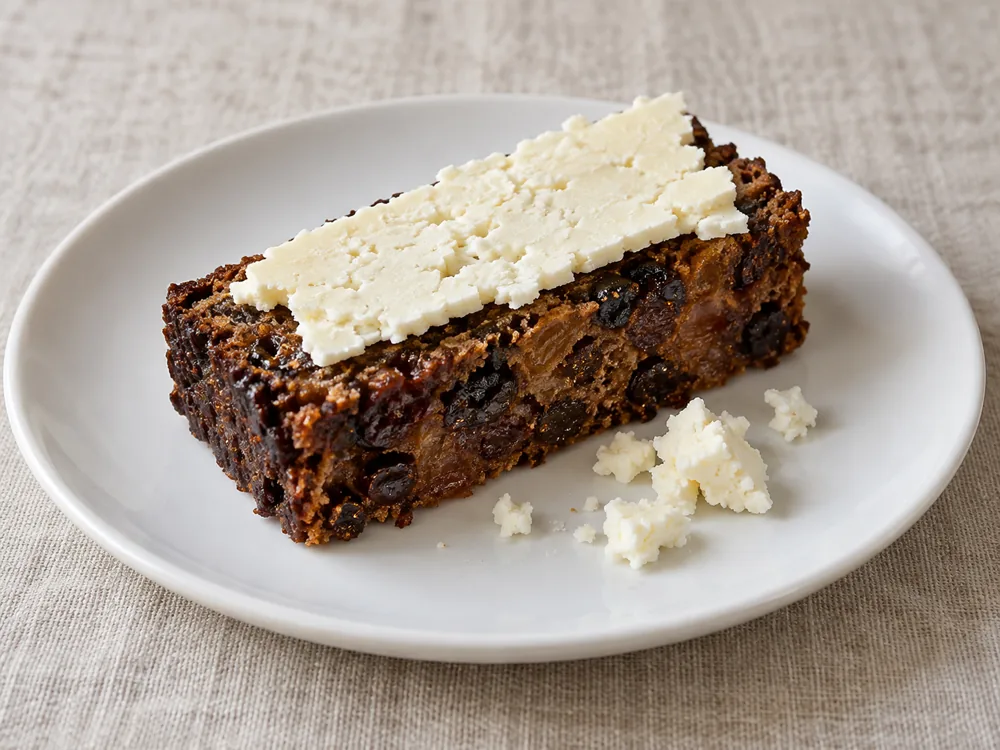
Wikipedia says the cheese is still often eaten with fruit cake or Christmas cake in Yorkshire and North East England. The Academy of Cheese calls a rich, moist slice of Christmas cake its classic partner.
Andy Swinscoe, who owns The Courtyard Dairy, picks a crumbly cheese about 2 to 3 months old for a rich fruit cake. He says the lactic bite of a cheese that age offsets the dense, fruity richness of the cake.
What the Maker and Cheese Shops Pair With Wensleydale
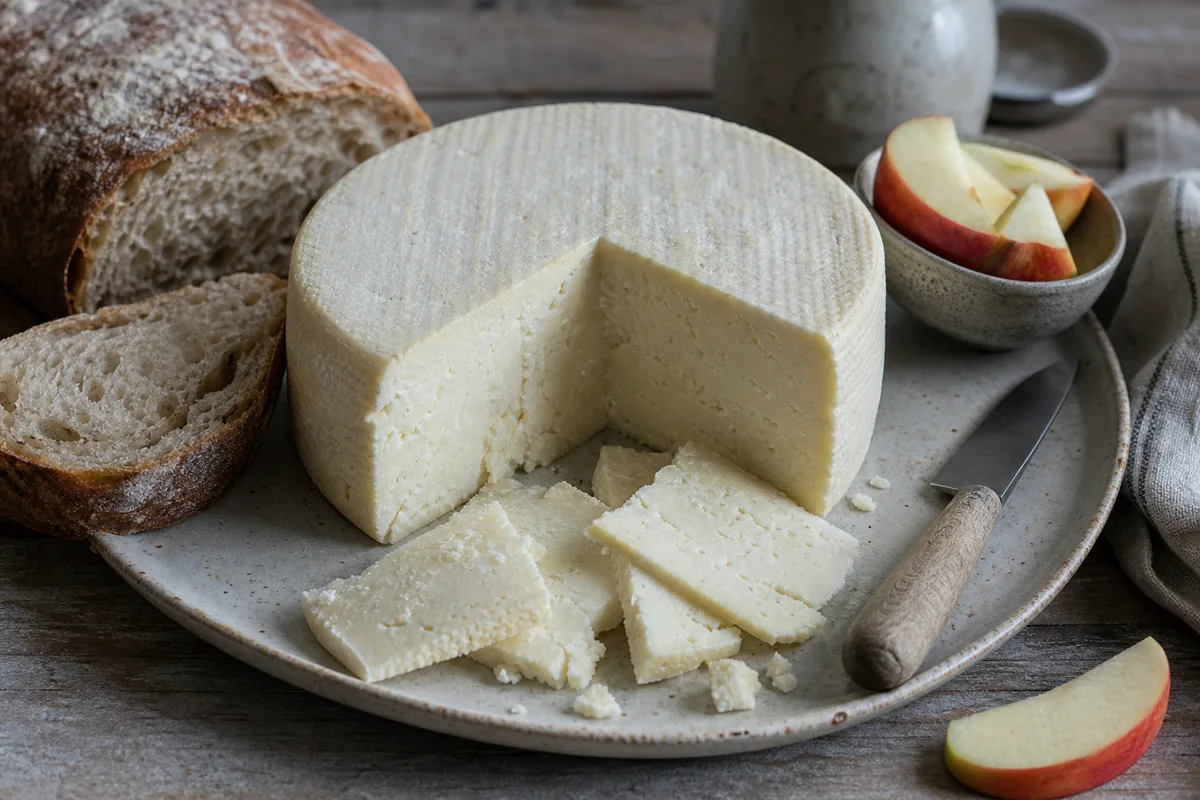
The creamery pairs Yorkshire Wensleydale with crackers, bread, apples and grapes. It suggests honey or a fruit preserve such as apricot jam to bring out the cheese's sweeter, floral notes.
The Academy of Cheese adds pears and dried fruits, and Wikipedia says the flavour suits sweeter produce such as sweet apples.
Drink suggestions run from wine to tea:
| Pairing | Type | Why It Works |
|---|---|---|
| Sauvignon Blanc | Wine | The creamery's crisp white. |
| Pinot Noir | Wine | The creamery's light red. |
| Beaujolais | Wine | The Academy of Cheese's light red. |
| Cider | Drink | The creamery's choice when you want no wine. |
| Light ale, golden ale or mild bitter | Drink | Cheese Etc.'s picks. |
| Breakfast tea | Drink | Also suggested by Cheese Etc. |
The beer advice splits. Cheese Etc. wants nothing too powerful so the Wensleydale still shows, while the Academy of Cheese suggests a hoppy IPA.
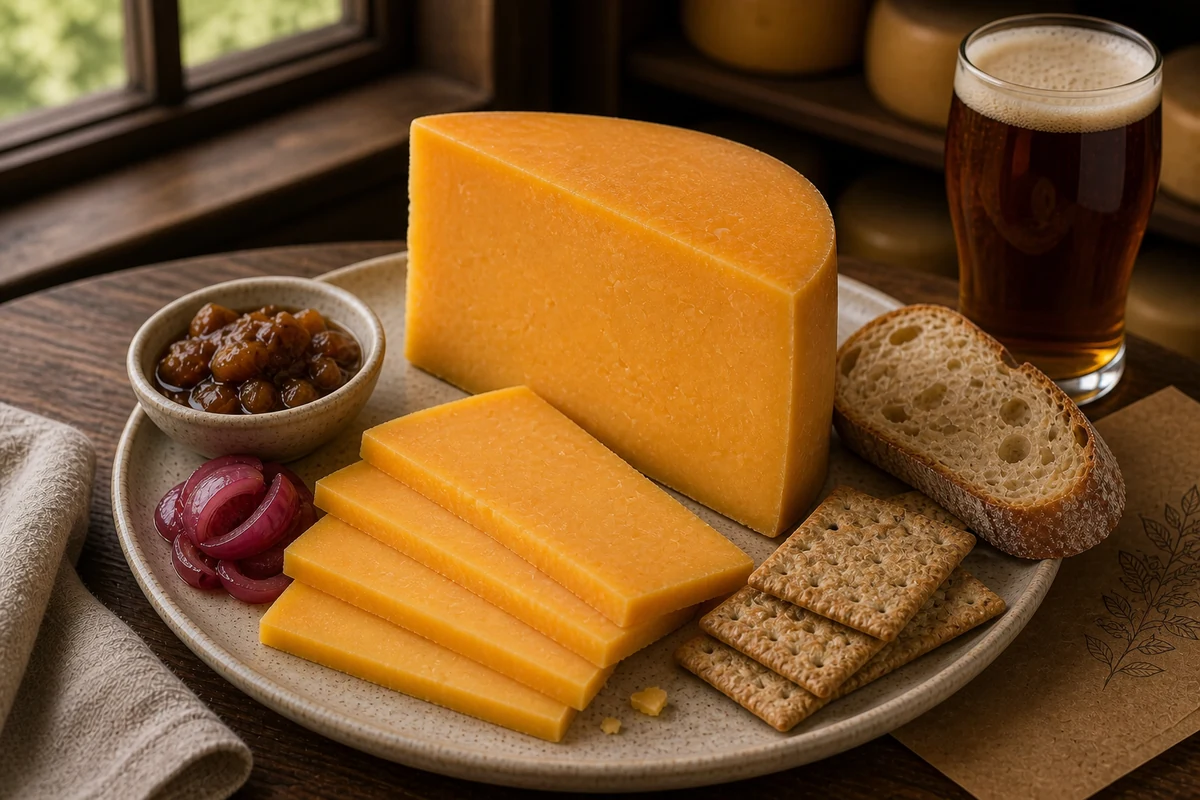
Cheese Etc. also says to take the cheese out of the fridge a good hour before eating so it can reach room temperature, and it lists apple chutney and water biscuits beside it.
Wensleydale is a poor choice when a dish needs cheese for melting. The creamery says it does not melt like other cheese when cooked and keeps its texture and flavour, so its recipes crumble it over food instead.
| Use | How It Works |
|---|---|
| Warm salads | The creamery crumbles it into a warm summer greens salad. |
| Tarts | Crumbled onto a tart (creamery) or into savoury tarts (Academy of Cheese). |
| Scones | Suggested by the Academy of Cheese. |
| Cooked vegetables | Cheese Etc. lists leeks, spinach and caramelised onions. |
Cheese Etc. says the cheese's fresh acidity stops that kind of tart from becoming too rich, and the Academy of Cheese makes the same point more generally.
The creamery also offers Yorkshire Wensleydale as a British replacement for imported cheeses such as feta in its recipes.
How Long Wensleydale Keeps, and Can You Freeze It?
The creamery says its cheese is normally guaranteed for 4 weeks, or 28 days. It adds that the real figure depends on the cheese and its packaging, so every pack carries its own storage instructions and best-before date.
Once a piece is open, Cheese Etc. says to eat it within 10 to 14 days and to keep it refrigerated in waxed paper or cling film.
Freezing is fine by the maker. The creamery advises wrapping portions in tin foil, labelling them and freezing them for up to three months, then defrosting them in the fridge.
None of the sources we read says how freezing changes the crumble, so we give no texture warning here.
Rennet is the other label question. The creamery says all of its cheese is suitable for vegetarians, and Cheese Etc. lists vegetarian rennet for the Yorkshire Wensleydale it sells, with milk, salt and starter cultures as the other ingredients.
The Academy of Cheese warns that this depends on the producer, since some Wensleydale makers still use traditional animal rennet.
Which Crumbly Cheeses Can Stand In for Wensleydale?
The Academy of Cheese points Wensleydale fans to four other British cheeses. It says Wensleydale's citrusy sharpness and freshness set it apart from Cheshire, Caerphilly and Lancashire.
Cotherstone from Teesside is its Dales-style pick, started by Joan Cross and now made by her son Gordon from the pasteurised milk of their Jersey herd.
Cheshire, one of England's oldest cheeses, comes in several versions that range from crumbly to creamy and are aged for different lengths of time.
Welsh Caerphilly is named after the town where it began, and only a handful of producers make it, including Trethowan Brothers, Westcombe Dairy and Caws Cenarth.
Traditional Lancashire comes from several producers working to different recipes. The Academy names Mrs Kirkham's as the last raw-milk clothbound Lancashire, made with a two-day curd.
For fruit cake, Andy Swinscoe of The Courtyard Dairy names Cheshire, Lancashire and Caerphilly alongside Wensleydale as the crumbly cheeses to use.
Is Wensleydale Safe in Pregnancy?
The specification lets Yorkshire Wensleydale be made from raw or pasteurised milk. Cheese Etc. lists pasteurised milk for the Yorkshire Wensleydale it sells, and the Academy of Cheese names several raw-milk farmhouse makers.
The NHS lists pasteurised or unpasteurised hard cheeses such as cheddar, gruyère and parmesan as safe in pregnancy, along with pasteurised semi-hard cheeses such as edam.
The CDC lists hard cheese made with pasteurized milk as a safer choice and soft cheese made from unpasteurized milk as riskier. It adds that pregnant women are 10 times more likely to get a Listeria infection.
Neither agency names Wensleydale or says whether it counts as hard or semi-hard, so the lists do not settle it. Check the milk on the label and ask your midwife or doctor.
SOURCES & REFERENCES
Wensleydale Cheese FAQ
The Yorkshire Wensleydale specification describes a mild, clean, slightly sweet flavour with a honeyed aftertaste that grows fuller as the cheese matures.
Not like most cheese. The creamery says it keeps its texture and flavour when cooked, so it is usually crumbled over salads and tarts.
The Wensleydale Creamery says all of its cheese is suitable for vegetarians, but the Academy of Cheese says some other makers use animal rennet, so check the label.
No. Wensleydale is made across the UK, and only cheese made in the defined Wensleydale area of North Yorkshire, centred on Hawes, can be sold as Yorkshire Wensleydale under its PGI.
The Academy of Cheese suggests Cotherstone, Cheshire, Caerphilly and Lancashire.