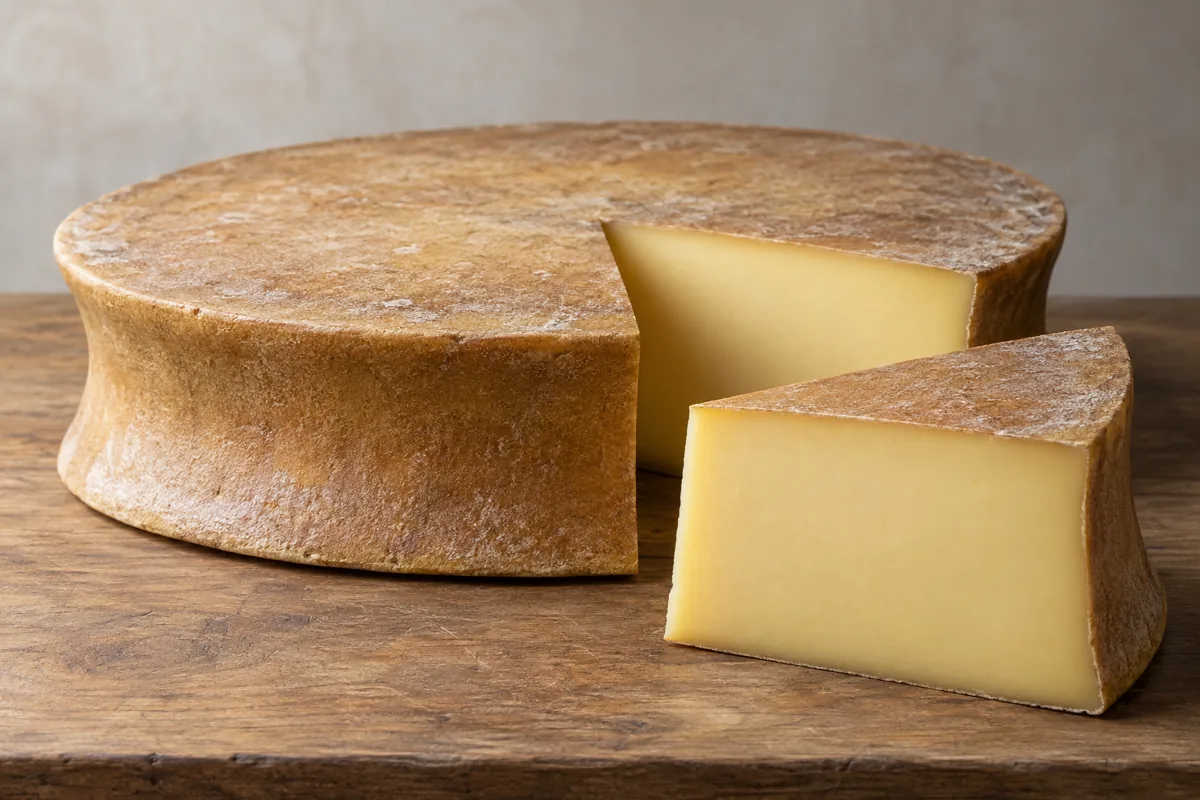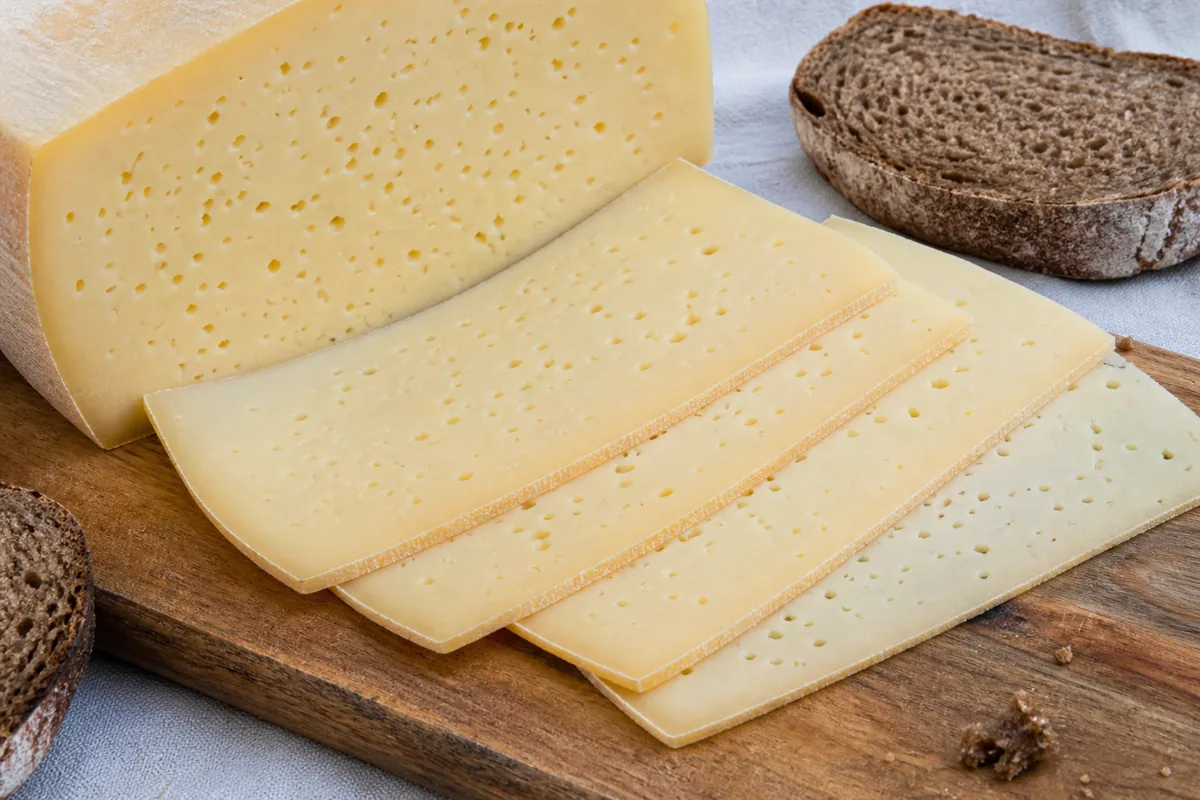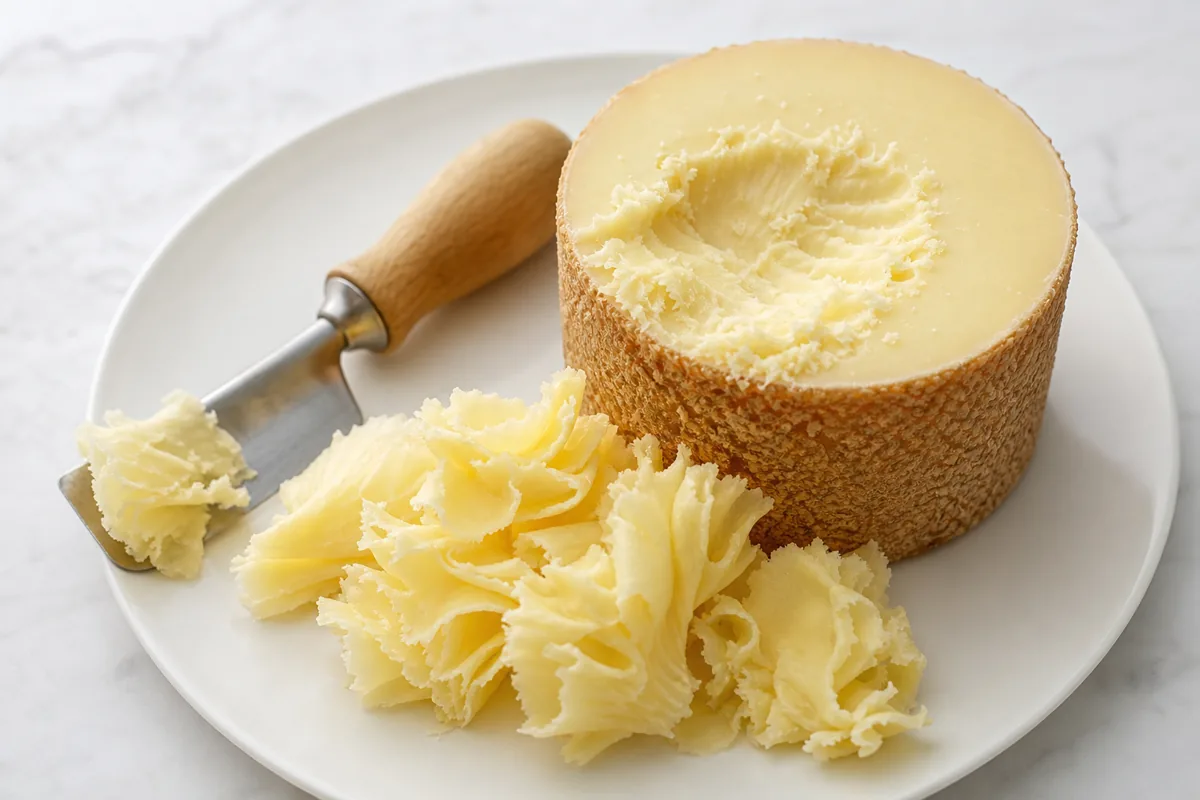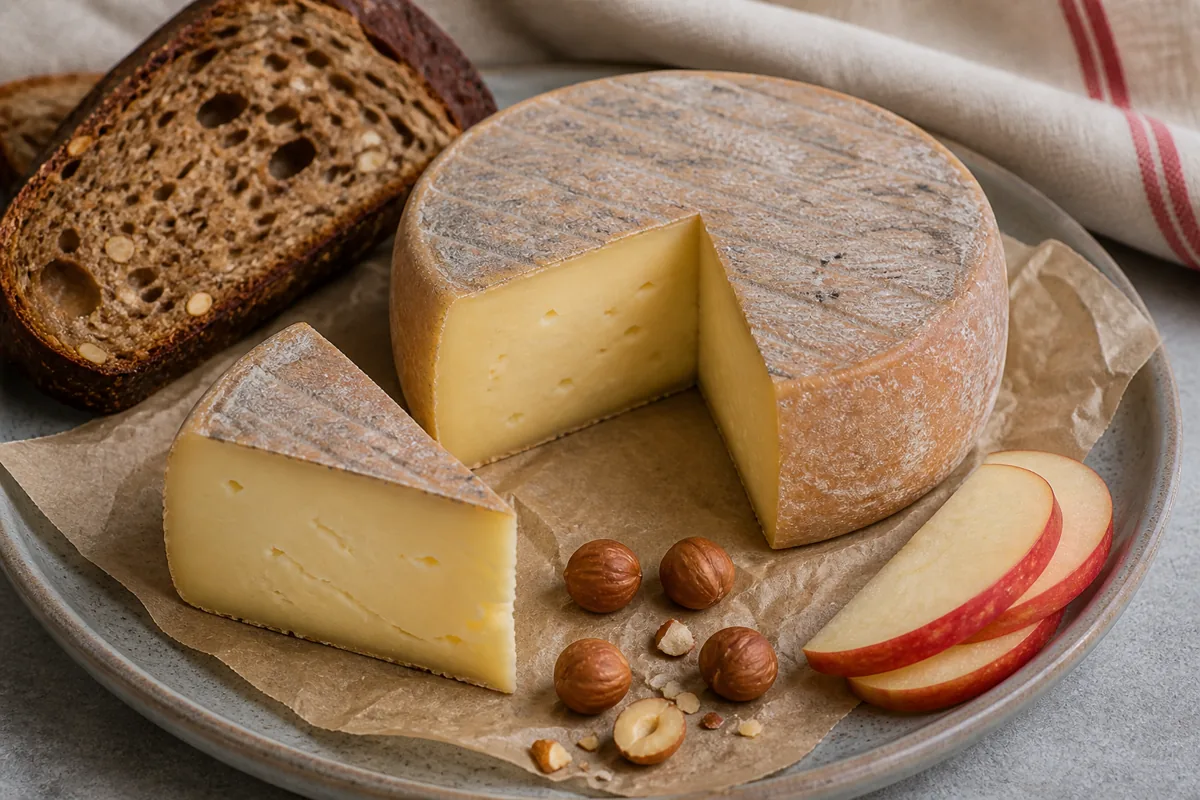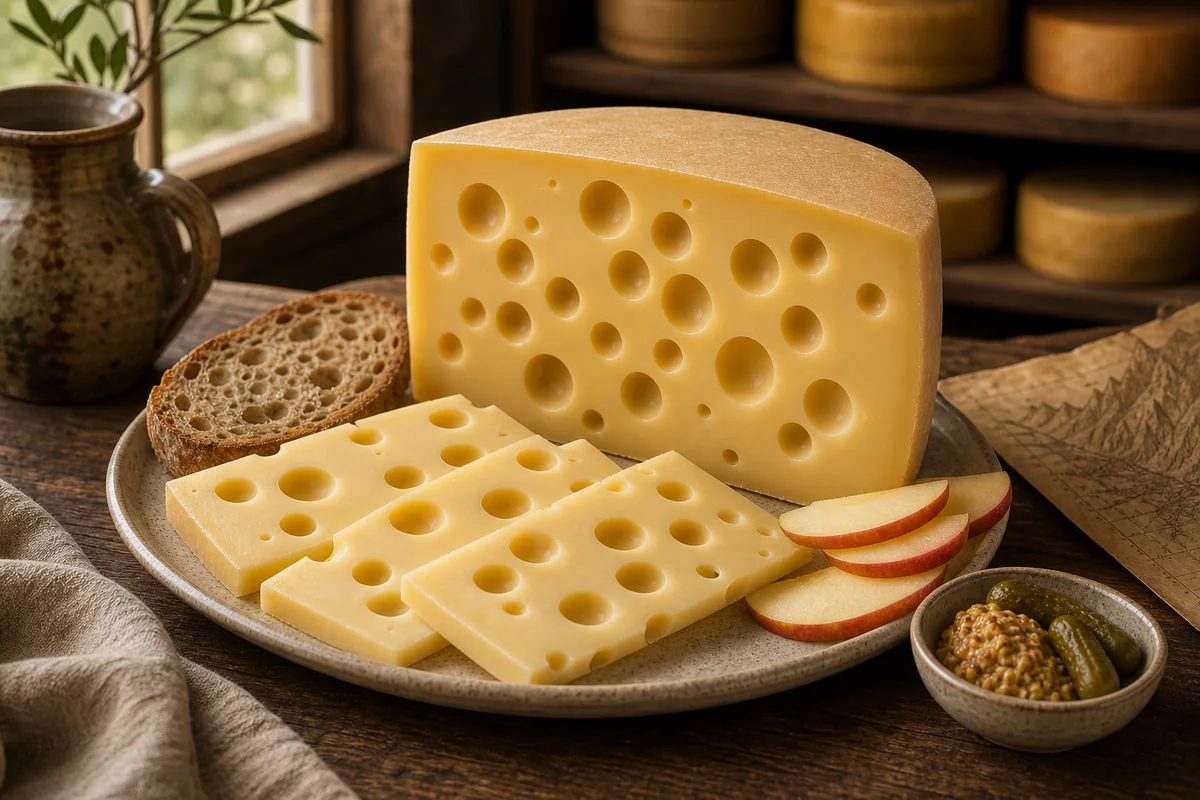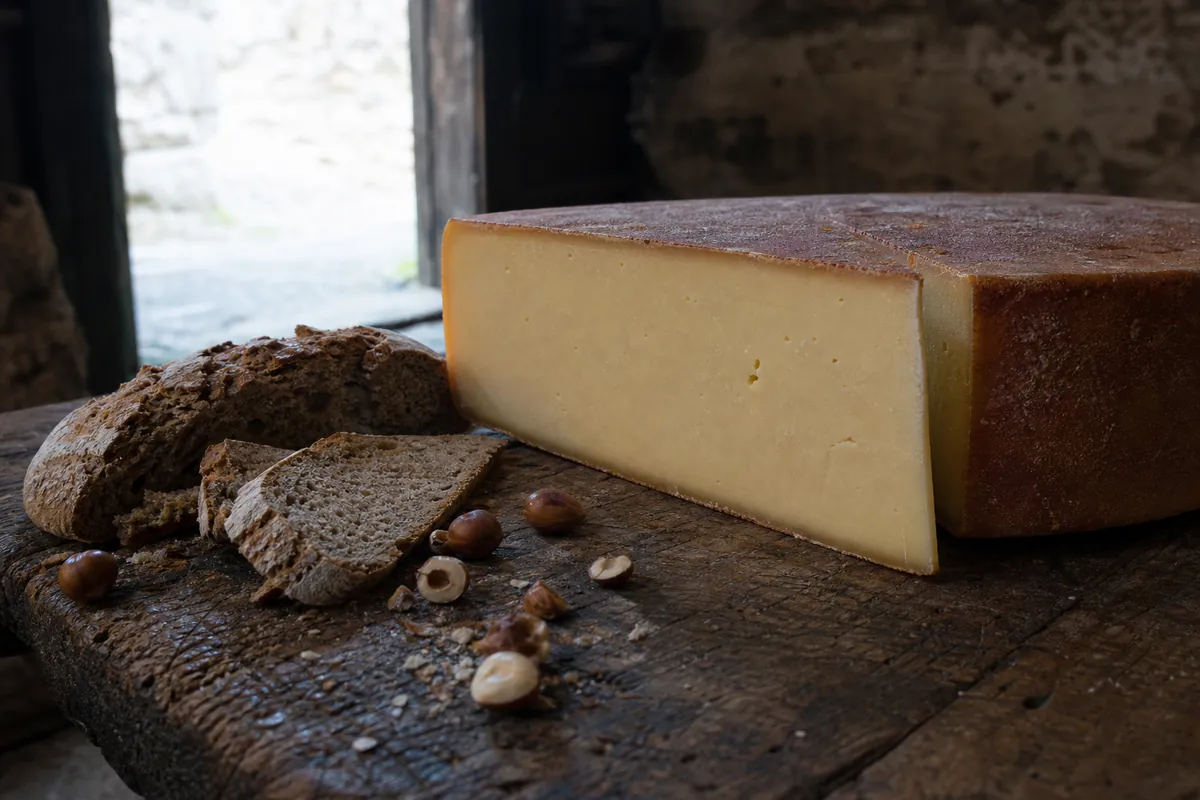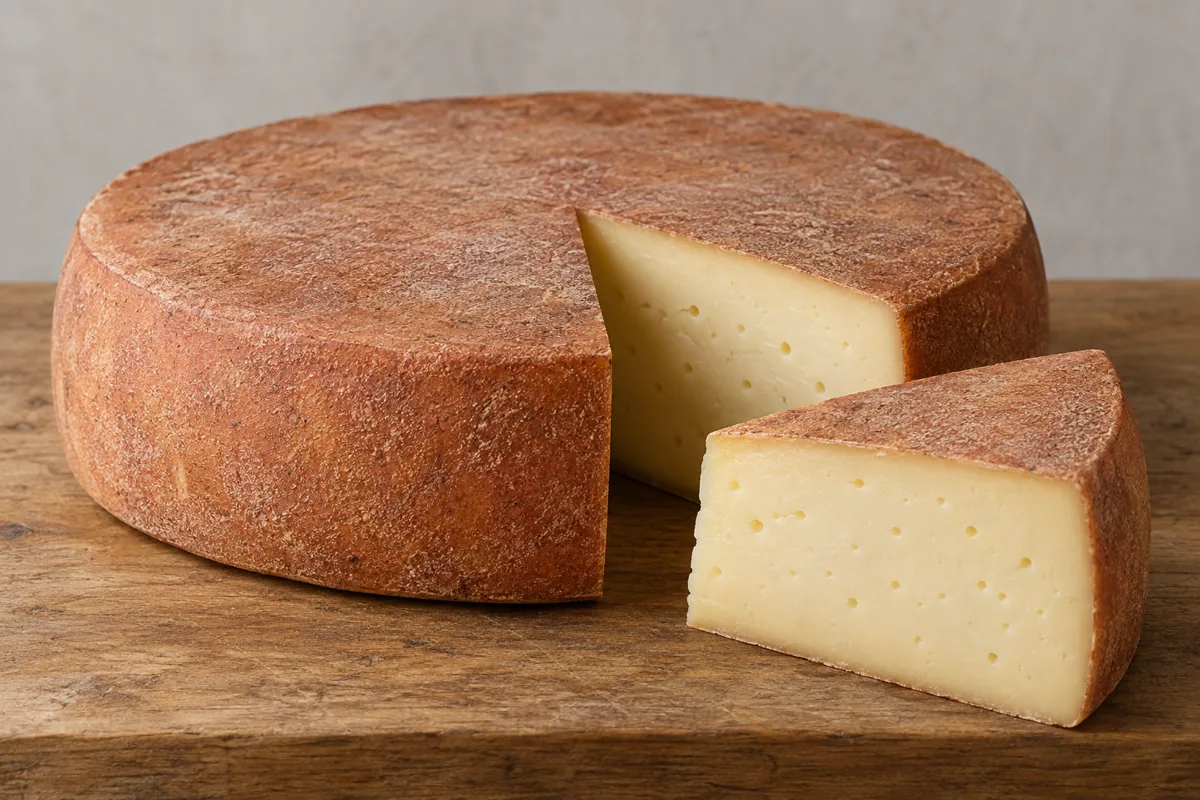
Appenzeller is a cow's milk cheese from the Appenzellerland in northeastern Switzerland, rubbed during ripening with a herbal brine whose recipe its makers keep secret. The producers' trade body sells it under colour-coded labels, from the three-month Silver Label to the nine-month Purple Label.
In This Article
What Is Appenzeller Cheese?
English Wikipedia describes Appenzeller as a hard, washed-rind cheese with a golden rind and a straw-coloured paste with tiny holes. It gives the flavour as nutty or fruity, from mild to tangy depending on age, with a strong smell.
On the trade body's product sheets the paste is ivory to light yellow, with a few evenly spread holes of 3 to 6 mm, about the size of a pea.
The name is not a protected designation of origin under Swiss law. It is a collective trademark of the Sortenorganisation Appenzeller Käse GmbH, and its word and picture marks are protected in Switzerland and abroad.
What Is in the Secret Herbal Brine?
The brine, called Kräutersulz, is a mix of wine, yeast, salt and about forty herbs and spices, according to Patrimoine culinaire suisse, and the exact blend is the part kept secret. The trade body says only two people know the recipe.
The brine is prepared in the herb rooms of an Appenzeller bitters maker, and Patrimoine culinaire suisse calls it what separates the cheese from related wheels such as Tilsiter or a semi-hard alpine cheese.
English Wikipedia says the herbal brine flavours the cheese, helps preserve it and promotes the formation of the rind. The trade body's Silver, Gold and Organic Green pages describe the brine as washing or treating the cheese for the whole ripening, which runs from at least three months to five on those labels.
Each dairy has its own brine recipe, most of them trade secrets, by English Wikipedia's account, while German Wikipedia says the recipes that families once guarded are now uniform and set by the trade body.
The one-recipe account is the newer of the two: English Wikipedia's per-dairy line cites a trade body page retrieved in 2015, while German Wikipedia and the revised Patrimoine culinaire suisse entry describe one uniform brine.
The older brine was rougher. A jubilee history cited by Patrimoine culinaire suisse describes a sharp rub of salt, fruit wine, pepper, cloves and cheese shavings, applied about twice a week for six to nine months.
English Wikipedia says the brine sometimes includes wine or cider.
Which Appenzeller Label Should You Buy?
The label colour tells you the strength at a glance, because each colour stands for a minimum age and a flavour description on the trade body's product pages.
| Label | Aged for | Flavour on the label | Rind |
|---|---|---|---|
| Silver | At least 3 months | Mild and creamy | Yellow to reddish brown |
| Gold | 4 to 5 months | Tangy and aromatic | Reddish brown |
| Black | At least 6 months | Sharp and robust | Reddish brown |
| Purple | At least 9 months (9 to 12 on its badge) | Complex and lingering | Brown to dark brown |
| White | At least 3 months, with an extra portion of cream | Rich and creamy | Yellow to red-brown, grained |
| Organic Green | At least 3 months, from organic raw milk | Creamy and zesty | Reddish brown |
The trade body calls Gold Label Switzerland's favourite Appenzeller. For the Black Label, it says cheesemakers pick the best wheels and mature them in a damp cellar at around 14 °C for at least six months.
Appenzellerland Tourism adds that experts choose those Black Label wheels after five and a half months of ripening.
The Purple Label is the one with cheese crystals on the cut surface, and its sheet allows small cracks as well as the usual holes.
Which Colour Label Matches Classic, Surchoix, or Extra?
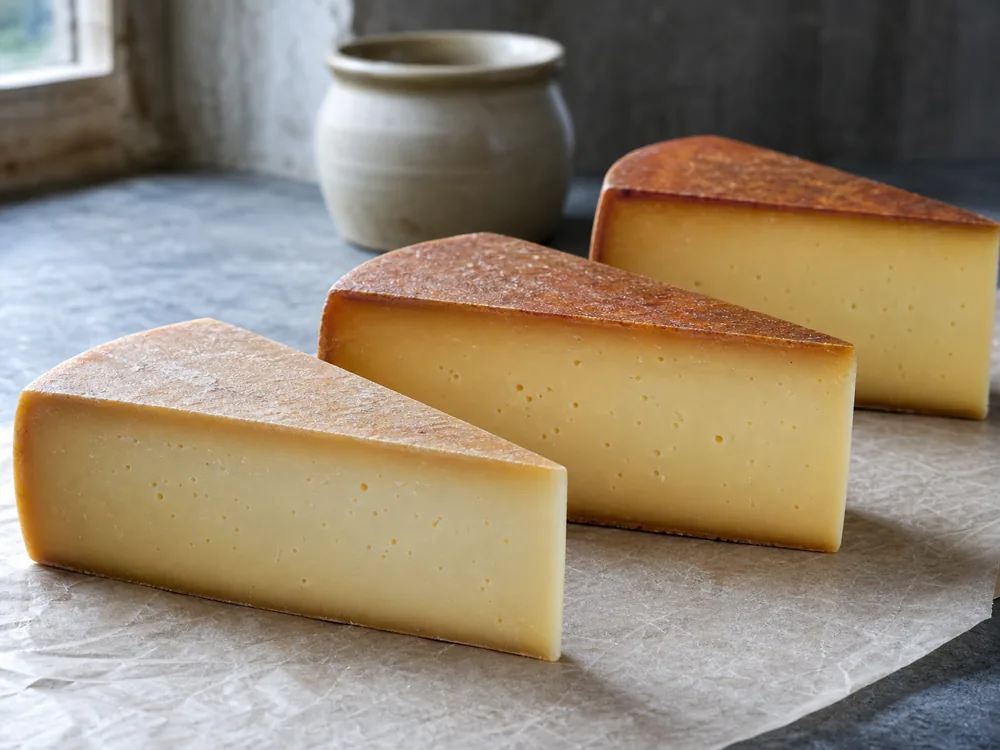
If a shop sells Appenzeller as Classic, Surchoix or Extra, it is using the older grade names for the silver, gold and black labels, which is how English Wikipedia matches them.
| Colour label | Older grade name | Age in the older sources | Tourism office wording |
|---|---|---|---|
| Silver | Classic | 3 to 4 months (English Wikipedia); at least 3 months (Patrimoine culinaire suisse) | Mildly spicy |
| Gold | Surchoix | 4 to 6 months (English Wikipedia); at least 4 months (Patrimoine culinaire suisse) | Strong and spicy |
| Black | Extra | 6 months or longer (English Wikipedia, Patrimoine culinaire suisse) | Extra spicy |
| Purple | Edel-Würzig | 9 months (Patrimoine culinaire suisse) | Noble-spicy |
The fourth grade, Edel-Würzig, matches the Purple Label by age and crystals. Patrimoine culinaire suisse says it was added in the second half of 2015 and ages for nine months with fine ripening crystals, and the tourism office gives its noble-spicy cheese a violet-golden label.
German Wikipedia gives Classic as mild-würzig and Extra as extra würzig, which English pages render as mildly spicy and extra spicy, or as extra sharp. The trade body's own English pages use tangy, sharp and robust for the same cheeses, so when you compare shops, the age and the colour tell you more than the adjective.
The tourism office also lists a quarter-fat Räss cheese, stored six to eight months under a silvery-brown label, which it describes as melty to crumbly with a dry paste and an unmistakably tart taste.
Patrimoine culinaire suisse says the milk for the Räss is skimmed and that it is hardly sold outside the region, and German Wikipedia sets its minimum at 20% fat in dry matter against 50% for the full-fat cheese.
Appenzeller is sold as ten products in all, including one made for raclette, a fondue version, a Brown Label and an Organic Dark Green Label. For a Brown or Organic Dark Green wedge, ask the shop how old it is.
How Is Appenzeller Made?
Patrimoine culinaire suisse follows one dairy through the make, starting with raw milk warmed to 31 °C. The producer there explains that raw milk carries microbes that shape the cheese as it ripens, and that pasteurisation would remove them.
The dairy must also hit a regulated fat level, so part of the milk is skimmed first. The vat milk for the full-fat cheese runs at 3.3 to 3.5% fat, mixed from fresh morning milk and chilled evening milk.
- Setting: rennet and lactic bacteria set the milk in a little over half an hour.
- Cutting and heating: the curd is cut into grains about the size of corn kernels and stirred while heated to 40 to 42 °C.
- Pressing: the curd is pressed in round moulds, usually twice for 15 minutes, and each wheel is printed with a cheese pass for tracing.
- Salting: the wheels spend about two days in a salt bath.
- Ripening: the wheels rest on wooden boards and are turned and rubbed with the herbal brine every two days.
- Finishing: after five to seven weeks the cheese dealers take over, check hole formation, paste, colour, exterior and aroma, and keep treating every label with the brine.
The salt bath does more than season: the producer quoted by Patrimoine culinaire suisse says it sets up flavour, keeping quality and storability, and that it supports the rind, which starts to form while each soft wheel is turned four times in 24 hours in a draining room.
A longer bath gives a firmer, more pronounced cheese, the same producer says, which is why wheels stay in a little longer in summer, when the cheese is softer.
Robots now turn and smear the wheels overnight, a job once done by hand, and Patrimoine culinaire suisse gives the ripening cellars 13 to 14 °C and 92% humidity. The same source says a colder cellar would make the cheese too firm, and a warmer one would ripen it too fast.
A cellar master tells Patrimoine culinaire suisse that the brine could not work as well in wheels larger than the 6 to 8 kg ones that source describes.
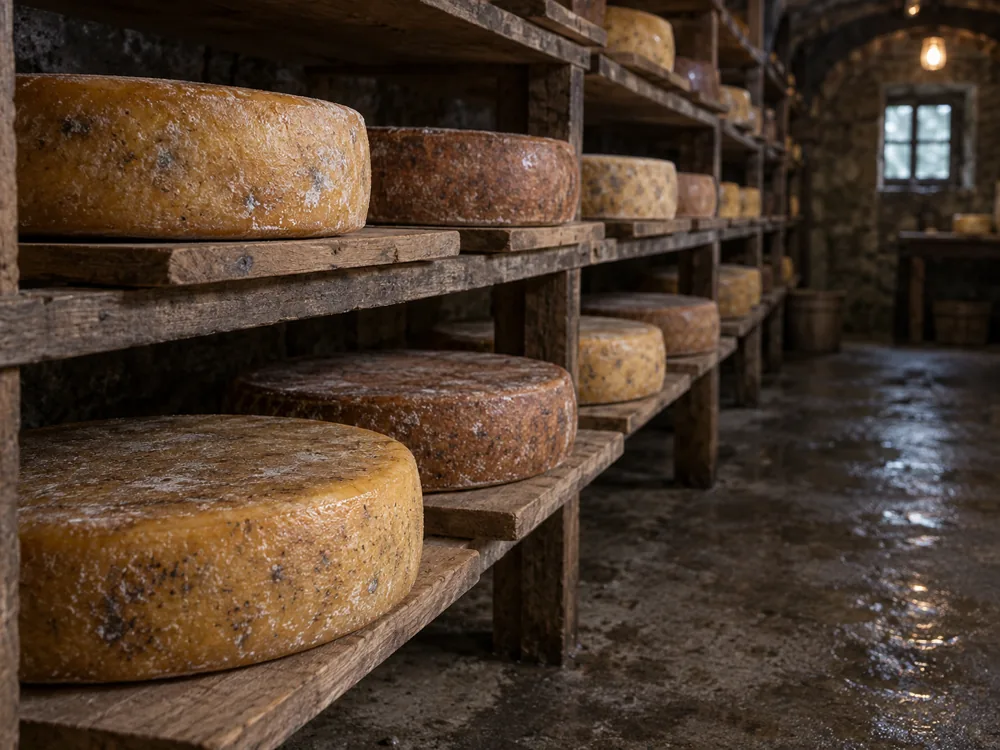
German Wikipedia gives slightly different make figures, with renneting at 30 to 31 °C and the curd reheated to 42 to 46 °C. It also has the wheels sit in a salt bath at 8 to 14 °C for one to three days and then be brushed and salted for about ten days to encourage the surface smear.
Does Appenzeller Use Raw Milk, and Is It Hard or Semi-Hard?
Appenzeller's milk is raw or unpasteurised on five of the six accounts that say how it is treated: the trade body, Patrimoine culinaire suisse, German Wikipedia, Switzerland Cheese Marketing and the tourism office, while English Wikipedia lists thermised milk and cites trade body PDFs it retrieved in 2015.
Its texture class, fat minimum, wheel size and holes also differ from one account to the next.
| Point | Trade body (appenzeller.ch) | Other sources |
|---|---|---|
| Milk | Pure raw cow's milk without additives | Raw milk (Patrimoine culinaire suisse, German Wikipedia); thermised, not pasteurised (English Wikipedia) |
| Texture class | Hard cheese for Silver, Gold, Black and Purple; semi-hard for White | Semi-hard (German Wikipedia, Patrimoine culinaire suisse, Switzerland Cheese Marketing); hard (English Wikipedia) |
| Fat minimum | 48% fat in dry matter (55% for White) | 45% (Switzerland Cheese Marketing, Silver Label); 50% (German Wikipedia, citing a 1974 handbook) |
| Wheel | Round, 30 to 33 cm across, 7 to 9 cm high, 6.7 kg on average (6.1 kg for Purple) | 6 to 8 kg, about 30 cm across (Patrimoine culinaire suisse); 20 to 30 cm across, 12 to 15 cm high (German Wikipedia) |
| Holes | 3 to 6 mm | Pea-sized (Patrimoine culinaire suisse); corn-kernel to cherry-stone size (German Wikipedia) |
The weights agree: Switzerland Cheese Marketing gives 6.4 to 7.4 kg for the Silver Label, inside the 6 to 8 kg given by Patrimoine culinaire suisse and German Wikipedia. Only the shape differs, with German Wikipedia's wheel taller and narrower than the trade body's flat one.
If you are pregnant, the texture split matters, because the NHS treats unpasteurised hard and semi-hard cheeses differently.
Where Is Appenzeller Made, and How Old Is the Cheese?
Production is limited to the cantons of Appenzell Innerrhoden and Ausserrhoden and parts of St. Gallen and Thurgau, the hilly country between Lake Constance and the Säntis.
Most of the dairies now sit outside the two Appenzell cantons. German Wikipedia says 37 village dairies made 8,090 tonnes in 2024, most of them in St. Gallen and Thurgau and a few in Ausserrhoden, and that none has come from Innerrhoden since the Oberegg dairy closed in 1989.
The same article says the last firm ripening the cheese in the town of Appenzell closed its cellar in 2023, while Patrimoine culinaire suisse, last revised in 2019, still places the ripening in Innerrhoden.
In 2024 Appenzeller output sat below Emmentaler AOP at 12,395 tonnes and Raclette Suisse at 17,230 tonnes, and well below Le Gruyère AOP at 30,311 tonnes.
About 53% of the cheese is sold abroad, German Wikipedia adds, and about 78% of that export goes to Germany.
Patrimoine culinaire suisse's older figures show the same pattern: 60% of the 2007 output went abroad, two thirds of it to Germany, and in 2016 the export share was 54.4%, with 3,952 of the 4,949 exported tonnes going to Germany.
That source adds that Germany, not Switzerland, eats the most Appenzeller, and that most of what is sold is Classic and Surchoix, the silver and gold labels.
The trade body, founded in 1942, counts about 800 milk producers and about 40 cheesemakers. Older counts run higher: Patrimoine culinaire suisse gives 66 dairies in 2007 and 52 in 2016, and English Wikipedia still says about 75.
Output has stayed in a band from about 8,000 to just over 10,000 tonnes while the dairy count fell. Patrimoine culinaire suisse puts 2007 output at more than 8,600 tonnes from 66 dairies and 2016 at 9,105 tonnes from 52, and German Wikipedia reports a record above 10,000 tonnes in 2020.
Cheese from the area is far older than the brand. A charter of 15 January 1282 in the St. Gallen abbey archive set sixty cheeses a year from Gais as part of a retired abbot's pension.
German Wikipedia notes that these records do not say how the cheese was made and suggests it was probably small and soft. Patrimoine culinaire suisse dates the rennet cheesemaking that Appenzeller is based on to the mid-16th century.
The cheese that came before the brand was a different product. Patrimoine culinaire suisse says the Appenzellerland mainly made Räss, a very salty, sharp cheese that ripened for a long time, and an 1835 description it quotes ranked local cheesemaking far behind Schwyz, Emmental and Gruyère.
Who Controls Appenzeller, and What Marks a Genuine Wheel?
One organisation plans the output. The Sortenorganisation buys the cheese from the makers, markets it at home and abroad and sets the production quantities and sale prices, and every producer must belong to it.
It began as a wartime rationing office. The market order that followed obliged the makers in the area to hold their cheese at the office's disposal, and trial series then standardised production and quality.
The trade body's own page describes four groups with a quarter of the votes each: the foundation that owns the brand for the canton of Appenzell Innerrhoden, the milk producers, the cheesemakers and five dealers and affineurs. A 141-member general assembly elects the eight-member management board.
Production strictly follows sales, which peak in autumn and before Christmas.
A dairy cannot sell cheese it makes beyond its set quantity as Appenzeller, German Wikipedia says, so several dairies sell very similar cheese under other names, which it says cuts into the original's sales.
The cheese is sold under the registered brand name Appenzeller Switzerland, and a certificate on the base of each wheel vouches for its quality. Check the base of a whole wheel for the certificate; on a cut wedge, ask the shop.
How Do You Cook with Appenzeller?
Appenzeller is both a table cheese and a cooking cheese. For your fondue or raclette, German Wikipedia puts the milder labels in the base melt and the stronger types in as a seasoning cheese, while the tourism office lists fondue under the Gold and Black labels but not the Silver.
Appenzeller Käsefladen, Käseküchlein, Käseschnitten and Käsehörnli are local dishes made with the cheese.
For eating it plain, Patrimoine culinaire suisse names four partners, all from the herders' traditional meal or its usual sides.
| Pairing | Type | Why It Works |
|---|---|---|
| Bread | Food | Bread, milk and cheese were the herders' traditional meal, and Patrimoine culinaire suisse says they are still a popular way to eat Appenzeller. |
| Milk | Drink | Part of the same herders' meal. |
| Boiled potatoes | Food | Named by Patrimoine culinaire suisse as a popular side. |
| Salad | Food | Named alongside boiled potatoes as a popular side. |
The trade body's own recipes match a label to each dish, which shows how much cheese it uses and in what form.
| Use | How It Works |
|---|---|
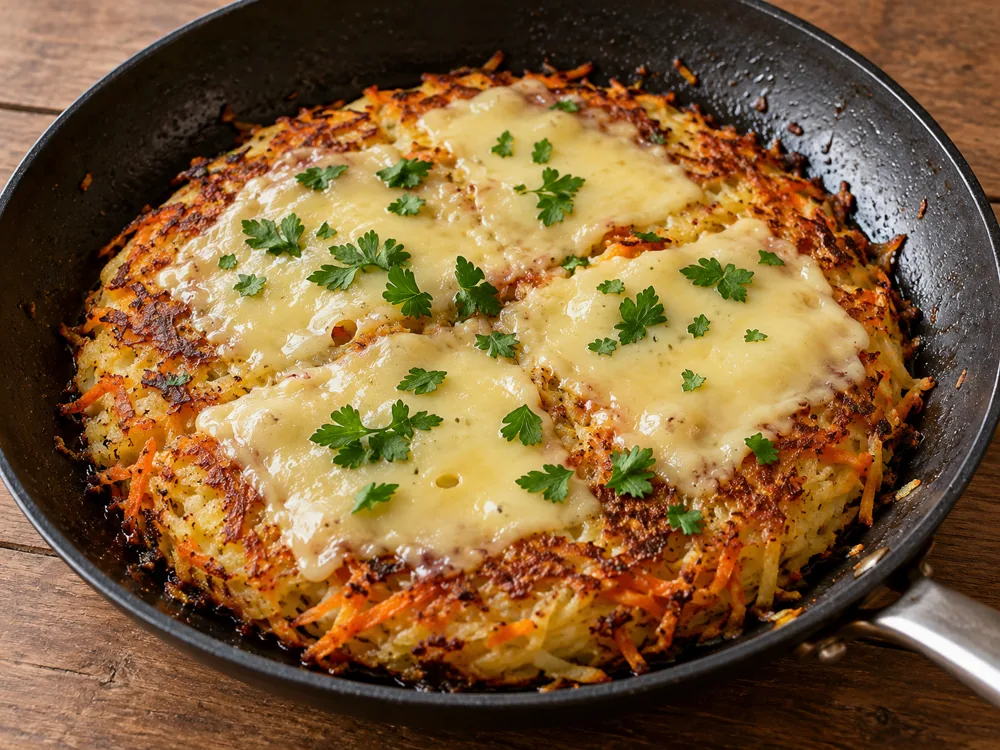
| Farmer's rösti | Black Label: 150 g coarsely grated into 700 g potatoes and 300 g carrots, with four slices melted on top, for four people. |
| Vegetable bake | White Label: 150 g mixed with grated potatoes, cream cheese, milk and eggs, baked at 200 °C for 55 minutes. |
| Stuffed veal cutlets | Silver Label: 100 g grated into a filling of onion, porcini, parsley and egg yolks. |
The tourism office lists onion soup au gratin, a cheese and potato tart and the stuffed veal schnitzel under the Silver Label, fondue and cheese pancakes under the Gold, and fondue, a herders' rösti and a sausage strudel under the Black.
That matches the trade body's recipe pages for the rösti (Black Label) and the veal cutlets (Silver Label).
In the rösti, the grated cheese goes into the potato and carrot mix, which fries for about 15 minutes until a golden crust forms and about 10 more after turning. The slices go on last and melt on top.
What Do Appenzeller Labels Show for Nutrition and Lactose?
The trade body lists average values per 100 g for each label. The Purple Label, with the least water, carries the most energy at 418 kcal, while the White Label, made with extra cream, carries the most fat at 35 g.
| Label | Water | Protein | Fat | Energy |
|---|---|---|---|---|
| Silver | 40 g | 25.2 g | 32 g | 389 kcal |
| Gold | 40 g | 25.8 g | 32 g | 391 kcal |
| Black | 40 g | 26.3 g | 32.8 g | 400 kcal |
| Purple | 36 g | 27 g | 34.5 g | 418 kcal |
| White | 40 g | 23 g | 35 g | 407 kcal |
| Organic Green | 40 g | 25.2 g | 32 g | 389 kcal |
The 48% fat minimum and the 32 g in the table are different measures. The minimum is fat as a share of the dry matter, so the Silver Label's 40 g of water comes out first: 32 g of fat in the remaining 60 g is about 53%, by our arithmetic on the trade body's rounded figures.
German Wikipedia's full-fat minimums are 50% fat in dry matter and 58% dry matter, which caps the water at 42 g per 100 g, and the White Label's 35 g of fat in 60 g of dry matter works out to about 58%, above the trade body's 55% minimum for that label.
Every label sheet lists the cheese as free from lactose and gluten, as well as from preservatives, colourings and flavour enhancers. If you need a lactose figure in grams, check the label on your piece.
Is Appenzeller Safe During Pregnancy?
It depends on which health service you follow, because Appenzeller is a raw-milk cheese classed as hard on some accounts and semi-hard on others.
For cheese in pregnancy, the NHS lists pasteurised or unpasteurised hard cheeses such as cheddar, gruyère and parmesan as safe, but its semi-hard entry covers only pasteurised cheeses such as edam. It also lists any cheese cooked until steaming hot as safe.
The CDC is stricter on raw milk, listing hard cheese as a safer choice only when it is made with pasteurized milk and naming Swiss, Gruyere and Emmental as examples.
The CDC lists dairy products made from raw milk as riskier, and its heated lines cover pasteurized soft cheeses heated to an internal temperature of 165°F or until steaming hot and deli-sliced cheeses heated to 165°F or until steaming hot. The CDC also notes that pregnant women are 10 times more likely to get a Listeria infection.
On the semi-hard reading, the NHS says foods made from unpasteurised milk must be thoroughly cooked, so a cold slice of raw-milk Appenzeller is on the NHS safe list only if you go by the trade body's hard-cheese label, and it is not on the CDC's safer list at all.
SOURCES & REFERENCES
What Else Do People Ask About Appenzeller?
English Wikipedia calls it nutty or fruity, from mild to tangy with age. The trade body describes the Silver Label as mild and creamy and the Black Label as sharp and robust.
Patrimoine culinaire suisse lists wine, yeast, salt and about forty herbs and spices. The exact blend is secret.
It is a collective trademark rather than a Swiss protected designation of origin, according to German Wikipedia.
The trade body says every label is made from raw cow's milk. English Wikipedia lists thermised milk instead.
English Wikipedia matches Classic to the silver label, Surchoix to gold and Extra to black.
From at least three months for the Silver Label to at least nine months for the Purple Label, according to the trade body.