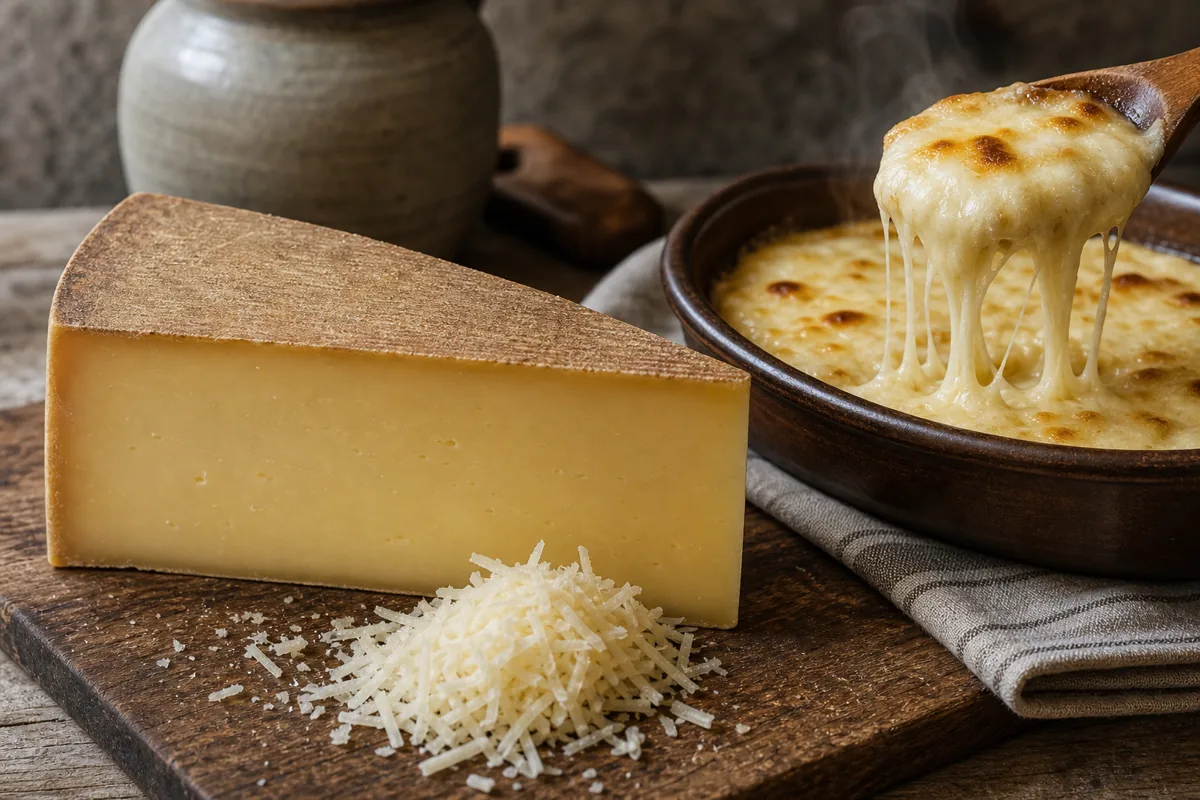
Cheese Profile

Gruyère Cheese: Origin, Flavor, Melting, and Best Uses

GRUYERE QUICK FACTS
OriginFribourg canton, Switzerland
MilkRaw cow
TextureSemi-hard, dense, smooth paste with small eyes
RindNatural, rough, brownish-grey
Aging5 months minimum (Classic); 8-12+ months (Reserve)
Fat Content49% FDM (fat in dry matter)
PDO / DOPGruyere AOP (Switzerland, 2001)
Availabilitycommon
Pricemid

Gruyere is the world's most used cooking cheese for good reason. It belongs to the Swiss alpine cheese family, a group defined by raw cow's milk, cave aging, and exceptional melt behavior. The Swiss regional cheese guide maps the Gruyere AOP production zone in the Fribourg canton.

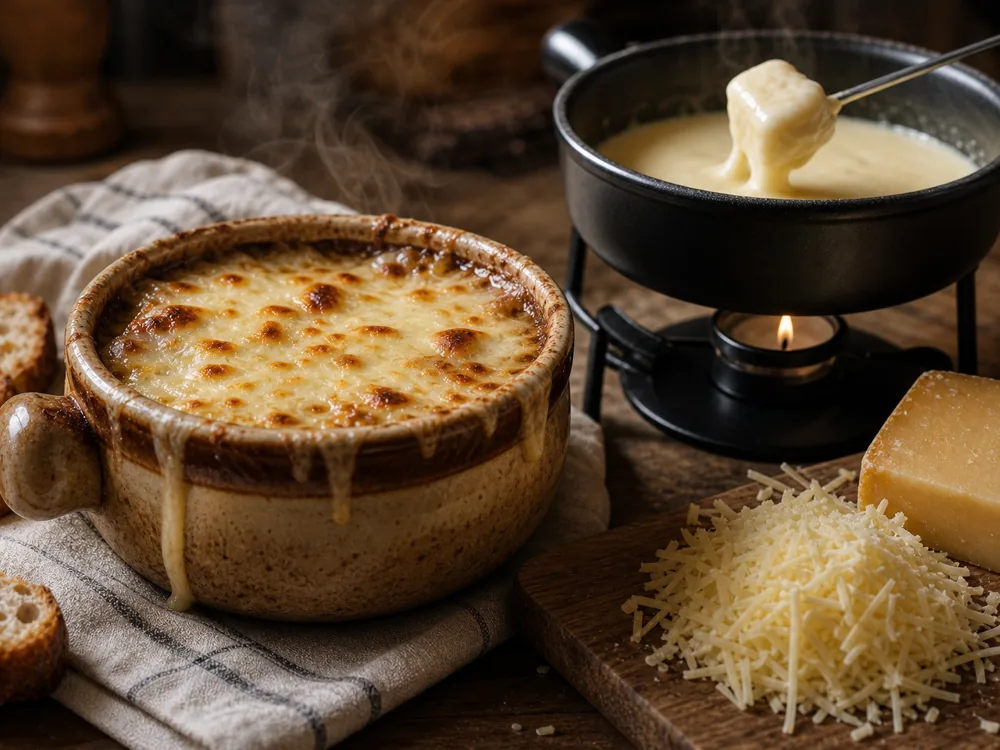
No other widely available cheese combines Gruyere's depth of flavor with its ability to melt into a completely smooth, non-greasy pool. That combination is what makes it the required cheese for fondue, French onion soup, and croque monsieur.

This profile covers everything that matters for buying, cooking with, and storing Gruyere correctly.

What Gruyere Is

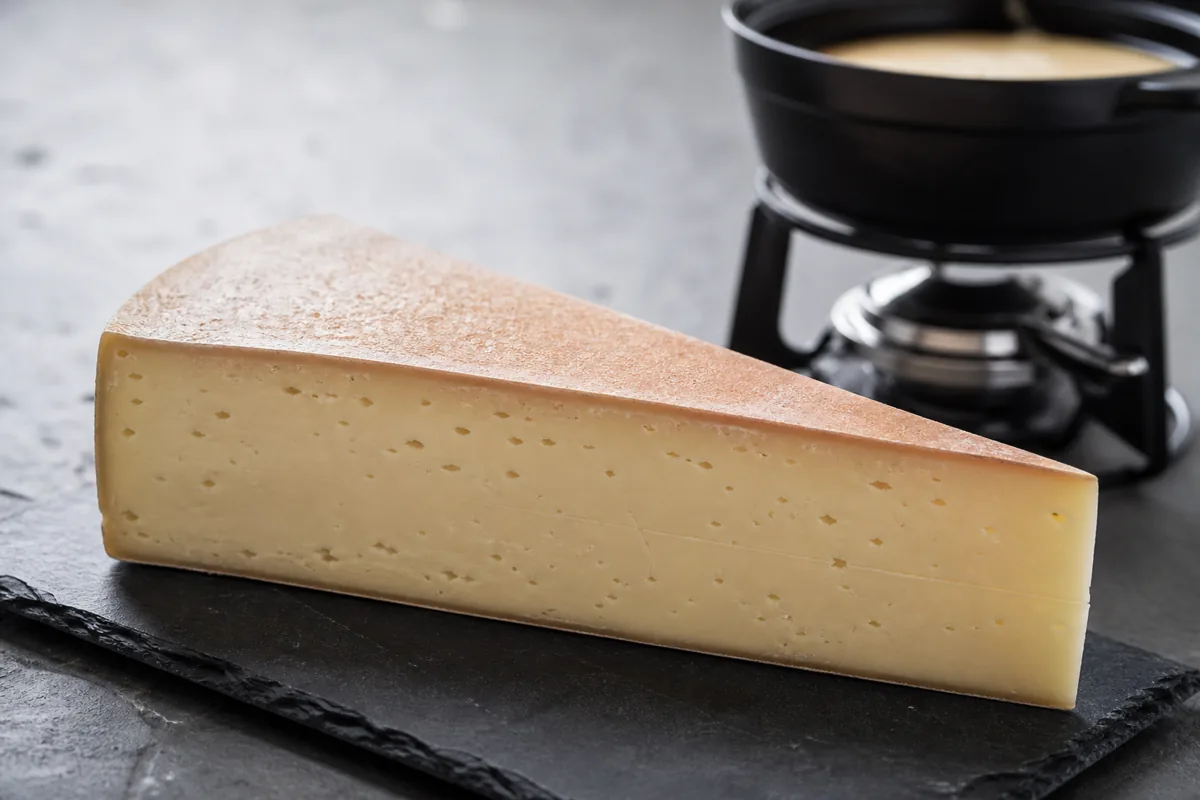
Gruyere is a raw cow's milk alpine cheese from the canton of Fribourg in western Switzerland. The town of Gruyeres (spelled with an accent, unlike the cheese) sits at the center of the traditional production zone.

The cheese has been made in this region since at least the 12th century. Historical records from 1115 document Alpine herders producing a hard cheese from summer milk in the high meadows above Fribourg.

Gruyere received AOP (Appellation d'Origine Protegee) status in 2001, after a 12-year international dispute over the name. France, which produces Gruyere-style cheeses in the Franche-Comte region under the name Gruyere francais, contested the Swiss application. The resolution permits France to use the Gruyere name on its domestic market but restricts the AOP designation to Swiss-made cheese following the Swiss production specification.

  • Origin — Fribourg canton, western Switzerland, produced since the 12th century
  • Milk — raw cow, from silage-free herds on grass and hay only
  • AOP status — Gruyere AOP granted 2001 after a 12-year international dispute
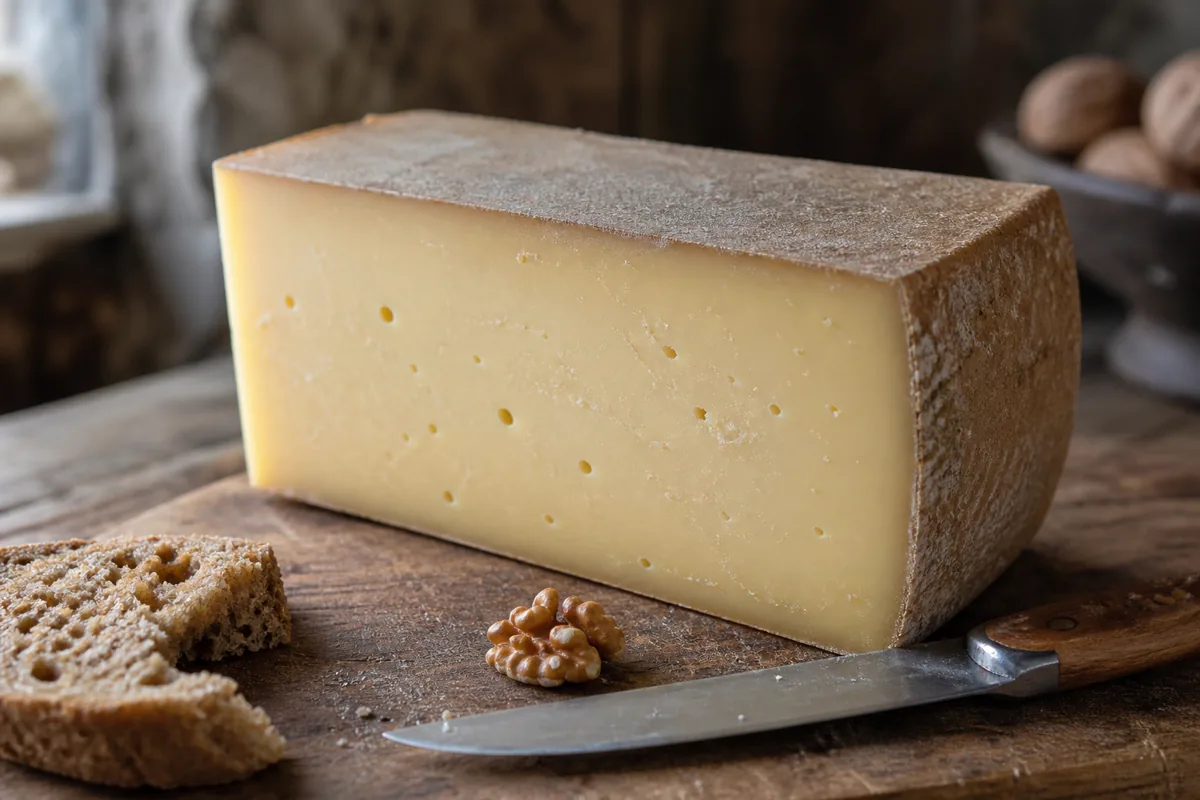
  • Rind — natural, rough, brownish-grey, washed weekly during aging
  • Aging grades — Classic (5-8 months), Reserve (8-12), Premier Cru (12+), Alpage (seasonal)

The AOP rules require raw milk from cows fed on fresh grass and hay only. Silage (fermented grass feed) is prohibited. That feeding restriction directly affects flavor. Milk from silage-free cows contains different microbial flora and fat profiles that contribute to Gruyere's characteristic nuttiness.

The natural rind develops over the full aging period in the sandstone caves of Fribourg, where affineurs wash and brush each wheel by hand throughout the maturation. Those caves maintain specific humidity and temperature conditions that no modern refrigerated warehouse fully replicates.

Wheels that mature in the Kaltbach cave system near Lucerne (carved into the hillside in the 14th century) carry the Kaltbach label and represent some of the most complex Gruyere available outside Switzerland.

NOTE

The 2001 AOP dispute between Switzerland and France lasted 12 years. Both countries have centuries-old traditions of making Gruyere-style cheese. The final ruling gave Switzerland exclusive rights to the AOP label internationally, while France retained domestic use of the name. French Gruyere and Swiss Gruyere AOP are legally distinct products.

Gruyere Flavor and Texture

Young Gruyere (5-8 months, Classic grade) has a mild, creamy, slightly fruity character with a clean finish and very low sharpness. It is the version most commonly sold in US supermarkets.

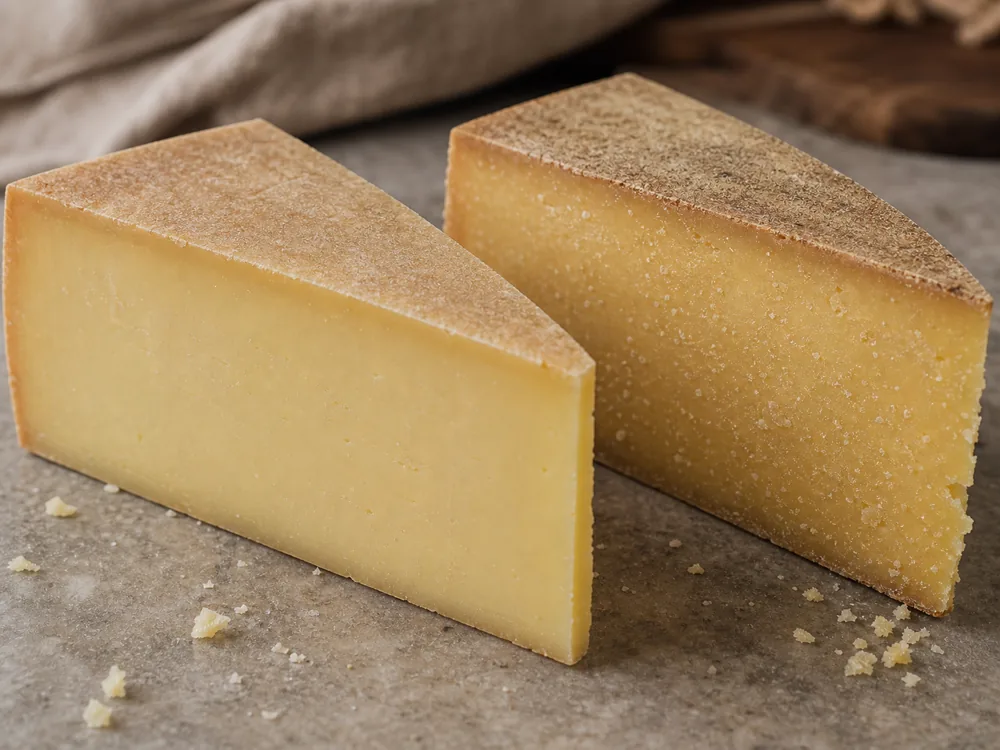
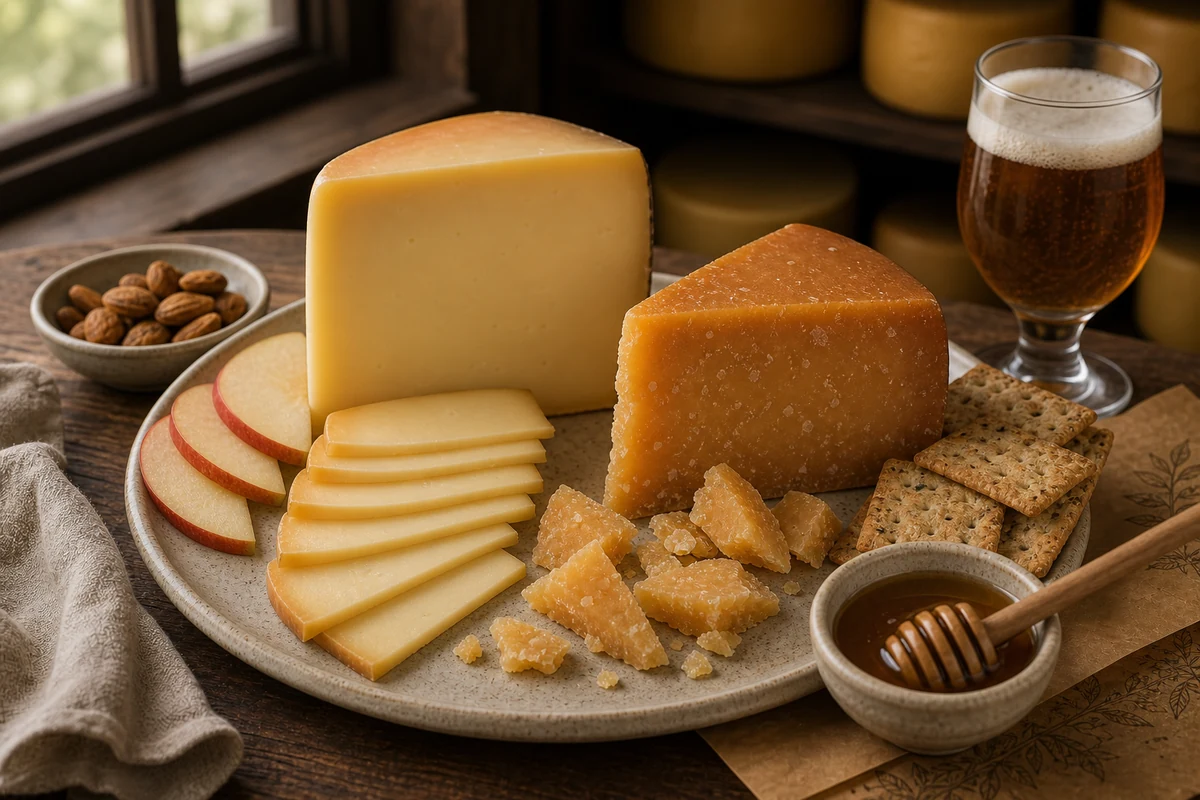
Aged Gruyere (8-12 months, Reserve grade) develops pronounced nuttiness, a longer finish, and a slightly granular texture from calcium lactate crystals that form in the paste. These white specks are not salt and not a defect. They are a marker of proper long aging, like the tyrosine crystals in aged Parmesan.

GRUYERE FLAVOR PROFILE (CLASSIC, 5-8 MONTHS)
SALTYSWEETBITTERSOURUMAMICREAMY
Salty
32
Sweet
28
Bitter
15
Sour
18
Umami
62
Creamy
55

The radar above reflects Classic-grade Gruyere at 5-8 months. Reserve-grade at 10-12 months shows higher umami (75+) and salty (42), with reduced creamy as moisture drops and the paste becomes denser.

Premier Cru Gruyere, aged 14+ months, develops a complex caramel note alongside the nuttiness. It is a distinct eating experience from Classic and should be served on boards rather than melted, where the subtleties are lost to heat.

  • Classic (5-8 months): mild, creamy, slight fruitiness, clean finish, excellent for cooking
  • Reserve (8-12 months): nutty, savory, longer finish, small calcium lactate crystals, dual-purpose
  • Surchoix / Premier Cru (12+ months): caramel, deep nuttiness, granular texture, best for boards
  • Alpage (summer milk only): seasonal, brighter herbal notes from high-altitude grazing, limited availability

Gruyere has almost no lactose. The combination of raw-milk lactic fermentation and long aging converts essentially all residual lactose. Most people with lactose sensitivity tolerate Gruyere easily, though individual responses vary.

The paste should feel dense but not crumbly when cut. A good wedge of Classic Gruyere cuts cleanly and bends slightly without snapping. Reserve-grade becomes slightly more brittle and shows occasional small eyes through the paste.

Gruyere Aging

Aging is the single biggest variable in Gruyere's flavor and price. The same wheel tastes completely different at 5 months versus 14 months. The AOP system formalizes this with named grades that tell you exactly what to expect.

Each grade has a distinct best use, and buying the wrong one for the job wastes money or flavor.

Classic (5-8 months)
Reserve (8-12 months)
Surchoix (10-14 months)
Premier Cru (14-18+ months)
Alpage (seasonal)

For fondue, Classic grade is always the correct choice. Its higher moisture and milder flavor let the cheese blend smoothly with wine and Vacherin Fribourgeois without overpowering the dish. Reserve-grade in fondue can make the flavor too intense and the texture less fluid.

How Gruyere Is Made

Gruyere production follows the pressed-cooked curd method. This technique drives moisture out of the paste during production, concentrating flavor and enabling the long aging that distinguishes alpine cheeses.

Morning and evening milkings are combined in copper vats at the dairy. The raw milk is warmed and inoculated with thermophilic starter cultures, then renneted to form the curd.

Unlike buttery soft-ripened round or fresh Italian pizza cheese, the Gruyere curd is cut into very fine pieces, roughly the size of grains of rice, and then heated to around 57 degrees C (135 degrees F) while being continuously stirred. This cooking and stirring step expels most of the whey, producing a firm, dry curd grain.

TIP

Gruyere is one of the few major cheeses still made from raw milk even for export to the US. The 60-day FDA aging rule does not block Gruyere because it ages well past 60 days. Classic-grade Gruyere at 5 months is the youngest legally importable version. When you buy Gruyere in a US grocery store, it is always made from raw milk, unlike most imported Brie, which must be pasteurized.

  • Combine milkings — morning and evening milk go into copper vats
  • Inoculate and rennet — thermophilic cultures and rennet form the curd
  • Cut to rice grain size — fine cutting expels maximum whey
  • Cook to 57 C (135 F) — continuous stirring firms the curd grains
  • Press for 20 hours — large molds shape 25-40 kg wheels
  • Brine and cave-age — weekly hand-washing develops the natural rind

The curd is pressed into large molds and held under pressure for 20 hours to expel remaining whey. The resulting wheels weigh between 25 and 40 kilograms, much larger than soft-cheese wheels, because the scale of the wheel influences how the interior ages.

After brining in a salt bath, wheels go to the cave. Affineurs turn and brush each wheel with a brine solution weekly throughout the aging period. This rind-washing promotes the development of the natural brownish-grey crust and prevents undesirable mold species from establishing on the surface.

Best Uses for Gruyere

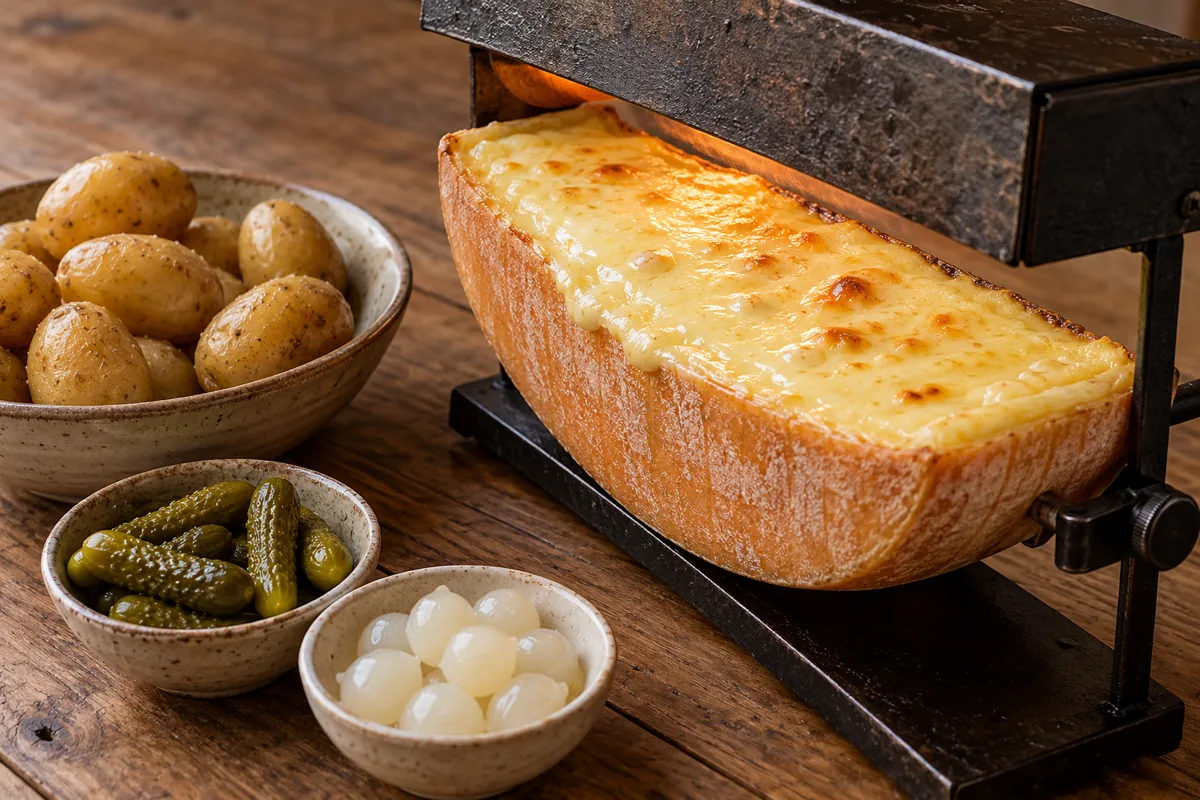
Gruyere's exceptional melt behavior sets it apart from almost every other widely available cheese. The combination of moderate fat content, low moisture, and long aging produces a melt that is smooth, cohesive, and non-greasy under heat.

Classic-grade Gruyere melts between 150-160 degrees F (65-71 degrees C) into a fluid, uniform pool. It does not separate into greasy oil and rubbery protein the way fresher or lower-fat cheeses can.

Fondue
The primary cheese in Swiss fondue. Combine with Vacherin Fribourgeois in a 1:1 ratio. Classic grade melts most smoothly. Add a splash of dry white wine and kirsch for proper fondue texture.
French Onion Soup
Grated Classic Gruyere, broiled over toasted bread on top of the soup. It browns without burning and forms the signature golden crust. The nutty flavor complements the sweet caramelized onions.
Croque Monsieur
The essential croque cheese. Gruyere in the bechamel and grated on top. Its melt and flavor profile are why the sandwich has the character it does. No other widely available cheese substitutes cleanly.
Quiche
Grated Gruyere is the standard for quiche Lorraine. It melts into the egg custard without breaking the emulsion and adds savory depth without overpowering the filling.
Cheese Boards
Reserve or Premier Cru at room temperature. Slice thin rather than cube. Gruyere's dense paste benefits from exposure to air for 20 minutes before serving.
Gratin
Grated Gruyere over potato gratin or pasta bake. Forms a cohesive golden crust without the graininess that harder cheeses like Parmesan can produce.
  • Fondue — the required cheese, combined with Vacherin Fribourgeois at 1:1
  • French onion soup — forms a golden, non-greasy crust over the bread
  • Croque monsieur — melts into bechamel and browns on top
  • Quiche Lorraine — melts into egg custard without breaking the emulsion
  • Potato gratin — forms a cohesive golden crust without graininess

For ranked melting cheeses, Gruyere consistently places in the top three for both melt smoothness and flavor contribution. It is the benchmark other cheeses are measured against in fondue and gratin tests.

Always grate Gruyere immediately before melting rather than buying pre-grated. The moisture and fat at the surface of freshly grated Gruyere accelerates melt initiation. Pre-grated Gruyere with starch anti-caking coating melts 15-20% slower and can produce a grainy sauce texture.

GRUYERE SCORES
Melt Quality 92/100
Flavor Intensity 75/100
Sharpness 45/100
Availability 88/100

The melt score of 92 reflects Classic-grade Gruyere in a controlled bain-marie test at 155 degrees F. It is the highest score among the seed article cheeses in this set, ahead of mozzarella for flavor-positive melt and behind only young Fontina for sheer smoothness.

The sharpness score of 45 positions Gruyere in the middle of the range, noticeably more assertive than Brie or mozzarella but considerably milder than aged sharp English classic. If Gruyere is unavailable, our Gruyere substitutes guide ranks Comte, Emmental, and five other options with match scores for fondue, quiche, and raw use.

Gruyere Seasons and Serving

Gruyere is available year-round, but two seasonal factors influence quality. Alpage Gruyere is made only from June through September at high-altitude dairies and carries distinct herbal and floral notes from alpine pasture.

Standard Gruyere uses milk from valley herds year-round. The flavor difference between summer and winter milk is subtler than in Alpage but still measurable.

Spring
Classic Gruyere melted into quiche with spring vegetables. The mild grade pairs well with asparagus and fresh herbs without overwhelming them.
Summer
Alpage Gruyere appears at cheese counters in late summer. Serve it on boards with fresh fruit to appreciate the herbal complexity. Peak season for this rare grade.
Autumn
Reserve Gruyere on autumn boards with roasted walnuts, dark honey, and sourdough. The nutty depth matches harvest-season flavors.
Winter
Classic Gruyere in fondue, French onion soup, and gratin. The ultimate winter cooking cheese. Fondue night is a Swiss tradition for good reason.

Serve board Gruyere at room temperature after 20-30 minutes out of the fridge. Cold Gruyere tastes flat and waxy. At room temperature, the nutty, caramel notes open up and the paste softens to the correct semi-firm bite.

Gruyere Pairings

Gruyere's nutty, savory character pairs best with wines and foods that carry matching weight and structure. Unlike Brie, which calls for delicate, acidic partners, Gruyere can hold its own against fuller-bodied accompaniments.

The umami depth in Reserve-grade Gruyere makes it particularly versatile. It matches with both white wines and lighter reds without clashing.

White Burgundy (Meursault or Puligny)
The best white wine match for Gruyere. The nutty, mineral character of aged Chardonnay from the Cote de Beaune mirrors Gruyere's nuttiness without competing with it.
Wine
Dry Riesling (Alsace)
High acidity cuts the fat. The slight petrol and stone fruit notes in mature Alsatian Riesling contrast cleanly with the savory paste.
Wine
Pinot Noir (Burgundy or Oregon)
Low tannin, earthy character. The umami in Reserve Gruyere and the earthy red-fruit of Pinot Noir align well. Avoid younger, fruit-forward Pinot because the fruit sweetness clashes.
Wine
Roasted Walnuts
The most direct flavor mirror for Classic Gruyere. Walnut oil and toasted walnut flavors align directly with Gruyere's nuttiness. A standard pairing on Swiss cheese boards.
Food
Dark Rye or Sourdough Bread
The slight sourness of rye or sourdough cuts through Gruyere's fat. Better than neutral crackers, which compete for attention without adding contrast.
Food
Cured Meats (Bresaola or Coppa)
Lean, lightly seasoned cured meats balance Gruyere's fat without overpowering it. Bresaola in particular pairs well with Reserve-grade.
Food
  • Nutty whites — White Burgundy and aged Chardonnay mirror the nuttiness
  • High-acid Riesling — cuts through the fat with stone fruit and petrol notes
  • Low-tannin reds — Burgundy Pinot Noir aligns with umami depth
  • Roasted walnuts — the most direct flavor mirror on any Swiss board
  • Dark rye bread — slight sourness cuts the fat better than neutral crackers

Avoid sweet accompaniments like honey and fig jam with Classic Gruyere. The savory, nutty profile does not carry sweet pairings the way Brie does. Honey works with Premier Cru Gruyere specifically, where the caramel notes in the paste provide a bridge.

Beer pairing: a Swiss or German lager cuts Gruyere's fat cleanly and does not compete with the savory flavor. A strong ale or Belgian dubbel works well with aged Reserve, where the malt sweetness in the beer mirrors the caramel development in the paste.

How to Store Gruyere

Gruyere is more forgiving than soft cheeses in storage because of its low moisture content and natural rind. The main enemies are dryness, which causes the cut face to crack, and competing mold species on the rind.

A whole wheel of Gruyere will last months under proper conditions. A cut wedge needs to be wrapped carefully and used within two to three weeks for best quality.

STORAGE GUIDE
Whole wheel (uncut)
60-90 days
Store at 50-55 degrees F with moderate humidity. A wine cellar or basement is ideal. Turn the wheel occasionally to prevent moisture pooling on one side.
Cut wedge (wrapped)
14-21 days
Wrap in wax or cheese paper, then loosely in plastic wrap. The cut face dries quickly if exposed to refrigerator air.
Grated Gruyere
5-7 days
Store in an airtight container. Grated cheese oxidizes and loses flavor faster than a block. Grate immediately before use when possible.
Frozen Gruyere
60 days
Grated Gruyere freezes well for cooking applications. Freeze in measured portions (½ cup) for fondue or gratin use. Texture change is minimal when melted from frozen.
  • Wax paper first — protects the cut face while letting the rind breathe
  • Loose plastic second — outer layer limits drying without sealing moisture in
  • Cheese drawer at 35-40 F — consistent temperature prevents moisture swings
  • Grate fresh before use — pre-grated oxidizes and loses melt quality fast

The natural rind of Gruyere may develop additional surface mold during storage. Light grey or green mold on the rind surface is normal and can be wiped away with a cloth dampened in brine (1 teaspoon salt per cup of water). The paste beneath is unaffected if the mold has not penetrated the rind.

If you see mold on the paste itself (not the rind), cut away at least one inch in all directions around the affected spot. For a hard cheese like Gruyere, this is sufficient. Discard soft cheeses with any mold penetrating the paste.

WARNING

Never use pre-grated Gruyere with starch coating for fondue. The anti-caking agents prevent the cheese from forming the smooth, cohesive melt that fondue requires. Starch-coated Gruyere in fondue produces a grainy, separated result. Always grate fresh from a block.

The wrapping principles for Gruyere match those for most hard and semi-hard cheeses. The Emmental vs Gruyere comparison shows how these two Swiss AOP wheels differ in flavor, hole formation, and which dishes each serves best. Our cheese storage guide covers wrapping methods, mold assessment, and shelf life charts for every major category from bloomy-rind soft cheeses through hard aged blocks.

✓ DO
Wrap cut Gruyere in wax paper first, then plastic wrap. The wax lets the rind breathe while protecting the cut face.
Wipe surface rind mold with a brine-dampened cloth rather than discarding the entire wedge
Grate Gruyere immediately before use for fondue and gratin. Freshly grated melts significantly better than pre-grated.
✗ DON'T
Do not store Gruyere in an airtight container. The rind needs minimal airflow to remain stable.
Do not store cut Gruyere near strong-smelling foods. The paste absorbs odors through the cut face even when wrapped.
Do not discard a wedge for rind surface mold alone. Wipe it, check the paste, and eat within a few days.

Gruyere stored correctly in wax paper inside a loose plastic bag will hold for 2-3 weeks in the cheese drawer. The natural rind protects the paste far better than the rindless surface of most supermarket cheeses.

Buying Gruyere

Gruyere is widely available in the United States, but quality varies significantly by source. Supermarket Gruyere is almost always Classic grade at 5-6 months of age. Specialty cheese shops carry Reserve and sometimes Premier Cru.

Unlike Brie, where the AOC rules block the best raw-milk versions from the US market, Gruyere AOP is fully available here in its authentic form. The cheese ages past the FDA 60-day raw-milk threshold before it is exported.

For fondue, Classic grade is the correct choice. The mild flavor does not compete with the Vacherin Fribourgeois that makes up the other half of a traditional Swiss fondue blend. Reserve-grade Gruyere in fondue can overpower the dish.

BUYING TIPS
Look for the AOP label
Gruyere AOP guarantees Swiss production under the official specification. The label includes a red-and-gold AOP logo. Domestic American Gruyere-style cheese is a different, milder product.
Check the grade
Classic (mild, 5-8 months) suits everyday cooking. Reserve (nutty, 8-12 months) is better for boards and premium applications. Ask the cheesemonger if the grade is not labeled.
Smell the cut face
Fresh Gruyere smells nutty, slightly sweet, and milky. A sour, ammonia-like, or plastic smell means the wedge has been refrigerated too long or wrapped improperly.
Buy a wedge cut that day
Pre-wrapped wedges in the case may have been sitting for a week. Ask the counter to cut from a fresh wheel. The difference in moisture and flavor is noticeable.
Kaltbach label for premium
Kaltbach-labeled Gruyere has been aged in the sandstone Kaltbach caves near Lucerne. It is reliably more complex than standard Reserve and widely available in US specialty stores.

If your store does not carry Gruyere AOP and you need something for fondue this week, the next-best option sits geographically close to the original. Comte, Emmental, and Fontina all share the alpine melt profile and substitute cleanly at a 1:1 ratio.

Gruyere Substitutes

For cooking applications, Comte is the closest substitute. It is made by the same pressed-cooked method from raw cow's milk, aged in the Jura mountains of France just across the Swiss border. The melt behavior and flavor profile are nearly identical at equivalent aging levels.

  • Comte — closest match, same alpine method, nearly identical melt and flavor
  • Emmental — milder and sweeter, works well in fondue at 1:1 ratio
  • Young Fontina — buttery melt for quiche and gratin
  • Beaufort — French alpine AOP, firmer and more buttery, excellent raw

Emmental is milder, sweeter, and has larger eyes, but melts similarly and works well in fondue at a 1:1 ratio. For quiche and gratin, young Fontina delivers a comparable melt with a slightly more buttery character.

We ranked all seven alternatives with match scores in our Gruyere substitutes guide, covering fondue, quiche, gratin, and raw board use.

Gruyere Nutrition

Gruyere is calorie-dense and high in fat by virtue of its 49% FDM fat content and low moisture. The upside is high protein, very low lactose, and strong calcium delivery per ounce.

  • Calorie-dense — 117 per ounce, concentrated by low moisture content
  • High protein — 8.5g per ounce, among the best cheese protein sources
  • Outstanding calcium — 287mg per ounce delivers 22% of daily value
  • Near-zero lactose — long aging converts virtually all lactose

Calcium is Gruyere's strongest nutritional attribute. One ounce delivers 22% of the recommended daily calcium intake, roughly double the amount in the same weight of fresh mozzarella or Brie. The low moisture content concentrates the mineral density.

Protein at 8.5g per ounce is high for a cheese of this type. The protein structure also determines why Gruyere melts so well: the specific protein network that forms during alpine-style aging is more stable under heat than fresh or young cheeses, which is why it does not break into oil and rubbery curds when heated.

These figures come from the USDA FoodData Central database, cited in the sources below.

SAFE WHEN PASTEURIZED
Gruyere AOP is made from raw milk but aged for a minimum of 5 months, well past the FDA 60-day threshold. The extended aging process significantly reduces the risk of Listeria survival in the paste. Most food safety authorities, including the FDA, consider properly aged hard cheeses made from raw milk to be safe during pregnancy. If you prefer complete certainty, choose a pasteurized Gruyere-style cheese. Avoid any Gruyere that appears very young, has a moist paste, or does not specify its aging duration.

Gruyere's combination of high calcium, high protein, and near-zero lactose makes it one of the most nutrient-dense cheeses per ounce. For people watching fat and calories, the intense flavor means a small amount goes a long way in cooking.

THE BOTTOM LINE
SOURCES & REFERENCES

1.
Le Gruyere AOP: Cahier des charges (Specification Document)
Interprofession du Gruyere, 2013 PDO
Official AOP production specification covering the permitted zone (cantons of Fribourg, Vaud, Neuchatel, Jura, and Berne), raw milk and silage-prohibition requirements, aging grades, and rind-care protocols.

2.
FoodData Central: Cheese, Gruyere
U.S. Department of Agriculture, Agricultural Research Service, 2019 Gov
Nutritional data per 28g serving used in the Gruyere Nutrition section above. Figures reflect standard Classic-grade Gruyere.

Gruyere FAQ

These are the questions we get most often about Gruyere, from melt behavior to aging grades.

Gruyere's exceptional melt comes from the combination of moderate fat content (49% FDM), very low moisture, and the specific protein network that forms during its pressed-cooked production method and long aging. The thermophilic cultures used in alpine cheese production create protein structures that remain stable at melt temperatures, flowing smoothly without breaking into separate fat and protein phases. Pre-grated Gruyere with anti-caking starch melts less cleanly. Always grate fresh.

Classic Gruyere is aged 5-8 months. It has a mild, creamy, slightly fruity flavor and is the standard choice for cooking. Reserve Gruyere is aged 8-12 months. It is nuttier, more complex, and shows small calcium lactate crystals in the paste. Reserve works well both for cooking and on a cheese board. Premier Cru (12+ months) develops caramel notes and is best served raw on boards where its complexity can be appreciated.

Yes, with context. Gruyere AOP is made from raw milk, but its minimum aging of 5 months (well past the FDA 60-day threshold) makes it considered safe by most food safety authorities, including the FDA. The extended aging reduces Listeria risk significantly in hard cheeses. If you prefer complete certainty, choose a pasteurized Gruyere-style cheese during pregnancy. Avoid any Gruyere with a moist, very young-looking paste.

The white specks in Reserve and Premier Cru Gruyere are calcium lactate crystals. They form when calcium and lactic acid combine during long aging and crystallize in the paste. They are not salt, not a defect, and not a sign of spoilage. They indicate proper long aging and are associated with good flavor development. The same crystals appear in aged Parmesan and aged Gouda for the same reason.

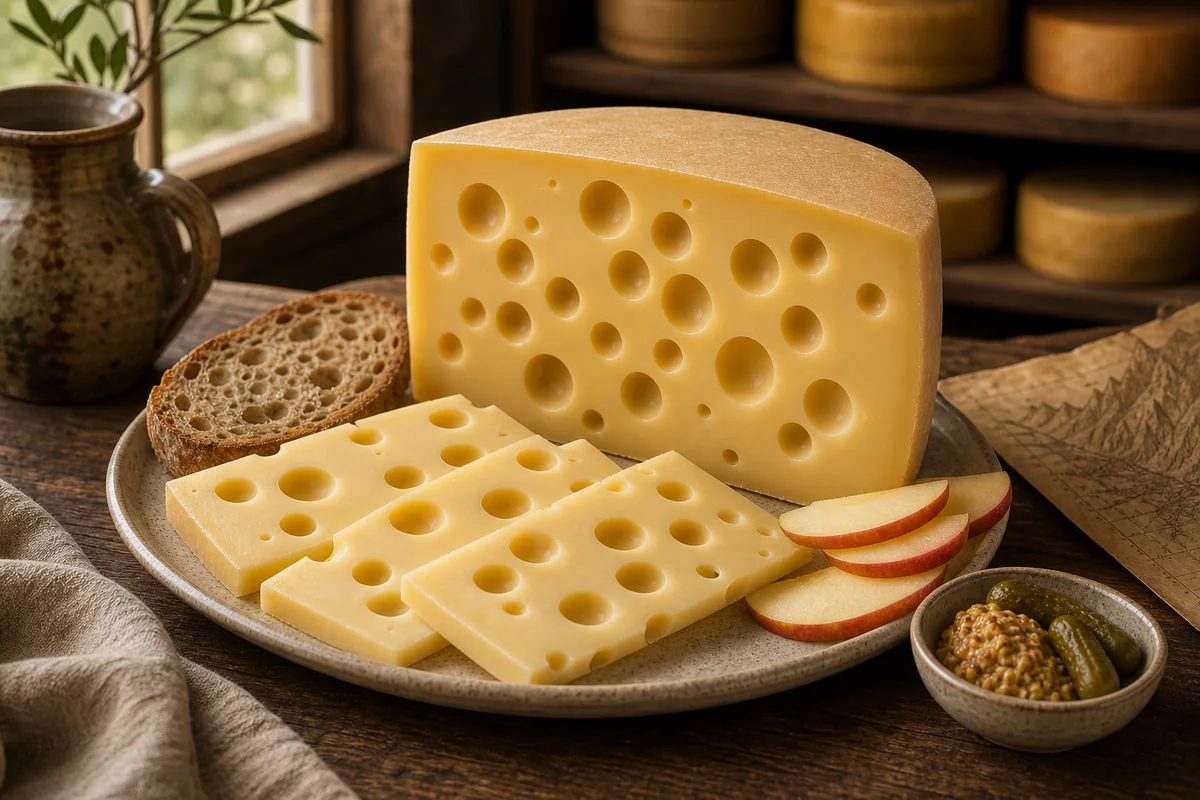
Yes, in most applications. "Swiss cheese" in the US commonly refers to Emmental, a milder, sweeter alpine cheese with large eyes. Gruyere has a stronger, nuttier flavor and smaller eyes, but the two cheeses share the same melt profile and production family. Gruyere makes a noticeably more flavorful sandwich or gratin than standard Swiss. The swap works at a 1:1 ratio in any recipe.

WRITTEN BY
Elise writes every cheese profile, pairing guide, and substitute recommendation on KnowTheCheese. She trained at Murray's Cheese in New York and has visited over 40 creameries across Europe and North America.