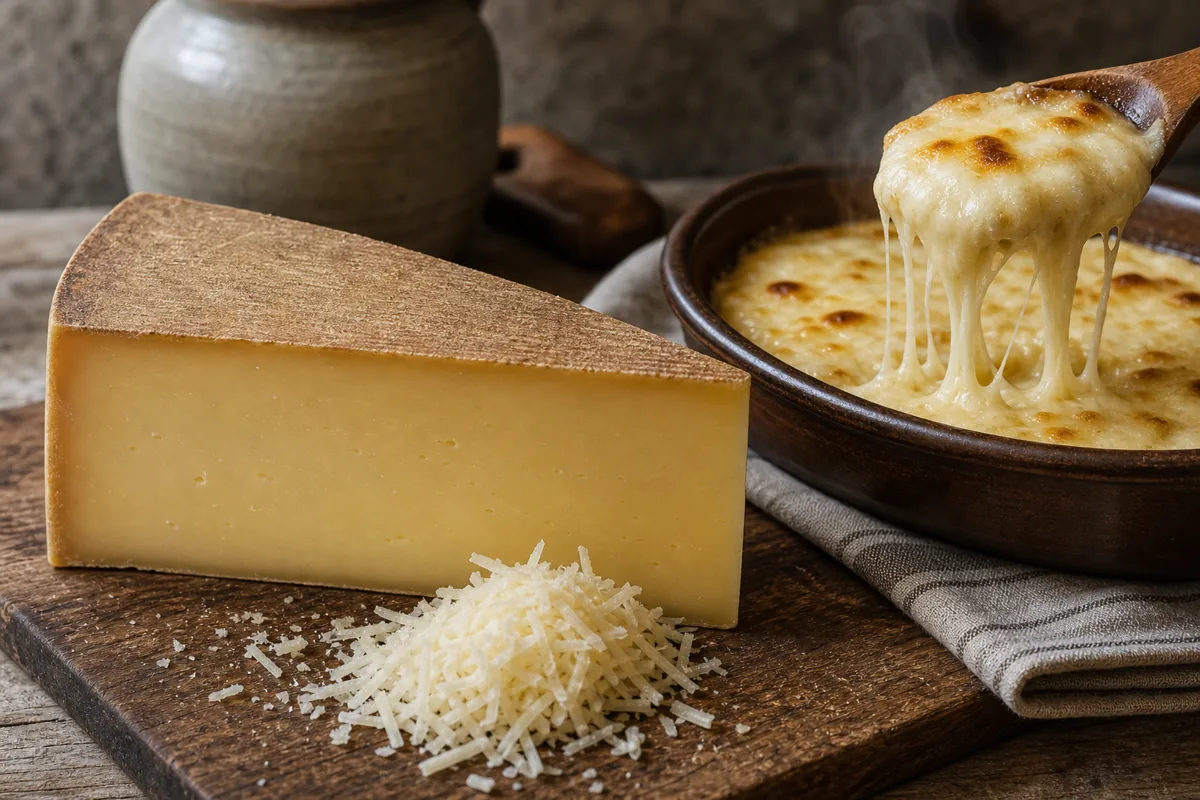
Comté is a practical first choice when you need a Gruyère substitute for a cheese board or a cooked dish.
For fondue, it has a particular advantage: the Comté consortium publishes a complete recipe using its own cheese, so you can follow that method instead of guessing a swap.
For quiche, Jarlsberg or Emmental are useful alternatives, while Beaufort offers another fondue option. Choose for the dish you are making, since a cheese that works in an egg filling does not automatically behave the same way in a pot of wine and melted cheese.
In This Article
6 Gruyère Substitutes: Best Alternatives for Cooking and Serving
1. Comté for fondue and serving in pieces
Choose Comté when you want a French alternative to Swiss Gruyère that you can serve as cheese as well as cook.
Ask the counter for a piece suited to your intended use rather than assuming the oldest wedge is the best purchase.
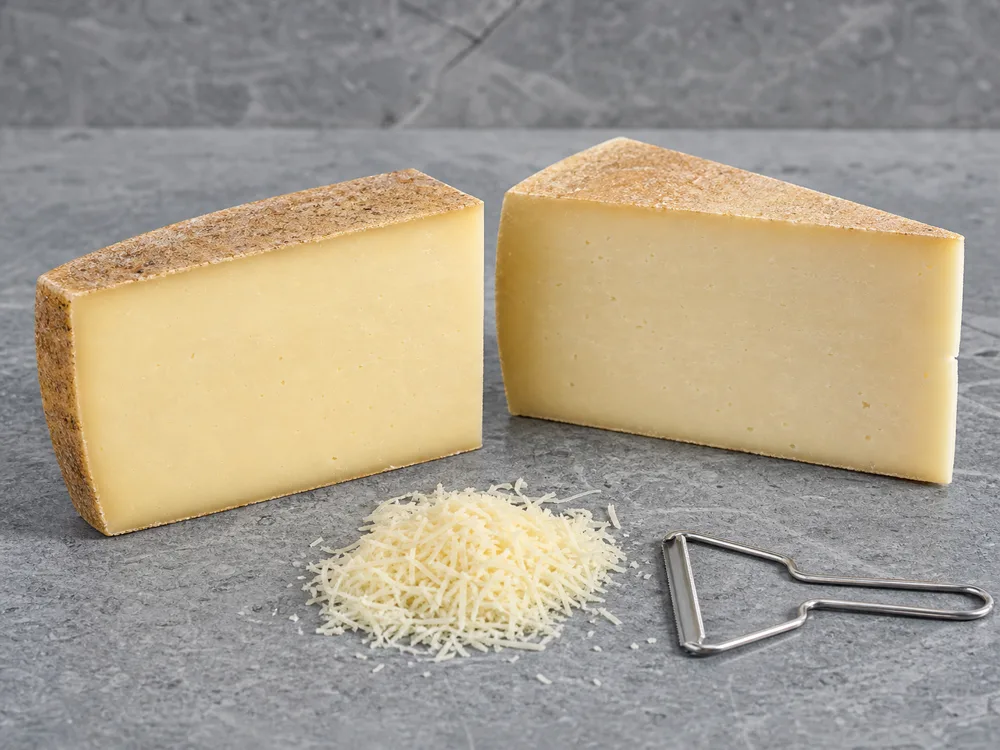
The official Comté fondue uses both eight-month and fourteen-month cheese with white wine. This is a useful example of a recipe deliberately combining ages, rather than a rule that older cheese cannot melt.
Follow that recipe's quantities and method if fondue is your goal.
For a sandwich or a topping, the same usable weight as the Gruyère in your recipe is a reasonable starting point, with flavour and browning judged as you cook.
2. Emmental for savoury tarts and soup toast
Emmentaler AOP Switzerland publishes an onion tart using mature Emmental with an egg-and-milk filling.
It also uses Emmental melted onto bread for a parsnip-and-mustard soup, making it a sensible candidate for a Gruyère-style soup topping.
That topping recommendation is an adaptation from a published use, not evidence that every Emmental will brown exactly like Gruyère. Keep an eye on bread under the grill and take it out when the cheese and toast reach the finish you want.
3. Jarlsberg for quiche
Jarlsberg's own quiche recipe uses grated Original in a filling of eggs, milk and cream.
Choose it when you want a documented egg-bake use rather than a promise that any melting cheese will behave identically.
Keep the custard proportions from the recipe you are following. Adding extra cheese to compensate for a different flavour also changes the filling, so it is better to accept the substitute's character than alter several ingredients at once.
4. Fontina DOP for a creamy fonduta
Fontina DOP is an option when you are willing to make Italian fonduta rather than reproduce a wine-based Gruyère fondue. The consortium's recipe uses milk, butter and egg yolks, with gentle cooking over a water bath.
This is a different preparation, not a one-ingredient replacement in an existing fondue recipe. Buy the specified Fontina DOP and follow the full method if that creamy dish is what you want.
5. Beaufort for fondue without Gruyère
The consortium for Beaufort publishes a Savoyard fondue in which Beaufort is the only cheese. That makes it a supported alternative when you can buy it and want to prepare a fondue built around that cheese.
Use the recipe as written instead of automatically cutting the cheese by a fixed percentage because a wedge tastes strong. Cheese-to-liquid balance is part of the method, and reducing only one ingredient changes it.
6. Sharp cheddar when a different flavour is welcome
Cheddar can be useful when it is the cheese you already have, but it will make the dish taste like cheddar. Choose it for a bake or sandwich where that change is welcome, rather than expecting an indistinguishable Gruyère replacement.
Cheddar can also make fondue. Cabot's sharp-cheddar recipe includes stock, white wine and cornstarch, so the workable choice is a cheddar-specific recipe rather than dropping cheddar into any Gruyère formula.
How Do You Adjust Weight and Cooking for a Gruyère Substitute?
For a grated topping or sandwich filling, begin with equal usable cheese weight. If a recipe calls for 100 g of grated Gruyère, weigh 100 g of the replacement after removing any rind you do not intend to use.
This is a starting amount, not a promise of identical flavour or texture.
For fondue, sauces and custards, a recipe written for the chosen cheese gives you a firmer basis than a universal 1:1 rule.
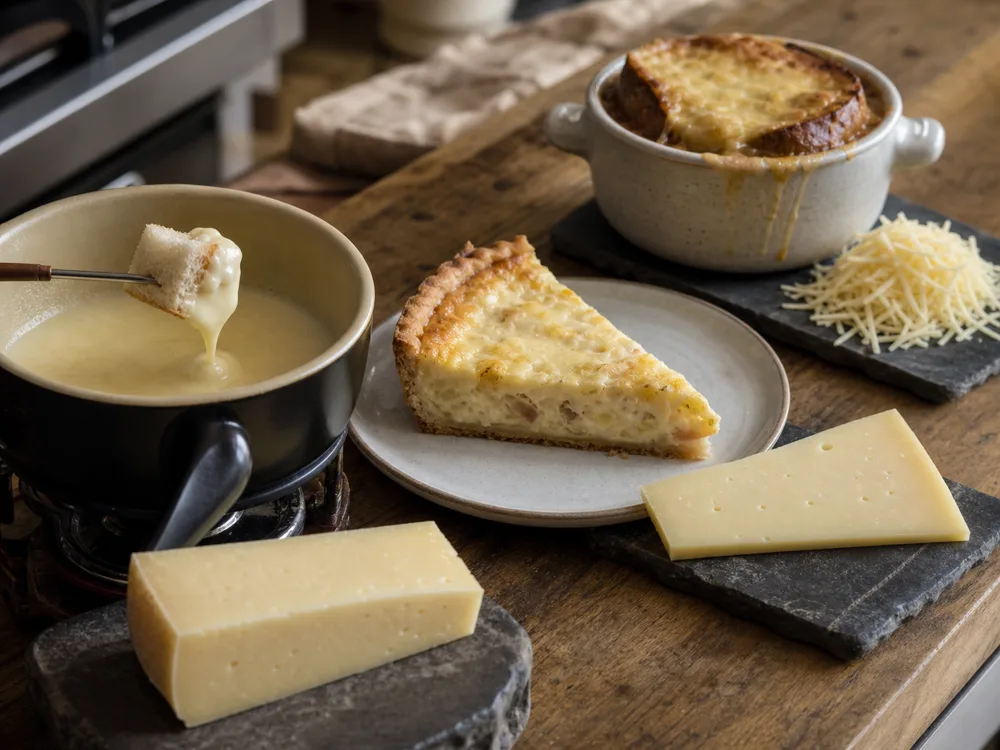
A block lets you choose the grate size, but pre-shredded cheese is not automatically unusable. Cabot explicitly allows its grated block or packaged shredded sharp cheddar in its fondue recipe.
Follow the chosen recipe's heat and liquid instructions rather than relying on a single temperature for every cheese. Our cheese choices for sauces and toppings explain how those jobs differ.
What if the replacement must be dairy-free?
All six choices above are dairy cheeses.
If avoiding dairy is the reason for replacing Gruyère, choose a plant-based product whose maker gives instructions for your intended dish, or use a complete dairy-free recipe.
A product that softens on toast may not make a pourable fondue, and a firm-looking alternative is not necessarily suited to grating. Check the ingredients as well as the cooking directions, especially when serving someone with a nut or milk allergy.
Cashew-based and coconut-oil products come in different formulations.
Compare the specific products' cooking instructions instead of choosing by the base ingredient alone.