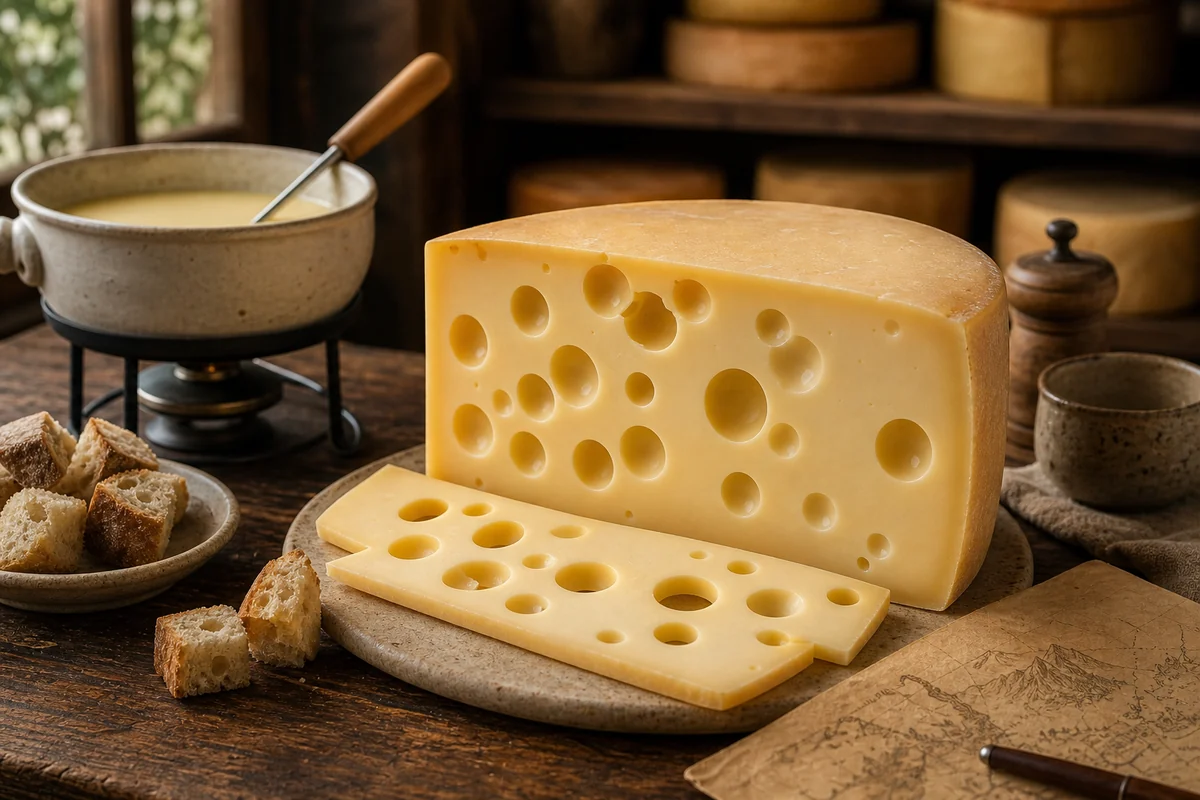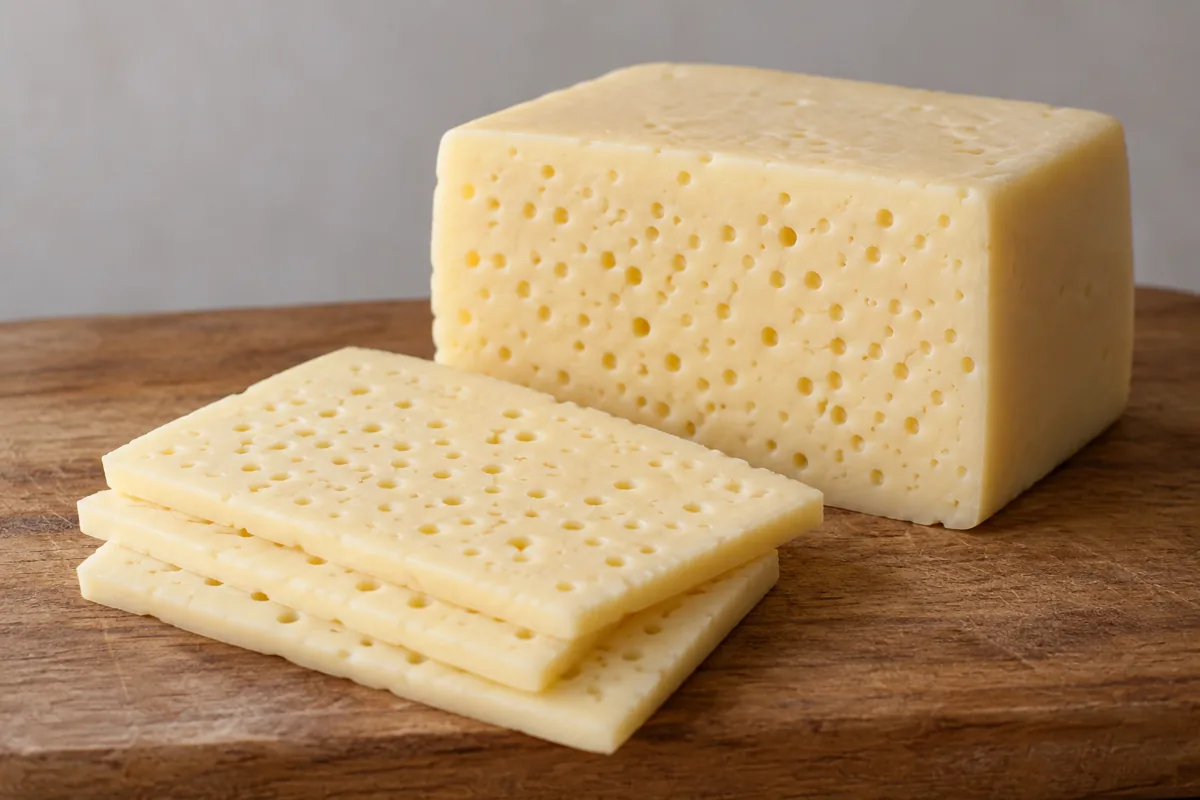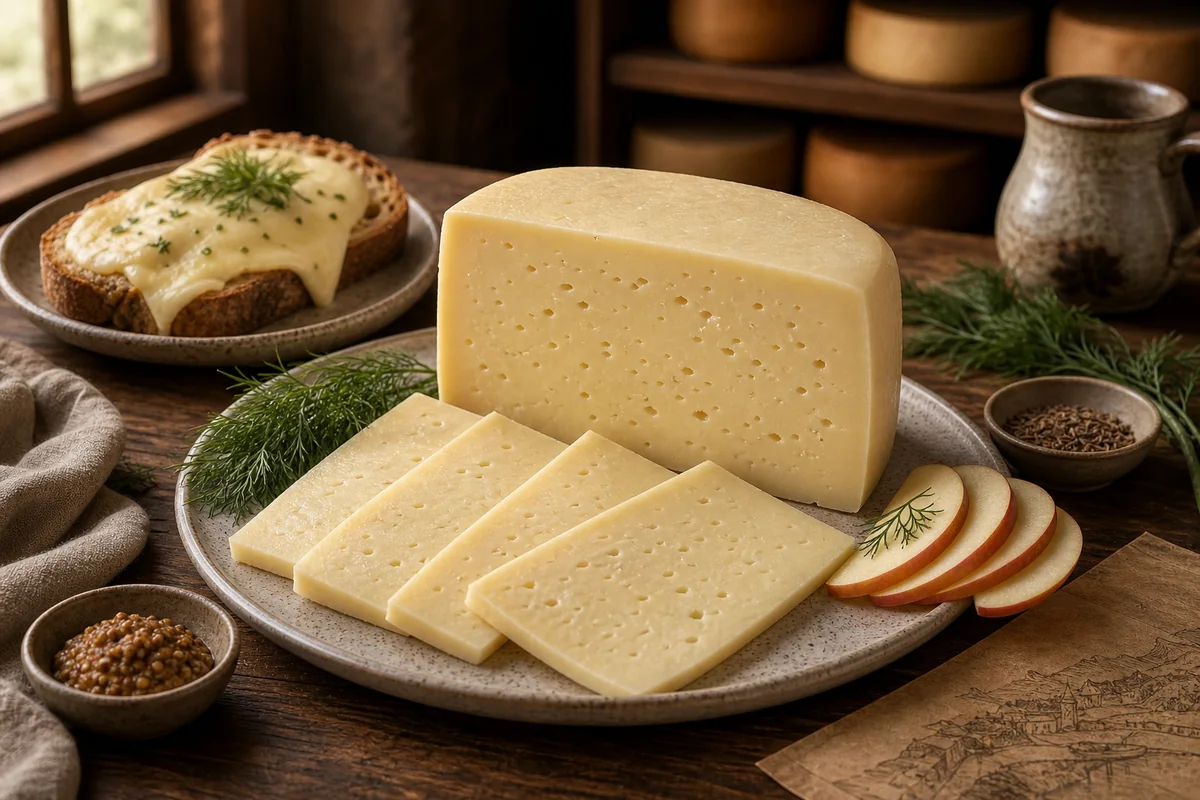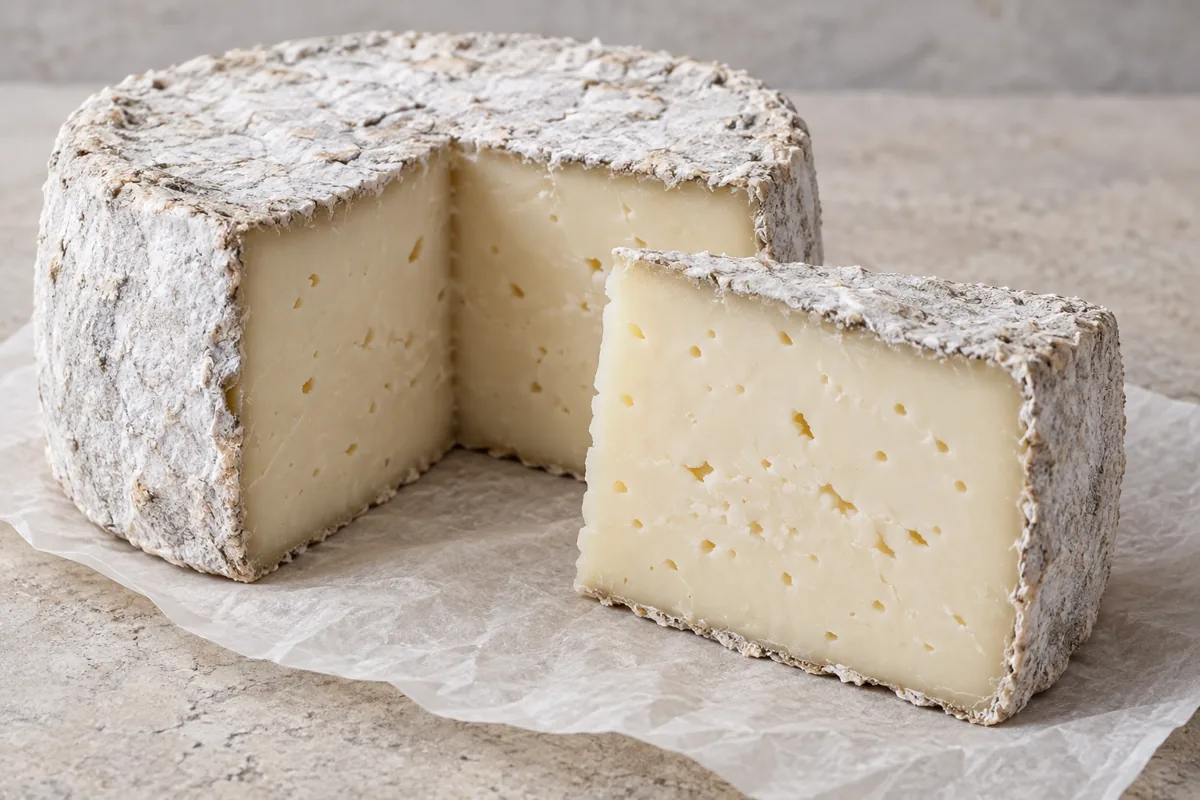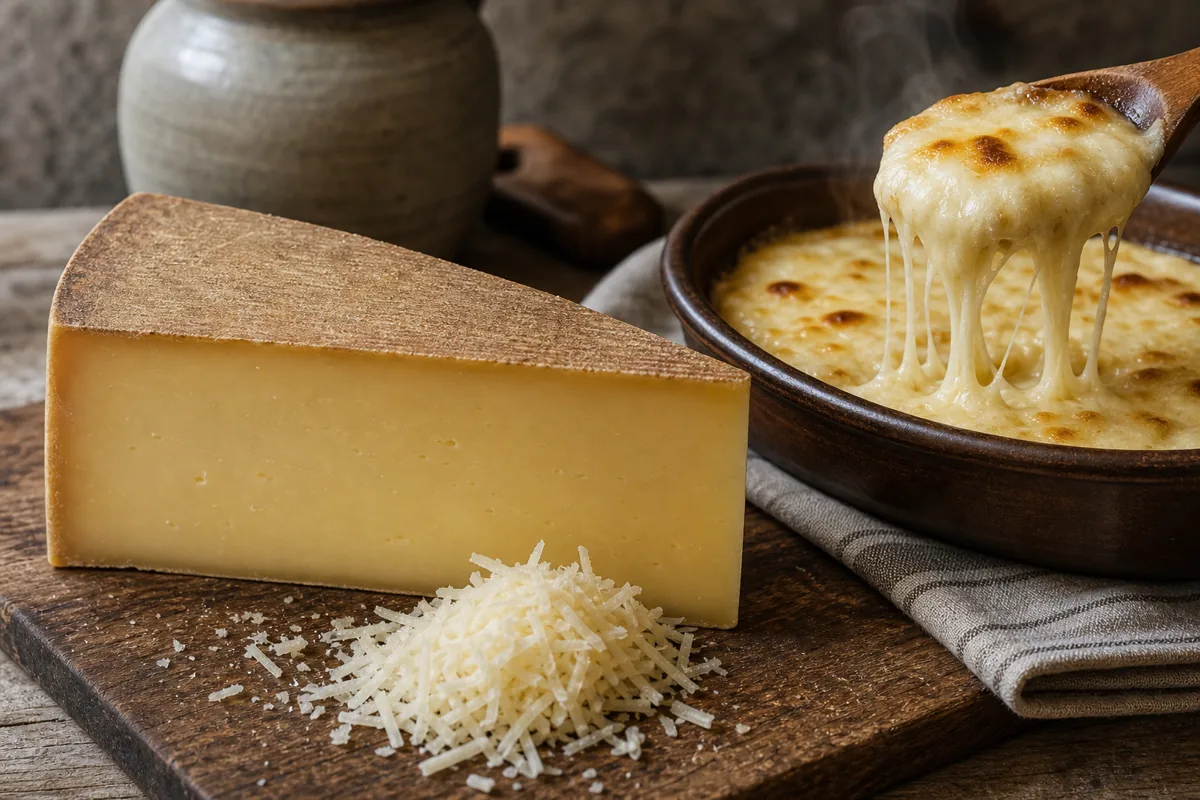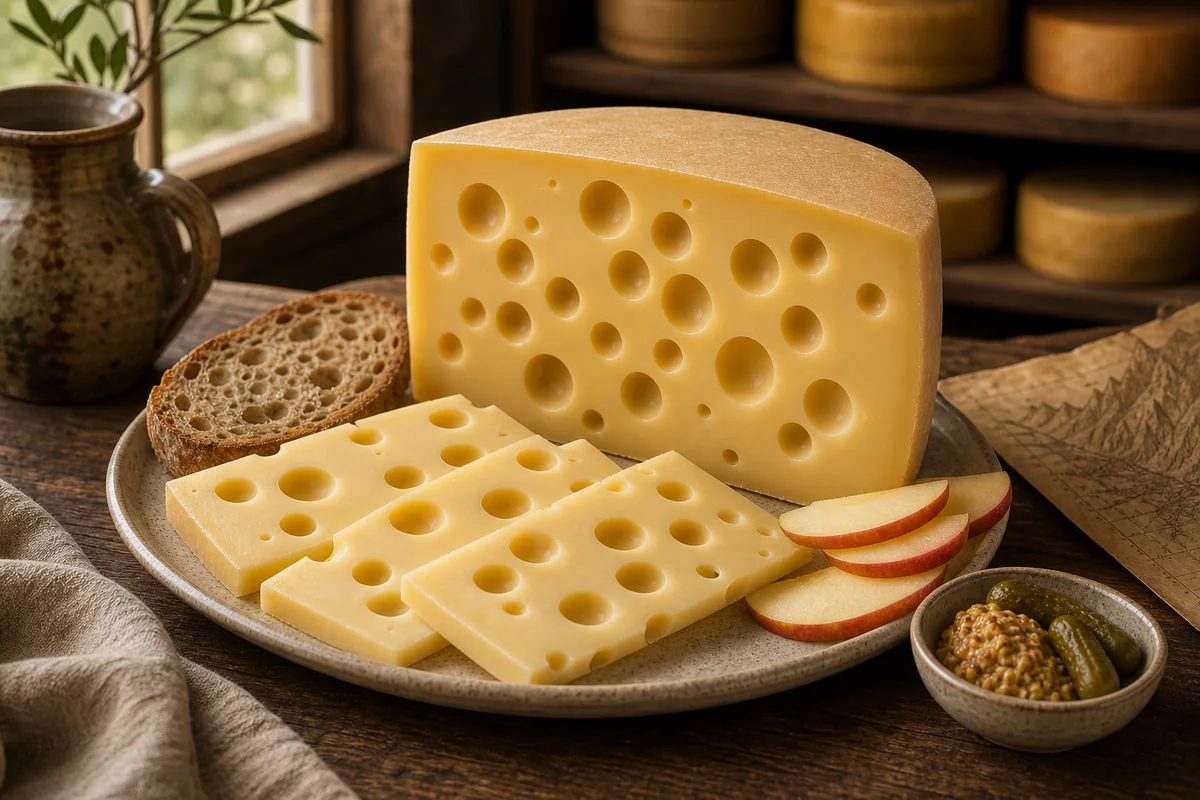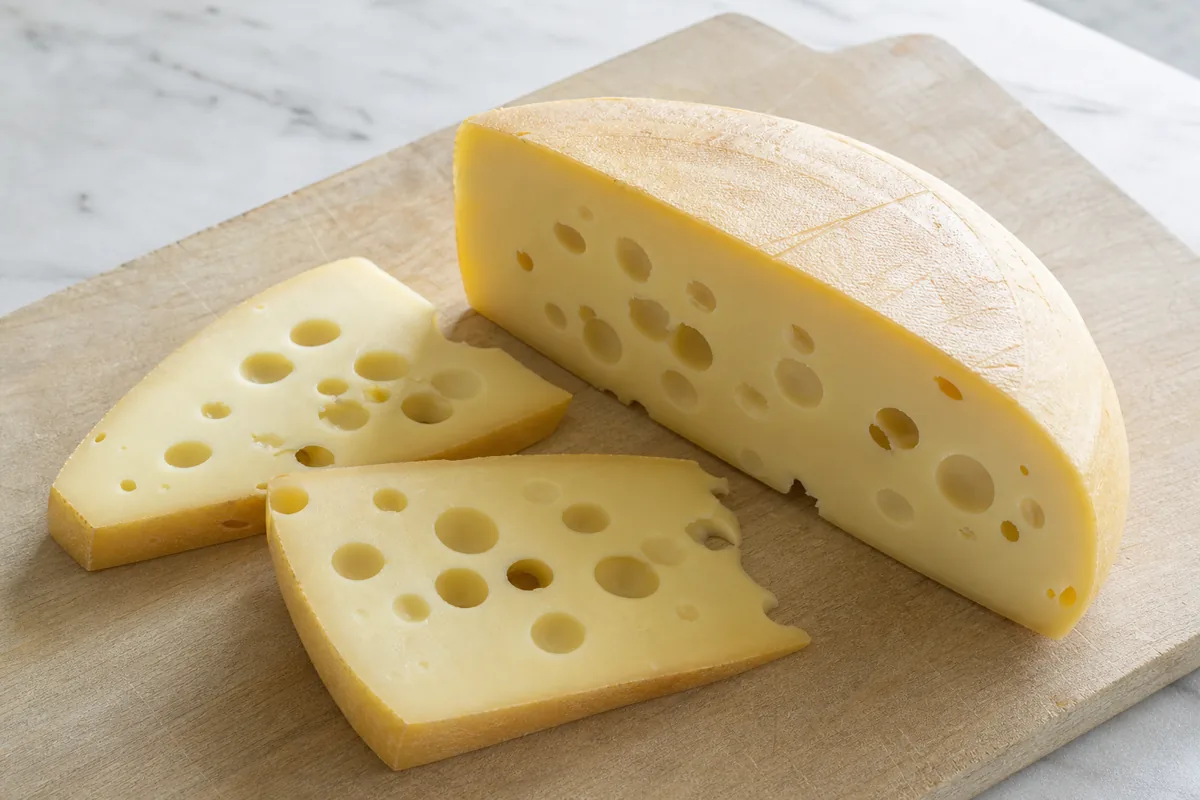
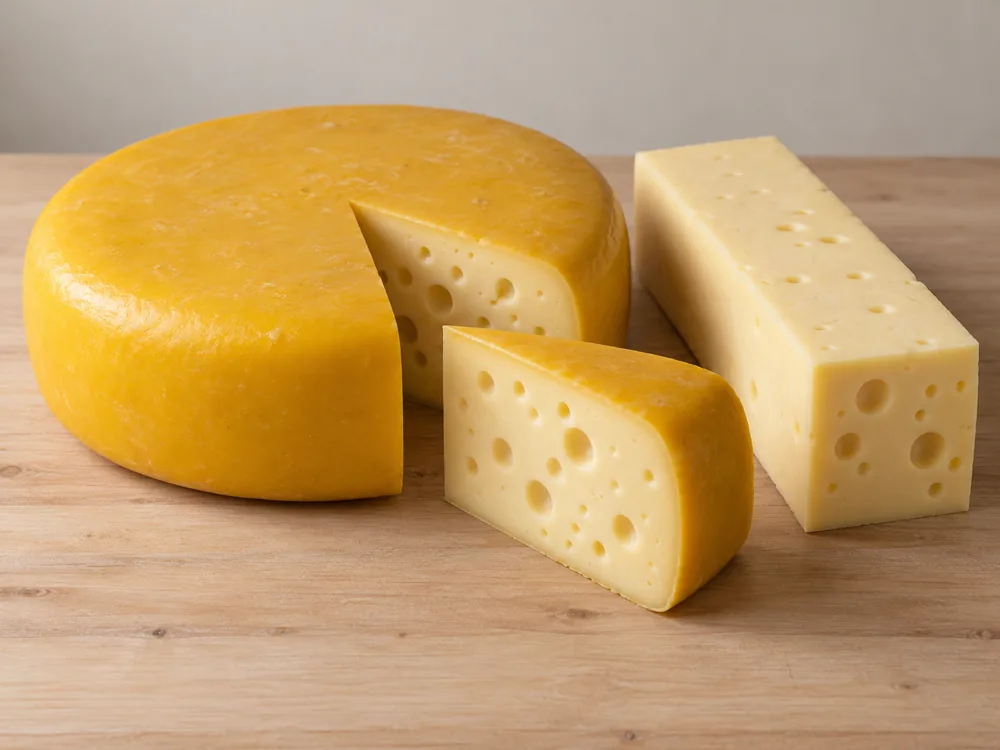
Jarlsberg is a Norwegian cow's milk cheese with round holes and a sweet, nutty flavor, made to a single recipe by the dairy cooperative TINE. It looks like Swiss Emmental, and TINE's Jarlsberg Q&A says it differs in production method, bacteria culture and moisture, which leaves a softer, creamier and less dry cheese.
The everyday version is Jarlsberg Original, which the Q&A says is ready after 8 to 10 weeks, while Special Reserve ripens for at least 12 months.
In This Article
What Is Jarlsberg Cheese?
Professor Ole Martin Ystgaard and his team at the Agricultural University of Norway in Ås began developing the cheese in 1956, according to the Jarlsberg Q&A. They classed it as a goutaler, a cheese that mixes Gouda and Emmental cheese-making techniques.
Norwegian Wikipedia traces the project to a thesis by the dairy student Per Sakshaug on getting better holes in Gouda. At the time, the way holes formed in Gouda was treated as a quality fault.
TINE's own history page describes the same starting point, a research project to increase the number of holes in Gouda with a new cheese culture. It says the resulting goutaler pairs Gouda's smooth texture with Emmental's characteristic holes.
The name is older than the recipe. The Q&A says Jarlsberg Manor in Vestfold gave permission to use it, and that the name is the only thing today's cheese shares with the cheese made in Vestfold in the 1800s.
That older history is disputed, according to Norwegian Wikipedia. Some sources credit the farmer Anders Larsen Bakke (1815–1899) of Våle, while advertisements for Jarlsberg-Ost already ran in the 1820s.
Norwegian Wikipedia says TINE registered Jarlsberg as a trademark in 1972, and the Q&A describes TINE as a cooperative of about 10,000 Norwegian farmers.
The trademark is what holds the name to one maker. Norwegian Wikipedia says Jarlsberg is not tied to a region the way many protected cheeses are, and that after Synnøve Finden launched its Kongsgård cheese in 2016 as a Jarlsberg-type cheese, the Follo district court ordered it to stop marketing it that way.
TINE makes the cheese in its own dairies at Verdal, Elnesvågen and Jæren in Norway, at Mogeely in Ireland and at Alpine Cheese in Ohio. The Q&A says the Ohio and Mogeely sites were set up in 2001 and 2004.
The Q&A, which mentions a 2019 award and so is recent, calls all five dairies fully owned by TINE.
How Is Jarlsberg Made?
In the Q&A's account, cheese-making separates the milk into casein curd and whey, and propionic acid bacteria, which it calls the secret recipe, give Jarlsberg its characteristic taste and holes. The Q&A adds that the lactic acid produced by these bacteria stimulates the enzymes in the rennet, which makes it easy to remove the whey from the curd.
The Q&A then walks through the shaping in this order:
- Cutting: once the curd is firm, a special cutting tool divides it.
- Pressing: the pieces are pressed together, divided into small blocks and placed in cheese molds, where they are under pressure.
- Brining: the cheese comes out of the mold and goes into a salt solution.
- Maturing: it is packed and left to mature, for a length that depends on the version.
The holes you see come from gas. The Emmentaler AOP FAQ says natural fermentation produces carbonic acid gas during ripening, which creates the round openings, and the Jarlsberg Q&A names Propionibacterium shermanii among Jarlsberg's bacteria.
English Wikipedia describes the formula as a trade secret, and the Q&A calls the culture the soul of Jarlsberg.
TINE produces that culture in Norway, the Q&A says, while most cheese producers buy their cultures on the open market. If your Jarlsberg was made in Ireland or the USA, it was made with the same culture, and TINE says the recipe has not changed since 1956.
The 1956 team also tried different production techniques, cooking temperatures, salt brine and ripening temperatures before it settled on the recipe, according to the Q&A.
Why Does Jarlsberg Taste Different from Emmental?
Set the two side by side and, by the Jarlsberg Q&A's account, Jarlsberg has smaller and fewer holes and is less dry, softer and creamier. The brand puts that down to three things: the production method, the bacteria culture, and the balance of moisture and aroma compounds.
Of those three, the Q&A credits the culture with the sweet, mild and nutty taste, the soft consistency and the large holes.
The milk differs too. Emmentaler AOP confirms that Emmentaler is made from raw cow's milk, which Jarlsberg uses pasteurized.
| Point | Jarlsberg | Emmental | Source |
|---|---|---|---|
| Milk | Pasteurized semi-skimmed cow's milk | Raw whole cow's milk (Emmentaler AOP); pasteurized in Emmental-style cheese outside the AOP | Jarlsberg Q&A; Emmentaler AOP |
| Type | Semi-soft (Cheese.com); semi-hard (Jarlsberg Q&A) | Semi-hard | Cheese.com; Jarlsberg Q&A |
| Holes | Smaller and fewer than Emmental | Larger and more numerous | Jarlsberg Q&A |
| Texture | Softer, creamier, less dry | Firmer | Jarlsberg Q&A; Cheese.com |
| Flavor | Sweet, nutty, mild | Stronger and sharper than Jarlsberg | Cheese.com |
| Age | 8 to 10 weeks for Original | 4 to 30 months (Emmentaler AOP) | Jarlsberg Q&A; Emmentaler AOP |
| Name | TINE trademark since 1972 (Norwegian Wikipedia) | Swiss AOP designation since 2006 (Emmentaler AOP) | Norwegian Wikipedia; Emmentaler AOP |
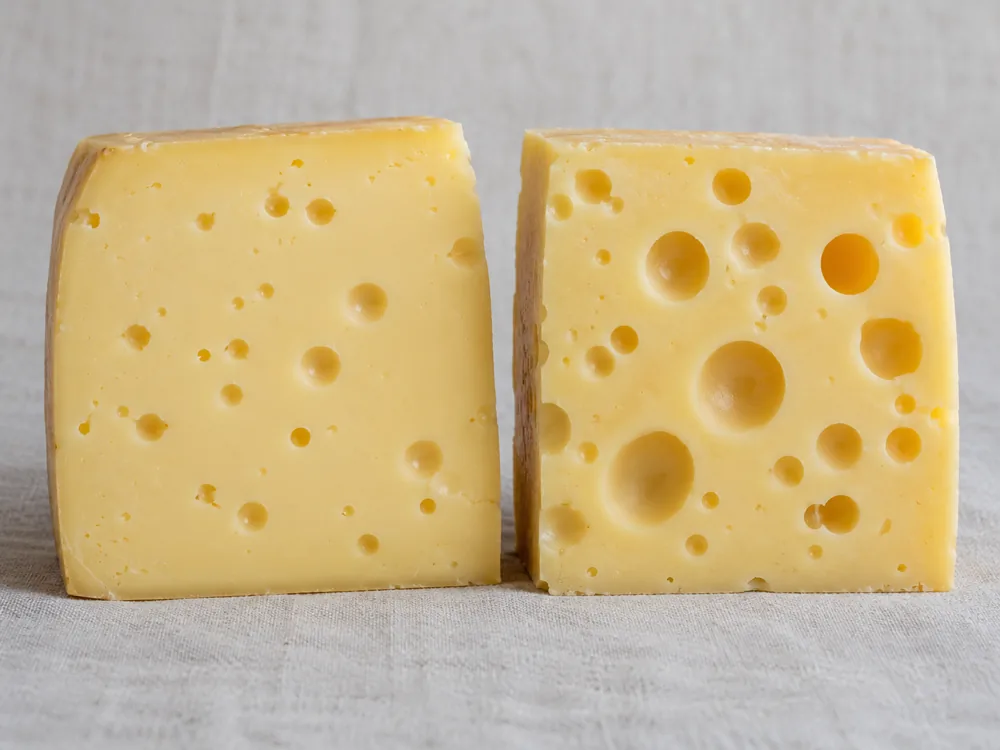
The holes are where the brand's own wording pulls two ways: the Q&A calls them big, round and characteristic, yet smaller than Emmental's. Cheese.com calls the eyes open and irregular.
Emmentaler AOP also ages far longer, 4 to 30 months against 8 to 10 weeks for Original Jarlsberg.
You may still find Jarlsberg marketed as a Swiss cheese. Norwegian Wikipedia says the new cheese was sold as one for several years, and Cheese.com says it is still often marketed that way because it resembles Emmentaler, though it calls the real cheese much sweeter and more substantial.
How Do Original, Lite and Special Reserve Differ?
TINE sells three versions, and its product pages separate them by age, fat and use. Original is the everyday cheese, sold with or without rind, and its page suggests it for sandwiches, summer salads and snacking.
Special Reserve ripens for at least 12 months, and the product page says the ageing keeps the same flavors and aromas but makes them stronger.
The Q&A describes the change a little differently, calling Special Reserve more tangy and developed, with a somewhat drier texture that is still creamy, and saying the cheese's character changes quite dramatically with age.
Lite is the lower-fat block. Its product page says the lower fat makes it less suitable for cooking than Original, though it is pliable enough to cut with a cheese slicer for sandwiches.
| Point | Original | Lite | Special Reserve |
|---|---|---|---|
| Age | 8 to 10 weeks (Q&A) | Not stated | At least 12 months |
| Energy | 351 kcal | 268 kcal | 364 kcal |
| Fat | 27 g | 16 g | 28 g |
| Saturated fat | 17 g | 10 g | 18 g |
| Protein | 27 g | 31 g | 28 g |
| Sodium | 440 mg | 440 mg | 440 mg |
| Calcium | 770 mg | 770 mg | 770 mg |
| Formats | 250 g, 500 g, cut pieces or a 10 kg wheel | 250 g and 500 g, no rind | Cut pieces or a 10 kg wheel |
The Lite page gives two fat figures, 13% beside the ingredient list and 16 g per 100 g in the nutrition table.
Cheese.com's nutrition line disagrees with the maker on energy: it lists 111 calories for a 28 g serving, about 396 kcal per 100 g, against 351 kcal on the Original page and 364 kcal on the Special Reserve page. Its 7.6 g of protein per serving works out to about 27 g per 100 g, which matches the maker.
The gap could come from a different version or a different method, so for the cheese in your hand, the pack's own nutrition panel settles it.
The Jarlsberg Q&A says Original is ready after 8 to 10 weeks, while Cheese.com gives a minimum of three months.
Norwegian Wikipedia says the cheese with rind is made as round 10 kg wheels and the rindless cheese as 5 kg blocks.
Cheese.com lists wheels, slices, wedges, minis and random-weight pieces, and the Q&A says the wedges you buy are cut from the 22 lb wheel, with slices and snacks sold at most retailers.
If a piece still wears its yellow wax rind, it is Original or Special Reserve, because Lite is sold only without rind.
Which Dishes Work Best with Melted Jarlsberg?
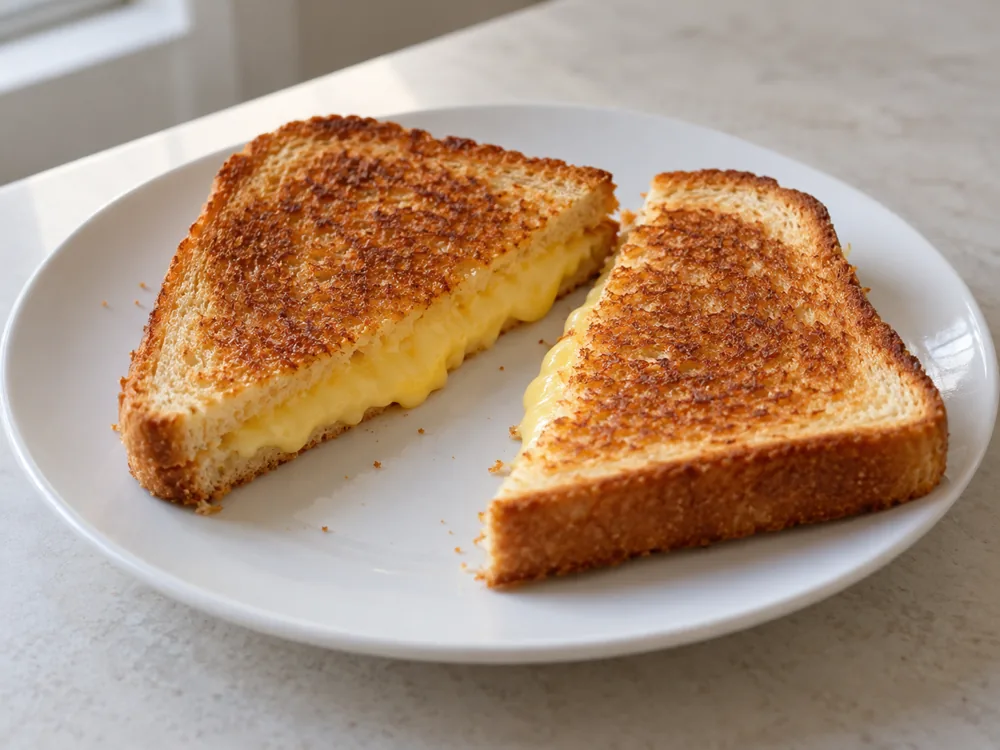
Jarlsberg is made to melt, according to the Q&A, which names six hot dishes for it. Cheese.com calls it an all-purpose cheese for cooking and snacking and adds quiches and other hot dishes.
| Use | How It Works |
|---|---|
| Grilled cheese | Named in the Jarlsberg Q&A. |
| Burgers | Named in the Q&A. |
| Pizza and soup | Both named in the Q&A. |
| Mac and cheese | Named in the Q&A. |
| Fondue | Named in the Q&A and by Cheese.com. |
| Quiches and hot dishes | Cheese.com's suggestions. |
The melt has a stated source: TINE's Our Story page says the goutaler type took Gouda's great melt, which fits the Q&A line that Jarlsberg is made to melt.
For a recipe from the maker, the product page shows four for Original and swaps some of them from one visit to the next, and burger recipes such as The Marvelous Meltdown Burger have been among them.
When a dish needs a stronger flavor, the product page points you to Special Reserve, whose recipes run to a Jerusalem artichoke gratin and a mac 'n' cheese sandwich.
The product page also lists Lite recipes under a Cook with Jarlsberg Lite heading, among them creamy pasta with crayfish, puff pastry swirls and surf 'n' turf, even though the same page says Lite is less suitable for cooking than Original.
In Norway, Jarlsberg is the topping on Grandiosa, which Tasting Table describes as Norway's best-selling frozen pizza brand.
Cheese.com also suggests melting it into a gourmet grilled cheese and grating it over pasta.
What to Serve with Jarlsberg
You can keep serving simple. The Q&A suggests the cheese on its own, or with fresh bread, crackers, fresh fruit or vegetables, and Cheese.com adds fruits and nuts.
| Pairing | Why It Works |
|---|---|
| Fresh bread | Named in the Jarlsberg Q&A. |
| Crackers | Named by the Q&A and Cheese.com. |
| Fresh fruit | Named by the Q&A and Cheese.com. |
| Fresh vegetables | Named in the Q&A. |
| Nuts | Cheese.com pairs Jarlsberg with fruits and nuts. |
| Summer salads | The product page for Original suggests it. |
If you are building a cheese board, the product pages name both versions: Original as an addition to the board, and Special Reserve for cheese platters or as finger food at a buffet.
How Should You Store and Freeze Jarlsberg?
Slice Jarlsberg while it is cool: every product page says the cheese is best sliced when cool. How long it keeps depends partly on whether you have opened the pack:
- Fridge: 0 to 4 °C, according to the product pages, and in sealed packaging, according to the Q&A.
- Unopened: up to 4 to 6 weeks in the fridge, according to Cheese.com.
- Opened: best within 1 to 2 weeks, wrapped or in an airtight container, according to Cheese.com, which says air exposure can lead to spoilage.
- Date: the Q&A points to the best-before date printed on each pack.
You can freeze Jarlsberg, but the Q&A says to grate it first, because a frozen piece loses some of its flexible texture.
Grated cheese from the freezer suits cooking, and the brand names grilled cheese as the use.
Why Is Jarlsberg So Expensive?
The Q&A answers the price question with four costs: only premium milk, a micro-filtering step, TINE's own in-house culture and highly skilled staff.
On milk, the Q&A names a standard for each country: only grade A milk in the USA, which it calls the highest quality and most expensive, and selected milk from carefully chosen suppliers in Ireland.
It says TINE accepts only the equivalent of Norwegian elite milk everywhere, tests every load, and turns away any milk showing traces of antibiotics.
All the milk is then micro-filtered even though it is of the highest quality, a technique the Q&A credits with a pure, consistent taste.
The people are the fourth cost, since the Q&A says key personnel are trained in dairy technology and research, with courses and further education prioritized.
Which Cheeses Can Replace Jarlsberg?
Pick the substitute by what you need Jarlsberg to do. Cheese.com's substitutes page compares eight cheeses with it and says what each one shares and what it changes.
| Substitute | What it shares with Jarlsberg | What changes |
|---|---|---|
| Swiss cheese | Pale yellow color, large round holes, mild nutty flavor, melts well | Less creamy and less sweet |
| Gruyère | Nutty taste with a hint of sweetness, smooth, melts well | More robust and assertive, slightly earthy |
| Emmental | Sweet, nutty flavor, smooth texture, large holes | Stronger, sharper and firmer |
| Gouda | Creamy texture, mild nutty taste | More buttery |
| Maasdam | Mild, nutty flavor, creamy texture | Less sweet; holes may be less prominent |
| Norvegia | Norwegian, mild, slightly sweet, smooth | Lacks Jarlsberg's nutty flavor |
| Havarti | Creamy texture, melts well | Milder, without the nutty notes |
| Cheddar | Melts in cheese sauces | Sharper and more robust |
If you want the look of Jarlsberg, Swiss cheese shares the color, holes and nutty flavor, according to Cheese.com, but can lack Jarlsberg's creaminess and subtle sweetness.
Maasdam, which Cheese.com calls Dutch Emmental, keeps the nutty, creamy profile but tastes less sweet.
Gruyère is the stronger swap. Cheese.com suggests it for fondue or gratins when a more pronounced taste is welcome.
For sandwiches and burgers, Danish Havarti melts well, though Cheese.com says it lacks Jarlsberg's nutty notes.
Cheese.com ties Gouda to grilled cheese sandwiches and cheesy appetizers, where its buttery notes complement the other ingredients, and Cheddar to melted cheese sauces for dishes such as macaroni and cheese or nachos.
Because TINE builds Jarlsberg from Gouda's melt and Emmental's holes, the two parents each cover one half of the job, and Cheese.com's notes line up that way: Gouda matches the creamy texture and Emmental the large holes.
Is Jarlsberg Lactose-Free and Safe in Pregnancy?
If you avoid lactose, Jarlsberg contains less than 0.01 g of lactose per 100 g, according to the Q&A, and the product pages call every version naturally lactose-free. Each version's nutrition table lists 0 g of carbohydrate.
The Q&A explains why: most lactose leaves the curd with the whey, and lactic acid bacteria use up the rest during ripening.
If you are pregnant, the NHS lists pasteurised semi-hard cheeses such as edam, and pasteurised or unpasteurised hard cheeses, as safe to eat in pregnancy. The Q&A says all Jarlsberg is made from pasteurized milk.
The CDC names hard cheese made with pasteurized milk, including Swiss and Emmental, among the safer choices, but puts unheated cheese sliced at a deli among the riskier ones. The CDC also says pregnant women are 10 times more likely to get a Listeria infection.
SOURCES & REFERENCES
The brand gives the pronunciation as yahrls-burg.
Yes. The Jarlsberg Q&A says every Jarlsberg product is made with vegetable or microbial rennet, so it is suitable for vegetarians.
The ingredient list is pasteurized semi-skimmed milk, cheese cultures, salt and microbial enzymes; anyone avoiding gluten should check the label on the pack they buy.
No. The Jarlsberg Q&A says there are no preservatives in Jarlsberg.
The brand says it cannot call Jarlsberg A1 or A2 only, because the milk comes from a mix of cow breeds.
TINE says its five dairies use the same equipment and quality rules, and that sensory analysis finds the same taste profile at every site. The Q&A also notes that flavor can vary from batch to batch with the cheese's composition and age.