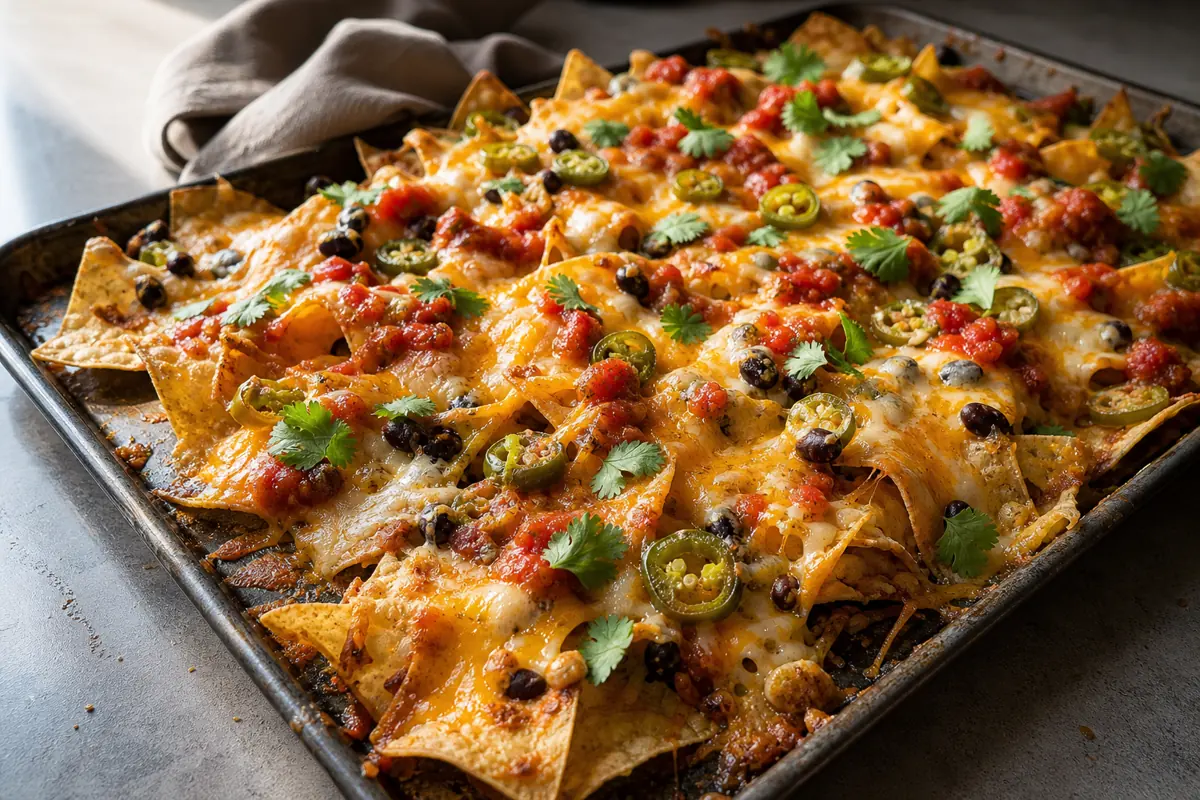
Cheddar is still the best single cheese for nachos because it browns well, tastes like real nachos, and keeps its identity under beans, salsa, jalapenos, and sour cream. For most home trays, though, a Monterey Jack and cheddar blend is the smarter play because Jack keeps the melt loose while cheddar keeps the flavor from disappearing.
Nachos need more than the stretch that general cheese melt rules reward: they need browning, coverage, enough salt and tang to punch through toppings, and a melt that still feels good once the tray hits the table.
We ranked these cheeses by the jobs that matter on real nachos: flavor through toppings, smoothness under broiler heat, hold time after baking, and how well the cheese reaches more than the top chip layer.
In This Article
Why cheddar still wins most nacho trays
Cheddar is still the best single-cheese answer, and young and medium cheddar do the job better than most supermarket cheeses. They melt well enough, brown on the edges under a broiler, and keep enough tang to survive salsa and beans.
Once the toppings get louder, that flavor edge matters more than perfect silkiness.
The ranking changes once you stop asking for one perfect cheese and start asking what job the tray needs.
A dry sheet-pan tray rewards cheddar more than a party platter does. A long sit on the counter rewards smoother cheeses and sauces more than a quick weeknight tray does.
Smooth Monterey Jack blocks are easier to melt than cheddar, but the trade-off is obvious on a loaded tray. Once black beans, salsa, jalapenos, and crema land on top, plain Jack can taste like texture without much voice.
Chile-flecked Jack solves that a different way. It keeps the same easy melt behavior as Jack while adding chile bite inside the cheese layer.
Queso Chihuahua is the richer, butterier branch when you want a more Mexican-style melt. Colby works for family trays where mild cheddar flavor is the target but a softer, gentler melt matters more than sharp edges.
Why Are Broiler Heat and Wet Toppings the Real Nacho Problem?
The broiler blasts the top chips hard, while the lower layer stays cooler because the chips, beans, and pan are still absorbing heat. That means the cheese has to melt fast on top without turning oily before the middle catches up.
Salsa, beans, guacamole, crema, and pickled jalapenos then add moisture, salt, and acid.
A cheese that tastes fine by itself can go flat once those toppings land, which is why mild melt alone is not enough for nachos.
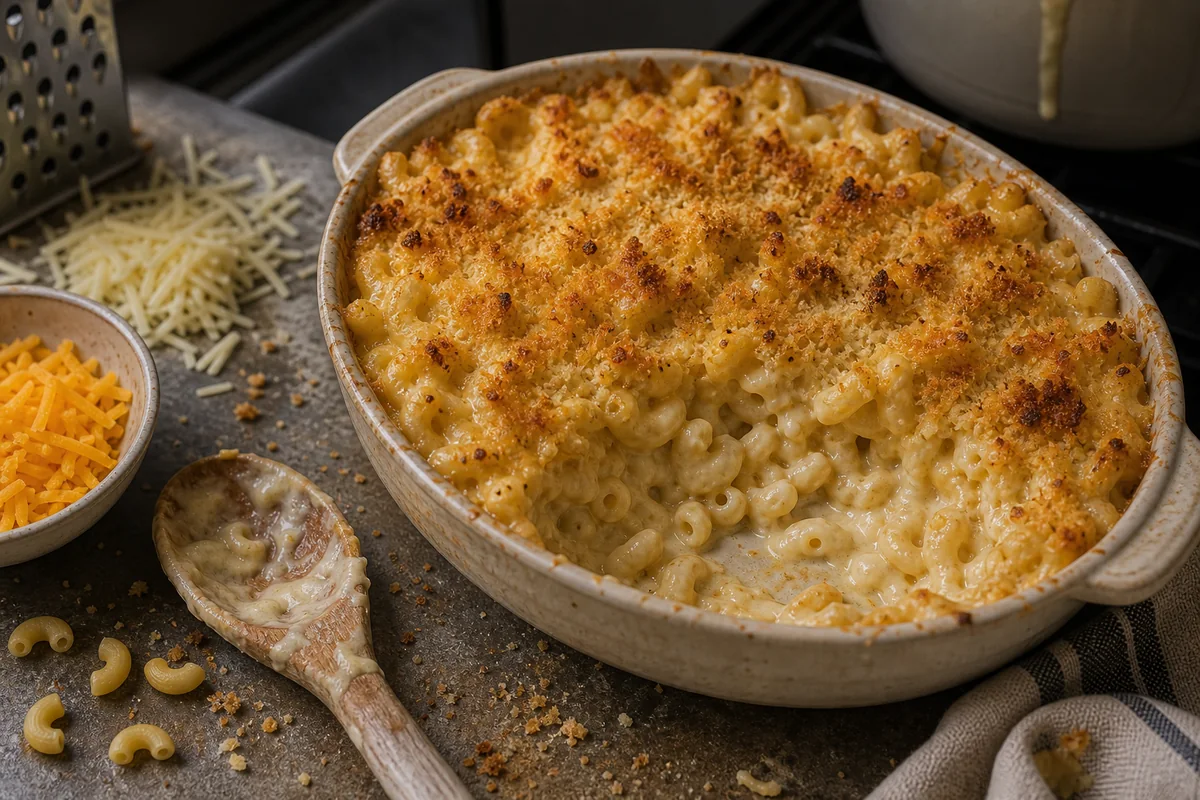
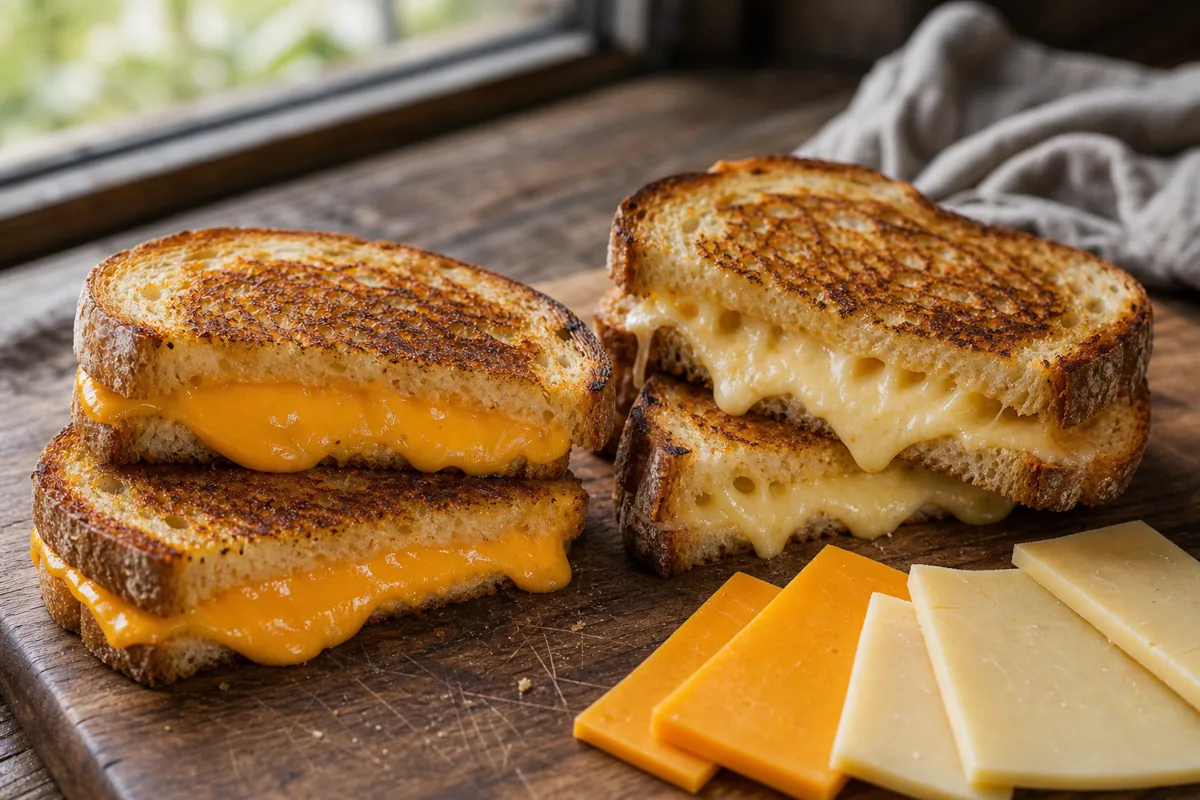
Top heat plus a wet topping layer is why some famous melting cheeses still lose here. A cheese can behave well in pasta, fondue, or a sandwich and still miss on nachos because those dishes do not combine the two in the same way.
Fresh grating matters more than people expect, because pre-shredded cheese carries anti-caking starches that can make the surface look dusty and slow down how the shreds fuse across the chips.
What Cheese Roles Matter on a Nacho Tray?
A good nacho tray does not ask every cheese to do the same job.
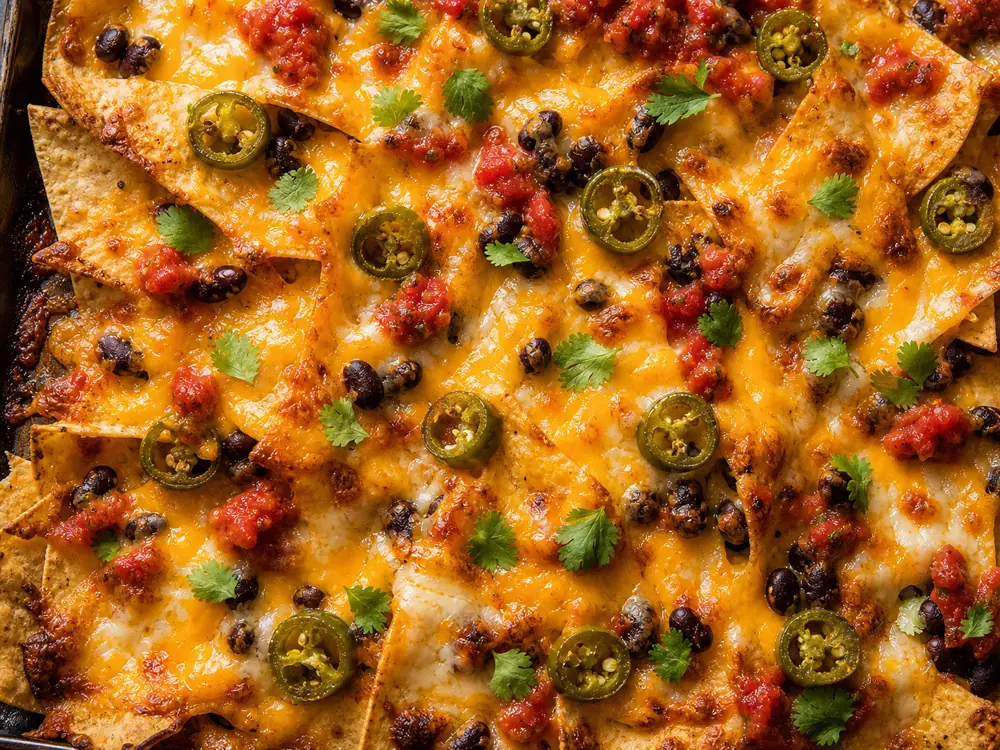
- Flavor role: cheddar wins because it still tastes like something after beans, salsa, jalapenos, and sour cream stack up.
- Smooth-coverage role: Jack, Colby, and American cheese melted into a sauce cover awkward chip angles more easily.
- Stretch role: long-pull Oaxacan cheese gives the biggest pull, but it needs a stronger partner or bolder toppings because the flavor stays mild.
- Sauce role: queso works best when the tray has to feed a crowd, sit for a while, or coat every chip instead of just the top layer.
Why the Jack-cheddar blend fixes most home trays
Use Jack for melt and cheddar for flavor. That blend fixes the biggest home-cook problem, which is choosing between a smooth but bland tray and a tasty tray that tightens up too fast.
- 2:1 Jack to cheddar: smoothest everyday blend, especially for family sheet-pan trays.
- 1:1 Jack to cheddar: better when the tray is bean-heavy, jalapeno-heavy, or built for bolder toppings.
- Cheddar plus Chihuahua: useful when you want softer melt than all-cheddar but more personality than all-Jack.
- All cheddar: still valid when the tray is small, the toppings are light, and you want the sharpest nacho flavor.
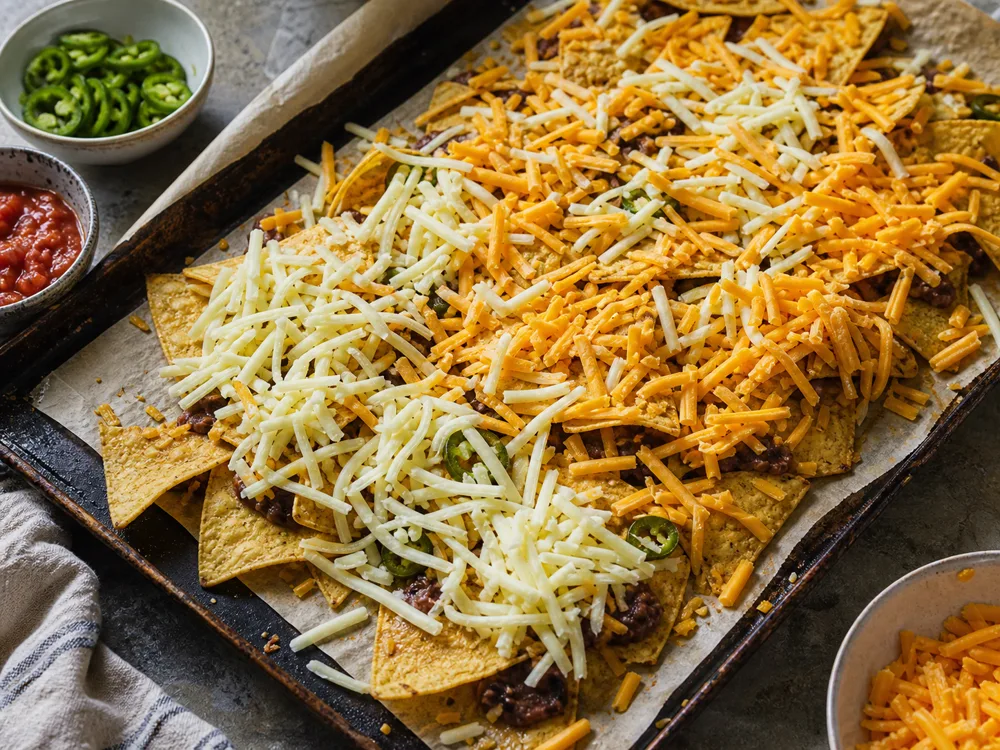
The other half of the fix is placement: put part of the cheese between chip layers instead of only on top.
The middle layer glues the tray together, while the top layer gives you the browned finish people expect when the pan comes out.
Layering matters because chips create air gaps, and a light middle scatter gives the lower chips enough cheese to matter without turning the whole pan soggy.
For loaded trays, put beans and cooked meat below the final cheese layer, and add salsa, crema, guacamole, and fresh herbs only after the cheese has melted and browned, so steam from cold wet toppings does not flatten the melt.
When shredded cheese is enough and when queso should take over
Shredded cheese wins most weeknight nachos because it keeps the chips crisper and tastes more like actual cheese. Queso wins when the tray has to feed a crowd, hold on the counter, or cover every chip in a deep pile.
| Attribute | Shredded-Cheese Tray | Queso-Led Tray |
|---|---|---|
| Best for | Sheet-pan nachos, quick broil, crisp chip edges | Party trays, stadium-style chips, long hold time |
| Cheese look | Visible shreds, browned patches, stronger contrast | Full coverage, smoother blanket, less browning |
| Flavor payoff | More distinct cheese character | More even distribution, usually milder |
| Main weakness | Can leave lower chips dry if layered badly | Can soften the chips faster if overused |
| Best cheese role | Cheddar, Jack-cheddar blend, Chihuahua | American-assisted queso, Jack-heavy sauce |
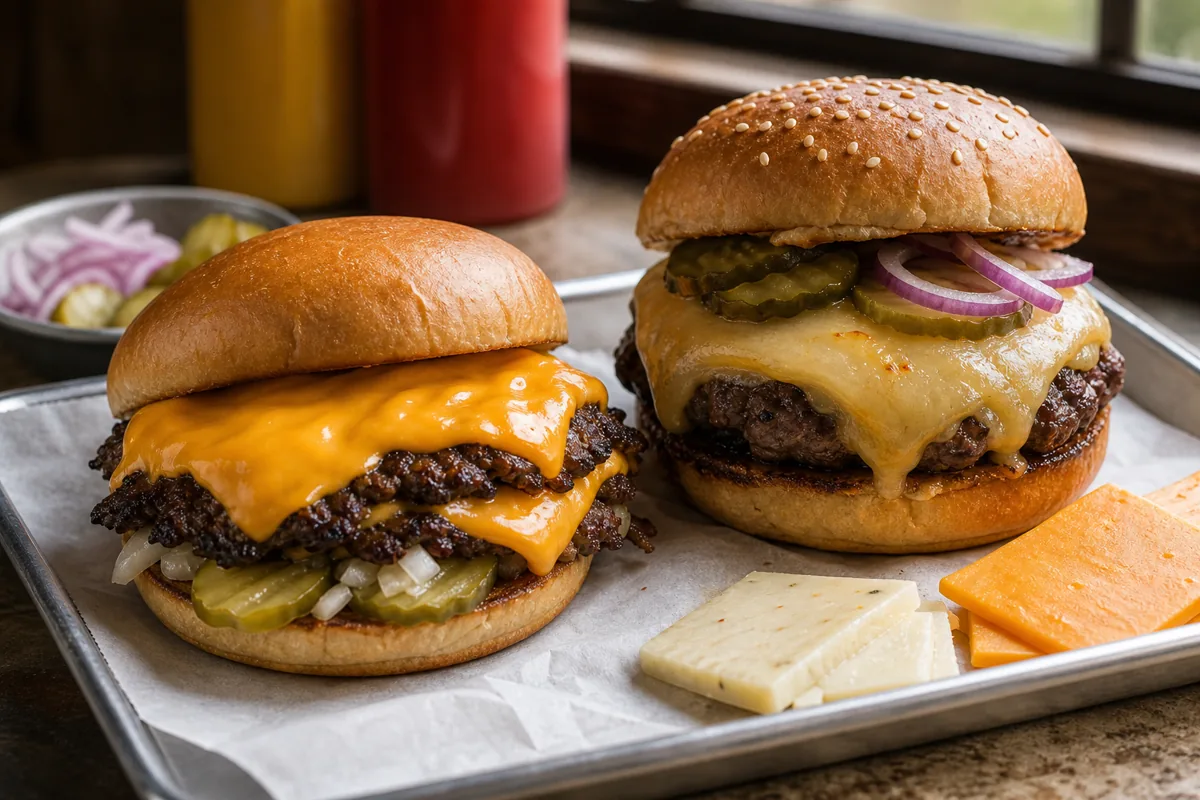
That is the same reason sauce-first cheese picks do not automatically become the best shredded nacho picks, and why some burger cheeses only work once you turn them into sauce or blend support.
For most home trays, a hybrid works: shredded cheese as the main melt, plus a small queso drizzle only if the tray is especially loaded or meant to sit.
That keeps some crispness while fixing the coverage problem that stacked nachos always create.
How Should You Choose Cheese for Each Nacho Style?
Nacho style changes the answer more than brand does. A thin sheet-pan tray, a fully loaded restaurant-style plate, and a party pan under foil do not reward the same cheese behavior.
- Thin sheet-pan nachos: lean harder on cheddar or a one-to-one Jack-cheddar blend because the chips have enough direct heat to brown the top well.
- Loaded nachos with beans and meat: move toward more Jack or Chihuahua because the tray needs smoother flow across uneven surfaces.
- Party nachos that will sit: let queso or a queso drizzle help, because straight shredded cheese tightens up faster once the tray cools.
- Kid-friendly trays: use Jack or Colby-heavy blends so the jalapenos and salsa do not fight a sharp cheese edge.
That is also why burger logic only overlaps so far. Burger cheese needs fast drape on one hot patty.
Nachos need broad coverage across chips, air gaps, beans, and toppings, so the tray asks more from placement and less from one perfect slice.
Which Cheeses Go Rubbery, Oily, or Vanish on Nachos?
Some cheeses lose because they solve the wrong texture job. They may be great cheeses, but they either do not melt into a useful layer, turn rubbery as the tray cools, or bring too little flavor once the toppings pile up.
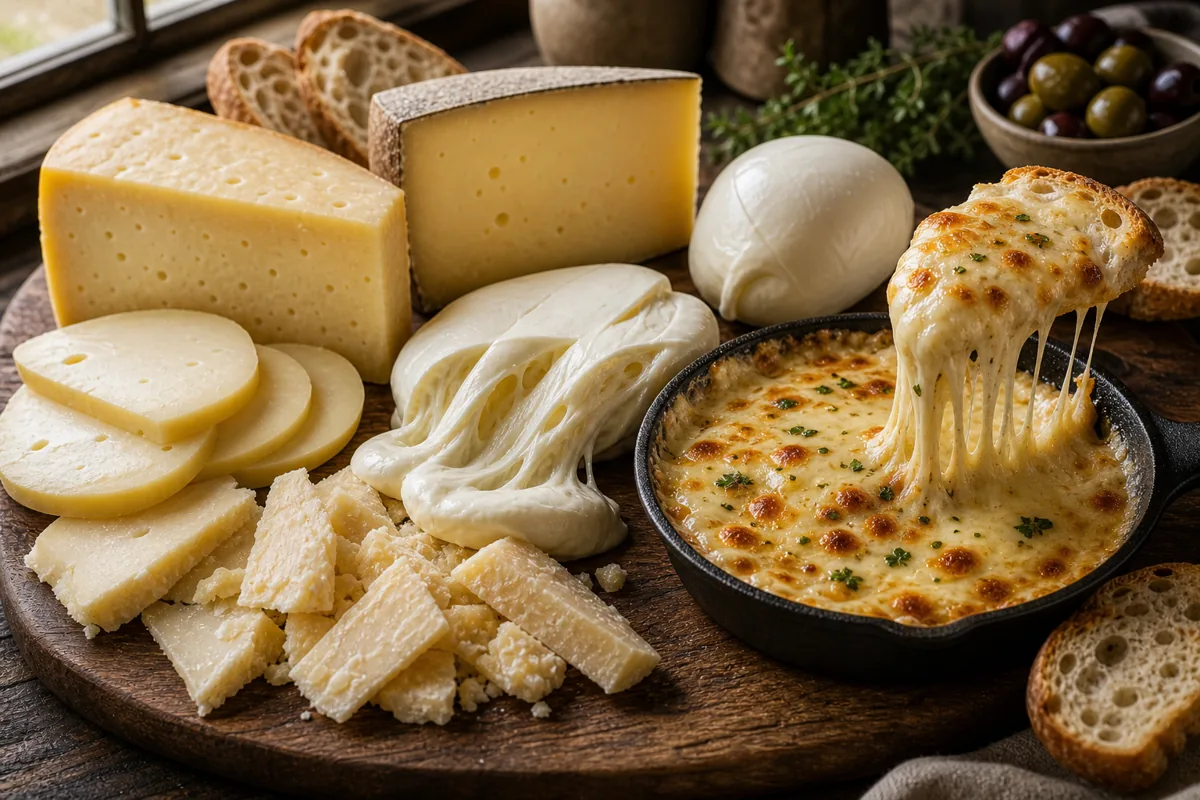
- Fresh mozzarella: plenty of stretch, but too much water and not enough nacho flavor.
- Feta: salty and useful as a finishing accent, but it does not become the melted layer people want here.
- Parmesan: great for finishing, weak as the main broiled layer because it stays granular.
- Very aged cheddar: stronger flavor, but more risk of oiling and a tighter melt than younger blocks.
- Brie or other rich bloomy cheeses: they collapse into richness faster than they build recognizable nacho flavor.
What Should You Buy for Your Next Nacho Tray?
The easiest nacho fridge holds one block for flavor, one block for smooth melt, and a fallback plan for sauce if the tray has to feed a crowd.
If bagged pre-shredded cheese is all you have, use a little less topping moisture so the melt does not fight water and starch at the same time.
If you want one cheese only
Use: Cheddar
Cheddar still gives the clearest nacho flavor, the best browning, and enough strength to stand up to beans, salsa, jalapenos, and sour cream.
If you want the best result on most home trays
Use: Monterey Jack and cheddar together
Jack keeps the melt loose, cheddar keeps the tray from tasting flat, and the blend handles broiler heat and toppings better than either cheese alone.
If you only buy one cheese, buy cheddar. If you want the tray that behaves best from the first chip to the last one, buy cheddar and Jack together.
SOURCES & REFERENCES
What Else Do People Ask About Nacho Cheese?
These are the nacho-cheese problems that matter once the tray is actually in front of you.
Cheddar is the best single cheese for nachos because it browns well, tastes strong enough through toppings, and still feels like classic nacho cheese. For most home trays, a Monterey Jack and cheddar blend works even better because it adds smoother melt without losing flavor.
The safest default is Monterey Jack plus cheddar. Use more Jack when you want a looser melt, and more cheddar when the toppings are heavier or you want a stronger nacho flavor.
Use shredded cheese for most weeknight trays because it keeps the chips crisper and gives you better browning. Use queso when the tray is piled high, has to sit for a while, or needs more even coverage on lower chips.
The usual reasons are too much cheddar by itself, no middle-layer cheese, pre-shredded cheese with anti-caking starch, or cold toppings added before broiling. A Jack-cheddar blend and later topping timing usually fix the problem.
You can, but it is not a top pick. Fresh mozzarella is too wet and too mild for most nachos, and even low-moisture mozzarella usually needs cheddar or another stronger cheese beside it.