Sharp cheddar is a useful starting point for mac and cheese when you want a clear cheddar flavour. A second cheese can change the taste or texture, but a smooth sauce depends on the recipe and cooking method, not simply on adding Gruyere.
Choose the result first: a spoonable stovetop sauce, a breadcrumb-topped bake, or a firmer casserole.
In This Article
Which Cheese Suits the Flavour You Want?
For a first batch, a cheddar-led recipe makes it easier to judge what you would change next time. Add a different cheese for a specific reason, such as a nutty flavour or pepper heat, rather than assuming that more varieties make a better sauce.
| Cheese | Why choose it? | What to watch |
|---|---|---|
| Sharp cheddar | A tangy cheddar flavour for an everyday batch | Keep the recipe's sauce method, especially with a mature block |
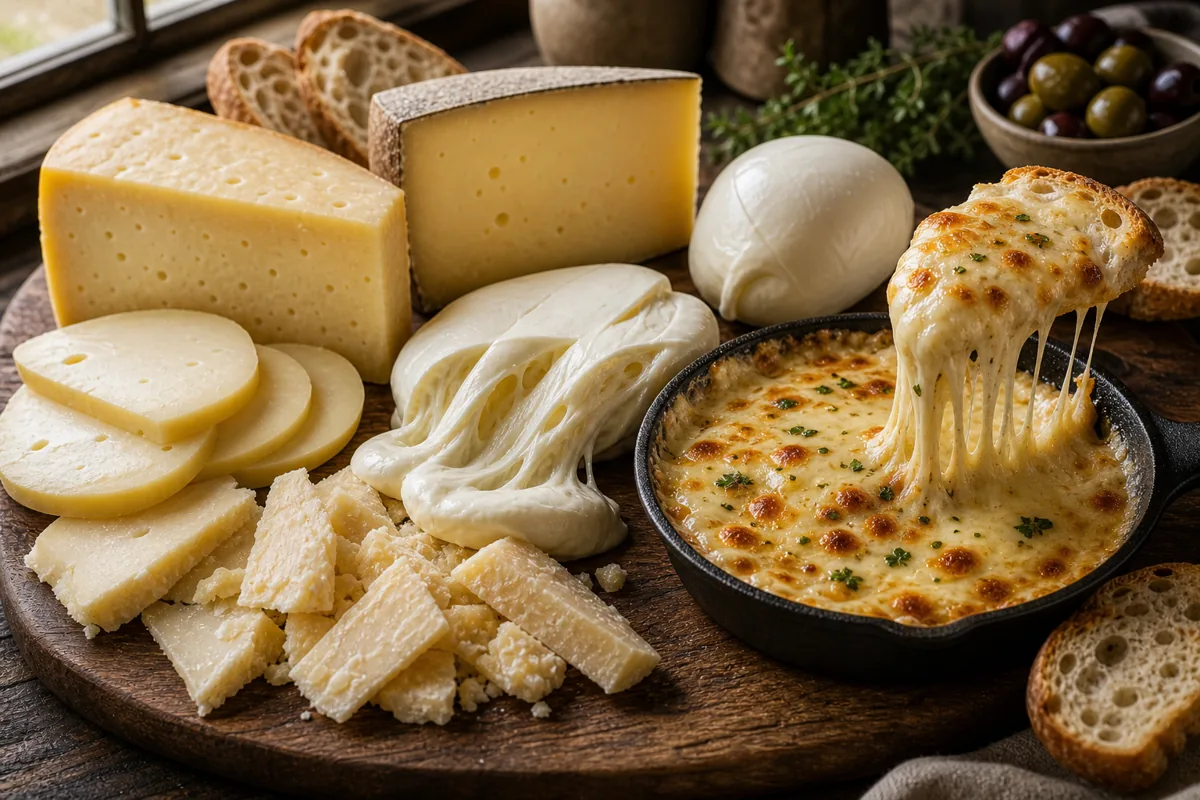
| Gruyere | A nutty addition to a cheddar blend | Choose by age and flavour, not as a guaranteed cure for splitting |
| Monterey Jack | A milder direction when strong cheddar would dominate | Dry Jack is an aged grating cheese, not the same substitution |
| Pepper Jack | Pepper flavour without adding a separate hot sauce | Heat varies by product, so taste before adding more chilli |
| American process cheese | A recipe designed for a smooth, cohesive sauce | Use the product type and quantity specified, since slice formulations vary |
| Smoked Gouda | A smoky variation | Use a recipe that balances it with the other ingredients, especially bacon or smoked meat |
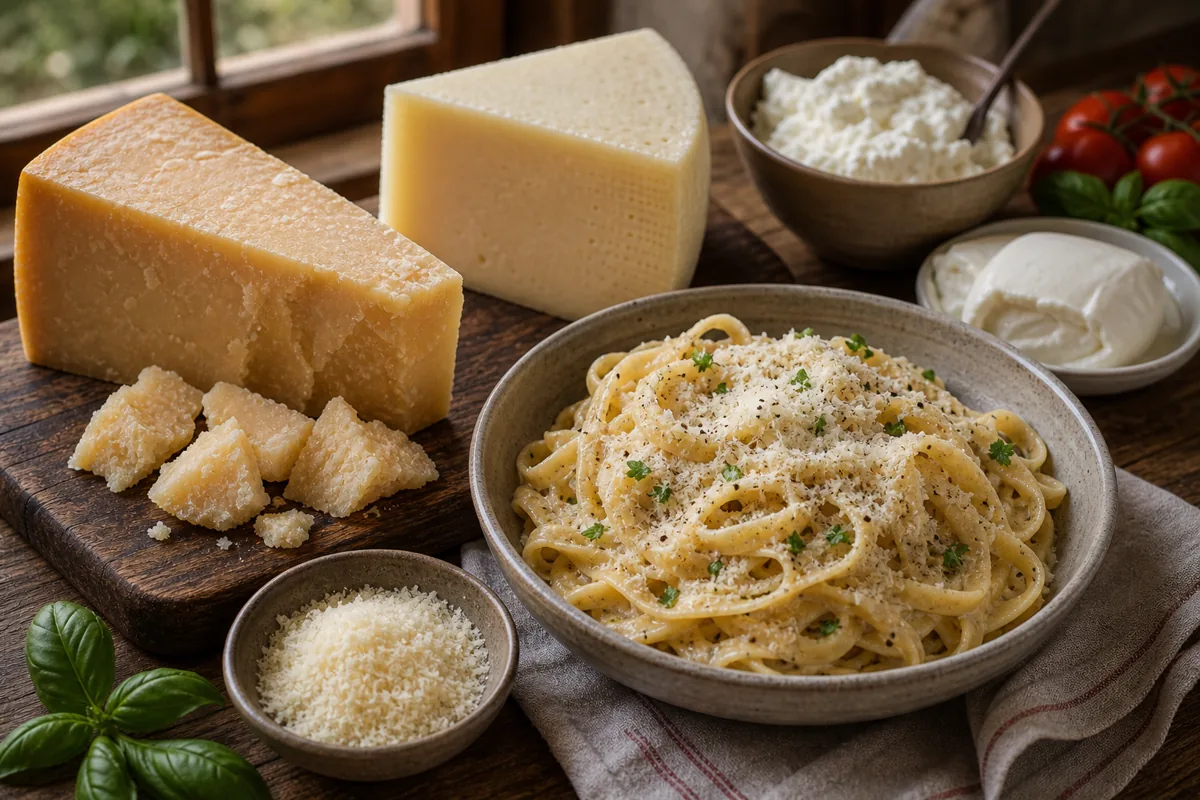
| Parmesan or Pecorino Romano | A savoury accent in the sauce or topping | Do not replace all the main cheese with a dry grating cheese without adapting the recipe |
Young Monterey Jack and Dry Jack are not interchangeable. Check the full name on the label.
For a nutty addition, consider the age and flavour of Gruyere before buying a longer-aged Reserve.
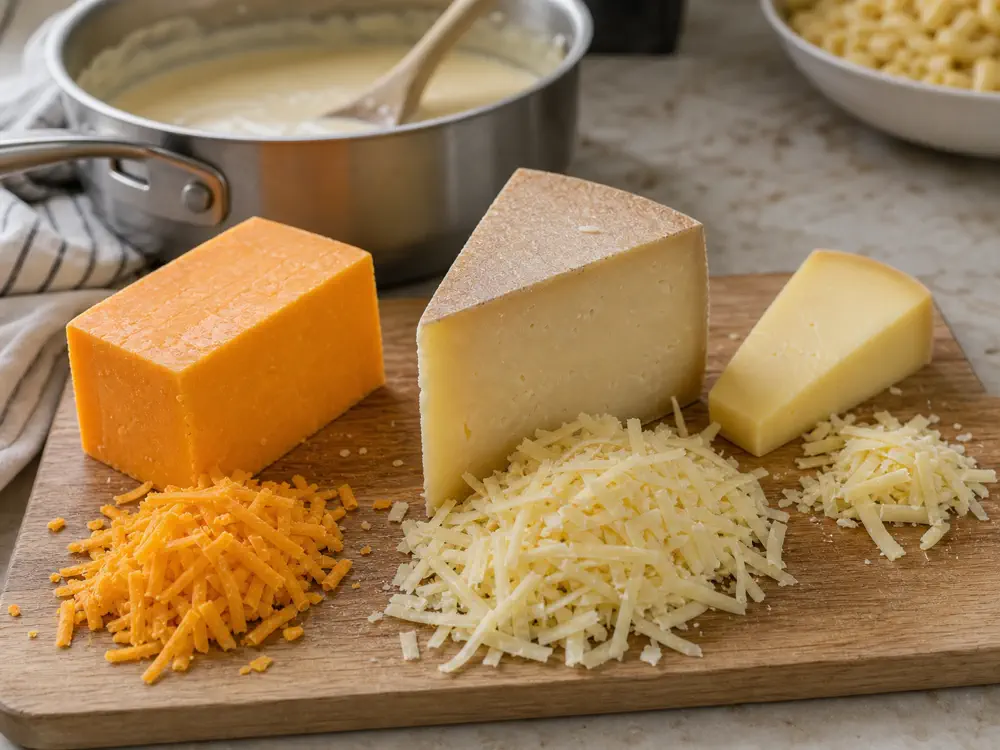
Should You Match the Cheese to the Cooking Method?
A stovetop recipe and a baked recipe can use the same cheddar yet produce quite different dishes. Their liquid, starch, pasta preparation and heating steps matter as much as the cheese name.
J. Kenji Lopez-Alt's Ultra-Gooey Stovetop Mac and Cheese uses 1 pound (454 g) of extra-sharp cheddar and 8 ounces (227 g) of American cheese for 1 pound (454 g) of elbow macaroni, with evaporated milk, eggs and cornstarch, to serve 4 to 6. That combination is a complete sauce method, not evidence that extra-sharp cheddar fails unless mixed with Gruyere.
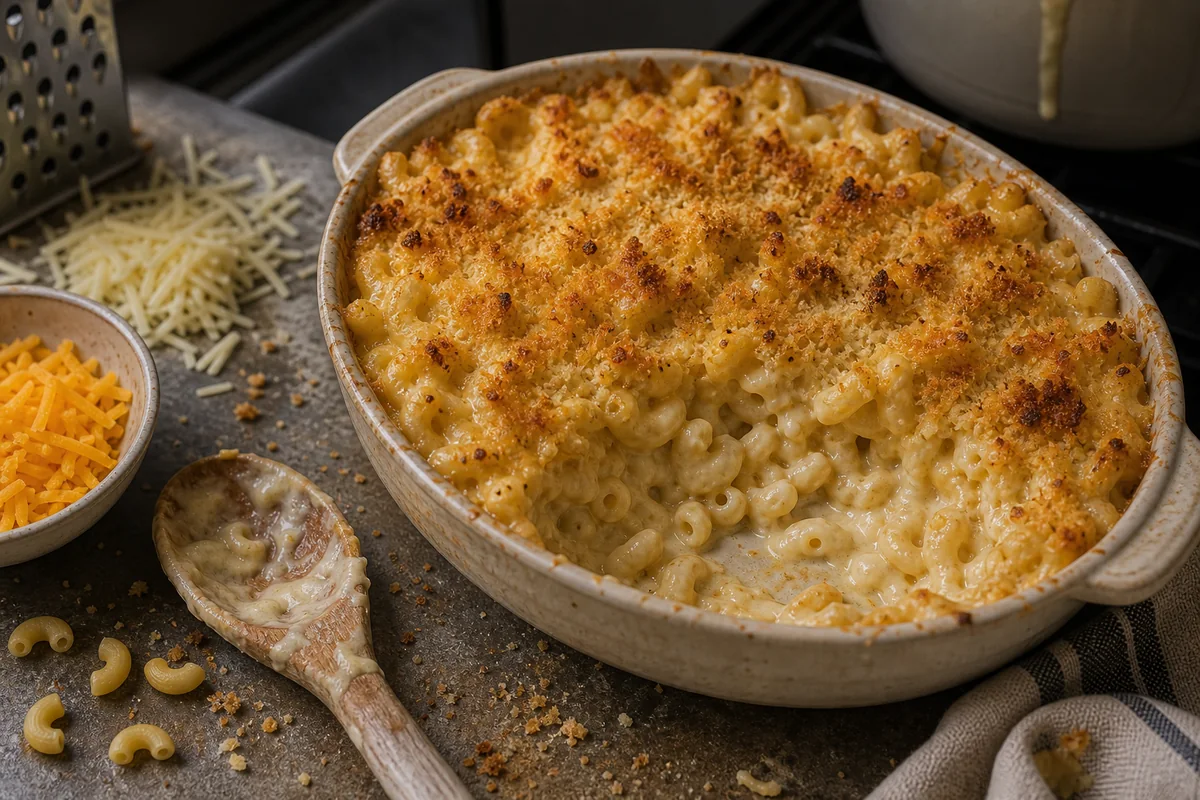
For a baked example, Cabot's Baked Macaroni and Cheese uses sharp or extra-sharp cheddar without a second cheese. It makes a flour-thickened milk sauce, adds cheese off the heat and reserves some cheese for the layers and breadcrumb topping.
Neither recipe needs a 60:40 blend. In the stovetop recipe the cheese weighs one and a half times the dry pasta, so scale every ingredient together if you halve or double it, and follow one complete method before changing the cheese ratio, liquid or oven time.

If you want a set casserole that cuts into portions, use a recipe written for that result. Putting a loose stovetop version into the oven until it firms up can leave you with a different dish from the one you planned.
What to Buy: Blocks, Shreds or American Cheese?
A block lets you pick the exact cheese and grate the amount needed. Pre-shredded cheese is also a valid option when the recipe supports it: Cabot explicitly lists its block or shredded cheddar for the baked recipe above.
Do not assume every bag will behave identically, since ingredients and shred sizes differ. When weighing a substitution, match the recipe's cheese weight rather than guessing that a loosely filled cup of large shreds equals a packed cup of fine ones.
American process cheese can be a deliberate ingredient, rather than a shortcut to apologise for. The US standard for pasteurized process cheese food allows emulsifying agents, but the label and the recipe still determine which product to buy.
Keep the specified ingredient for the first batch, especially when the sauce relies on it.
What Should You Do When the Sauce Goes Wrong?
If a sauce turns oily or grainy, adding another natural cheese does not guarantee a repair. Take it off the heat and check the recipe's cheese-addition step before adding more ingredients.
For the next batch, record what you actually changed: cheese type, amount, liquid, heat or time in the oven. Changing all five at once makes it hard to tell whether the cheese was responsible.
A sauce that tastes flat needs a different decision from one that has separated. Taste before adding salt, particularly when the dish already contains bacon, Parmesan or Pecorino, and change the main cheese only if its flavour is what you want to strengthen.
Strong flavour, stretch and a smooth sauce are separate qualities when choosing cheese for cooking. Decide which one your dish lacks before buying a replacement.