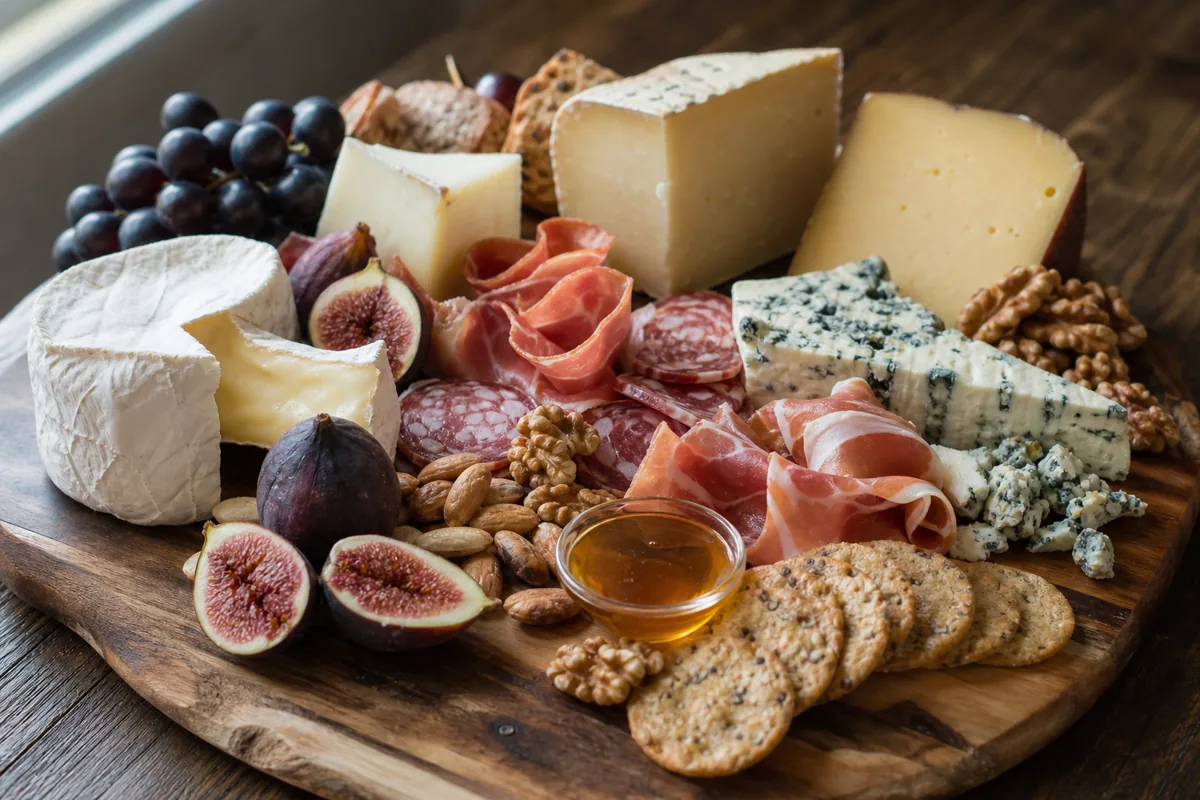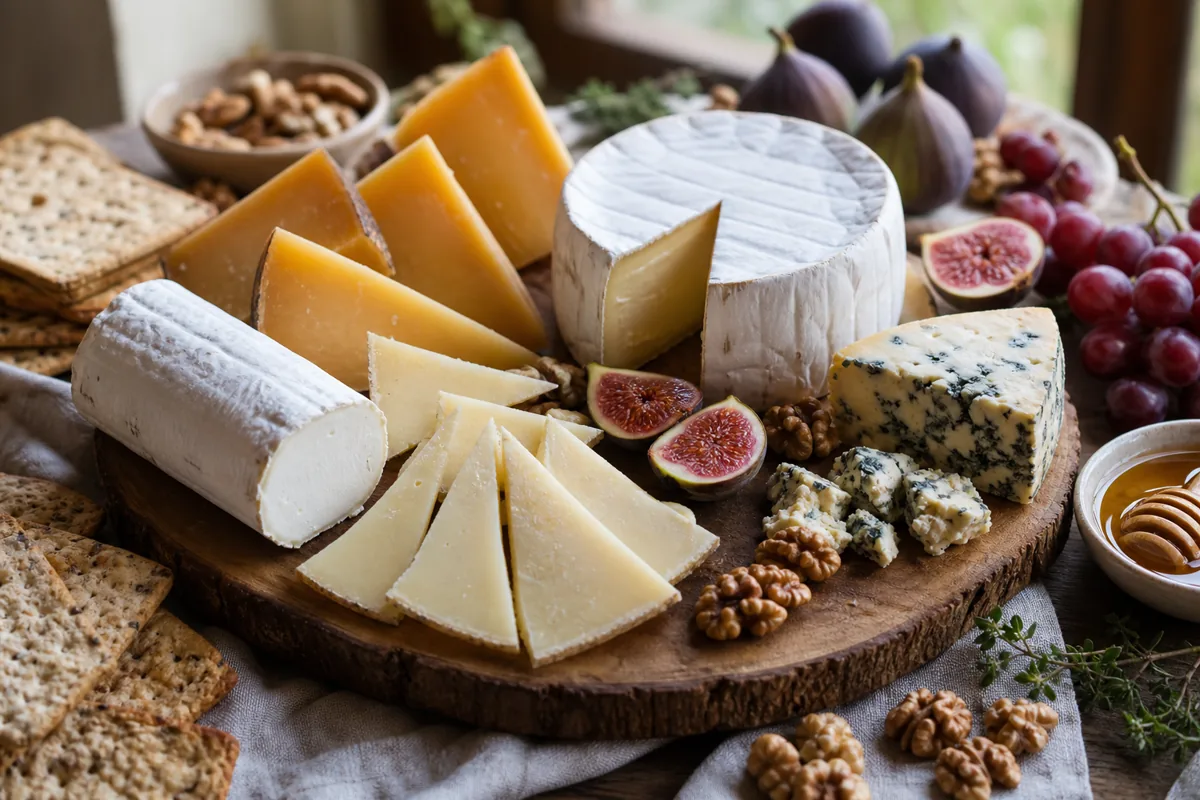
Brie is the best cheese for a cheese board because it fills the centerpiece job better than almost anything else. The strongest board usually adds one sweet-savory slicer like aged Gouda, one salty firm cheese like Manchego or Parmesan, and one contrast cheese such as fresh goat cheese or a mild blue.
A cheese board is not the same job as a charcuterie board. A cheese-first board has to stand on cheese behavior alone.
It does not get rescued by salami, prosciutto, or a pile of pickles.
That changes the answer fast. The best cheese board needs a friendly centerpiece, a clean slicer, a salty shard or firm bite, and one cheese that breaks the pattern.
Once those four jobs are covered, the board already feels thoughtful.
We ranked these picks by room-temperature performance, texture contrast, serving ease, and how clearly each cheese owns a board role instead of duplicating the one beside it.
In This Article
Why Brie still wins the centerpiece slot
Brie is still the best single answer because a cheese board wants one cheese that feels generous before anyone even takes a bite. Brie gives you that immediately.
It spreads well, looks complete as a wheel or wedge, and reads as familiar even to guests who do not usually shop a cheese counter.
Ripe Brie also has the broadest range on a mixed board.
It works with fruit, crackers, honey, nuts, and bread without forcing the rest of the selection in one direction, which makes its flexibility more useful here than pure intensity.
The point of this ranking is not to pile all six cheeses onto one platter. It is to show which cheeses win the individual board jobs that actually matter.
Once you know the jobs, picking the final three or four cheeses gets much easier.
Brie stays on top because the board job starts with mood and ease, not just flavor. If the centerpiece cheese looks stiff, awkward, or too sharp for half the table, the whole board feels harder to enter.
Ripeness matters more than brand here. Brie should feel gently springy at the edge and softening toward the center, not chalky all the way through or leaking before it reaches the board.
A slightly underripe wheel can still work if it has time to warm, but a fully cold wheel will taste flatter than the rest of the spread.
If Brie is too mild for the group, choose the same role with more character rather than abandoning the centerpiece idea. Camembert gives an earthier bloomy-rind version, while a small triple-cream wheel makes the center richer and more dessert-like.
Why Does a Cheese Board Need Four Jobs, Not Ten Wedges?
Most weak boards do not fail because the cheeses are bad. They fail because the host buys four cheeses from the same mood.
Two mellow cheddars, one Gouda, and one second Gouda can all be good cheeses and still make a boring board.
The better way to think is by job. Once one cheese owns the creamy center, another should own sweet-savory slicing, another should bring firmer salt, and the last should break the pattern with tang or blue bite.
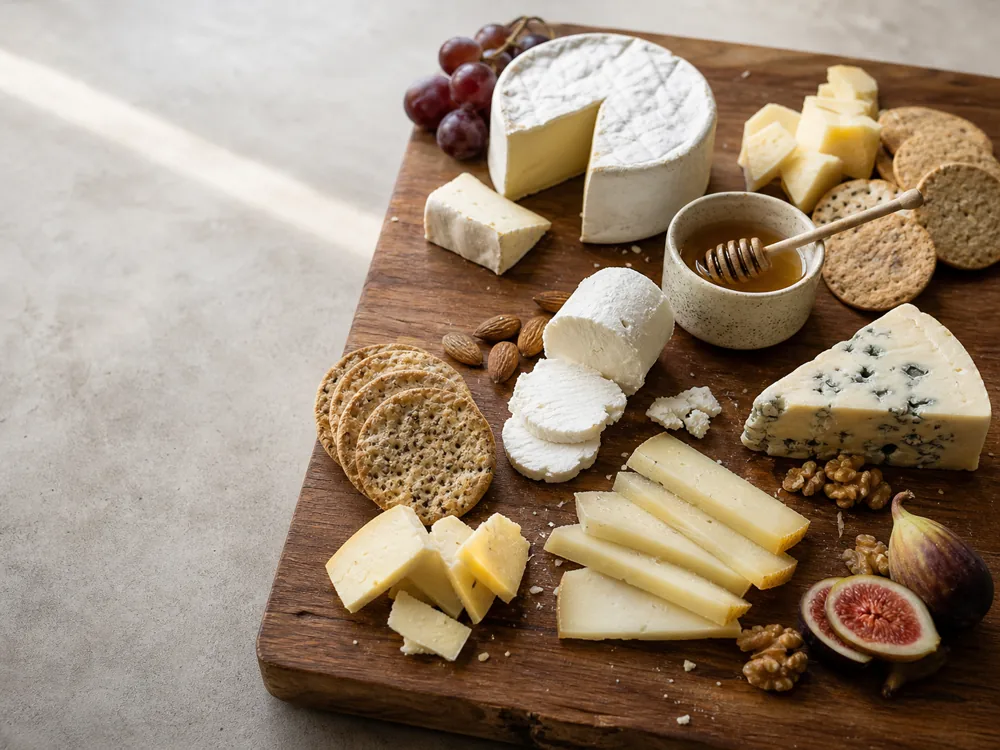
- Centerpiece job: Brie, a smaller earthier Camembert wheel, or another soft bloomy-rind cheese that makes the board feel open and generous.
- Sweet-savory slicer job: Aged Gouda, Comte, or a clean cheddar that cuts neatly and tastes bigger than plain butteriness.
- Salty shard job: a nutty Manchego wedge or Parmigiano-Reggiano when the board needs a drier, firmer bite.
- Contrast job: fresh goat cheese, a mild blue, or a controlled washed rind when the board needs one sharper turn.
This is where a cheese-first board separates from a charcuterie board. A charcuterie board can lean on cured meats, pickles, and spreads to create contrast.
A cheese board has to build that contrast mostly inside the cheese selection itself.
The four-job model also keeps shopping under control. If you already have Brie and aged Gouda, do not buy a second creamy wheel and another sweet firm wedge.
Add a salty shard or a tangy contrast instead, because those jobs are still missing.
Texture is the easiest way to check yourself. The board should offer something spreadable, something sliceable, something firm or crystalline, and something bright or bold.
If all four cheeses cut the same way, the board will eat like one long flavor.
Should You Build the Board by Role or by Fame?
Famous cheeses do not automatically make a better board. The real question is whether the cheese earns one of the open jobs.
If Brie already owns the soft centerpiece, a second bloomy-rind wheel may be less useful than a tangy goat log or a crystalline hard cheese.
That is why role order beats prestige order. Start with the board job that is hardest to replace, then fill the missing textures around it.
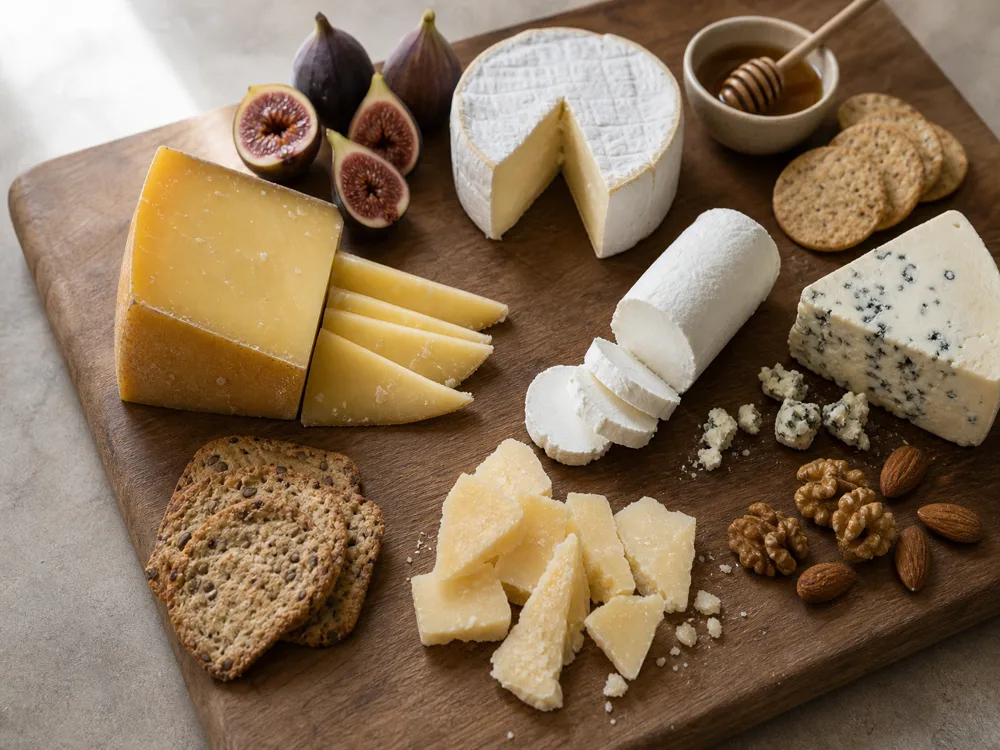
- Start with Brie when you want the safest centerpiece for mixed crowds.
- Start with goat cheese when the board already has enough richness and needs brightness instead.
- Start with aged Gouda when the board has to feel sweet-savory and highly snackable.
- Start with Manchego or Parmesan when the board needs a firm dry corner that changes the bite shape.
If you are shopping fast, lock the centerpiece first, then ask the counter for one firm slicer, one salty firm cheese, and one contrast cheese. That keeps the board from collapsing into four similar wedges.
That sequence also helps when the crowd is mixed. A safe board is not a timid board.
It is a board where one cheese invites, one cheese steadies, one cheese sharpens, and one cheese wakes the table up.
Layout should follow the same order. Put the soft centerpiece where guests can reach it without dragging a knife through everything else.
Put firm slices or shards in small opened groups so people know how to cut them. Put the bold contrast cheese slightly off to the side so it does not flavor every cracker and nut around it.
- Open one edge of the centerpiece cheese so guests know it is ready.
- Pre-cut firm wedges into a few starter pieces to show the intended shape.
- Separate bold cheese from mild cheese with fruit, nuts, or empty board space.
- Keep crackers close to soft cheese, but not under wet or sticky toppings.
When goat, blue, or washed rind should take the contrast slot
The contrast slot is where most boards either become interesting or become confused. Goat cheese, a blue cheese contrast, and washed-rind cheese all solve that slot in different ways, so they should not be treated as interchangeable upgrades.
| Attribute | Contrast Cheese | Best Board Situation |
|---|---|---|
| Fresh goat cheese | Bright, tangy, crumbly-soft | Best when Brie and Gouda already make the board feel rich |
| Gorgonzola Dolce or another mild blue | Creamy, salty, blue contrast | Best when the board needs one bolder corner but the crowd is mixed |
| Roquefort or stronger blue | Sharp, salty, assertive | Best only when the board is for people who already like bold cheese |
| Controlled washed rind | Savory, meaty, aromatic | Best when the board is cheese-first and not built for shy eaters |
Goat cheese is usually the easiest contrast pick because it changes the board without bullying it. Blue cheese works when you want a clear bold turn, but it should stay at the edge where guests can choose it instead of running into it first.
If you are split between Brie and another bloomy wheel, the Brie-Camembert gap matters more than price. Brie is usually the broader centerpiece.
Camembert makes more sense when you want a smaller earthier wheel and the board already has enough mildness.
When the contrast slot goes tangy instead of blue, wine and condiment logic changes too. Brie-friendly bottles usually stay easy, while goat-cheese pairings reward fresher acid and cleaner fruit.
Washed-rind cheese is the riskiest contrast slot for a general board. It can be excellent, but it changes the smell of the whole table faster than goat cheese or mild blue.
Use it when the guests are cheese-curious, not when the board has to please a broad crowd.
Which Cheeses Make a Board Feel Muddy or Repetitive?
The biggest board mistakes are usually duplication and mess. Two cheeses can be good on their own and still weaken each other when they bring the same spread, the same slice shape, or the same water problem.
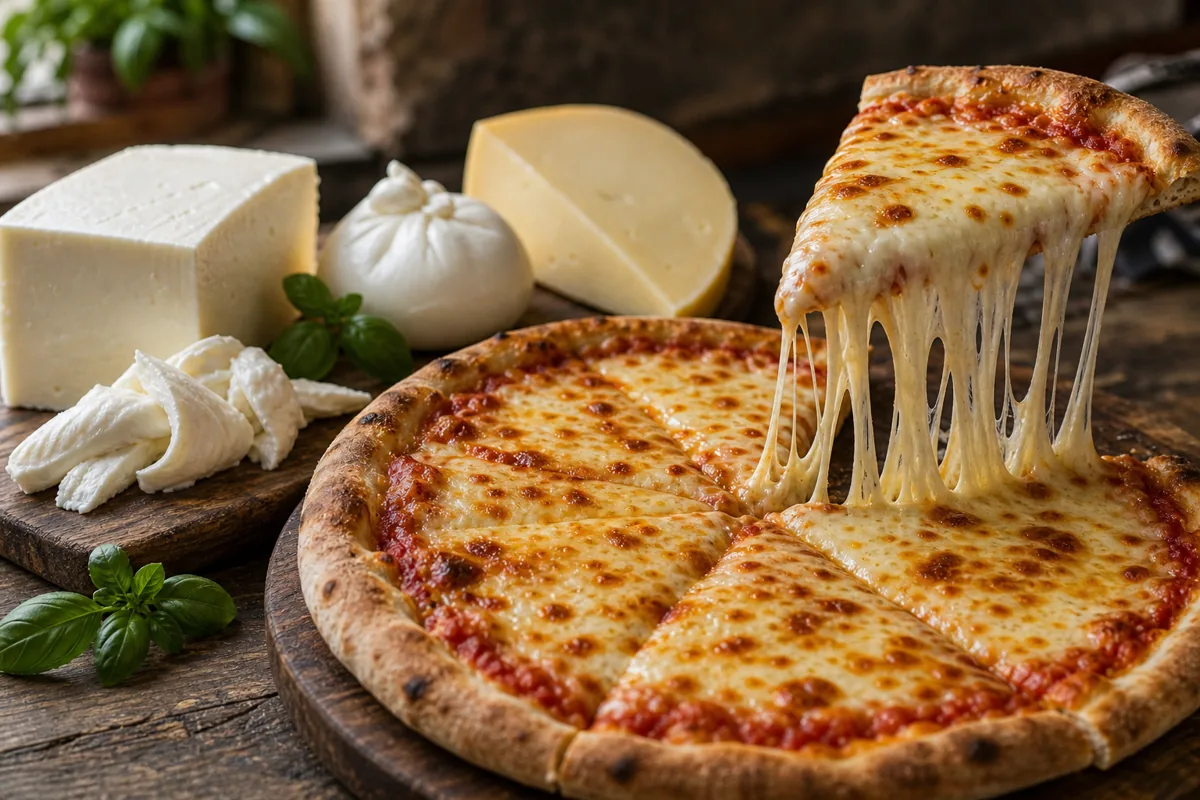
- Very wet fresh cheeses: burrata, loose stracciatella filling, and fresh mozzarella ask for their own service logic more than a mixed board can comfortably give.
- Duplicate bloomy-rind choices: two soft white-rind wheels often feel redundant unless the board is intentionally a soft-cheese tasting.
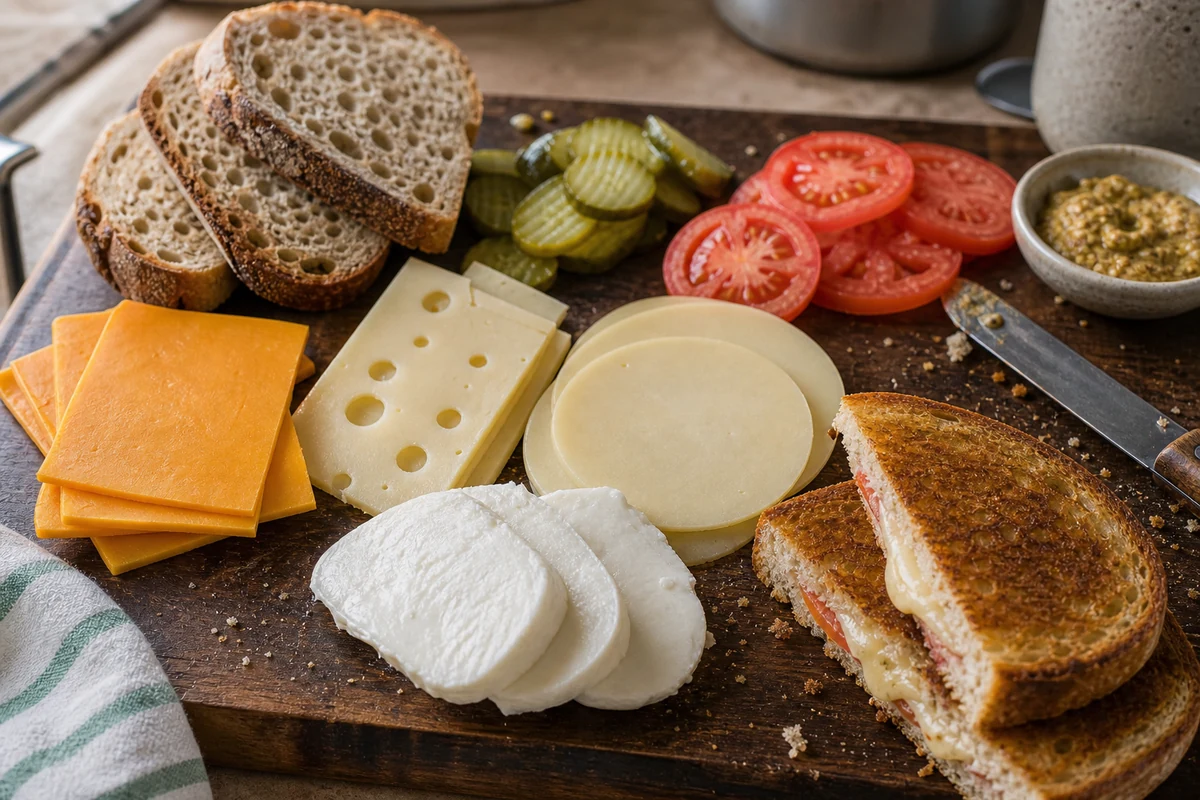
- Too many orange firm wedges: cheddar, Gouda, and another similar firm cheese can flatten the board into one texture story.
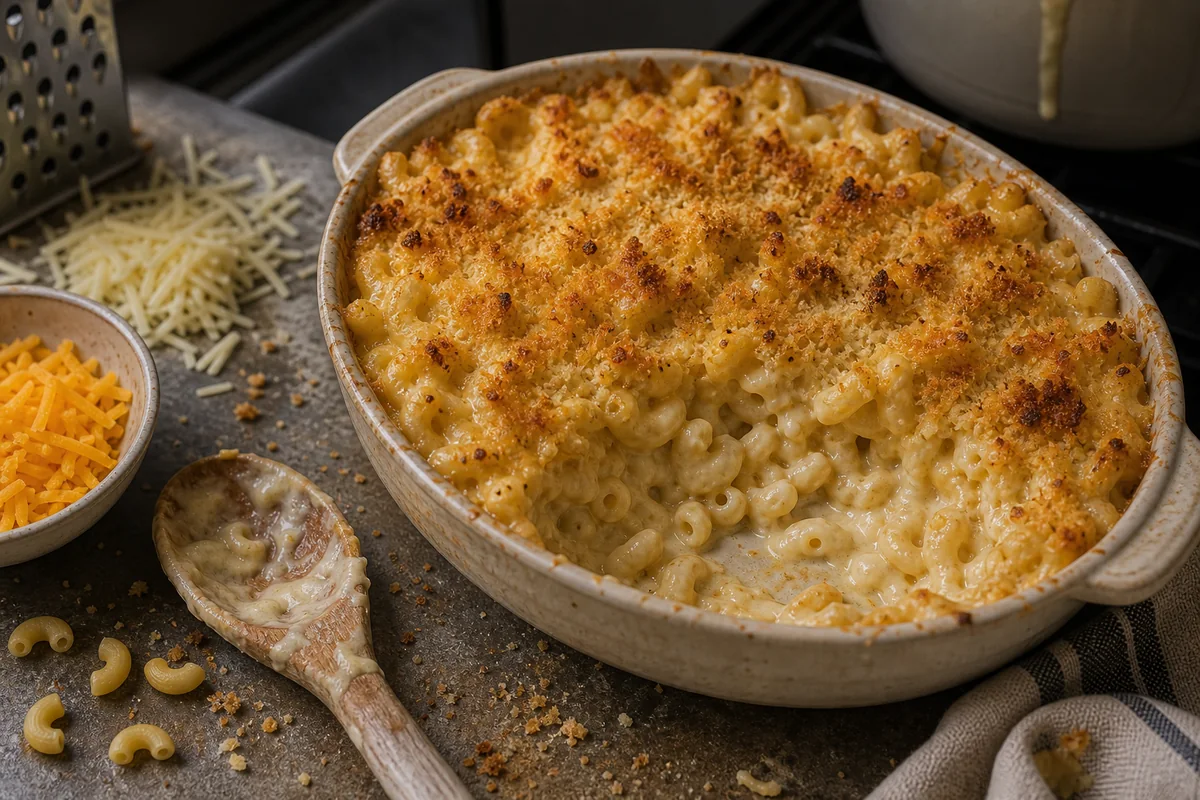
- Cooking-first cheeses: deli shreds or pizza-only cheese choices do not bring enough board identity to earn a slot.
A cheese board should invite grazing, and that is the clean line between a cheese board and a cheese course.
A cheese that turns the center of the board into a puddle or a repair project belongs in a more controlled setup.
That does not mean runny burrata, stracciatella, or very ripe washed-rind cheeses are bad. It means they often need a bowl, plate, or dedicated serving moment.
A mixed cheese board works better when each cheese can survive light grazing without changing the texture of everything beside it.
Duplicate firm cheeses cause a quieter version of the same problem. Mild Cheddar blocks, Gouda, and another mild firm cheese may all be easy to like, but the board starts to feel like three versions of the same snack.
One of those slots should usually become goat, blue, Manchego, or a hard shard.
How many cheeses you actually need
Most hosts need fewer cheeses than they think. Three strong roles already feel complete for a small group, and a fourth cheese usually does more good than a fifth.
Add a new cheese only when it changes the board shape. If the fifth cheese sounds like another version of one you already have, stop there.
Once the selection is set, portioning and layout matter more than one extra wedge. Cut and place the cheeses so guests can see how to approach them without breaking the board apart.
If the board needs cleaner service, proper cutting shapes and good storage before the party matter more than buying a rarer cheese at the last minute.
As a portion rule, plan about 2 to 3 ounces of cheese per person for an appetizer board and closer to 4 ounces per person if the board is the main food. Keep the number of cheeses steady and increase the amount of each cheese before adding new roles that guests do not need.
Temperature timing matters too. Soft cheeses need enough time to relax, while firm and hard cheeses need only enough time to lose the fridge chill.
Pull the board too early and soft cheese can slump. Pull it too late and the flavors stay muted.
What Are the Easiest Grocery-Store Cheese Board Formulas?
You do not need a fancy counter to build a strong board. You need a formula that covers the board jobs cleanly.
At the store, freshness beats novelty. Look for Brie with a clean mushroomy rind, Gouda or Manchego with clean cut faces, and goat cheese that smells bright rather than sour.
Avoid pre-cut wedges with dried edges when the cheese has to sit out for guests.
For most homes, the safest answer is still Brie plus one sweet-savory firm cheese, one salty firm cheese, and one contrast cheese. That formula feels complete without feeling busy.
If the board has to travel, choose sturdier versions of the same jobs. Brie can stay if it is packed cold and served soon, but a very ripe soft wheel may be messy.
Aged Gouda, Manchego, Cheddar, and a small goat log handle transport more cleanly than runny soft cheeses.
If you want one best cheese only
Use: Brie
Brie fills the centerpiece job with the least friction. It spreads well, looks welcoming, and works with the broadest range of common board accompaniments.
If you want the strongest everyday four-cheese board
Use: Brie + aged Gouda + Manchego + goat cheese or mild blue
That mix gives you creamy center, sweet-savory slices, firmer salty bite, and one contrast turn without drifting into duplicate textures or overly aggressive flavors.
If the board still feels flat after that mix, the fix is usually a sharper contrast cheese, not more of the same texture family.
SOURCES & REFERENCES
Best Cheese for a Cheese Board FAQ
These are the questions that matter once you stop choosing random wedges and start building by role.
Brie is the best overall cheese for a cheese board because it fills the centerpiece role with the widest crowd appeal. It spreads well, looks generous, and pairs easily with fruit, crackers, nuts, and honey.
Three cheeses is enough for most small gatherings, and four cheeses is the sweet spot for a fuller board. Go to five only if each extra cheese adds a clearly different texture or flavor role.
Yes, if you want one bold contrast slot. Mild Gorgonzola Dolce is the safest way to add that turn without making the whole board feel aggressive.
Avoid very wet fresh cheeses, duplicate soft wheels, and too many similar firm orange wedges. Those choices usually make the board feel messy or repetitive instead of balanced.
Start with Brie, aged Gouda, and Manchego. That trio gives you one creamy centerpiece, one sweet-savory slicer, and one firmer salty bite without much shopping drama.