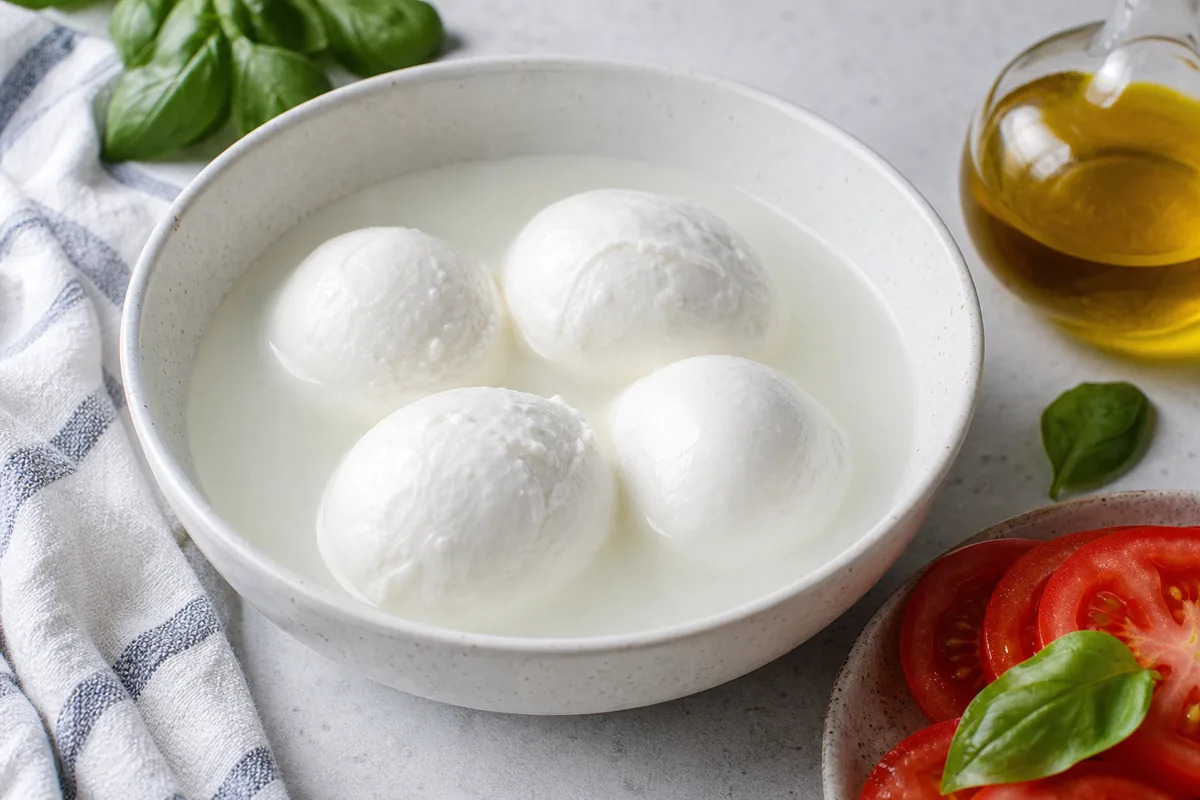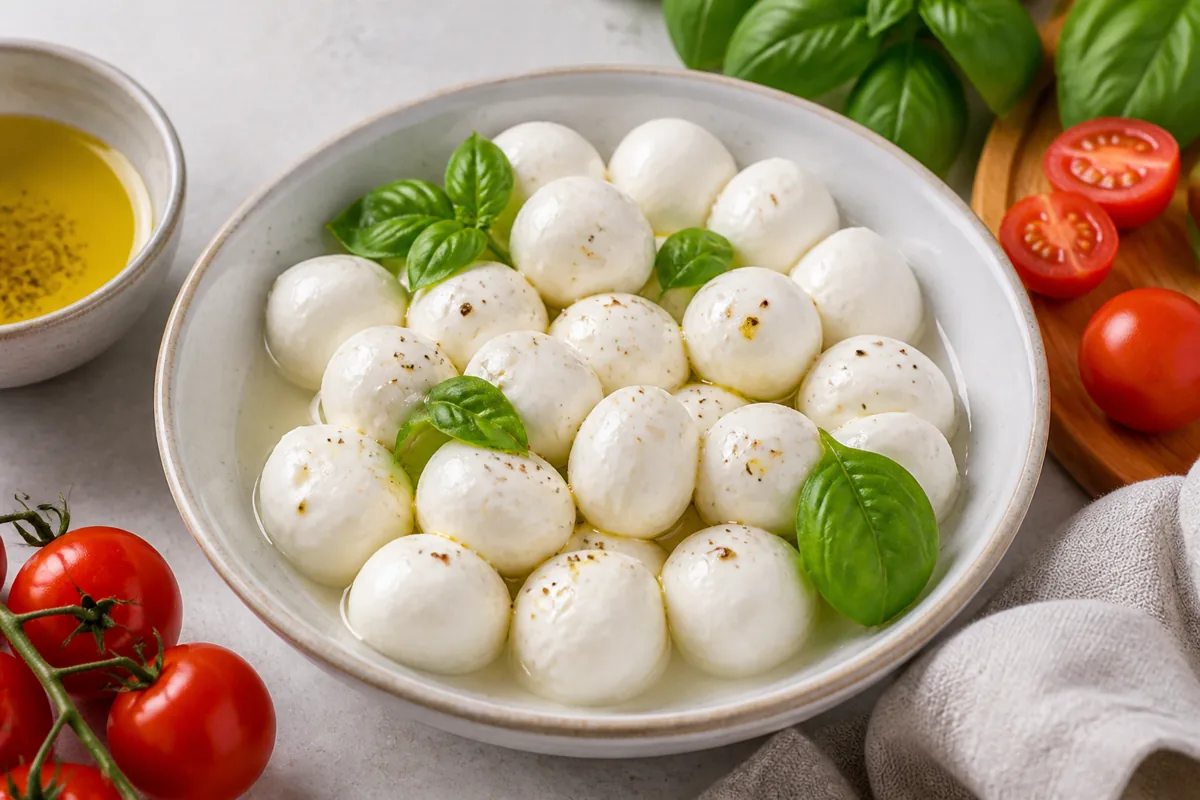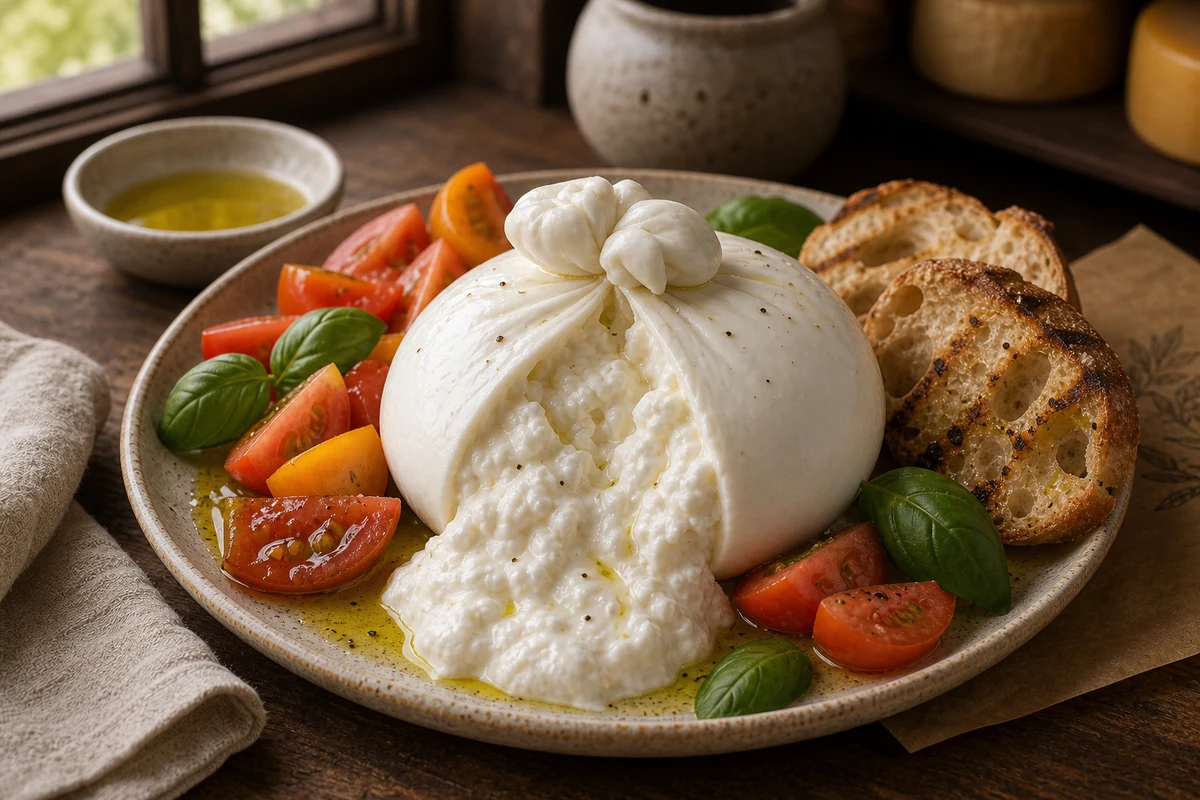
Among fresh Italian cheeses, Burrata is the one that surprises people at the knife. The outside looks like a ball of fresh mozzarella.
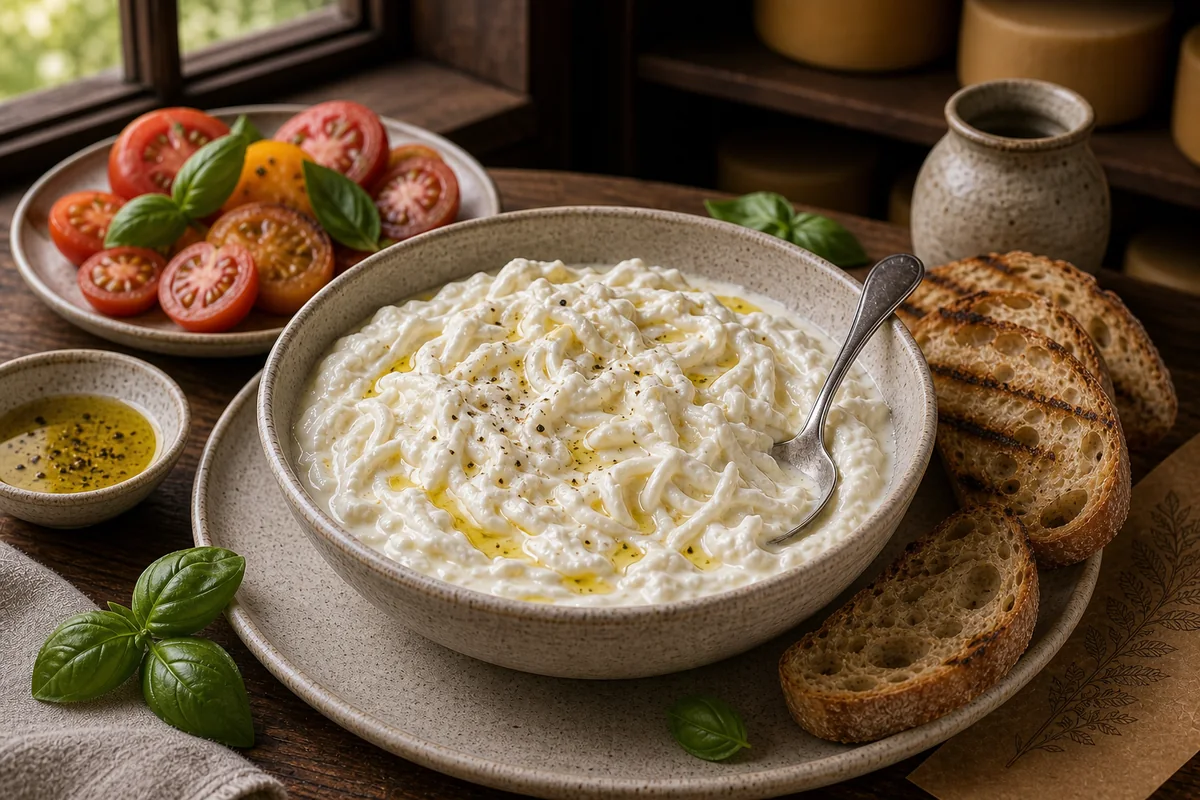
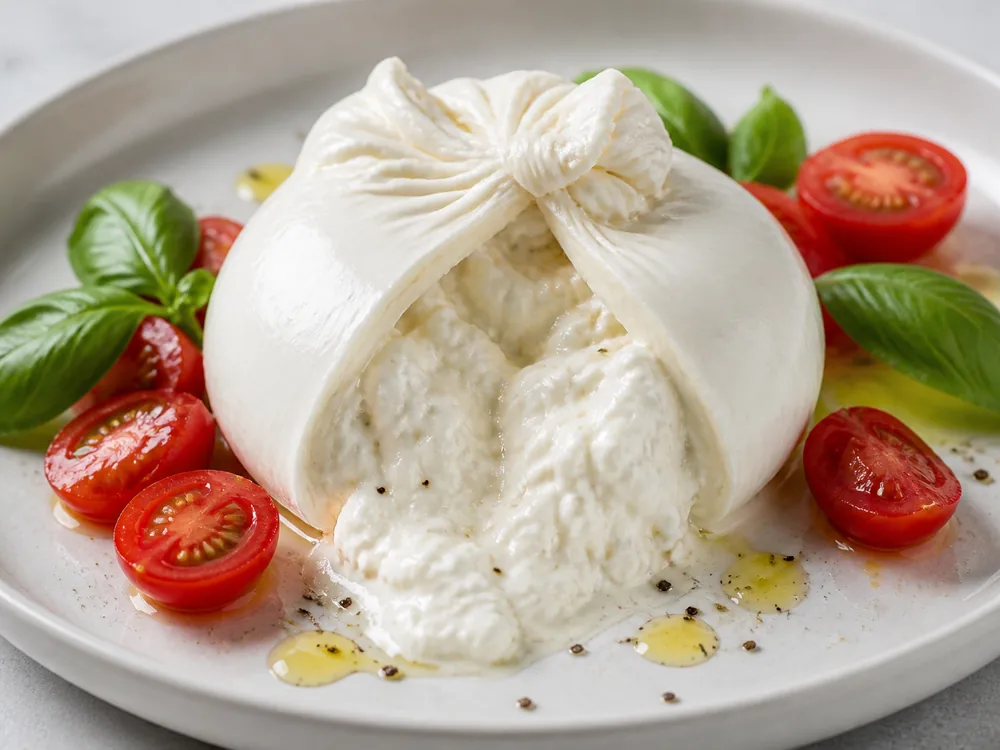
The inside is a pool of stracciatella: shredded mozzarella curds mixed with fresh cream that spills out the moment you break the shell.
This combination of textures puts Burrata in a category of its own among fresh Italian pasta-filata cheeses. It shares DNA with stretched mozzarella curd but delivers a richer, more luxurious eating experience.
In This Article
What Is Burrata?
Few cheeses reach the table this young. It is a fresh pasta-filata cheese from Puglia in southern Italy.
It consists of an outer shell of stretched mozzarella curd wrapped around a filling of stracciatella (shredded curd soaked in fresh cream).
The cheese was created in the 1920s in Andria, a town in the Murge plateau of Puglia. Lorenzo Bianchino, a cheesemaker at the Piana Padula farmstead, developed it as a way to use leftover mozzarella scraps.
He wrapped the scraps in cream inside a pouch of fresh mozzarella curd, creating a new cheese from what would have been waste.
- Two-part structure - firm shell of mozzarella, liquid cream filling
- Stracciatella - the name means "little shreds" in Italian, describing the torn curd
- IGP since 2016 - Burrata di Andria has protected geographic status
- Peak at 48 hours - flavor and texture decline noticeably after two days
- Served at room temperature - cold Burrata is waxy and the cream thickens
The name "burrata" comes from the Italian word for "buttered," which describes the rich, buttery quality of the cream filling. When you cut a properly fresh Burrata, the stracciatella should flow slowly, like very thick cream.
If it holds rigid, the cheese is too cold or past its prime.
Burrata di Andria IGP received protected geographic indication status in 2016. The IGP rules require production in Puglia using local milk and traditional stretching techniques.
Burrata made outside Puglia cannot carry the IGP label, though non-IGP Burrata is produced across Italy and increasingly in the United States.
The cream center tastes richer than milk but less tangy than cultured cream cheese. That low tang lets tomatoes, peaches, and olive oil stay bright.
Compared with fresh ricotta curds, Burrata feels smoother and more fragile. Ricotta can bake into fillings, but Burrata loses its best texture under sustained heat.
What Does Burrata Taste Like?
Fresh Burrata has a milky, sweet, buttery flavor that is more delicate than any aged cheese. The shell tastes like mild fresh mozzarella.
The stracciatella center adds richness from the cream and a slight lactic tang from the shredded curd.
The freshness window is the most important thing to understand about Burrata. This is a cheese measured in hours, not weeks.
This describes Burrata within 24 hours of production. By day three the cream has begun to turn: the texture loses its richness, a sour note appears, and the freshness that defines the cheese is gone.
By day five, the cheese is still safe but no longer worth the premium price.
- Day 1 - peak flavor, sweet milk, flowing cream, delicate and clean
- Day 2 - still excellent, slightly firmer shell, cream still flowing
- Day 3-4 - noticeable decline, cream thickens, slight sour note develops
- Day 5+ - safe but past prime, shell rubbery, cream separated and acidic
This short window is why Burrata was historically a local Pugliese specialty. Before modern cold-chain logistics, it could not travel more than a few hours from the dairy.
Air freight and vacuum-sealed packaging changed that, but the freshness rule still applies: eat it as soon as possible after purchase.
Temperature matters almost as much as freshness. Serve Burrata at room temperature after 20-30 minutes on the counter.
Cold Burrata from the fridge has a waxy, stiff shell and the cream filling loses its flowing quality.
In Puglia, the traditional way to test Burrata freshness is to press the ball gently. A fresh Burrata gives slightly and feels heavy with liquid. A stale one feels lighter and more rigid. The best Burrata you can eat is at a caseificio (dairy) in Puglia, minutes after production. Nothing shipped overnight matches that experience.
How Is Burrata Made?
Two separate preparations have to meet on the same day. Production requires two preparations running in parallel: the mozzarella shell and the stracciatella filling.
A skilled cheesemaker can form a ball of Burrata in under a minute, but the technique takes years to master.
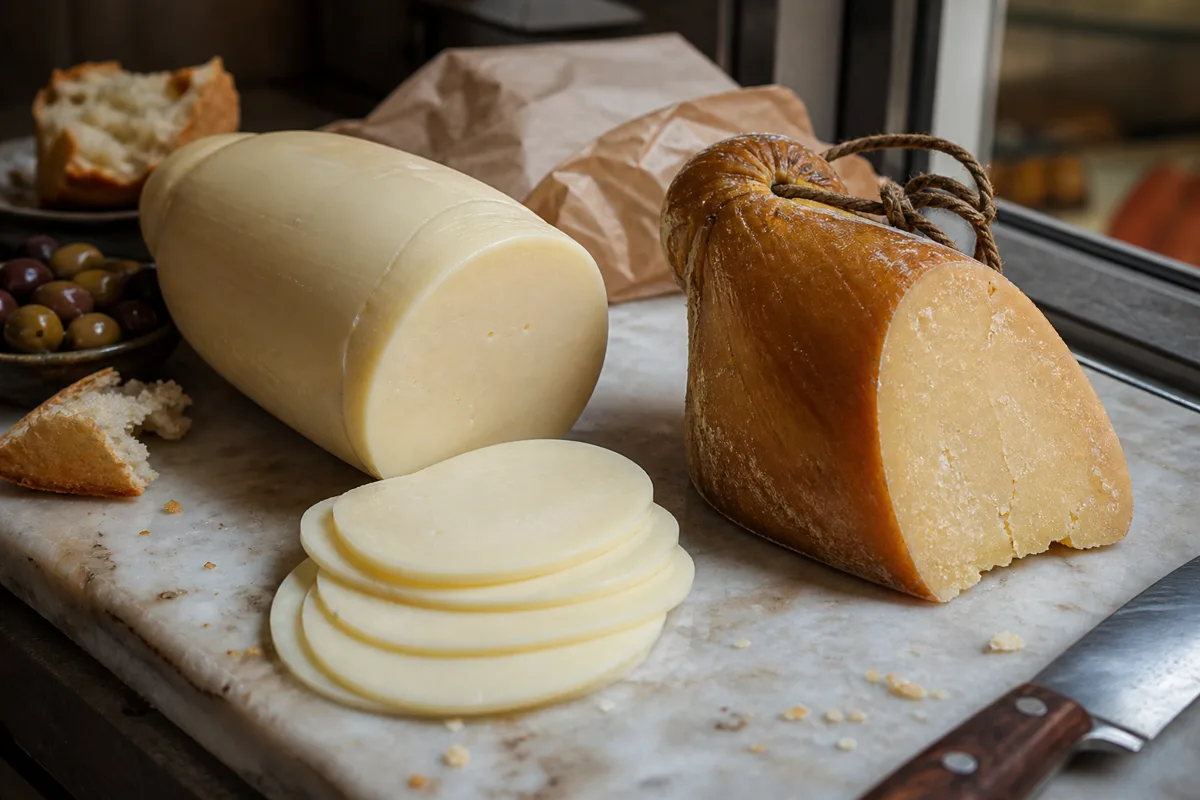
The process starts with the same hot-water stretching used for pulled-curd provolone. Milk is curdled, the curd is cut, and then it is stretched in hot water until it becomes elastic and glossy.
- Make the curd - milk is warmed, acidified, and renneted to form a firm curd
- Stretch in hot water - the curd is pulled and folded in near-boiling water until smooth
- Form the shell - a flat disc of stretched curd is shaped into a pouch
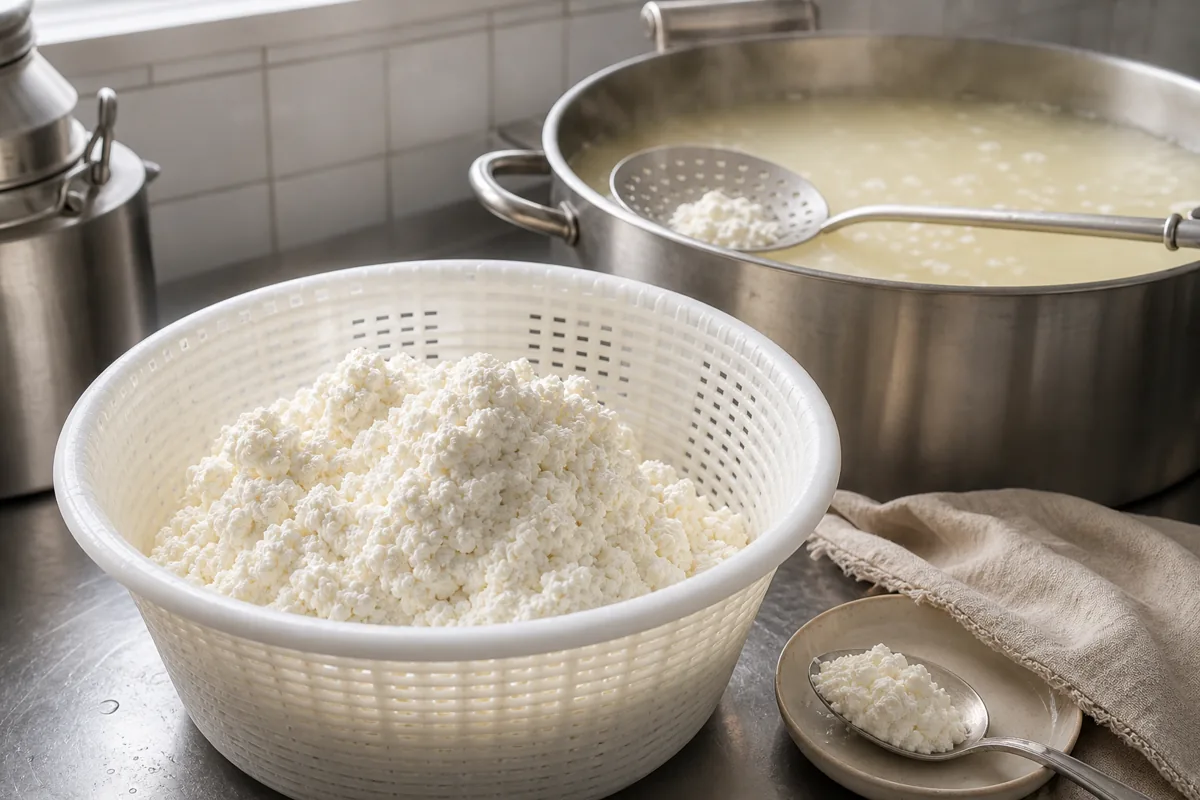
- Make the stracciatella - separate curd is shredded by hand and mixed with fresh cream
- Fill and seal - the stracciatella is spooned into the pouch, which is twisted shut
The filling step is where skill matters most. The cheesemaker holds the warm mozzarella pouch open, fills it with stracciatella, and twists the top closed in one fluid motion.
Too slow and the shell cools and tears. Too much filling and the ball bursts.
The cream quality determines everything. Burrata made with fresh, high-fat cream from the same dairy has a cleaner, sweeter flavor than Burrata made with commodity cream.
This is one reason why Pugliese Burrata from small producers tastes noticeably better than mass-produced versions.
Buffalo milk Burrata exists and carries a premium. The water buffalo milk produces a richer shell with more fat and a slightly tangy flavor.
Buffalo Burrata from Campania is a seasonal specialty, available primarily in spring and summer when buffalo milk production peaks.
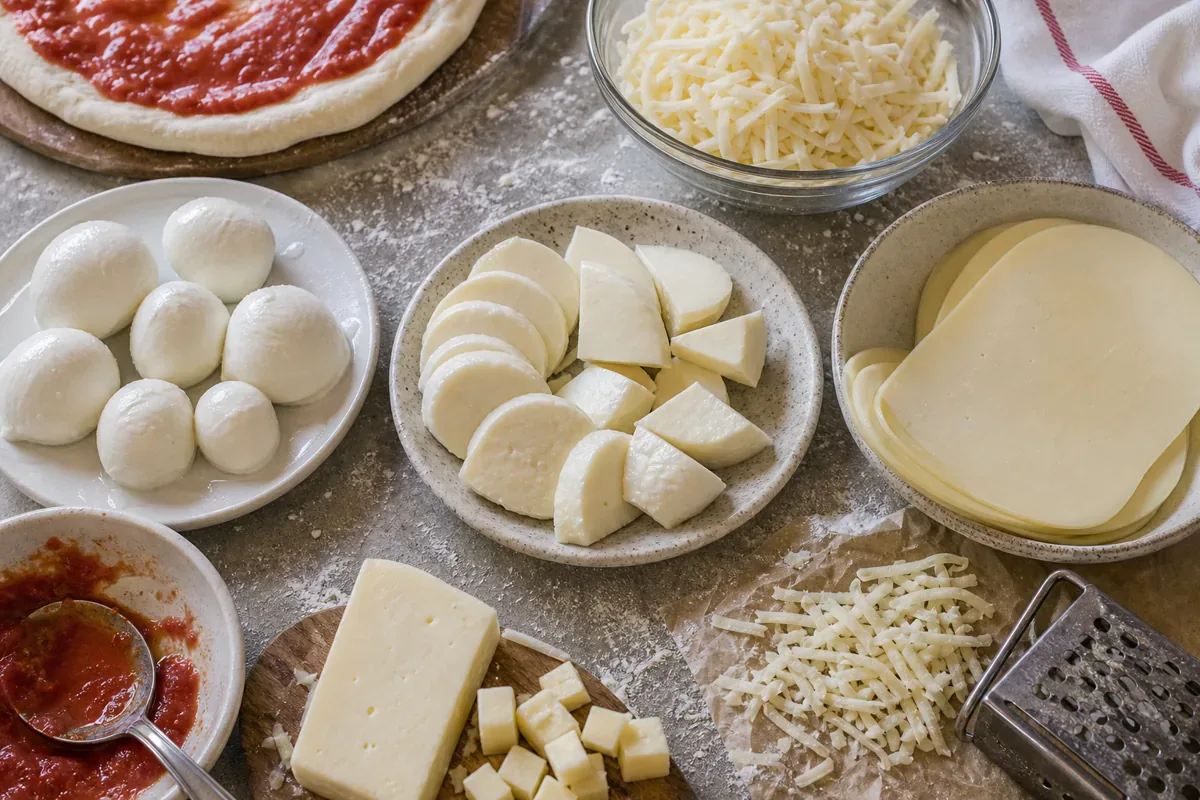
Heat damages Burrata faster than it improves it. If a hot dish needs cheese structure, pizza melting cheeses handle the oven better.
How Should You Serve Burrata?
Treat it as a centerpiece cheese, not an ingredient. It deserves the middle of the plate with simple, high-quality accompaniments that let the cream speak.
The golden rule: do not overwork it. The best Burrata presentations involve tearing it open at the table and pairing it with three or four elements.
| Use | How It Works |
|---|---|
| Torn Over Salad | Tear Burrata over ripe tomatoes, fresh basil, and olive oil. The classic caprese upgraded. The cream acts as the dressing. Season with flaky salt and black pepper. |
| With Grilled Bread | Place a whole ball on a board with grilled sourdough, olive oil, and flaky salt. Tear the Burrata open and spoon it onto the bread. This is the simplest and best preparation. |
| Over Pasta | Tear Burrata over hot pasta tossed with cherry tomatoes, garlic, and basil. The cream from the center mixes with the pasta sauce. Add the cheese after plating, never cook it. |
| With Prosciutto | Drape thin slices of prosciutto di Parma around torn Burrata. Add a drizzle of aged balsamic and arugula. The salt and funk of the ham against the sweet cream is a textbook Italian combination. |
| With Stone Fruit | In summer, pair Burrata with ripe peaches or nectarines, basil, and a drizzle of honey. The fruit acidity and sweetness against the cream is one of the best seasonal pairings. |
- Room temperature always - pull from the fridge 20-30 minutes before serving
- Tear, do not slice - the cream should spill naturally, not be cut away
- Add last to hot dishes - heat kills the texture, place on plated dishes only
- Keep accompaniments simple - olive oil, salt, tomatoes, basil, prosciutto
Never cook Burrata. Heat destroys the delicate cream filling and turns the shell into generic melted mozzarella.
If a recipe calls for melted cheese on pizza or in a baked dish, use regular mozzarella. Save the Burrata for cold and room-temperature applications where the contrast between shell and filling is the whole point.
Burrata should not be melted.
This is a cheese about texture and freshness rather than bold flavour.
Burrata is stocked in most specialty stores and many major grocery chains, though it is still far less common than mozzarella.
Fresh tomatoes, basil, peaches, and prosciutto work because they add acid, aroma, or salt. Brined feta crumbles can play the salty role, but they make the plate sharper.
What Goes With Burrata?
That delicate, milky sweetness requires light, crisp pairing partners. Anything too bold, tannic, or spicy overwhelms the subtle cream flavor.
| Pairing | Type | Why It Works |
|---|---|---|
| Vermentino or Fiano | Wine | Southern Italian whites with mineral, citrus character. These wines match Burrata's Pugliese origins and have enough acidity to cut the cream without overwhelming it. |
| Prosecco | Wine | The light bubbles and green apple notes cleanse the palate between rich bites. A dry Prosecco (Brut) works better than a sweet one. The carbonation refreshes. |
| Ripe Tomatoes | Food | Peak-season heirloom tomatoes with olive oil and salt. The acidity of the tomato cuts the cream. This pairing only works in summer when tomatoes have real flavor. |
| Prosciutto di Parma | Food | The salt and aged funk of prosciutto against sweet, fresh cream. One of the most reliable Italian antipasto combinations. |
| Extra Virgin Olive Oil | Food | High-quality Pugliese EVOO with peppery bite. Drizzle generously over torn Burrata. The oil is not an afterthought. It is a primary flavor element. |
- Light, crisp whites - Vermentino, Fiano, Prosecco, unoaked Chardonnay
- Peak-season produce - tomatoes, peaches, basil, arugula
- Cured meats - prosciutto, bresaola, coppa for salt contrast
- Quality olive oil - a Pugliese EVOO with peppery finish
Avoid oaked whites, tannic reds, and strong-flavored cheeses on the same plate. Burrata is the gentle center of the table.
Everything around it should support, not compete.
How Long Does Burrata Last?
Storage is simple: eat it as fast as possible. This is not a cheese you buy in advance for a party next weekend.
Buy it the day you plan to serve it, or at most the day before.
- Buy the day you serve - freshness matters more than any other factor
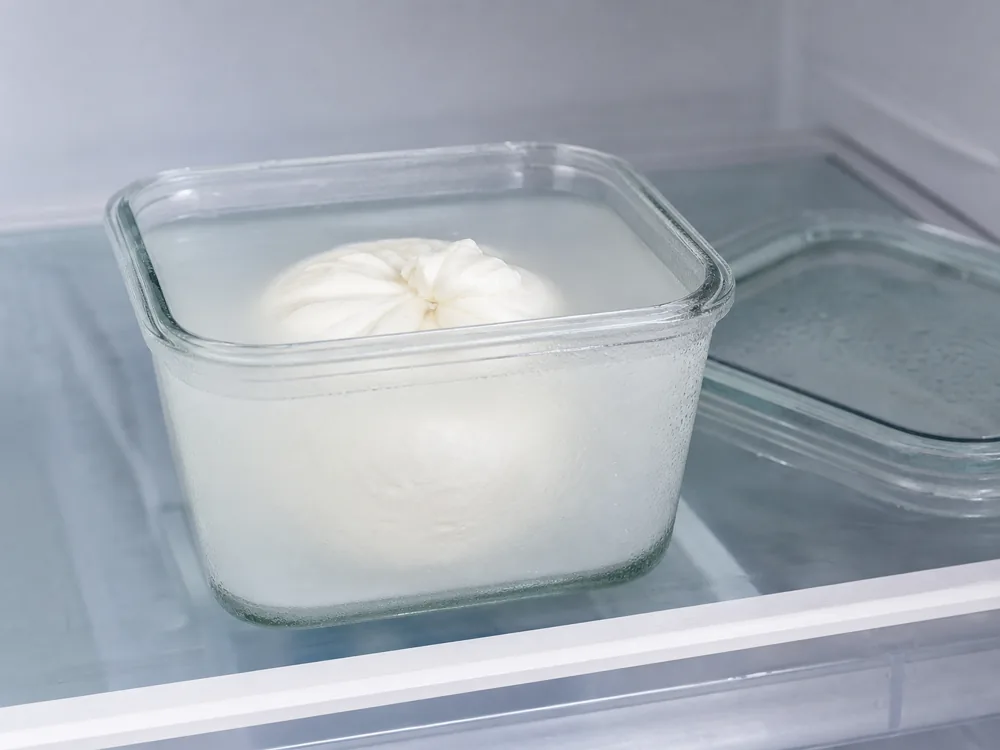
- Keep in original liquid - the packing water preserves moisture and freshness
- Never freeze - both the shell and cream filling are destroyed by freezing
- Check the production date - not the sell-by date, which can be generous
If your Burrata was produced in Italy and shipped to the US, it is already 2-3 days old by the time you buy it. That is fine.
Eat it that day or the next.
Domestic US-produced Burrata from creameries in New York, California, or Texas can be fresher at point of sale because it does not cross an ocean. If freshness is your priority, buy domestic from a producer within driving distance of your city.
Burrata is a fresh, high-moisture cheese. Do not leave it at room temperature for more than 2 hours (or 1 hour if exposed to temperatures above 90 degrees F). Serve it, eat it, and refrigerate any remainder immediately. Unlike aged cheeses, fresh Burrata has no rind or culture to inhibit bacterial growth at warm temperatures.
For a richer substitute, mix fresh mozzarella with a spoonful of mascarpone. Mascarpone cream gives body without adding aged-cheese sharpness.
What Can You Substitute for Burrata?
Fresh mozzarella is the closest substitute. It has the same pasta-filata shell without the cream filling.
You lose the flowing stracciatella center, but the flavor family is the same.
- Fresh mozzarella - same shell, no cream center, widely available and cheaper
- Stracciatella (sold separately) - the cream filling without the shell, for salads and pasta
- Buffalo mozzarella - richer and tangier than cow's milk mozzarella, closer to Burrata's richness
- Ricotta with cream - fresh ricotta mixed with heavy cream mimics the texture for dipping
Some specialty stores sell stracciatella on its own in tubs. If you want the Burrata experience without the shell, spooning stracciatella over tomatoes and bread gets you 80% of the way there.
Burrata or Mozzarella: Which Is Richer?
The filling is what moves the numbers, so it is higher in fat and calories than regular mozzarella because of the cream filling. The stracciatella center is essentially shredded cheese suspended in heavy cream, which raises the fat content significantly.
- Moderate lactose - fresh cheese retains more lactose than aged varieties
The low sodium is notable. Burrata is one of the least salty cheeses available, which makes it a good option for people watching sodium intake.
The mild flavor does not rely on salt for character.
Lactose content is moderate in Burrata because it is a fresh cheese with no aging period. The cream filling adds additional lactose.
People with lactose sensitivity should be cautious with Burrata, as it contains more lactose than aged Cheddar blocks or Parmesan.
SOURCES & REFERENCES
What Else Do People Ask About Burrata?
Freshness drives almost every Burrata question, which is why these answers keep returning to the date on the tub.
The center is stracciatella: shredded mozzarella curd mixed with fresh cream. "Stracciatella" means "little shreds" in Italian.
When you split the mozzarella shell, the stracciatella flows out as a rich, creamy mixture. It is the defining feature that separates Burrata from regular mozzarella.
Eat it within 1-2 days of purchase. Burrata is at its best within 48 hours of production.
If your Burrata was shipped from Italy, it may already be 2-3 days old at the store, so buy it the day you plan to serve it.
Keep it in the original liquid in the refrigerator until you are ready to eat.
Burrata should not be cooked. Heat melts the shell into generic mozzarella and destroys the cream filling.
Place Burrata on dishes after cooking: torn over hot pasta, laid on pizza after it comes out of the oven, or placed on warm grilled bread. The residual heat warms the cheese slightly without cooking it.
Structure. Mozzarella is a solid ball of stretched curd.
Burrata is a shell of stretched curd wrapped around a cream-and-curd filling called stracciatella, while mozzarella is firmer with a cleaner, simpler flavour.
The richer, more delicate one should not be cooked. Mozzarella can be.
Different, not automatically better. Buffalo milk Burrata has a richer, tangier shell and a more complex flavor.
It is also more expensive and harder to find outside Italy, while the cow's milk version is milder, sweeter, and more widely available.
Both are good. Fresh buffalo Burrata from a reputable producer is worth trying at least once.