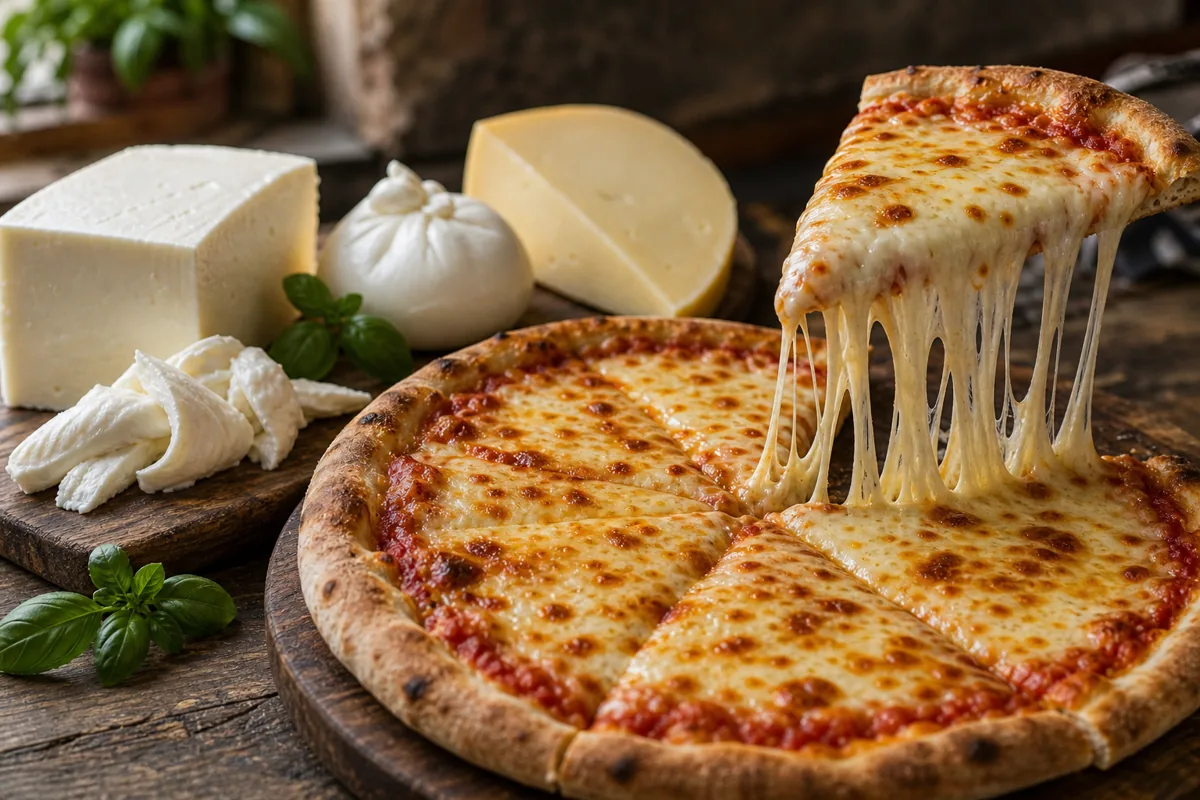
Low-moisture whole-milk mozzarella is still the best cheese for pizza in most kitchens because home ovens ask for stretch, browning, and moisture control at the same time. Fresh mozzarella only becomes the better answer when the oven is hot enough to finish the pie before that water has time to soak the crust.
Pizza cheese is not really a popularity contest.
It is a heat-management decision. The same cheese can be brilliant in a 900 degree oven and frustrating in a 475 degree home oven.
Pizza rewards cheeses that melt evenly, brown in patches, and release little enough water to protect the crust while the pie finishes.
We ranked these cheeses by oven fit, stretch, browning, moisture release, and how useful they are as either a base cheese or an accent. If the crust is the stage, the cheese still has to know what part it is playing.
In This Article
Why Does Low-Moisture Mozzarella Still Win Most Pizzas?
Low-moisture whole-milk mozzarella is still the best default answer because it solves the hardest problem first. It gives you melt and stretch without flooding the pie.
Low-moisture mozzarella behaves like pizza cheese should behave in a normal kitchen. It softens into an even layer, browns in spotted patches, and keeps the crust from going slack under a longish bake.
Pizza usually wants whole-milk low-moisture mozzarella, not part-skim. Part-skim can melt, but it tends to feel tighter and less rich, especially once the slice cools for a minute or two.
That fat difference sounds small on paper, but it shows up quickly on the slice. The pie stays more relaxed and less rubbery after it leaves the oven.
Block form matters too. A block gives you control over shred size and lets the cheese hit the sauce without powdery coatings.
Pre-shredded mozzarella can still work for a weeknight pie, but it usually browns and melts less cleanly because the pieces are coated to keep them separate in the bag.
For a 12-inch home pizza, start lighter than you think. A thin even layer of low-moisture mozzarella usually bakes better than a thick blanket.
Heavy cheese traps steam, slows browning, and makes the slice slide when the sauce underneath gets hot.
The top spot does not mean every other cheese is wrong. It means low-moisture mozzarella wins the broadest number of real pizza nights.
A cheese like burrata can still be delicious, but it solves a finishing job instead of the base-melt job.
This order weighs base-cheese usefulness, not prestige. A very good finishing cheese can still sit low here, because you would never trust it to carry the whole pie by itself.
Does Your Oven Decide the Pizza Cheese Before the Toppings Do?
Most pizza-cheese confusion starts when people choose by tradition but bake by a different method. Fresh mozzarella is traditional on Neapolitan pizza, but tradition assumes a very hot oven and a very short bake.
| Attribute | Oven or style | Cheese that fits best |
|---|---|---|
| Home oven, 450 to 500 F | Longer bake, more risk of water release | Low-moisture mozzarella, plus provolone or Fontina as an accent |
| Pizza steel or stone, 500 to 550 F | Stronger floor heat, shorter bake | Low-moisture mozzarella still wins, with small fresh-mozz additions possible |
| High-heat outdoor or deck oven | Fast bake, blistered crust, little time for water to pool | Fresh mozzarella or fior di latte can finally lead |
| Detroit or pan pizza | Deep pan, edge contact, longer bake | Low-moisture mozzarella base, brick-cheese style blend, or a mild natural melter |
That table is why fresh mozzarella disappoints so many home bakers. It is not that the cheese is bad.
It is that a slower oven gives the water too much time to fall into the crust before the top is ready.
If the pie lives in a standard kitchen oven, start from the safer base and then add personality around it. That is more useful than forcing a romantic cheese choice that the oven cannot support.
A pizza steel or stone changes the answer a little, but not completely. Stronger floor heat helps the crust finish faster, so you can use a few small fresh mozzarella pieces without soaking the center.
The base layer should still be low-moisture mozzarella if the bake takes more than a few minutes.
Outdoor ovens shift the risk in the other direction. At very high heat, low-moisture shreds can brown before the crust has fully opened, while fresh mozzarella can soften quickly without flooding the pie.
That is why the same fresh cheese that disappoints in a home oven can taste right in a fast Neapolitan setup.
What Jobs Do Block, Fresh, and Finishing Cheeses Do on Pizza?
Pizza gets easier once you stop asking every cheese to do the same thing.
Some cheeses are base cheeses. Some are blend cheeses.
Some should never go on until after the pie leaves the oven.
That distinction matters because pizza punishes the wrong timing. A low-moisture block can bake from the start.
Fresh mozzarella needs drainage and a faster oven. A salty hard cheese can sharpen the top, but it cannot turn into the stretchy layer that holds a slice together.
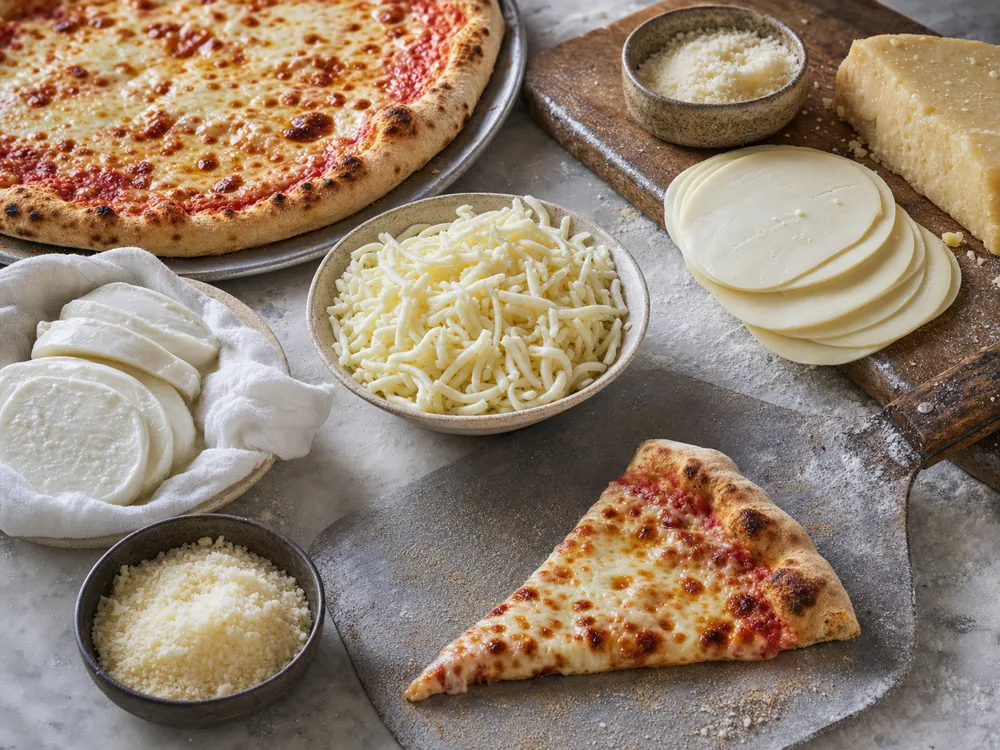
The visual cue is the moisture level. Dry shreds and slices can cover the pie early.
Wet fresh cheese needs restraint. Finishing cheese should land late enough that it seasons the slice instead of scorching into hard salty spots.
- Base cheese: low-moisture mozzarella is the safest foundation because it carries the biggest share of melt and coverage.
- Blend cheese: aged provolone, a buttery Fontina wedge, or a nutty Gruyere wedge bring sharper flavor or creamier flow when used in smaller amounts.
- Finishing cheese: a salty Pecorino Romano grate, Parmesan-style cheese, or a torn burrata finish belong after or near the end of the bake, not as the main melt blanket.
If you buy mozzarella for pizza, buy it as a block when possible. Freshly grated or sliced block cheese melts more evenly than pre-shredded bags that carry anti-caking powders.
This is also why pizza and general melting cheese are related but not identical. Pizza does not just want melt.
It wants melt that stays balanced against sauce, crust, and oven time.
If you are building a plain cheese pizza, keep the base boring and let the bake do the work. If you are building a white pie, mushroom pie, or sausage pie, then the accent cheese can carry more personality because the sauce and topping structure have changed.
That order prevents the most common mistake: choosing the cheese by flavor first, then hoping the oven will forgive the moisture and fat. Pizza works better when the base cheese protects the crust and the accent cheese changes the direction in smaller amounts.
Which Cheese Blends Actually Improve a Pizza?
Most good pizza blends are not complicated. They start with a mild melting base and then borrow a little flavor or color from a second cheese.
- Classic home-oven blend: about 80 percent low-moisture mozzarella and 20 percent aged provolone for sharper bite and better browning.
- White-pie blend: mozzarella plus Fontina, then ricotta or a finishing hard cheese added in smaller touches.
- Detroit or pan blend: mozzarella plus a mild richer melter that can help the edge caramelize without turning oily.
- Bold finishing move: mozzarella base, then a light grate of Pecorino Romano or a few torn burrata pieces after the bake.
The pattern stays the same. Use the second cheese to change flavor direction, not to replace the whole structure of the pie.
Once the accent cheese becomes most of the layer, the crust usually starts paying for it.
If you want a stronger cheddar-like voice on pizza, keep it small. Cheddar can add flavor in a restrained blend, but it is prone to oiling and is rarely the base cheese you want for a clean slice.
Provolone is the most useful accent for a classic red pie because it sharpens the dairy note without changing the whole style. Fontina moves the pizza toward a creamy white-pie direction.
Gruyere brings nutty depth, but it can make a tomato pie taste heavier if it is used like mozzarella.
Smoky Gouda accents and other smoked cheeses need even more restraint. They can make barbecue chicken, bacon, or onion pies taste fuller, but smoke spreads through melted cheese quickly.
Use them as a seasoning layer, not as the main cover.
Which Cheese Mistakes Wreck Pizza Before the Crust Helps?
The biggest pizza-cheese mistakes are almost always technical, not fancy. Too much water, too much cheese, or the wrong kind of heat usually does more damage than a slightly imperfect cheese choice.
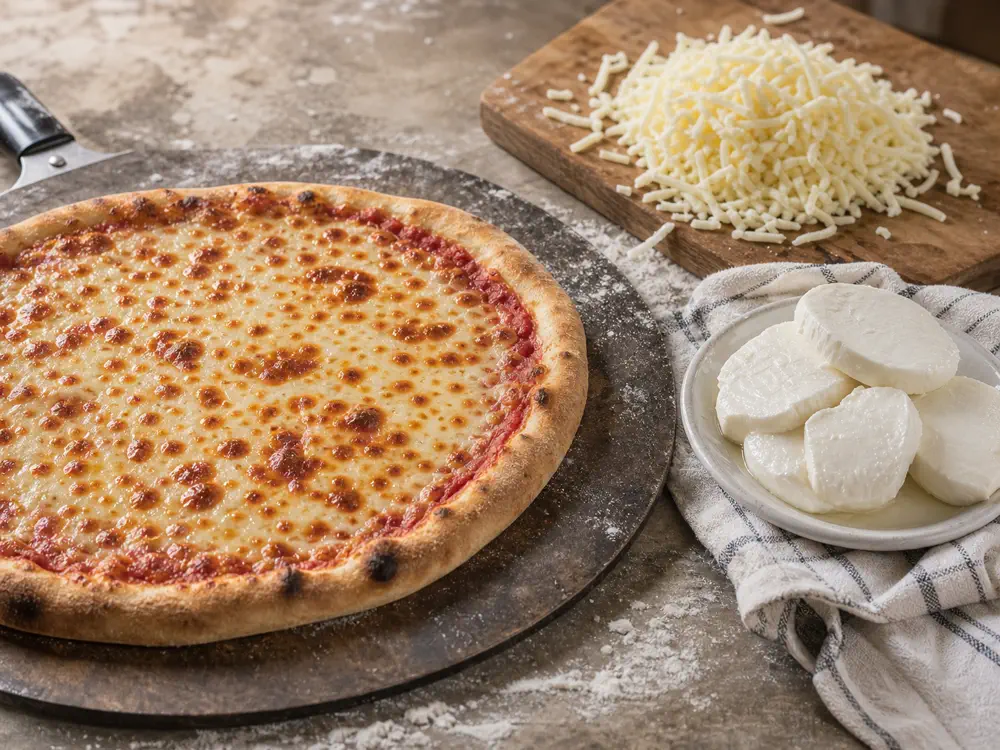
Cheddar fails most often because it separates. Fresh mozzarella fails most often because it wets the crust.
Hard grating cheese fails because it burns or stays too dry to behave like a base layer.
Even a good cheese can become a bad pizza cheese when the amount is wrong. A lighter, even layer usually bakes better than a heavy hill that traps steam and slides off the slice.
Fresh mozzarella needs the most prep. Slice it early, place the pieces on towels, and let the surface moisture drain before it goes near the dough.
If the cheese still leaves wet spots on the towel, it will leave wet spots on the pizza too.
Hard finishing cheeses need the opposite caution. Pecorino Romano and Parmesan-style cheeses bring salt, but they dry and brown fast.
A light grate after baking often tastes cleaner than a heavy layer that sits in the oven from the start.
- Most forgiving base: low-moisture mozzarella for ordinary home ovens.
- Most common moisture mistake: fresh mozzarella that never got drained long enough.
- Most common flavor mistake: too much accent cheese and not enough neutral base.
Which Cheese Fits Which Pizza Style?
Once the oven is clear, the next question is style. A plain red pie, a white pie, a pan pizza, and a finishing-heavy specialty pizza do not all want the same cheese structure.
What Cheese Fits a New York or Plain Cheese Pizza?
Use low-moisture mozzarella first, then a little aged provolone if you want more bite. This is the most useful lane for standard home-oven pizza because it protects stretch, browning, and slice integrity at once.
Keep the layer thin enough that sauce can still breathe through the cheese. The pie should show small red gaps before baking, not a solid white sheet.
Those gaps help the top brown instead of steaming under a closed layer.
Which Cheese Handles Neapolitan or High-Heat Pizza?
Use well-drained fresh mozzarella or high-moisture fior di latte. The pie bakes quickly enough that the water has less time to soak the crust.
In a slower oven, the same cheese becomes much riskier.
Cut the fresh cheese into small pieces rather than broad slabs. Smaller pieces soften quickly and leave room for the crust to blister.
Large wet rounds can turn the center soupy before the rim has finished coloring.
What Should You Put on Detroit, Pan, or Sheet-Pan Pizza?
Use a sturdier low-moisture base and let edge contact do part of the work. A mild richer accent cheese can help here, but the base still has to survive a longer bake and thicker sauce load.
For pan styles, push some cheese toward the edge only if the cheese can brown without turning greasy. Low-moisture mozzarella handles this better than fresh mozzarella.
A small amount of richer accent cheese can help the edge caramelize, but too much fat makes the side heavy.
Which Cheese Works on White or Mushroom Pizza?
Use Fontina or Gruyere as part of the blend when you want a creamier, nuttier direction. These cheeses make more sense once the pie is not asking tomato and mozzarella to do the full classic job.
White pies also need restraint because there is no tomato acidity to cut the fat. Pair creamy cheese with garlic, herbs, mushrooms, onions, or a bitter green so the slice does not taste flat after two bites.
That is also why Scamorza-style stretched-curd cheese can be interesting on flatter, drier pies even though it is not the main mainstream answer. It brings some of the pasta-filata logic without copying ordinary mozzarella exactly.
What Shopping and Prep Steps Matter Most for Pizza Cheese?
Pizza gets much easier if you buy for the role instead of the headline cheese name. One dependable base cheese, one optional accent cheese, and one finishing move already cover most home cooks.
Between pizza nights, good cheese wrapping matters more than people think. A dried-out mozzarella block or a sweaty provolone edge will not melt the same way the next time around.
At the store, avoid shredded bags that look dusty or clumped with broken bits at the bottom. For blocks, choose cheese that bends slightly under pressure and has no dried corners.
For fresh mozzarella, check the sell-by date and buy only what you can drain and use soon.
- Buy block mozzarella when you want the cleanest home-oven melt.
- Buy fresh mozzarella only when you can drain it or bake hot enough to control moisture.
- Buy provolone or Fontina as an accent, not as the entire cheese layer.
- Buy hard finishing cheese for the final salty grate, not the base melt.
Leftover pizza cheese should be planned before it dries out. Low-moisture mozzarella can go into another pizza, a baked pasta dish, or a hot sandwich.
Fresh mozzarella is less forgiving after opening, so use it within the next day or two in a salad, toast, or quick high-heat pie.
Most home ovens and everyday pizza nights
Use: Low-moisture whole-milk mozzarella, with aged provolone as an optional accent
That setup gives the safest combination of stretch, browning, and moisture control for standard kitchen bakes.
Very hot oven pizza or finishing-led specialty pies
Use: Well-drained fresh mozzarella, then finish with Pecorino Romano or burrata when the style calls for it
Fresh mozzarella finally wins once the oven is fast enough to protect the crust, but it still works best when you treat it as a high-heat choice rather than a universal one.
If your pizza keeps coming out wet, the fix is usually not a fancier cheese. It is usually a drier base cheese, a lighter hand, or a better match between the cheese and the oven.
SOURCES & REFERENCES
What Else Do People Ask About Pizza Cheese?
These are the pizza-cheese problems that matter once the oven and the crust start making demands.
Low-moisture whole-milk mozzarella is the best cheese for most homemade pizza because it stretches, browns, and releases less water than fresh mozzarella in a normal home oven.
Fresh mozzarella holds much more water than low-moisture mozzarella. In a slower oven, that water has time to run into the crust before the pie finishes.
Draining helps, but the oven still has to be hot enough to support it.
Yes. Provolone works best as part of a blend with mozzarella because it sharpens flavor and can help browning.
It is usually more useful as an accent than as the whole cheese layer.
Well-drained fresh mozzarella or fior di latte is the standard choice for Neapolitan pizza, but it really shines only when the oven is hot enough to bake the pie very quickly.
Use burrata as a finishing cheese, not as the main baking cheese. It adds luxury and cream after the pie comes out, but it is too wet and too delicate to replace the base melt layer.