Buffalo mozzarella sits at the rich end of the fresh Italian cheeses, and it does not behave like an ordinary ball of fresh mozzarella. It gives you richer milk flavor, a more tender interior, and more moisture, which is exactly why it can be either magical or inconvenient depending on the dish.
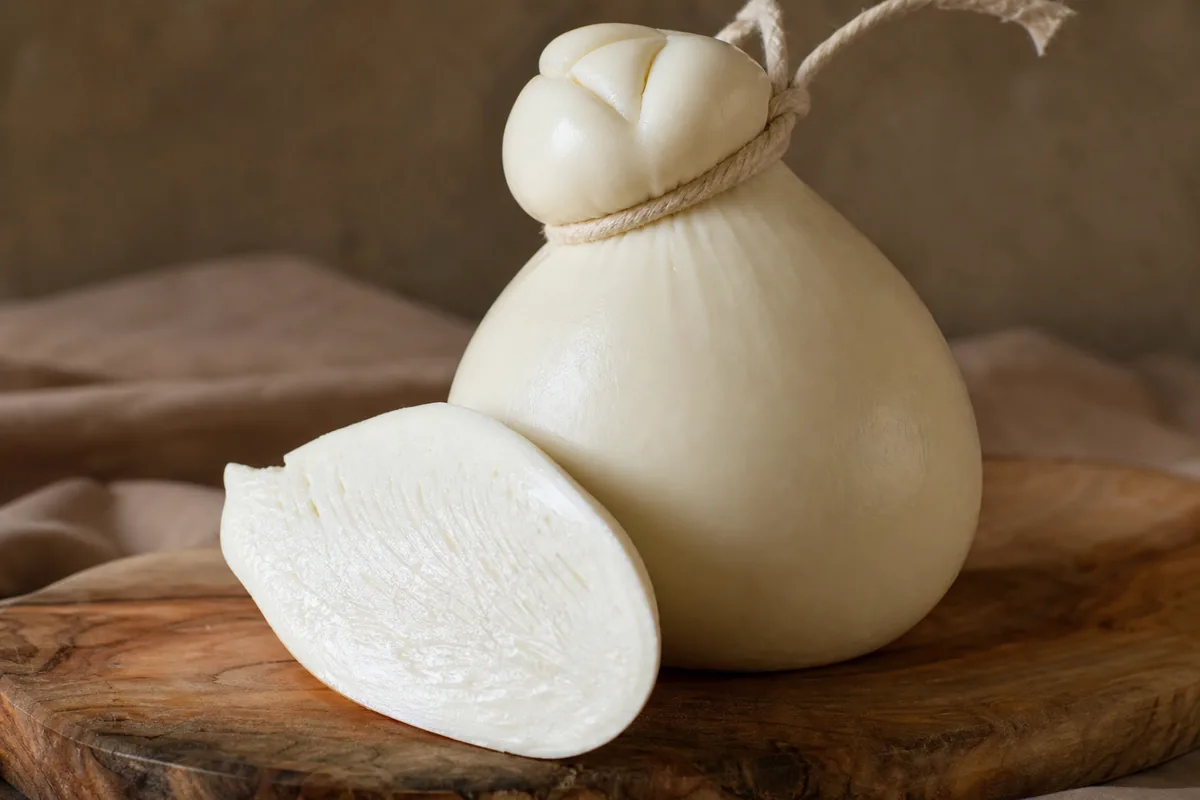
That distinction matters the moment you compare it with cow's milk mozzarella. It also tastes leaner and less indulgent than the cream-filled Puglian showpiece.
Buffalo mozzarella is not simply the premium version of every fresh Italian cheese. It has its own strengths, especially when freshness and milk character matter more than melt control.
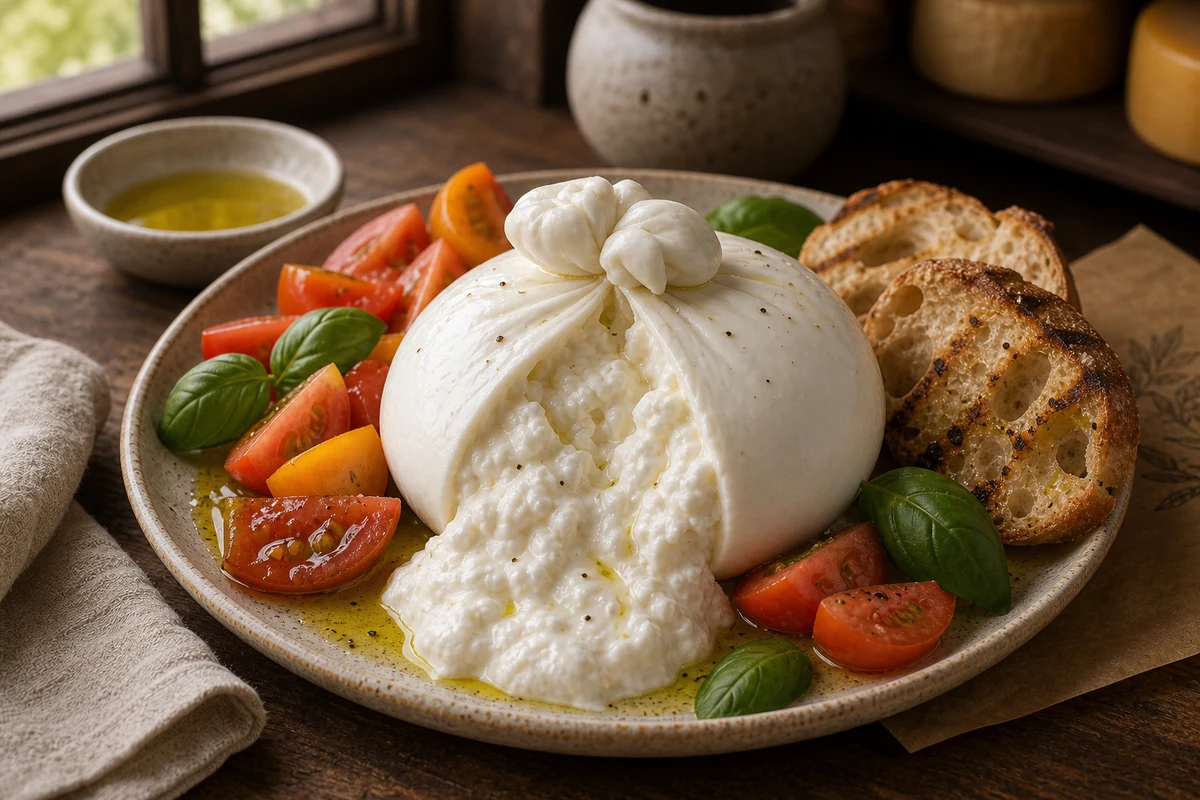
If the buying decision comes down to center texture, mozzarella and burrata differences matter more than price. Buffalo mozzarella keeps a springy curd, while burrata turns the center creamy and loose.
This profile covers what the DOP label really protects, how buffalo milk changes the bite, and why the same ball that makes a brilliant caprese can turn a home-oven pizza watery if you do not handle it correctly.
In This Article
What Buffalo Mozzarella Is and What the DOP Actually Protects
Buffalo mozzarella is a fresh pasta-filata cheese made from water buffalo milk. The best-known protected version is Mozzarella di Bufala Campana DOP, a name reserved for cheese made under official geographic and production rules in approved parts of southern Italy.
That DOP matters because buffalo mozzarella is widely imitated. A package labeled only as buffalo mozzarella may still be good, but it is not automatically the same thing as the protected Campanian-style product.
The protected production area reaches beyond Campania into approved parts of Lazio, Puglia, and Molise, which is one reason the full protected name matters more than the casual phrase buffalo mozzarella. The label tells you whether you are buying a legally defined origin cheese or a broader buffalo-milk fresh cheese.
- Milk source: water buffalo milk, not cow's milk.
- Protected style: Mozzarella di Bufala Campana DOP ties name, place, and method together.
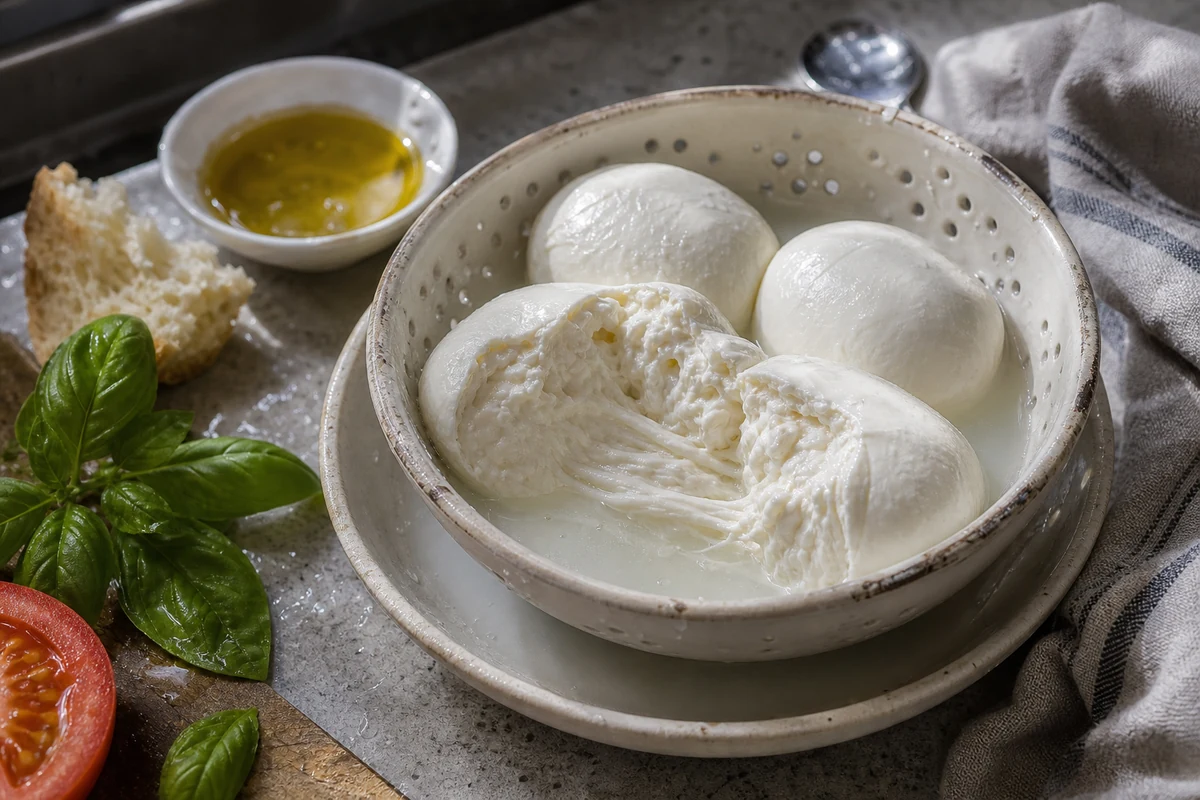
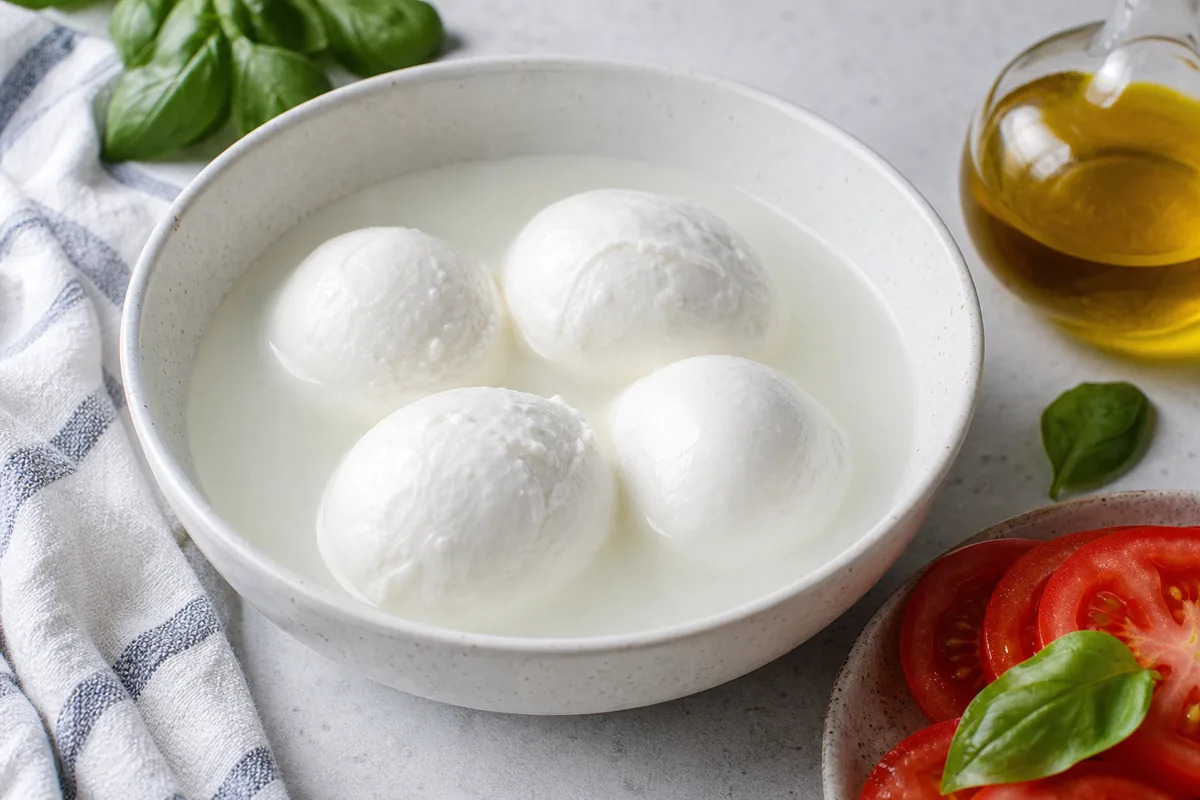
- Appearance: porcelain white with a thin outer skin and tender inner body.
- Storage: usually sold in liquid that helps protect texture and flavor.
- Main buying clue: freshness and label quality matter more here than with harder cheeses.
The DOP is useful because buffalo mozzarella declines fast. If you are paying for the protected name, you are paying for a specific milk source, a legal production zone, and a cheese that is supposed to be eaten as a true fresh specialty rather than as a generic wet mozzarella ball.
If you want the protected Italian version, look for the full name Mozzarella di Bufala Campana DOP and the official mark. A package that only says buffalo mozzarella may still be good, but it does not tell you the same story.
Why Buffalo Milk Changes the Texture and Aroma
Buffalo milk changes the cheese from the first bite. Compared with cow's milk mozzarella, buffalo mozzarella tends to taste richer, more aromatic, and slightly tangier, with a softer and juicier center that releases milky liquid when cut.
The goal is not aggressive flavor. It is a deeper fresh-milk expression.
Good buffalo mozzarella should feel succulent and elastic, not watery in a weak way and not rubbery from cold storage.
That richness lands as weight on the tongue rather than as strength of flavour. A whole ball eaten on its own gets tiring quickly, while the same amount torn across a plate of vegetables reads as generous.
It also coats the mouth for longer than cow's milk mozzarella. A bite of sharp tomato or a squeeze of lemon between mouthfuls keeps the plate moving instead of letting it settle.
- Richer aroma: more cultured milk character than many cow's milk mozzarellas.
- Tender interior: a softer center with real juiciness when the cheese is fresh.
- More tang: enough acid to keep the richness from feeling flat.
- Higher moisture challenge: wonderful for fresh service, trickier for long baking.
This is why buffalo mozzarella often tastes better raw or barely warmed than heavily cooked. The more you expose it to dry heat, the more you trade away the exact qualities that made it worth buying.
How Buffalo Mozzarella Is Made
The texture people pay for comes from one step, and it happens with the curd already made.
The curd first rests under its own whey for several hours, usually around five, which is where the acidity develops that lets the next step work at all.
Then it is cut into strips and worked with boiling water until it turns plastic and stretches. That is pasta filata, the stretched-curd technique, and it is what gives the finished ball its elastic, layered structure rather than a crumbly one.
The stretched curd is shaped and dropped into a covering liquid while still warm. The ball is finished the same day, which is why this is a fresh cheese with a short life rather than one that improves on a shelf.
That sequence also explains the juice. The layers formed during stretching trap whey inside the ball, and cutting it releases the milky liquid that a good piece should give.
Which Provinces the DOP Actually Covers
The name is regional but the map is wider than Campania alone, which matters when a label says Campana and the address does not.
The protected zone centres on Caserta and Salerno, plus parts of Naples and Benevento, all in Campania.
It also reaches outside the region. Parts of Latina, Frosinone and Rome in Lazio qualify, along with one municipality in Molise and part of the province of Foggia in Puglia.
So a genuine DOP ball can carry a Lazio or Puglia address without being a fake. What it cannot do is come from outside that defined zone.
The protection itself dates from June 1996, when the name was registered as a PDO covering the production area, the milk origin, the husbandry and the processing method rather than the name alone.
How to Read Freshness From the Bag, Surface, and Center
Freshness is the real buffalo mozzarella skill. The liquid in the package should look clean, the cheese should smell lightly lactic rather than sour, and the surface should feel delicate rather than thick or leathery.

Press the ball through the bag with one finger before you decide. It should push back and come level again, and a piece that keeps the dent has lost the spring you are paying for.
Read the packing date against today rather than against the limit on the tub. A ball packed two days ago and a ball packed six days ago can carry the same use-by date and are not the same cheese.
When cut, the center should look moist and supple. A fresh piece will give a little milky release, but it should still feel dense enough to slice or tear cleanly.
A skin that has already gone thick or leathery never softens back. The inside behind it is drier than it should be, and no amount of resting at room temperature returns it.
Buffalo mozzarella tastes tighter and duller straight from the refrigerator. Let it warm briefly before serving so the center loosens and the milk aroma opens up.
- Good sign: thin skin, clean liquid, and a tender center that does not look chalky.
- Warning sign: stale sour smell, thick skin, or a center that already feels exhausted and dry.
- Best timing: as close to packing or purchase date as possible.
- Main mistake: treating it like a fridge-stable block instead of a short-window fresh cheese.
This is also why buffalo mozzarella is a poor impulse buy without a plan. Great freshness is part of the product, not just a bonus if you get lucky.
The pack itself tells you something too. The official consortium notes that genuine DOP cheese is sold in origin packaging, which helps protect freshness and authenticity in a cheese that is not built for open-air shelf life.
Caprese, Pizza Finish, and Where the Moisture Helps or Hurts
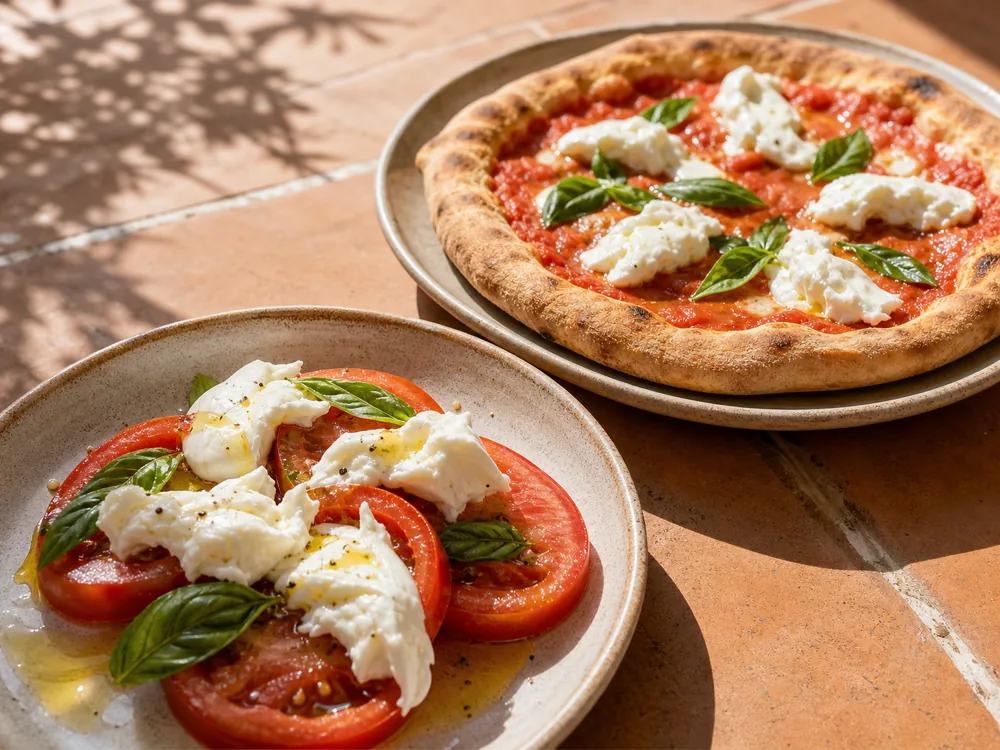
Buffalo mozzarella is strongest in dishes where its moisture and aroma stay visible. Caprese, torn pieces over warm vegetables, bruschetta, and quick-finished pizzas are natural fits because the cheese still feels fresh when it reaches the plate.
| Use | How It Works |
|---|---|
| Caprese salad | Still the clearest use because tomatoes, basil, and olive oil let the milk richness stay in focus. |
| Quick pizza finish | Works best when torn small, drained well, and used lightly instead of blanketing the pie. |
| Bruschetta and toast | Excellent over bread with tomatoes, peppers, or anchovy when you want richness without heavy melt. |
| Summer plates | Great with melon, peaches, zucchini, or prosciutto when the cheese stays mostly fresh. |
| Pasta finish | Add at the end so the cheese warms gently instead of cooking into the sauce for too long. |
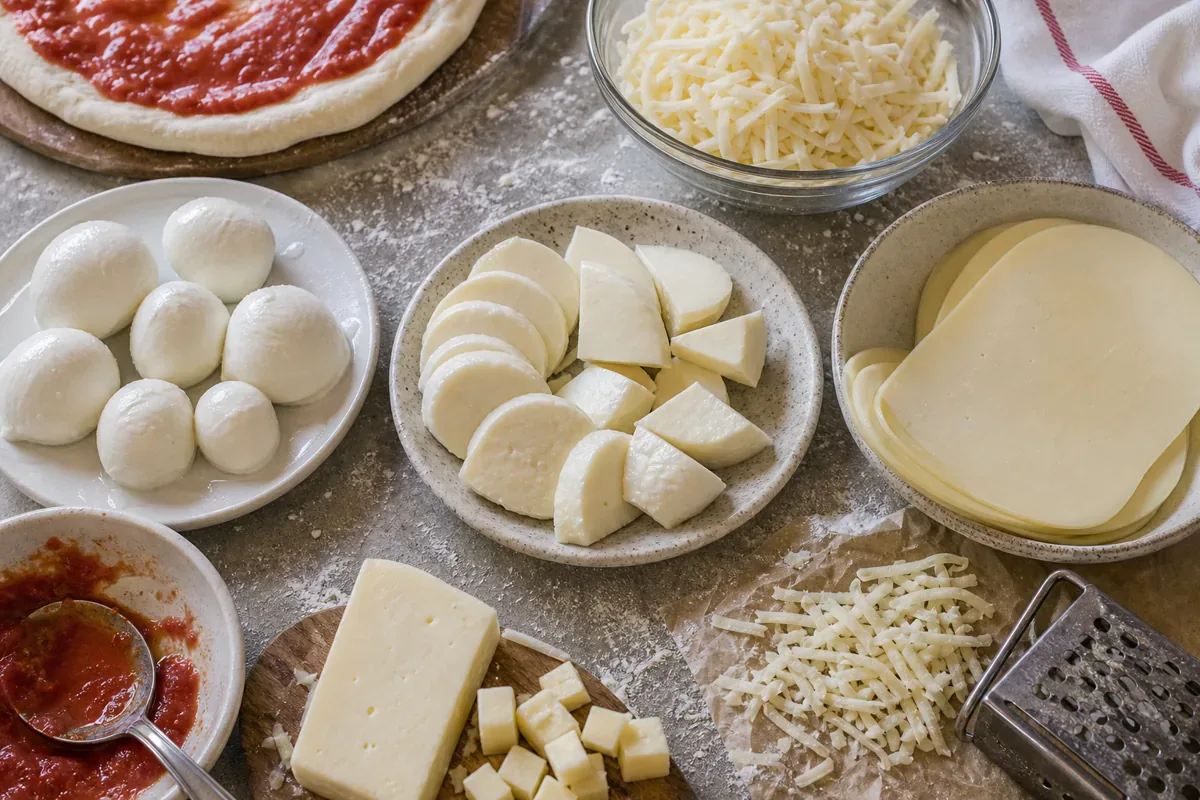
The pizza tradeoff is the important one. Buffalo mozzarella gives better flavor than many low-moisture cheeses, but it also brings more liquid, which is why home-oven pizza cheese needs more moisture control than a standard pizza block.
That is why buffalo mozzarella is usually better on lightly topped pizzas or as a post-bake addition than on overloaded home-oven pies. Shorter exposure to dry heat protects the creamy center and keeps the crust from turning soggy underneath it.
Drain it properly before it goes near a hot oven. Tear the ball, sit the pieces on a rack or a folded cloth for twenty minutes, and pour off what collects rather than blotting the surface once and calling it done.
Small torn pieces beat slices on a pizza because they let their liquid go where the heat can drive it off. A whole slice traps water underneath itself and steams the crust it is sitting on.
For caprese, put the salt on the tomatoes and not on the cheese. Salt landing directly on the ball pulls liquid straight out of it and leaves a puddle on the plate before anyone sits down.
Build the plate at the last minute. Torn pieces left sitting on cut tomato take up the tomato water and go slack, and the dish looks tired before it reaches the table.
Buffalo mozzarella is a freshness cheese first and a baking cheese second. Judging it on how it bakes misses what you bought it for.

Buffalo Mozzarella vs Fior di Latte and Burrata
The most useful comparison is not with supermarket shredded mozzarella. It is with other fresh Italian cheeses that shoppers often treat as interchangeable.
Buffalo mozzarella is richer than fior di latte and more structurally complete than burrata.
- Vs fior di latte: buffalo mozzarella is richer, more aromatic, and usually wetter.
- Vs burrata: buffalo mozzarella is a full cheese throughout, not a shell with a creamy center.
- Vs low-moisture mozzarella: buffalo mozzarella gives more flavor but much less oven control.
- Best reason to choose buffalo mozzarella: the dish lets freshness matter more than dryness or stretch.
If you want a cream-filled showpiece, burrata is still the more indulgent choice. If you want a cleaner fresh-cheese bite with more structure and less chaos after cutting, buffalo mozzarella is the better buy.
Price usually settles this at the counter, and the honest split runs by dish. A plate where the cheese is the main event repays the difference, while one already carrying prosciutto, good oil, and ripe tomato does most of the work itself and fior di latte will pass.
Burrata also cannot wait. Once the shell is cut the centre runs, so it goes onto the plate last, where a buffalo mozzarella ball can be torn and left standing for a few minutes while you finish everything else.
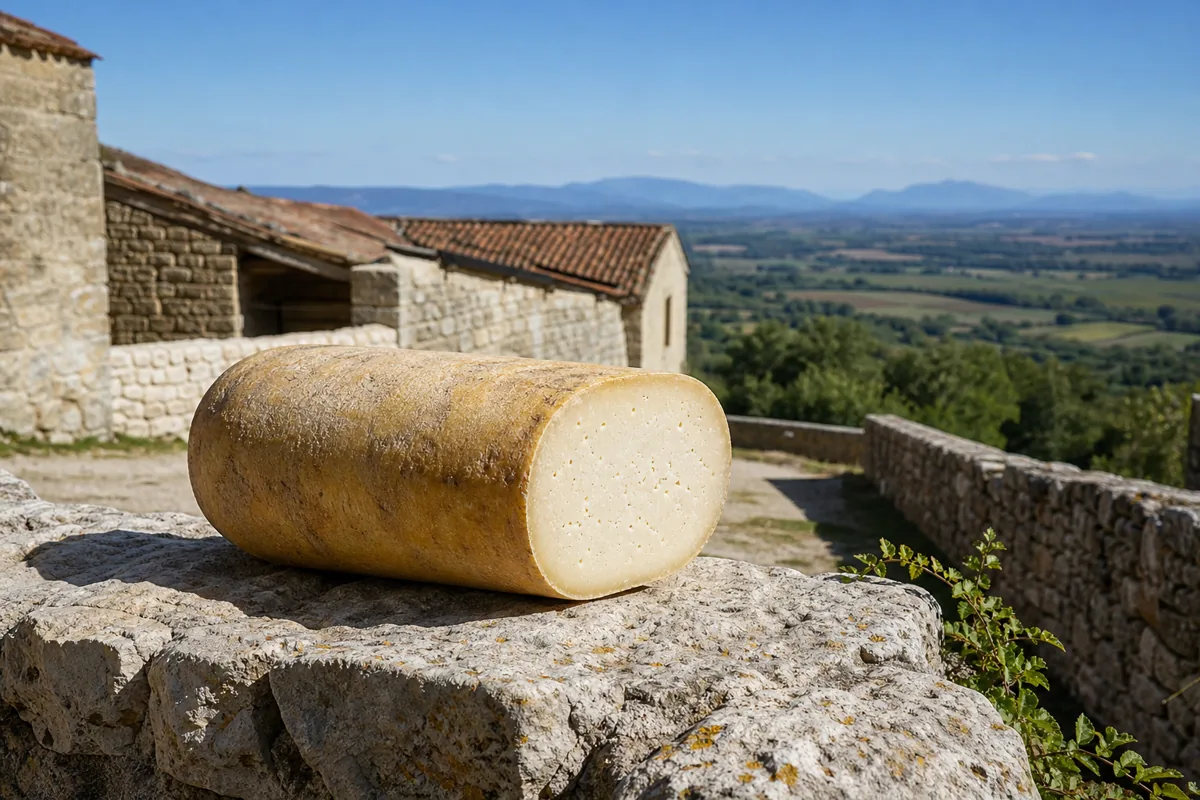
The Italian pasta-filata family places buffalo mozzarella inside a broader fresh-curd world instead of letting it blur into every other Italian white cheese.
How to Buy and Store It Fast Enough
Buy buffalo mozzarella for near-term use, not for a vague plan later in the week. The cheese should stay cold and in its liquid, then be eaten quickly once opened.
If you are serving it as the centerpiece, think almost like a fishmonger instead of a pantry shopper. Date, freshness, and turnover matter more than long fridge security or bulk buying ever will with this style.
The broader fresh-cheese storage routine still applies, but buffalo mozzarella gives you less margin than almost any hard or semi-soft cheese in the fridge. Speed matters.
When the dish needs a firmer stand-in, match the moisture level before trying to match the buffalo-milk flavor.
Should You Keep It in the Fridge?
The honest answer is that the fridge protects the cheese and damages the texture, so the decision depends on when you will eat it.
Cold firms the paste and mutes the aroma. A ball straight from the fridge tastes flatter and squeakier than the same ball at room temperature.
Eaten on the day of purchase, the traditional handling is to keep it at room temperature in its liquid, and Italian guidance treats a ball held at roughly 18 to 25C for up to two days from production as safe rather than reckless.
Beyond that day, refrigerate it. The risk of a warm ball rises with time, and a slightly firmer texture is a better outcome than a spoiled one.
Either way, bring it back to room temperature before serving. Thirty minutes out of the fridge, still sitting in its liquid, recovers most of what the cold took away.
Never store it drained. The covering liquid is part of the product, and a ball left dry in a box goes rubbery at the surface within hours.
Pairings That Let the Milk Flavor Stay Visible
Buffalo mozzarella likes bright, clean partners: tomatoes, basil, olive oil, prosciutto, grilled vegetables, stone fruit, and dry sparkling wine. The right pairing clears the richness instead of competing with it.
| Pairing | Type | Why It Works |
|---|---|---|
| Tomatoes | Food | Still the default because acidity and juiciness frame the cheese perfectly. |
| Prosciutto | Food | Salt and cured sweetness make the cheese taste even creamier. |
| Peaches | Food | A strong summer partner when the plate stays fresh and light. |
| Dry sparkling wine | Wine | Bubbles cut the rich milky center without burying it. |
| Olive oil | Food | A grassy oil adds aroma without stealing the spotlight. |
| Basil and mint | Food | Fresh herbs keep the finish cool and clean. |
Bread should be plain and open-crumbed. A sourdough with real acidity fights the tang in the cheese, and a dense loaf makes the mouthful heavy before the milk flavour arrives.
Peppery olive oil serves it better than a delicate one. The cheese brings enough fat of its own that a soft mild oil vanishes into it, while a bitter green oil gives the plate an edge to push against.
Wine wants acid and bubbles rather than weight. An oaked white lands on top of the richness the cheese already has and flattens both halves of the pairing.
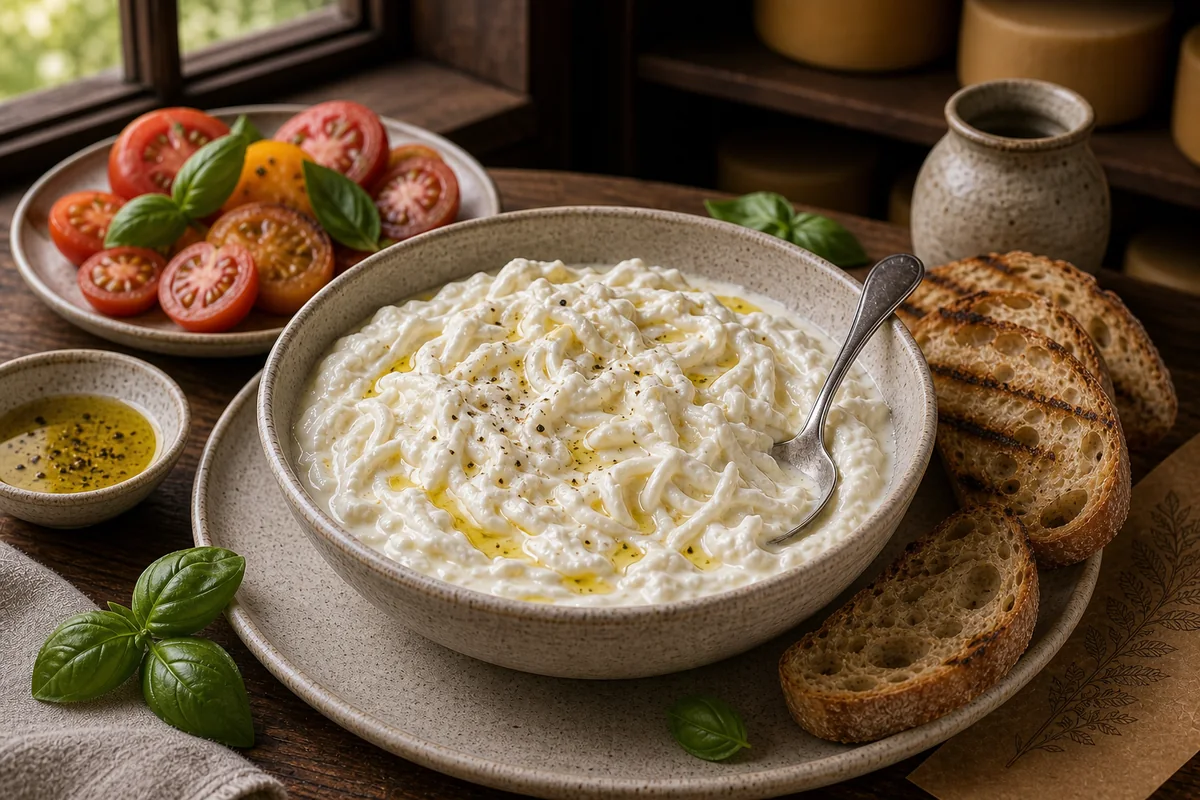
Do not bury the cheese under heavy sweet sauces if buffalo mozzarella itself is the point. If you want a looser creamy finish instead, that spoonable whey-cheese lane solves a different job.
Fresh Buffalo Milk Cheese Needs a Label and Cold-Chain Check
Buffalo mozzarella is rich but usually eaten in moderate portions. One ounce often lands around the mid-80-calorie range with useful protein and calcium, though exact figures vary by producer and water content.
Pregnancy guidance depends on pasteurization and handling rather than the cheese name alone. Many products are pasteurized, but fresh cheese storage and label reading still matter, so fresh-cheese safety rules are the safer check when you need certainty.
Buy buffalo mozzarella when freshness, milk aroma, and soft juicy texture matter more than melt control. It is one of the best fresh cheeses on the Italian shelf, but only when you handle it like a short-window specialty instead of a generic pizza cheese.
SOURCES & REFERENCES
Buffalo Mozzarella FAQ
These are the quick decisions shoppers usually need before they buy a tub or tear open a fresh ball at home.
No. Buffalo mozzarella uses water buffalo milk, so it tastes richer and often feels more tender and aromatic than the usual cow's milk version.
It can be excellent on pizza, but only if you drain it well and use it lightly. Its extra moisture can flood a pie if you treat it like low-moisture mozzarella.
Buffalo mozzarella is a complete cheese in one piece. Burrata has an outer shell with a creamy stracciatella center, so it behaves much more loosely once cut.
Freshness matters a lot. Unopened cheese usually lasts only a few days to about a week, and opened cheese is best eaten within a day or two.
You can, but you should not if texture matters. The cheese turns grainier and less juicy after thawing.