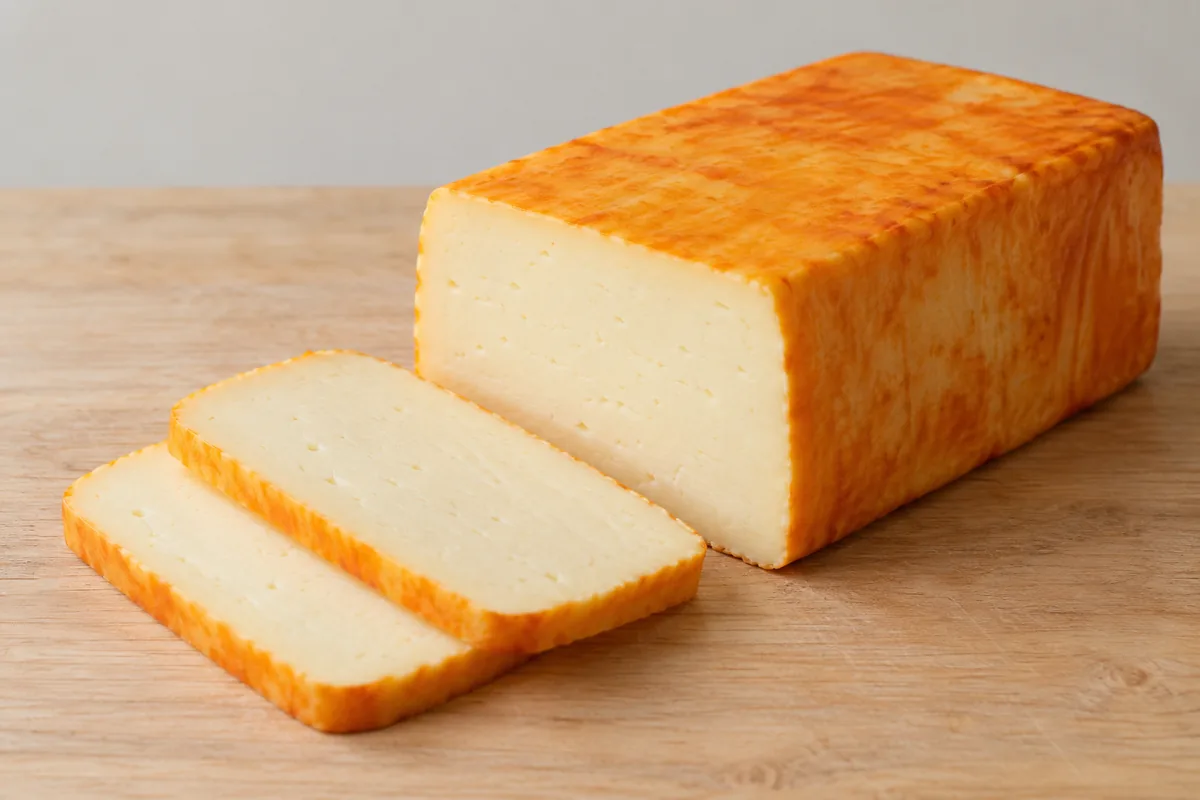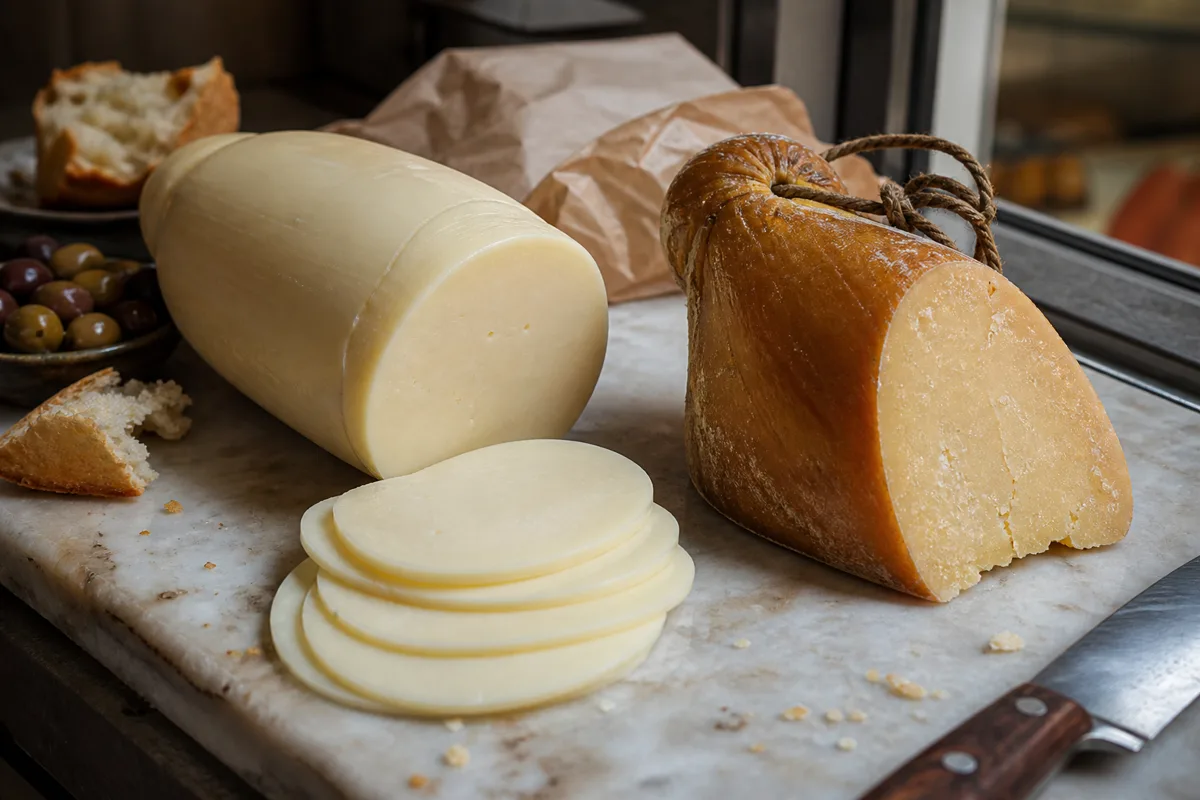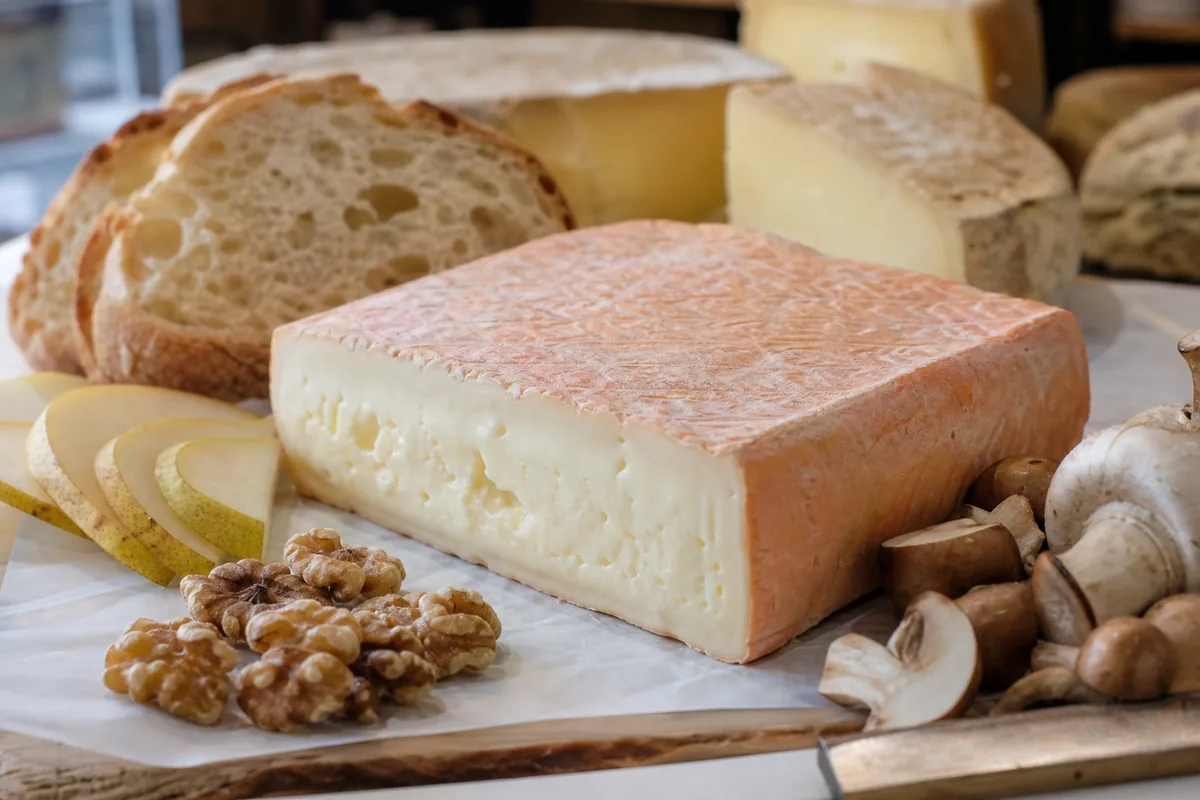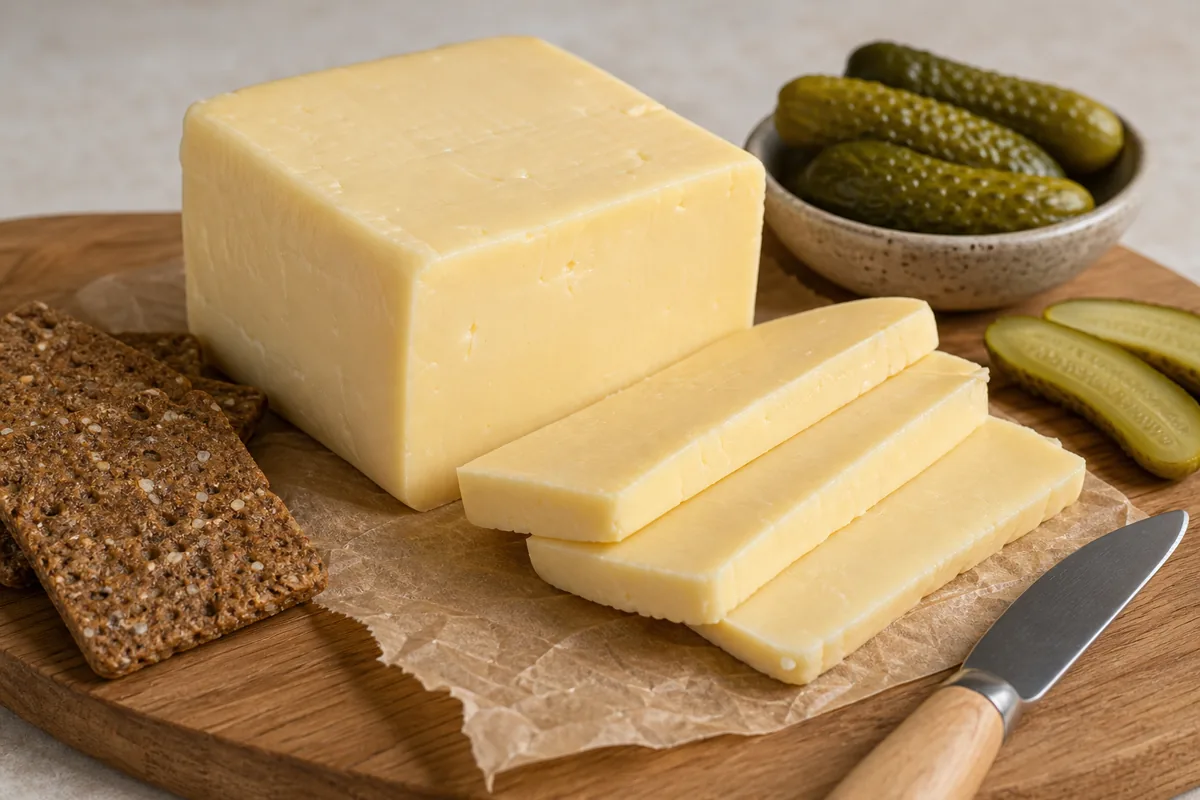
Choose young Brick for melting and aged Brick for a pungent, tangy bite. This Wisconsin cow's-milk cheese ranges from mild and sweet to stronger-smelling and nutty as it matures, so the age matters when buying for pizza or the table.
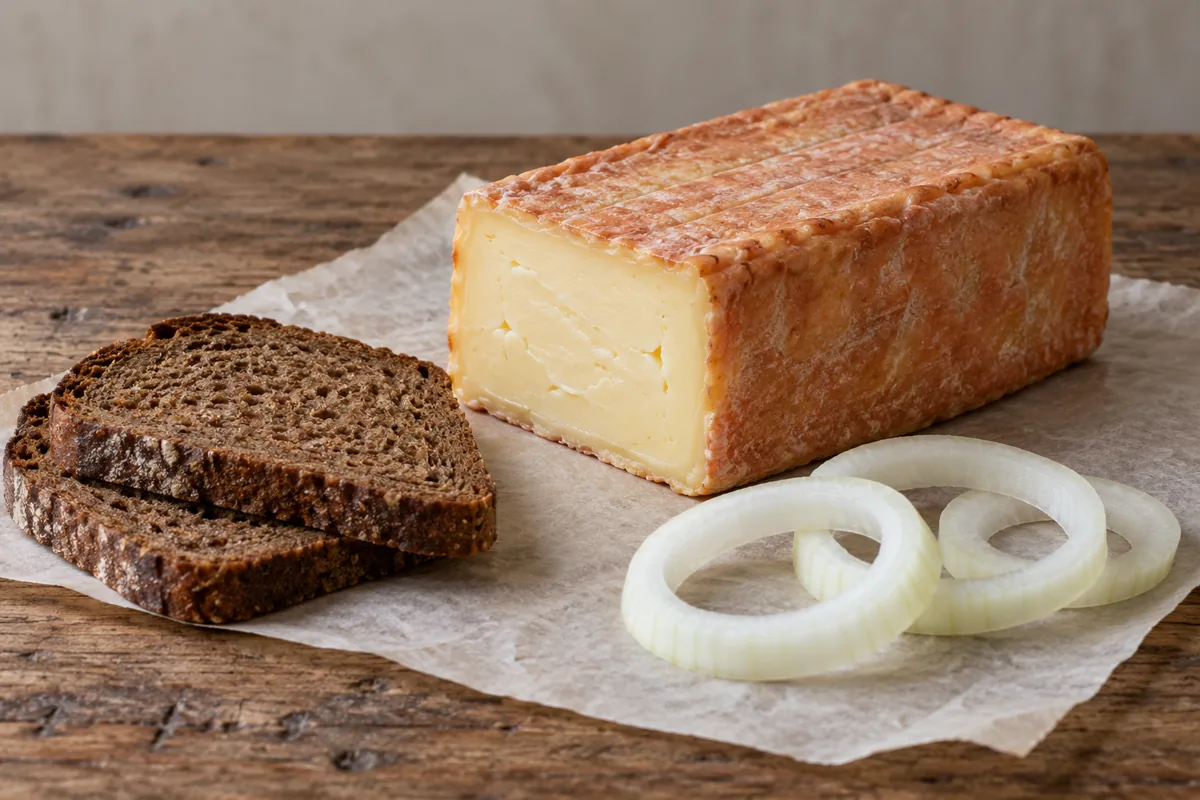
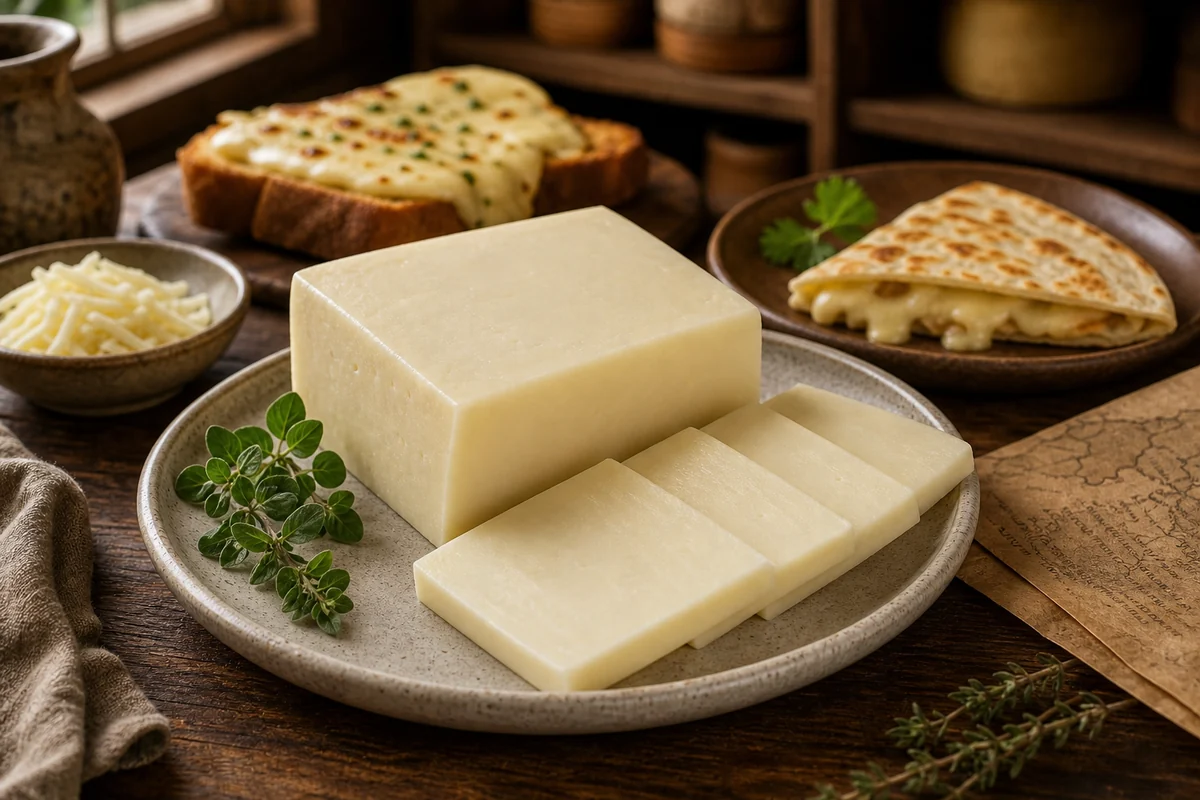
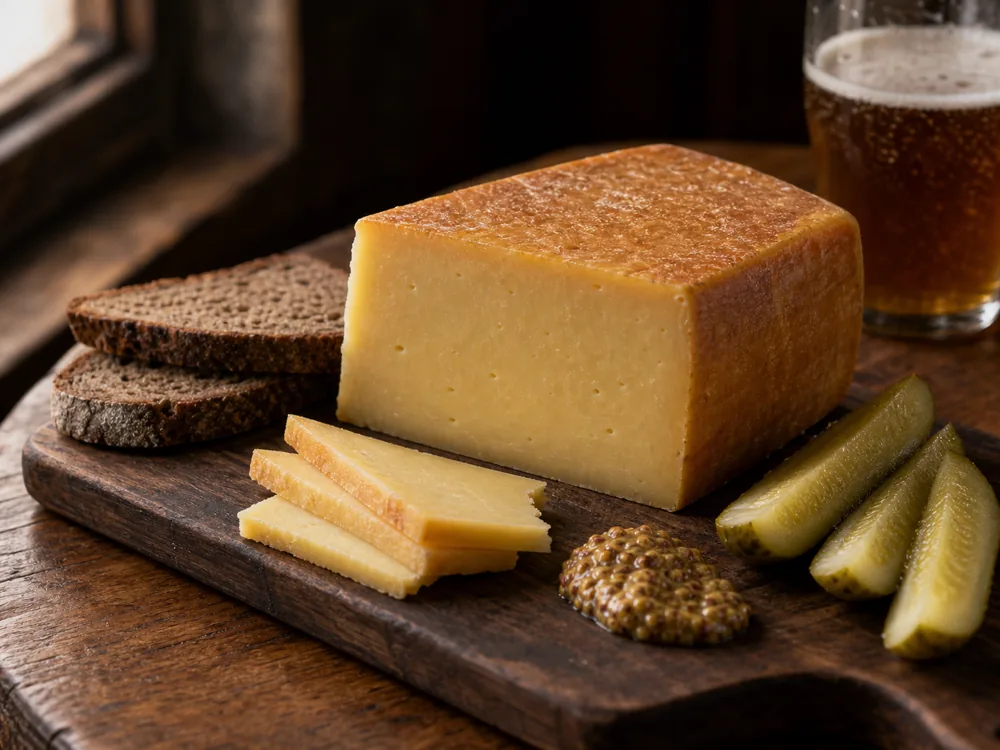
Young, unaged Brick is suitable for melting and suits macaroni, potatoes au gratin and platters. For an aged piece, think rye or crusty bread with pub mustard.
In This Article
Pick young, aged or a flavoured product
The descriptions agree on mildness when young, but use different texture labels and describe the older flavour differently:
| Question | Answer |
|---|---|
| Texture | Semi-hard, open and smooth (Cheese.com), medium-soft, softer than Cheddar (English Wikipedia) |
| Young Brick | Mild in all three, mild and sweet (Cheese.com), mild with a touch of nuttiness (Wisconsin Cheese), sweet and mild (English Wikipedia) |
| Aged Brick | Pungent and tangy with a touch of nuttiness (Cheese.com), more complex, pungent and tangy (Wisconsin Cheese), stronger smell and a nuttier taste (English Wikipedia) |
Read those as separate accounts rather than a guarantee of one texture at every age. “Aged” alone is not an exact maturity: ask how long the block was kept.
Brick is considered ready after two weeks and may remain in cold storage for up to five months in Wikipedia's account. Follow your pack's storage and use-by instructions alongside the seller's age information.
Widmer's sells mild Brick, aged Brick, caraway-and-jalapeño Brick and an aged spread combining washed-rind Brick with aged white cheddar. The plain cheese's young-to-aged descriptions do not describe those added flavours or the spread's blend.
Joe Widmer is a Wisconsin Master Cheesemaker for Brick, cheddar and colby. It is a title from a three-year program for cheesemakers with at least ten years making their chosen cheese.
Use young Brick for Detroit-style pizza edges
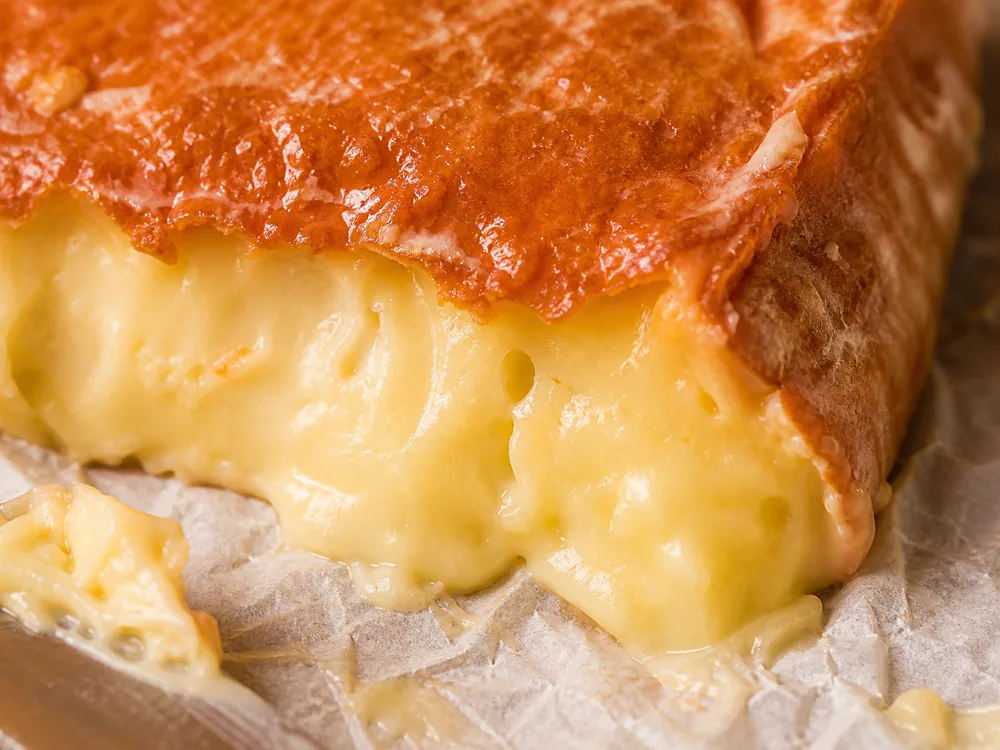
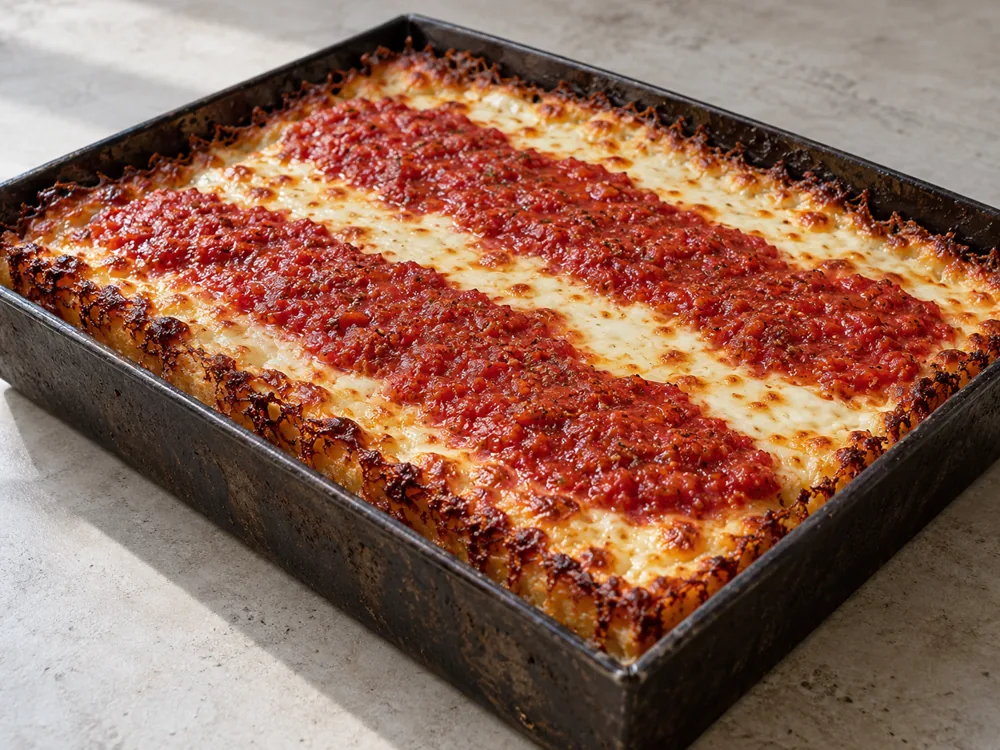
Brick is called the traditional cheese for Detroit-style pizza, with cheese spread right to the edges: Wisconsin Brick or mozzarella. It caramelizes against a high-sided, heavyweight rectangular pan, creating the lacy, crisp rim of the pizza.
The style dates to 1946 at Buddy's Rendezvous in Detroit, owned by Gus and Anna Guerra. The Takeout's Dennis Lee describes Brick as mild, white, fatty and creamy, and calls it an ideal melting cheese.
The edge forms when cheese melts between crust and pan. Loui's Pizza puts the pepperoni down first, adds almost a pound of Brick and bakes at 700°F (370°C).
Brick can withstand that heat because of its butterfat content. Shield's Pizza instead bakes for thirteen minutes at 440°F (225°C), so those are distinct pizzeria methods.
The buttery crust flavour is credited to a small quantity of oil and the melting properties of mozzarella and Wisconsin Brick. The crisp edge is called frico.
Sauce goes on top to prevent a soggy crust and keep the cheese anchored to the rim, in The Detroit News explanation reproduced in the pizza account.
Outside Detroit and Wisconsin, The Takeout describes Brick as difficult to find in ordinary grocery stores and often sourced directly from Wisconsin. Its alternative is low-moisture mozzarella, which resembles Brick enough to make savoury cheese edges, and Detroit-style chain Jet's Pizza uses mozzarella.
Build plates and pairings around the age
Wisconsin Cheese puts young Brick on a meat and cheese platter, in macaroni and potatoes au gratin, and slices it for sandwiches or melts it with polenta. For mature Brick, its plate is rye, spicy pub mustard and sautéed onion.
Widmer's suggests a slice of its aged Brick on crusty bread with stone-ground or spicy pub mustard. Pickled vegetables and toasted Italian bread are further accompaniments in the cheese reference.
| Pairing | Type | Why It Works |
|---|---|---|
| Macaroni and potatoes au gratin | Food | Wisconsin Cheese suggests them for young Brick, and Cheese.com names both for Brick. |
| Rye, pub mustard and sautéed onion | Food | Wisconsin Cheese suggests them for mature Brick. |
| Crusty bread and stone ground mustard | Food | Widmer's pick for its aged Brick. |
| Pickled vegetables and toasted Italian bread | Food | Cheese.com, for Brick. |
| Light red wine, Gamay Beaujolais | Wine | Cheese.com, for young Brick. |
| Porter ale and full-flavoured beers | Drink | Cheese.com, for aged Brick. |
Cheese.com adds hard cider for aged Brick. Its young-cheese suggestion is light red Gamay Beaujolais with sweet pickles, and its aged suggestions include porter and stronger beers.
Beer and wine options by source
For beer, bock, pale ale, porter and stout overlap between Wisconsin Cheese's list for Brick and Widmer's, which wants a substantial partner. The former also includes weiss beer and brown ale.
For wine, the overlapping choices are Chardonnay, Pinot Noir, Riesling, Sauvignon Blanc and Grüner Veltliner. Widmer's adds Merlot, Champagne, Beaujolais and Pinot Gris.
Porter appears across all three pairing accounts, while Beaujolais overlaps between Widmer's and the reference's young-Brick suggestion. Leftover Brick also goes into beer-cheese dip in Dennis Lee's recommendation.
The bricks, Cheddar lineage and washed rind
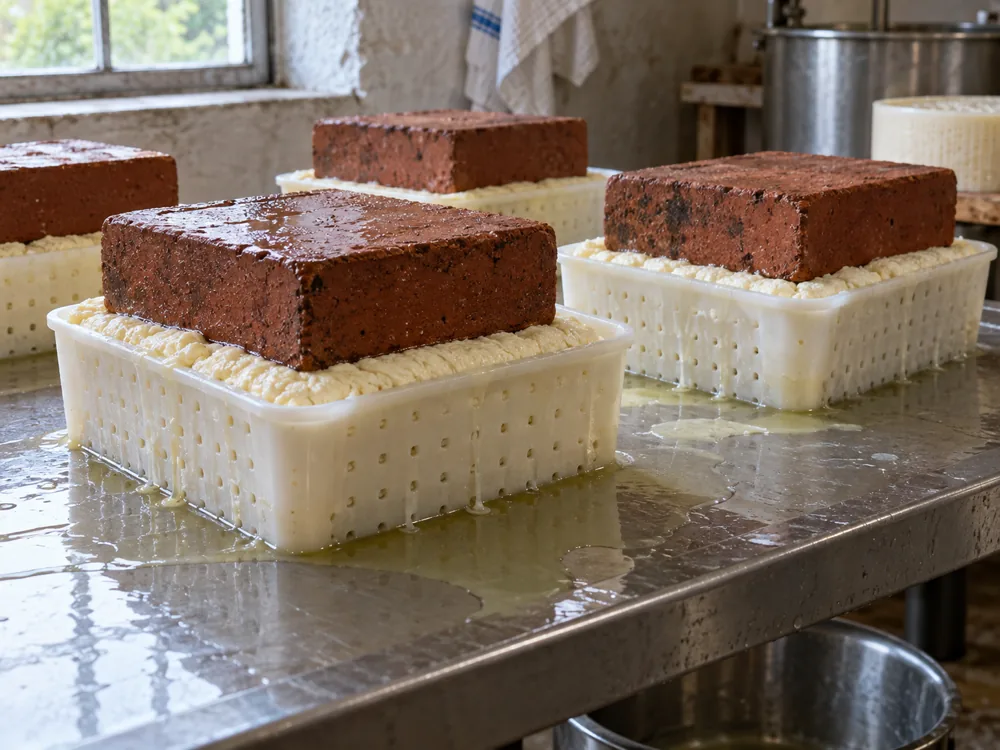
It is named for bricks: most accounts describe weights pressing moisture or whey from curd, while another describes how actual bricks originally formed the brick shape. John Jossi made the first Brick in 1877, or around 1877 in the cheese reference.
Founded in Theresa, Wisconsin in 1922, Widmer's Cheese Cellars still presses its curd with actual bricks. Its hand-filled moulds turn three times on the first day while the bricks weight the curd and remove whey.
The maker uses the recipe, open vats and clay-fired bricks of Joe Widmer's grandfather and calls itself one of the few makers that still produce the original version.
Why the paste and rind invite different comparisons
The make traces to white American Cheddar, while rind and aroma invite the Limburger comparison. In Wikipedia's account, slightly higher culturing temperature gives marginally higher fat, a slightly altered protein structure and a slightly softer texture.
Cheese.com describes the result as slightly soft with a distinctly sharper taste. Wisconsin Cheese describes German immigrants treating it as a less pungent Limburger alternative and summarises the taste as somewhat softer with a sharper finish.
Widmer's uses lower levels of Brevibacterium linens rubbed on the rind, describing a tamer, milder Limburger relation. Germany's surface-ripened Beer cheese, or Bierkäse, is another German relative beside Limburger that many people associate with Brick.
Salt, warm ripening and surface cultures
Traditional Brick is brined, rested warm to encourage flavour-producing bacteria and hand-washed in brine. Widmer's follows the same order: a brine bath introduces salt and cultures, then comes the warm-room rest and brine washing.
Other accounts specify a mix of water and whey for washing. The named surface bacteria also differ: Brevibacterium linens, shared with Limburger and many French cheeses, or Corynebacterium and Arthrobacter bacteria.
Both use “smear” for the growth, giving the smear-ripened classification. The colour descriptions are pale yellow to white with an orange rind or ivory or creamy yellow.
What the US standard requires, and what the label leaves open
21 CFR 133.108 sets Brick's federal standard of identity. These are its composition and make requirements:
- Milkfat is at least 50% of the solids by weight, while moisture is at most 44% of the cheese.
- Milk is pasteurised, or the cheese is cured at 35°F or above for at least sixty days.
- Culture is added at about 88°F, with stirring and slow heating to about 96°F.
- Optional ingredients include colouring, clotting enzymes, antimycotic agents and calcium chloride up to 0.02%.
After the enzyme sets the milk, the mass is cut into roughly ⅜-inch cubes and stirred during heating towards 96°F. Once firm, some whey is removed and water or salt brine dilutes the mixture to control acidity.
The curd drains in forms, is pressed and turned, then salted after drainage. Surface cultures characteristic of Brick are applied before curing.
The standard also permits another procedure yielding the same physical and chemical properties. The reference's objection is that its fat and moisture limits do not account for the surface ripening with B. linens expected of Brick.
For vegetarian needs, obtain the maker's enzyme origin: the reference marks Brick not vegetarian, and the standard permits rennet or other clotting enzymes. Animal, plant and microbial enzymes may all be declared simply as “enzymes”, so that word alone cannot identify the origin.
Read nutrition values for the actual portion
USDA reference data republished by NutritionValue.org gives the following per 100 g:
The water figure, 41.1 g, sits below the 44% moisture ceiling. Fat is 29.7 g of the remaining 58.9 g solids, about 50.4%, just above the standard's 50% minimum.
The same record's 28 g slice has 105 calories, 8.4 g fat, 5.3 g saturated fat and 159 mg sodium. Total sugars are 0.5 g per 100 g, so use your exact product's panel when managing lactose intolerance.
Pregnancy: verify the milk and serving method
The cheese reference lists Brick as pasteurized cow's milk, but the federal standard allows raw milk cured for sixty days or more at 35°F or above. That legal maturation condition is not a pregnancy safety clearance.
A labelled pasteurised Brick fits the NHS safe list under its semi-hard or medium-soft descriptions. If the label is raw or unclear, cook thoroughly until steaming hot.
The CDC rates raw-milk dairy riskier. In the US, raw or unlabelled Brick has no CDC safer route even cooked, and a pasteurised medium-soft piece eaten cold sits in neither CDC column.
For a soft or deli-sliced piece in the US, heat to 165°F or until steaming hot: the CDC also puts unheated deli-sliced cheese in its riskier column. Pasteurisation does not remove that deli-sliced action.
With Brick's variable milk and texture, remember the CDC pregnancy comparison: “10 times more likely to get a Listeria infection”. Read the broader cheese in pregnancy guidance before treating one cheese description as universal permission.