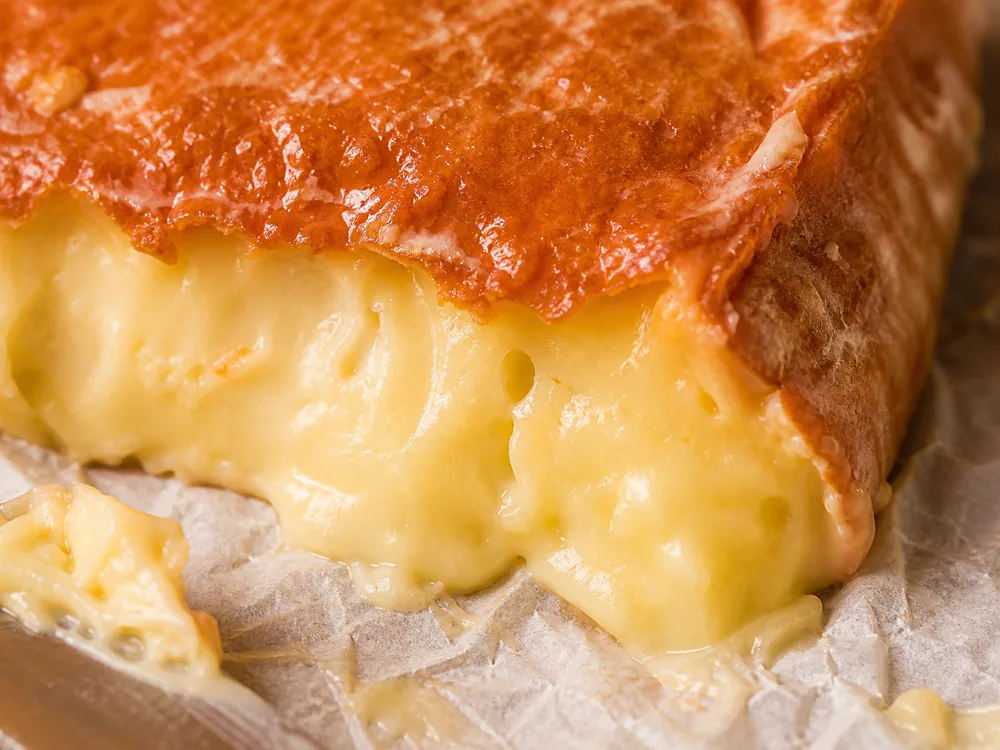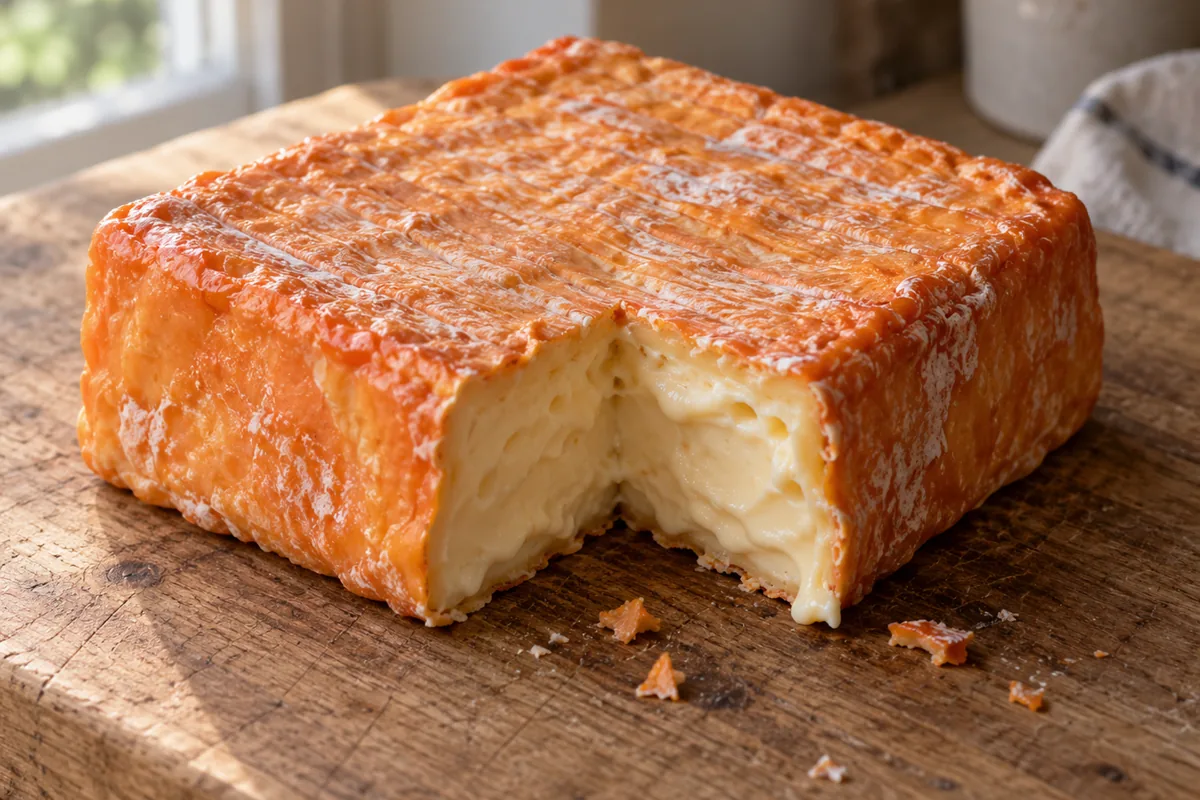
Limburger is a semi-soft, washed-rind cheese made from cow's milk, first made in the Herve area of the old Duchy of Limburg, which is now part of Belgium's province of Liège.
Its smell comes from bacteria that makers smear on the rind, and under that smell the flavor is usually mild.
In This Article
Does Limburger Taste as Strong as It Smells?
For most pieces, no: under a pungent aroma, the flavor is mild, grassy and tangy. Its taste is described as mushroomy, with a delicate tang at the end.
A young Limburger is quite mild. An aged one is described as tangy and robust.
The smell builds with age as well: at three months, Limburger takes on its strong aroma from the smear of bacteria that ripens it. So if the smell worries you, buy a piece younger than three months.
If the smell is still too strong for you, look at the rind: it is sometimes rinsed or cut off to weaken the odor.
Why Does Limburger Smell like Feet?
The smell is the work of Brevibacterium linens, the bacterium on Limburger's rind, whose familiar odor comes from sulfur-containing compounds called S-methyl thioesters.
The same bacterium is found on human skin, where it is partly responsible for body odor, foot odor in particular.
Makers cure Limburger in saltwater brine, smear the bacteria on the surface and wash the rind again and again as it ages, and the liquids that carry the red-smear bacteria, chiefly Brevibacterium linens, go on at the start of ripening and again during it. The bacteria help the cheese ripen and build its flavor as well as its smell.
On the surface, the bacteria break down proteins, and that creates the rind's color and adds to the strong smell.
Limburger is often stored in airtight containers, and at home a very tightly lidded glass container is the one to use.
Mosquitoes make the same match: the malaria mosquito Anopheles gambiae is attracted equally to the smell of Limburger and to the smell of human feet, a study result published in The Lancet on 9 November 1996 that won an Ig Nobel Prize in biology in 2006.
The mosquito finds hosts mainly by the carbon dioxide in breath, and in still air it prefers to bite the soles and ankles. There, a close relative of the cheese bacterium, Brevibacterium epidermidis, makes short-chain fatty acids with a cheesy smell.
The mosquitoes are also drawn to what Brevibacterium linens produces, so traps built on Limburger odor compounds have been developed to keep bites down, and traps baited with the cheese itself have been placed in some parts of Africa.
How Does Limburger Change as It Ages?
Limburger starts firm and crumbly and turns mostly creamy over its first two months, and the smell comes last.
| Age | Texture |
|---|---|
| First month | Firmer and more crumbly; described as close to the texture of feta |
| About six weeks | Chalky; described as soft |
| Two months | Much smoother and mostly creamy |
| Three months | Ripe, with its strong aroma |
So ask how old a piece is before you buy it: a six-week piece is still chalky, and a two-month piece is mostly creamy and much smoother.
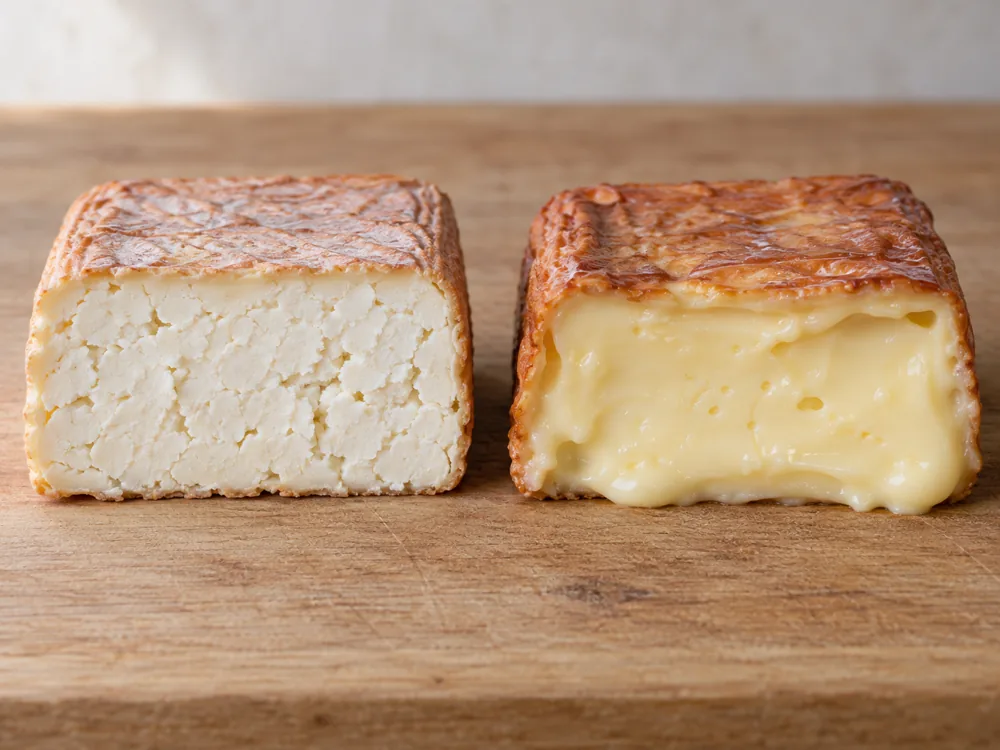
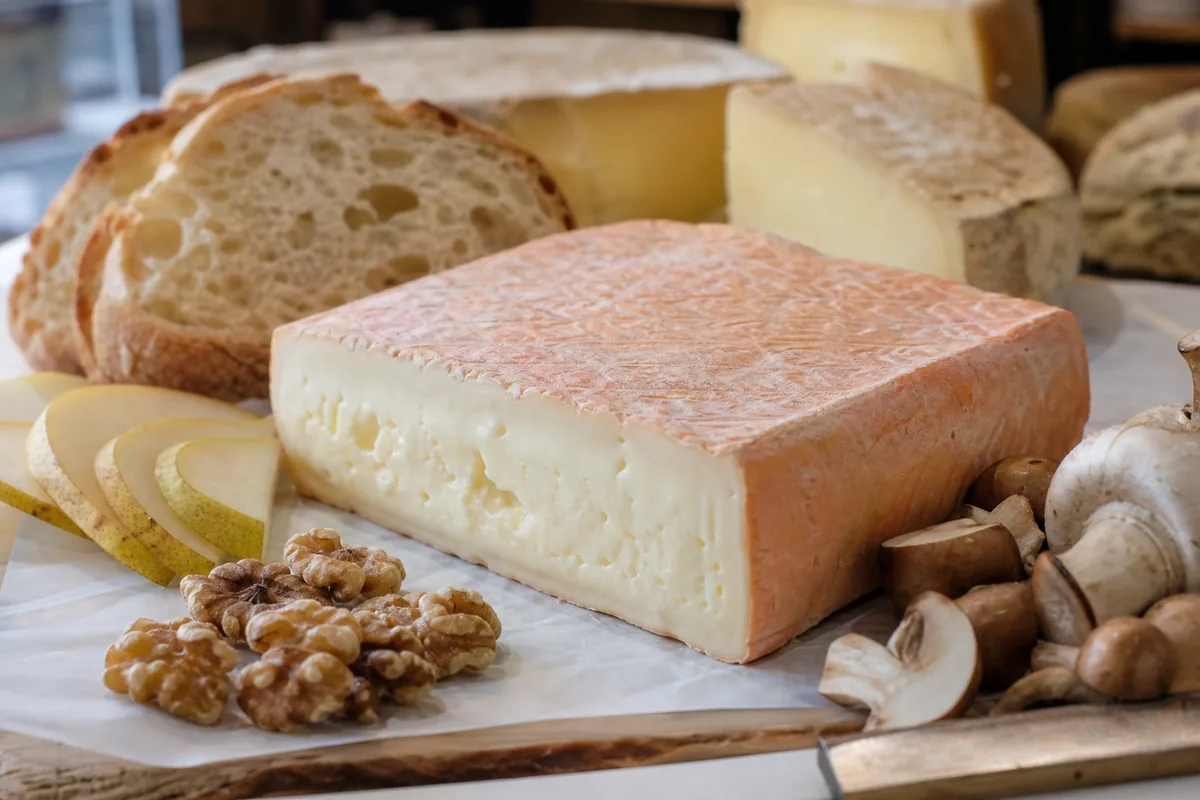
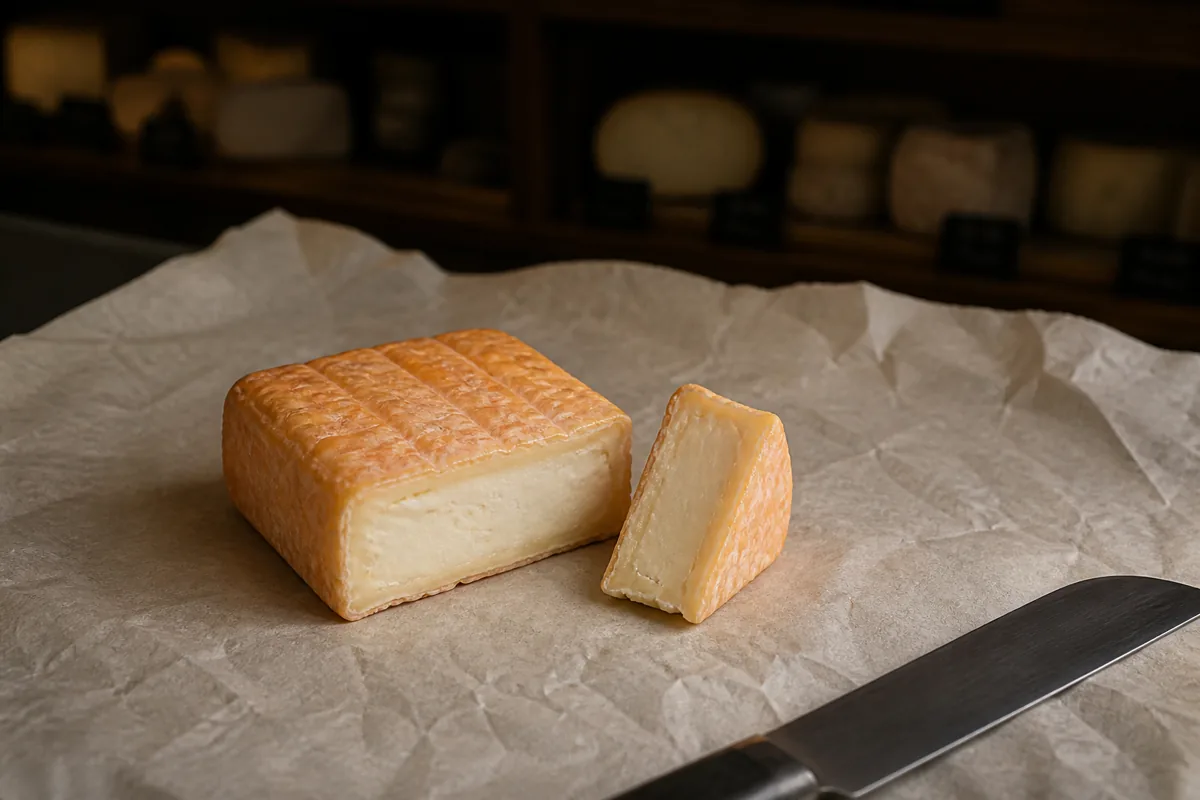
The cheese is described as cream-colored under a reddish-brown rind, sometimes with a hint of white mould.
At the counter, pass over a piece with a greasy rind and shrunken paste: that Limburger has passed its best and is not recommended.
Where Does Limburger Come From, and Who Makes It Now?
Limburger is named for the Duchy of Limburg, whose capital was Limbourg-sur-Vesdre, and as of October 2026 it is made in Belgium as Herve, in Germany's Allgäu and, in the United States, by a single cooperative in Wisconsin.
Herve comes from a hilly area between the Vesdre and Meuse rivers, near Liège and the Dutch and German borders, and the duchy lasted until the French Revolution as part of the Holy Roman Empire.
When it was first made is disputed: Herve's producers date the tradition back more than eight centuries, English Wikipedia says the cheese has been made in Herve since the 15th century, German Wikipedia says monks in the duchy's monasteries first made it, and Cheese.com traces it to Trappist monks in 19th-century Belgium.
As of October 2026, production in Germany centres on the Allgäu, where Carl Hirnbein began making soft cheese at Missen-Wilhams in 1830. It is sold there in rectangular bars of 200 g and 500 g, and the brick shape gives it the nickname Backsteinkäse.
Where the first American Limburger was made has two answers: the F.X. Baumert cheese factory in Antwerp, New York, in 1854 in English Wikipedia's account, and Swiss immigrants in Wisconsin in Wisconsin Cheese's.
A few years after 1867, 25 factories were making it. It was also made in Canada, where the Oak Grove Cheese Company in New Hamburg, Ontario, produced it and the cheese was a German-Canadian cultural marker.
As of October 2026, Chalet Cheese Cooperative in Monroe, Wisconsin, is the only Limburger maker left in the United States.
Five dairy farmers founded the cooperative in 1885. As of October 2026, the dairy farmers who own it are all in Green County, close to the factory, and supply its milk fresh each day, and its range also covers Wisconsin Brick, Swiss and Baby Swiss made in Monroe, along with smoked versions of these cheeses.
Is Herve the Same Cheese as Limburger?
Yes: in Belgium the same cheese is called Herve, though the Herve piece sizes, fat figure and ripening times differ from Limburger's.
Fromage de Herve is now the protected European name for the Belgian cheese, while Limburger is the name for the same style made elsewhere.
That protection dates to 1996, and as of October 2026, Herve is the only Belgian cheese with a protected designation of origin.
| Question | Herve | Limburger |
|---|---|---|
| What size are the pieces? | Cubes of 100, 200 or 400 g | Bars of 200 g and 500 g in Germany |
| How much fat? | 45% | 20% to 60% in dry matter |
| How long does it ripen? | Four weeks for mild Herve, six weeks for strong Herve and two months for Remoudou | Two weeks to three months (German Wikipedia); two to three months (English Wikipedia) |
| What milk? | Raw milk (English Wikipedia) | Raw or pasteurized milk (German Wikipedia) |
Before you compare fat, check whether a Herve label gives its fat in dry matter, the basis of Limburger's 20% to 60%.
Herve making begins immediately after the cows have been milked, with milk collected from dairy farms in the Pays de Herve. The milk is warmed to the temperature of the cow's udder and set with rennet, and the curds are cut small, stirred and poured into moulds that give Herve its precise cube shape.
The cheeses drain overnight in the moulds, where the curds shrink with time and are never pressed by machine, and are then steeped in a brine bath or salted.
In cellars kept at constant humidity and temperature, the cheeses are washed and turned by hand twice a week: for four weeks for mild Herve, six weeks for strong Herve or two months for Remoudou.
Those cellars sit in the Herve countryside and are sometimes cut into its chalky rock, and the cheese is sometimes flavored with herbs.
A 16th-century edict of Emperor Charles V that banned wheat exports from the Herve plateau led its farmers to turn their fields into pasture and make a cheese that took a long time to ripen, so it could be carried to places that were sometimes far away, according to Herve's producers.
Herve comes in three types: mild, strong, which ripens longer, and Remoudou, an old recipe made with full-cream milk. Making Remoudou began in the 19th century, and its name comes from "rimoude", Liège Walloon for a second milking that gave rich, creamy milk.
Other names for the cheese are Limburg, Rommedoe in southern Dutch usage, Herve in Belgium and Remoudou, though among Herve's makers Remoudou names one type, the full-cream Herve ripened for two months.
How Is Limburger Eaten, and What Do You Drink with It?
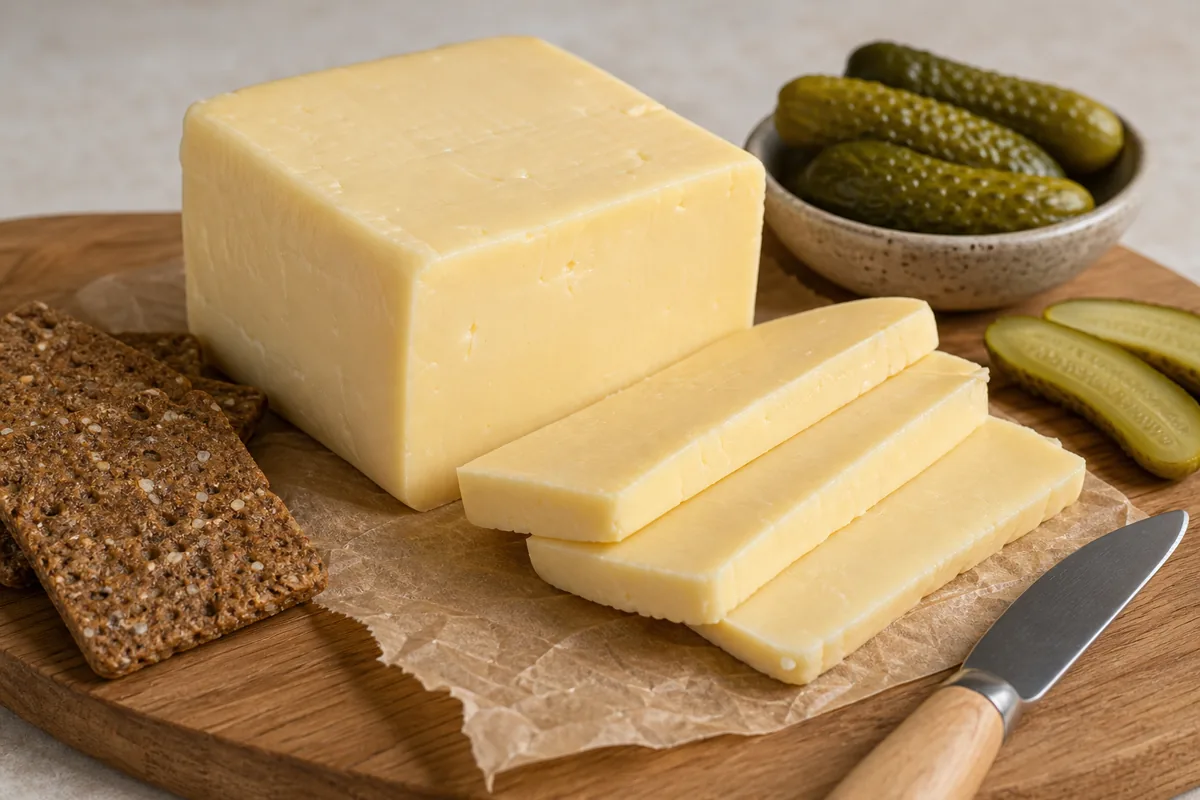
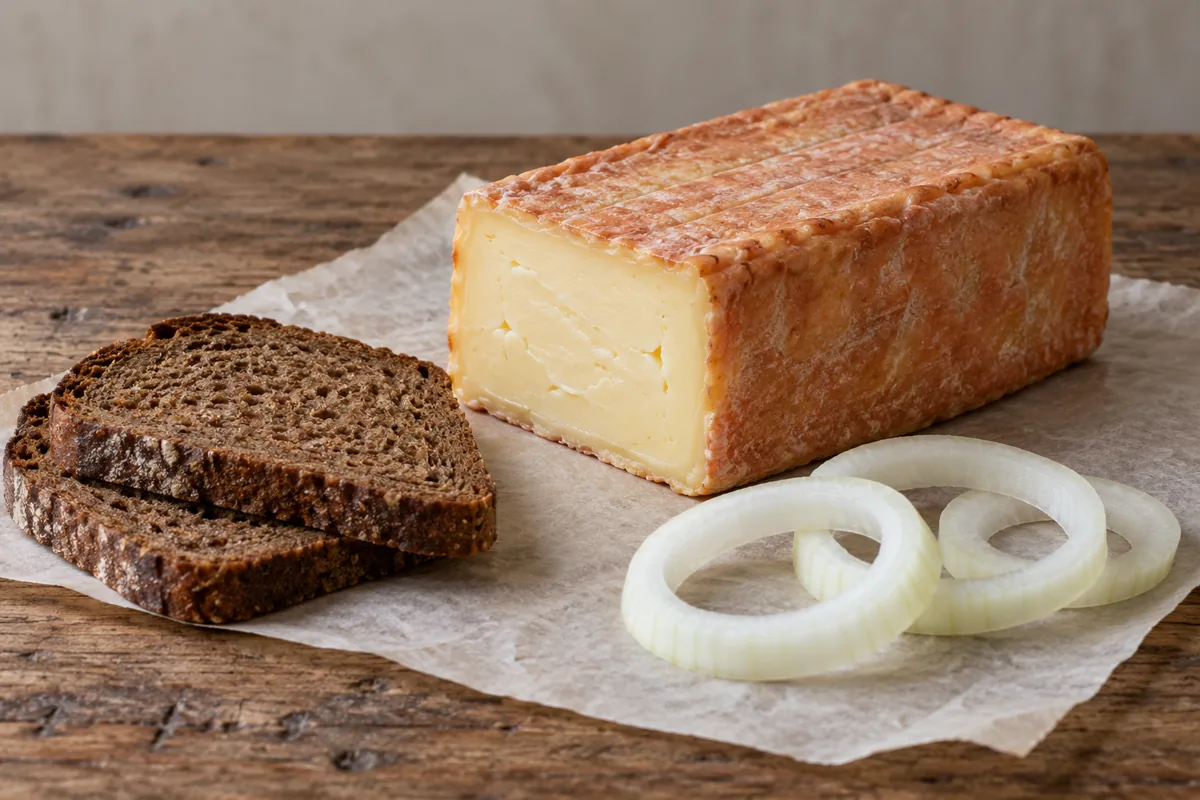
One way to serve it is the Limburger sandwich: ripe cheese often spread thick, more than 0.5 cm, on firm 100% rye bread under a large, thick slice of onion. Chunks or slices up to 1.5 cm thick can also be cut from the block and laid in the sandwich instead.
The sandwich is typically served with strong black coffee or lager beer, and it also comes with bologna, lettuce, tomato or roasted walnuts, or on white or French bread.
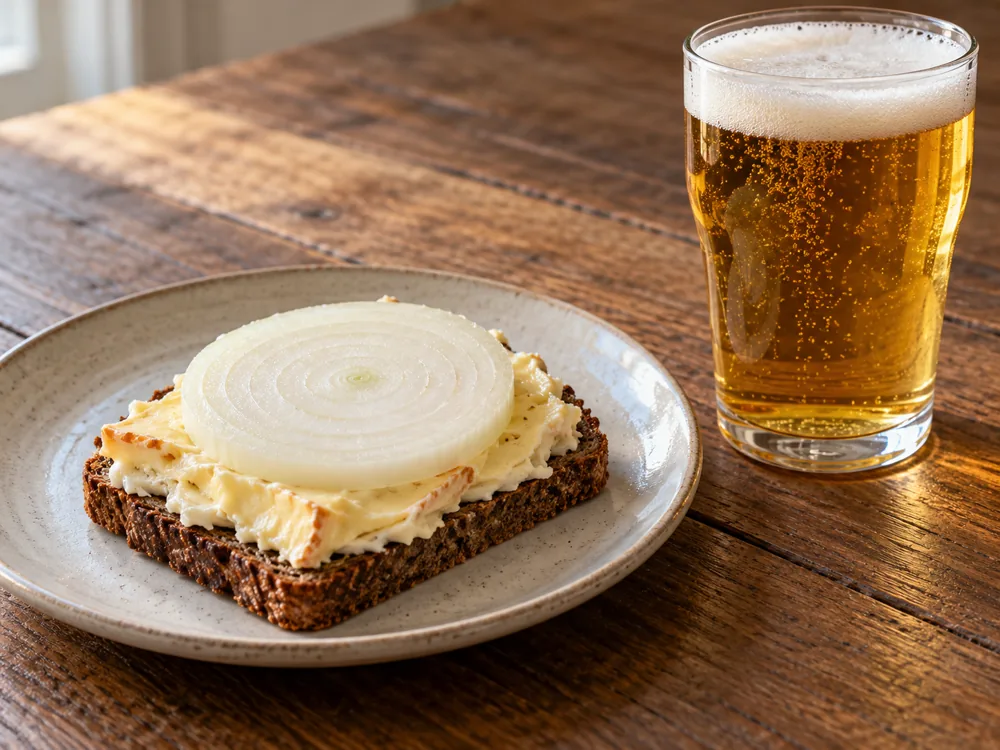
The mustard is where versions part: try horseradish mustard and red onion on rye, brown mustard, or pub mustard on dark rye with thickly sliced raw onion.
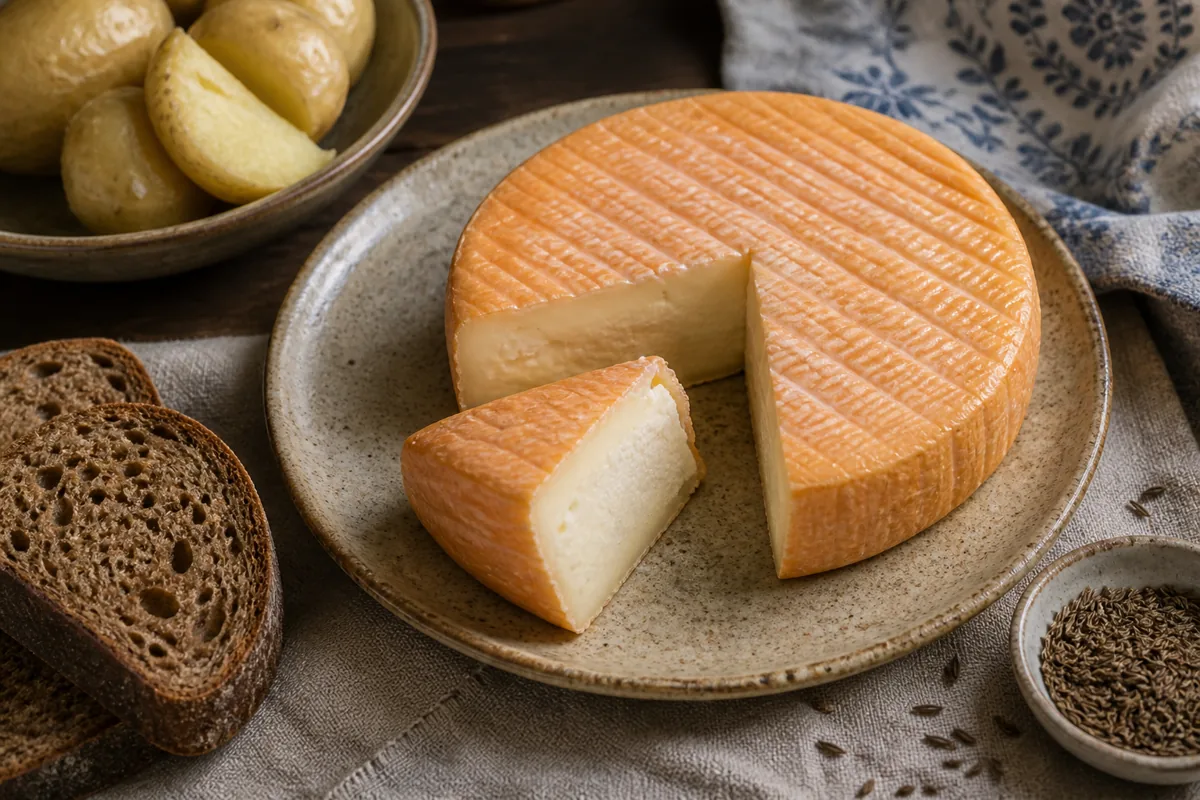
Away from bread, a little Limburger goes on a bowl of boiled, buttery potatoes. In the Allgäu and Upper Swabia it is eaten with young, hot potatoes boiled in their skins and butter, with cold milk to drink.
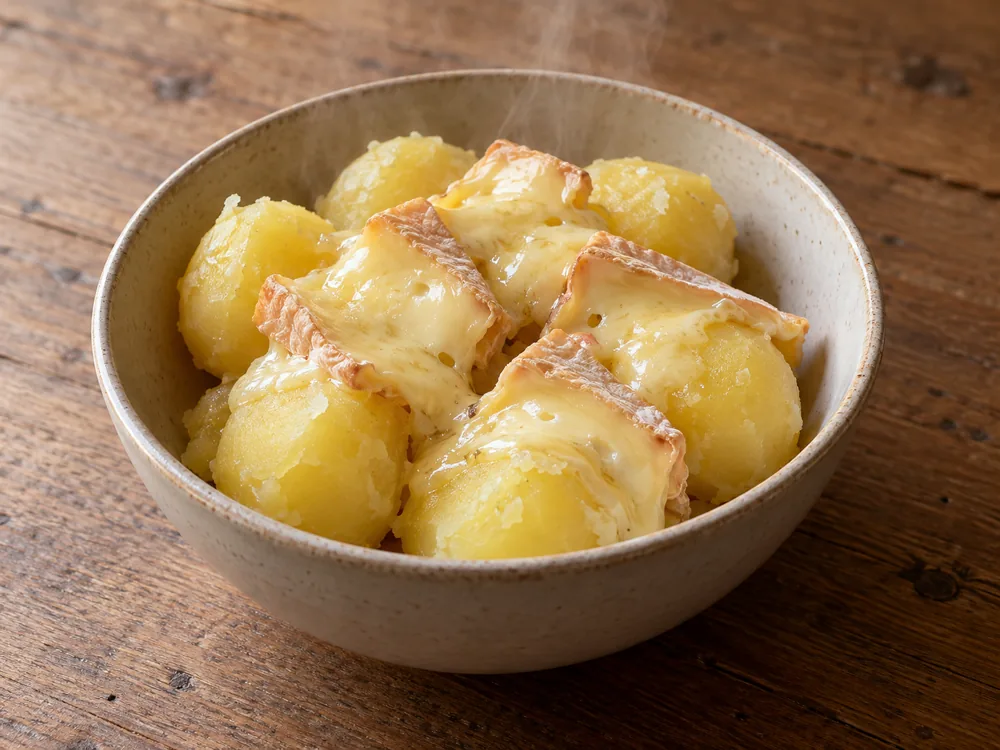
In the same region it is also eaten as a sour cheese, dressed in vinegar, oil and plenty of onion rings, with mixed rye bread and apple must to drink. Wholegrain breads such as pumpernickel and raw onion go well with it too.
For something sweeter, try it with strawberry jam. You can also try it on a cracker plate, as long as it is the only cheese there, or on a pizza topped with caramelized onions.
Pickles and cured meats go well with it as well, beside dark bread such as pumpernickel, onions and mustard.
For a drink, beer suits it: stout, pale ale, porter or Belgian ale, or Belgian-style ales, icy cold bock, brown ale or lager.
If you would rather drink wine, pick a bottle with big personality, such as cabernet sauvignon, merlot, red zinfandel, beaujolais or grüner veltliner.
Belgian Herve has its own customs: the older generation traditionally eats it with a little sirop de Liège and a cup of coffee. To finish a meal with it, try a vintage port, a dark abbey beer or a Gewürztraminer.
| Pairing | Type | Why It Works |
|---|---|---|
| Lager or coffee | Drink | Lager beer or strong black coffee, the drinks the rye sandwich is typically served with. |
| Ales | Drink | Stout, pale ale, porter, Belgian ale, icy cold bock or brown ale. |
| Cider and must | Drink | Cider or apple must, also the drink with the Allgäu sour cheese. |
| Red wine | Wine | Cabernet sauvignon, merlot, red zinfandel or beaujolais, bottles with big personality. |
| White wine | Wine | Grüner veltliner, if you prefer white. |
| Cold milk | Drink | Cold milk with hot potatoes boiled in their skins and butter, as in the Allgäu. |
Can You Cook with Limburger?
Yes. Limburger can be cut up and mixed lightly into bread dough before baking: try a little in your next batch of sourdough, rye or beer bread.
Baked into bread this way, its strong aroma is described as highly reduced, leaving a loaf with a rich and creamy texture.
For pizza, toss small bits onto a crisp crust with sweet, slow-cooked caramelized onions and your other toppings.
Limburger also goes into burgers, quiches, salads and dips. Herve suits everyday dishes such as risotto, tartiflette, sauces and croque-monsieur.
Is Limburger Safe During Pregnancy?
If you are pregnant, check the label for the milk: Limburger can be made from raw milk or pasteurized milk, Belgian Herve is a raw-milk cheese, and the Chalet Limburger is made with pasteurized cow's milk. The CDC says pregnant women are 10 times more likely to get a Listeria infection.
If there is no label, or it does not say pasteurised milk, cook Limburger until it is steaming hot before you eat it: the NHS says any foods made from unpasteurised milk must be thoroughly cooked and lists any cheese that's been cooked until steaming hot as safe to eat.
If you follow US advice, ask a midwife or doctor before you eat a Limburger without a label that says pasteurised milk, even cooked: the CDC lists unpasteurized (raw) milk and dairy products made from raw milk, and soft cheese made from unpasteurized (raw) milk, as riskier.
If you follow NHS advice, you can eat pasteurised Limburger: it is a semi-soft cheese, and the NHS lists pasteurised soft cheeses as safe to eat.
The NHS says pasteurised or unpasteurised mould-ripened soft cheeses with a white coating on the outside and pasteurised or unpasteurised soft blue-veined cheeses must be thoroughly cooked, and Limburger, a washed-rind cheese with an orange to reddish-brown rind, is neither.
If you follow US advice, heat pasteurized Limburger to an internal temperature of 165°F or until steaming hot, or ask a midwife or doctor before you eat it cold: the CDC lists pasteurized soft cheeses heated to an internal temperature of 165°F or until steaming hot as safer.
Served cold, a pasteurised Limburger is described as a pasteurized semi-soft, soft ripened, firm, crumbly, chalky, soft, elastic, creamy, smooth, runny, sliceable or spreadable cheese, a type the CDC list does not cover.
What Is in 100 g of Limburger?
100 g of Limburger contains 327 calories, 240 of them from fat.
Its fat ranges from 20% to 60% in dry matter, so the label on your piece can differ from these figures.
| Nutrient | Per 100 g |
|---|---|
| Energy | 327 calories |
| Total fat | 27 g |
| Saturated fat | 17 g |
| Protein | 20 g |
| Sodium | 800 mg |
| Cholesterol | 90 mg |
Which Cheeses Are Close to Limburger?
If you want a tamer cheese than Limburger, start with a young Wisconsin Brick. If you like Limburger as it is, these other cheeses, made in Wisconsin as of October 2026, are worth a try:
- Wisconsin Brick: a quieter, tamer version, known as the "married man's limburger".
- Liederkranz: described as close to Limburger in texture and aroma but distinctly robust and buttery.
- Blue cheese and gorgonzola: Wisconsin's blue cheeses and Wisconsin-made gorgonzola are described as not as stinky as some, but still complexly aromatic.
Wisconsin Brick is also among the cheeses ripened with the same bacterium as Limburger, and so are Munster, Tilsit, Port-Salut, Raclette, Livarot, Pont-l'Évêque, Époisses and Maroilles.
Germany's Romadur carries the same red smear of Brevibacterium linens on its surface, and blue cheese uses the bacterium too, alongside the mould Penicillium roqueforti.
SOURCES & REFERENCES
The rind is ripened with Brevibacterium linens, a bacterium also found on human skin, where it is partly responsible for body odor, foot odor in particular. On the soles, a close relative, Brevibacterium epidermidis, makes short-chain fatty acids with a cheesy smell.
Under a pungent aroma, the flavor is usually mild, grassy and tangy. An aged Limburger is described as tangy and robust.
Two weeks to three months in German Wikipedia's account, or two to three months in English Wikipedia's box. It takes on its strong aroma at three months.
When ripe, it is often spread thick on firm 100% rye bread under a large, thick slice of onion, and typically served with strong black coffee or lager beer. Horseradish mustard, brown mustard or pub mustard can go with it.
As of October 2026, Chalet Cheese Cooperative in Monroe, Wisconsin, is the only Limburger maker left in the United States.
If there is no label, or it does not say pasteurised milk, cook Limburger until it is steaming hot before you eat it: the NHS says any foods made from unpasteurised milk must be thoroughly cooked and lists any cheese that's been cooked until steaming hot as safe to eat.
If you follow US advice, ask a midwife or doctor before you eat a piece without that label, even cooked, or a pasteurized piece cold: the CDC lists soft cheese made from unpasteurized (raw) milk as riskier, and served cold, a pasteurised Limburger is described as a pasteurized semi-soft, soft ripened, firm, crumbly, chalky, soft, elastic, creamy, smooth, runny, sliceable or spreadable cheese, a type the CDC list does not cover.
If you follow NHS advice, you can eat pasteurised Limburger: the NHS lists pasteurised soft cheeses as safe to eat.