Baluchon is an organic, semi-firm, washed-rind cow's-milk cheese from Quebec, first made by Marie-Claude Harvey and Michel Pichet and now sold by Fromagerie L'Ancêtre.
Baluchon has changed hands twice, and its milk is described as raw, thermized or pasteurized in records from different years.
For the cheese you can buy today, start from the current producer, which lists organic pasteurized milk and a 45-day ripening.
In This Article
Who Makes Baluchon Now?
Fromagerie L'Ancêtre bought Baluchon on 18 August 2020. Production moved to L'Ancêtre's plant in Bécancour, while ageing and the shop stayed in Sainte-Anne-de-la-Pérade.
The cheese is older than that sale: Harvey and Pichet founded Fromagerie FX Pichet and created it, and it has been made since 2003 according to L'Ancêtre's 2020 announcement, or since 2004 according to the producer's current product page.
In the founders' years, Baluchon was made on Michel Pichet's 260-acre farm in Champlain and aged 20 kilometres away in Sainte-Anne-de-la-Pérade. The farm's herd was Holsteins, Swiss Browns and Canadienne cows on pasture with grasses and clover.
Harvey and Pichet sold the creamery in May 2017, and Harvey gave health reasons. The Ould Baba Ali family, with Abdel Ould Baba Ali as director general, owned it from then until the 2020 sale to L'Ancêtre.
A review that describes one herd on one farm therefore describes the founders' cheese, not the piece you find on a shelf today.
Is Baluchon Raw, Thermized, or Pasteurized?
Today's Baluchon is made from organic pasteurized milk, as the producer page and the ingredient lists on two retailer pages give it. Founder-era reviews say raw, while a 2020 report and the undated Aux Terroirs distributor record say thermized, the Aux Terroirs record with 60 days of ripening.
| Source | Period | Milk | Ripening and figures |
|---|---|---|---|
| Fromagerie L'Ancêtre product page | Current | Organic pasteurized milk | 45 days; 30% fat; 45% moisture |
| La Boîte à grains and La Réserve Naturelle | Current retail | Organic pasteurized milk in the ingredient list | 45 days |
| Aux Terroirs | Distributor record, undated | Organic thermized milk | 60 days; 28% fat; 45% moisture; 1.7 kg wheel |
| CheeseLover.ca | 2020 | Thermized at 60 °C for 15 seconds, counted as raw milk in Québec | Minimum two months |
| The Globe and Mail | Founders' years, undated | Raw organic cow's milk | Minimum 60 days; 1.75 kg wheels |
| Savvy Company | Undated | Raw cow's milk | 60 days |
| Cheese.com | Undated | Raw cow's milk | About 60 days |
The ripening time fits the producer's pasteurized label. The Canadian Food Inspection Agency states that all raw milk cheeses sold in Canada must age at least 60 days, so a 45-day cheese cannot be sold as raw milk cheese.
Milk treatment and ripening time differ between records, so the label on the piece in your hand is the deciding source. Check the milk line and the ripening period printed on it before relying on any review.
What Does Baluchon Look and Taste Like?
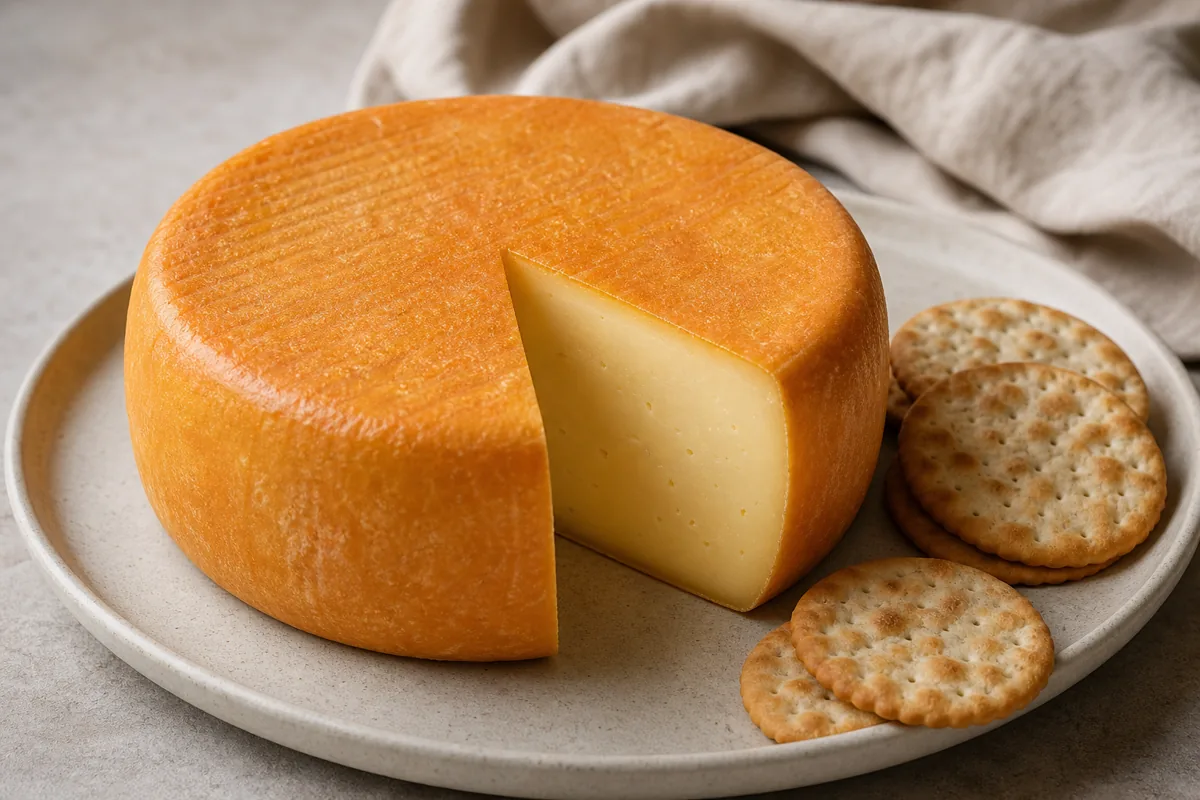
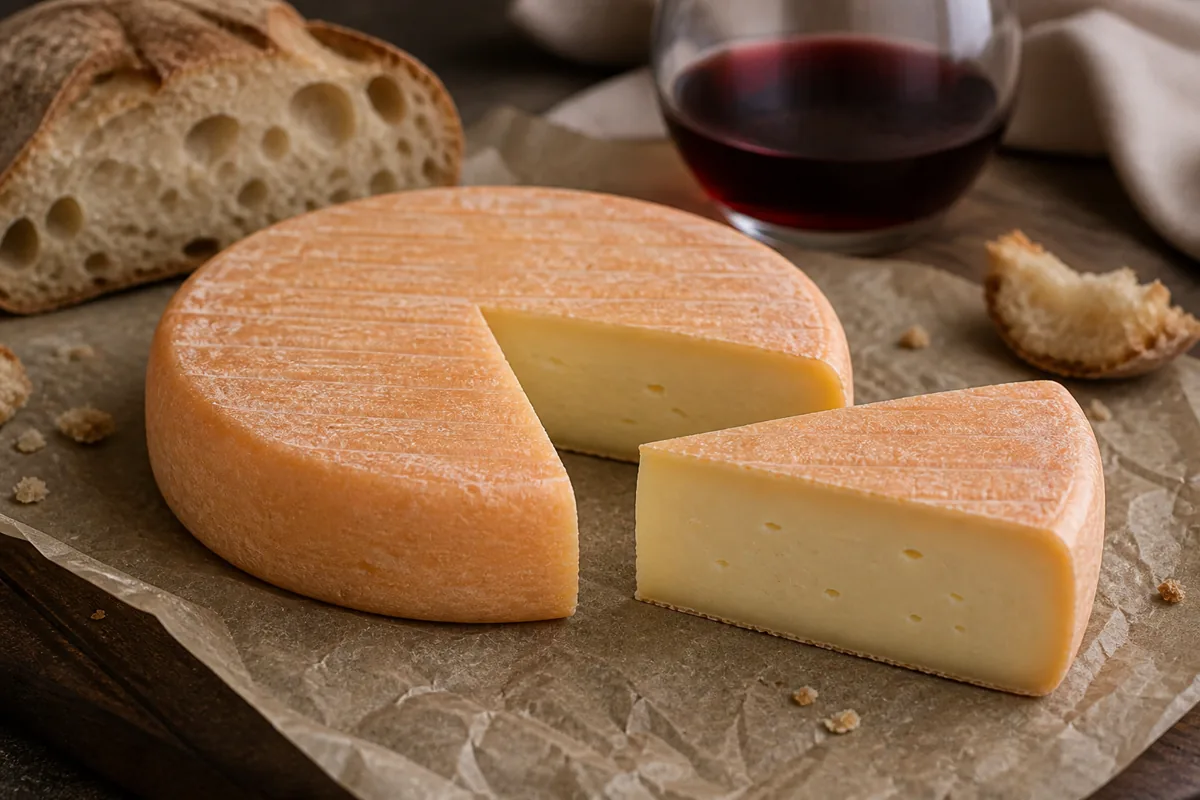
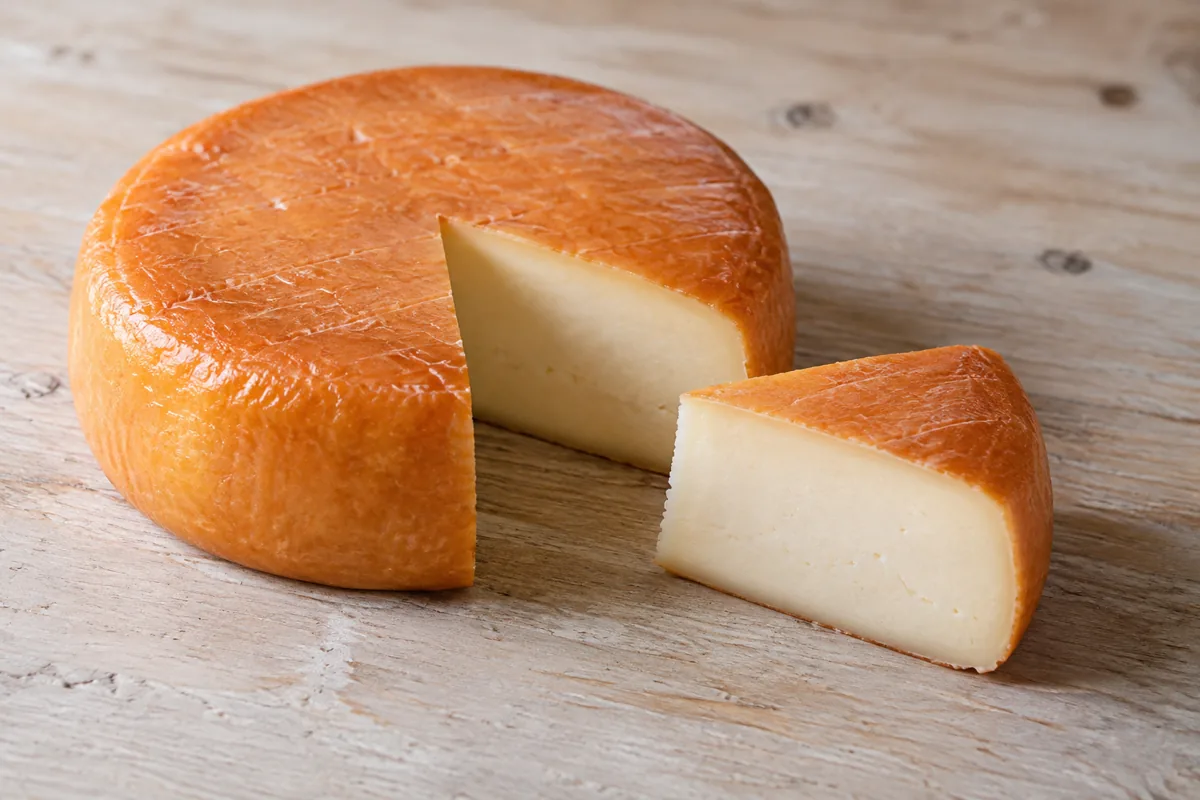
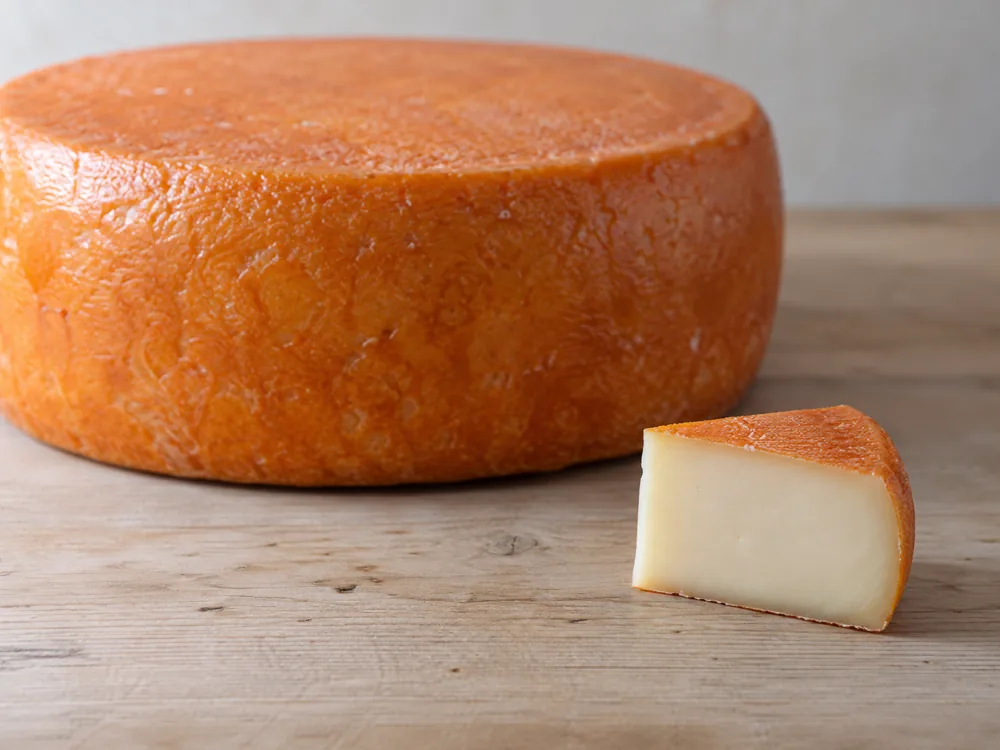
If your piece comes from the current maker, L'Ancêtre's description is the one to hold it against: an orange rind that is slightly humid and sticky, with a humid cellar scent, around an ivory paste of even texture.
L'Ancêtre calls the aroma mild and earthy, with butter and herbs. The flavour it describes is creamy and melts in the mouth, tasting of hazelnut, cream and butter with a slight clover aftertaste, slightly acidic and salty.
Aux Terroirs adds a supple, unctuous, smooth paste and no bitterness.
Reviews from the founders' years describe a different paste colour and a stronger aroma, and ivory, butter-yellow and bright golden paste cannot all describe one piece.
| Source | Paste | Rind | Aroma |
|---|---|---|---|
| Fromagerie L'Ancêtre | Ivory, even texture | Orange, slightly humid and sticky | Mild, earthy, butter and herbs |
| Aux Terroirs | Supple, unctuous, smooth | Slightly sticky, pink-orange | Sweet grass and butter with a hint of the farm |
| The Globe and Mail | Butter-yellow, small eyes, moist, slight sheen | Earthy, somewhat gritty | Fresh, creamy and barny |
| Savvy Company | Bright golden yellow, small holes, creamy | Apricot to terracotta with a thin white dusty layer as it ages; gritty | Pungent and barny |
The Globe and Mail also describes salt and fruitiness in balance with a mellow, savoury finish.
Where Does the Oka-Style Label Come From?
The label comes from two descriptions of Baluchon: The Globe and Mail says it is based on an Oka-style recipe, and Savvy Company says it is made Oka-style.
Oka, which Wikipedia describes as a semi-soft washed-rind cheese, was first made by Trappist monks at Oka, Quebec. Brother Alphonse Juin developed it in 1893 by adapting a Port-du-Salut recipe, and the monks sold the recipe to the Agropur cooperative in 1981.
That places Baluchon in the Quebec washed-rind style, where most Oka varieties ripen one to two months.
Which Canadian Awards Has Baluchon Won?
At the inaugural Canadian Cheese Awards on 7 April 2014 in Toronto, judges tasted 291 cheeses from 76 producers. Baluchon took Canadian Cheese of the Year, Best Semi-Soft Cheese and Best Organic Cheese, according to CheeseLover.ca.
The Globe and Mail reports top honours in organic cheese at the 2009 Canadian Cheese Grand Prix. Both awards date from the founders' years, before the 2017 sale and before L'Ancêtre took over in 2020.
How Do You Buy, Serve, and Store Baluchon?
You can find it at the creamery, in specialty shops and in most supermarkets, according to Fromages d'ici.
For a small piece, L'Ancêtre lists a 145 g wedge, which La Boîte à grains listed at CAD 9.99 and showed as out of stock. Whole wheels differ by record: 2.9 kg at L'Ancêtre and 1.7 kg at Aux Terroirs.
In the kitchen, Fromages d'ici says the cheese is particularly popular in cheese fondue, and La Jolie Cheese Shop says it is excellent baked, broiled or melted over vegetables.
If you want fondue without making it, L'Ancêtre also sells a ready-to-serve Baluchon fondue, made with organic white wine and three of its own cheeses, Baluchon, Swiss and aged cheddars.
For wine, L'Ancêtre pairs the cheese with fruity, medium-bodied or vibrant wines, and La Jolie Cheese Shop suggests light, fruity local wines or wines from Savoie.
If you avoid lactose, gluten or animal rennet, the producer's product page lists Baluchon as lactose free, gluten free and animal-rennet free, and La Réserve Naturelle also sells it as lactose free.
At home, Health Canada says your refrigerator should stay at 4 °C (40 °F) or lower and that refrigerated cheese keeps until its best-before date.
Is Baluchon Safe in Pregnancy?
Whether Baluchon is safe during pregnancy depends on the milk treatment and on how you eat it. The producer lists pasteurized milk, but the founders' records say raw or thermized milk.
Health Canada tells pregnant people to avoid soft cheeses such as Brie-style rounds whether pasteurized or not. It also lists semi-soft cheeses, with Havarti as its example, as not recommended.
Baluchon is called semi-firm by its maker and semi-soft by CheeseLover.ca, and Health Canada does not name it, so if you are pregnant, ask a midwife or doctor whether it counts as semi-soft under Health Canada's advice. Health Canada lists dairy cooked in casseroles or au gratin dishes as a safer option.
The same Health Canada guidance treats pasteurized Parmesan-type hard cheeses as safe.
The Canadian Food Inspection Agency advises pregnant people to avoid raw milk cheese even after 60 days of ageing, which matters for any piece made in the raw-milk era.
In the United States, the CDC lists soft cheese from unpasteurized milk, such as Camembert-style cheese and blue-veined cheese, as riskier. It lists pasteurized soft cheeses heated to an internal temperature of 165 °F or until steaming hot as safer.
Served cold, Baluchon is described as a pasteurized semi-firm or semi-soft cheese, a type the CDC list does not cover, so ask a midwife or doctor. The CDC also lists unpasteurized (raw) milk and dairy products made from raw milk as riskier, which covers a raw or thermized piece from the founders' years.
The NHS in the UK lists pasteurised or unpasteurised hard cheeses, pasteurised semi-hard cheeses and pasteurised soft cheeses as safe to eat, and says foods made from unpasteurised milk and mould-ripened soft cheeses with a white coating on the outside must be thoroughly cooked. The producer calls Baluchon semi-firm and describes an orange rind and not a white coating.
SOURCES & REFERENCES
What Else Do People Ask About Baluchon?
The current producer, Fromagerie L'Ancêtre, lists organic pasteurized milk and a 45-day ripening. Older records from the founders' years say raw milk, and one distributor record says thermized, so the label on your piece decides.
Fromagerie L'Ancêtre has made it since its purchase on 18 August 2020, with production in Bécancour and ageing in Sainte-Anne-de-la-Pérade. Marie-Claude Harvey and Michel Pichet created it, and the Ould Baba Ali family owned the creamery between 2017 and 2020.
Baluchon is French for backpack. L'Ancêtre says its creators wanted the cheese to have a place at every table, like a seasoned world traveller.
It depends on the milk treatment on the label and on whether the cheese is cooked. Health Canada advises avoiding soft and semi-soft cheese unless cooked, and the CDC lists pasteurized soft cheeses heated to an internal temperature of 165 F or until steaming hot as safer.
Served cold, Baluchon is described as a pasteurized semi-firm or semi-soft cheese, a type the CDC list does not cover, so ask a midwife or doctor.