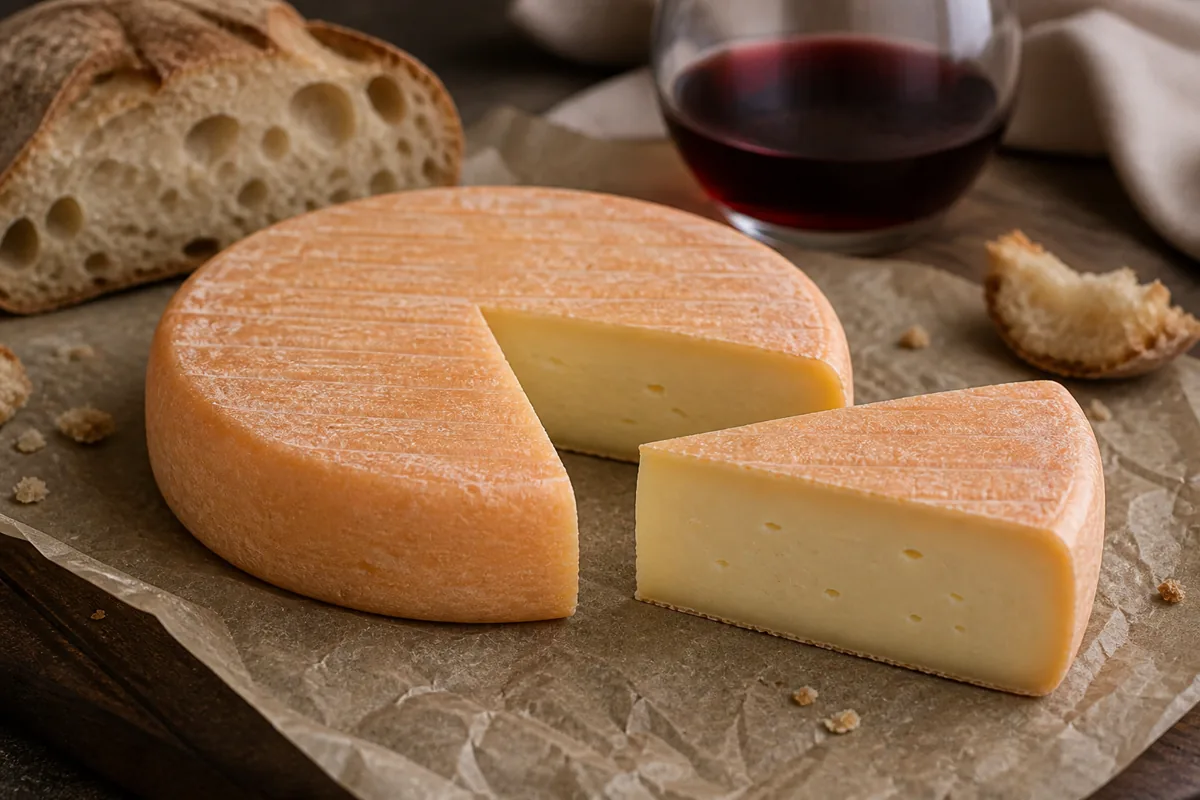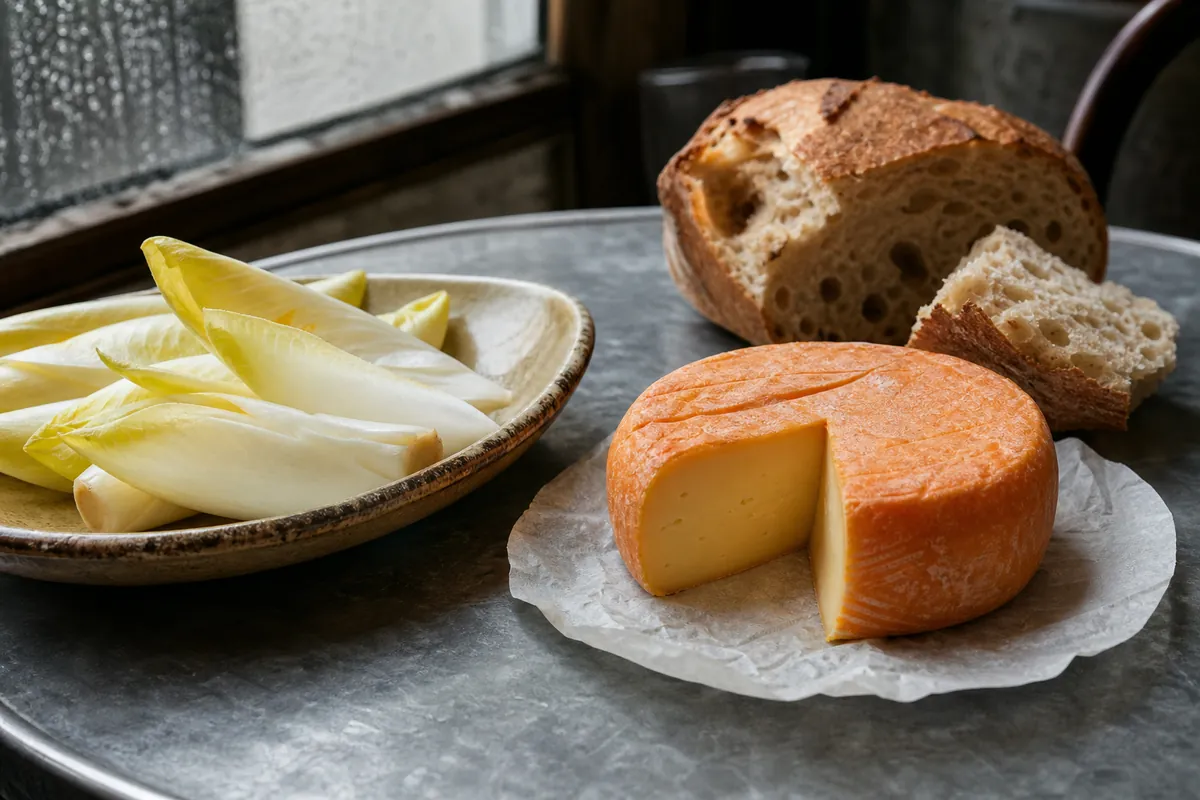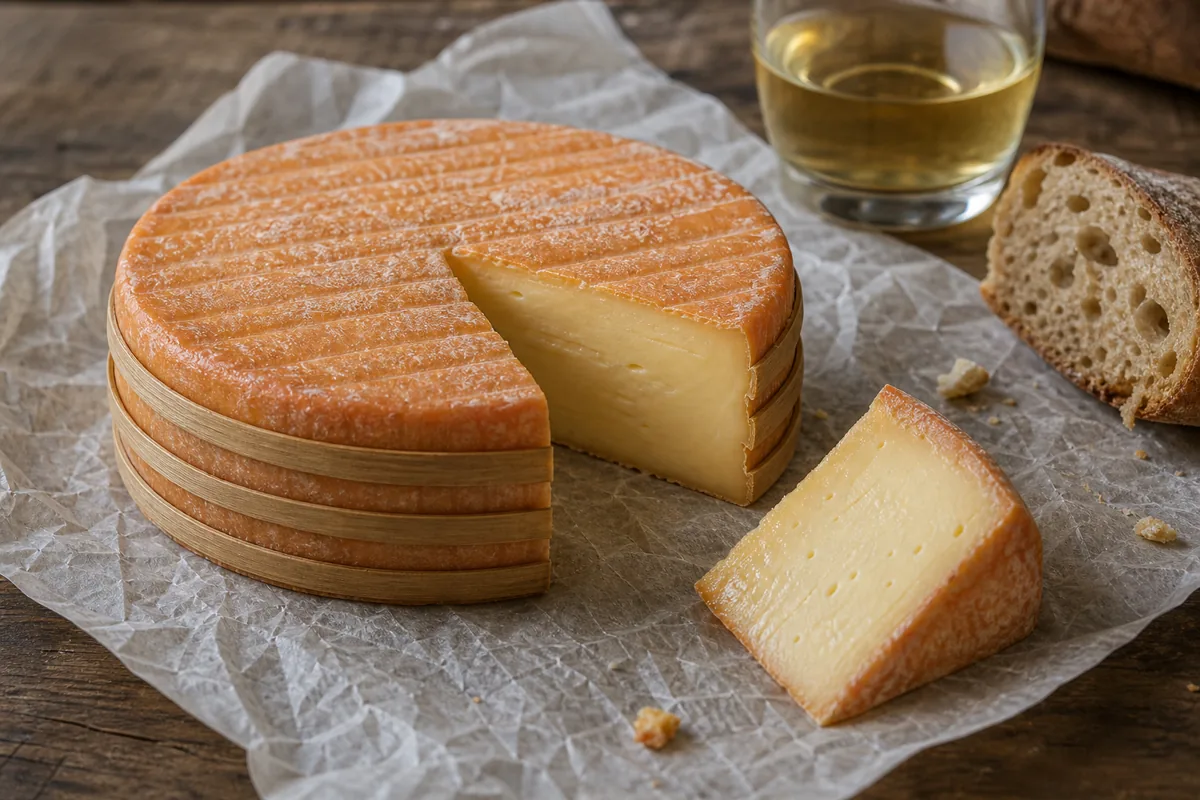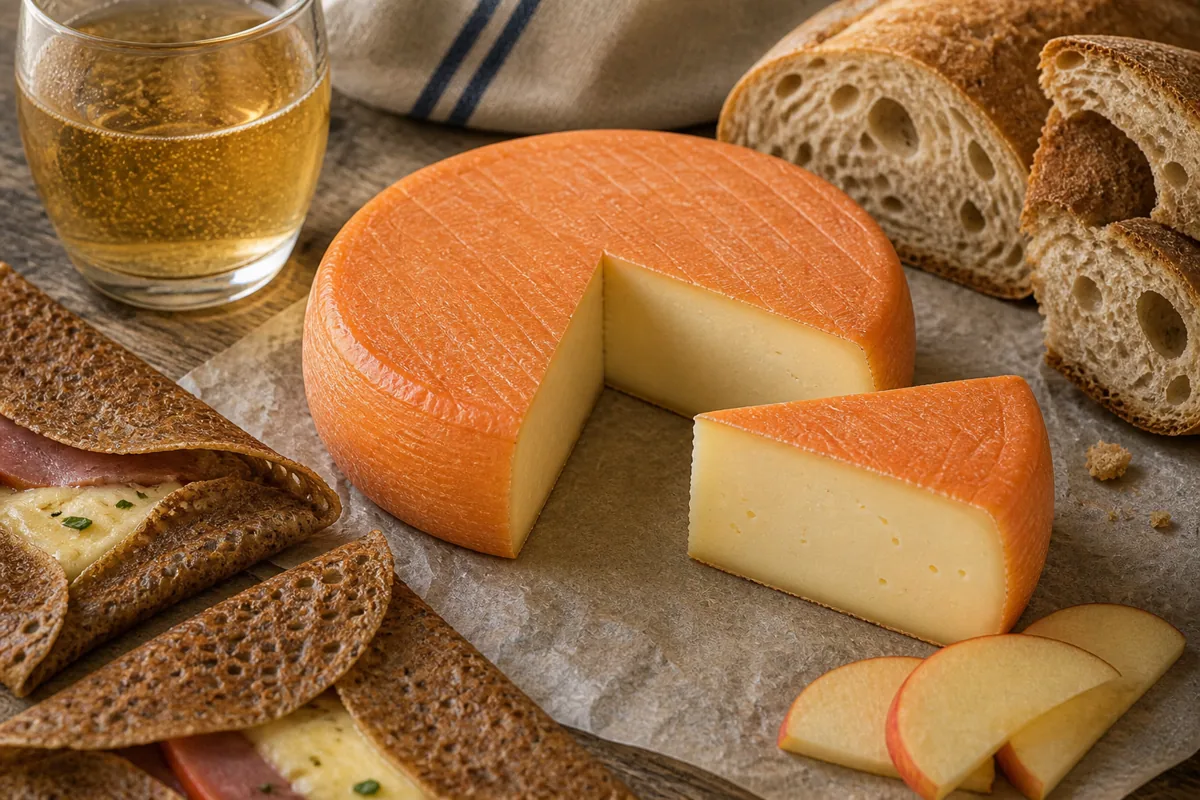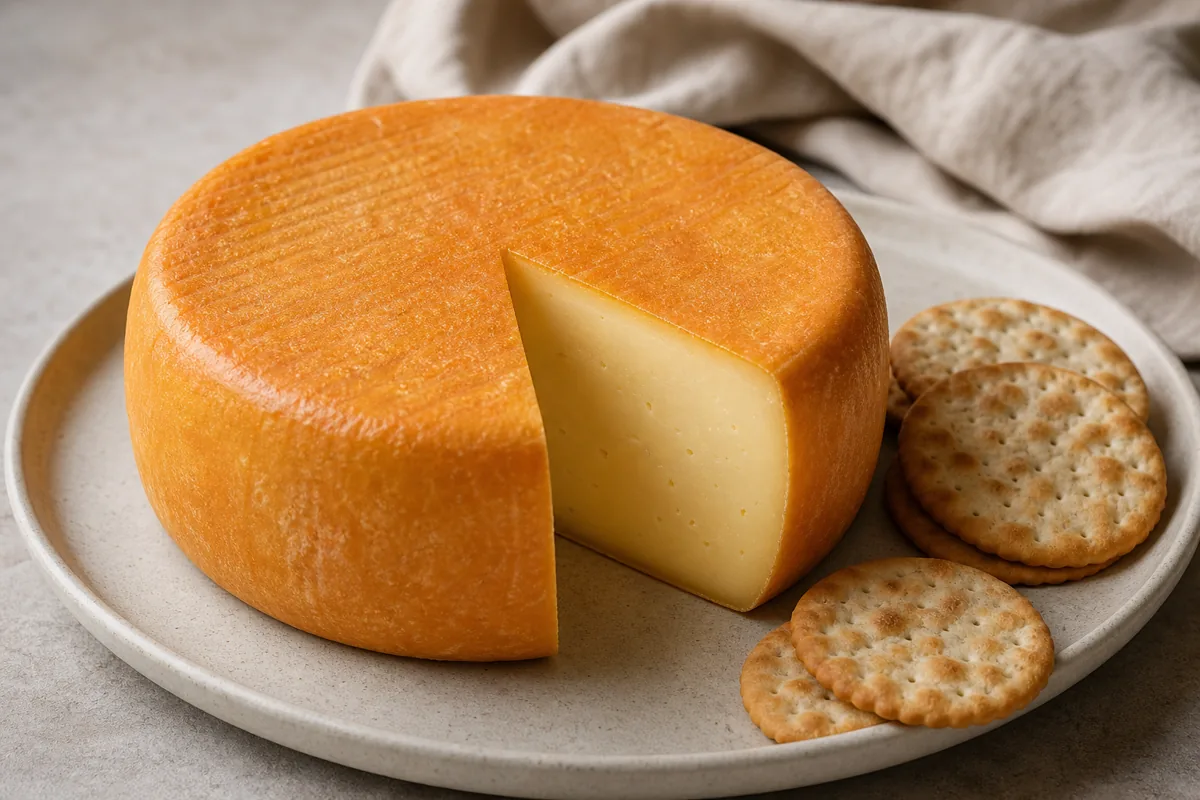
Port Salut is a mild French semi-soft cow's milk cheese with a smooth pale-yellow center and a bright orange exterior. The current branded wedge uses pasteurized milk, vegetarian rennet, annatto color, and natamycin on an outer coating that the manufacturer labels inedible in the UK.
Check your own package before eating the orange layer because products and labeling can differ by market.
The cheese tastes much gentler than it looks.
Expect milk, butter, light tang, and a soft savory finish rather than the powerful aroma associated with traditional washed-rind cheese. Its dense creamy paste slices cleanly, softens under heat, and fits sandwiches as easily as a cheese board.
In This Article
What Is Port Salut?
Port Salut is both a named cheese with monastery roots and a modern commercial brand. The current product is made in France and sold in a wedge or convenient slices, depending on the market.
The branded wedge has a semi-soft paste.
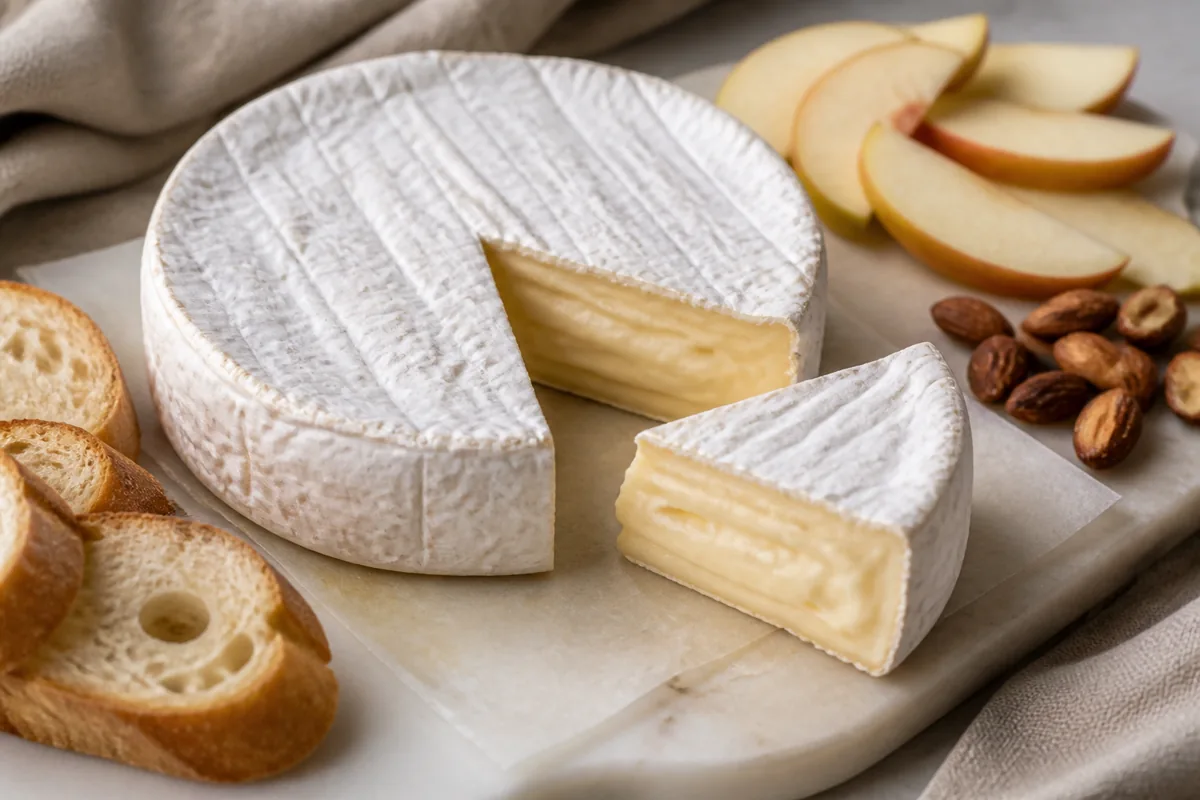
It bends before it breaks and feels dense rather than airy. A clean cut shows a uniform pale-yellow interior with few small openings, not the flowing creamline or mushroom rind expected from Brie.
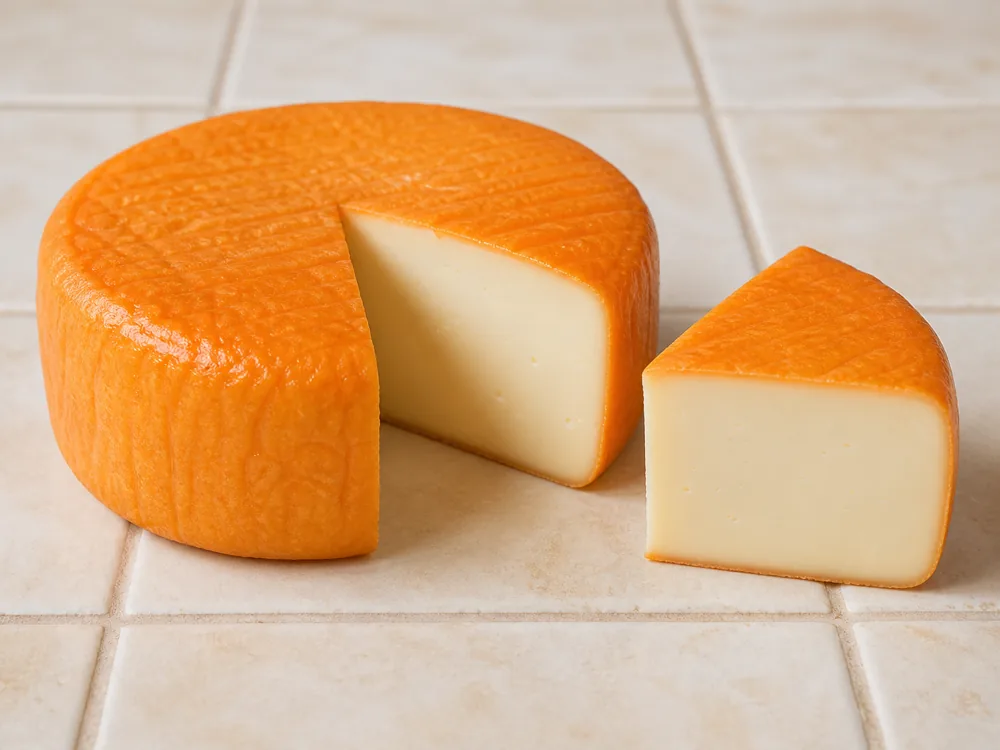
The orange surface is a visual identifier, but it is not proof of an active washed rind.
The current UK wedge lists annatto norbixin for color and natamycin as a preservative. That construction helps explain why supermarket Port Salut looks consistently orange while keeping a mild aroma and stable exterior.
Port Salut is not a PDO or AOP name.
Its identity comes from the registered brand, recipe, and history rather than a protected geographical specification. Other cheeses may use Port-Salut-style or monastery-style descriptions without being the branded product.
Wedge and slice formats are designed for different actions.
The current UK wedge weighs 185 grams and lets you choose thick board pieces, thin sandwich slices, or small melting cubes. The slice pack contains six rectangular pieces intended for rolls, baguettes, and crackers, with paper between them to prevent sticking.
Convenient retail cutting changes how much cheese touches air before the package reaches your refrigerator.
A whole wedge protects most of its paste until you cut it, while factory slices expose more area from the start. Choose slices when speed matters and choose the wedge when you want better control over portion, cut, and presentation.
The cheese should never be identified from color alone.
Annatto can produce a similar orange on several cheeses, and a retailer may use orange wrapping or coating for visual consistency. Port Salut identification still depends on the product name and package rather than a guessed match from appearance.
Use the package as the authority for the exact product in your hand. The orange exterior, ingredients, rind advice, slice format, and nutrition can differ across countries and related cheeses.
This distinction prevents two common mistakes.
Do not assume every orange cheese is Port Salut, and do not assume every cheese inspired by the old monastery style has the same coating or label instructions as the branded wedge.
Is the Orange Rind Edible?
The manufacturer tells buyers not to eat the orange coating on its current 185 g UK wedge. Its FAQ says the coating is approved for food contact but is not a food product, so remove it before serving.
Accidentally swallowing a small amount is not described as a specific danger by the company.
That does not turn the coating into an intended ingredient. Trim it from each serving rather than leaving guests to guess whether the vivid orange strip should stay on the cheese.
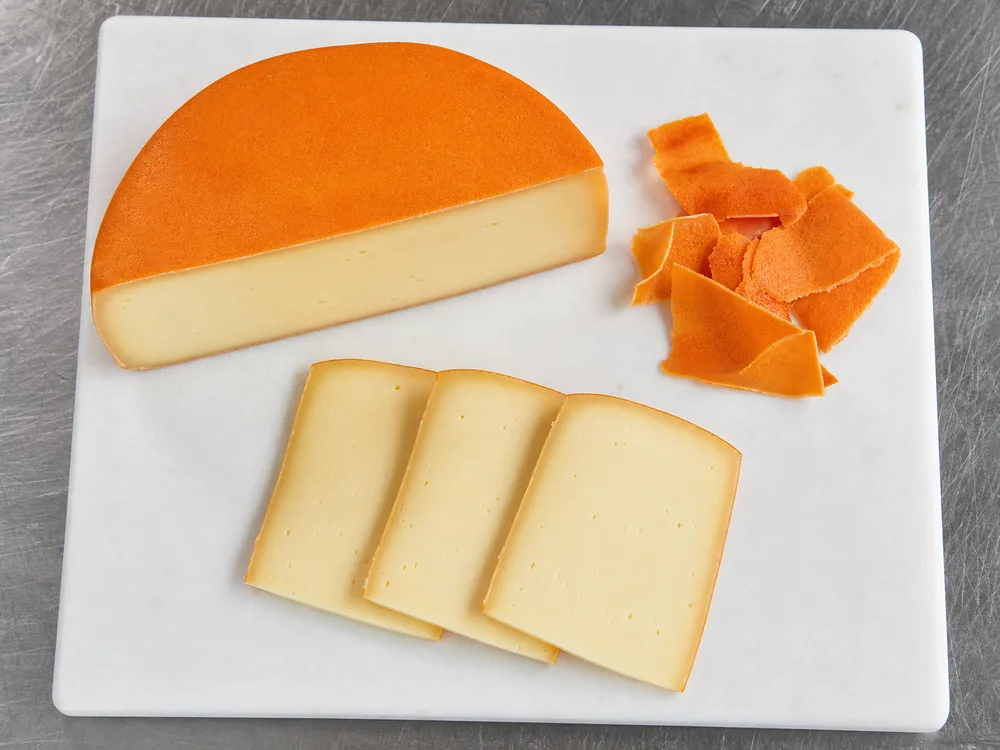
Use a small sharp knife and make a shallow cut just beneath the surface.
Peel or slice away only the coating so you keep as much of the mild paste as possible. Trimming a thick band wastes cheese and can make every portion look dry before it reaches the table.
Pre-cut slices are a separate product.
The current UK slices list pasteurized milk, milk protein, salt, lactic ferments, vegetarian rennet, and annatto. They are designed to come apart with separator paper and do not require the same trimming step as a wedge with its outer coating.
Annatto and natamycin perform different jobs on the wedge.
Annatto norbixin supplies the recognizable orange color, while natamycin controls unwanted mold growth at the surface. Neither ingredient tells you how strong the paste will taste, which is why a vivid wedge can remain mild and creamy.
Do not scrape the surface and call the job finished.
A coating may lift in narrow strips or come away with a very thin layer of cheese. Inspect every serving edge after trimming because an orange band can remain where the top, bottom, and curved outer face meet.
Trim shortly before serving when possible.
Removing the coating from the entire wedge days ahead exposes more paste to refrigerator air. If you need only half the cheese, leave the unopened portion protected and trim individual pieces as they are cut.
Advice from another country may conflict because the product sold there can carry a different surface or label.
When a retailer calls the exterior edible but your package says inedible, follow the package. The manufacturer knows the formulation of that exact unit, while a general cheese description may refer to another market or to traditional Port-du-Salut-style cheese.
Who Made Port Salut?
Trappist monks created Port Salut at the Abbaye du Port du Salut in Entrammes in 1816. The abbey stands in the Mayenne department of western France, within the Loire Valley area associated with the cheese.
The cheese reached Paris by 1873.
According to the brand's history, weekly deliveries attracted enough attention that a flag announced their arrival. This account explains how a practical monastery cheese developed recognition beyond its local market.
Production remained on the abbey grounds until 2005.
The manufacturing site later moved, and modern Port Salut is a commercial branded cheese rather than a cheese still made by monks at the abbey. The historical connection remains real, but it should not be used to imply that today's supermarket wedge is monastery-made.
- 1816: Trappist monks create the cheese at the Abbaye du Port du Salut.
- 1873: Port Salut reaches the Paris market through regular deliveries.
- Until 2005: Production continues on the original abbey grounds.
- Today: The branded product is made commercially in France and sold as wedges or slices.
The history matters because it separates origin from current manufacture.
You can value the monastery roots while still judging the present product by its label, ingredients, texture, storage, and intended use.
The original abbey name also explains the cheese name.
Port du Salut refers to the monastery at Entrammes rather than a seaside port or a generic category of French cheese. The shortened Port Salut name followed the product into wider commerce and became the identity buyers recognize today.
Commercial consistency is part of the modern story.
Pasteurized milk, a controlled orange exterior, fixed retail portions, and refrigerated distribution make the branded cheese more predictable than many small-batch monastery-style cheeses. That predictability is useful for sandwiches and cooking even when it offers less variation from wheel to wheel.
What Does Port Salut Taste Like?
Port Salut tastes mild, milky, buttery, and lightly savory. A little tang keeps the creamy paste from feeling flat, but the cheese does not deliver the barnyard, meat, or cellar intensity suggested by its bright exterior.
The texture carries much of its appeal.
A fresh wedge feels smooth and dense, then becomes creamy as it warms in the mouth. It has enough elasticity for neat slices but should not feel rubbery or squeak against the teeth.
Serve a piece without condiments first.
This lets you notice the clean dairy center, restrained salt, and short savory finish before mustard, pickles, or fruit alter the balance. A current branded wedge is designed for approachability rather than a long sequence of ripening aromas.
- Aroma: Mild milk, butter, and a restrained cultured note.
- Flavor: Creamy, gently tangy, lightly salty, and softly savory.
- Texture: Dense and smooth with enough flexibility for clean slices.
- Finish: Short and comfortable rather than sharp, bitter, or pungent.
Temperature changes the impression.
Refrigerator-cold Port Salut feels firmer and can taste mostly salty. Let a serving portion rest for about 20 to 30 minutes so butter and milk become clearer, but return the rest to cold storage rather than warming the whole wedge repeatedly.
Judge texture with a clean slice rather than a squeeze.
A fresh piece should bend slightly before breaking and show a smooth face without crumbling. Smearing, weeping liquid, or a rubbery bounce falls outside the dense creamy texture expected from the branded wedge.
The mildness gives seasoning nowhere to hide.
Excess salt, refrigerator odor, or stale cardboard becomes obvious because no strong rind aroma covers it. A clean package and fresh cut matter more here than they might with a much stronger cheese.
Port Salut does not need to become pungent before it is ready.
Unlike a traditional soft surface-ripened cheese bought for a narrow peak, the commercial wedge is intended to taste approachable through its labeled life. Waiting for powerful aroma can leave you with a dry or stale product rather than a more complex one.
How Does Port Salut Melt?
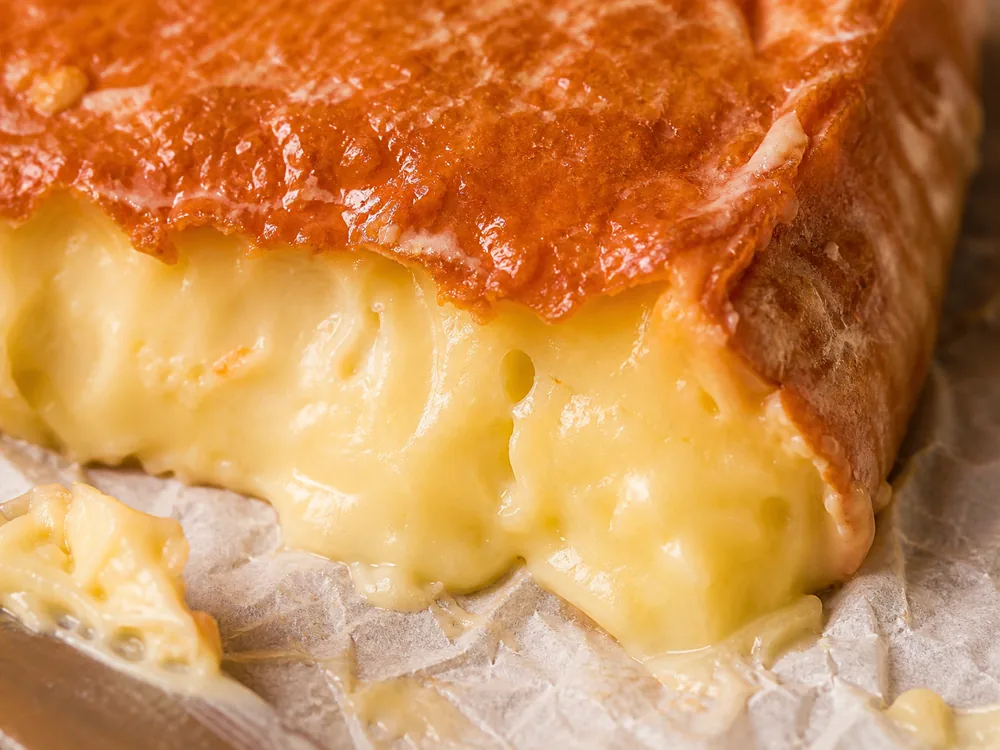
Port Salut softens into a smooth creamy layer under moderate heat. It does not produce the long elastic pull of mozzarella, and high heat can force fat from the paste before the center melts evenly.
Thin slices give the most predictable result.
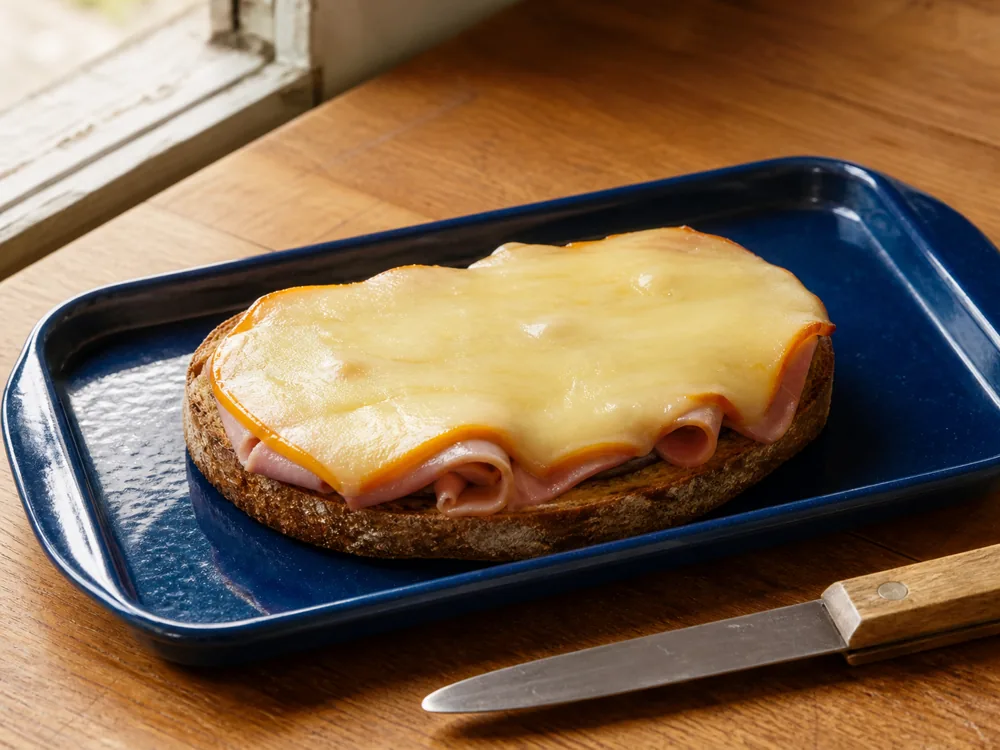
Remove an inedible coating before cooking a wedge.
Place the pale cheese directly against warm bread, potato, pasta, or sauce so heat reaches the paste. Leaving the coating around small pieces can create tough orange strips that separate from the melted cheese.
| Use | Cut | Heat | Expected Result |
|---|---|---|---|
| Toastie or panini | Thin slices | Medium, covered if needed | Even soft layer that holds the filling together |
| Open tartine | Overlapping slices | Brief top heat | Creamy surface with light browning at exposed edges |
| Cheese sauce | Small coating-free cubes | Low heat after the base thickens | Smooth mild body without a sharp cheese flavor |
| Baked potato | Small pieces | Residual heat or short bake | Soft coating over the potato rather than stretch |
| High-heat broiling | Any cut | Intense direct heat | Greater risk of oiling before the middle softens |
For a sauce, add the cheese after reducing the heat.
Small cubes dissolve more evenly than one thick slice. Stir gently and stop when the sauce is smooth because prolonged boiling can split the fat and dull the mild dairy flavor.
Moisture in the other ingredients affects the melt.
Tomato, wet spinach, or an undrained pickle can steam the bread and make softened cheese slide away. Pat wet fillings dry and place Port Salut against bread, ham, or another stable surface that holds the creamy layer in place.
A lid can solve an uneven toastie.
Cover the pan briefly or close the sandwich press gently so trapped heat reaches the center before the bread burns. Lower heat gives the dense paste time to soften without forcing oil onto the surface.
Test one slice before committing the wedge to a recipe.
Different package formats can contain slightly different moisture and salt. A small melt test shows whether you need thinner slices, lower heat, or a sharper companion such as mustard before the full dish is assembled.
Port Salut works best when melt and creaminess are the goal.
Choose another cheese when a dish needs a sharp aged flavor, a crisp browned crust, or dramatic stretch. Adding more Port Salut increases richness but does not create those missing qualities.
How Should You Cut and Serve Port Salut?
Cut a wedge across its width into slices of even thickness. Trim the coating first when your package labels it inedible, then keep the broad cut face flat against the board for control.
For a cheese plate, aim for pieces thick enough to show the creamy texture.
Paper-thin slices warm quickly but can fold into a sticky stack. Pieces about the thickness of two stacked coins remain easy to pick up and give the paste enough volume to taste milky rather than merely salty.
| Use | How It Works |
|---|---|
| Cold Sandwiches | Use thin flexible slices with ham, greens, mustard, or pickles. |
| Cheese Boards | Serve coating-free pieces as the mild semi-soft option before stronger cheese. |
| Panini and Toasties | Overlap thin slices for a smooth melt without relying on stretch. |
| Cheese Sauce | Stir small cubes into a warm base over low heat for gentle creamy flavor. |
| Snack Plates | Pair a few slices with apple, bread, or walnuts for an easy portion. |
Place Port Salut early in a tasting sequence.
Blue cheese, smoked cheese, and pungent washed rinds can erase its mild finish. Taste Port Salut after fresh cheese and before stronger aged or surface-ripened choices.
A separate knife helps the cheese stay clean.
Mustard and chutney transferred onto the cut face continue flavoring leftovers in the refrigerator. Put condiments beside the cheese and let each person add them to bread or a plate.
Use the wedge shape to control portions.
Start at the narrow end for small tasting pieces, then move toward the broad back when you need wider sandwich slices. This keeps the remaining block stable and avoids leaving a thin flap that dries before the next meal.
Cold slices travel well when kept properly chilled.
Pack them between clean separator papers in a sealed lunch container with an ice pack. Do not rely on the cheese's firm appearance as proof that it stayed cold during a long commute.
What Goes Best With Port Salut?
Port Salut needs acidity, crunch, or gentle savor more than sweetness. Its creamy paste already supplies richness, so the best partners refresh the mouth and leave room for milk and butter.
| Pairing | Type | Why It Works |
|---|---|---|
| Tart Apple | Food | Fresh acidity and crunch reset the palate after the dense creamy paste. |
| Crusty Bread | Food | A plain slice carries the cheese without masking its mild flavor. |
| Cornichons | Food | Sharp briny crunch gives the cheese clearer contrast. |
| Mild Ham | Food | Thin cured pork adds savor without overwhelming the short finish. |
| Crisp White Wine | Drink | Fresh acidity suits the mild paste better than heavy oak or sweetness. |
| Light Beer | Beer | Clean carbonation cuts richness while keeping the pairing casual. |
Walnuts add texture and a mild bitter edge.
Use a small handful rather than covering every slice because old or heavily toasted nuts can dominate the cheese. Pear works when you want softer sweetness, while apple gives a clearer contrast.
Apply mustard in a thin swipe on bread.
Strong mustard placed directly on the cheese can erase its flavor. The same restraint applies to chutney, honey, and jam, which should support a bite rather than become its largest component.
For drinks, avoid heavy tannin.
A large red wine can make the mild paste seem metallic or disappear after one sip. Crisp white wine, dry cider, or light beer provides enough acid and refreshment without asking Port Salut to compete.
Port Salut vs Saint Paulin
Port Salut and Saint Paulin belong to the same broad French monastery-style family, but shoppers should not treat the names as interchangeable brands. Port Salut carries its own history and commercial formulation, while Saint Paulin is a cheese style made by multiple producers.
Both are commonly semi-soft cow's milk cheeses with mild flavor and an orange or yellow exterior.
Texture and label details vary by producer, so compare the exact wedge rather than relying on family resemblance. A Saint Paulin with an edible rind does not prove that a branded Port Salut coating is edible.
Taleggio is a stronger comparison.
It has a softer, more aromatic washed rind and a more assertive savory flavor. Use it when you want rind character to lead, but do not expect the same gentle sandwich profile.
Young Havarti replaces texture more closely than history.
It slices, bends, and melts easily with a mild buttery taste, though it lacks Port Salut's orange exterior and French monastery association. Mild Fontina is another practical option when the dish needs smooth melting rather than the branded flavor.
Choose substitutes by the task. Saint Paulin is the closest family comparison, young Havarti replaces mild sliceability, and Taleggio moves toward stronger washed-rind flavor.
What Should You Look for When Buying Port Salut?
Buy Port Salut by label and cut-face condition. The orange exterior can remain vivid after the exposed paste has dried, so inspect both surfaces rather than using color as the freshness test.
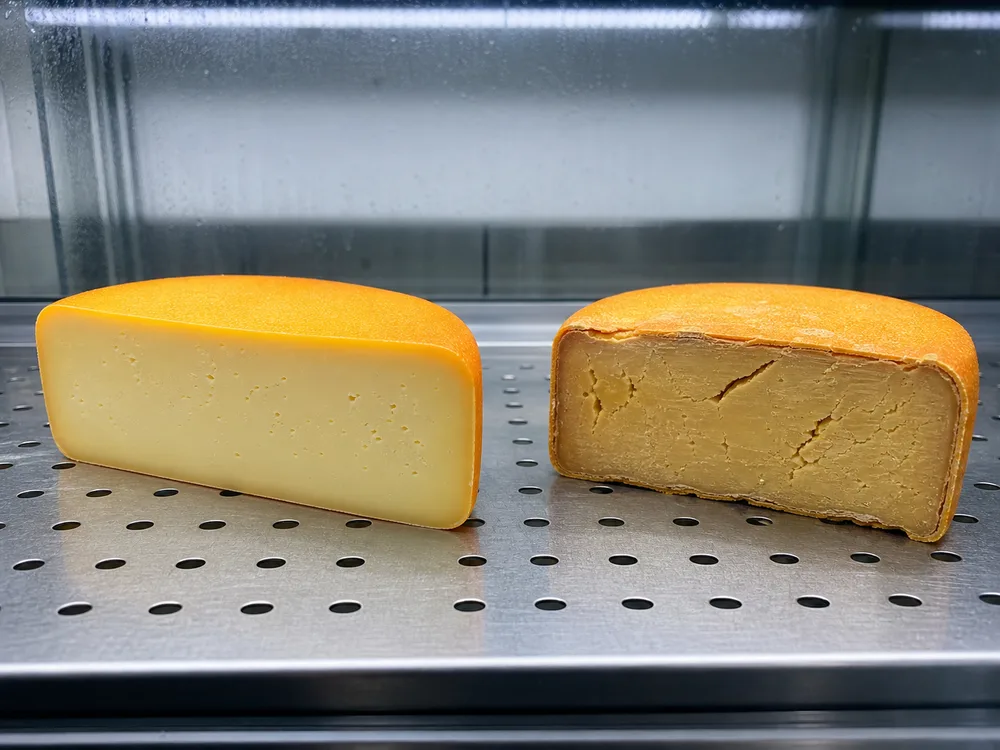
Read the ingredient and rind statement.
The current UK wedge lists pasteurized French milk, milk protein, salt, lactic ferments, vegetarian rennet, annatto norbixin, and natamycin. Another market may use different wording, size, or surface advice, which is why the package outranks a generic shelf card.
- Choose: Smooth pale paste, clean edges, intact cold packaging, and a readable date.
- Confirm: Milk treatment, coating advice, package size, ingredients, and storage instructions.
- Skip: Dry darkened cut faces, deep cracks, curled edges, swollen packs, or broken refrigeration.
- Plan: Buy a wedge for flexible cutting or slices for immediate sandwich convenience.
Press only through an intact package.
The cheese should feel firm enough to hold a slice and supple enough to yield slightly. A hard dry block has lost the texture that makes Port Salut useful, while a leaking or swollen pack calls for rejection rather than a ripeness debate.
Choose wedge or slices by use.
The wedge gives you control over thickness and usually protects the interior better after opening. Pre-cut slices save time for lunches, but their larger exposed area makes prompt use and tight cold storage more important.
Price comparisons need equal units.
Compare cost per 100 grams rather than package price because the wedge and slice pack contain different amounts. Then include waste in the decision, since the wedge requires coating removal while the slices may cost more for convenience.
A fresh wedge should smell quiet through the package.
Strong sourness, fermentation gas, or sharp chemical odor is not a sign that the orange exterior has matured into a better cheese. Leave the pack behind when the seal or smell raises doubt.
How Should You Store Port Salut?
Keep unopened Port Salut at the refrigerator temperature printed on its package. Store it in the cold chain from shop to home and do not leave groceries in a warm car while making other stops.
After opening, protect the cut face first.
Use the original wrap when it reseals cleanly.
Otherwise place parchment or cheese paper against the exposed paste, then use a covered container or loose outer wrap. The goal is to limit drying and odor transfer without letting condensation pool against the cheese.
Pre-cut slices need tighter moisture protection.
Keep their separator papers clean and close the package promptly. Slices dry and absorb refrigerator odors faster than a wedge because more surface area is exposed.
Write the opening date on the outer package.
The current Port Salut UK FAQ says to use its products within five to seven days of opening and keep them at 2 to 6 degrees Celsius. Treat those as instructions for the current UK branded range, and let the package override them when its date or temperature range is narrower.
Freezing changes the reason to buy Port Salut.
The thawed paste can become grainy or damp, which weakens cold slices and board service. Freeze small coating-free portions only when they will go into sauce, toast, or another cooked dish.
Keep the cheese away from the refrigerator door.
Repeated temperature swings from opening and closing encourage condensation and shorten the useful texture window. A stable interior shelf or cheese drawer gives the paste more consistent protection.
Do not return served pieces to the main package.
Pieces that sat beside bread, hands, and condiments can carry crumbs and moisture back to the untouched cheese. Store only the portion that remained clean and cold, then discard pieces left out beyond safe local guidance.
What Are Port Salut's Nutrition and Pregnancy Facts?
The current UK 185 g wedge provides 327 calories, 27 grams of fat, 21 grams of protein, and 1.6 grams of salt per 100 grams. A 30 gram portion provides 98 calories, 8.1 grams of fat, 6.3 grams of protein, and 0.48 grams of salt.
Those numbers belong to that product and market.
The UK slices have a different declared nutrition profile and portion size, so use the label on the package you buy. Portion data also prevents a thick board wedge from being mistaken for the manufacturer's 30 gram serving.
The current branded UK wedge and slices use pasteurized milk, but that fact belongs to those products and market.
The manufacturer says its current UK products are suitable during pregnancy, and it sells the wedge as a semi-soft cheese. The NHS lists pasteurised soft cheeses as safe to eat.
The CDC lists unheated cheese sliced at a deli as riskier and deli-sliced cheeses heated to 165 degrees F or until steaming hot as safer, so a factory-sealed pack with a clear milk label and intact cold chain is easier to verify than a counter cut. Served cold, Port Salut is described as a pasteurized semi-soft cheese, a type the CDC list does not cover, so ask a midwife or doctor.
Port Salut contains milk and is unsuitable for anyone with a cow's milk allergy.
The current UK slices are labeled lactose-free, while the wedge page does not make the same displayed claim. Someone who needs verified lactose information should choose the specifically labeled product rather than applying one format's claim to the full range.
Choose Port Salut when you want mild creamy French cheese that slices and melts easily. Read the exact package, remove an inedible orange coating when directed, and judge freshness by the pale cut face rather than the bright exterior alone.
SOURCES & REFERENCES
What Else Do People Ask About Port Salut?
These answers cover the final label, flavor, cooking, and safety questions most buyers ask.
Port Salut tastes mild, milky, buttery, and gently tangy, with a smooth creamy texture and a short savory finish. Its bright orange exterior looks stronger than the cheese tastes.
Follow your package. The manufacturer labels the orange coating on its current 185 g UK wedge inedible and advises removing it, though products sold in another market may carry different instructions.
Yes. Thin coating-free slices soften into a smooth creamy layer in toasties, panini, tartines, potatoes, and sauce, but they do not create a long mozzarella-style stretch.
Trappist monks created Port Salut at the Abbaye du Port du Salut in 1816. Modern branded Port Salut is commercially made in France and is no longer produced at the abbey.
The current branded UK wedge and slices use pasteurized milk. Check the exact package because imported products, related styles, and market formulations can differ.
The current UK wedge and slices use vegetarian rennet and are labeled suitable for vegetarians. Verify the ingredient list when buying in another market.
The current branded UK wedge and slices are pasteurized, and their manufacturer labels them suitable during pregnancy. Check the exact package and keep it cold.
The CDC lists unheated cheese sliced at a deli as riskier and deli-sliced cheeses heated to 165 degrees F or until steaming hot as safer. Served cold, Port Salut is described as a pasteurized semi-soft cheese, a type the CDC list does not cover, so ask a midwife or doctor.