When a recipe asks for Fontina you usually need a cooking result rather than a name match, and that widens the list of workable swaps. A good swap should melt smoothly, bring enough savory flavor, and avoid changing the moisture of the dish.
The tricky part is that Fontina can mean two different things at the counter. Aosta Valley Fontina is earthier, richer, and more savory than many domestic fontina-style blocks.
The best substitute depends on which version the recipe expects.
In This Article
7 Fontina Substitutes: Best Alternatives for Fondue and Gratins
Fontina is asked for because it melts smoothly and still tastes of something, so every swap trades along those two axes.
The matrix shows where each one sits before the entries explain what to do about it.
| Substitute | How it melts | Flavour depth | Best job |
|---|---|---|---|
| Gruyere | Clean and smooth, firmer body | Deep, nutty, Alpine | Fondue, gratin, onion soup |
| Havarti | Soft and buttery, gives easily | Mild, milky | Sandwiches, gentle bakes |
| Young Gouda | Reliable and even | Mild, lightly sweet | Everyday bakes on a budget |
| Provolone | Stretches and pulls | Tangy, mild to sharp | Hot sandwiches |
| Raclette | Loose and glossy | Strong, washed-rind aroma | Potato and onion gratins |
| Comte | Smooth, slightly firmer | Deep, French Alpine | Dishes where the cheese seasons |
| Monterey Jack | Very smooth | Almost none | Emergency melt only |
1. Gruyere
The safest first choice whenever Fontina is carrying the dish rather than filling it.
It is a firm Swiss mountain cheese, drier and denser than Fontina, with a nutty savoury depth that survives heat.
Grate it finer than the recipe suggests and heat it gently, since a drier cheese needs help to flow. Use slightly less if the wedge tastes strong, and add a splash of wine, milk or cream in a sauce-based dish.
It fails to copy the softness, and the symptom is a firmer, cleaner set than Fontina would give. That is usually a trade worth making, because the alternative is a bland pale melt.
Grate Gruyere finer than the recipe says and add a splash of wine, milk or cream in anything sauce-based. A drier cheese needs help to flow, and finer shreds melt before the sauce overheats.
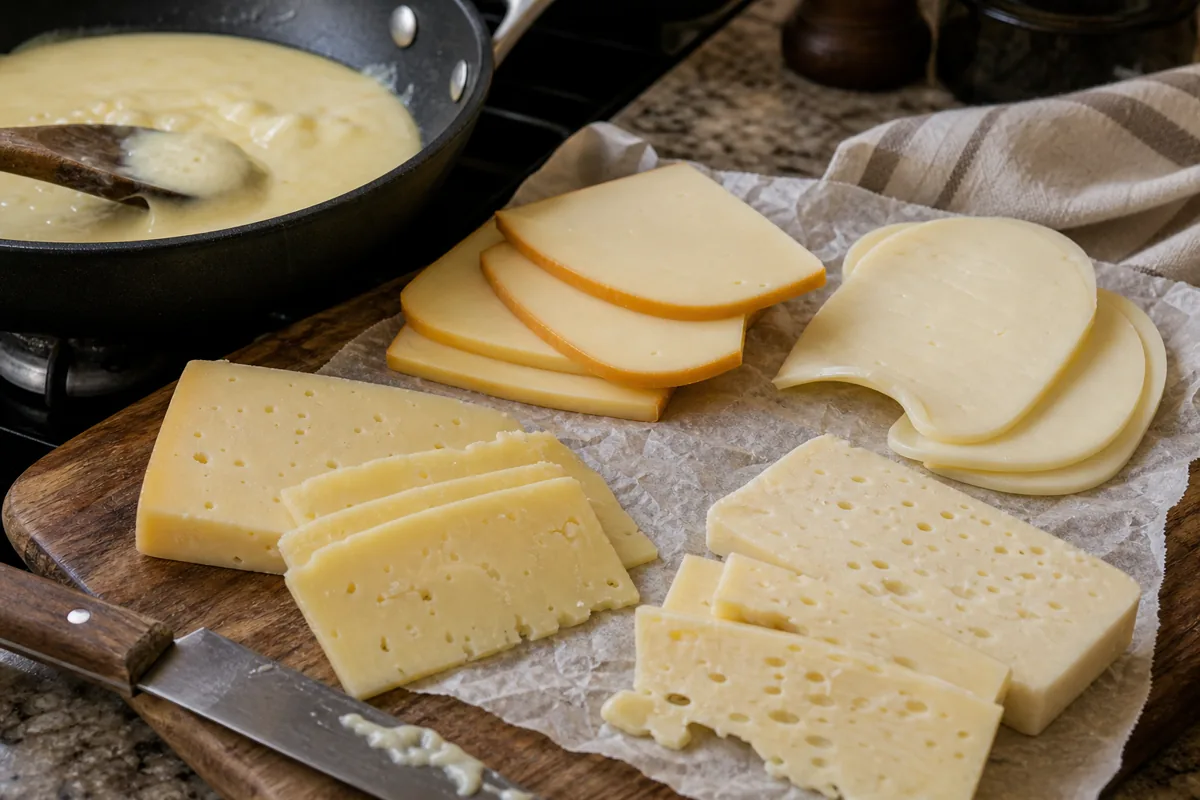
2. Havarti
The better answer when the dish needs softness more than mountain flavour, which covers most sandwiches.
It is a Danish semi-soft cheese, buttery and high in moisture, so it gives the yielding quality Fontina is often chosen for.
Use it straight in sandwiches and mild bakes. In a gratin, blend it with Gruyere so one brings the give and the other the flavour, which lands closer to Fontina than either alone.
It fails on savour, and the symptom is a dish that melts beautifully and tastes of very little. Anything relying on the cheese for seasoning will need help from mustard, pickles or a sharper cheese alongside.
Blending Havarti with Gruyere lands closer to Fontina than either cheese alone. One supplies the buttery give and the other the Alpine depth.
3. Young Gouda
The supermarket answer when exact Alpine flavour is not the point.
Young Gouda is mild and lightly sweet, and it slices cleanly, so it behaves predictably in a home oven.
Use it where the filling already carries the seasoning, and grate rather than slice it in a bake so it distributes evenly.
It fails where the cheese was supposed to lead, and the symptom is a bake that tastes of everything except cheese. Buy aged Gouda instead if you want depth, but expect a firmer, crystalline result that no longer melts like Fontina.
4. Provolone
For hot sandwiches, especially with roasted peppers, onions or beef.
It is a pasta filata cheese, so it stretches and pulls in a way none of the Alpine options do.
Slice it thinly and let the bread heat it gradually. Choose the mild version unless the sandwich can take the sharper aged style.
It fails in a sauce, and the symptom is a stringy mass instead of a smooth coat. Pull is an asset between bread and a liability in a gratin.
5. Raclette
For potato, onion, ham and mushroom gratins that can carry more aroma.
It is a washed-rind Alpine cheese, so it melts loosely and brings a savoury, faintly funky note Fontina does not have.
Use it where the other ingredients are robust, and hold back the salt elsewhere in the dish because aged Alpine cheeses run saltier than mild Fontina-style blocks.
It fails in a delicate sauce, and the symptom is a cream sauce that tastes of rind rather than of the dish. Keep it for assertive company.
6. Comte
For dishes that want French Alpine depth, where the cheese is the main seasoning.
It is a firm cooked-curd mountain cheese, drier than Fontina like Gruyere but with a different sweetness to the finish.
Treat it exactly like Gruyere: grate fine, heat gently, add liquid in a sauce. Choose a younger wheel if you want it to melt more readily.
It fails on suppleness for the same reason Gruyere does, and the symptom is the same firmer set. Older wheels also carry crystals that will not dissolve.
7. Monterey Jack
The emergency option when nothing else is in the shop.
It is a young, mild American cheese bred for melting, so the flow is excellent and the flavour is close to absent.
Use it only where you can compensate: add a sharper cheese, mustard, pickles or well-seasoned fillings so the dish is not carried by the cheese.
It fails on body, and the symptom is a dish that is technically correct and tastes flat. It solves the melt and none of the reason Fontina was named.
Do not use Monterey Jack where the cheese is the seasoning. In a fondue or a plain gratin there is nothing else to carry the flavour, and the dish arrives tasting of milk.
What Is the Best Overall Fontina Substitute?
Gruyere is the safest first choice when Fontina carries the dish. It melts cleanly, tastes nutty and savory, and has enough body for gratins, fondue, onion soup, baked pasta, and toasted sandwiches.
It is firmer and drier than Fontina, so it does not copy the softness perfectly. The tradeoff is useful: the dish gets deeper Alpine flavor and a cleaner finish instead of a bland pale melt.
For a recipe that already includes wine, potatoes, cream, onions, or bread, Gruyere usually works without changing the structure. Use a little less if the wedge tastes strong.
If the recipe depends on Fontina's soft buttery side more than its mountain flavor, choose Havarti instead of forcing Gruyere into every dish.
This is the main rule for the whole page: substitute by the job in the pan, not by the closest-looking wedge.
Which Fontina Substitute Should You Choose by Cooking Job?
Fontina usually appears in three jobs: smooth melt, gentle Alpine flavor, and enough body to season starch or bread. No substitute covers all three perfectly, so ranking by use case is more useful than one rigid list.
For flavor depth, a firm Swiss mountain wheel is strongest, and for a softer deli melt a buttery Danish-style slice is easier.
For extra aroma in hot dishes, a table-melting Alpine cheese can work if the recipe can handle the rind note.
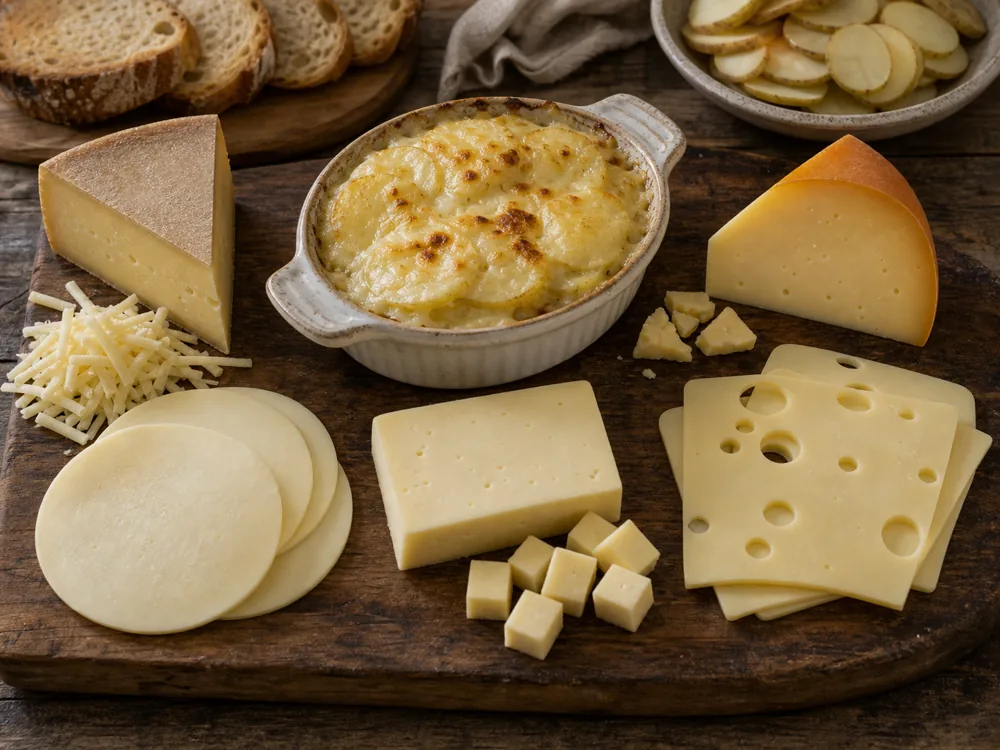
- Fondue: Gruyere first, with Havarti only if you need softer body.
- Gratin: Gruyere or Raclette gives more flavor than a mild domestic block.
- Sandwiches: Havarti, young Gouda, or provolone keeps the melt gentle.
- Budget bakes: young Gouda works when exact Alpine flavor is not the point.
If the recipe only says Fontina because it wants a good melt, our smooth-melt decision frame is better than chasing the name alone.
Which Substitute Works Best for Fondue, Gratins, and Baked Pasta?
Fondue and gratins need both flow and flavor. Gruyere is the best start because it melts into a smooth sauce while keeping enough nutty bite to season potatoes, bread, or pasta.
For a softer result, blend Gruyere with Havarti, since Gruyere brings flavor while Havarti brings the buttery give that Fontina often has.
This blend is usually closer than either cheese alone.
For gratins and baked pasta, grate Gruyere finely and blend it with Havarti at about 2 parts Gruyere to 1 part Havarti. The blend protects flavor and soft melt at the same time.
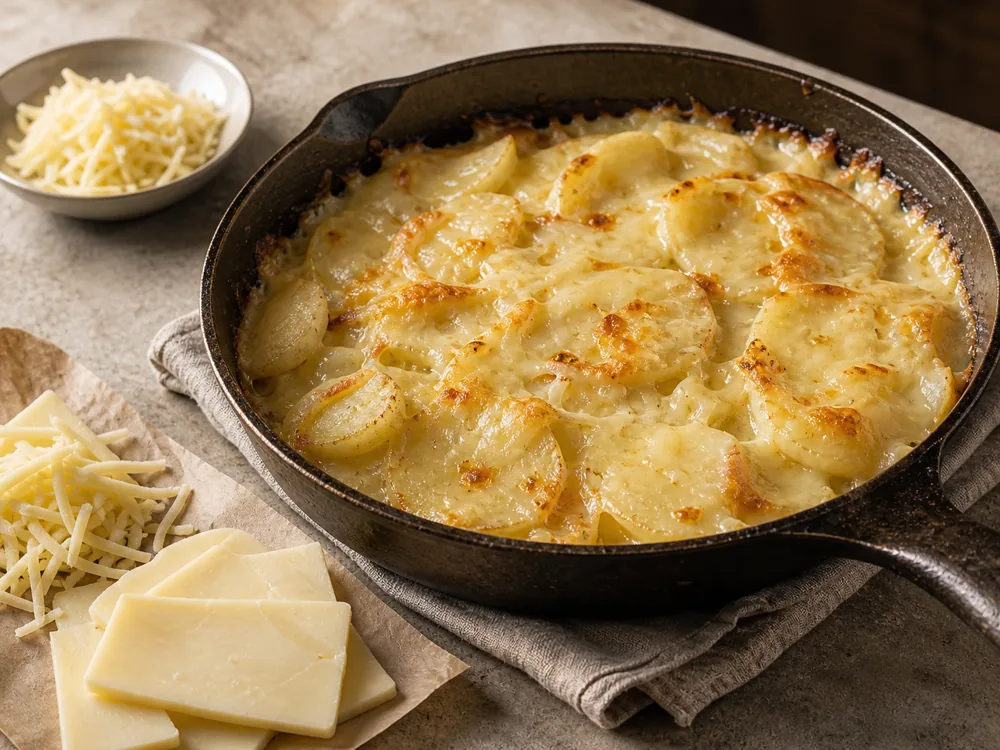
Raclette is useful when the dish can handle more aroma. It works with potatoes, onions, ham, and mushrooms, but it can feel too assertive in a delicate cream sauce.
Comte can also work, especially when the dish wants French Alpine depth. The distinction between Comte and Gruyere flavor matters if the cheese is the main seasoning.
Which Substitute Works Best for Sandwiches, Burgers, and Mild Melts?
Sandwiches usually care more about softness than mountain flavor. Havarti is often the better Fontina substitute here because it melts gently and tastes buttery without taking over the filling.
Young Gouda works when you want a supermarket block that slices cleanly and melts reliably. Provolone works when stretch is welcome, especially in hot sandwiches with roasted peppers, onions, or beef.
| Use | How It Works |
|---|---|
| Grilled sandwiches | Havarti gives the closest soft buttery bite. |
| Burgers | Young Gouda melts well and adds mild sweetness. |
| Italian-style sandwiches | Provolone brings stretch and a sharper deli profile. |
| Panini | Gruyere works when the sandwich needs a stronger savory center. |
For hot sandwich cheese, slice thinly and let the bread heat the cheese gradually. Thick chunks can stay cool in the center while the bread burns.
Monterey Jack is the emergency option. It melts smoothly but lacks Fontina's savory body, so add a sharper cheese, mustard, pickles, or seasoned fillings if the sandwich tastes flat.
- Choose Havarti when the sandwich needs soft buttery melt.
- Choose young Gouda when the filling already has enough seasoning.
- Choose provolone when pull matters more than Alpine flavor.
How Do You Adjust a Fontina Substitute to Prevent a Bad Swap?
The first adjustment is moisture, because Fontina is supple while Gruyere and Comte are drier.
Grate them finer, heat gently, and use a splash of wine, milk, or cream if the recipe is sauce-based.
The second adjustment is salt, since Raclette and aged Alpine cheeses can taste saltier than mild Fontina-style blocks.
Havarti and Monterey Jack can taste flatter, so the recipe may need more acid or seasoning.
Fresh mozzarella is the common wrong turn, because it stretches but brings too much moisture and not enough savory flavor for most Fontina jobs.
It can help in a pizza-style blend, not as a full gratin substitute.
For semi-hard wedges used over several meals, proper cheese wrapping keeps the substitute from drying before the second recipe.
- Fine grate Gruyere, Comte, and aged Gouda before heating.
- Slice thin Havarti and provolone for sandwiches.
- Add acid when a mild substitute tastes flat.
What Should You Do When No Fontina Substitute Is Close Enough?
If the recipe is built around true Fontina Val d'Aosta, a substitute will change the dish. That matters in fonduta, simple polenta, and recipes where the cheese is the main flavor rather than a background melt.
In that case, choose between two honest compromises.
Gruyere keeps the mountain depth but gets firmer and nuttier, while Havarti keeps softness but loses the earthier Alpine note.
Do not replace Fontina with a random shredded Italian blend when the cheese is the main ingredient. Those blends often melt, but they usually miss the savory depth and can add anti-caking texture.
If you are cooking for guests, the Gruyere-Havarti blend is the safest compromise. It tastes intentional and avoids the biggest failure: a dish that melts but tastes empty.
Are Fontina Substitutes Safe for Pregnancy and Everyday Use?
Most Fontina substitutes are calorie-dense cow milk cheeses with moderate protein and sodium. The biggest nutrition change usually comes from salt and moisture, not from a dramatic calorie difference.
Pregnancy safety depends on the substitute and milk treatment. Pasteurized Gruyere-style, Havarti, Gouda, provolone, and Monterey Jack are generally straightforward when kept refrigerated.
Raw-milk imported wedges need label checking and medical guidance for risk-sensitive meals.
If food safety is the concern, choose a sealed pasteurized substitute and keep it cold. The same practical handling rules used for pregnancy cheese decisions apply here.
SOURCES & REFERENCES
What Else Do People Ask About Fontina Substitutes?
These answers cover the practical swaps readers usually need when a recipe calls for Fontina.
Gruyere is the best overall substitute because it melts well and brings nutty Alpine flavor. Havarti is better when you need a softer, milder melt.
Yes, and Havarti works well in sandwiches, casseroles, and mild bakes.
It is softer and more buttery, but less savory than true Fontina.
Only in limited sandwich or pizza-style situations. Mozzarella changes moisture and stretch too much for most gratins, sauces, and Alpine-style dishes.
Gruyere is closer for flavor and hot dishes. Provolone is useful for sandwiches when stretch and availability matter more than Alpine flavor.
Young Gouda is often the easiest supermarket substitute. Havarti is the best mild soft-melting option when it is available.