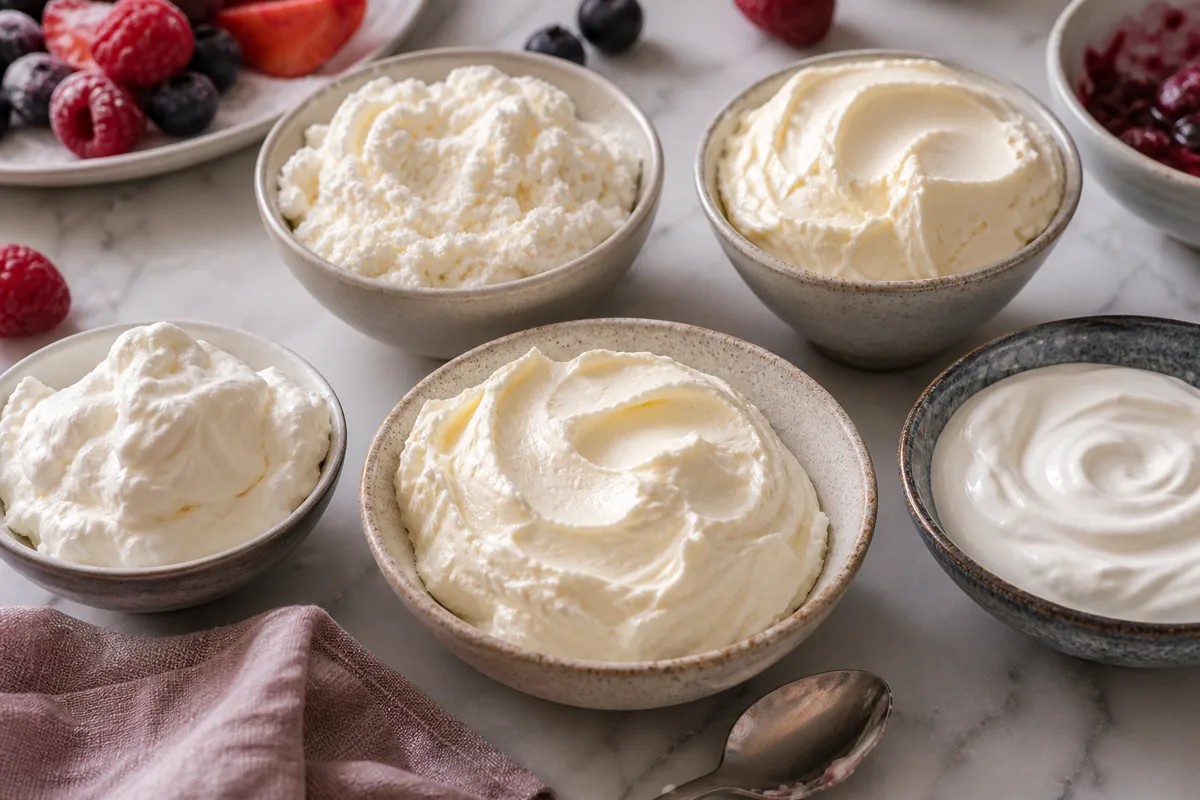
Among cheese swaps, mascarpone is difficult to replace because the recipe is usually asking for two things at once: quiet cream flavor and a thick texture that still feels soft. Plain cream cheese covers the thickness, but it brings more tang and a firmer bite than the fresh cream base mascarpone is known for.
That low-acid profile changes the order of decisions. With many cheese substitutes, flavor comes first and texture gets corrected later.
With mascarpone, texture and acidity have to be solved together because even a smooth substitute can ruin the dish if it tastes sour, especially in coffee, cocoa, or vanilla desserts.
That is why the choice starts with the recipe job, not with a list of tubs. Tiramisu, frosting, pasta sauce, and baked filling all fail in different ways when the replacement is too sour, too grainy, or too loose.
In This Article
6 Mascarpone Substitutes: Best Alternatives for Tiramisu
These are the six dairy substitutes worth using, ranked by how often they are the right answer.
Each entry gives the dish it suits, the adjustment it needs, and the point where it stops working. Dairy-free options and the corrections you make in the bowl have their own sections below.
Those four numbers decide most of the swap. The fat gap explains why a lighter cheese sets softer, and the draining time is what turns the one grainy option into a usable filling.
| Has to hold a slice | Can stay spoonable |
|---|---|
| Cream cheese loosened with heavy cream | Creme fraiche |
| American Neufchatel, chilled and served cold | Fromage blanc or quark with added cream |
| Ricotta, drained and sieved, with cream added | Strained yogurt, labneh or sour cream |
| No-bake cheesecake, piped frosting, tiramisu | Pan sauces, dips, fruit creams, spoon desserts |
1. Cream Cheese Loosened With Heavy Cream
The default for tiramisu and any no-bake filling that has to hold a slice.
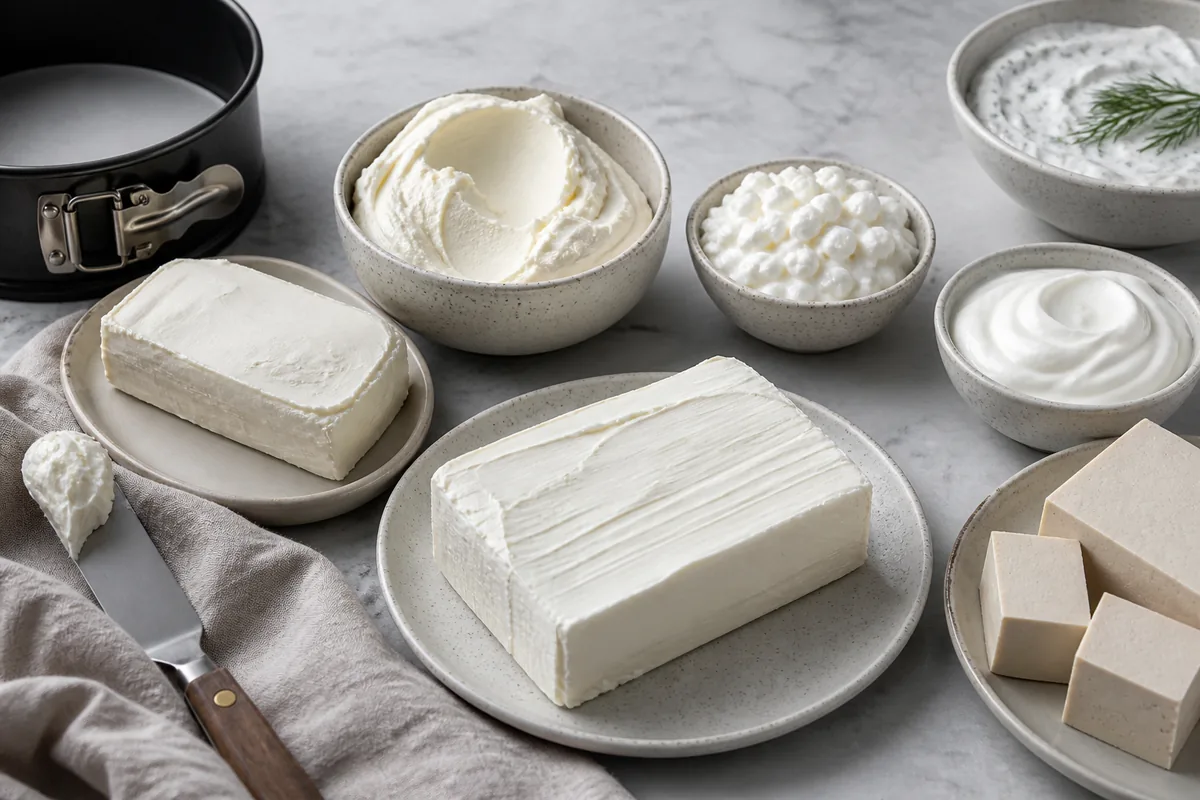
Cream cheese alone is both firmer and tangier than mascarpone, so the cream is not optional. It is the part that turns one cheese into a usable stand-in for the other.
Work to roughly three parts cream cheese to one part heavy cream by weight, starting from block cheese at room temperature. Beat the cheese smooth first, then add the cream a spoonful at a time.
The cue is the ribbon. Lift the spoon and the mixture should fall in a slow band that settles back into the surface within a couple of seconds, neither holding a peak nor pouring.
- Bring the block cheese fully to room temperature before you start.
- Beat it smooth on its own, with no cream in the bowl yet.
- Add the cream one spoonful at a time, testing the ribbon after each.
- Stop at the ribbon; beating past it thins the mixture for good.
Stop as soon as you reach it. Beating on past that point thins the mixture and it will not thicken again.
It fails unloosened, and the symptom is a tiramisu that eats like cheesecake. The layers sit heavy against the ladyfingers instead of yielding, and the tang arrives before the coffee.
2. Creme Fraiche
The easiest answer for savoury sauces, because it is already spoonable and cultured.
Its fat content is high enough that it will not split the way sour cream does, which is what makes it usable in a hot pan at all.
Add it off the heat or over the lowest flame, then loosen with pasta water, stock or cream until it coats rather than clings. Swap one to one and taste before adding salt, since it carries its own acidity.
The cue is the back of the spoon. The sauce should leave a clean line when you draw a finger through it.
It fails as a set filling, and the symptom is a dessert that never firms. It has no standing body, so a no-bake layer made with it stays loose however long it chills.
Do not let creme fraiche reach a simmer. It holds together better than sour cream, but a rolling boil still breaks it and the sauce goes grainy.
3. American Neufchatel
For the cream-cheese lane when you want the same structure a little lighter.
It runs about 23 to 29 percent milk fat against roughly 33 percent for standard cream cheese, and it is made from milk alone rather than milk plus added cream.
Treat it exactly like cream cheese but hold back the loosening liquid, since it starts softer. Around a quarter less cream than the cream-cheese ratio is a safe first pass.
Expect a slightly tangier finish. That reads as freshness in a coffee or citrus dessert and as sourness in a plain vanilla one.
It fails where firmness has to survive a warm room, and the symptom is a piped layer that slumps. Keep it for chilled desserts served straight from the fridge.
4. Ricotta
Useful because it is in every supermarket, and workable in baked fillings once corrected.
It is a whey cheese rather than a cream cheese, so it is lighter, wetter and visibly grainy where mascarpone is smooth.
Drain it in a sieve for at least half an hour, then press it through the mesh or blend it briefly until no grain survives on the tongue. Add a spoonful of cream afterwards to replace some of the fat you did not have.
The cue is the tongue rather than the eye. A mixture can look smooth and still feel sandy against the palate, which is the texture that gives the swap away in a dessert.
It fails uncorrected, and the symptom is a filling that tastes right and feels wrong. The grain reaches the mouth before the flavour does, so the dessert reads as fresh cheese rather than as cream.
Sieve first, then add cream, in that order. Cream added to ungrained ricotta only makes a wetter grainy mixture, and no amount of beating removes the texture afterwards.
5. Fromage Blanc or Quark
For fillings that can carry a cleaner, lighter dairy flavour instead of richness.
Both are fresh cultured cheeses with much of the fat removed, which is exactly the difference from mascarpone and also exactly the point.
Use them where the recipe supplies its own fat through butter, eggs or cream. Fold in a little heavy cream if the mixture needs body, and sweeten slightly more than the recipe says to balance the extra acidity.
The cue is the finish. If the filling tastes clean rather than lingering, it is behaving as intended rather than failing.
They fail in a rich dessert, and the symptom is a filling that tastes thin next to the recipe it came from. Neither brings the fat that makes mascarpone read as luxurious.
6. Strained Yogurt, Labneh or Sour Cream
For dips and casual fruit creams where thickness matters more than richness.
All three reach a mascarpone-like body by removing water rather than by carrying fat, which is why they look convincing in the bowl and taste different on the spoon.
Strain them further through muslin if any whey is still separating, then balance the acidity with sugar, honey or a spoonful of cream before it goes near the rest of the dish.
Keep them out of anything heated. Yogurt and sour cream both split at a simmer, and labneh goes chalky rather than melting.
They fail on tang, and the symptom is a dessert that reads as tart before it reads as rich. In a plain filling the acidity arrives first and never quite recedes.
How Do You Blend Cream Cheese with Cream for Tiramisu?
A tiramisu pan punishes plain cream cheese quickly. The filling can taste like cheesecake, and the extra firmness makes the layers feel heavy instead of plush.
Start with room-temperature cultured block cheese, beat it smooth, then loosen it with heavy cream a spoonful at a time. The goal is not to make it runny.
The spoon should leave a slow ribbon that folds back into the bowl, because that texture spreads over ladyfingers without turning the pan soupy.
Start with a two-to-one blend by weight of cream cheese and heavy cream, then adjust by sight. If the mixture still holds ridges like frosting, add a little more cream.
If it falls off the spoon like sauce, chill it before adding anything else.
The flavor fix matters as much as the texture fix. Use vanilla, sugar, coffee, or cocoa to pull the tang into the dessert, but avoid adding extra lemon or sour cream unless the recipe was written for cream cheese.
The closer the dessert is to classic tiramisu, the less acidity you want in the bowl.
Egg-based tiramisu creams need extra caution because the substitute changes how the bowl feels before it sets. If the mixture already looks loose before folding, do not assume the refrigerator will repair it.
Chill the cream-cheese blend separately, then fold gently so the final cream stays thick enough to spread.
The direct cream cheese and mascarpone split is why a blend wins. Cream cheese gives the filling backbone.
Heavy cream pushes it back toward mascarpone's softer, rounder finish.
How Does the Dessert Type Change Your Substitute Choice?
Before choosing a substitute, look at what the dessert must do after mixing. A no-bake filling has to hold a slice.
A spoon dessert can stay softer. A frosting needs enough body to sit on a cake without tasting sharp.
Those jobs point to different dairy. American Neufchatel can stand in when you want the cream-cheese lane a little lighter, while fromage blanc and quark make sense only when the recipe can tolerate a cleaner, fresher tang.
Also check how the recipe is served. A chilled square, a piped frosting, and a soft spoon dessert may use the same ingredient name, but they ask for different resistance.
Mascarpone can move between those jobs because it is rich without being stiff. Substitutes need more supervision.
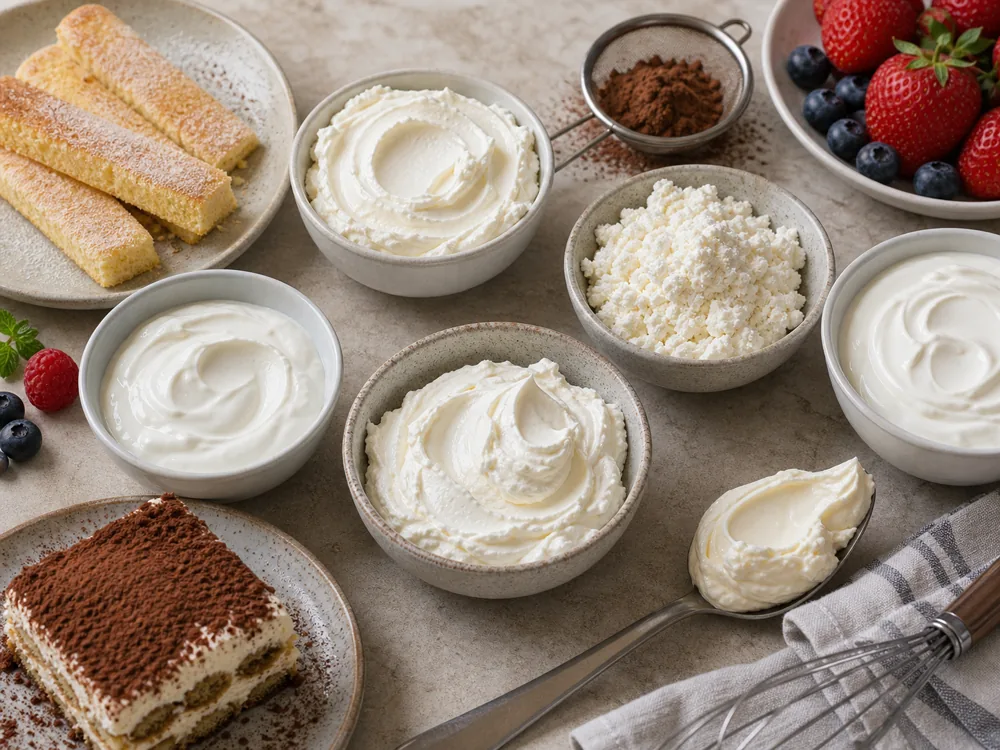
A bowl of options can look interchangeable, but the set point is the part readers usually feel later. A loose substitute may taste fine on the spoon and still collapse between layers after chilling.
- Tiramisu: use cream cheese plus heavy cream, then chill before assembly.
- No-bake tart: use cream cheese or Neufchatel, then sweeten enough to tame the tang.
- Layered glass dessert: creme fraiche or fresh quark can work if the layers do not need clean slices.
- Baked filling: use drained ricotta only when a lighter curd texture fits the recipe.
Mascarpone is not just creamy. It is creamy without much sourness, and many replacements only solve half of that.
Which Cultured Dairy Works Best in Sauces?
A sauce does not need mascarpone to stand upright. It needs to loosen into the pan without separating, turning chalky, or making the dish taste like frosting.
Creme fraiche is the easiest sauce substitute because it is already spoonable and cultured. Add it off the heat or over low heat, then thin with pasta water, stock, or cream instead of trying to melt a firm block into a smooth finish.
Temperature is the hidden variable. A cold, firm substitute hits a hot pan and tightens before it blends.
A room-temperature dairy whisked with a little liquid enters the sauce more gently.
That small prep step often matters more than choosing the richest tub.
| Recipe job | Best swap | Adjustment |
|---|---|---|
| Pasta finish | Creme fraiche | Stir in off heat and loosen with pasta water. |
| Pan sauce | Cream cheese plus cream | Whisk smooth before it hits the pan. |
| Soup enrichment | Fromage blanc | Temper with warm liquid first. |
| Cold dip | Quark or labneh | Add olive oil or cream if the texture feels tight. |
If the dish is pasta, decide whether you need mascarpone richness or just a creamy finish. The answer can change after looking at other pasta cheese choices, because grated aged cheese, cream, and starchy pasta water may already carry part of the job.
Cream cheese can work in sauce, but it needs pre-whisking. Dropping cold chunks into a hot pan is how you get white flecks instead of a glossy finish.
For sauce work, the safest replacement is the one that needs the least rescue. A slightly tangy cultured dairy is easier to balance than a firm block that refuses to smooth out.
Should You Fix Ricotta Before Using It as a Filling?
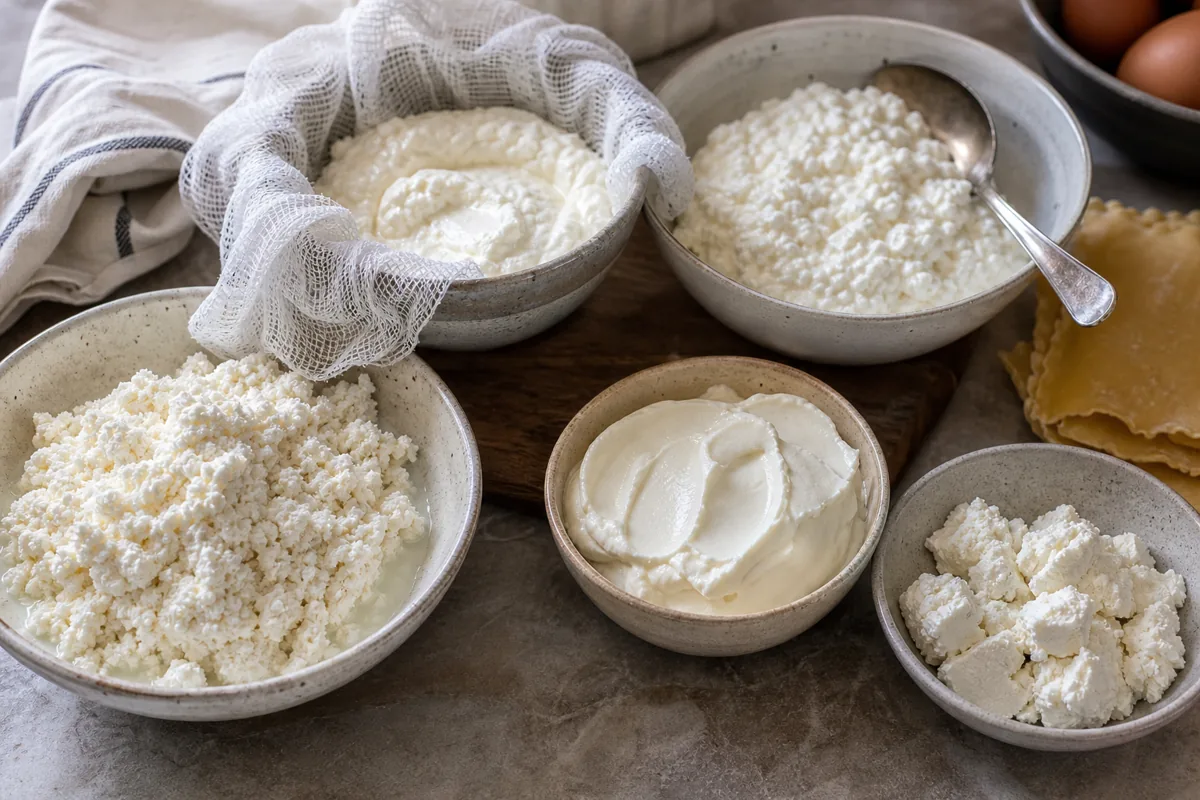
Ricotta belongs in this conversation because it is easy to find and mild, but it is not a straight mascarpone copy. Fresh ricotta is lighter, wetter, and grainier, so it changes the mouthfeel before it changes the flavor.
For baked fillings, drain it first. Then press it through a sieve or blend it briefly if the dessert needs a smoother bite.
That extra step matters more than the brand on the tub, because uncorrected curds can make a filling feel sandy next to the clean cream texture readers expected.
Use the towel test when you are unsure. If a spoonful of ricotta leaves wet whey on a paper towel after a few minutes, it needs more draining before sugar or eggs go in.
Once sugar is added, the filling loosens again, so start firmer than the final texture you want.
- Cheesecake-style filling: blend drained ricotta with a little cream cheese for body.
- Cannoli-style cream: drain, sweeten, and sieve ricotta so the grain feels intentional.
- Baked pasta or savory tart: leave some texture if the dish already has noodles, vegetables, or sauce.
- Cold tiramisu: avoid ricotta unless the recipe is built around a lighter curd filling.
The ricotta and cottage cheese texture difference also explains why a blended curd option is a backup, not a first pick. It can become smooth, but its dairy flavor is leaner and less dessert-like than mascarpone.
When Does Tang Become the Problem?
The common mistake is chasing thickness while ignoring acidity. Greek yogurt, sour cream, labneh, and some fromage blanc can look close in the bowl, but they pull the dessert toward tartness before you taste the mascarpone-like richness.
That does not make them useless. Strained yogurt texture can help a dip or casual fruit cream, and a French fresh cheese can lighten a filling.
They fail when the recipe depends on mascarpone's calm dairy flavor, especially next to coffee, cocoa, vanilla, or delicate fruit.
Do not use sour cream as a full mascarpone substitute in tiramisu. It is too loose and too sharp, so the layers can slump and the filling tastes sour before it tastes creamy.
Use tangy dairy only when the rest of the recipe wants that brightness. If the dessert is supposed to taste soft, creamy, and sweet, choose cream plus a mild cheese before reaching for yogurt.
What Are the Best Dairy-Free Mascarpone Alternatives?
Dairy-free mascarpone substitutes are less about copying mascarpone and more about deciding which flavor shift you can live with. Coconut cream gives the richest texture, but the coconut note will show up unless cocoa, coffee, citrus, or spice covers it.
Cashew cream can taste milder, especially when blended very smooth, but it takes planning and still lacks the dairy finish of mascarpone. Vegan cream-cheese-style spreads vary widely.
Some are too salty or gummy for dessert, so taste before building the whole bowl around one tub.
For a dairy-free tiramisu-style dessert, keep the rest of the recipe assertive. Coffee syrup, cocoa, and a slightly bittersweet finish make coconut cream feel intentional.
Pale vanilla cream exposes the substitute more because there is nowhere for the flavor shift to hide.
That Italian dessert context matters because mascarpone is not simply a neutral fat source. The best dairy-free version should support the dessert structure without pretending the flavor stayed identical.
What Should You Adjust in the Bowl Before Assembly?
The last chance to save a mascarpone substitute is before it touches ladyfingers, cake layers, pasta, or filling. Once the dish is assembled, a loose mix stays loose and a gritty mix keeps broadcasting the mistake.
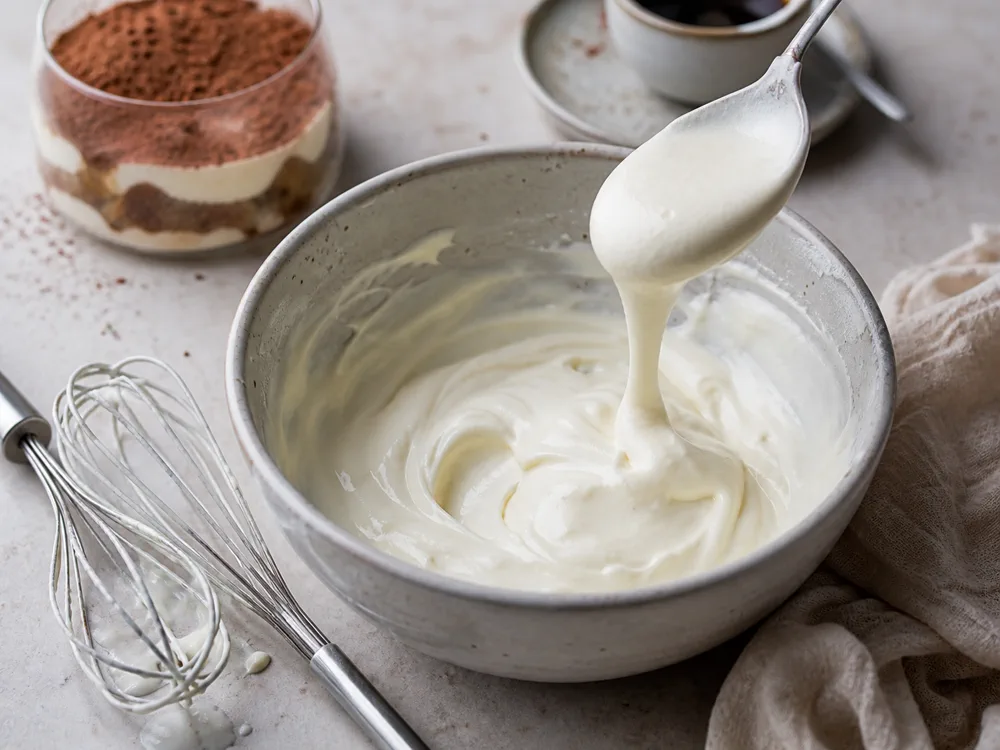
Work in small corrections. Add heavy cream when the mix is too stiff, powdered sugar when you need sweetness without extra liquid, and a pinch of salt only when the substitute tastes flat.
If the bowl is already tangy, sugar can soften the edge, but it cannot turn sour cream into mascarpone.
Separate texture corrections from flavor corrections. Cream changes body, sugar changes sweetness, salt changes flatness, and cold changes stability.
If you add all four at once, you cannot tell which fix helped and which one pushed the filling away from mascarpone.
- Too stiff: beat longer first, then add cream one spoonful at a time.
- Too loose: chill for 20 to 30 minutes before adding more dairy.
- Too grainy: sieve ricotta or blend cottage cheese before sweetening.
- Too tangy: add cream and vanilla before adding more sugar.
- Too bland: add a tiny pinch of salt, then taste again.
Fresh dairy also needs a practical clock. Opened tubs should stay cold, covered, and cleanly handled.
The general fresh dairy storage rules matter more here because mascarpone-style mixtures spoil faster than aged cheese.
Freezing soft dairy is a backup for cooked sauces, not for a pristine tiramisu cream.
For tiramisu, chill the substitute mixture before assembly and again after layering. Cold does not make the flavor identical, but it tightens the texture and hides small blending flaws.
The useful rule is simple: fix texture first, then flavor. A beautiful-tasting substitute that cannot hold the dessert will still disappoint when the first slice slides apart.