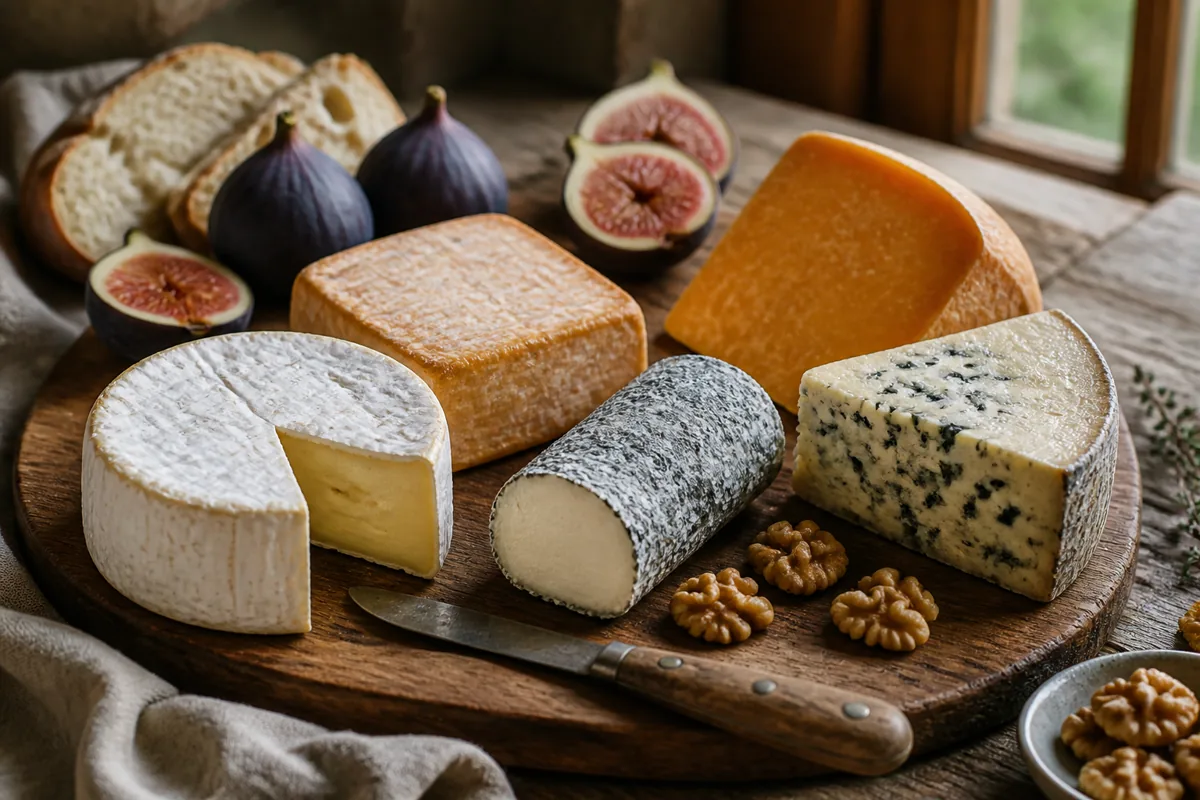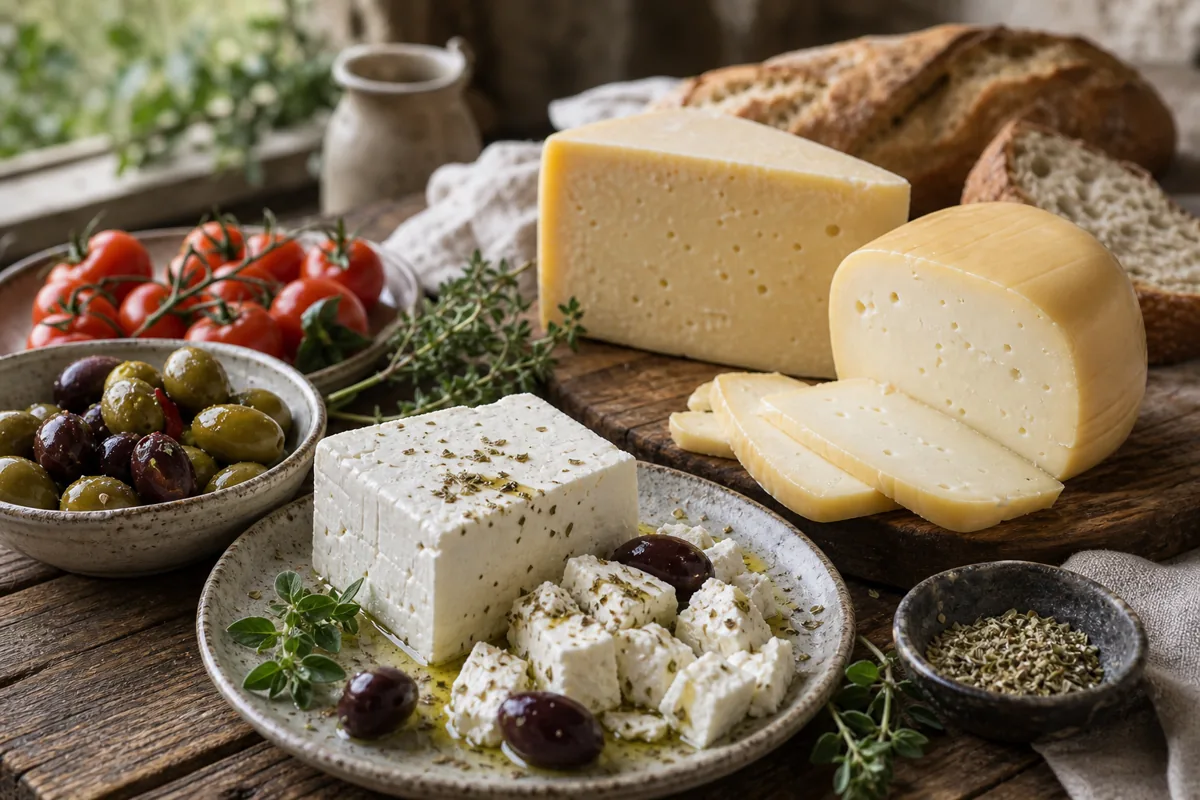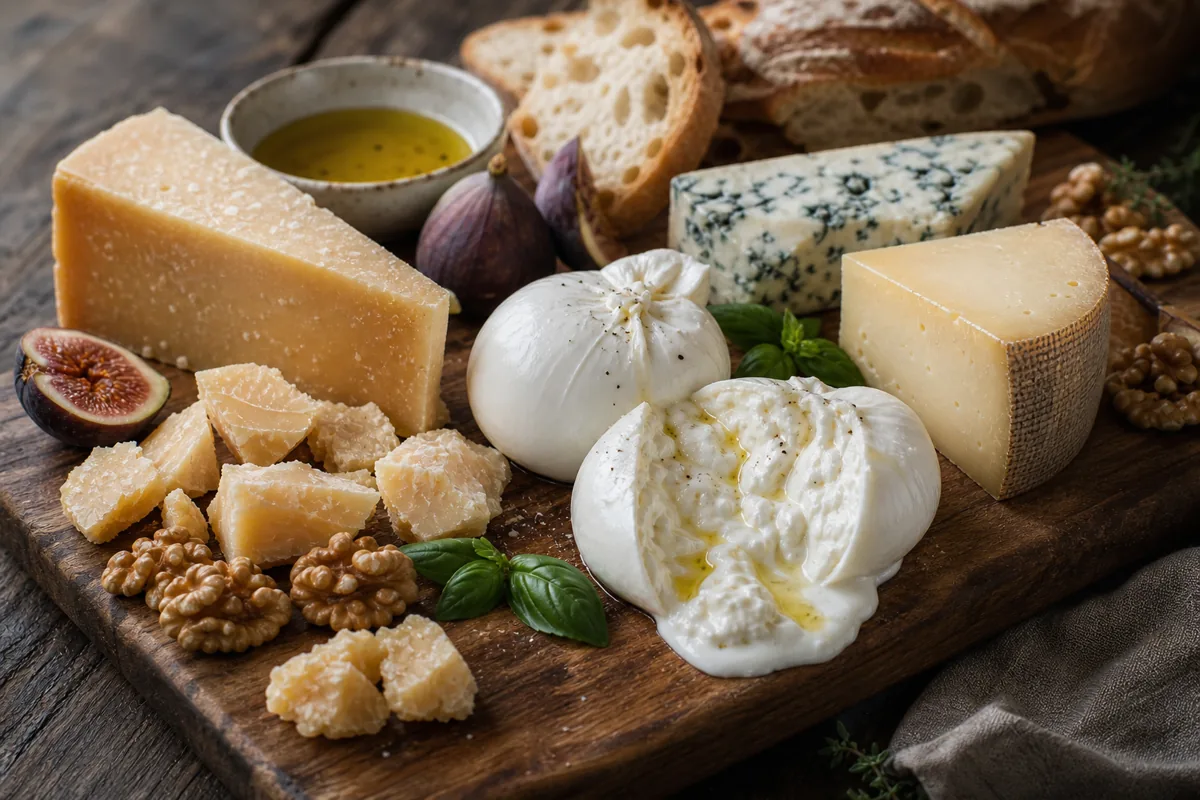
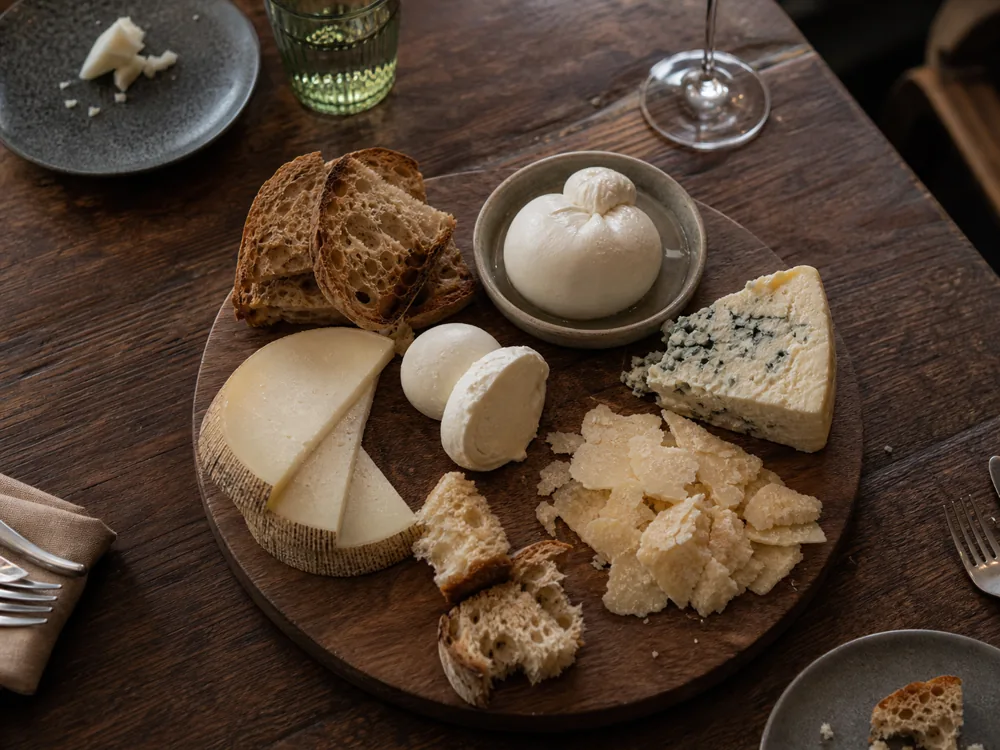
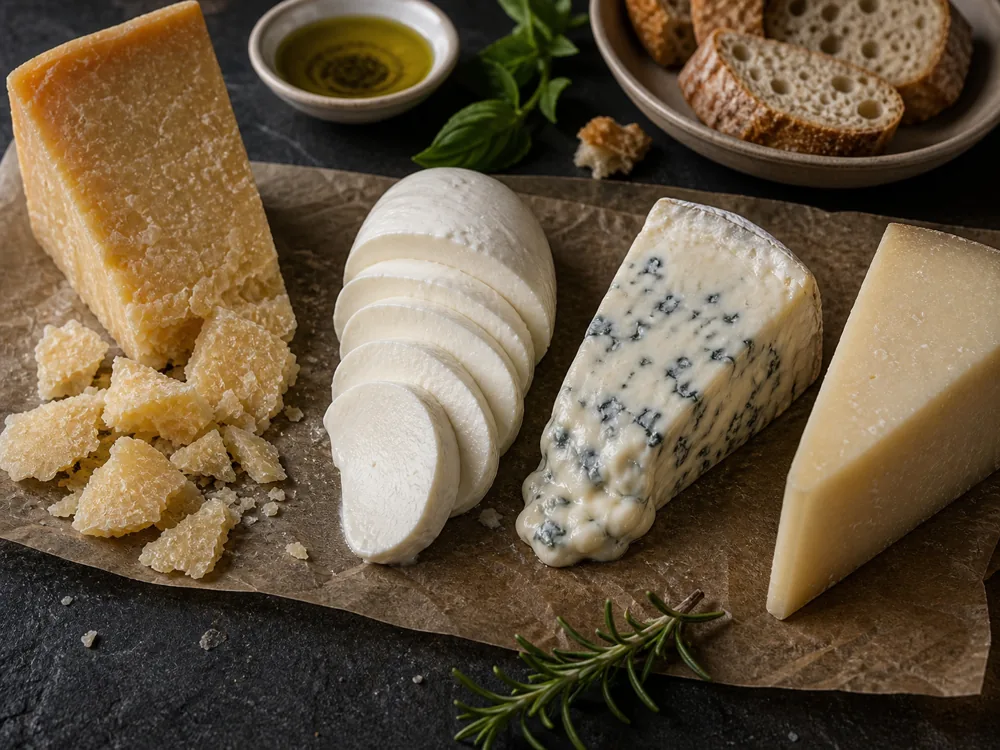
For a first selection, try one fresh cheese, one firm aged cheese and one blue or melting cheese. Mozzarella, Parmigiano Reggiano and Gorgonzola show more variety than three similar hard wedges.
In This Article
Where Do Italian Cheeses Come From?
Protected cheese areas do not always follow the boundaries of one modern region. Parmigiano Reggiano crosses into Lombardy, for example, and Mozzarella di Bufala Campana is made in defined areas of four regions.
| Cheese | Protected production area | What to look for |
|---|---|---|
| Fontina DOP | Valle d'Aosta in northwest Italy | A supple cow's-milk cheese for slices or melted dishes, including local fonduta. |
| Gorgonzola DOP | Specified areas of Piedmont and Lombardy | Dolce for a softer, creamier blue. Piccante for a firmer, more assertive wedge. |
| Parmigiano Reggiano DOP | Parma, Reggio Emilia and Modena, plus Bologna left of the Reno and Mantua right of the Po | A hard cow's-milk cheese aged at least 12 months. Ask the age when comparing wedges. |
| Pecorino Toscano DOP | Tuscany and specified municipalities in Lazio and Umbria | Sheep's-milk cheese sold fresh or aged. The fresh version is mild and soft, rather than a sharp grating cheese. |
| Mozzarella di Bufala Campana DOP | Defined areas in Campania, Lazio, Puglia and Molise | Fresh stretched-curd cheese made from buffalo milk. Check the full protected name on the package. |
This is a starting selection, rather than a complete list of Italy's cheeses.
Within it, the biggest contrast is between moisture-rich fresh mozzarella and the long-aged, granular structure of Parmigiano Reggiano.
Which Other Italian Cheeses Can You Explore?
The list below links Italian cheeses that have their own profile here. Type a name, or pick a milk or style, to narrow it to a shopping list.
43 cheese profiles
- Alpe di Frabosa
- Asiago
- Basajo
- Bel Paese
- Bella Lodi
- Bocconcini
- Bra PDO
- Burrata
- Cacio de Roma
- Cacio di Bosco al Tartufo
- Caciobarricato
- Caciobirraio
- Caciobufala
- Caciocavallo Cheese
- Caciocavallo di Bufala
- Caciocavallo Podolico Vetus
- Cacioradicchio
- Caciotta
- Caciotta al Tartufo
- Canestrato
- Castelmagno
- Casu marzu
- Crucolo
- Dolcelatte
- Fontina
- Gorgonzola DOP
- Grana Padano
- La Tur
- Manteca
- Mascarpone
- Montasio
- Mozzarella
- Parmesan and Parmigiano-Reggiano
- Parmigiano-Reggiano
- Pecorino Crotonese
- Pecorino Romano
- Pecorino Toscano
- Pepato
- Provolone
- Ricotta Salata
- Robiola
- Scamorza
- Stracciatella
What Does DOP Tell You?
DOP is the Italian abbreviation for protected designation of origin, called PDO in English. Under the EU scheme, all stages of production take place in the defined area, following the registered specification.
The full name matters. A packet marked mozzarella does not by itself identify Mozzarella di Bufala Campana DOP, and the word pecorino describes sheep's-milk cheese without identifying one particular protected variety.
A PDO label answers a question about origin and production rules.
It does not tell you that every cheese carrying it will suit the same recipe or your preferred level of maturity.
Gorgonzola makes this distinction easy to see: Dolce and Piccante share the protected name, but their texture and strength differ.
Ask for Dolce if you want a creamy blue to spread, or Piccante if you want a firmer piece to crumble.
Which Italian Cheese Fits Your Dish?
For pasta and vegetables: Parmigiano Reggiano can be grated finely or shaved into larger pieces.
It also works as a table cheese, so a wedge can serve both dinner and a cheese board.
Grana Padano is another protected hard grating cheese, with a minimum maturation of nine months.
Compare the stated ages and prices of the actual wedges instead of assuming every grana has the same flavour or that the older option is always necessary.
For pizza: fresh mozzarella and low-moisture mozzarella need different handling. Fresh cheese carries more water, so drain excess packing liquid and consider the recipe's topping quantity and baking method.
There is no single draining time that fits every ball, cut size and oven.
Low-moisture mozzarella is a practical option when you want less added liquid, while fresh mozzarella remains useful for pizzas designed around it.
For a fresh plate: mozzarella can be sliced with tomatoes or vegetables.
Burrata has a mozzarella pouch surrounding shreds of cheese and cream, so opening it releases a soft filling rather than neat slices.
Burrata can also go on pizza or warm dishes. Adding it at the end keeps that filling more distinct, but heating it is a recipe choice, not a prohibition.
For a melted dish: Fontina can go into sandwiches, toast or fonduta.
The Fontina consortium describes the Aosta Valley version of fonduta with Fontina, milk, butter and eggs, so follow a recipe for that dish rather than treating it as an interchangeable cheese sauce.
For a mild board cheese: fresh Pecorino Toscano is worth asking for. Its minimum maturation is 20 days, and the consortium describes a milky character that differs from the stronger taste many shoppers expect from the word pecorino.
A cheese's origin alone cannot tell you how a sauce or pizza will turn out. Moisture and maturity also affect how cheese melts, alongside the heat and liquid in the recipe.
What to Check at the Cheese Counter
Start with the exact name, milk type and age or version. Those details distinguish buffalo mozzarella from other mozzarella, fresh Pecorino Toscano from aged pecorino, and Gorgonzola Dolce from Piccante.
Then compare the price per weight and the amount you will use. A smaller piece of an aged cheese may be a better purchase for occasional grating than a large wedge you will struggle to finish.
For packaged fresh cheese, read the storage and after-opening instructions before buying.
Keep the label until you have finished the cheese, since a retailer's instruction for one product should not become a rule for every Italian variety.
Good cheese storage starts with refrigeration and attention to spoilage.
Neither a DOP mark nor a pleasant smell is a guarantee that mishandled cheese is safe.