Spain's cheese tradition is far older and broader than Manchego alone, though Manchego is the only Spanish cheese most people outside Spain know by name. Twenty-eight DO-protected cheeses span the peninsula from the lush green pastures of Galicia and the Basque Country in the north to the dry plateau of La Mancha and the island of Minorca in the Mediterranean.
The range of milk types sets Spain apart from its European neighbors. While France and Switzerland rely primarily on cow’s and goat’s milk, and Italy adds buffalo, Spain has strong traditions in all three - plus a significant history of mixed-milk cheeses that blend two or three types in a single wheel. The full regional cheese picture across Europe shows that Spain's multi-milk tradition is one of the most distinctive.
This guide covers Spain's five main cheese-producing territories, their flagship DO cheeses, the terroir factors that shape flavor, and practical guidance for buying Spanish imports. For a broader view, the full regional cheese map covers every European tradition.
Spain's DO system (Denominación de Origen) predates the EU's PDO framework and follows the same legal logic: a production specification that ties a cheese's identity to a defined geographic zone, specific animal breeds, and traditional methods. Spanish DO cheeses receive EU PDO recognition in export markets, though the domestic designation remains DO.
In This Article
La Mancha and Castile: The Sheep's Milk Plateau
The high central plateau of Spain, known as the Meseta, is the home of the country's most internationally recognized cheese and its most extensive sheep-farming tradition. The Manchega sheep, native to the dry scrubland of Castilla-La Mancha, produces rich, high-fat milk in conditions that would challenge most dairy breeds. Hot summers, cold winters, and sparse vegetation define the landscape and the cheese it produces.
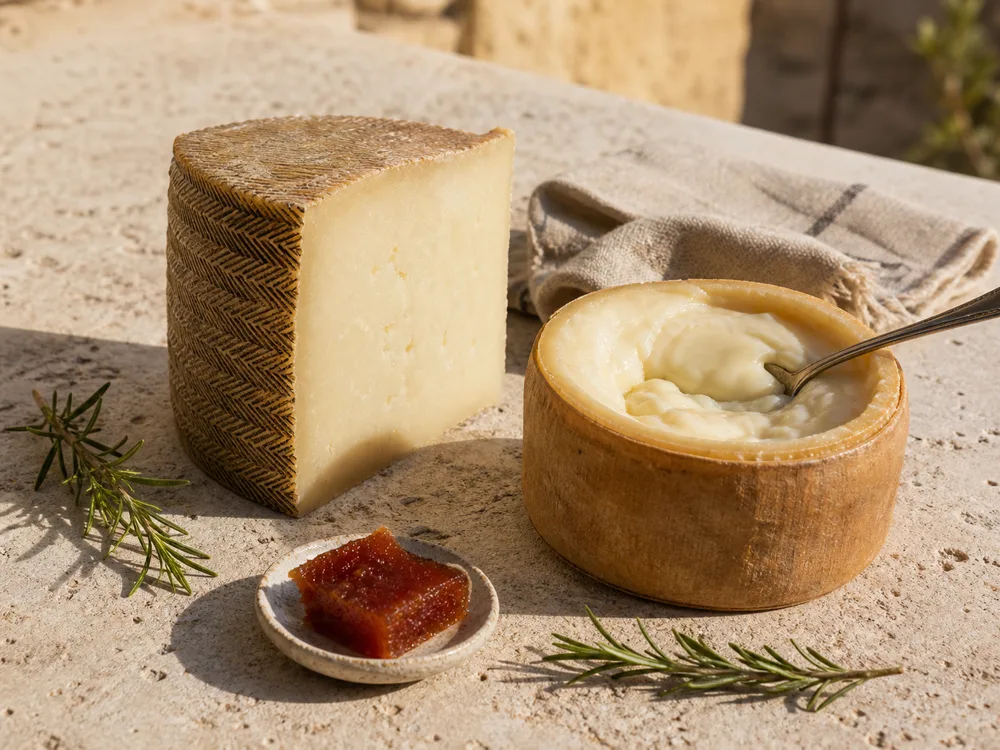
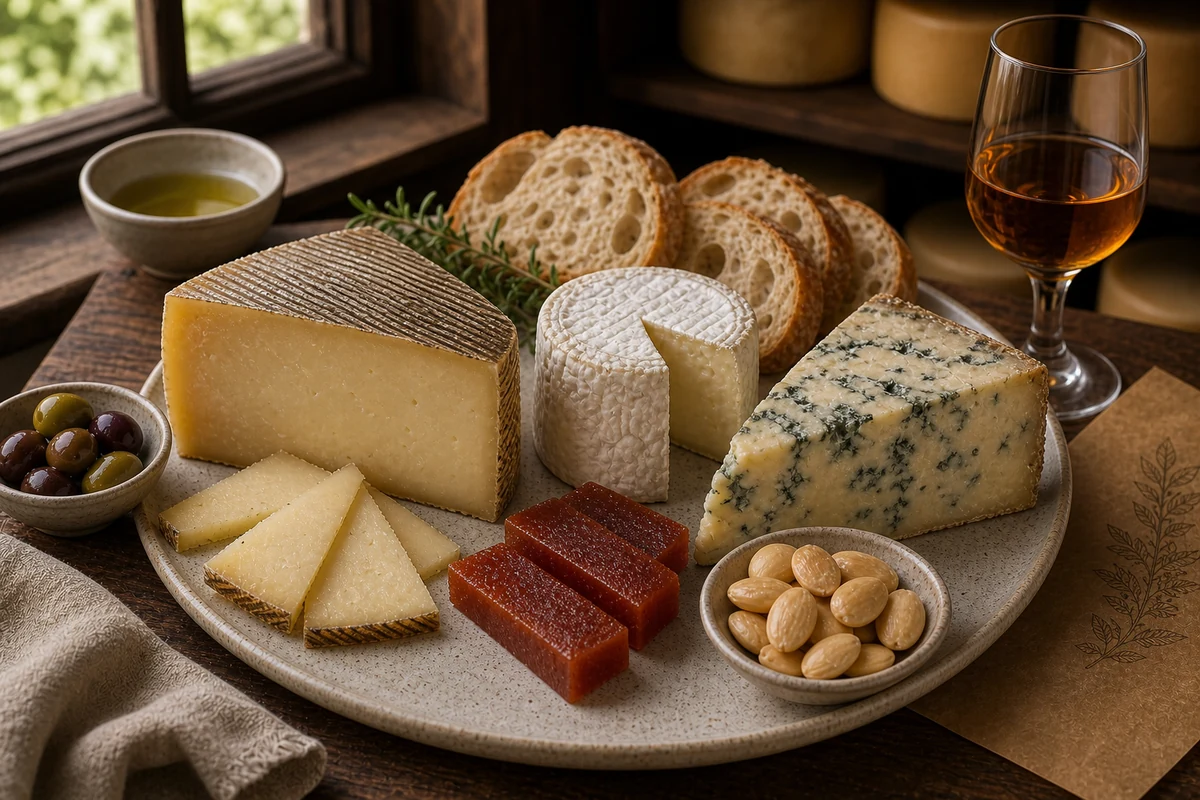
Queso Manchego DO is Spain's flagship. It carries four aging stages from Fresco (soft and mild at 2 weeks) through Semicurado (2-3 months), Curado (3-6 months), and Viejo (12+ months). The DO requires milk exclusively from Manchega sheep, and the production zone covers the provinces of Albacete, Ciudad Real, Cuenca, and Toledo. The distinctive crosshatch rind pattern comes from the esparto grass molds (pleita) used historically and replicated in modern production.
- Queso Manchego DO: four aging stages, Manchega sheep only, crosshatch rind, Spain's most exported cheese
- Queso Zamorano DO: raw sheep's milk from Zamora province, harder and more intense than Manchego, cylindrical wheel with pleita pattern
- Queso Ibores DO: raw goat's milk from Extremadura, rubbed with olive oil and paprika during aging, brick-red exterior
- Torta del Casar DO: raw Merino sheep's milk, semi-liquid paste at peak ripeness, eaten by cutting off the top and spooning out the interior
Torta del Casar is Spain's most dramatic cheese. Made from raw Merino sheep's milk in Extremadura, it uses cardoon thistle (Cynara cardunculus) as the coagulant instead of animal rennet, a pre-Roman technique still practiced in the region. The vegetable rennet produces a different proteolysis pattern that breaks down proteins more aggressively, resulting in the liquid, almost runny paste at peak ripeness. The flavor is intensely savory, slightly bitter, and profoundly rich. It rewards the same bold wine approach explored in our cheese and wine pairing guides.
When buying Torta del Casar, look for a wheel that gives slightly to pressure all the way to the center. A hard center means it has not yet developed the liquid interior. If it is fully liquid but smells strongly ammoniated, it is past peak. The optimal window is short - ask your cheesemonger when the wheel was cut or opened.
The Basque Country and Navarre: Smoked Alpine Tradition
The Basque Country (Euskadi) and neighboring Navarre sit in northern Spain against the Pyrenees. The climate here is Atlantic in the west and more continental inland. The Basque cheese tradition centers on sheep's milk from the Latxa and Carranzana breeds, hardy mountain sheep that graze the Pyrenean foothills and produce rich, intensely flavored milk.
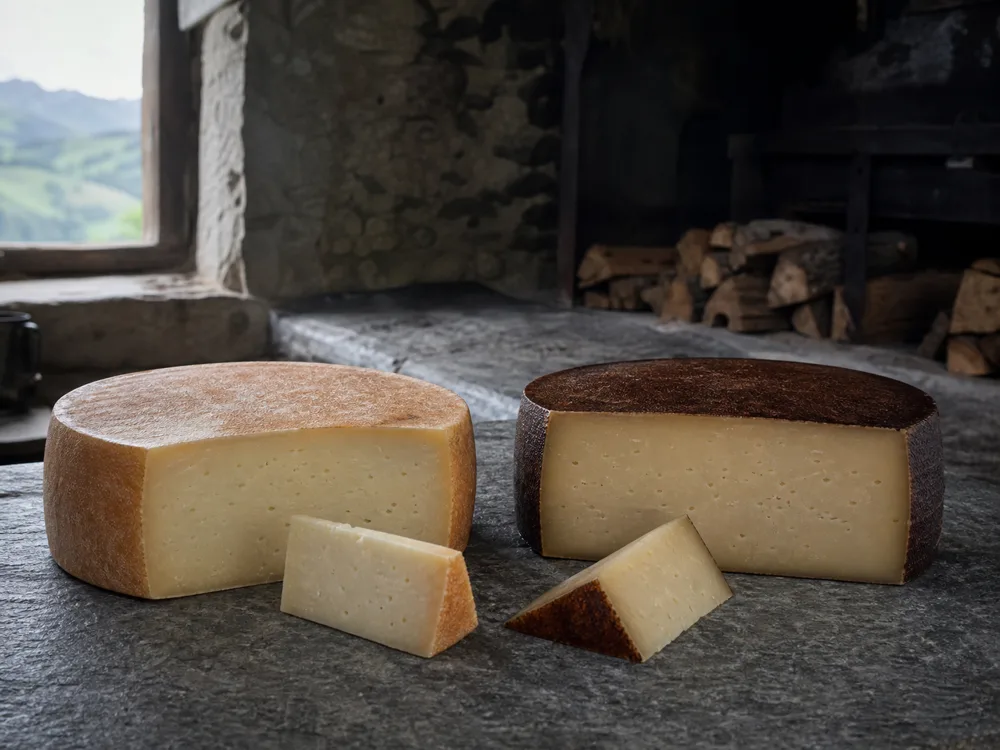
Idiazabal DO is the Basque Country's flagship cheese and one of Spain's most distinctive. It is a raw sheep's milk pressed-curd wheel aged a minimum of 60 days. What sets Idiazabal apart from other Spanish sheep's milk cheeses is the option of cold smoking: many producers smoke the wheels over cherry wood, beech, or cherry blossom, creating a dark brown rind and a subtle smokiness that penetrates slightly into the paste near the rind.
- Idiazabal DO: raw Latxa or Carranzana sheep's milk, smoked or unsmoked, firm paste, intense savory flavor with slight smokiness in smoked versions
- Roncal DO: Spain's first DO cheese (1981), raw Lacha or Rasa sheep's milk from the Roncal valley in Navarre, minimum 4 months, hard and sharp
- Queso de los Beyos** - semi-hard cow's and goat's milk mountain cheese from Asturias, small production, rarely exported
The Latxa sheep breed is genetically distinct from the Manchega and produces milk with a higher casein-to-fat ratio. This composition affects how the curd sets and how the aged cheese develops protein crystals. Aged Idiazabal at 6+ months shows small crystalline deposits similar to aged Manchego Viejo, but the overall flavor profile is more mineral and herbal from the Pyrenean pasture vegetation.
Idiazabal DO comes in two clearly different products: smoked (ahumado) and unsmoked (natural). The two versions are not interchangeable in cooking. Smoked Idiazabal adds a wood-smoke dimension to pintxos and salads. Unsmoked Idiazabal is the correct choice for dishes where a clean sheep's milk flavor is wanted without the smoke overlay. Both are sold under the same DO designation.
Galicia and Asturias: Cow's Milk and the Atlantic North
The northwest corner of Spain, comprising Galicia and Asturias, is climatically and culturally distinct from the rest of the country. Atlantic rainfall, lush green pastures, and a dairy culture shaped by Celtic heritage produce Spain's freshest and most delicate cheeses. Galicia's terrain resembles Ireland more than La Mancha: rolling hills, frequent rain, and year-round grass growth that supports high-producing dairy herds.
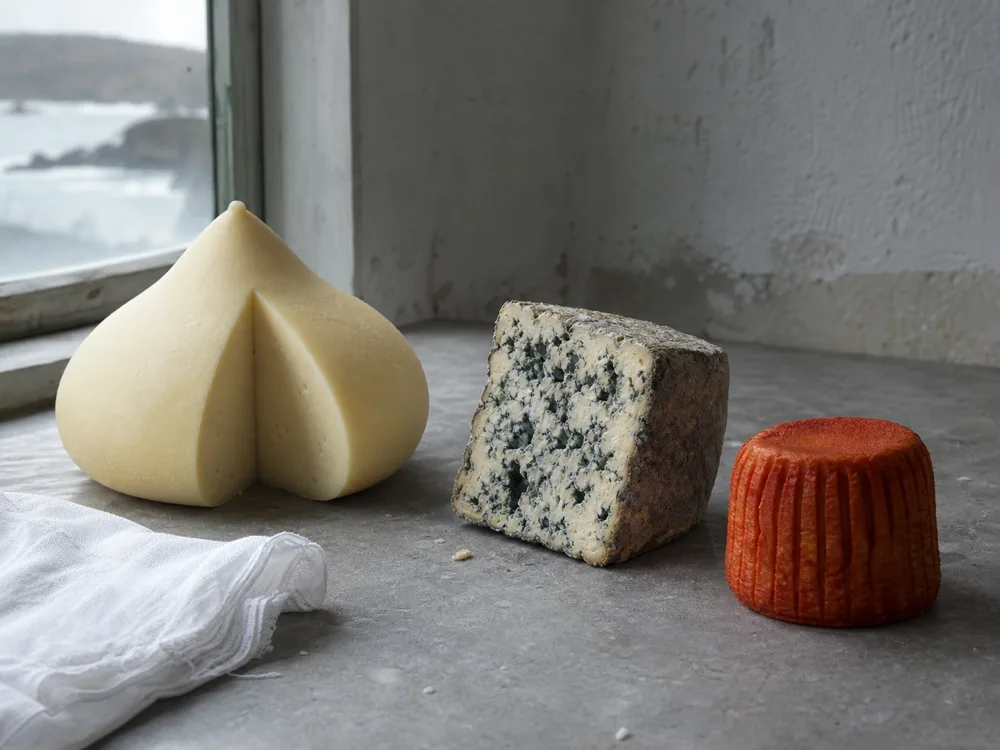
Tetilla DO is Galicia's most recognizable cheese, named for its breast-shaped form. It is a young, soft, mild cow's milk cheese eaten within weeks of production. The flavor is clean, buttery, and slightly acidic, with a semi-soft texture that melts easily when heated. Tetilla is the everyday table cheese of Galicia, served at nearly every meal in the region, sliced and eaten with bread or grilled until soft.
- Tetilla DO: young, semi-soft, mild cow's milk, distinctive teardrop shape, Galicia's everyday cheese
- Arzúa-Ulloa DO: soft, lactic, slightly acidic, flat disc shape, eaten very fresh (7-15 days) or semi-cured (30+ days)
- San Simón da Costa DO: smoked with birch wood, pear-shaped, firm texture, mild smokiness, amber-brown rind
- Queso Nata de Cantabria DO: soft, high-fat, buttery, creamy paste from Cantabria's Atlantic coast dairy herds
Asturias, east of Galicia, is Spain's blue cheese heartland. The province contains over 40 local cheese varieties, more than any other single Spanish region, and its most famous cheese uses the natural cave systems of the Picos de Europa mountains. Cabrales DO is a raw milk blue made from a mixture of cow's, sheep's, and goat's milk, aged in natural caves where the cool, humid conditions foster Penicillium mold development without needling. The same fungal process shapes cave-aged blue wheels across Europe. The natural cave environment, not inoculation, drives the blueing in Cabrales.
- Cabrales DO: raw mixed milk (cow, sheep, goat), cave-aged in Picos de Europa, no needling, very sharp and pungent, among Spain's strongest cheeses
- Gamonéu DO: lightly smoked, partially blue, raw milk, semi-hard to hard, more restrained than Cabrales
- Afuega'l Pitu DO: soft, slightly sour, can be plain or seasoned with paprika; one of Asturias's oldest named cheeses
Catalonia, Minorca, and Mediterranean Spain
The eastern Mediterranean coast and its islands produce Spain's most geographically isolated cheese traditions. Minorca (Menorca), the smaller Balearic Island, makes one of Spain's most storied cheeses. The Canary Islands off the African coast produce a distinctive goat's milk wheel with an unusual production quirk. And Catalonia, despite being Spain's most economically developed region, maintains a strong tradition of fresh artisan cheeses rarely seen outside the region.
Mahón-Menorca DO from the island of Minorca is a cow's milk pressed-curd wheel notable for its square corners, a shape that developed because wheels were historically pressed wrapped in cloth (fogasser) that created the distinctive pillow-like rectangular form. The cheese ages from Tierno (tender, 2 months) through Semi-Curado (3 months) to Curado (5+ months) and Añejo (10+ months). The island's salty sea winds and limestone-rich pasture give Mahón a slightly briny, mineral character at all aging stages.
- Mahón-Menorca DO: cow's milk, square corners from cloth pressing, four aging stages, slightly briny and mineral
- Formatge de Mahó** - generic term for Minorcan cheese; only Mahón-Menorca DO carries production guarantees
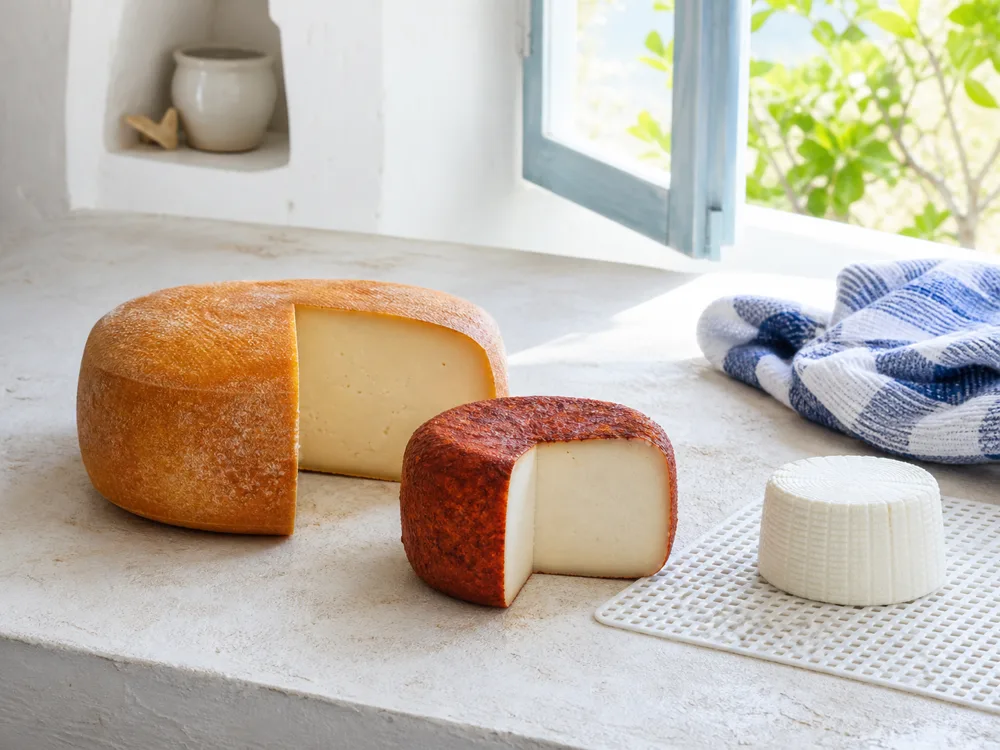
- Queso Majorero DO: raw goat’s milk from Fuerteventura in the Canary Islands, rubbed with paprika, gofio (toasted grain flour), or olive oil during aging
- Queso Palmero DO: smoked goat's milk cheese from La Palma island, cylindrical, firm, the most widely produced Canary Islands cheese
Majorero from Fuerteventura is made from the Majorera goat breed, native to the volcanic island and adapted to its near-desert climate. The breed produces milk with a specific fatty acid profile from browsing on dry scrubland plants. The rubbing of the rind with paprika or gofio during aging adds a layer of flavor complexity unique to this style. Majorero is one of the few Spanish goat's milk cheeses regularly available in US specialty shops.
Buying Spanish Cheese Imports: What to Know
Spanish cheese exports have grown significantly over the past decade, driven primarily by Manchego's global popularity. The growth in demand also brought a wave of imitation product. "Spanish-style" sheep's milk cheese made in the US, Argentina, and Australia fills supermarket shelves at lower price points. Some is labeled Manchego without any DO certification, which is legal in some non-EU markets.
The only protection against imitation is knowing the certification marks. Our cheese substitute guides cover backup options when specific varieties are unavailable. Every authentic Manchego DO wheel carries the Consejo Regulador's embossed casein plaque with a serial number. The plaque is embedded in the rind during production and cannot be added afterward. A wheel without this plaque is not certified Manchego DO regardless of what the label says.
The best Spanish cheese shops in the US typically specialize in Iberian foods broadly - Spanish wines, jamón, olive oils, and cheeses together. These shops maintain cold chain discipline and turn their inventory faster than a general cheese counter that stocks one Spanish cheese alongside dozens of French and Italian options. For rare types like Torta del Casar, Cabrales, and aged Zamorano, an online Spanish specialty importer is often the most reliable source outside major cities.
Spanish Cheese FAQ
These are the questions we hear most about Spanish cheese regions, DO certification, and how to identify authentic Spanish imports.
Spain has 28 DO-certified cheeses as of 2023, overseen by the Spanish Ministry of Agriculture (MAPA). Each DO has its own Consejo Regulador that sets standards and certifies production. The number has grown from fewer than 10 in the 1980s as regional cheese traditions gained official recognition. Spain's DO cheeses receive EU PDO status for export, meaning they are protected under European law in countries that recognize geographic indications.
Three things make Manchego legally distinct: the Manchega sheep breed, the La Mancha plateau production zone, and the Consejo Regulador certification with the numbered casein plaque. Other Spanish sheep's milk cheeses like Zamorano and Roncal use different breeds (Churra, Lacha) in different zones and produce genuinely different flavor profiles. Manchego's Manchega sheep milk is higher in fat and protein than most sheep breeds, producing the dense, compact paste and distinctive tangy-nutty flavor. The crosshatch pleita rind pattern is a visual identifier but not the legal certification marker - only the casein plaque confirms DO status.
Cabrales DO is a raw mixed-milk blue cheese aged in the natural caves of the Picos de Europa in Asturias. Its intensity comes from three factors: raw milk, which preserves native bacteria and enzymes that accelerate flavor development; a mixture of cow's, sheep's, and goat's milk, which adds complexity from three different fatty acid profiles; and natural cave aging without needling, where the mold distributes irregularly through natural fissures in the paste rather than through artificial holes. The result is one of Europe's most pungent blue cheeses - sharper and saltier than Roquefort, less creamy than Gorgonzola Dolce, with a more aggressive lactic sharpness.
Curado ages 3-6 months and has a firm, compact paste with a nutty, tangy, slightly caramel flavor. It grates well and is the most versatile cooking and eating stage. Viejo ages 12+ months and develops a hard, crumbly texture with intense sharpness, pepper notes, and heavy crystalline deposits throughout the paste. Viejo is primarily a board cheese or finishing cheese - too assertive for most cooking applications and considerably more expensive because of the aging time and moisture loss. For most uses, Curado is the right choice. Viejo is for when you want Manchego at its most concentrated and complex.
In the US, the best sources are Spanish specialty food importers, dedicated cheese shops with good Iberian programs, and online retailers specializing in Spanish foods. Manchego is widely available in better supermarkets, but verify the DO seal and casein plaque. Cabrales, Torta del Casar, Idiazabal, and Roncal are less common and typically require a specialty shop or online importer. In the UK, Spanish DO cheeses are more widely distributed through supermarket chains with European cheese programs. Always check for the DO logo and the relevant Consejo Regulador mark rather than relying on general "imported from Spain" labeling.