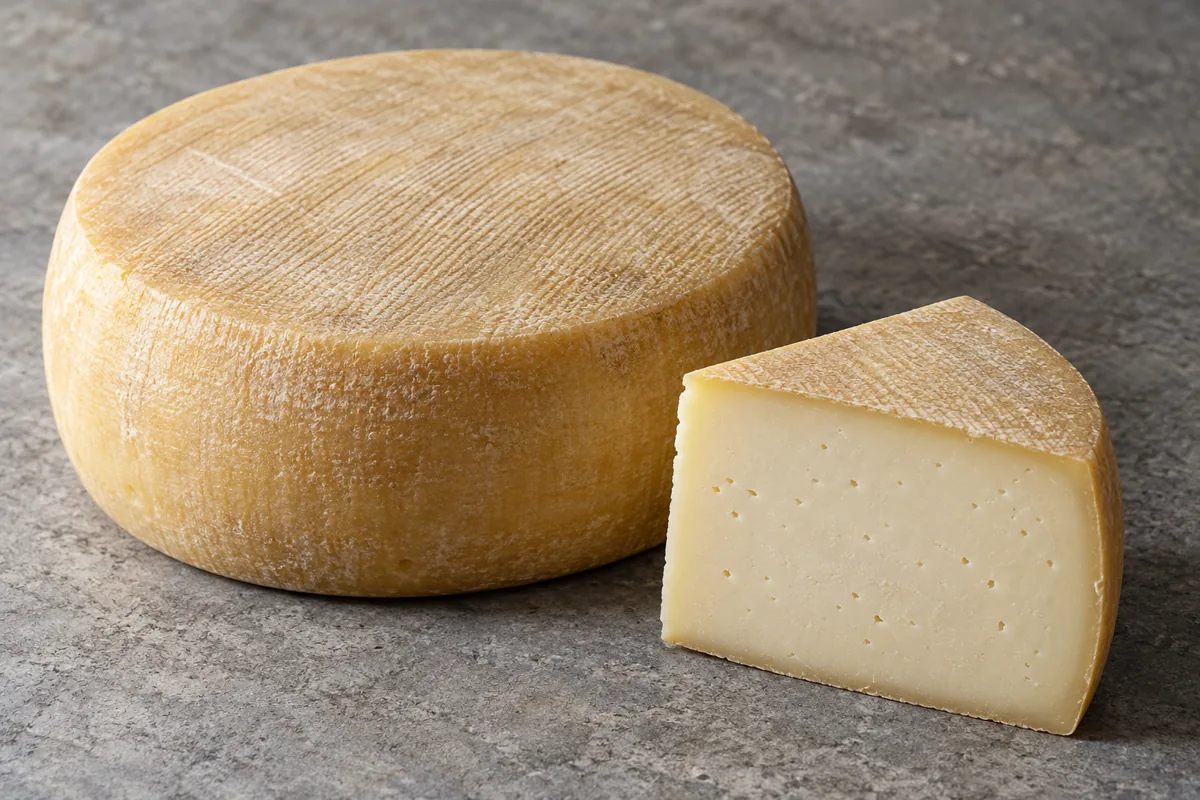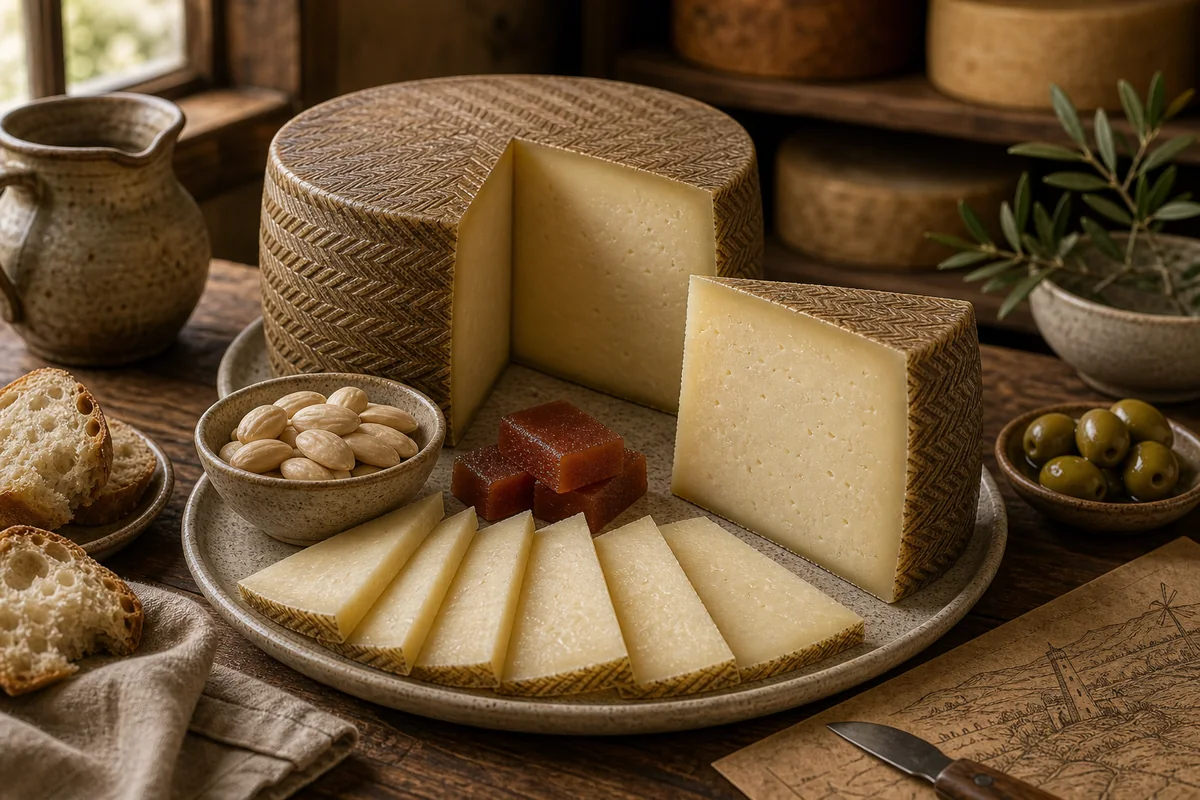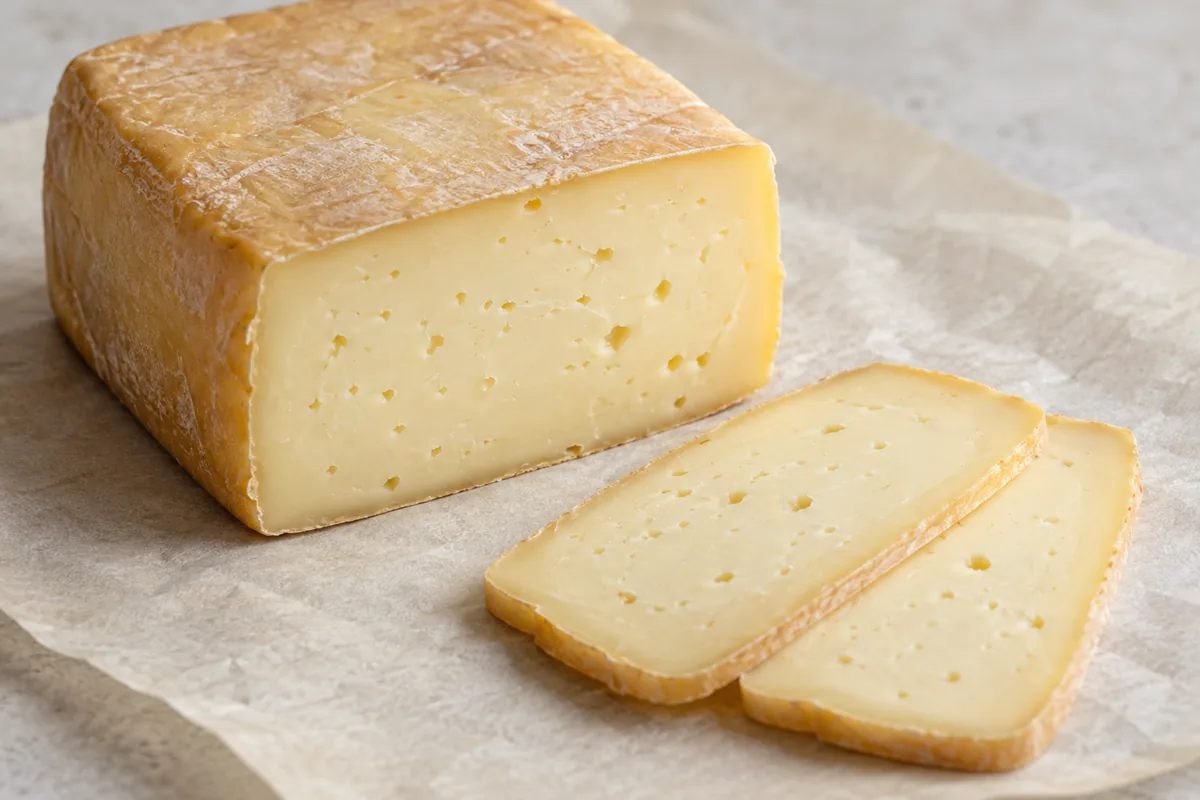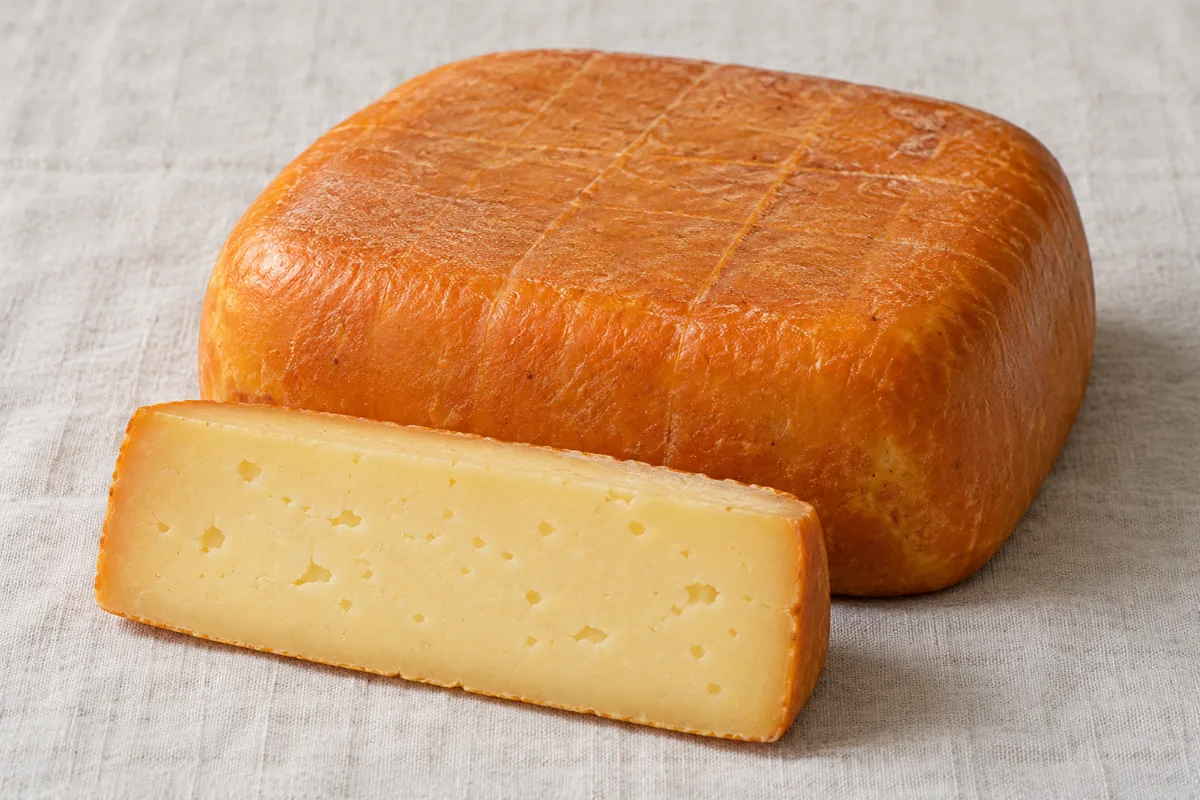
Mahón-Menorca is a pressed cheese made from cow's milk on the island of Menorca, in the Balearic Islands of Spain, and shaped as a square block with rounded corners.
Its protected rules sort it two ways. By milk, it is either raw-milk Artesano or standard Mahón-Menorca made from treated milk; by age, it is Semicurado under 150 days and Curado beyond that.
In This Article
What Makes a Cheese Mahón-Menorca?
The name is a Protected Designation of Origin. The EU single document published in 2018 requires the milk to be produced, and the cheese made and matured, on Menorca.
The milk is whole milk from Friesian, Mahonesa or Menorquina, and Brown Alpine cows. Producers may add milk from Menorquina sheep, up to 5 parts per 100.
Culture magazine says Mahón was first made from the milk of the island's native sheep, and that producers switched to cow's milk after an 18th-century British occupation brought Friesian cattle to Menorca.
At least 70 percent of the fodder the herds eat must be grown on the island. The specification explains why the rule stops short of 100 percent: uneven rainfall and the strong tramontana wind make it difficult to guarantee in every season.
The finished cheese holds at least 38 percent fat in dry matter. Its body is firm, stays intact when cut and is ivory yellow.
The name itself comes from the port of Mahón. The Regulatory Council says Menorcan cheese was already an important export in the 13th century, and that the period of British domination gave it a considerable boost and the name Mahon, after the port where it was shipped.
The Regulatory Council dates the Designation of Origin to 1985, and in 1997 the protected name was extended to Mahón-Menorca.
Under the 2018 specification, a label must read Queso Mahón-Menorca and carry the PDO logo and a control number. The same amendment lets producers print the logo on their own label, where before it came on a separate numbered label issued by the Regulatory Council.
How Does Menorca's Land Shape the Milk?
The EU specification describes the natural grasslands as dense, tall grass on land that used to be farmed for crops, where grasses and legumes with high grazing value dominate. The main fodder crops are sulla, barley, oats, maize, clover and ryegrass.
The herds graze these pastures usually from November to May. In April and May, surplus fodder is turned into silage or hay for the months when pasture is scarce, and concentrates and by-products supplement it.
Rainfall averages a little over 600 mm a year, and the humid air near the sea leaves abundant dew. The specification says that is enough grazing to feed almost 20,000 cattle, about 15,000 of them dairy cows.
Farms are family holdings called llocs, and an estimated 15,000 km of stone walls divide the land into enclosures called tanques, which makes it easier to ration grazing and cuts the labour of tending the herd.
Wikipedia and Culture magazine both put the number of farms at about 600, and Culture adds that some farms make their own cheese while others sell their milk to other producers or cooperatives.
The specification links all of this to the cheese: milk from animals fed mainly on this fodder gives the cheese its typical chemical and sensory character. The Regulatory Council adds the wind, humidity and light of Menorca, and Rogers Collection says the sea winds, heavy rainfall and humidity give the milk a high acidity and a touch of saltiness.
Those are the Regulatory Council's own statements, in its EU application and on its website, plus an importer's, and none of them reports a measurement of what the grass does to the milk.
How Does the Fogasser Shape Artesano Mahón?
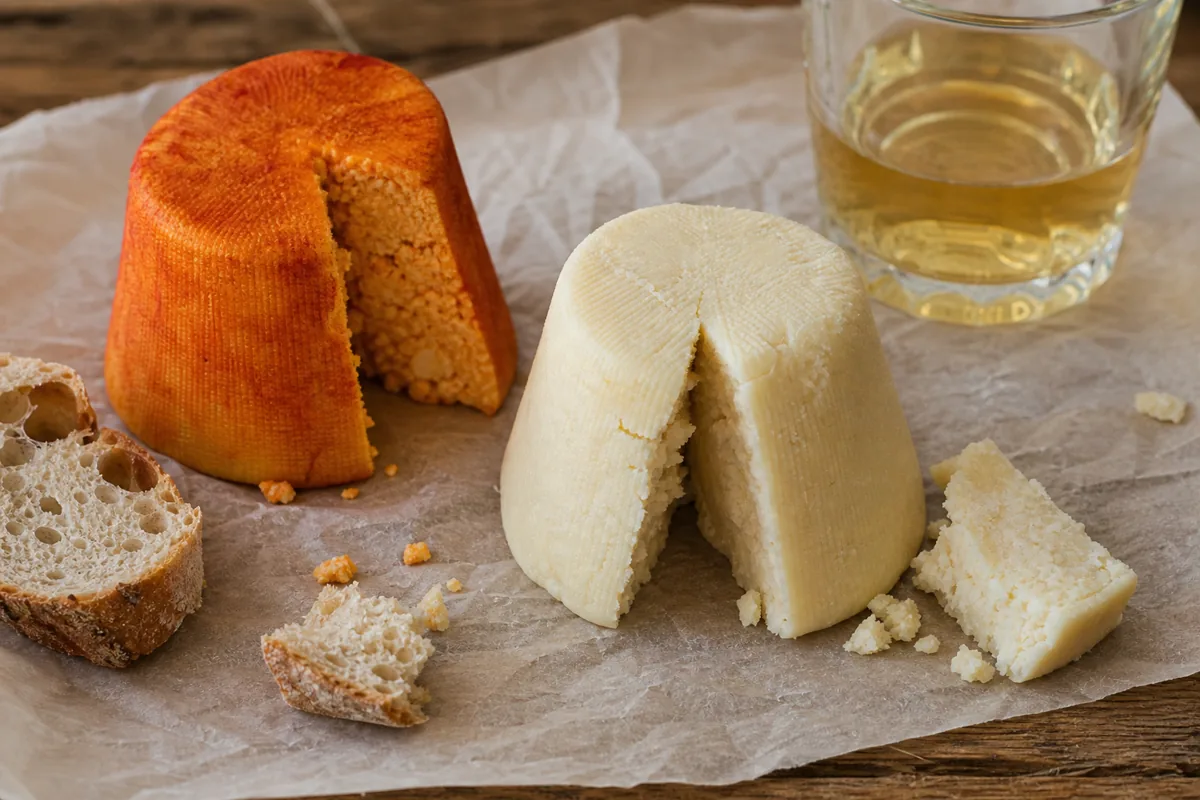
The square shape comes from the fogasser, a square cotton cloth. For Artesano, the Regulatory Council says the curd is bagged in the cloth and hung from its four corners, then set on a table while the whey drains off.
The curd is pressed by hand and tied with a string called the lligam before it goes into a press.
When it comes out, the folds of the cloth and the string leave a raised pattern on the top face called the mamella. The EU specification lists these fold marks on the upper surface of artisanal cheeses.
Culture magazine says artisanal Mahón comes out pillow-shaped, because the cloth is knotted at the corners and that rounds the edges.
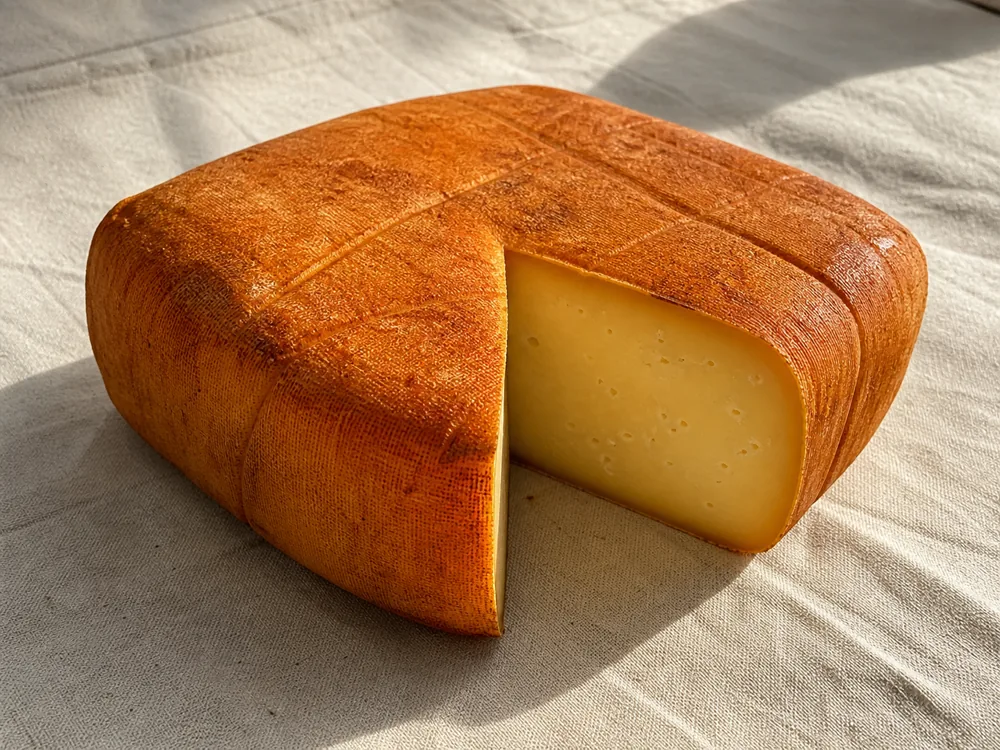
Next the cheese goes into brine, then into ventilated rooms where it airs and a surface flora starts to grow. In the maturing cellars it is turned and smeared at intervals with olive oil or oil mixed with paprika, which gives the rind its orange colour.
Culture magazine says the brining is what allows the rind to develop before the cheese is aged in the maturing rooms.
The EU specification adds butter to the list of rubs and says the treatment, repeated several times, stops the rind from drying out abruptly. Culture magazine describes the rub as a blend of olive oil, butter and paprika that turns the rind red-orange.
Standard Mahón-Menorca follows the same basic steps with two differences, according to the Regulatory Council: the milk can be pasteurised, and producers can use moulds to give the cheese its square shape.
| Mahón-Menorca Artesano | Mahón-Menorca |
|---|---|
| Made in artisanal dairies from raw milk from the farm itself | Made in industrial dairies from milk given some form of process or preservation method |
| Shaped in the fogasser cloth | Moulds may be used |
| Fold marks from the cloth on the top face | No fold marks required |
| At least 60 days, then sold as semicurado or curado | No minimum set; sold as semicurado or curado |
Vegetarians should expect animal rennet. Culture magazine lists it for Mahón, and Cheese.com marks the cheese as not vegetarian.
How Big Is a Mahón Wheel?
Wikipedia lists a block of 20 cm by 20 cm by 9 cm weighing 2 to 3 kg, and Culture magazine gives 8 inches square, 2 to 3 inches high and 5 to 6 pounds, roughly 2.3 to 2.7 kg.
Importer Rogers Collection sells its Quintana Mahón in 5-pound sizes, so all three describe a wheel from the middle of the specification's weight range.
The EU document records that the minimum weight used to be 1 kg and was lowered to 0.6 kg because of growing demand for smaller cheeses. Cheeses between 0.6 and 1 kg must still meet every other characteristic in the specification.
The Regulatory Council's application cites a study by the Department of Chemistry at the University of the Balearic Islands on registered cheeses of 0.6 to 1 kg, which checked raw materials, production conditions and maturation.
The study found no difference in aroma, texture or flavour from the larger PDO cheeses, and a similar degree of maturity judged by average moisture content, so the Council concluded that lowering the minimum would not affect the specified characteristics.
Semicurado or Curado: How Long Is Each Aged?
The EU specification draws one line. Mahón-Menorca matured for less than 150 days is semicurado, anything older is curado, and Artesano must mature for at least 60 days.
The Regulatory Council's own site uses three steps instead: a young soft cheese from 21 days, semi-cured from 60 days and cured from 150 days.
By the EU wording, everything matured under 150 days falls under semicurado, a band that on a standard Mahón-Menorca, which has no minimum age, runs from the Council's 21-day soft stage to just short of five months.
| Source | Youngest | Semicurado or middle age | Curado or oldest |
|---|---|---|---|
| EU single document (2018) | Not set; Artesano at least 60 days | Under 150 days | Over 150 days |
| Regulatory Council | Soft, from 21 days | From 60 days | From 150 days |
| Rogers Collection (one raw-milk cheese it imports) | Not given | 3 to 4 months | 8 to 9 months |
| Cheese.com | Sold from 2 months | Artesano up to 5 months | Reserva up to 12 months |
| Culture magazine | Semi-aged at 2 months | Not given | Very old at 10 months |
| English Wikipedia | 3 weeks | Not given | 2 years or longer |
English Wikipedia also uses artesà for young Mahón aged no longer than three months. That clashes with the specification, where Artesano names the raw-milk type and comes as either semicurado or curado.
How Do Mahón's Rind and Paste Change With Age?
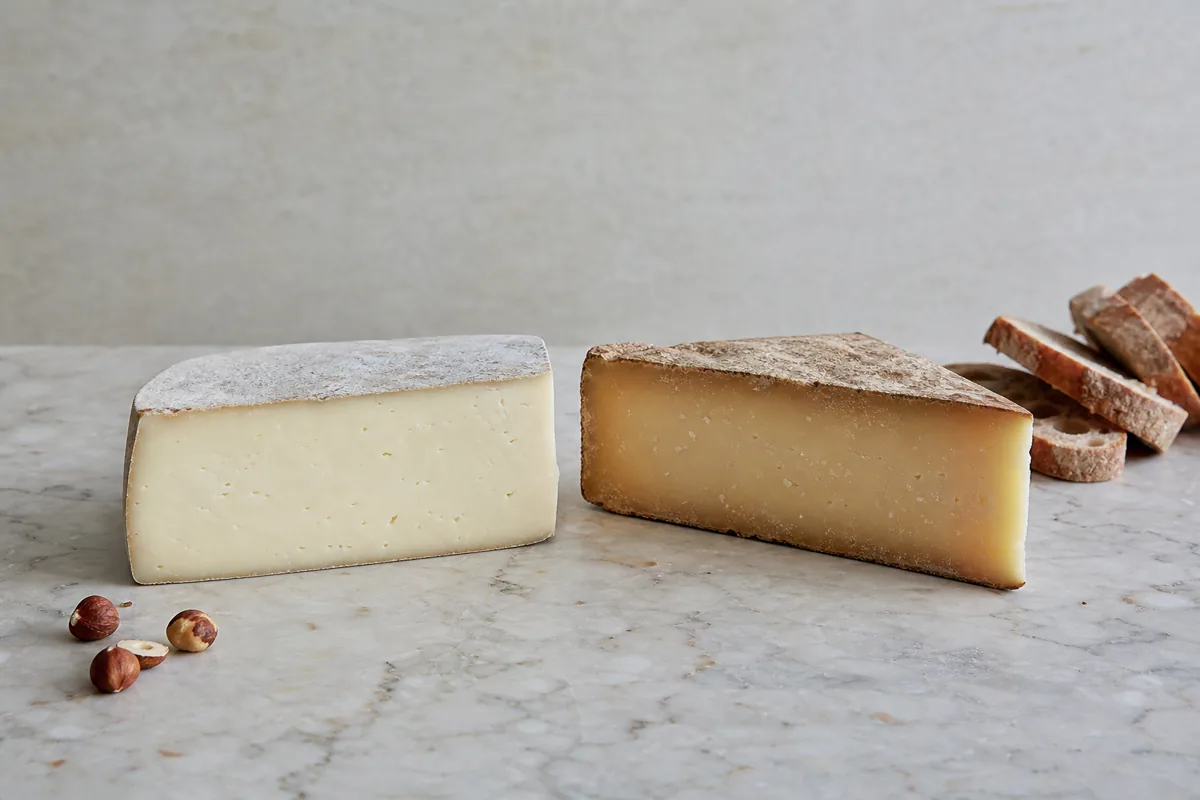
Paste colour is where sources part. The EU specification calls the matured body ivory yellow, Cheese.com lists an ivory paste, and Culture magazine says a young Mahón is bone-white and darkens as it matures.
The Regulatory Council's stages show the same drift, from white-yellowish at 21 days to yellowish ivory by 60 days, so much of the gap probably comes from the age each source describes.
The rind shifts with age too. The Council calls the soft stage's rind little developed and a handmade semi-cured rind orange or brown, where the specification's range for the whole PDO is yellow to yellowish-brown.
Texture changes with age as well. The Council describes the 21-day stage as soft and elastic, semi-cured as firm and easy to cut, and cured as firmer, harder and less elastic, breaking brittle and flaky when cut at advanced ages.
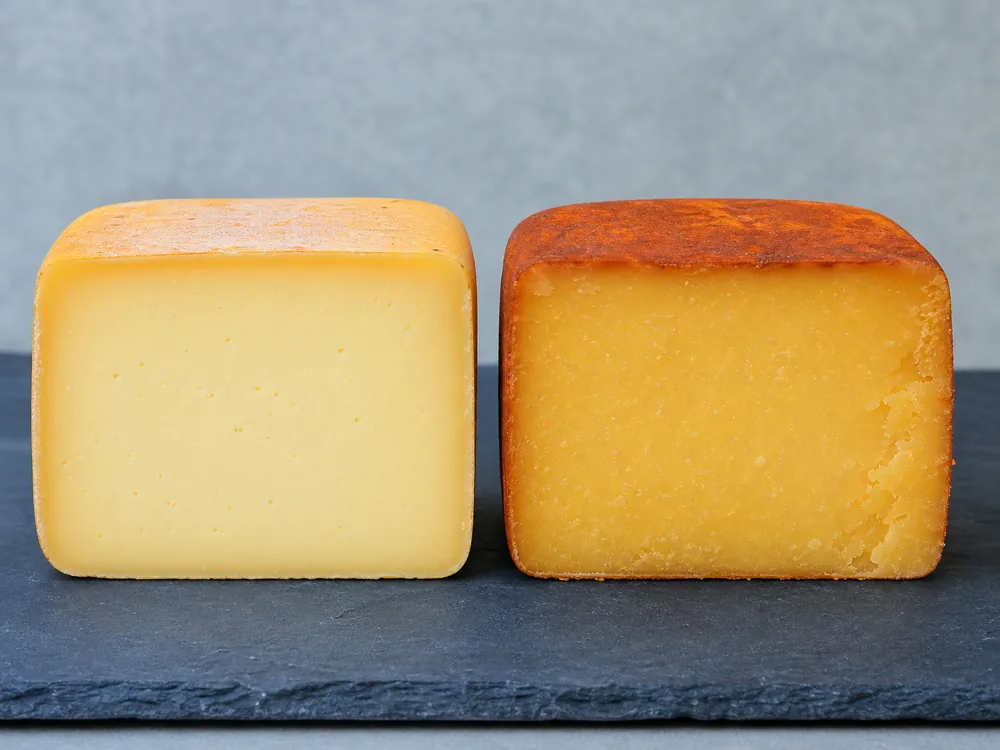
Culture magazine calls young Mahón close, dense and crumbly but slightly moist, and its youngest cheese is two months old, which puts that description nearer the Council's semi-cured stage than its soft one.
The specification allows few eyes, none larger than a pea, while Wikipedia says aged Mahón has a proliferation of tiny holes and, around 10 months, small misshapen holes and some granularity.
What Does Mahón Cheese Taste Like?
The EU specification describes light hints of acidity and delicate milky notes, with a pungency in curado that grows sharper as the cheese matures.
Younger cheese stays close to milk. The Regulatory Council gives the soft stage a lactic aroma with a slight hint of butter and a light acidic touch, and calls the semi-cured stage milky in taste and aroma.
Culture magazine describes younger Mahón as buttery, fruity and tart, with a slight sourness and a hint of salt, and says the more complex flavour of artisanal raw-milk Mahón shows more as it gets older.
Curado moves away from milk. The Council describes a highly evolved, complex and intense flavour with a long-lasting mouthfeel.
English-language references stress salt more as the cheese ages. Cheese.com says its oldest Reserva is saltier, and Culture magazine says some older wheels can be very salty and piquant.
Cheese.com and Wikipedia each give one flavour for the whole range, buttery and sharp with some salt, and Wikipedia adds sweet and nutty aromas while Cheese.com credits the olive oil and paprika rub with a soft, fruity note.
Is Mahón Cheese Pasteurized?
It depends on the type, as the comparison of the two types above shows: Artesano uses raw milk, and standard Mahón-Menorca uses treated milk.
Some references flatten this. Cheese.com describes Mahón as an unpasteurised cheese, which fits Artesano only, while Culture magazine separates raw-milk artisanal cheeses from milder industrial ones made with pasteurised milk.
Raw-milk Mahón does reach export counters. Importer Rogers Collection lists raw cow's milk, animal rennet and paprika as the ingredients of the Quintana Mahón it sells.
The NHS does not name Mahón. It lists pasteurised or unpasteurised hard cheeses, such as cheddar, gruyère and parmesan, and pasteurised semi-hard cheeses, such as edam, as safe, and says foods made from unpasteurised milk must be thoroughly cooked.
That leaves raw-milk Artesano between two NHS lines, because its texture class is unclear: Culture magazine files Mahón as hard, while Cheese.com gives both labels, listing its type as semi-hard and calling it a hard cheese in its description.
The CDC lists raw milk and dairy products made from raw milk as riskier choices, and hard cheese made with pasteurized milk as a safer one. It says pregnant women are 10 times more likely to get a Listeria infection.
For pregnancy, the NHS also counts any cheese cooked until steaming hot as safe.
Does Mahón Cheese Melt?
Yes. Rogers Collection says Mahón melts well and is often served warm over sautéed vegetables.
English Wikipedia suggests serving it over pasta, potato, rice or vegetable dishes.
The Regulatory Council's own recipe collection cooks with both ages, from mini pizzas to cheese-topped burgers:
| Use | How It Works |
|---|---|
| Stuffed potatoes | Potatoes filled with onion, serrano ham and grated Mahón-Menorca, then roasted for 15 minutes. |
| Mini pizza | Grated Mahón-Menorca on tomato sofrito, baked for 25 to 30 minutes at 180 °C. |
| Mini cheeseburger | Thin slices of semicurado laid on each hot burger under onion confit. |
| Cheesecake | Semicurado and curado baked with mascarpone for 45 minutes at 170 °C. |
| Risotto | A Mahón-Menorca risotto with seasonal mushrooms. |
The recipes show two ways to melt it. The mini fondue cuts 200 g of semi-cured cheese into small cubes, to make it easier to melt, and stirs it into 400 g of liquid cream over a water bath.
The cheese royal melts 200 g of diced cured cheese into 100 g each of cream and milk and sets it with agar-agar; a pancake sauce heats cream with semi-cured cheese in a water bath until melted.
Curado also makes a crisp: the same royal recipe spreads another 100 g of grated cured cheese on a silicone mat and bakes it at 100 °C until crisp.
In the Council's macaroni gratin, 100 g of grated cured cheese is baked on top until melted and toasted, and its risotto stirs grated cured cheese in halfway through cooking and finishes with flakes.
The two recipes that call for thin slices, the burger and a cannelloni around foie micuit, use semi-cured cheese, while the gratin, risotto and crisp use grated cured. That fits the firmness the Council describes for each stage.
English Wikipedia, citing the 1999 textbook Cheese: Chemistry, Physics and Microbiology, says most of the production goes into processed cheese.
What Should You Serve With Mahón Cheese?
On Menorca the traditional way to eat Mahón is sliced and sprinkled with olive oil, black pepper and tarragon, according to English Wikipedia and Culture magazine.
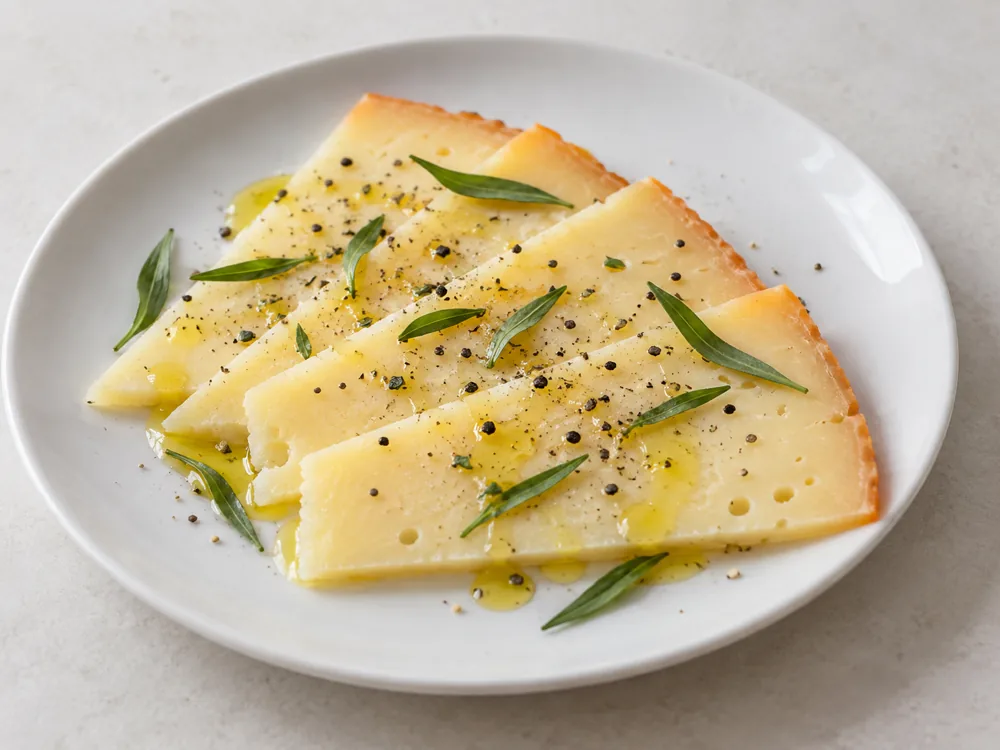
Culture magazine says Mahón needs an assertive wine to stand up to it. Rogers Collection points to Spanish wines from Rueda, Mancha, Rioja and Ribera del Duero.
The same importer says that in Spain young Mahón is often eaten at breakfast or as a dessert, with a white Cava.
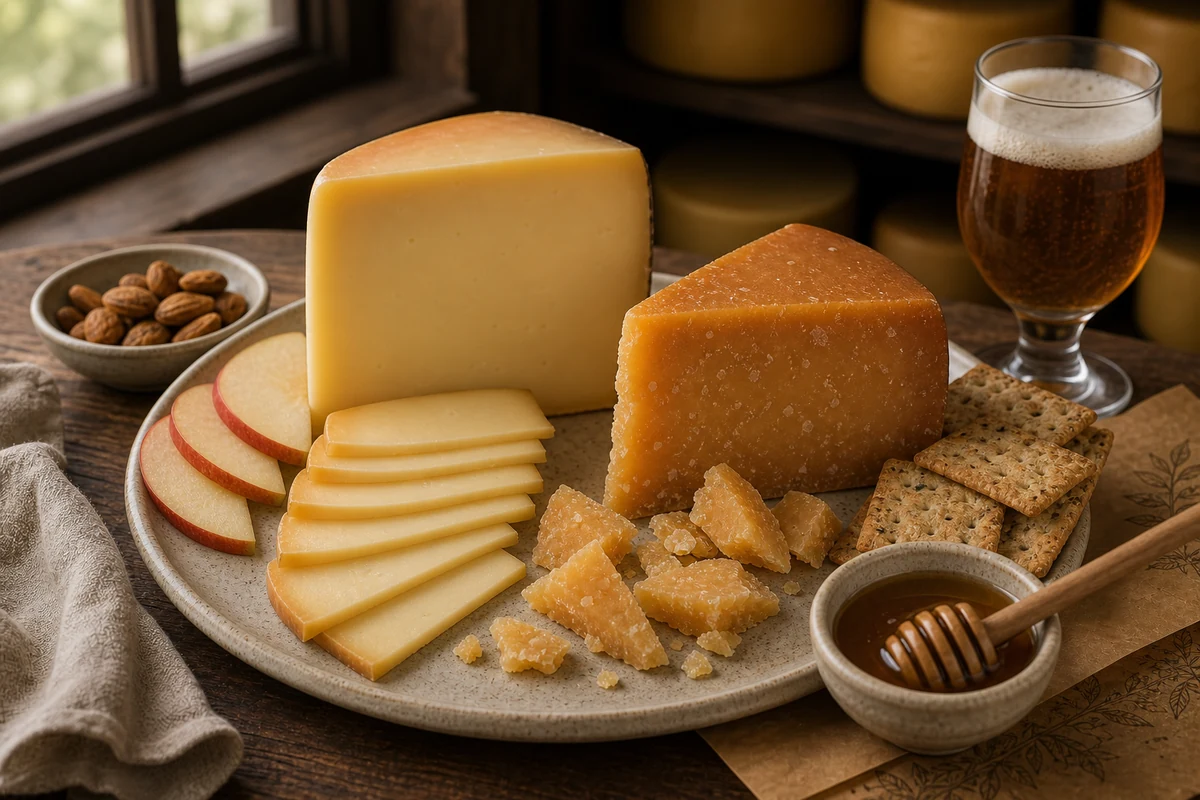
| Pairing | Type | Why It Works |
|---|---|---|
| Olive oil, black pepper and tarragon | Food | The traditional Menorcan way to serve sliced Mahón, per Wikipedia and Culture magazine. |
| Madeira or Rioja | Wine | Culture magazine's picks for an assertive wine. |
| Rueda, Mancha, Rioja or Ribera del Duero | Wine | The Spanish wines Rogers Collection names. |
| White Cava | Wine | Served with young Mahón at breakfast or dessert in Spain, per Rogers Collection. |
| Beer | Drink | Rogers Collection says Mahón goes nicely with many beers. |
| Apple, walnuts and turkey | Food | Diced with semicurado over lettuce in the Regulatory Council's salad recipe. |
| Tomato jam, honey and walnut | Food | Topped on small pieces of Mahón-Menorca in the Council's puff pastry recipe. |
Mahón vs Manchego
Mahón and sheep's milk Manchego share the age words semicurado and curado, but not the milk, the island or the calendar behind those words.
| Point | Mahón-Menorca | Manchego |
|---|---|---|
| Milk | Cow's milk, with up to 5% Menorquina sheep's milk (EU specification) | Milk of Manchega sheep (Cheese.com) |
| Origin | Island of Menorca, Balearic Islands | La Mancha region |
| Semicurado | Under 150 days (EU specification); from 60 days (Regulatory Council) | About 3 weeks to 3 months (Cheese.com) |
| Curado | Over 150 days | 3 to 6 months (Cheese.com) |
| Rind | Compact and greasy, yellow to yellowish-brown; on Artesano, rubbed with butter, olive oil or oil and paprika | Basket-weave zigzag pattern (Cheese.com) |
The same word covers different ages. A Manchego sold as curado can be as young as 3 months, which is younger than a Mahón semicurado close to its 150-day limit.
How Should You Store Mahón Cheese?
Outside the ripening cellars, the Regulatory Council says, storehouses, restaurants and home pantries all find it hard to hold the right temperature and humidity. In the refrigerator, it suggests keeping the cheese in the least cold part, wrapped in shrink film or a damp cloth so it does not dry out too much.
English Wikipedia gives each age its own wrap. Young Mahón goes in airtight plastic in the vegetable drawer to stay soft, and harder, older Mahón in foil or waxed paper.
For eating, the Council puts the best temperature at 18 to 20 °C and recommends taking the cheese out of the refrigerator ahead of time.
SOURCES & REFERENCES
What Else Do People Ask About Mahón Cheese?
Standard Mahón-Menorca is made from treated milk, which the Regulatory Council says can be pasteurised. Mahón-Menorca Artesano is made from raw milk, so check the label for the word pasteurised.
No. Culture magazine lists animal rennet for Mahón, and Cheese.com marks it as not vegetarian.
Young Mahón tastes milky, lightly acidic and buttery. Curado turns more pungent, saltier and more complex as it ages.
No. Mahón-Menorca is made mainly from cow's milk on Menorca, while Manchego is made from the milk of Manchega sheep in La Mancha.
Yes. Rogers Collection says it melts well, and the Regulatory Council uses it in pizza, stuffed potatoes and burgers.