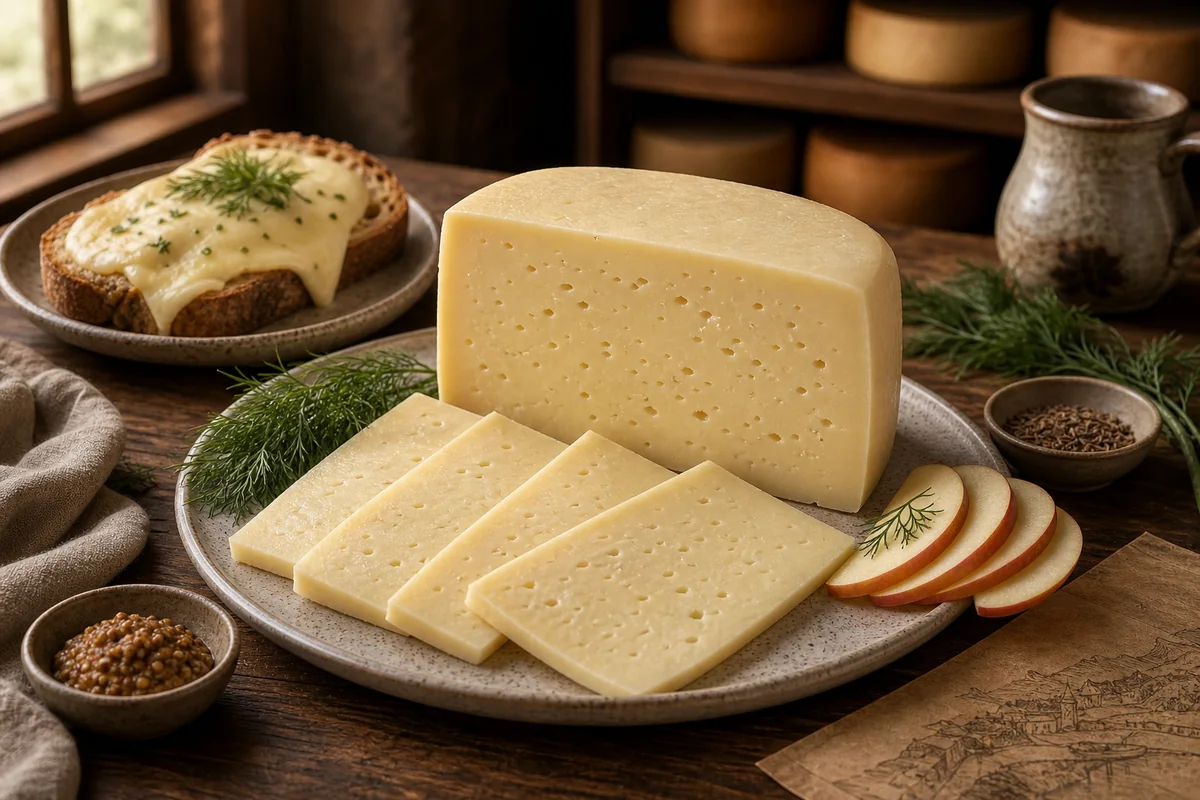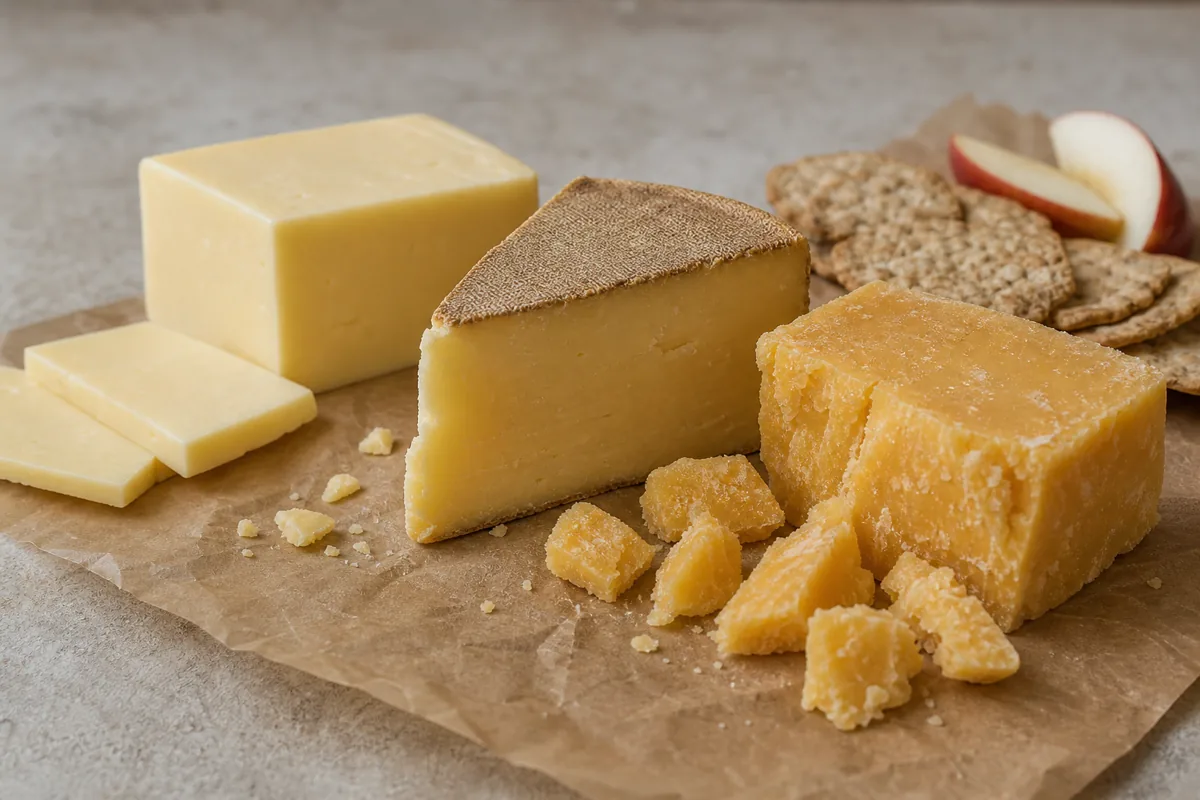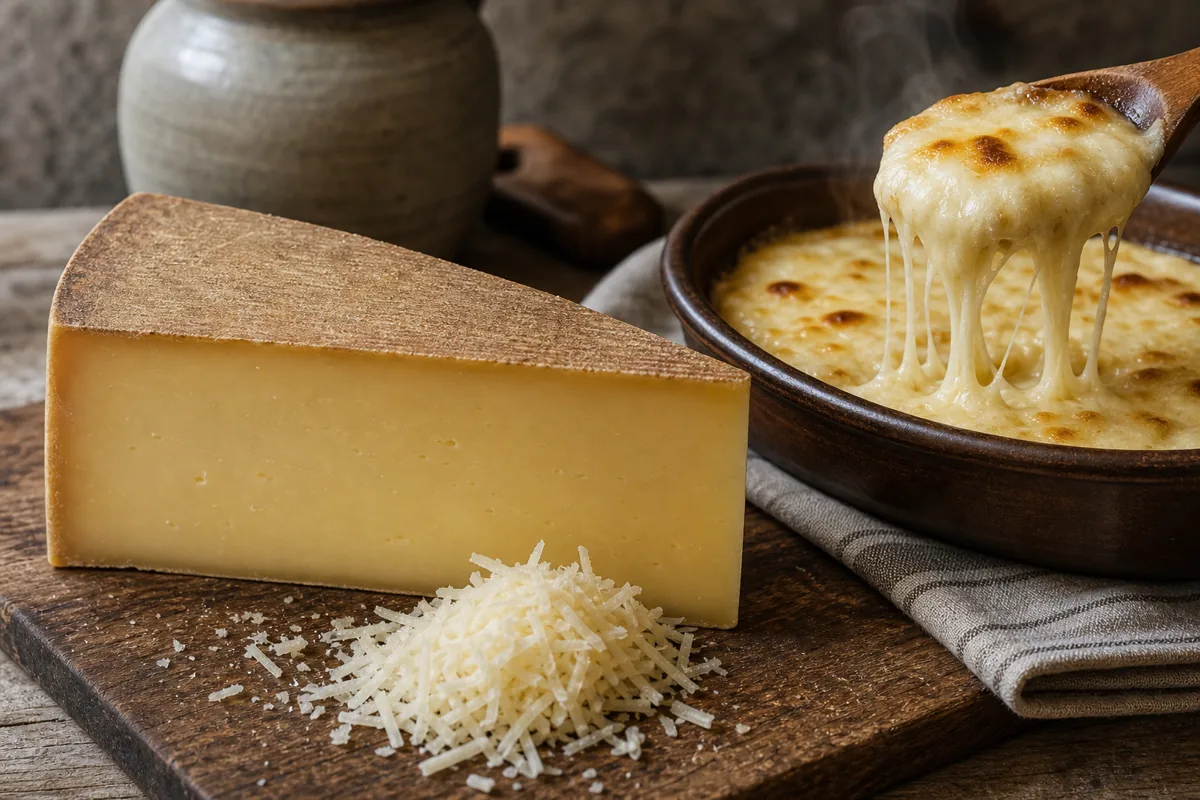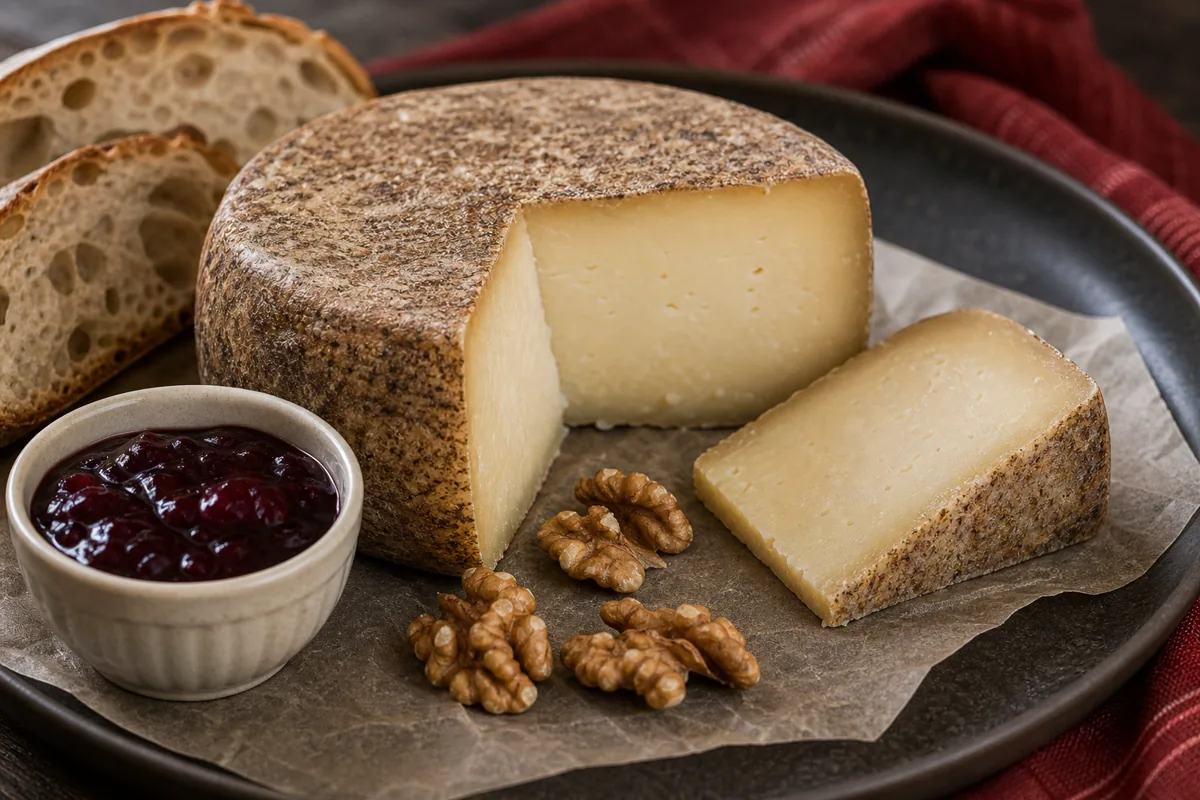
Manchego cheese is a buying decision before it is a flavor decision. The stage on the label tells you whether the wedge belongs in a sandwich, on a tapas board, over pasta, or in thin shavings with quince paste.
Authentic Manchego also has a tighter owner than many sheep cheeses: Manchega sheep milk, La Mancha geography, a protected DO seal, and the crosshatch rind pattern. That sets it apart from sheep's milk cheese in general and from generic Spanish-style wedges.
The seal and the age stage come first because those two cues decide taste, texture, price, and safety label questions.
In This Article
How Do You Know Manchego Is Real?
The authenticity check starts with a pressed sheep's milk cheese from the La Mancha region of central Spain. The DO specification requires that the milk come exclusively from the Manchega breed of sheep, a hardy, heat-tolerant breed native to the high, dry plateau of Castilla-La Mancha.
La Mancha sits at 600-700 meters elevation on Spain's central meseta. The hot summers, cold winters, and sparse scrubland vegetation define the Manchega sheep's diet and, by extension, the flavor of the milk.
This is not lush alpine pasture. The sheep forage on wild herbs, grasses, and stubble.
DO protection arrived in 1984, making it one of Spain's earliest protected cheeses. The Fundacion Consejo Regulador de la Denominacion de Origen Queso Manchego certifies every wheel and enforces the production standard.
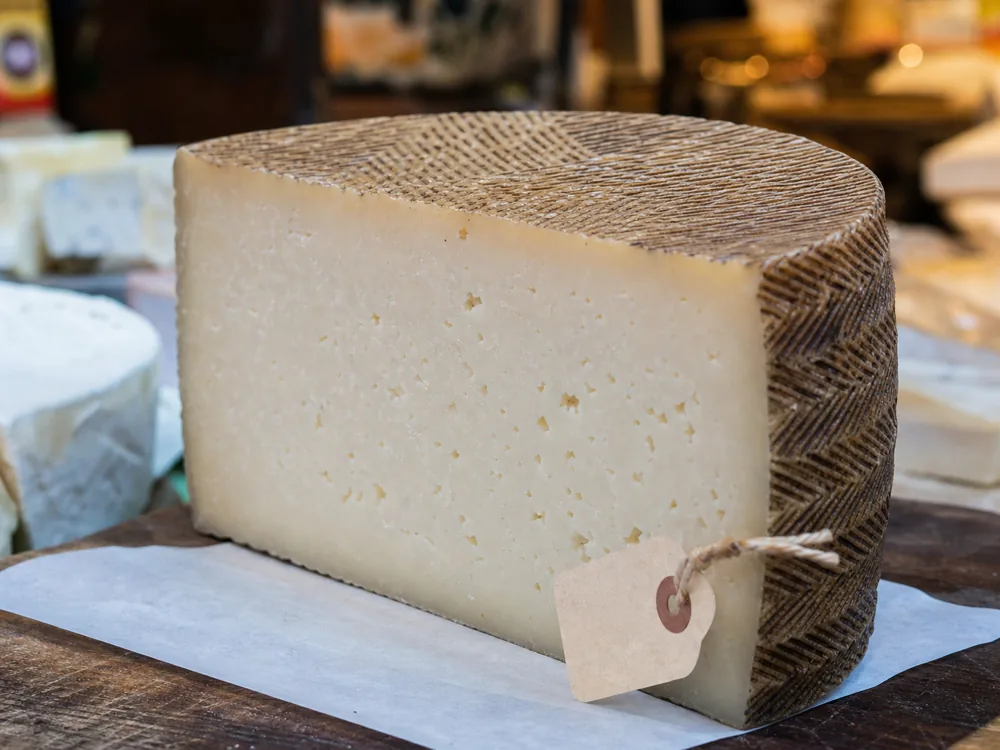
- Manchega sheep - the only permitted breed, native to La Mancha, produces rich, high-fat milk
- Pleita pattern - the distinctive crosshatch rind imprint comes from esparto grass molds traditionally used to shape the wheels
- Olive oil rub - many producers rub olive oil on the rind during aging, creating the dark exterior
- DO zone - production restricted to the provinces of Albacete, Ciudad Real, Cuenca, and Toledo
The Manchega sheep produces milk with approximately 8% fat and 6% protein, considerably richer than cow's milk. This high-fat, high-protein composition is what gives Manchego its dense, compact texture and the sharp, tangy flavor base that intensifies with aging.
The crosshatch (pleita) pattern on the rind is a signature that no other cheese carries. Historically, wheels were pressed in woven esparto grass molds that left this imprint.
Modern production uses plastic molds that replicate the same pattern, preserving the visual identity.
Much of the 'Manchego' sold in the US is actually Manchego-style cheese from non-DO producers, sometimes from other countries. Authentic Manchego DO carries the Consejo Regulador seal on the label. If the label does not specify DO and the Consejo seal, it may be a generic sheep's milk cheese with similar flavor but no production-standard guarantee.
Which Manchego Age Should You Buy?
The four aging stages are not optional labels. They represent distinct flavor and texture profiles that determine how the cheese should be used.
The same wheel tastes completely different at 2 months versus 12 months.
Most Manchego sold in the US falls into the Curado (3-6 months) category. Semicurado is increasingly available.
Fresco is rare outside Spain because it does not travel well. Viejo commands a premium price.
The price difference between stages is significant. Viejo costs 2-3 times more than Semicurado because of the aging time, moisture loss (wheels lose 30-40% of their weight), and the space each wheel occupies in the aging cave for a full year.
For cooking, Curado is the best value. It grates well, melts into sauces, and has enough flavor to stand up to heat without the premium cost of Viejo.
Why Does Manchego Taste Tangy?
Sheep milk changes the flavor before aging does. Its higher fat content and distinct fatty acid composition include more short-chain fatty acids (caproic, caprylic, capric) than cow's milk.
These acids create the tangy, slightly peppery undertone that cow's milk cheeses lack.
This describes Curado at 4-5 months. Viejo at 12+ months is far saltier, much more savory, noticeably more sour, and barely creamy as the paste hardens and flavor concentrates.
- Semicurado taste - buttery, mild tang, grassy undertone, smooth finish
- Curado taste - nutty, tangy, slight caramel, lingering savory finish
- Viejo taste - sharp, peppery, crystalline crunch, long complex finish
- All stages - the underlying sheep's milk tang is present at every age
If you have only tried mild cow's milk cheeses, Manchego's tanginess may surprise you on first taste. The flavor is assertive but clean.
It is not the funky, barnyardy tang of washed-rind cheeses. Think roasted nuts and toasted butter with a peppery finish.
Manchego has very low lactose at every aging stage. The lactic acid fermentation and pressing process remove most lactose early in production.
By the Curado stage, the lactose content is negligible. Even people with significant lactose intolerance typically tolerate Manchego well.
The Manchega sheep produces richer milk than many brined sheep cheeses. That extra fat gives Curado more board presence than salty feta crumbles without adding brine.
What Is Each Manchego Age Stage Good For?
The useful stage depends entirely on the job. Semicurado slices for sandwiches, Curado grates for cooking, and Viejo crumbles for finishing.
Using the wrong stage in the wrong application wastes the cheese's best qualities.
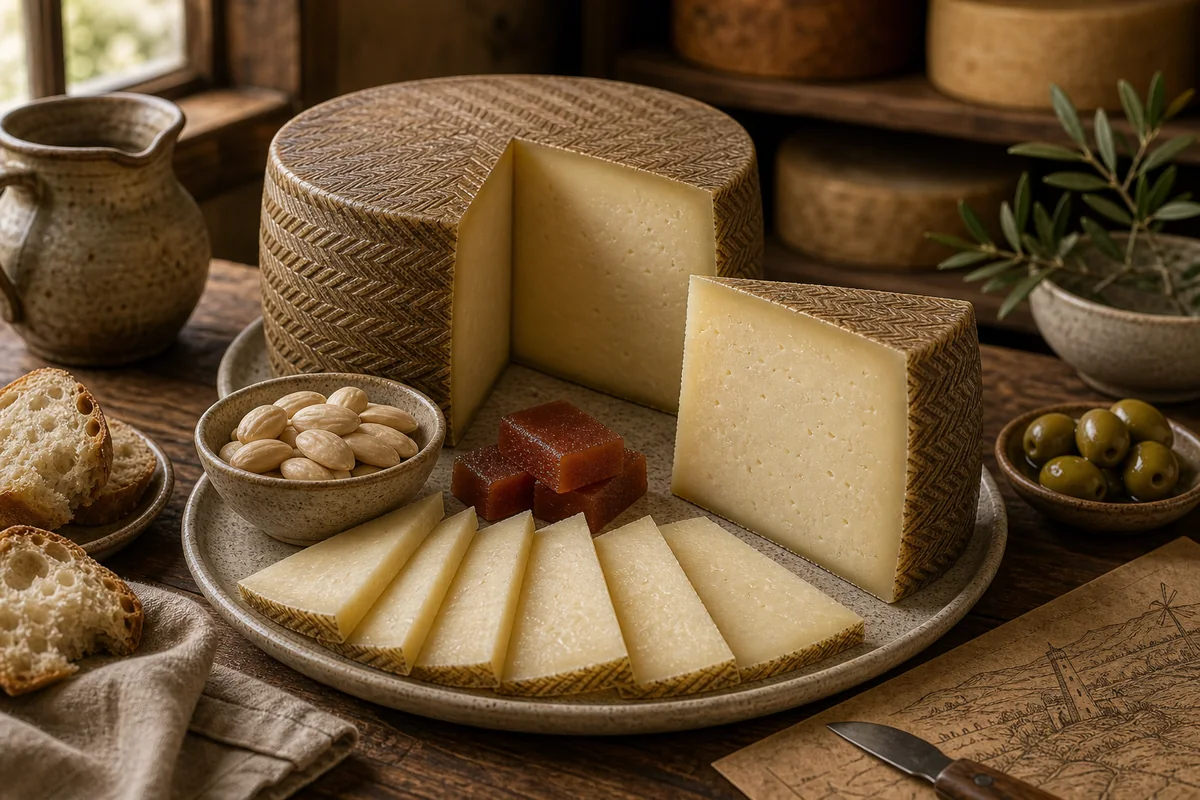
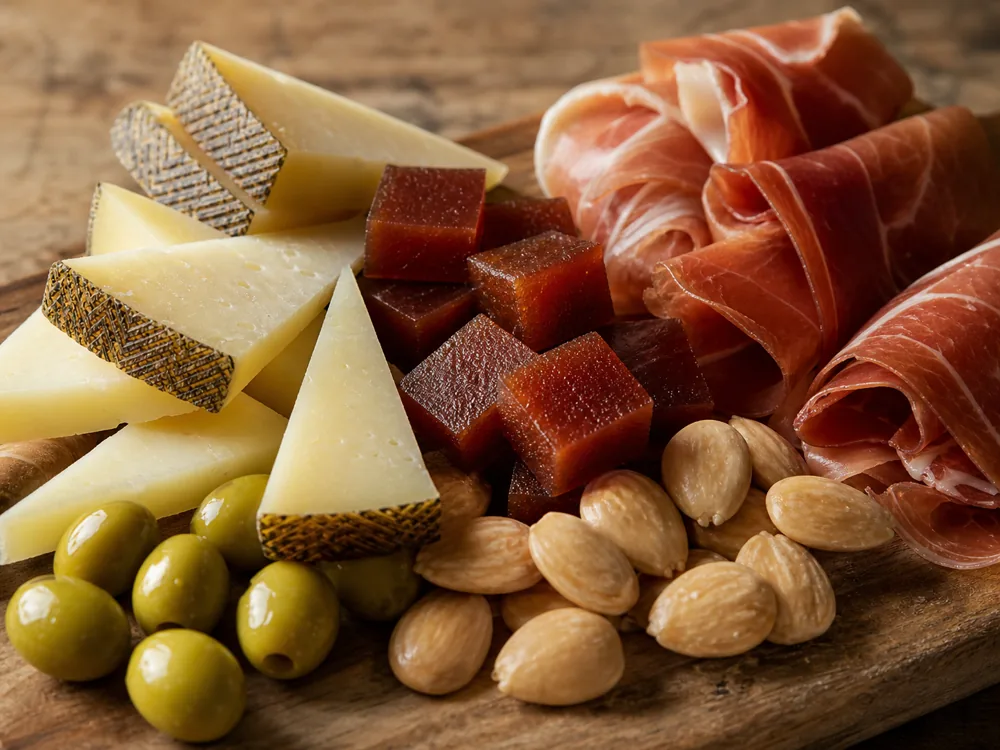
In Spain, Manchego is the default tapas cheese. A plate of sliced Curado with marcona almonds, olives, and membrillo (quince paste) appears on almost every tapas menu in La Mancha.
| Use | How It Works |
|---|---|
| Tapas Board | Sliced Curado or Viejo with membrillo (quince paste), marcona almonds, Serrano ham, and olives. This is the classic Spanish cheese plate. Cut into triangular wedges, not cubes. The traditional presentation matters. |
| Grating | Curado and Viejo grate well over pasta, salads, and soups. Use Manchego as a sheep's milk alternative to Parmesan. The tangy flavor adds a different dimension than the umami-heavy character of Parmigiano-Reggiano. |
| Sandwiches | Thinly sliced Semicurado on a bocadillo with Serrano ham and tomato. The semi-firm texture slices cleanly and the mild flavor complements cured meats without competing. Semicurado is the sandwich stage. |
| Fried Manchego | Curado cut into sticks, breaded, and fried until golden. A popular tapa. The firm texture holds shape during frying and the heat brings out the nutty, caramel notes. Serve with romesco sauce. |
| Salads | Viejo shaved over mixed greens, roasted beets, or grain salads. The sharp, peppery flavor and crystalline texture add complexity. Use a vegetable peeler for thin shavings rather than a grater. |
| Membrillo Pairing | Sliced Curado with membrillo (quince paste) is the definitive Manchego combination. The sweet, slightly tart quince paste complements the nutty, tangy cheese. No other pairing captures Manchego's character as well. |
For a quick rule: if you would use Parmesan in a recipe, you can substitute Curado Manchego at a 1:1 ratio for a different flavor angle. The sheep's milk tang gives pasta dishes, risottos, and gratins a Spanish character that Parmesan does not provide.
- Semicurado - slicing cheese for sandwiches, light tapas, and melting
- Curado - all-purpose grating, cooking, boards, and tapas
- Viejo - finishing cheese for shaving, crumbling, and bold boards
- Need clean slices? Choose Semicurado because it stays pliable.
- Need grated flavor? Choose Curado because it has enough firmness without going harsh.
- Need a small finishing bite? Choose Viejo and use less.
- Need tapas for guests? Choose Curado because it balances nutty flavor and easy texture.
Manchego does not melt as smoothly as alpine Gruyere melt or mozzarella. It softens and becomes pliable under heat but does not pool into a fluid melt.
For dishes that require a melted cheese layer (gratin, fondue), Manchego works better mixed with a high-melt cheese than used alone.
Manchego softens under heat but does not flow. Its flavor is strong, more assertive than Swiss or buttery Havarti.
It still tastes less intense than aged Cheddar bite or Viejo Manchego.
- Use Semicurado for sandwiches, mild tapas, and cleaner slices.
- Use Curado for boards, grating, and everyday cooking.
- Use Viejo for shaving, crumbling, and intense sheep-milk bite.
How Do You Store a Manchego Wedge?
The firm texture and natural rind make storage easier than it is for soft cheeses. The rind itself is inedible because it is treated with olive oil and sometimes wax, but it protects the paste from drying and mold intrusion during storage.
The main risk is the cut face drying and cracking. Once you cut into a wheel, the exposed paste begins losing moisture.
Proper wrapping slows this process significantly.
- Wax paper on the cut face - protects against drying without trapping excess moisture
- Leave the rind exposed - the natural rind breathes and does not need wrapping
- Cheese drawer at 38-42 F - slightly warmer than the main fridge compartment
- Bring to room temp before serving - 30 minutes out of the fridge opens up the nutty flavor
If a white crystalline surface appears on the cut face of aged Manchego, it is calcium lactate or tyrosine crystals, not mold. These are safe and indicate proper aging.
If fuzzy mold appears on the cut face, trim at least one inch around the spot. The remaining cheese is safe for firm varieties like Manchego.
For Manchego wedges, breathable parchment wrapping slows cut-face drying without trapping rind moisture.
Membrillo is the classic pairing because its quince acidity cuts sheep-milk fat. Spanish reds, dry sherry, and wine and cheese pairing habits work best when they keep that sweet-acid balance.
For sandwiches, Semicurado slices cleanly and stays firm. It behaves more like firm sandwich cheeses than like stretchy melt-first cheeses.
Curado can replace Parmesan when you want a sheep-milk finish. The swap changes the dish more than a normal hard-cheese substitution because Manchego brings tang instead of deep umami.
Why Is Manchego Served With Membrillo?
Spanish wines, cured meats, and fruit pastes work because they match the sheep's milk tang and nutty character with acidity, sweetness, or salt.
The classic pairing rule for Manchego: what grows together goes together. Spanish wines and Spanish cured meats are the natural match.
| Pairing | Type | Why It Works |
|---|---|---|
| Tempranillo (Rioja or Ribera del Duero) | Wine | The default red wine pairing. Tempranillo's cherry and leather character balances Curado's nuttiness. Aged Reserva Rioja with Viejo Manchego is a peak pairing, where the vanilla oak notes mirror the cheese's caramel development. |
| Albarino (Rias Baixas) | Wine | A crisp white with citrus and saline notes. The acidity cuts through the fat in Semicurado and Curado. The slight brininess in Albarino echoes the sheep's milk tang. |
| Fino Sherry (Jerez) | Wine | Dry, nutty Fino sherry is one of the best matches for Curado Manchego. The yeasty, almond character of Fino directly complements the nutty paste. Serve both cold. |
| Membrillo (Quince Paste) | Food | The definitive Manchego pairing. The sweet, slightly tart quince paste balances the sharp tang of the cheese. Available at most specialty stores and many regular grocery stores. Slice thin alongside Curado wedges. |
| Serrano or Iberico Ham | Food | Thin-sliced Spanish cured ham draped over Manchego wedges. The salt and fat in the ham amplify the savory character of the cheese. This combination appears on every tapas menu across Spain. |
| Marcona Almonds | Food | Fried, salted marcona almonds alongside sliced Manchego. The rich, buttery almond flavor echoes the nutty notes in Curado and Viejo. Marcona almonds are rounder and fattier than California almonds. |
- Tempranillo - the default red, cherry and leather balance the sheep's milk tang
- Fino Sherry - dry, nutty, mirrors Manchego's nuttiness directly
- Membrillo - the definitive pairing, sweet quince against sharp cheese
- Serrano ham and marcona almonds - the full Spanish tapas board
Avoid full-bodied, tannic reds like Cabernet Sauvignon with Manchego. The tannins and the sheep's milk tang create a bitter, astringent clash.
If you want a red wine, stay with Tempranillo, Garnacha, or Mencia from Spanish regions.
Is Manchego Safe in Pregnancy?
The concentrated sheep's milk base makes the cheese high in protein and calcium. The fat content is higher than most cow's milk cheeses, reflecting the 8% fat in Manchega sheep milk.
- Very low lactose - fermentation and aging reduce lactose to negligible levels
Sheep's milk cheeses deliver more conjugated linoleic acid (CLA) per serving than cow's milk cheeses. CLA is a fatty acid associated with potential health benefits in some research.
While we do not make health claims for cheese consumption, the CLA content in sheep's milk products is documented in dairy science literature.
These figures come from the USDA FoodData Central database for Manchego cheese.
Manchego's high fat content makes it calorie-dense per ounce, but the intense flavor means small portions deliver significant taste impact. A few thin slices of Viejo with membrillo provide a satisfying tapa with less total cheese than a thick slab of milder cheese on a sandwich.
Manchego DO is Spain's flagship cheese and one of the most flavorful sheep's milk cheeses available worldwide. Four aging stages give you four different cheeses from one wheel. Buy Semicurado for sandwiches, Curado for all-purpose use and tapas, and Viejo for bold boards and grating. Pair with membrillo, Serrano ham, and Tempranillo for the full Spanish experience. Always look for the DO seal.
SOURCES & REFERENCES
Do Manchego Shoppers Ask Anything Else?
Age and the DO seal account for most Manchego questions, and the two are related.
Manchego has four official stages: Fresco (2 weeks to 2 months, soft and mild), Semicurado (2-3 months, semi-firm and buttery), Curado (3-6 months, firm and nutty), and Viejo (12+ months, hard, sharp, and crystalline). Each stage is a different eating experience.
Most Manchego in US stores is Curado. Semicurado is milder and better for sandwiches.
Viejo is a bold board and grating cheese.
No. Manchego's rind is inedible. It is treated with olive oil and sometimes food-grade wax during aging to protect the paste.
The rind is firm, dark, and carries the distinctive crosshatch (pleita) pattern. Always cut it off before eating.
The paste directly beneath the rind is fine to eat.
Viejo Manchego shares some characteristics with aged Parmesan: firm texture, crystalline crunch, and strong flavor. Both grate well.
The key difference is the milk. Manchego's sheep milk gives it a tangy, peppery character that Parmesan's cow milk does not produce.
You can substitute Manchego for Parmesan at a 1:1 ratio for a different flavor angle in pasta and salads.
Look for the Consejo Regulador seal on the label or rind. Authentic Manchego DO also carries a numbered casein plaque embedded in the rind for traceability.
If the label says "Manchego-style" or does not display the DO seal, it is not certified. Generic sheep's milk cheese sold as "Manchego" in the US may taste similar but lacks the production-standard guarantee.
The NHS lists pasteurised or unpasteurised hard cheeses and pasteurised soft cheeses as safe to eat, and says foods made from unpasteurised milk must be thoroughly cooked. The CDC lists hard cheese made with pasteurized milk as safer and unpasteurized (raw) milk and dairy products made from raw milk as riskier.
Manchego can be made from raw or pasteurized milk, and only Viejo (12+ months) is described as hard: Fresco is soft, Semicurado semi-firm and Curado firm. Check the label for pasteurization status, and ask a midwife or doctor about a raw-milk piece or a younger stage.