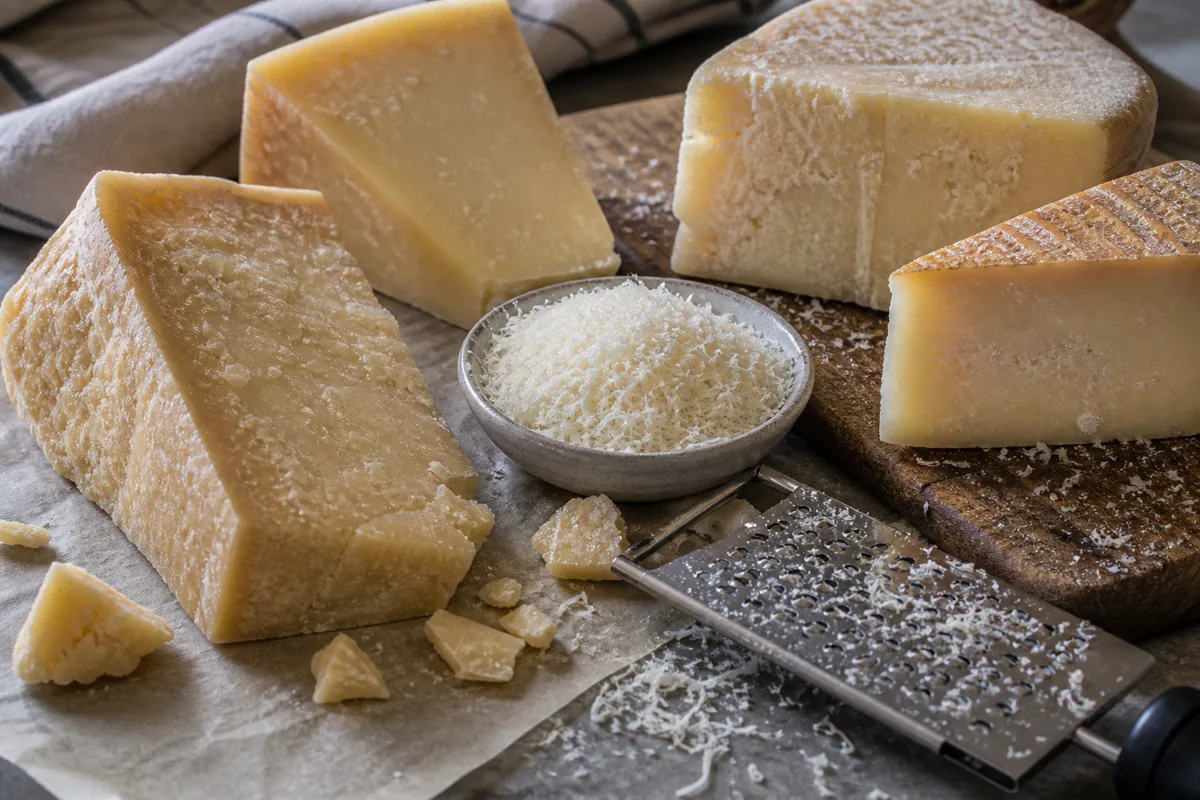
Parmesan swaps should be chosen by job, not by prestige. Parmesan, the hard Italian grating cheese, can finish pasta, shave over salad, enrich soup, season breadcrumbs, or sit on a board as hard crystalline chunks.
Grana Padano is the closest all-purpose substitute because it grates, melts into hot food, and tastes savory without changing the dish too much. After that, the choice depends on salt, age, milk type, budget, and whether the cheese is being grated, shaved, simmered, or eaten in chunks.
Start by reading which name is on the wedge. Parmigiano-Reggiano is made under protected rules, while a tub sold as parmesan can be anything from a decent hard cheese to shreds cut with cellulose.
In This Article
How Do You Choose a Parmesan Substitute?
Parmesan is usually not acting like a melting cheese.
It is a dry flavor concentrate. It grates into fine snow, dissolves on hot pasta, seasons soup, and adds umami to a dish without turning stretchy.
That is why soft cheeses fail. Brie, Havarti, mozzarella, and young Gouda can be delicious, but they do not grate into dry particles or season a pan of pasta the way a hard aged cheese does.
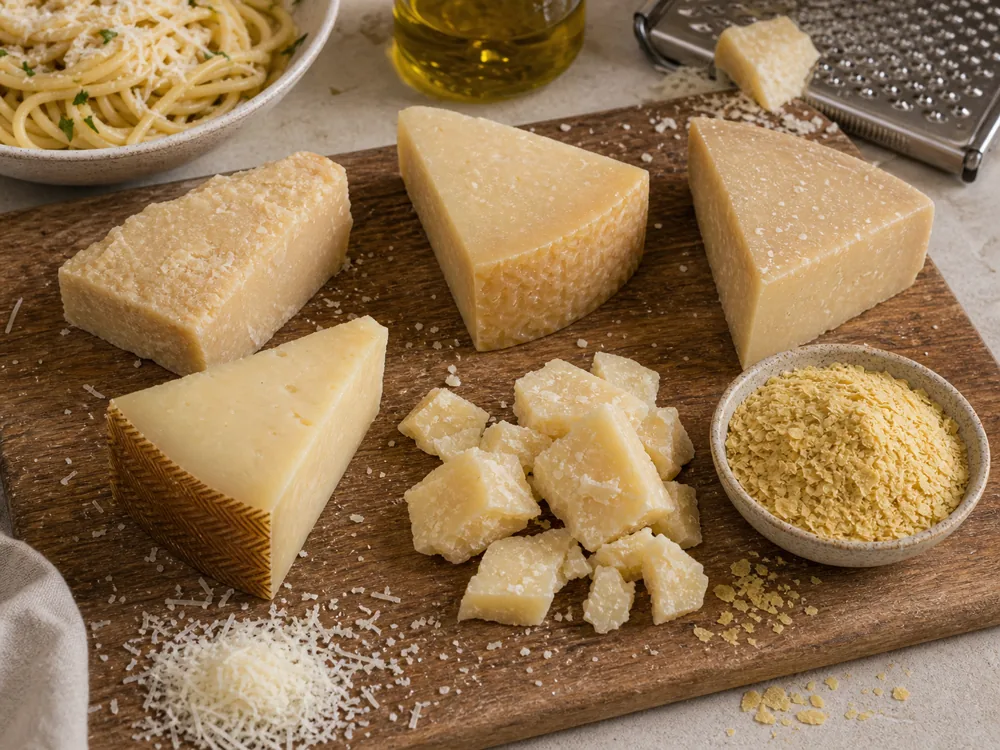
A good substitute needs at least one of Parmesan's hard-cheese jobs, since a cheese that cannot grate, shave, season, or chunk cleanly solves a different problem.
The dish usually tells you which job matters. Pasta wants fine particles that melt into starch and fat.
Caesar salad wants thin shavings that stay visible. Soup wants a rind or grated cheese that seasons liquid slowly.
A board wants chunks that taste complete without a sauce.
Moisture is the hidden rule.
A cheese can taste nutty and still fail if it is too soft to grate dry. The wedge should feel firm under a knife, break into small grains or shards, and leave dry crumbs on the board instead of bending like a sandwich cheese.
The closer the dish is to plain pasta, risotto, or Caesar salad, the more the substitute needs real hard-cheese texture.
7 Parmesan Substitutes: Best Alternatives for Grating and Finishing
1. Grana Padano Is the Closest Everyday Swap
Grana Padano, the Po Valley granular cheese, is the easiest Parmesan substitute because it belongs to the same Italian hard-cheese family. It is usually milder, often cheaper, and less tightly restricted by production area than Parmigiano-Reggiano, but it behaves similarly in the kitchen.
Use it one-to-one for pasta finishing, risotto, soup, salad shavings, roasted vegetables, and breadcrumbs. If the dish is simple, choose an older Grana Padano because younger wedges can taste gentler and less complex.
| Parmesan job | Best substitute | Adjustment |
|---|---|---|
| Fine pasta snow | Grana Padano | Use 1:1 and grate fresh. |
| Roman pasta | Pecorino Romano | Reduce amount and salt. |
| Salad shavings | Grana Padano or aged Manchego | Use a peeler for petals. |
| Soup rind | Grana Padano rind | Simmer, then remove before serving. |
Freshly grated cheese matters more than most people think.
Pre-grated tubs and shelf-stable shakers lose aroma, dry out, and often contain anti-caking agents. A small wedge of Grana Padano usually beats a larger container of dull grated cheese.
Age changes the swap too. Younger Grana Padano is mild and friendly, while older Riserva-style wheels taste deeper and more crystalline.
If the Parmesan was meant to finish a very simple pasta, an older wedge makes the substitute feel much closer.
If budget is the reason you are replacing Parmesan, buy a smaller wedge of Grana Padano and grate it fresh. You will use less because the flavor is stronger than pre-grated cheese.
2. Pecorino Romano Is a Salt Decision, Not a Neutral Swap
Pecorino Romano can replace Parmesan in many dishes, but it changes the seasoning. It is a sheep-milk Roman grating cheese, sharper and much saltier.
In cacio e pepe, carbonara, and amatriciana, that is the point. In a mild soup or salad, it can take over.
Start with about three-quarters of the Parmesan amount and use extra restraint when the recipe already has anchovies, olives, cured meat, capers, or salted broth.
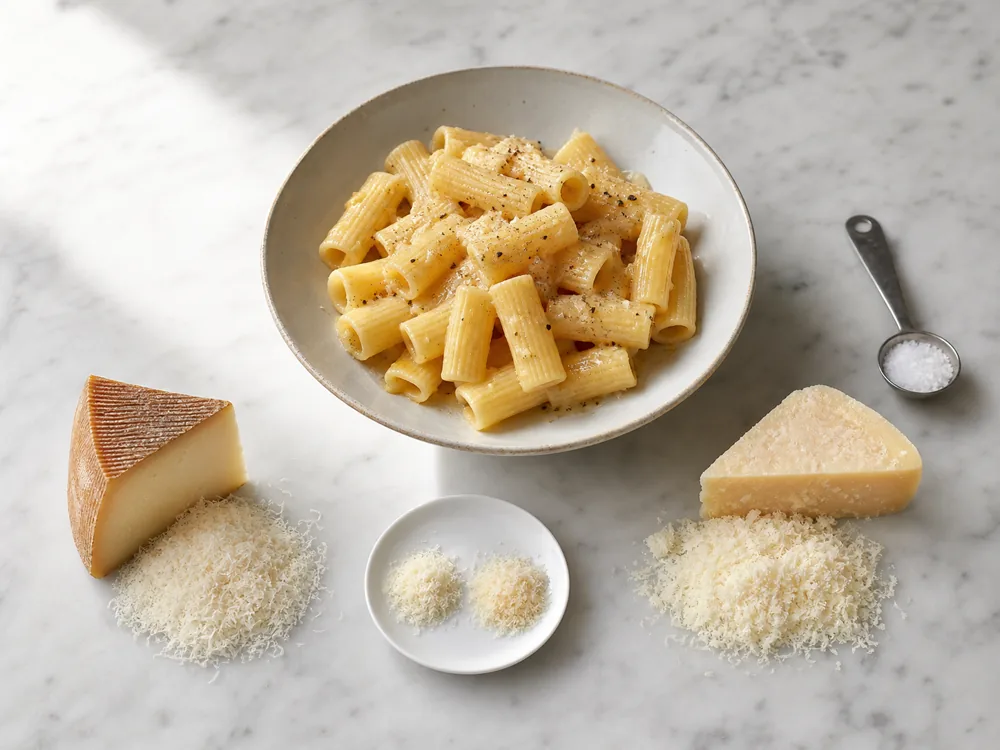
The comparison with Parmesan versus Pecorino is useful when the dish is Italian and the cheese choice changes the sauce. For a general substitute, treat Pecorino as a strong seasoning tool.
Pecorino changes texture less than it changes flavor. It still grates and shaves well, so the dish may look right while tasting sharper and saltier.
The amount matters more than the tool when Pecorino is the substitute.
Do not swap Pecorino Romano one-to-one into a recipe that also adds salt at the end. Taste first, especially in pasta water, soup, and Caesar-style dressing.
3. Aged Asiago Is the Grocery Backup for Grating
Aged Asiago, Piave, aged Manchego, and Dry Jack can all replace Parmesan's structure, but none copies its flavor exactly. That is fine when the dish can handle a new direction.
Aged Asiago is nutty and slightly sweet when firm enough to grate. Use it for pasta, soup, and salads when the wedge is firm.
Do not use fresh Asiago as a Parmesan substitute. It may melt or slice nicely, but it does not give the dry grate you need.
4. Piave Brings Sweetness to Boards and Pasta
Piave is dense and sweet with a clean Italian profile. Use it for boards, shavings, and richer pasta finishes when you want that sweetness.
5. Aged Manchego Gives Nutty Sheep-Milk Shavings
Aged Manchego, the Spanish sheep cheese, brings sheep-milk nuttiness to salads, roasted vegetables, and Spanish-leaning plates. It is excellent over roasted peppers, chickpeas, bitter greens, and olive-oil dishes.
Use it with olive oil, lemon, roasted vegetables, and grain salads. Young Manchego fails the way fresh Asiago does, because it does not give the dry grate you need.
6. Dry Jack Is the American Hard Wedge
Dry Jack, from California, is an American hard grating cheese with a cheddar-like edge. It fits American-Italian dishes and breadcrumb mixes where that edge is welcome.
Soft Jack is the version to avoid, since it may melt or slice nicely without giving a dry grate.
7. Nutritional Yeast Replaces Seasoning, Not Cheese Structure
Nutritional yeast is the best dairy-free Parmesan substitute when the job is savory seasoning. It works on popcorn, pasta, roasted vegetables, breadcrumbs, and vegan sauces because it brings umami and a cheese-like aroma.
It does not shave, melt like hard cheese, or give crystalline crunch. For better texture, blend nutritional yeast with cashews, salt, garlic powder, and a small amount of lemon zest.
That makes a sprinkle rather than a wedge, so use it to season pasta or crumbs instead of trying to shave it over salad.
- Vegan pasta: nutritional yeast plus olive oil gives fast savory lift.
- Breadcrumb topping: use nutritional yeast with toasted crumbs and salt.
- Caesar-style dressing: add miso or capers for deeper savory flavor.
- Board service: choose another cheese; nutritional yeast is not a board substitute.
Pantry substitutes such as breadcrumbs, toasted nuts, miso, or soy sauce can support Parmesan's savory role, but they do not replace it alone. Use them when the dish needs background umami, not when a visible cheese topping matters.
For vegan pasta, texture usually comes from the sauce instead of the sprinkle. Nutritional yeast can add savory flavor, but olive oil, pasta water, blended nuts, or beans have to create body.
Expect it to season the dish, not behave like grated cheese.
Do Tools and Storage Change the Substitute More Than the Label?
A Microplane makes fine snow that melts into hot pasta fast. A box grater gives larger shreds for salads, soups, and breadcrumbs.
A vegetable peeler makes broad shavings for Caesar salad, carpaccio, and boards.
Add hard cheese off heat when you want a smooth sauce. Boiling can make the proteins clump before the cheese has time to disperse.
For soup, a rind should simmer slowly and be removed before serving.
Storage also matters because hard grating cheeses dry out at the cut face. Wrap wedges properly and grate only what you need.
Keep the wedge in breathable wrapping so the cut face does not turn dusty before the next meal.
The best Parmesan substitute is not always the strongest cheese. It is the one that handles the tool, heat, and dish in front of you.
Storage affects the result.
A dried-out wedge can taste sharp but grate into dusty pieces with little aroma. A freshly cut wedge of a slightly milder substitute often performs better because it still has enough moisture and fat to carry flavor into the dish.
For shopping, avoid solving every Parmesan problem with one bargain wedge. Buy Grana Padano for close everyday use, Pecorino for Roman pasta, and nutritional yeast for dairy-free seasoning.
Keeping those uses separate prevents over-salting with Pecorino and expecting nutritional yeast to act like real hard cheese.
For serving, grate at the last minute whenever the cheese is exposed. Fresh shavings carry aroma and texture that pre-grated cheese loses quickly.
That matters most in simple dishes where the substitute is one of only a few flavors on the plate.
If the recipe uses both Parmesan and another salty ingredient, adjust the whole dish, not just the cheese. Anchovies, pancetta, olives, capers, and salted pasta water can make even a good substitute taste harsh when the total salt load is ignored.
SOURCES & REFERENCES
What Else Do People Ask About Parmesan Substitutes?
These answers cover the most common Parmesan replacement decisions in pasta, salads, and dairy-free cooking.
Grana Padano is the best all-purpose Parmesan substitute because it is a hard granular Italian cheese that grates well, dissolves into hot food, and tastes close enough for most pasta, soup, and salad uses.
Yes, but reduce the amount and taste before adding salt. Pecorino Romano is sharper and saltier than Parmesan, so it works best in Roman pasta and bold dishes.
No, because Grana Padano and Parmigiano-Reggiano are separate DOP cheeses with different production rules and regions. Grana Padano is usually milder and often cheaper, but it is the closest everyday substitute.
Nutritional yeast is the easiest vegan savory sprinkle because it gives pasta, popcorn, crumbs, and sauces a cheesy umami note without replacing Parmesan's hard texture.
Aged Asiago can replace Parmesan in pasta, soup, and salads if it is firm enough to grate. Fresh Asiago is too soft and mild for the same job.