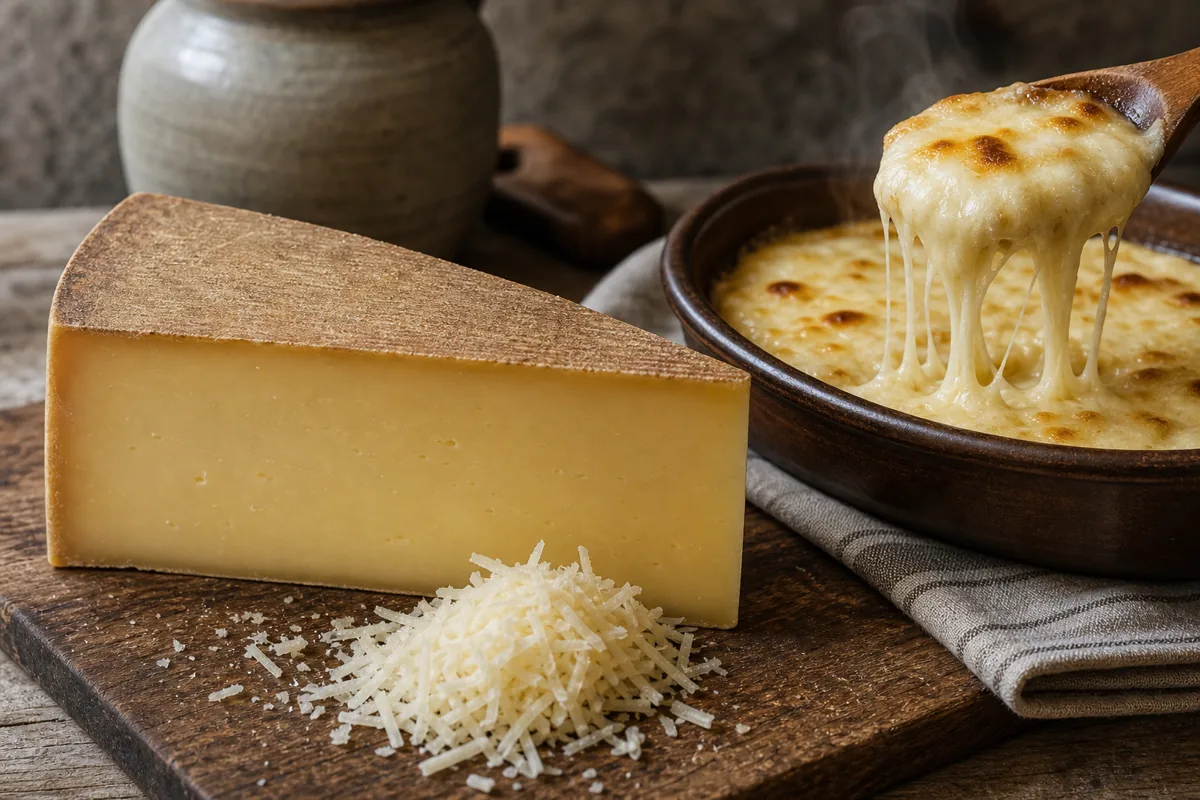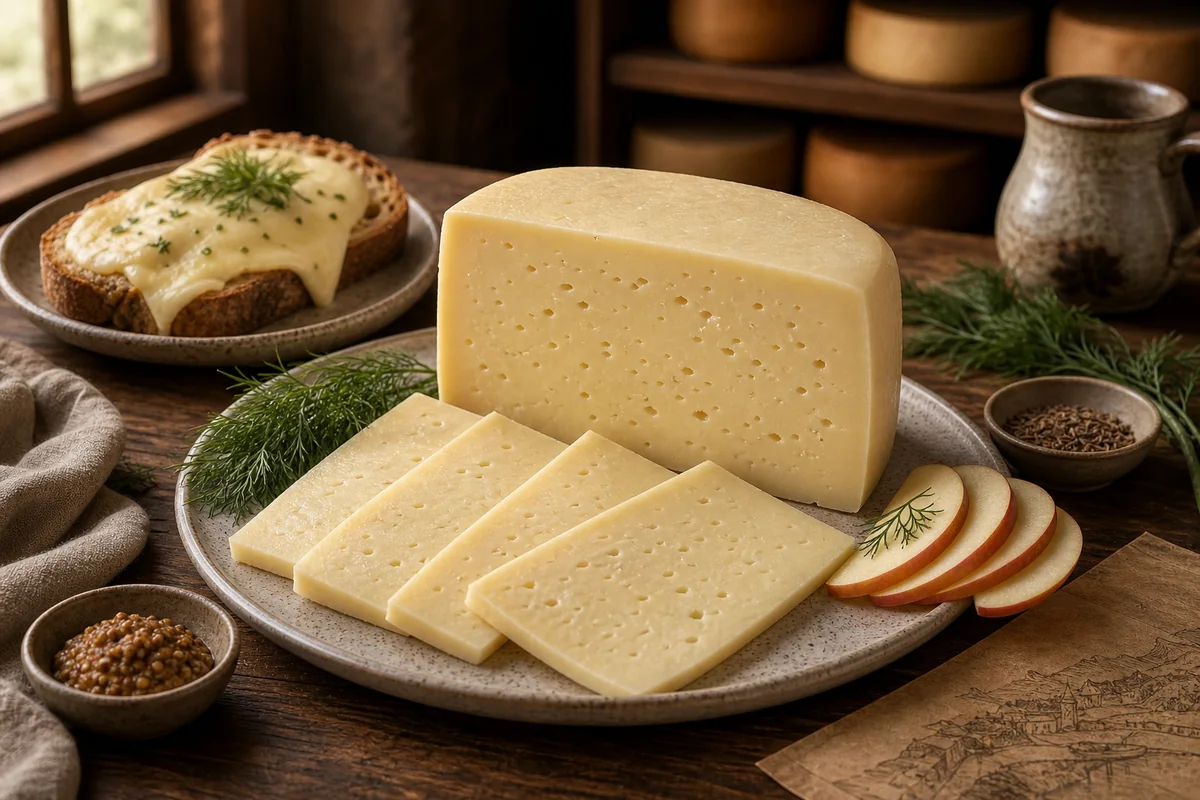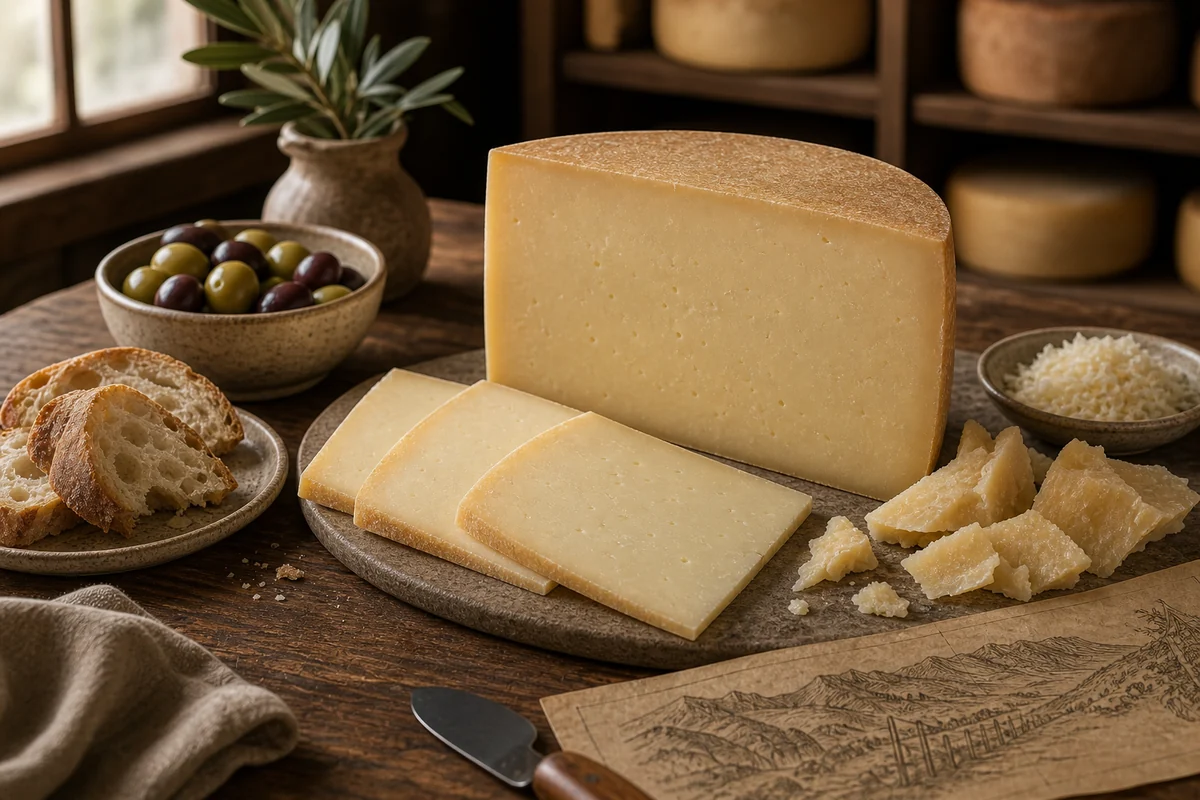
Among Italian cow's milk cheeses, Asiago is two cheeses sold under one name. Fresh Asiago Pressato is a mild, springy table cheese aged less than 40 days.
Aged Asiago d'Allevo is a firm, granular grating cheese that spends up to two years hardening into something closer to Parmesan than to its younger counterpart. Understanding which type you need is the first step toward using Asiago well.
The cheese takes its name from the Asiago Plateau in the Veneto-Trentino border region of northeastern Italy. The plateau sits at 1,000 meters elevation, and the dairy tradition there dates back to at least the 10th century.
The DOP designation, granted in 1978 and registered with the EU in 1996, protects both Pressato and d'Allevo as distinct products under one name.
In This Article
Pressato or d'Allevo: Which Asiago Is It?
The distinction between Pressato and d'Allevo is not a marketing label. These are different products made from different milk treatments, aged for different durations, and suited to completely different uses.
Buying the wrong one will produce a result nothing like what you intended.
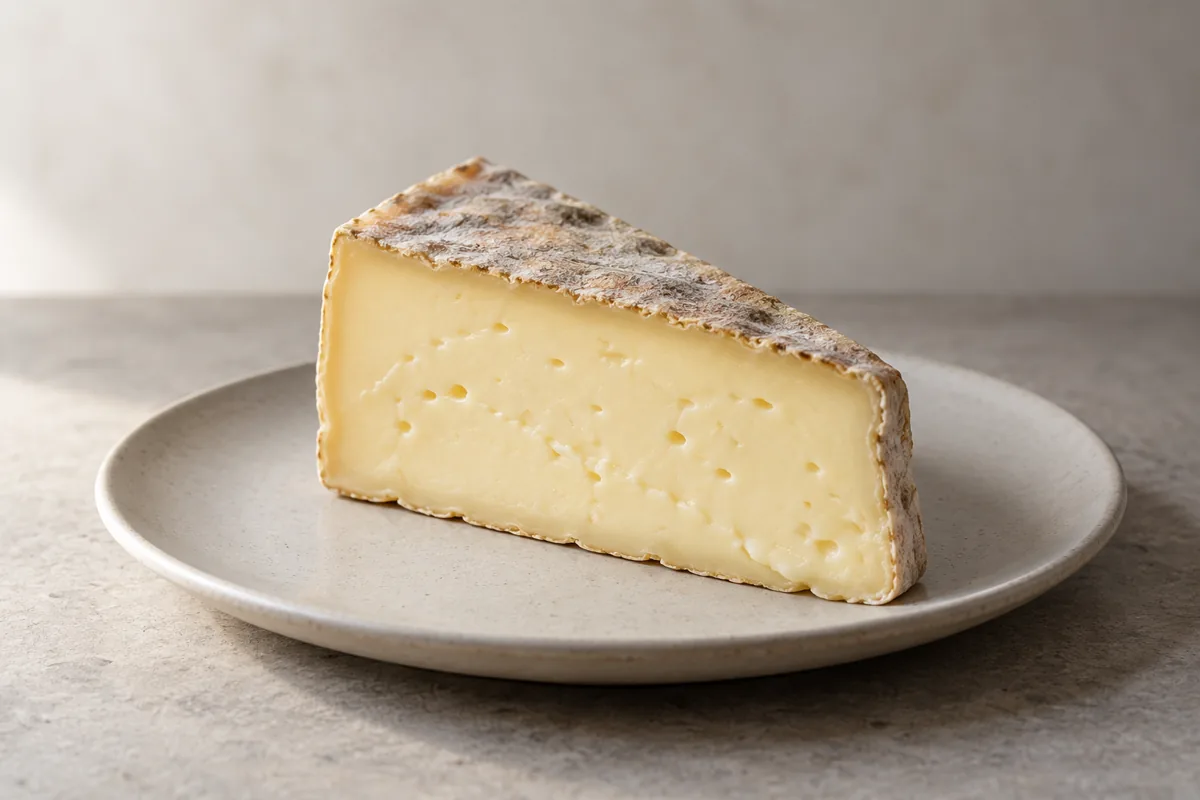
Pressato uses whole milk and ages for only 20 to 40 days. The result is a smooth, elastic cheese with a mild, milky flavor and a thin, pale rind.
It slices cleanly, melts reasonably well, and works as an eating cheese on sandwiches and boards. Think of it as Italy's answer to a young Havarti.
D'Allevo uses partly skimmed milk and ages from 4 months to over 2 years. The skimming concentrates the protein-to-fat ratio, and the extended aging drives out moisture, concentrates flavor, and produces a hard, granular paste suitable for grating.
A 2-year d'Allevo is sharp, savory, and crumbly with visible tyrosine crystals, closer in character to aged aged Cheddar crystals or a young Parmesan than to its own Pressato sibling.
- Pressato - whole milk, aged 20-40 days, smooth and elastic, mild and milky
- Mezzano (d'Allevo) - partly skimmed, aged 4-6 months, semi-firm, nutty and sweet
- Vecchio (d'Allevo) - aged 10-15 months, hard, sharp and savory with small crystals
- Stravecchio (d'Allevo) - aged 15-24+ months, very hard, intensely sharp and granular
The Consorzio Tutela Formaggio Asiago oversees both types and grades each wheel before applying the DOP stamp. Wheels that fail grading are sold without the Asiago name.
The Consorzio reports annual production of roughly 1.5 million wheels, split approximately 70% Pressato and 30% d'Allevo.
American 'Asiago' is almost always a Pressato-style cheese aged less than 30 days. If a US recipe calls for 'Asiago' without specifying the type, it means Pressato. If it calls for grated Asiago, it means d'Allevo. Confusing the two produces very different results.
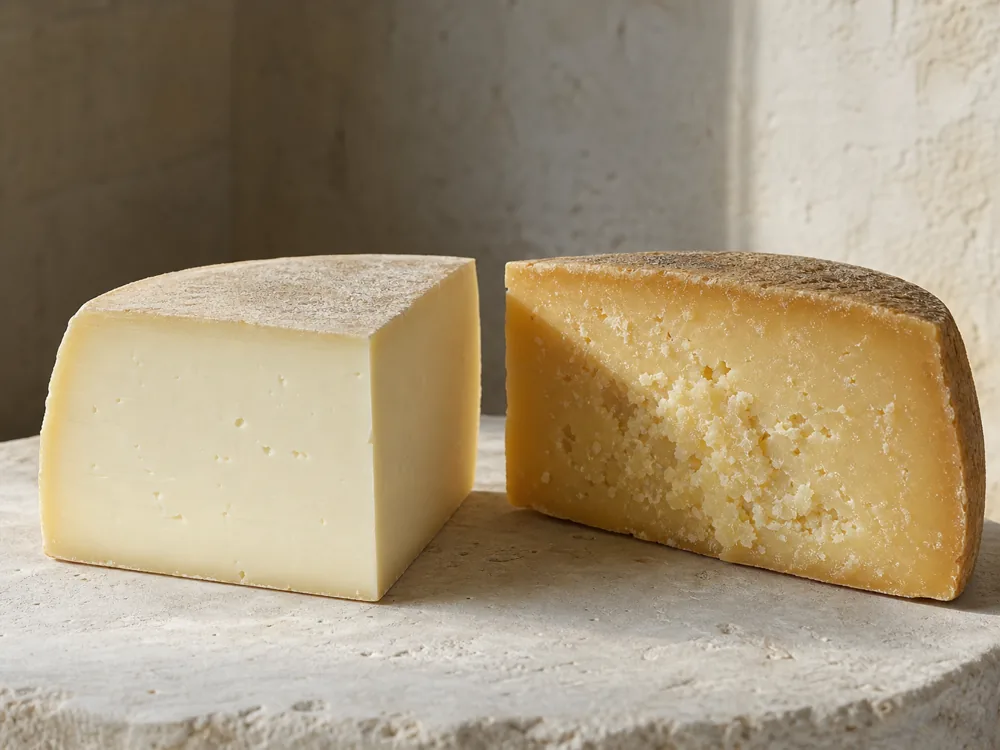
How Different Do the Two Styles Taste?
Pressato tastes clean, buttery, and mildly sweet. The texture is smooth with small, evenly distributed eyes.
It has almost no sharpness and only a faint tang. The flavor is pleasant but quiet, which makes it a good canvas for stronger accompaniments on a sandwich or board.
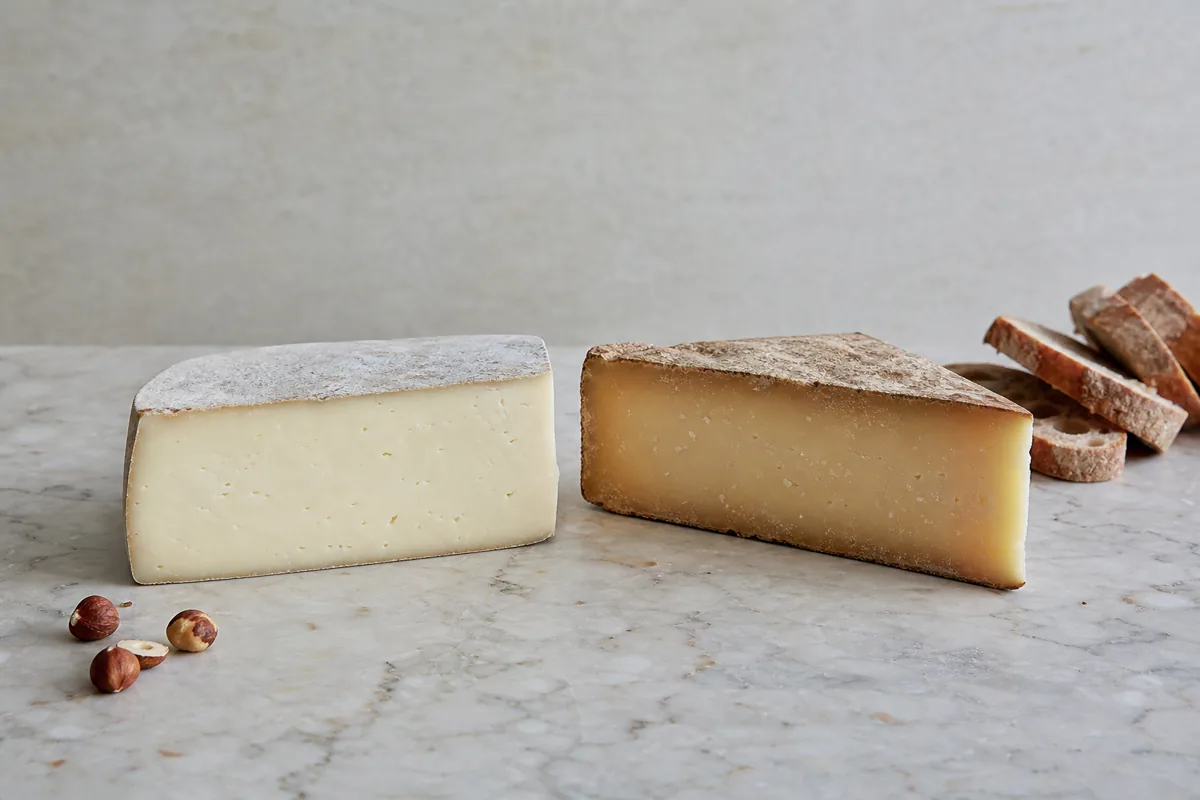
D'Allevo at the Mezzano stage (4-6 months) develops a nutty, caramel sweetness with moderate tang. The texture is semi-firm and sliceable.
At the Vecchio stage (10-15 months), the paste hardens, the flavor sharpens, and the first tyrosine crystals appear. At Stravecchio (15-24+ months), the cheese is fully hard, intensely savory, and crystalline throughout.
This describes a 6-month Mezzano. The balance shifts sharply with age, and a Stravecchio loses almost all of the creaminess as it turns intensely savory.
Few cheeses show this much variation across their aging spectrum under a single DOP name.
- Pressato (20-40 days): Mild, milky, buttery. Smooth elastic paste. For eating and sandwiches.
- Mezzano (4-6 months): Nutty, sweet, moderate tang. Semi-firm. Sliceable and grateable.
- Vecchio (10-15 months): Sharp, savory, earthy. Hard paste with emerging crystals.
- Stravecchio (15-24+ months): Intensely sharp and granular. Fine-grating only. Crystalline throughout.
The eyes in Pressato are a key quality marker. They should be small, round, and evenly distributed.
Large, irregular holes or a complete absence of eyes indicates a fermentation problem. D'Allevo gradually loses its eyes as the paste compresses during aging.
Stravecchio has no eyes because the extended drying and protein compression close them entirely.
Why Are the Two Made From Different Milk?
Both types start with cow's milk from herds in the designated DOP provinces of Vicenza, Trento, Padova, and Treviso. The critical difference begins at the vat: Pressato uses whole milk, d'Allevo uses milk that has been partly skimmed by natural creaming overnight.
- Pressato path - whole milk, coagulated, cut to walnut-size curds, briefly cooked, pressed, aged 20-40 days
- D'Allevo path - partly skimmed milk, coagulated, cut to rice-grain size, cooked to 47 degrees C, pressed firmly, aged 4 months to 2+ years
- Curd size - the single biggest variable; smaller curds expel more whey and age harder
- Cooking temperature - Pressato is barely heated; d'Allevo reaches 47 degrees C for a drier curd
The curd cut size determines the final texture more than any other step. Pressato curds are left at walnut size to retain moisture and stay soft.
D'Allevo curds are cut to the size of rice grains, which expels far more whey and produces the dense, low-moisture paste that can survive 2 years of aging without spoiling. That small-curd path also explains why Parmesan-style grating texture feels closer to Stravecchio than to Pressato.
After pressing, Pressato wheels enter a short aging room at 10 to 15 degrees C for 20 to 40 days. D'Allevo wheels go into temperature-controlled cellars at similar temperatures but stay for months or years.
During aging, d'Allevo wheels are turned and brushed regularly to develop the hard natural rind that protects the paste during the long maturation.
A walnut-sized curd retains roughly 55% of its original moisture. A rice-grain curd retains about 38%. This moisture difference at the start of aging determines whether the cheese stays soft and mild (Pressato) or dries into a hard, sharp grating cheese (d'Allevo Stravecchio). The same milk, the same rennet, the same vat: just a different cut size produces two fundamentally different cheeses.
The Asiago Plateau's altitude matters for d'Allevo production in particular. The cooler temperatures at 1,000 meters allow slower, more controlled aging than lowland cellars.
Wheels labeled Asiago Prodotto della Montagna (Mountain Product) come from dairies above 600 meters using milk from mountain herds, and they carry a premium for the richer, more aromatic milk.
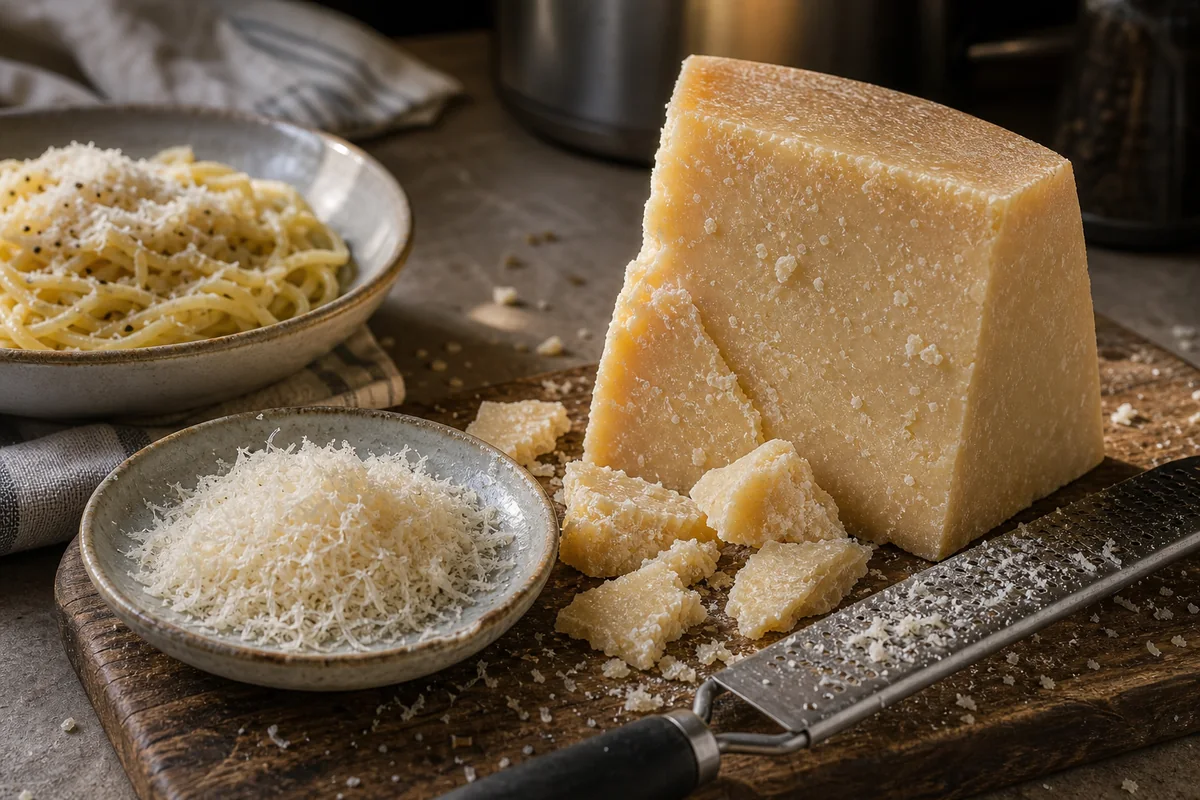
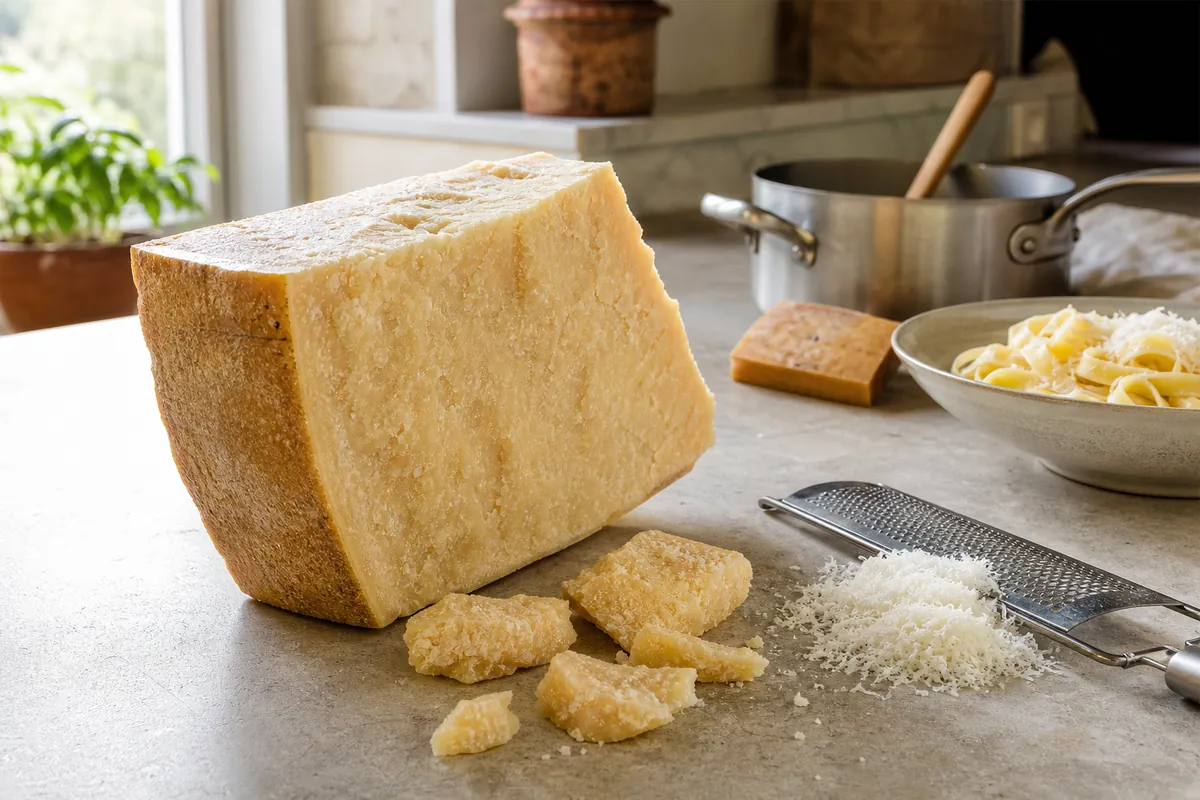
When a recipe needs a salty finishing layer, aged Asiago behaves closer to Parmesan and Pecorino tradeoffs than to a melting table cheese. That distinction matters most in pasta, risotto, and soup.
Which Asiago Melts and Which One Grates?
Pressato and d'Allevo serve different roles in the kitchen. Pressato is an eating and melting cheese.
D'Allevo Vecchio and Stravecchio are grating cheeses. Mezzano sits in the middle and works for both slicing and grating.
Using the wrong age grade for the task produces disappointing results.
| Use | How It Works |
|---|---|
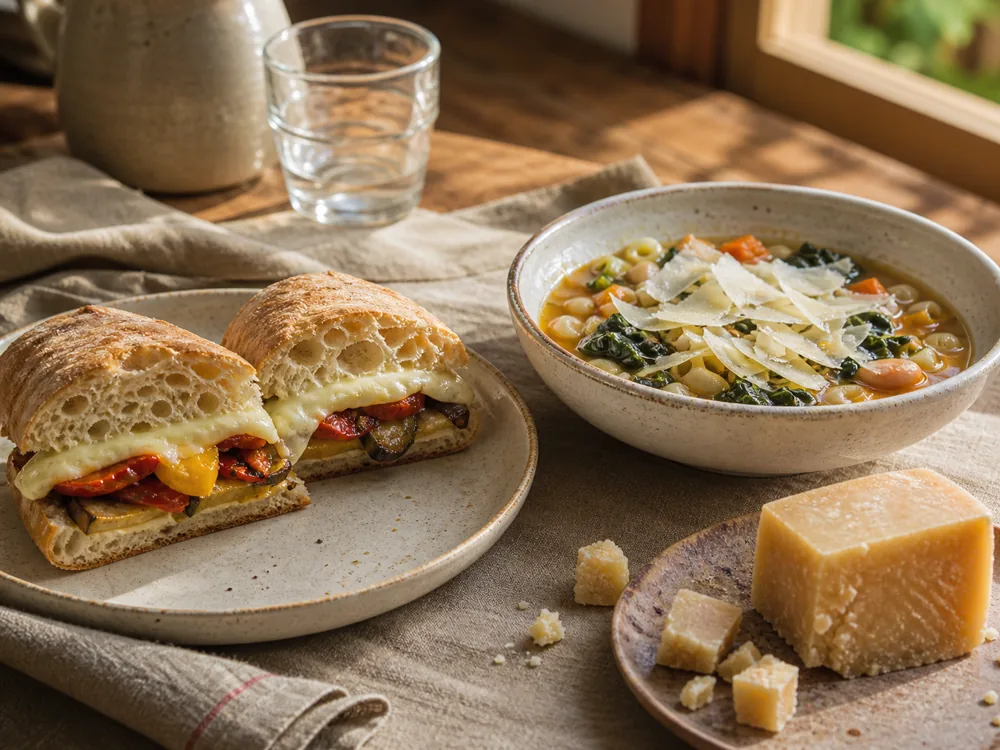
| Sandwich | Pressato: sliced thin for panini, grilled cheese, and cold sandwiches. Melts smoothly. |
| Salad | Vecchio or Stravecchio: shaved or grated over Caesar and arugula salads as a Parmesan alternative. |
| Pasta | Stravecchio: finely grated over risotto, pasta, and soups. Sharper than Parmesan, less salty than Pecorino. |
| Cheese Board | Mezzano: sliced into wedges for boards with prosciutto, olives, and roasted peppers. |
| Baking | Pressato: cubed into bread dough or focaccia. Melts into creamy pockets during baking. |
| Gratin | Mezzano or young Vecchio: sliced over potato gratins for a nuttier, less oily melt than Gruyere. |
- Pressato for eating - sandwiches, boards, panini, and any dish needing mild, smooth cheese
- Mezzano for versatility - slices for boards, grates for pasta, and melts for gratins
- Vecchio for grating - shaved over salads and soups, a Parmesan alternative with more tang
- Stravecchio for finishing - finely grated over completed dishes where sharp flavor must carry
Pressato melts well in grilled sandwiches and panini because the high moisture and whole-milk fat create a smooth, cohesive flow. D'Allevo at the Vecchio stage still melts but releases oil and turns grainy at high temperatures.
Use Vecchio for gratins where it bakes slowly rather than for direct-heat melting.
As a Parmesan substitute, Stravecchio d'Allevo costs less and delivers a tangier, slightly less sweet flavor. It works in any recipe calling for grated hard Italian cheese.
The main difference is sharpness: Stravecchio bites harder than Parmigiano-Reggiano at the same age.
For a milder board, pair Pressato with fruit and young cheeses. Buttery Havarti slices show a similar easy texture while tasting less nutty.
What Pairs With Each Grade?
The pairing strategy changes completely between Pressato and aged d'Allevo. Young cheese needs light partners.
Aged cheese stands up to bold ones.
| Pairing | Why It Works |
|---|---|
| Soave or Pinot Grigio (with Pressato) | Light, crisp Veneto whites match Pressato's mild, milky character without overpowering it. The regional match keeps both cheese and wine in their element. |
| Valpolicella Ripasso (with Mezzano) | Medium-bodied Veneto red with dried-fruit depth that complements Mezzano's nutty sweetness. The weight of both is matched. |
| Amarone (with Stravecchio) | The bold, raisiny intensity of Amarone needs a cheese with equal force. Stravecchio's crystalline sharpness and umami depth hold their ground. |
| Fresh Pear and Walnuts | A classic Italian combination that works across all Asiago grades. The pear's sweetness and walnut's bitterness frame the cheese. |
| Prosciutto di San Daniele | Northeast Italian prosciutto with a sweeter cure than Parma. The sweetness bridges Pressato's mildness and Mezzano's nuttiness. |
- Pressato - light whites, fresh fruit, mild cured meats
- Mezzano - medium reds, honey, walnuts, prosciutto
- Vecchio and Stravecchio - bold reds, dark honey, dried fruit, balsamic reduction
The Veneto regional pairing approach works well because the wines and cheese developed together over centuries. Soave with young Asiago and Amarone with aged Asiago are not creative suggestions.
They are the default combinations in the province where both are produced.
For a board featuring multiple Asiago grades side by side, include a progression from Pressato through Stravecchio with a nutty Gruyere wedge to show how alpine sweetness differs from Asiago sharpness. The contrast between young and aged Asiago surprises most people who assumed Asiago was a single cheese.
Which Asiago Keeps Longer?
Storage requirements differ between the two types. Pressato has higher moisture and spoils faster.
D'Allevo's low moisture gives it weeks or months of shelf life with minimal care.
- Pressato - treat like any fresh cheese: wrap well, use within 1-2 weeks, keep cold
- D'Allevo Mezzano - wax paper plus plastic, use within a month, trim dried edges
- Vecchio and Stravecchio - low moisture means long life, 6-8 weeks opened, freezes well grated
Pressato should never be frozen. The high moisture forms ice crystals that rupture the protein network, producing a mealy, crumbly texture after thawing.
D'Allevo freezes well if you grate it first. Pre-grated frozen Stravecchio thaws instantly and works directly over hot pasta.
A parchment-plus-loose-plastic wrap protects the cut face while letting hard Italian cheeses release moisture.
What Should You Ask at the Counter?
The first question to ask is: Pressato or d'Allevo? If the label just says "Asiago" without specifying the type or age, it is almost certainly Pressato.
American-made Asiago is Pressato-style by default. For aged d'Allevo, you need the DOP label and a stated aging grade.
Reserve extra-aged Asiago should be labeled d'Allevo Vecchio or Stravecchio. A producer name can help you choose a reliable wedge, but the useful buying question is still age grade first, then DOP status and texture.
Stravecchio d'Allevo is one of the best values in Italian hard cheese. It delivers sharp, crystalline, umami-rich flavor comparable to 24-month Parmigiano-Reggiano at a lower price.
The taste is tangier and less sweet than Parmesan, which some cooks prefer for pasta and salads.
Look for the Prodotto della Montagna (Mountain Product) sub-designation on d'Allevo wheels. This confirms milk from mountain herds above 600 meters and aging in plateau dairies.
The mountain wheels carry a richer, more aromatic profile than lowland production.
What Replaces Each Style?
Substitutes depend entirely on which Asiago type you need to replace.
For Pressato, young young Fontina texture or mild Gouda at 2-3 months matches the smooth, mild, elastic character. Monterey Jack also works for melting applications where Pressato's subtle flavor would be lost anyway.
- For Pressato - young Fontina, mild Gouda, or Monterey Jack for melting
- For Mezzano - young Gruyere or medium Cheddar for balanced slicing and grating
- For Vecchio - aged Manchego or Grana Padano for sharp grating
- For Stravecchio - Parmigiano-Reggiano or aged Pecorino for intense finishing
No single cheese substitutes across all four Asiago grades because the fresh and aged versions are fundamentally different products. Match the substitute to the specific grade your recipe requires.
How Does Skimming Change the Nutrition?
Nutritional values shift between Pressato and d'Allevo because the skimming and aging processes change the fat-to-protein ratio. D'Allevo is leaner per ounce but higher in protein and calcium due to moisture loss concentrating the solids.
- Pressato - lower protein, higher moisture, moderate calcium, higher fat percentage
- D'Allevo - higher protein, lower moisture, strong calcium, lower fat percentage
- Near-zero lactose - both types have minimal lactose; d'Allevo has virtually none
Long aging concentrates D'Allevo Stravecchio, because calcium stays in the paste while moisture leaves it.
For people seeking dairy calcium without lactose symptoms, aged d'Allevo is one of the best options available.
The partly skimmed milk in d'Allevo means it carries less saturated fat per ounce than full-fat cheeses like full-fat Brie or Fontina. Combined with its high protein, d'Allevo is a relatively efficient way to add flavor and nutrition to dishes without excessive fat.
SOURCES & REFERENCES
What Are the Most Common Asiago Questions?
Almost every question resolves once you know whether the wedge is Pressato or d'Allevo.
Pressato is a fresh, mild cheese made from whole milk and aged 20 to 40 days. D'Allevo is an aged cheese made from partly skimmed milk and aged from 4 months to over 2 years.
Pressato is smooth and elastic for eating. D'Allevo is firm to hard for grating.
They share a name and a DOP but are functionally different products.
Asiago d'Allevo at the Vecchio or Stravecchio grade works as a Parmesan substitute in most recipes. It is tangier and slightly sharper than Parmigiano-Reggiano, with a similar hard, granular texture.
Pressato cannot substitute for Parmesan because it is too soft, mild, and high in moisture. Match the Asiago grade to the Parmesan application.
Pressato melts smoothly and works in grilled sandwiches, panini, and baked dishes. Mezzano melts adequately for gratins at moderate heat.
Vecchio and Stravecchio do not melt well because their low moisture causes them to release oil and turn grainy under direct heat. Use them for grating and finishing, not melting.
Pressato lasts 1 to 2 weeks after opening when wrapped in wax paper and plastic. D'Allevo Mezzano lasts 3 to 4 weeks.
Vecchio and Stravecchio last 6 to 8 weeks because their low moisture inhibits bacterial growth. Pre-grated d'Allevo can be frozen for up to 6 months.
Pressato is a very approachable cheese with a mild, milky flavor that most people enjoy immediately. It works on sandwiches and boards without any acquired taste.
Tasting the progression from Pressato to Stravecchio on the same board is one of the best ways to learn how aging transforms cheese, because both carry the Asiago name and come from the same region.