Havarti is a mild, supple cow's-milk cheese that gives you a smooth melt without the sharper flavour of aged Cheddar or the stretch of mozzarella. You can slice it for sandwiches, melt it over burgers and eggs, or serve it on a board when you want an approachable cheese.
The name needs one important qualification. Havarti is a protected geographical indication in the European Union, so cheese sold there under the protected name must come from Denmark and follow the registered specification, while products sold in other markets may follow different national rules.
In This Article
What Is Havarti Cheese?
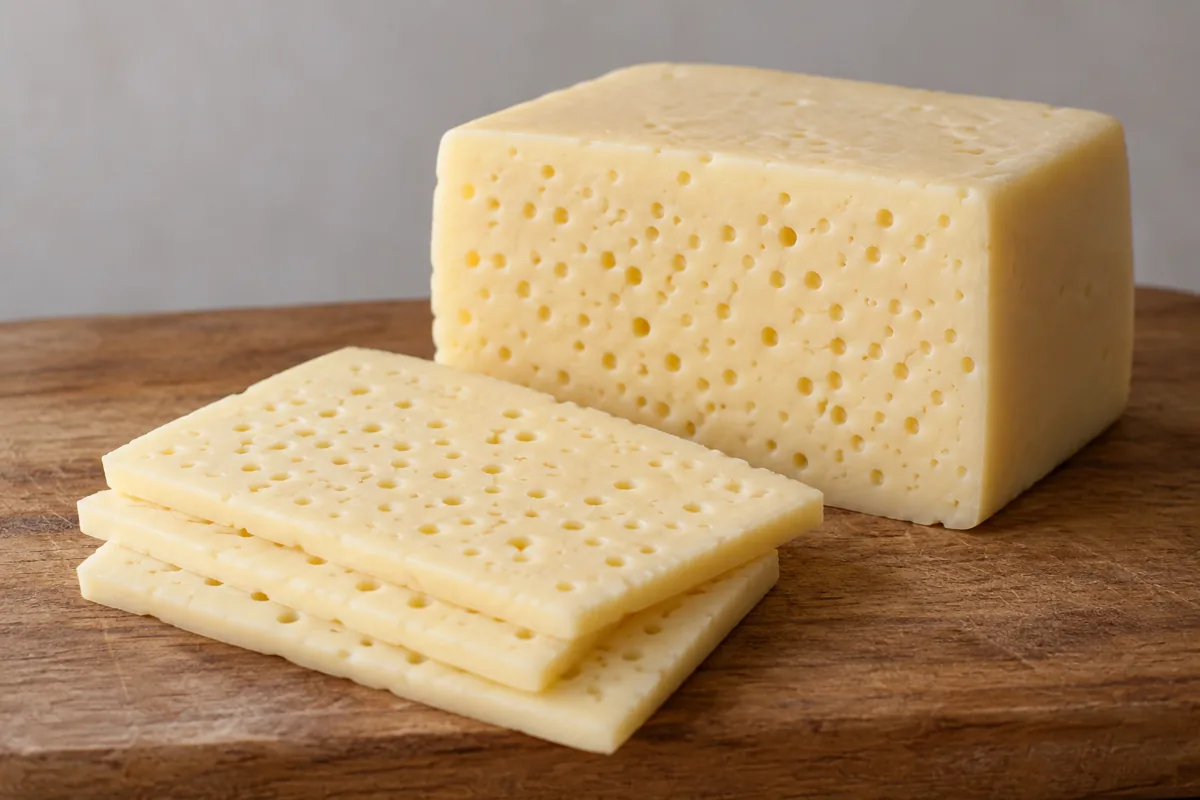
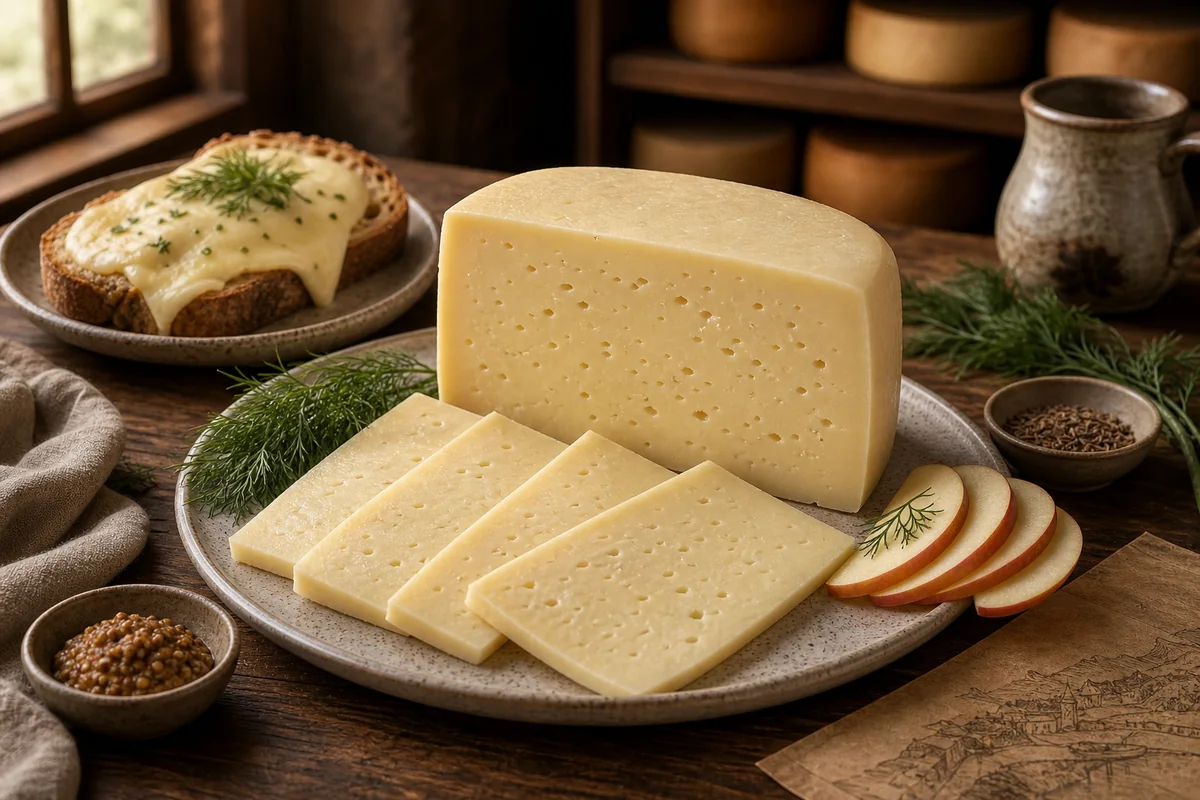
The current EU Havarti specification defines it as a ripened cow's-milk cheese with a whitish-to-yellow interior. Its paste should be soft but still cuttable and firm to the bite, with many irregular, rice-grain-sized eyes.
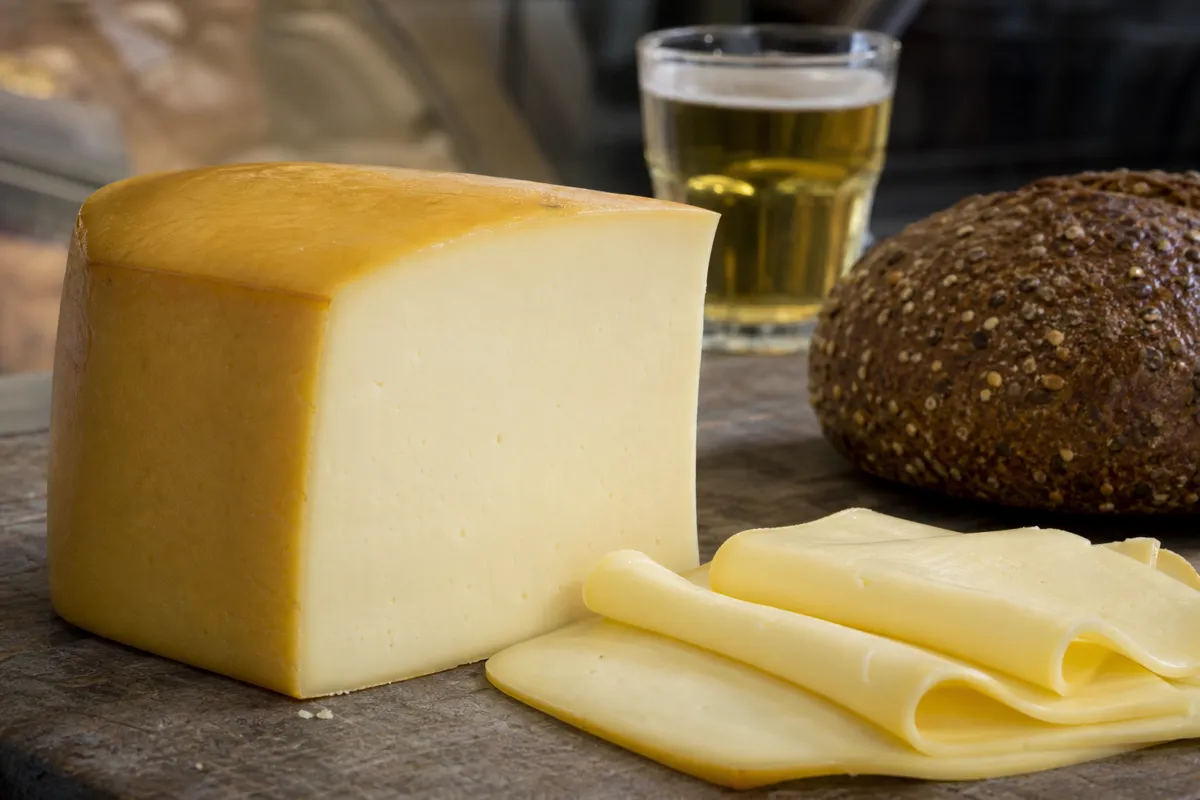
That description explains why Havarti can feel creamy without behaving like a spread. A cold slice bends and holds together, while warmth softens the paste enough for it to flow over bread, vegetables or meat.
The protected specification allows Havarti with or without a smear-ripened rind, and the surface may also be coated, so a rindless supermarket block and a small rind-ripened wheel can both fit the definition.
Why Does Havarti Taste So Mild?
Officially, Havarti should taste mild, acidic, aromatic and full, with more pronounced flavour as it ages. Young cheese therefore gives you butter and gentle tang first, while an older piece can become firmer and more savoury.
You will often see Havarti described simply as a washed-curd cheese. Curd washing is part of its production tradition, but the registered character also depends on temperature, timing, moisture and ripening, so one process step does not explain every block on the shelf.
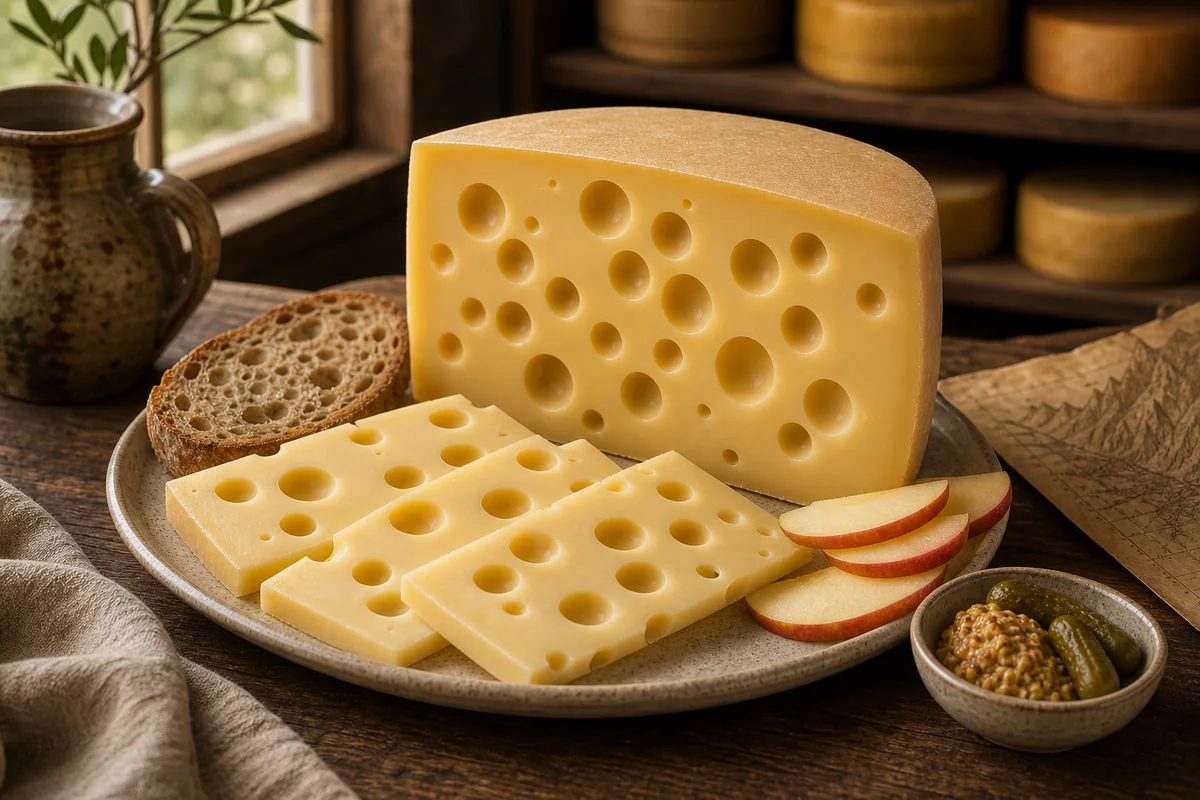
The small, irregular eyes separate Havarti visually from a completely closed cheese and from the large round holes associated with Emmental.
Is Havarti Really Protected?
Yes. The European Commission registered Havarti as a PGI in 2019, with the rule applying from May 2020, after objections from countries where the name had long been used more broadly.
The protection is territorial. Inside the EU, the PGI identifies Danish production; outside the EU, the legal treatment of the name depends on local law and trade agreements, which is why you may still find Havarti made in Canada or the United States.
If origin matters to you, look for Denmark and the PGI mark rather than relying on a Danish-looking brand name.
How Do Plain, Cream and Flavored Havarti Differ?
Plain Havarti is the most flexible choice because its gentle tang works cold or melted, while cream Havarti, labelled Flødehavarti under the PGI rules, must contain at least 60 percent fat in dry matter and gives you a richer, softer impression.
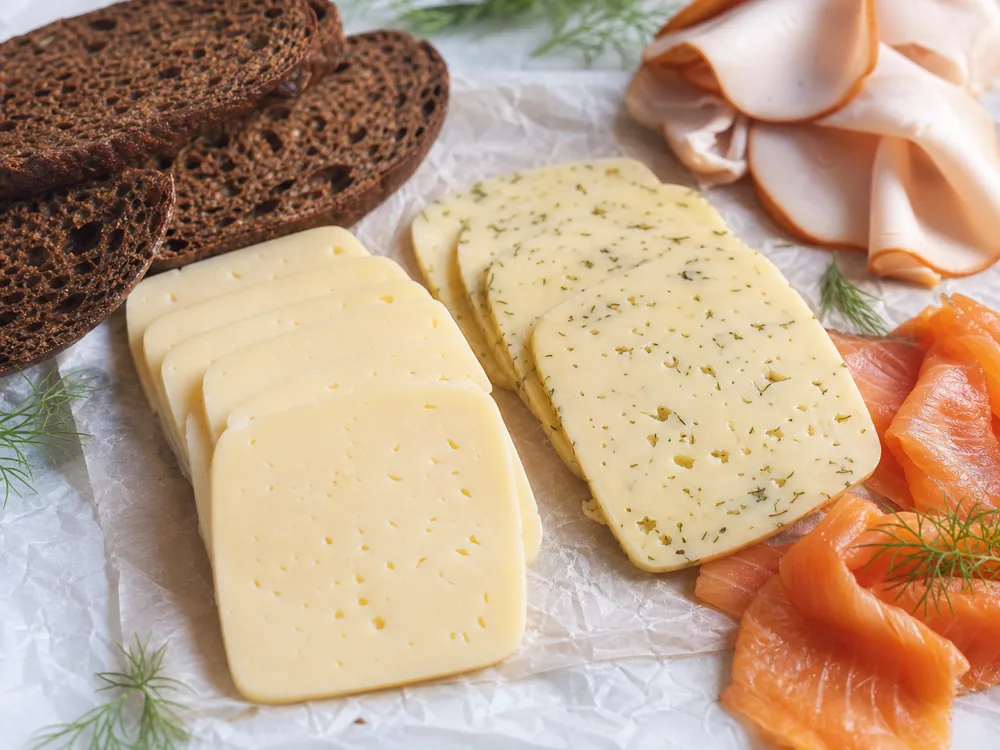
Flavoured Havarti uses the quiet base to carry a more obvious addition. The PGI specification permits herbs and spices, ramsons, garlic and jalapeños, and requires the flavouring to appear separately but in the same field of vision as the geographical indication.
| Style | What changes | Useful choice for |
|---|---|---|
| Plain, young | Mild, supple and easy to slice | Sandwiches, burgers, eggs and gentle melting |
| Cream Havarti | Higher fat in dry matter and a richer feel | Crackers, toast and a softer cheese board |
| Herb or chilli | The addition supplies most of the aromatic contrast | Simple sandwiches where one cheese carries the seasoning |
| More mature | Firmer texture and more pronounced flavour | A cheese board or a sandwich that needs more character |
Choose by the label in front of you rather than assuming every Havarti has the same age or fat level. A product page for Castello Creamy Havarti, for example, describes a one-month-old Canadian cheese, which is a product specification rather than a rule for the entire category.
When Does Havarti Work Best in Cooking?
Havarti earns its place in the kitchen when you want even coverage and a mild dairy flavour. It is particularly useful in grilled cheese, omelets, toast, burgers and creamy pasta because it softens readily without demanding that the rest of the dish adapt to a strong cheese.
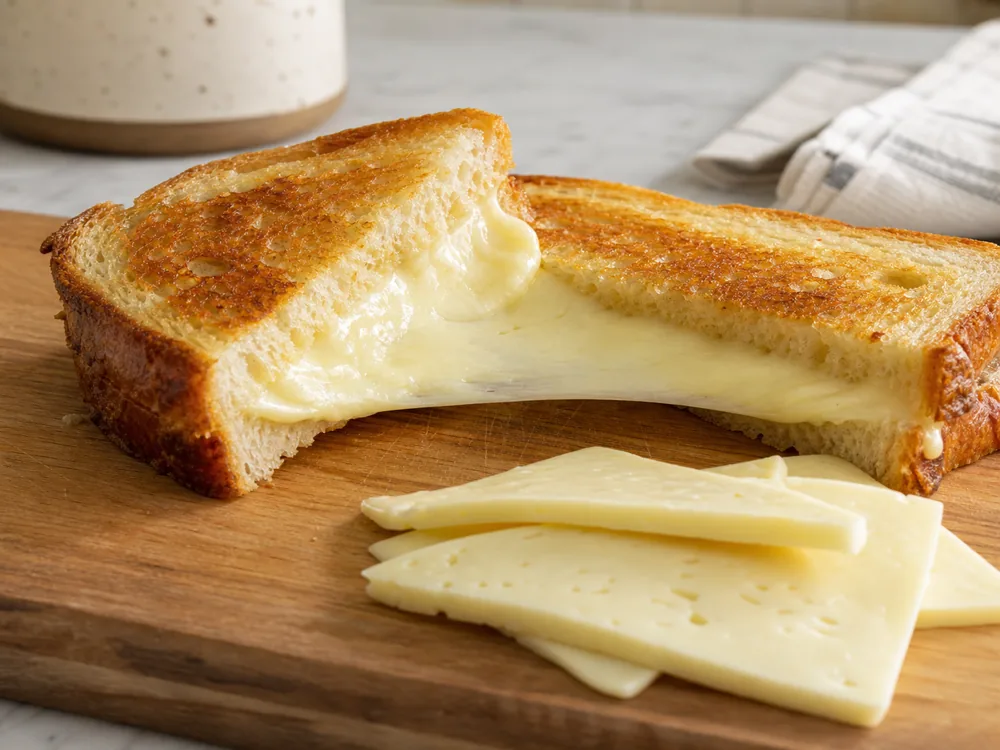
A producer's cooking guidance describes its Creamy Havarti as suitable for grilling and melting, and its mac and cheese recipe melts grated Havarti into a milk-and-cream sauce. That demonstrates a practical use for that product, but it does not prove that every Havarti will melt identically.
If you need a deeply browned top or a forceful aged flavour, Havarti may feel too quiet on its own. Combine it with a smaller amount of mature Cheddar, or choose Gruyère when browning and a nutty finish matter more than softness.
What Should You Pair with Havarti?
Acid and crunch keep mild Havarti from feeling flat, so apples, pears, pickles and crisp bread give you contrast without covering the cheese.
With dill or garlic Havarti, let the added flavour guide the rest of the plate. Dill works naturally with rye, cucumber and smoked fish, while jalapeño Havarti suits a burger or quesadilla where the cheese can provide both richness and heat.
More mature Havarti can take roasted nuts or darker bread because its flavour has had time to develop. We would keep very sweet preserves and heavy tannic red wine for stronger cheeses that can answer them.
How Should You Store Havarti?
Keep Havarti refrigerated at 40°F or 4°C or below, the temperature in the USDA refrigeration guidance. Once opened, wrap the cut surface so it does not dry out, then follow the package date and any producer instructions.
A damp or slimy surface, unwanted mould or a strong off-odour means you should pause rather than simply melting the cheese to hide the problem. Pre-sliced Havarti exposes more surface area than a block, so it usually loses quality sooner after opening.
If the supple texture matters for cold sandwiches or a board, buy a smaller piece and keep it refrigerated rather than freezing it.
Can You Eat Havarti During Pregnancy?
Do not assume that the cheese name settles the question. Check that your Havarti was made with pasteurised milk, and pay attention to whether it was sliced at a deli or packaged by the producer.
The CDC pregnancy guidance lists dairy products made from raw milk and unheated cheese sliced at a deli as riskier choices. It lists pasteurized soft cheeses heated to an internal temperature of 165°F or until steaming hot and deli-sliced cheeses heated to 165°F or until steaming hot as safer choices.
In the UK, the NHS lists pasteurised soft cheeses as safe to eat and says foods made from unpasteurised milk must be thoroughly cooked. Served cold, Havarti is described as a pasteurized soft, sliceable cheese, a type the CDC list does not cover, so ask a midwife or doctor.
SOURCES & REFERENCES
What Else Do People Ask About Havarti?
Yes, especially when you want a smooth, mild layer in toast, eggs, burgers or pasta. For a browned crust or stronger flavour, combine it with a more assertive cheese or choose Gruyère.
Cream Havarti has a higher fat-in-dry-matter level and feels richer and softer. Under the Danish PGI specification, the name Flødehavarti may be used when Havarti contains at least 60 percent fat in dry matter.
The EU PGI protects Havarti as a Danish cheese, and PGI-labelled Havarti must be produced in Denmark. Other markets may still sell locally made cheeses under the Havarti name, so check the origin line if Danish production matters to you.
It can. The PGI specification allows Havarti with or without a smear-ripened rind, and it also allows a coated surface.