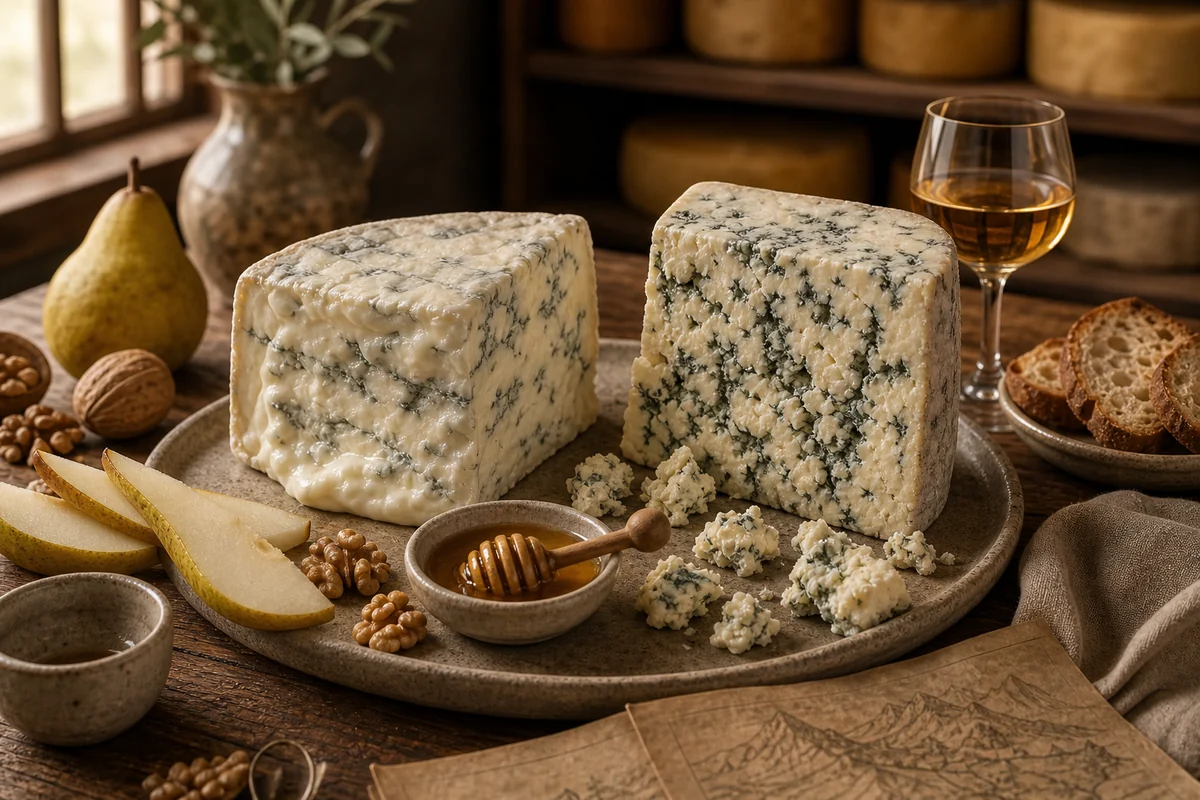
Gorgonzola is Italy's most famous blue cheese and one of only a few blue cheeses with DOP protection. The Swiss alpine cheese comparison shows how a different style of DOP protection works in the neighboring region. It belongs to the Italian cow's milk cheese tradition that spans from the Po Valley to the Alpine foothills of Lombardy and Piedmont. The Italian regional cheese guide maps the Lombardy and Piedmont DOP zones where Gorgonzola must be produced.
What sets Gorgonzola apart from other blue cheeses is the formal split into two distinct grades: Dolce (sweet and creamy) and Piccante (sharp and crumbly). These are not just aging variations. They use different production methods and function as different cheeses in the kitchen.
This profile covers both grades, the DOP rules that govern production, and how to buy, pair, and store Gorgonzola correctly.
In This Article
What Gorgonzola Is
Gorgonzola is a blue-veined cow's milk cheese produced exclusively in the Lombardy and Piedmont regions of northern Italy. The town of Gorgonzola, about 20 km northeast of Milan, gives the cheese its name, though production long ago spread across the eligible DOP zone.
Historical records place Gorgonzola production as early as the 9th century, making it one of the oldest named cheeses in the world. The original version was likely an accidental blue, formed when naturally occurring Penicillium spores colonized cheeses stored in the damp caves of the Po Valley.
Gorgonzola received DOP (Denominazione di Origine Protetta) status in 1996 under EU regulations. The Consorzio per la Tutela del Formaggio Gorgonzola oversees production standards, inspects facilities, and certifies every wheel with the foil wrap bearing the consortium's "CG" logo.
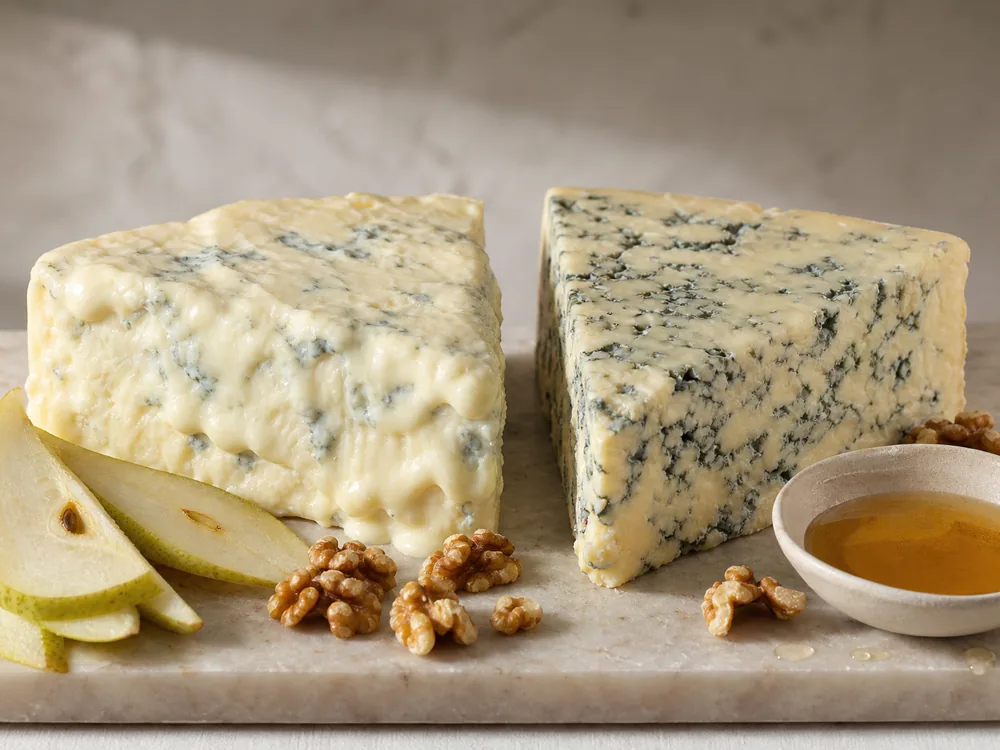
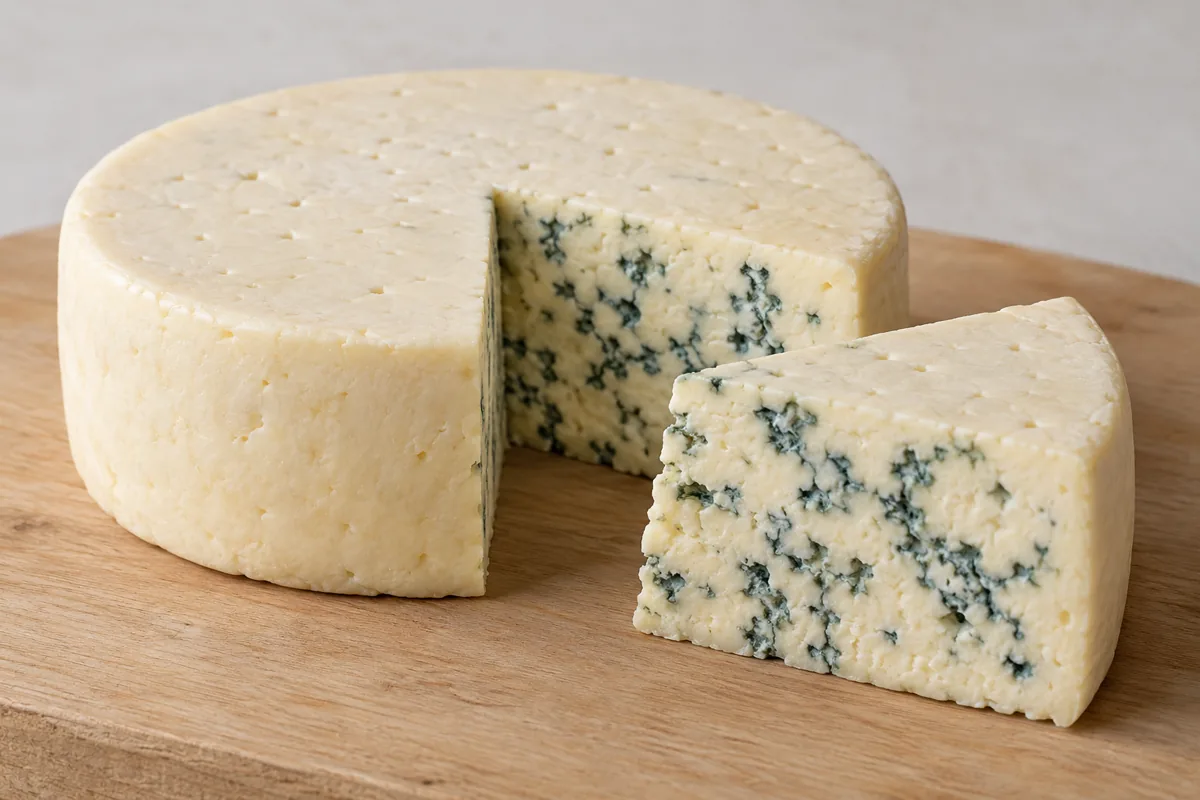
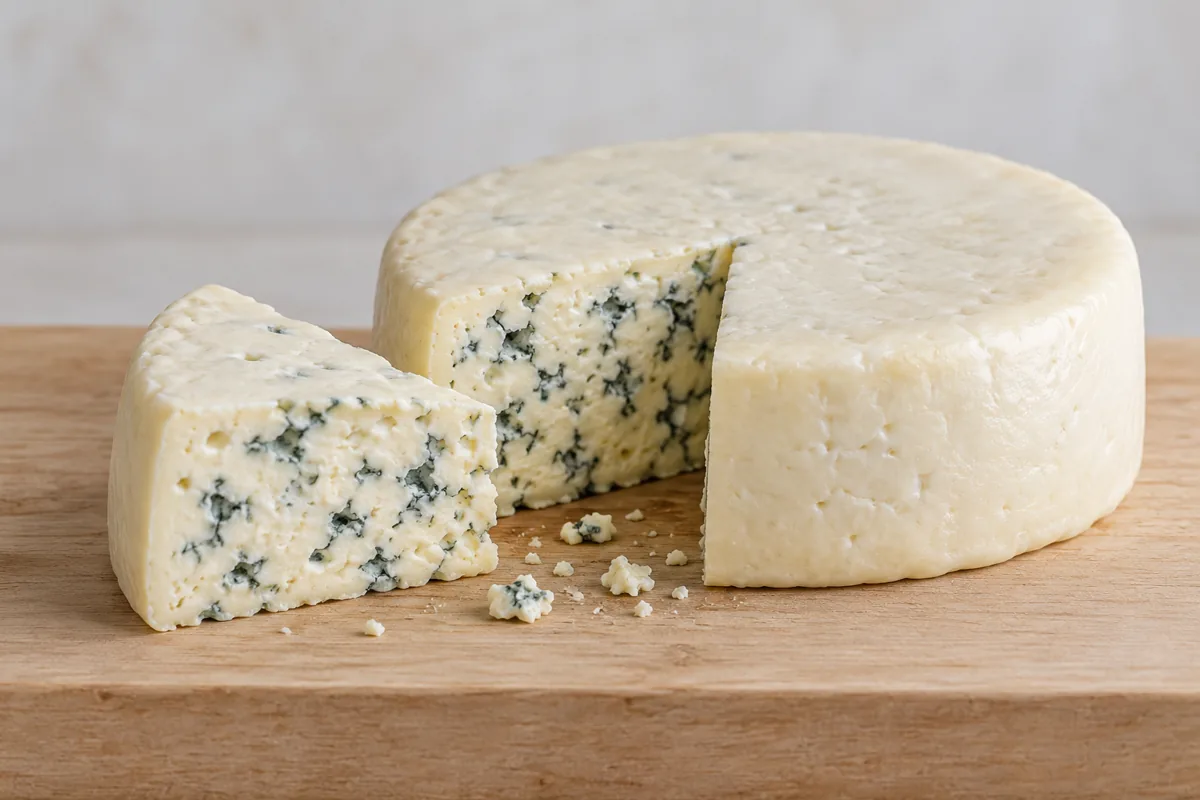
- Dolce (sweet) — soft, spreadable paste, mild blue tang, 2-3 months aging, cream-colored with sparse blue veining
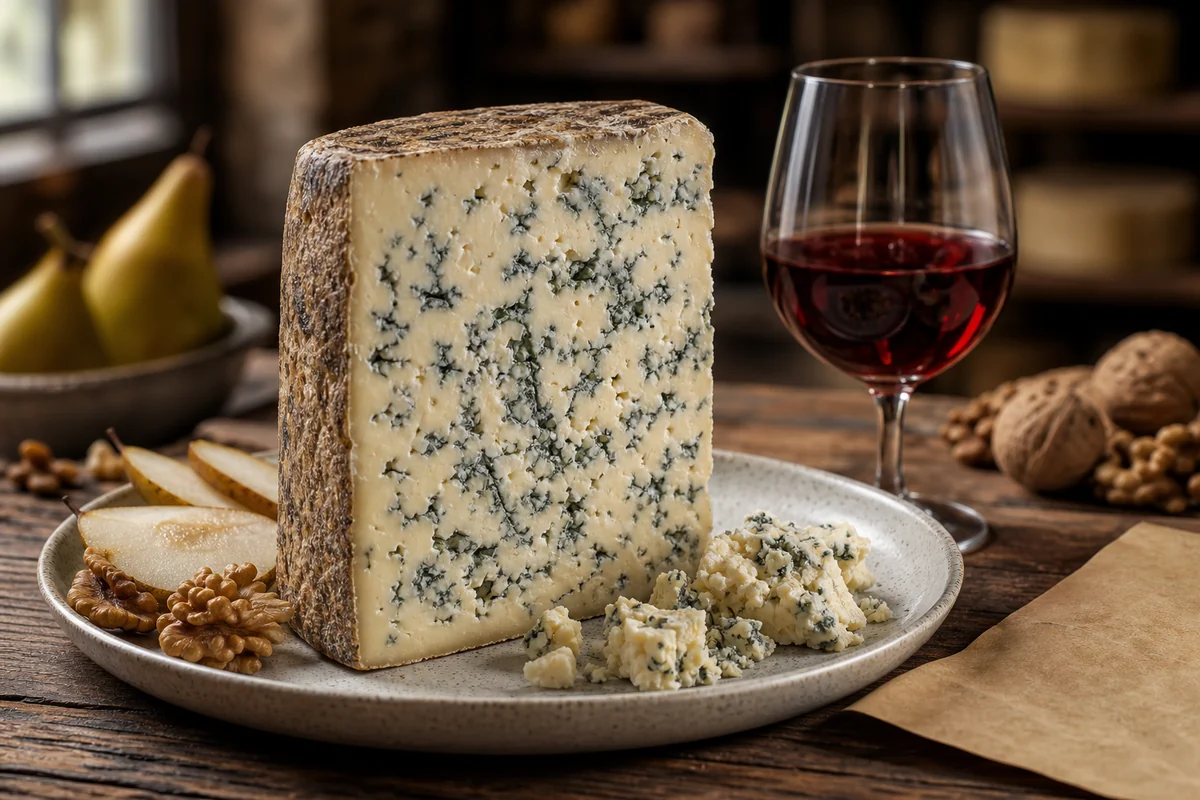
- Piccante (sharp) — firm, crumbly paste, assertive blue punch, 3-6+ months aging, dense blue-green veining throughout
- DOP zone — production restricted to specific provinces in Lombardy and Piedmont
- Foil wrap — every authentic wheel is wrapped in foil stamped with the Consorzio CG logo
The DOP rules require that milk comes from cows raised and milked within the designated provinces. The entire production process, from curdling through aging, must occur within the DOP zone. Gorgonzola made outside this zone cannot legally use the name in the EU.
About 55% of Gorgonzola produced today is Dolce, reflecting consumer preference for the milder, creamier version. Piccante accounts for the remaining 45% and is more popular in Italy than in export markets, where Dolce dominates.
Gorgonzola Flavor: Dolce vs Piccante
The flavor difference between Dolce and Piccante is not simply a matter of aging time. The two grades use different curd-making techniques that produce fundamentally different textures and flavor intensities from the start.
Dolce uses a single-curd method. The curd is formed, lightly drained, and transferred to molds while still moist and soft. Penicillium roqueforti is added during production, but the high moisture and shorter aging limit the extent of blue veining. The result is a paste that stays creamy and spreadable with a mild, buttery, slightly sweet blue tang.
The radar above reflects Dolce at 2-3 months. Piccante at 4-6 months shows dramatically higher bitter (48), higher salty (45), much lower creamy (30), and higher umami (58) as the paste firms and the blue veining intensifies.
Piccante uses a two-curd method. Evening milk is curdled separately from morning milk, and the two curds are layered in the mold. This creates natural seams in the paste where air penetrates and blue mold develops aggressively during the longer aging period.
- Dolce taste — buttery, mild tang, sweet undertone, smooth finish, faint mushroom note
- Piccante taste — assertive blue punch, sharp, peppery, lingering metallic finish, earthy depth
- Dolce texture — soft, spreadable, spoonable at room temperature
- Piccante texture — firm, crumbly, breaks into chunks rather than spreading
If you have tried Gorgonzola once and decided you dislike blue cheese, consider that you may have tried the wrong grade. Dolce and Piccante are different enough that many people who reject Piccante's sharp bite enjoy Dolce's gentle creaminess on pasta or with honey.
The blue veining in both grades comes from Penicillium roqueforti. During aging, metal needles pierce the wheels to allow oxygen into the paste. The mold needs oxygen to grow, and the needle channels create the characteristic veining patterns visible when you cut into a wheel.
Gorgonzola Dolce is sometimes labeled 'Gorgonzola Cremificato' or simply 'sweet Gorgonzola' in US markets. If the label says Gorgonzola DOP and the paste is soft and pale with minimal blue veining, it is Dolce. If the paste is firm, heavily veined, and crumbles when cut, it is Piccante. The foil wrapper color also differs: Dolce typically has green foil, Piccante has aluminum-colored foil.
How Gorgonzola Is Made
Gorgonzola production follows a lactic-acid method rather than the pressed-cooked method used for alpine cheeses. The curd is not heated to high temperatures or pressed under heavy weights. This preserves the high moisture content that gives Gorgonzola its characteristic soft texture.
Pasteurized full-fat cow's milk is warmed to 28-36 degrees C and inoculated with lactic starter cultures and Penicillium roqueforti spores simultaneously. Rennet is added to form the curd.
- Warm and inoculate — milk at 28-36 degrees C receives lactic cultures and P. roqueforti
- Form and cut curd — gentle cutting preserves moisture in the curd
- Mold and drain — curd transfers to perforated cylindrical molds, drains by gravity
- Salt by hand — dry salt rubbed on exterior over multiple days
- Pierce with needles — stainless steel needles puncture wheels to allow oxygen for blue mold growth
- Age at high humidity — 2-3 months (Dolce) or 3-6+ months (Piccante) at 2-7 degrees C
The needle-piercing step is critical. Without oxygen channels, the Penicillium roqueforti remains dormant in the paste and no blue veining develops. Wheels are pierced on both faces and along the sides, creating a grid pattern that determines where the blue-green veins will appear.
Aging occurs in temperature-controlled rooms at 2-7 degrees C with 85-95% humidity. Dolce wheels age for 50-80 days before passing inspection. Piccante wheels age for a minimum of 80 days, with many producers aging them to 150 days or more for a sharper, more developed flavor.
The Consorzio inspects every wheel before it can be sold as Gorgonzola DOP. Inspectors check the veining pattern, paste consistency, rind condition, and overall flavor. Wheels that fail inspection cannot carry the DOP name or the CG foil wrap. This means every piece of foil-wrapped Gorgonzola you buy has been individually certified.
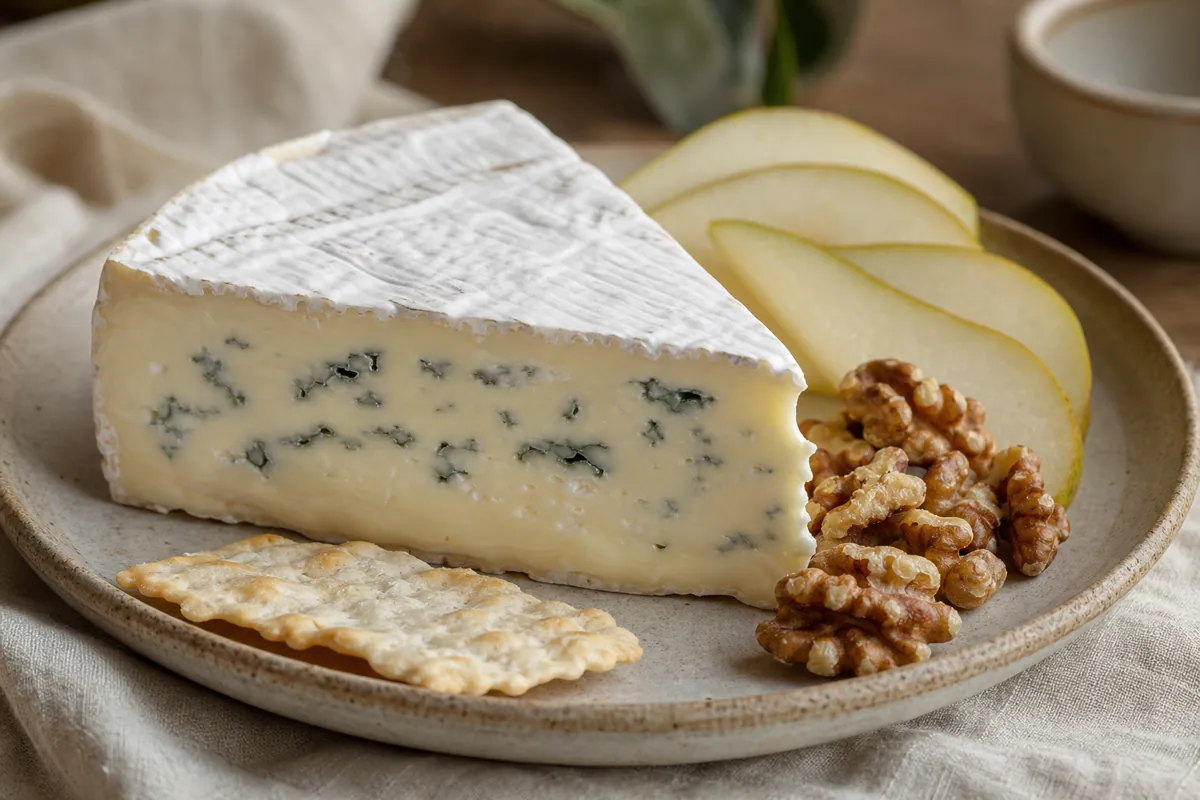
Unlike mild bloomy cheese, where the rind mold (Penicillium camemberti) grows on the surface, Gorgonzola's mold grows inside the paste. The English PDO blue uses the same interior-mold approach but without the needle-piercing step that Gorgonzola requires. The natural rind that forms on the exterior is a byproduct of the aging environment, not an intentional mold culture.
Best Uses for Gorgonzola
Dolce and Piccante perform differently in the kitchen. Dolce melts into sauces and dressings smoothly. Piccante crumbles over finished dishes as a flavor accent. Choosing the wrong grade for the application produces either too little or too much blue intensity.
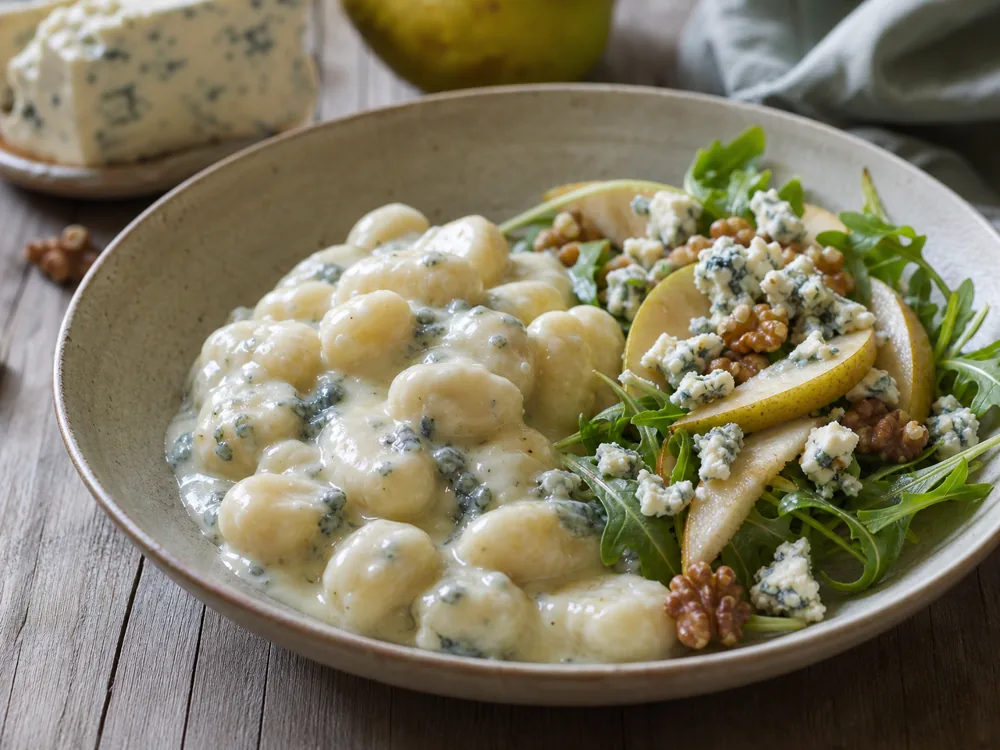
Dolce is the cooking grade. Its high moisture and mild flavor melt into cream sauces, risotto, and pizza without the sharp bite that can dominate a dish when Piccante is used in the same quantity.
- Dolce for cooking — cream sauces, risotto, pizza, gnocchi, polenta
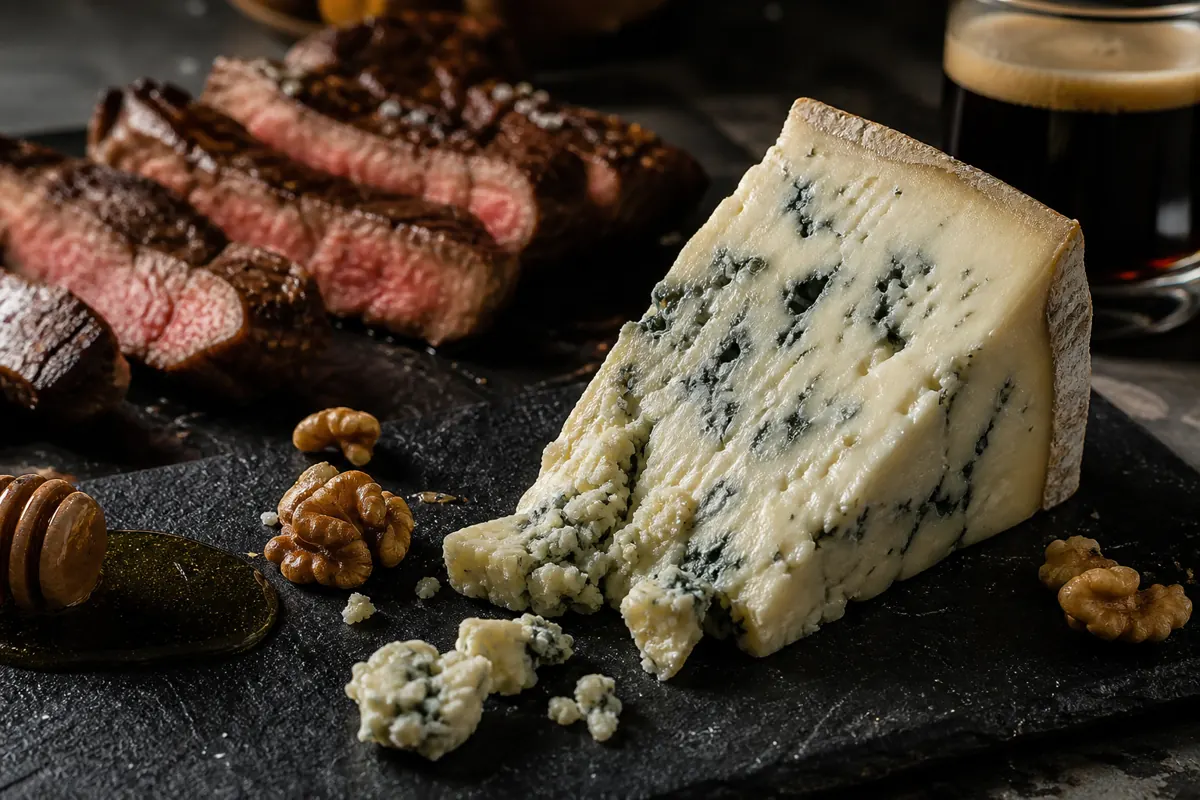
- Piccante for finishing — salad crumbles, steak topping, board cheese, pasta garnish
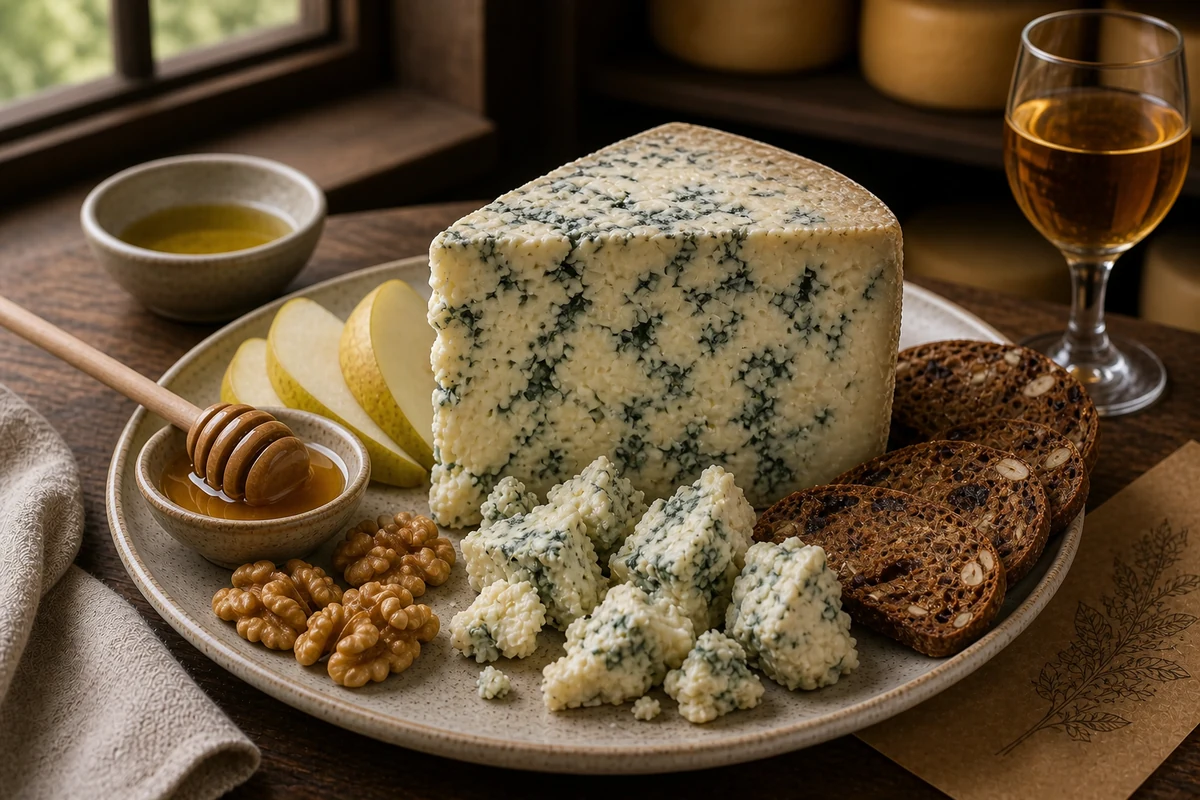
- Dolce with honey — the classic Italian antipasto combination
- Piccante with balsamic — aged DOP balsamic bridges the sharp flavor
The most common mistake with Gorgonzola is using Piccante in a cream sauce. The sharp, peppery flavor overwhelms the cream and can taste metallic when reduced. Always use Dolce for sauces and reserve Piccante for cold applications or brief heat exposure.
Gorgonzola Pairings
Gorgonzola's rich, tangy character requires partners with enough sweetness or acidity to cut through the fat and balance the blue mold flavor. The pairing strategy differs by grade.
Dolce pairs with sweeter, lighter wines and foods. Piccante needs sweeter, more intense partners to counterbalance its sharpness.
- Moscato d'Asti — the Italian standard for Dolce, light and sweet
- Sauternes or dessert Riesling — necessary sweetness for Piccante's sharpness
- Raw chestnut honey — bitter-sweet character bridges the blue flavor
- Toasted walnuts and ripe pears — texture and sweetness, works with both grades
Avoid dry red wines with Gorgonzola. The tannins in Cabernet Sauvignon or Barolo clash with the blue mold and create a metallic, bitter aftertaste. If you want a red pairing, Amarone or a slightly sweet Lambrusco are the safest choices.
How to Store Gorgonzola
Gorgonzola is a high-moisture cheese that deteriorates faster than hard or semi-hard varieties. Proper wrapping and cold storage are essential. An unwrapped wedge of Dolce will dry and discolor within two days.
The blue mold in Gorgonzola continues to develop during storage. This means the flavor intensifies over time. Buy only what you will use within a week for best quality, especially for Dolce.
- Wrap Dolce tightly in foil — limits air exposure that accelerates mold development and drying
- Use wax paper for Piccante — allows the firmer paste to breathe without excess moisture buildup
- Store at 35-38 degrees F — colder than room temp, slightly warmer than the back of the fridge
- Buy only what you need — Dolce degrades noticeably after 5-7 days even when properly stored
If the blue veining spreads significantly during storage or the paste develops off-colors (yellow, pink, or black spots distinct from the normal blue-green), discard the piece. Unlike hard cheeses where you can cut around mold, Gorgonzola's soft paste allows contamination to spread quickly through the entire piece.
Never eat Gorgonzola with a pink or orange discoloration on the paste. Normal Gorgonzola veining is blue-green. Pink or orange coloring can indicate Brevibacterium or other surface bacteria that are not part of the intended culture. While usually not dangerous, they indicate improper storage and the flavor will be off.
For tips on wrapping and storing all cheese types, including soft blues like Gorgonzola and aged hard cheeses, see our complete cheese storage guide. The blue cheese wine pairing guide covers the specific wine matches for both Dolce and Piccante styles.
Gorgonzola Nutrition
Gorgonzola is calorie-dense with high fat content, consistent with full-fat blue cheeses. The sodium level is moderate for a blue cheese but higher than mild varieties like Swiss or Italian pizza cheese.
- Moderate calories — 100 per ounce, in line with other soft blue cheeses
- Lower calcium — 149mg per ounce, less than hard cheeses because of higher moisture
- Notable sodium — 326mg per ounce from the dry-salt rind treatment during aging
- Low lactose — bacterial cultures convert most lactose during production and aging
Calcium content in Gorgonzola is lower than in hard cheeses because the high moisture dilutes mineral concentration. Gruyere delivers nearly double the calcium per ounce. If calcium is your goal, hard aged cheeses outperform soft blues.
These figures come from the USDA FoodData Central database for Gorgonzola cheese.
Gorgonzola's strong flavor means you use less per serving than milder cheeses. A tablespoon of crumbled Piccante on a salad delivers more flavor impact than an ounce of mild cheese on a sandwich, making the per-serving calorie contribution modest in practice.
Gorgonzola FAQ
These are the questions we get most about Gorgonzola, from choosing between Dolce and Piccante to pregnancy safety.
Dolce (sweet) is soft, spreadable, and mild with a gentle blue tang. It ages 2-3 months and uses a single-curd method. Piccante (sharp) is firm, crumbly, and assertive with intense blue veining. It ages 3-6+ months and uses a two-curd method that creates more air channels for mold growth. Use Dolce for cooking (sauces, risotto, pizza) and Piccante for finishing (salad crumbles, steak topping, cheese boards).
Raw Gorgonzola (cold, on a board) is on the avoid list from the FDA and NHS during pregnancy because it is a soft, mold-ripened cheese where Listeria can survive. Cooked Gorgonzola heated to 165 degrees F (74 degrees C) throughout is considered safe. If you want Gorgonzola during pregnancy, choose it in a cooked pasta sauce or baked dish rather than raw.
Dolce substitutes for Cambozola, Danish Blue, and Saint Agur in cooking. Piccante substitutes for Roquefort and Stilton in salads and boards, though the flavor profiles differ. Roquefort is sharper and tangier (sheep's milk), and Stilton is drier and more earthy. For cream sauces specifically, Dolce is the best blue cheese because of its high moisture and mild flavor.
A slight metallic finish is normal in Piccante-grade Gorgonzola and comes from the Penicillium roqueforti mold metabolism. If the metallic taste is very strong, the cheese may be over-aged or poorly stored. Dolce should not taste metallic at all. If your Dolce tastes metallic, it has likely been held too long after cutting and the blue mold has over-developed. Buy fresher stock.
Gorgonzola already contains intentional blue-green mold, so color alone is not a reliable indicator. Signs of spoilage: ammonia smell (not just blue-cheese tang), pink or orange discoloration on the paste, slimy or wet surface, or a taste that is overwhelmingly bitter rather than sharp. Dolce that has become very runny and smells of ammonia should be discarded entirely.