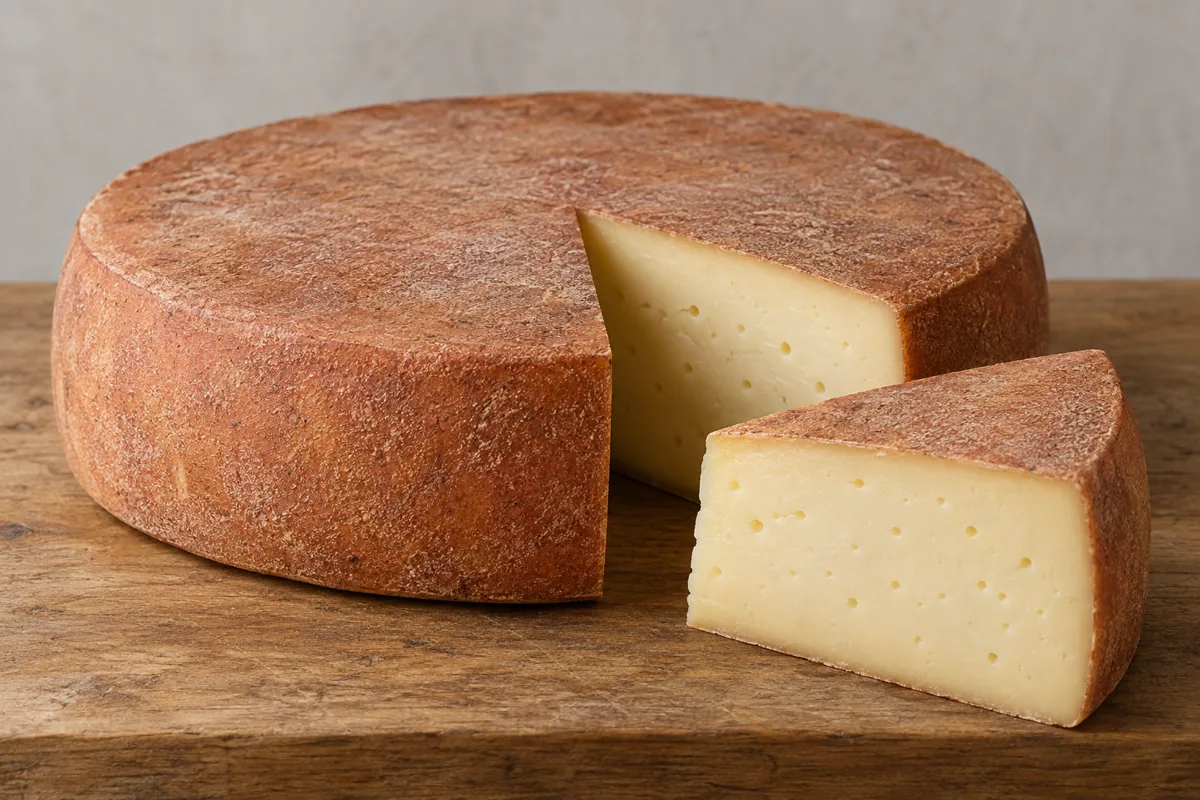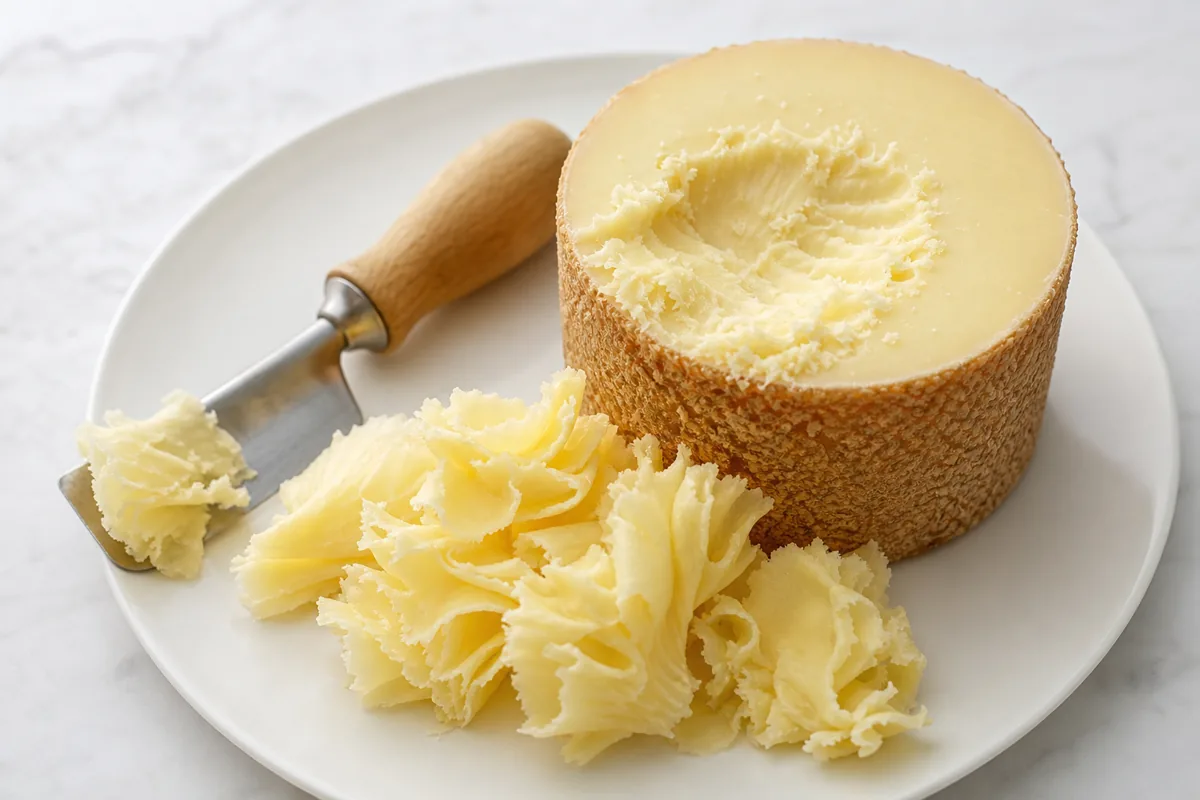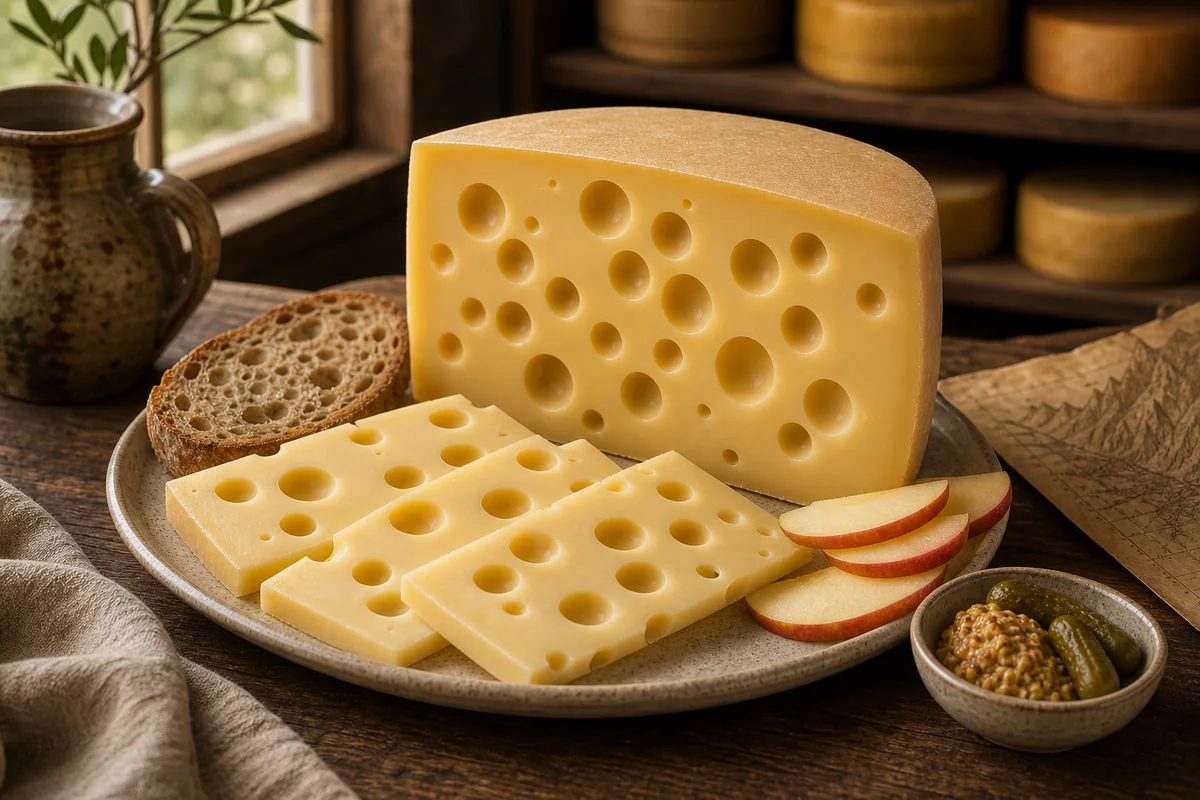
Swiss cheese is the familiar pale, nutty, eye-bearing cheese used in deli sandwiches, Reubens, quiche, and mild melts. Its signature holes come from gas formed during aging, but the label still matters because American Swiss, Baby Swiss, lace Swiss, and Emmentaler AOP do not all taste or cook the same way.
In the United States, "Swiss cheese" refers to a domestically produced version inspired by Swiss Emmental. The two are related but not identical.
True Emmentaler AOP from Switzerland uses raw milk, ages longer, and develops a more pronounced nutty flavor than American Swiss, closer to traditional Emmental wheels.
In This Article
Is American Swiss the Same as Emmentaler?
The name points to one valley. Production traces back to the Emme Valley (Emmental) in the canton of Bern, Switzerland.
The original Emmentaler has been produced in this region since at least the 13th century, making it one of the oldest named cheeses in continuous production.
The two names are not interchangeable. American Swiss cheese production began in the mid-1800s when Swiss immigrants brought cheesemaking techniques to Wisconsin and Ohio.
The Green County region of Wisconsin and the Holmes County area of Ohio became the primary domestic production zones and remain significant producers today.
The critical difference between Swiss-made Emmentaler and American Swiss lies in the milk. Emmentaler AOP requires raw cow's milk from silage-free herds, which carries natural bacterial populations that influence the final flavor complexity.
US Swiss cheese uses pasteurized milk with added cultures, producing a milder, more uniform product.
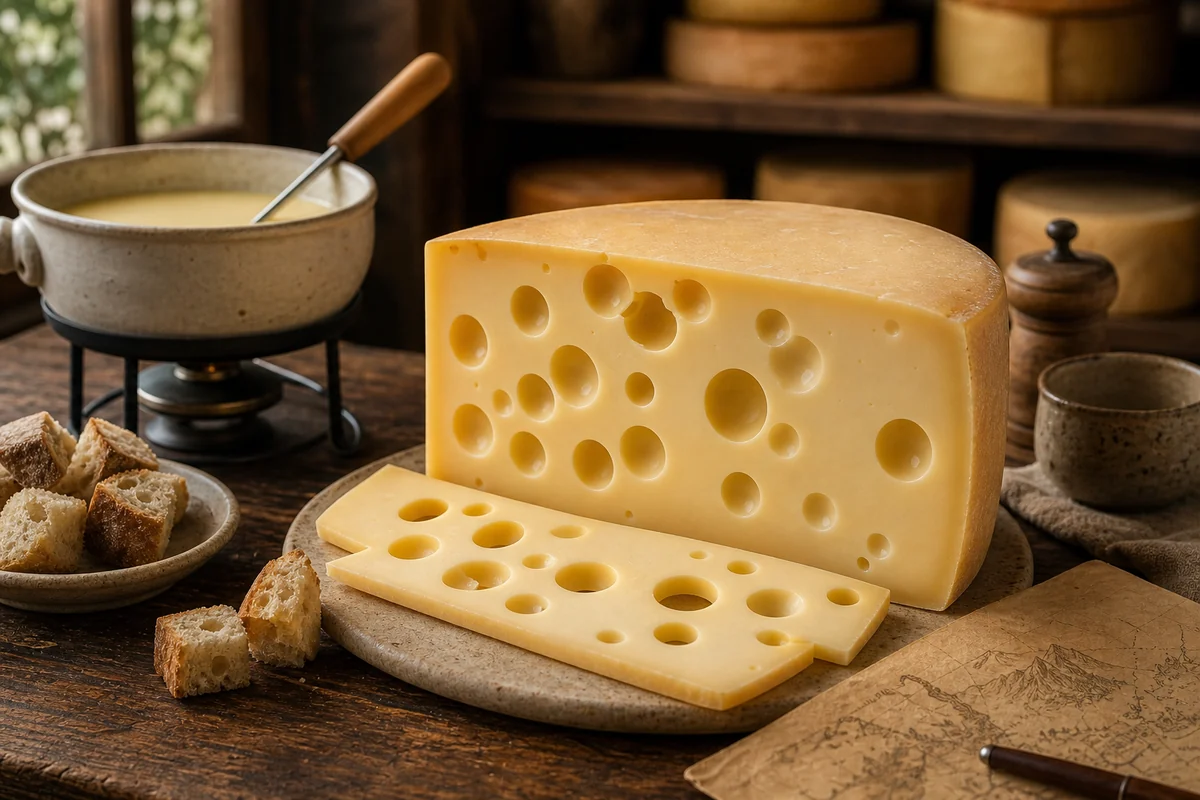
- Emmentaler AOP - raw milk, 4-14 months aging, nutty and complex, large wheels (80-100 kg)
- American Swiss - pasteurized milk, 2-6 months aging, mild and sweet, smaller blocks
- Finnish Swiss (Finlandia) - pasteurized milk, widely exported, medium flavor, smaller eyes
- French Emmental - pasteurized or raw milk, IGP protected, slightly different flavor from Swiss AOP
All versions share the same fundamental production method: a pressed-cooked curd process followed by a warm-room aging phase that triggers eye formation. The size of the eyes, depth of flavor, and texture vary by production origin and aging duration.
True Emmentaler AOP ages longer than most American Swiss and develops a deeper nutty note. That makes Gruyere and Emmental differences the reference point for the style.
For everyday shopping, the word Swiss usually means mild domestic slices or blocks. If the label says Emmentaler AOP, you are buying a protected Swiss cheese with stricter production rules, a larger wheel format, and a more developed flavor.
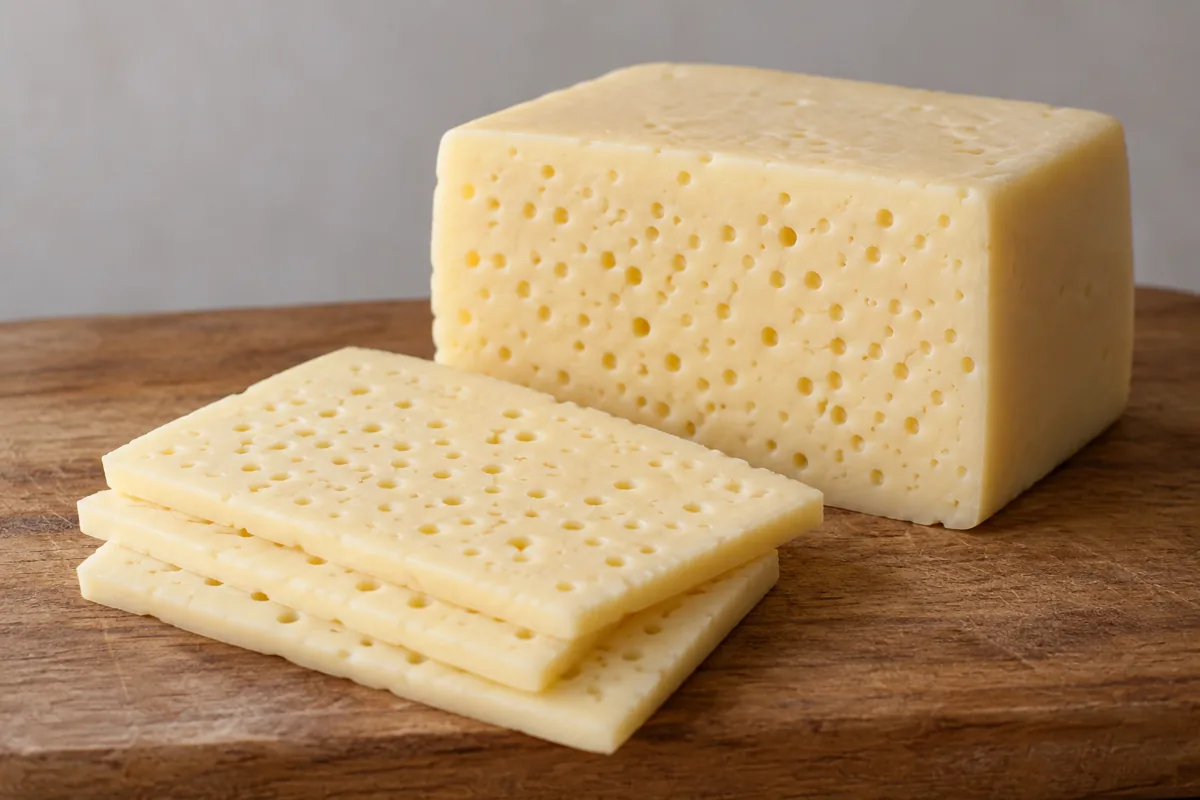
If the label says Baby Swiss, you are buying an American style made to taste creamier and milder with smaller eyes.
What Makes the Holes in Swiss Cheese?
The holes in Swiss cheese are not random air pockets. They are carbon dioxide gas bubbles produced by Propionibacterium freydenreichii during a specific stage of aging called the warm-room phase.
After initial pressing and brining, Swiss cheese wheels move to a warm aging room held at 20-24 degrees C (68-75 degrees F) for 3-6 weeks. At this temperature, P. freydenreichii becomes active and metabolizes lactic acid in the paste, producing carbon dioxide and propionic acid as byproducts.
The carbon dioxide gas cannot escape through the dense, elastic paste of the cheese. Instead, it collects at weak points in the curd structure, forming the round cavities we call eyes. The propionic acid produced alongside the CO2 contributes the sweet, nutty flavor note that distinguishes Swiss from other alpine cheeses.
- P. freydenreichii activates at 20-24 degrees C during the warm-room aging phase
- Lactic acid is consumed by the bacteria, producing CO2 and propionic acid
- CO2 forms bubbles at weak points in the elastic curd structure
- Eyes grow larger with longer warm-room time and higher temperature
- Propionic acid creates the characteristic sweet, nutty flavor
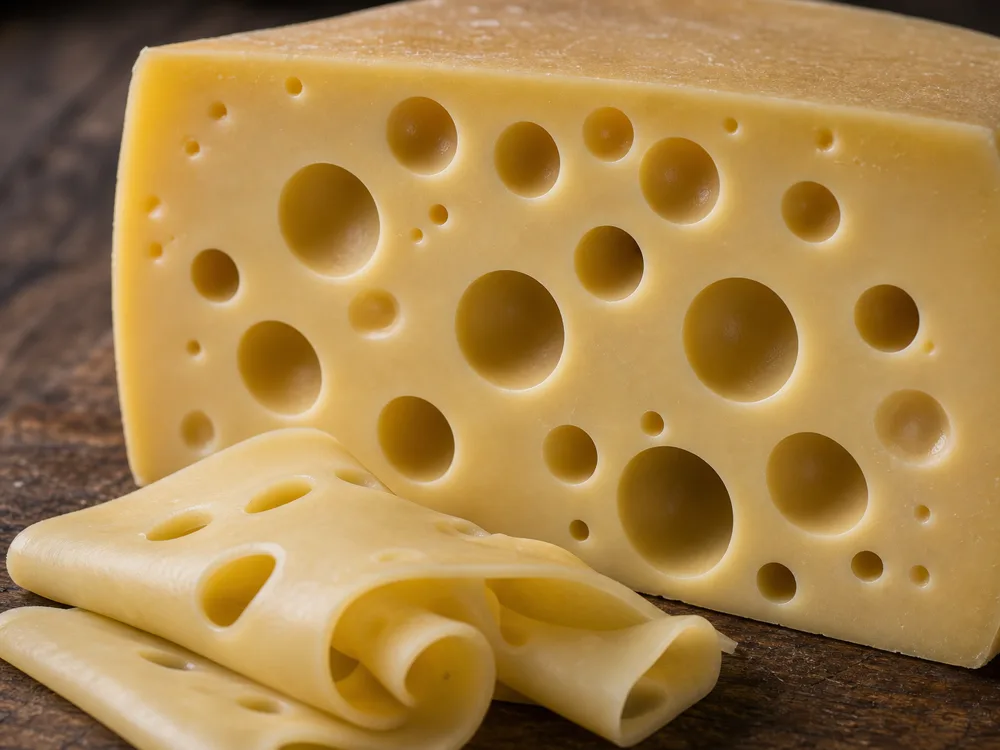
Eye size depends on warm-room duration and temperature. Traditional Swiss Emmentaler develops eyes the size of walnuts or larger.
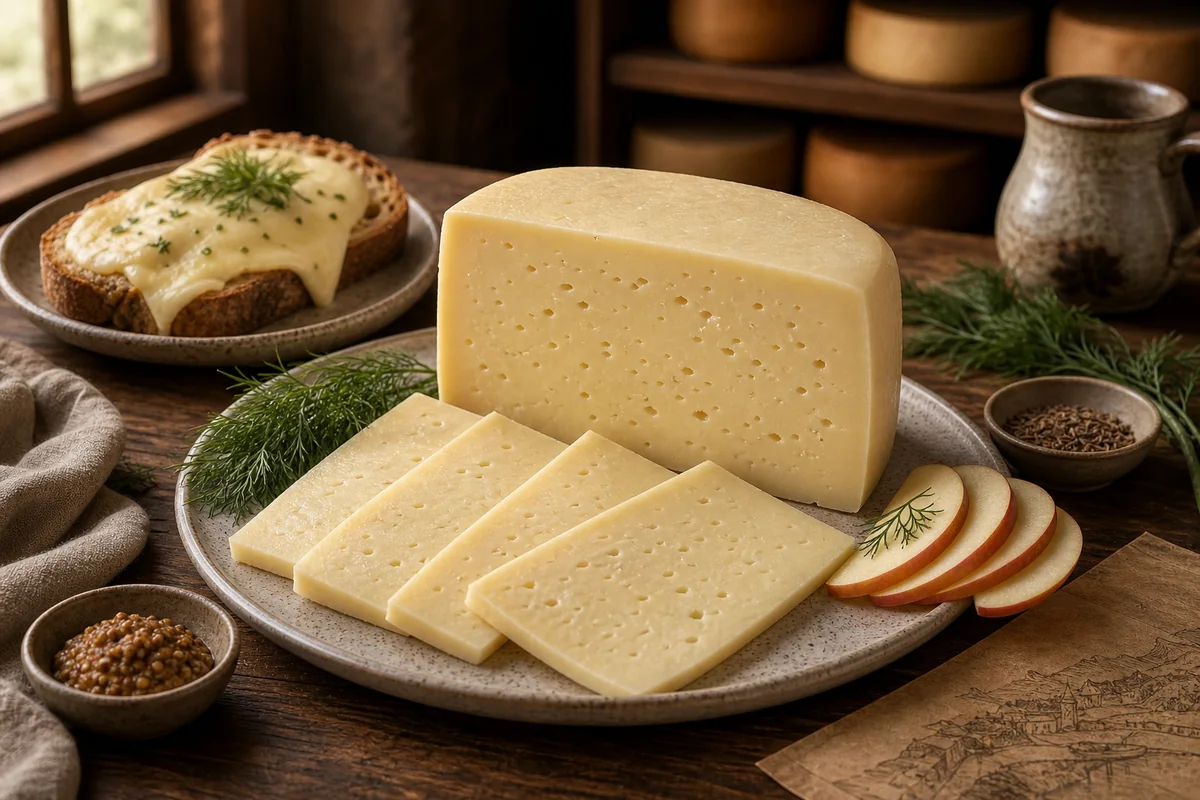
American Swiss producers often use shorter warm-room periods, producing smaller, more uniform eyes that slice better for deli use.
A 2015 study by Agroscope (the Swiss federal agricultural research center) found that microscopic hay particles in the raw milk act as nucleation sites for eye formation. Filtered, pasteurized milk produces fewer and smaller eyes because those particles are removed.
This explains why American Swiss cheese has consistently smaller holes than traditional Emmentaler.
Young Swiss stays milder than many semi-soft slicing cheeses. Its clean dairy sweetness sits near buttery Havarti paste, but the eye formation changes the texture.
The practical test is not hole size alone. Clean round eyes are expected, but a slice also needs enough paste between the holes to fold, melt, and hold together.
Very holey lace Swiss can look dramatic on a cold sandwich, yet it may melt unevenly because there is less solid cheese in each slice.
How Mild Is Swiss Cheese?
Young American Swiss (2-4 months) has a mild, sweet, slightly nutty flavor with almost no sharpness. It is the mildest of the alpine cheese family, less assertive than nutty Gruyere or Comte at equivalent ages.
Aged Swiss Emmentaler (8-14 months) develops a richer, more pronounced nuttiness with fruity undertones and a firmer bite. The flavor gap between young American Swiss and aged Emmentaler AOP is significant enough that they function as different cheeses in practice.
This describes standard American Swiss at 3-4 months. Aged Emmentaler AOP at 12+ months tastes more savory and saltier, with much of the sweetness gone, as moisture drops and flavor concentrates.
- Young American Swiss (2-4 months) - mild, sweet, clean finish, elastic texture, ideal for sandwiches
- Medium Swiss (4-6 months) - slightly nutty, firmer paste, better for melting applications
- Aged Emmentaler (8-14 months) - complex nutty and fruity notes, granular bite, board cheese
The texture of Swiss cheese is uniquely elastic among semi-hard cheeses. A thin slice of young Swiss cheese bends without breaking, making it one of the best cheeses for cold sandwich layering.
This elasticity comes from the same protein structure that allows eye formation.
Swiss cheese is usually a lower-lactose choice because whey is drained away and aging gives cultures time to use more milk sugar. That does not make every slice lactose-free, and individual tolerance still varies.
If lactose is the issue, start with a small portion and compare it with other lower-lactose cheese choices.
How Does Swiss Cheese Melt in a Sandwich?
Moderate heat is the whole trick. It melts cleanly at moderate temperatures, making it a reliable cooking cheese.
The mild flavor blends into dishes without overpowering other ingredients, which is both its strength and its limitation.
For applications where you want melt without strong flavor dominance, Swiss is an excellent choice. For dishes where the cheese flavor needs to carry the dish (fondue, French onion soup), Gruyere or Comte perform better.
| Use | How It Works |
|---|---|
| Deli Sandwiches | The most common use for American Swiss. It slices cleanly, folds without cracking, and melts smoothly under a broiler or panini press. The mild flavor complements ham, turkey, and roast beef without competing. |
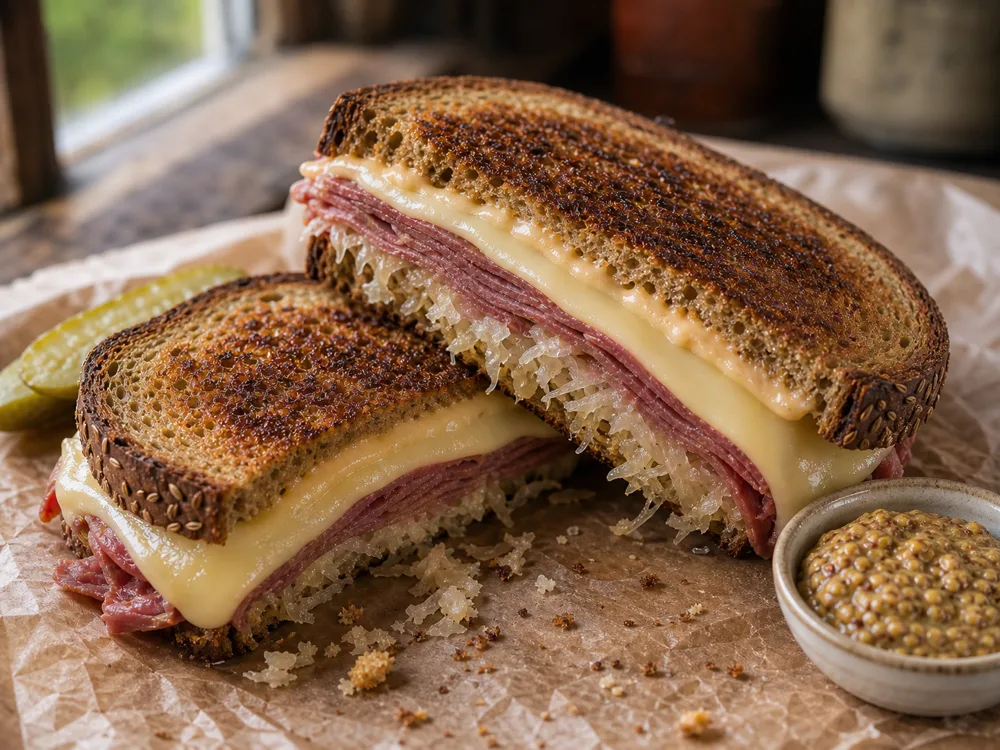
| Reuben Sandwich | Swiss is the traditional cheese for a Reuben alongside corned beef, sauerkraut, and Russian dressing on rye. The mild sweetness balances the sour kraut and salty meat. |
| Quiche and Egg Dishes | Swiss melts into egg custard evenly. For a milder quiche than Gruyere-based versions, use Swiss as the primary cheese. It lets the egg, cream, and filling flavors come through. |
| Patty Melts | Swiss on a patty melt browns and bubbles under high heat without separating. The caramelized edges add flavor that the mild paste alone does not provide. |
| Cheese Fondue (blended) | Swiss cheese can supplement Gruyere in a fondue blend at a 1:3 ratio. It adds stretch and smoothness without altering the flavor profile significantly. Do not use Swiss alone for fondue. |
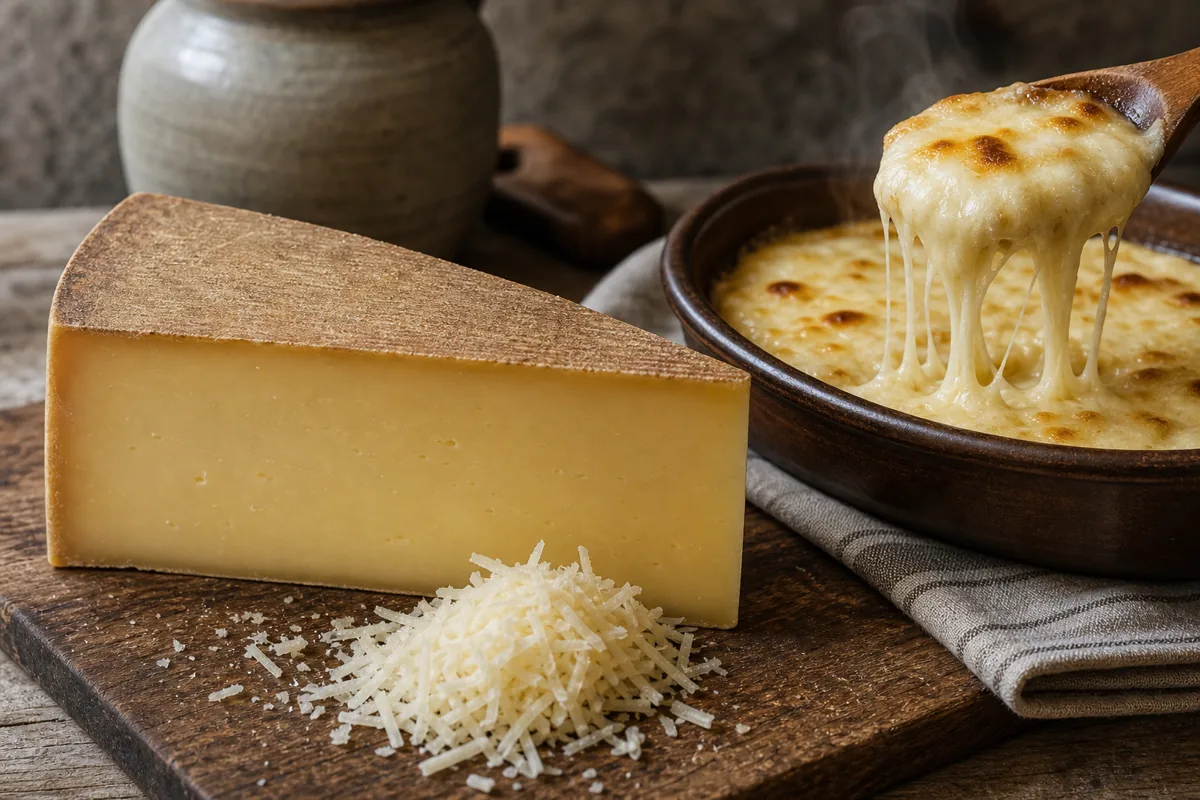
| Gratins | Grated Swiss forms a golden, bubbly topping on potato and vegetable gratins. For stronger flavor, combine with Gruyere at a 1:1 ratio. |
Swiss cheese is the default choice for hot sandwich melts that need clean flow without strong cheese flavor. The Reuben sandwich, patty melts, and Cuban sandwiches all rely on Swiss for this reason.
- Reuben - balances sour sauerkraut and salty corned beef with mild sweetness
- Patty melt - browns and bubbles under high heat without separating
- Quiche - melts into custard without dominating the filling flavors
- Gratin topping - forms a golden, cohesive crust at moderate temperatures
For cooking, always buy block Swiss and slice or grate it yourself. Pre-sliced deli Swiss has a starch coating on each slice that slows melting and can produce a grainy result in sauces and fondues.
Swiss cheese is one of the most widely stocked cheeses in US grocery stores. You can find it in virtually every supermarket deli counter and pre-packaged cheese section.
Swiss sits at the mild end of the alpine family. This is not a flaw.
Many recipes call for Swiss specifically because the cheese needs to melt and bind without asserting itself over other ingredients.
If Swiss tastes flat in a cooked dish, the problem is often the job, not the cheese. Use Swiss when ham, rye, beef, eggs, onions, or sauerkraut already bring the main flavor.
Use Gruyere, Comte, or aged Emmentaler when the cheese itself needs to carry the dish.
How Long Does a Swiss Wedge Keep?
Low moisture is what makes storage easy. The semi-hard texture and low moisture content.
A properly wrapped wedge or block will hold for two to three weeks in the refrigerator without significant quality loss.
The main risk during storage is surface drying at the cut face. The eyes create additional exposed surface area inside the cheese, so Swiss dries faster than a solid-paste cheese like firm Cheddar blocks when left unwrapped.
- Wax paper first - protects the cut face and slows moisture loss
- Loose plastic wrap second - prevents the cheese from drying without trapping excess moisture
- Cheese drawer at 35-40 F - consistent temperature prevents condensation and mold
- Replace wrapping every 3-4 days - fresh paper absorbs surface moisture and prevents sliminess
If white crystalline spots appear on aged Swiss cheese, those are calcium lactate or tyrosine crystals from aging. They are safe to eat and indicate proper maturation.
If you see fuzzy mold on the surface, cut away at least one inch around the affected area. The remaining cheese is safe for a semi-hard variety like Swiss.
A snug parchment wrap slows moisture loss around the eyes and cut face.
If you want a sweeter sandwich slice, young Gouda gives more caramel and fewer eyes. Young Gouda paste melts more softly but tastes less alpine.
For deli slices, watch the edges. Dry curled edges mean the slices have spent too much time exposed to air.
A block should feel springy and smell mild, not sharp, sour, or ammoniated.
Is Grocery Swiss Real Emmentaler?
The Swiss cheese you find in a US grocery store is almost always domestically produced American Swiss, aged 2-4 months. For Emmentaler AOP from Switzerland, you need a specialty cheese shop or a well-stocked international section.
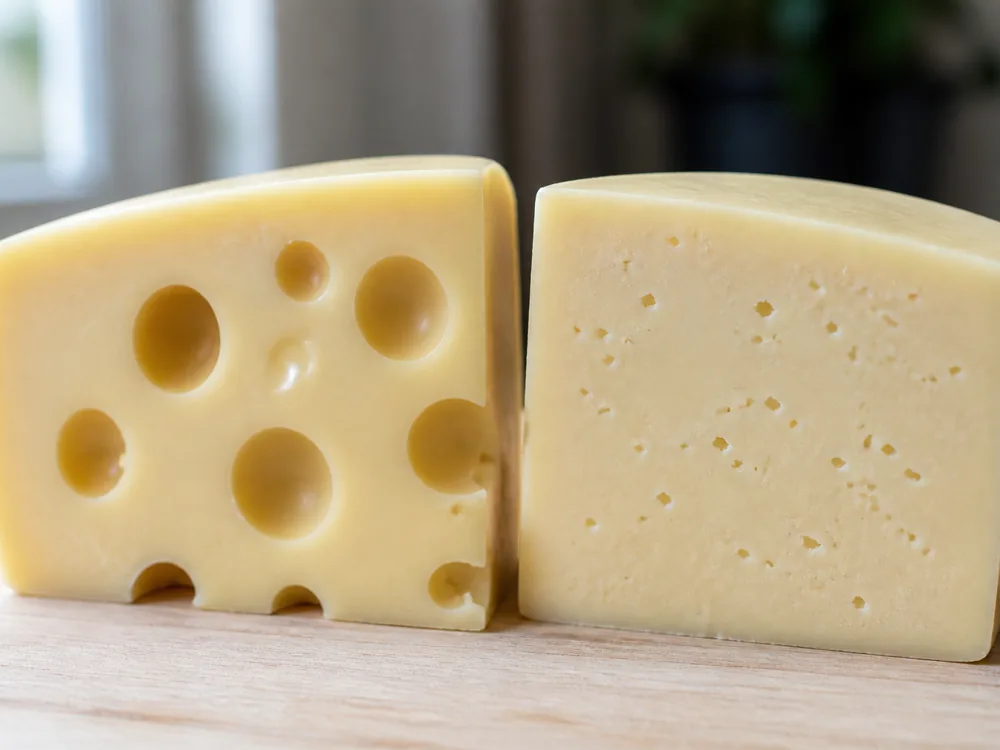
Baby Swiss is a distinct product, not just smaller Swiss. It uses a different culture ratio that produces smaller eyes and a creamier, slightly tangier flavor.
It was developed in the 1960s in Ohio specifically for the American market.
Lacey Swiss (also called lace Swiss) has very large, irregular eyes and a thinner paste between them. It is a deli product designed for visual appeal and cold sandwiches.
It melts poorly because there is not enough solid paste between the holes to form a cohesive layer.
| Label | What it usually means | Best use |
|---|---|---|
| American Swiss | Mild domestic block or slice, usually pasteurized | Reubens, deli sandwiches, patty melts, quiche |
| Baby Swiss | Creamier American style with smaller eyes | Snack trays, mild boards, turkey sandwiches |
| Lace Swiss | Very holey thin deli slice | Cold sandwiches where appearance matters |
| Emmentaler AOP | Protected Swiss raw-milk original, aged longer | Boards, fondue blends, Alpine comparisons |
- For deli melts - buy regular American Swiss in block form for a cleaner melt and milder flavor
- For a snack tray - Baby Swiss gives a creamier bite and smaller eyes that look less dry on the board
- For a true alpine board cheese - ask for Emmentaler AOP or another aged Swiss import instead of standard deli Swiss
- For dramatic sandwich looks only - lace Swiss is fine cold, but it is the weakest choice when you need an even melt
How Much Protein and Calcium Does It Carry?
The numbers are better than the mild flavour suggests. It delivers strong protein and calcium per ounce with moderate fat and usually low lactose.
It is one of the more nutrient-efficient cheeses in the alpine family, especially when you need a mild melt rather than a salty crumble.
- Lower sodium - 53mg per ounce is among the lowest of any aged cheese
- Good calcium - 252mg per ounce delivers 19% of daily value
- Moderate calories - 106 per ounce, slightly below Gruyere and Cheddar
- Usually low lactose - fermentation and aging reduce lactose, but tolerance still varies
The standout nutritional feature of Swiss cheese is its exceptionally low sodium. At 53mg per ounce, Swiss contains roughly one-quarter the sodium of Cheddar and one-third the sodium of Parmesan.
For people monitoring sodium intake, Swiss is one of the best aged cheese options available.
These figures come from the USDA FoodData Central database for domestic Swiss cheese.
Swiss cheese's low sodium and strong calcium make it a practical daily cheese for many people, especially when a sandwich needs a mild melt. For lactose sensitivity, treat it as a lower-lactose option rather than a guarantee.
For pregnancy, the label and local guidance matter more than the word Swiss.
Where Do the Swiss Cheese Claims Come From?
We separate three kinds of evidence for Swiss cheese. Emmentaler AOP material explains the protected Swiss original, dairy-science research explains eye formation, and USDA plus public-health sources cover nutrition and pregnancy wording.
Domestic Swiss slices and Emmentaler AOP are not the same product. The cooking advice follows American Swiss because that is what most US shoppers buy, while the origin and eye-formation material comes from Emmentaler and Swiss-type cheese research.
- Use Emmentaler AOP rules for origin, raw milk, wheel format, aging, and quality cues.
- Use dairy-science research for eye formation, warm-room aging, CO2, and hay-particle nuclei.
- Use USDA data for baseline domestic Swiss nutrition numbers.
- Use FoodSafety.gov and CDC-style pregnancy guidance for raw-milk and pasteurized hard-cheese wording.
Swiss cheese is the workhorse of the deli counter and a reliable cooking cheese for applications where you need clean melt without strong flavor. American Swiss handles sandwiches, quiche, and gratins well. For cheese boards and fondue, step up to aged Emmentaler AOP or Gruyere. Buy block, grate fresh for cooking, and match the product to the job.
SOURCES & REFERENCES
What Other Swiss Cheese Questions Come Up?
Almost every Swiss cheese question turns out to be about the holes or about whether the block is really Emmentaler.
The holes, called eyes, are formed by carbon dioxide gas produced by Propionibacterium freydenreichii during warm-room aging.
The CO2 cannot escape through the dense, elastic paste, so it collects at weak points and forms round cavities. The same bacteria produce propionic acid, which gives Swiss cheese its sweet, nutty flavor.
Not exactly. Emmentaler AOP is the original Swiss-made version using raw cow's milk, aged 4-14 months, in large 80-100 kg wheels.
American Swiss cheese is inspired by Emmental but uses pasteurized milk, ages for a shorter period, and tastes milder. Both share the same eye-forming bacteria and production method, but Emmentaler AOP has a deeper nutty flavor.
Yes, Swiss cheese melts smoothly at moderate temperatures and works well in sandwiches, quiche, and gratins. It is less flavorful when melted than Gruyere or Comte, so use it when you want melt without strong cheese flavor.
Do not use Swiss as the sole cheese in fondue. It lacks the flavor depth.
Combine it with Gruyere at a 1:3 ratio if needed.
Baby Swiss is a distinct American product developed in Ohio in the 1960s. It uses a modified culture ratio and shorter aging period to produce smaller eyes, creamier texture, and a slightly tangier flavor than standard Swiss.
The name refers to the smaller eye size and shorter aging, not the wheel size. Baby Swiss is better for snacking and cheese boards than for cooking.
Pasteurized hard Swiss cheese is the simplest choice during pregnancy. Imported Emmentaler AOP is traditionally raw-milk and aged, so use the product label and local medical guidance.
If you are unsure, choose pasteurized Swiss, or cook the cheese until steaming hot, which the NHS lists as safe for any cheese. The CDC lists unheated cheese sliced at a deli as riskier and deli-sliced cheeses heated to 165°F or until steaming hot as safer.