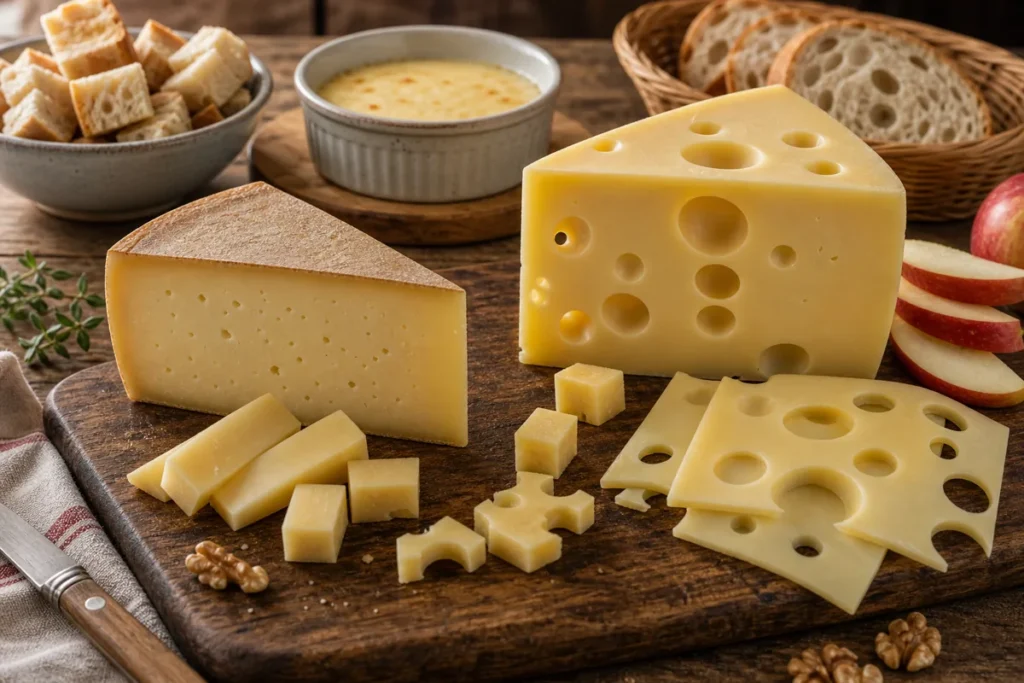
This belongs with Swiss melting-cheese decisions because these two wheels still get treated like the same buy when they are not.
Gruyere's dense Alpine paste points you toward a stronger savory finish and firmer fondue authority.
Emmental's large eyes signal a different lane: sweeter aroma and a lighter personality once it is sliced or melted.
If the meal needs one wedge that can carry fondue, onion soup, or gratin almost by itself, buy Gruyere. If you want an easier Swiss cheese for deli sandwiches, mild croques, or family snacking, Emmental is often the smarter cart choice.
In This Article
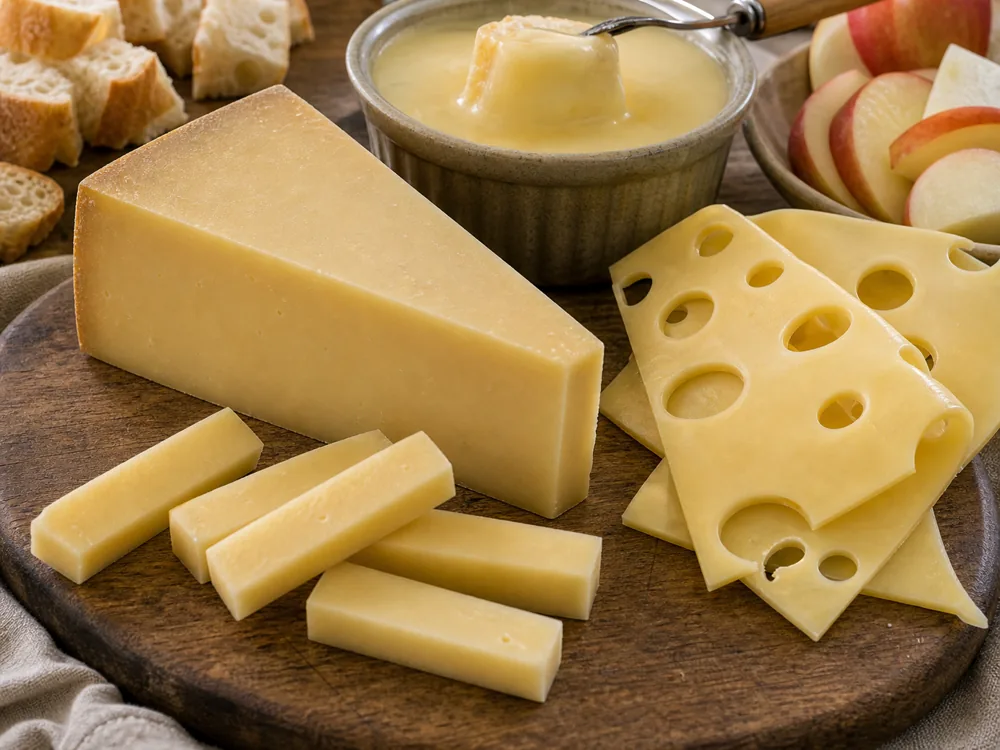
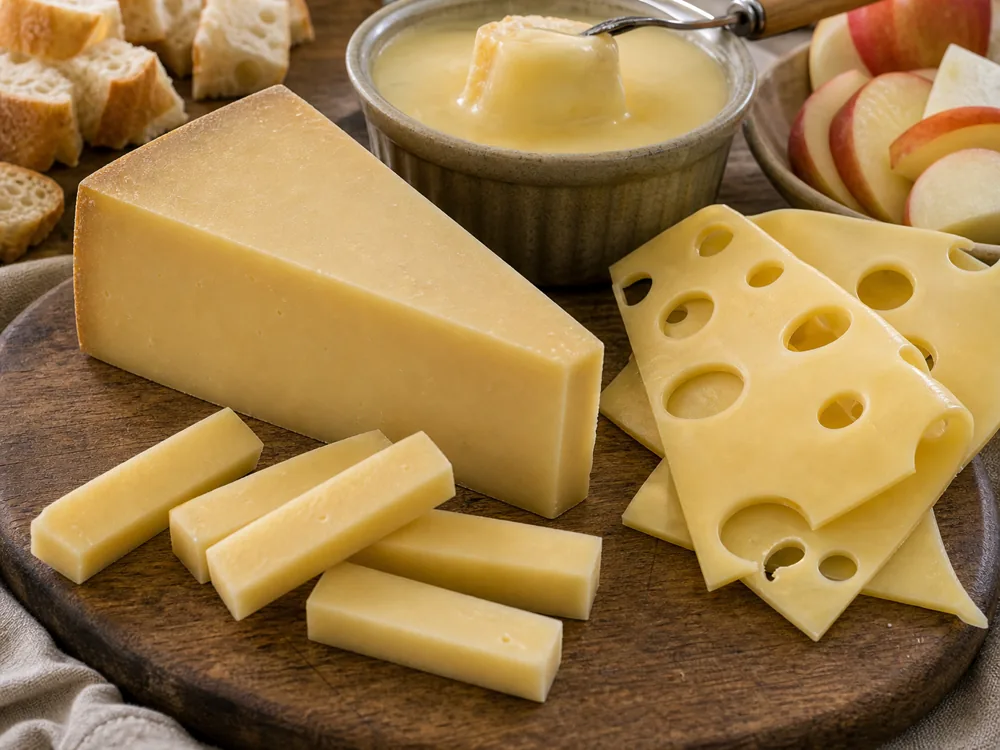
Gruyere vs Emmental Side by Side
Both cheeses come from Switzerland, both use raw cow's milk in their AOP forms, and both melt well. The similarity starts to break as soon as you look at age rules, eye formation, and how concentrated the flavor stays after heat.
Remember it later
Planning to try this recipe soon? Save it for a quick find later!
| Gruyere | Emmental | |
|---|---|---|
| Origin | Western Switzerland | Emme Valley and wider Swiss AOP zone |
| Milk | Raw cow milk | Raw cow milk |
| Texture | Dense, firm, no eyes | Supple, elastic, large eyes |
| Aging | At least 5 months, often 6 to 18 plus months | At least 4 months, often 4 to 12 plus months |
| Flavor | Nutty, brothy, savory | Buttery, sweet, hazelnut-like |
| Best Uses | Fondue, gratins, onion soup, stronger hot dishes | Sandwiches, mixed melts, snacking, milder fondue blends |
| Price | $16 to $26 per pound | $12 to $20 per pound |
That side-by-side view explains the real decision. Gruyere is usually the more forceful worker.
Emmental is usually the easier crowd pleaser.
Do not buy by the Swiss label alone. In many U.S. cases, generic Swiss cheese is closer to mild Emmental style than to true Gruyere, which is why the exact name matters.
How Gruyere and Emmental Taste as They Age
Gruyere usually tastes deeper from the first bite. Even at moderate age, it pushes broth, toasted nuts, and a savory onion-soup note more clearly than Emmental does.
Emmental usually opens softer and sweeter. You get butter, hazelnut, and a rounder dairy note before the finish sharpens at all.
The wider Swiss regional context helps frame that split. Gruyere comes out of a denser cave-aged Alpine tradition, while Emmental keeps the sweeter, eye-formed character that made "Swiss cheese" shorthand so common.
- Buy Gruyere for: deeper savory flavor that still reads clearly after wine, bread, or stock enter the dish.
- Buy Emmental for: milder sweetness when you want Swiss character without dominating the rest of the plate.
- Young Gruyere: usually feels smooth, nutty, and controlled rather than sharp.
- Older Emmental: gets firmer and nuttier, but it still rarely turns as brothy as Gruyere.
That is why age does not erase the difference. It only enlarges it.
Paste, Eyes, and Melt Behavior
The eyes matter because they signal a different paste structure and fermentation story. Emmental's holes come from gas development during ripening, which helps give it a springier, more elastic feel and a lighter melt.
Gruyere has no eyes in the classic form, so the paste stays denser and more compact. That usually gives the pot or pan a richer body and a more savory finish.
Fondue cheese behavior leans toward Gruyere for a reason. When you want one cheese to do most of the work, Gruyere gives more body and less watery sweetness than Emmental usually does on its own.
The melting-cheese ranking matters too. It shows why Emmental still deserves respect in blends, especially when you want stretch and a friendlier, less savory melt.
If the plan is a classic half-and-half pot, Emmental can still make sense. If the plan is one wedge, one pan, and no second chances, Gruyere is safer.
For home fondue, keep Gruyere as the majority cheese when you want body. Use Emmental as the softening partner, not the whole base, if flavor depth matters.
That split shows up in gratins and onion soup too. Gruyere usually browns darker and leaves a more savory finish after cream, stock, or onions hit the pan.
Emmental stays useful when the rest of the dish is already rich. It can keep a bake or toast from feeling too heavy, especially if the filling already brings salt and umami.
Best Uses for Weeknight Cooking, Sandwiches, and Boards
This is where the decision becomes practical. Gruyere wins more often in dishes that need the cheese to carry the whole finish, while Emmental wins more often when the cheese should support bread, ham, or mustard without taking over.
Hot sandwich cheese already hints at that split. Gruyere is the hotter, richer answer.
Emmental is the milder lunch-counter answer.
If you like the sweeter sandwich lane, the Norwegian Swiss-style wheel usually sits closer to Emmental than to Gruyere.
- Fondue night: Gruyere is the better lead cheese.
- Croque monsieur: Gruyere gives a more savory top note and browns more convincingly.
- Deli ham sandwich: Emmental is often the cleaner fit because it stays gentler and more flexible in thin slices.
- Snack board for mixed eaters: Emmental is easier if you need broad appeal rather than intensity.
There is also a leftovers question. Gruyere often tastes better in the cooked dish, but Emmental is often easier to keep using over the next two days in sandwiches, omelets, and quick toasties.
If the wedge must move from pot to lunchbox to board, Emmental can offer better total-use value. If dinner is the whole point, Gruyere usually earns the extra spend.
That is the practical tradeoff most shoppers miss. Gruyere wins the dramatic dinner job more often, while Emmental wins more low-effort lunches where you want the cheese to support the filling instead of take command.
If you cook once and eat twice, ask which meal matters more. Choose Gruyere when the first hot dish is the star, and choose Emmental when the second-day sandwich or snack plate matters just as much.
If what you really want is the sweeter Swiss-style lane at a slightly friendlier price, the Dutch big-eyed cousin can be a better detour than forcing Gruyere and Emmental to cover a third job they were not bought for.
What to Read on the Label Before You Buy
The first shortcut is the exact cheese name, not just the word Swiss. Generic Swiss cheese labels can explain supermarket shorthand, but the serious buying move is still to choose the real name first.
Then check age, paste, and cut-face condition. Gruyere should look dense and closed, while Emmental should show clear eyes and a springier interior.
- Read the name: Gruyere and Emmental solve different kitchen problems.
- Check the paste: dense and eye-free suggests Gruyere, while broad holes suggest Emmental.
- Ask for age: month count matters more than many shoppers expect in both cheeses.
- Wrap it well: expensive Swiss wedges lose aroma quickly if the cut face dries out.
Cut-face storage matters more with Gruyere because a drying surface dulls the savory notes you paid for. Emmental is forgiving, but it also flattens once it sits exposed too long.
If you cannot find real Gruyere at all, Gruyere substitute choices give the closest fallback lane. That is a better move than pretending every mild Swiss-style wedge will behave the same way.
At the counter, ask whether the wedge is true AOP Gruyere or Emmentaler Switzerland AOP if you want the classic version. Domestic Swiss-style cheeses can still be good buys, but they often sit closer to mild Emmental than to savory Gruyere once the dish is cooked.
That label question matters most when price jumps sharply. Paying Gruyere money for a mild Swiss-style wedge is one of the easiest ways to miss the result you wanted.
Price and Value Tradeoffs
Emmental is usually cheaper, and that matters for larger household cooks. A mild Swiss cheese you use often can be more valuable than a premium wedge you save only for special dinners.
Gruyere costs more for a reason, though. The flavor is more concentrated, so you often need less of it to make the dish taste finished.
That creates the real tradeoff. Emmental saves money up front and covers more casual use.
Gruyere costs more, but it returns more intensity per ounce in fondue, gratin, and broth-based dishes.
For a family sandwich cheese, Emmental is often the better value. For a dinner cheese, Gruyere is often the better value.
There is also waste to think about. Gruyere is usually worth buying in a smaller piece because a little goes farther, while Emmental often makes sense as a bigger weekly wedge if the household likes mild Swiss cheese often.
So the better value is not just the cheaper sticker. It is the wedge that fits how fast your household will use it and how much flavor the recipe actually needs.
Gruyere or Emmental: Which to Choose
These cheeses overlap, but they do not peak in the same jobs.
One leads with savory density. The other wins with milder flexibility.
Buy Gruyere when the meal depends on fondue body, stronger browning, or a more concentrated savory finish. Buy Emmental when you want Swiss melt at a lower price, softer flavor on sandwiches, or a more approachable wedge for mixed eaters.
Gruyere vs Emmental FAQ
These quick answers help once the two wedges are in front of you and both seem close enough to swap.
Usually yes. Gruyere tends to taste more savory, denser, and more concentrated, while Emmental usually stays sweeter and milder.
Gruyere is usually the safer fondue lead because it gives more body and a deeper savory finish. Emmental works better as part of a blend than as the whole base.
Emmental often wins for cold or simple hot sandwiches because it is milder, springier, and less likely to dominate the filling.
Yes in many cooked dishes, but expect a sweeter and lighter result. If the recipe relies on deeper savory melt, the swap will be noticeable.