Comparison

Ricotta vs Cottage Cheese: Texture, Protein, and Best Uses

QUICK ANSWER

Ricotta is smoother, sweeter, and more baking-friendly. Cottage cheese is curdier, tangier, and usually much higher in visible protein per serving.

They both live in the fresh white-cheese lane, but they do very different work once heat or texture matters.

Best: Ricotta for lasagna, fillings, and softer dairy richnessBudget: Cottage cheese for protein-heavy bowls and cheaper everyday use

This question belongs in our side-by-side cheese comparison library because both cheeses sit in the same cold case and get used as soft white dairy shortcuts. The Italian whey-cheese profile and the curd-based cottage cheese guide show why the overlap is only partial.

If you care about a smooth filling or a softer dairy finish, ricotta wins. If you want more chew, more visible curd, and a stronger protein-first identity, cottage cheese wins.

Ricotta vs Cottage Cheese Side by Side

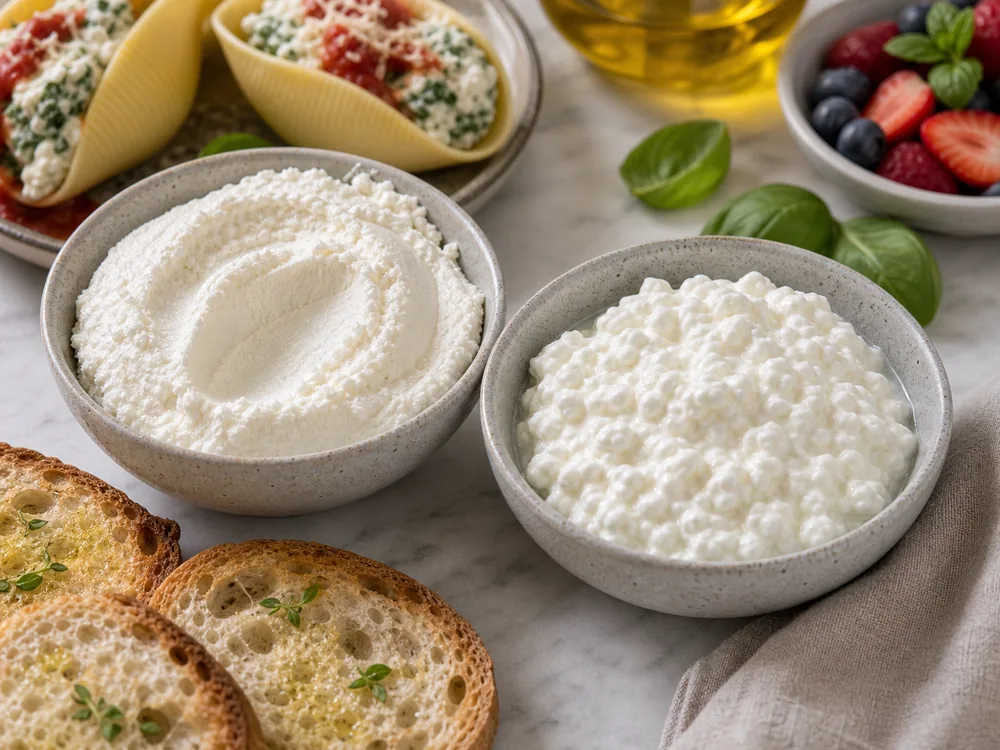
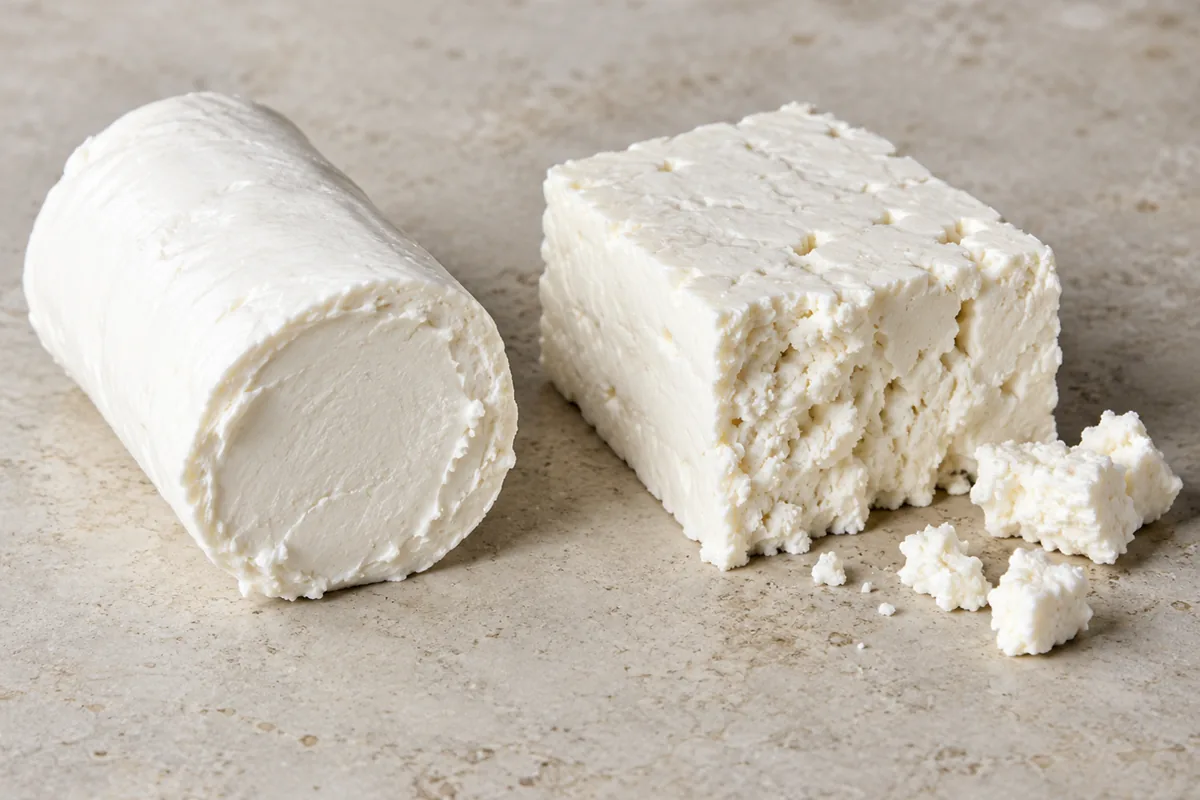
The cleanest difference is how each cheese is made. Ricotta is a whey cheese, so it lands softer and finer.

Remember it later

Planning to try this recipe soon? Save it for a quick find later!

Cottage cheese is a fresh curd cheese, so you can still see and feel the individual curds in every spoonful.

RicottaCottage Cheese
OriginItalyUnited States
BaseWhey, sometimes with added milk or creamFresh cow's milk curds in creamy dressing
TextureSoft, fine, spreadable, slightly grainyLumpy curds, wetter, more distinct bite
FlavorMild, milky, faintly sweetTangier, fresher, more cultured
Best UsesLasagna, ravioli, cannoli, baked dishesBreakfast bowls, snacks, cold plates, blended dips
Heat BehaviorSets softly in bakes and fillingsCan weep and stay curdy unless blended
Protein SignalModerateUsually higher by serving
Price$5 to $8 per pound$3 to $5 per pound

That production split explains almost every recipe result. Ricotta disappears more gracefully into fillings and batters.

Cottage cheese keeps a stronger identity unless you blend it first.

NOTE

When a recipe wants creamy structure rather than visible curd, ricotta is the safer choice. Cottage cheese can work, but only if you accept a looser or bumpier texture.

Flavor and Mouthfeel Difference

Ricotta tastes milky, soft, and lightly sweet. Cottage cheese tastes fresher and tangier because the cultured curds stay more separate on the tongue.

That is why ricotta behaves more like a soft baking ingredient, while cottage cheese often reads as a spoonable snack first.

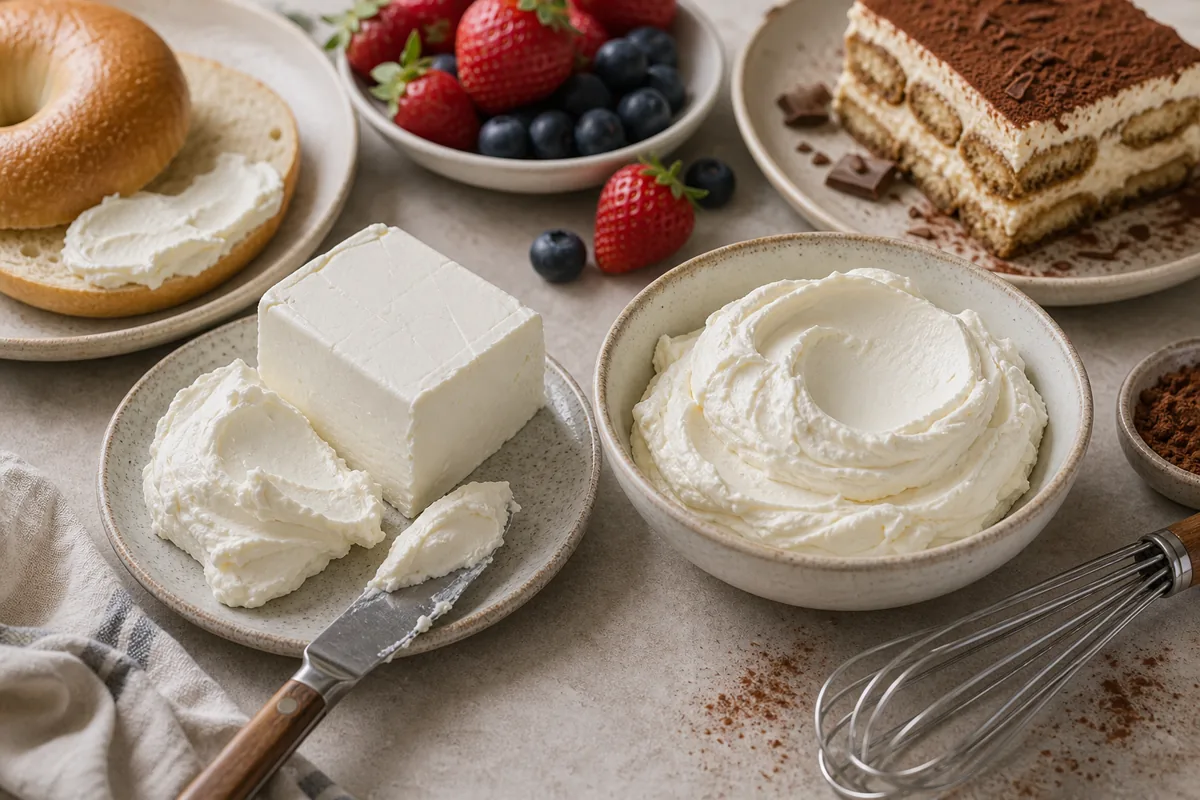
The split gets clearer if you compare them to the richer end of the fresh-cheese lane. The cream cheese profile is denser and fattier than either one, while both ricotta and cottage cheese stay lighter and less sticky.

  • Ricotta wins when you want smoothness, sweetness, and softer dairy flavor
  • Cottage cheese wins when you want curd texture, extra protein feel, and a sharper cultured note
  • Ricotta drawback is lower structure in cold bowls
  • Cottage cheese drawback is visible curd that can feel wrong in delicate fillings

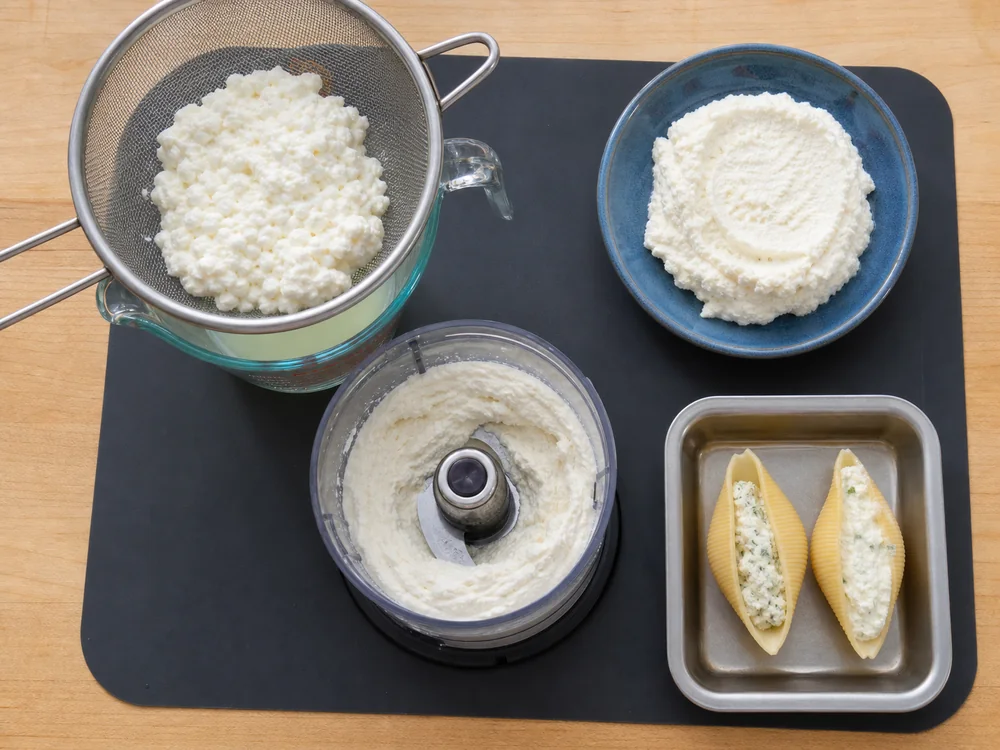
If you are building a pasta filling, the best cheese for pasta guide points toward ricotta because its moisture and grain are better suited to baked layers and stuffed shapes. Cottage cheese can work in lighter casseroles, but it usually needs straining or blending first.

Texture, Baking, and Cooking Behavior

Texture is where substitutions succeed or fail. Ricotta sets softly in lasagna, cheesecakes, and baked fillings.

Cottage cheese tends to release more visible liquid and keep small curd pockets unless you process it smooth.

That extra moisture matters even more if you are batch-cooking and storing leftovers. The fresh-cheese storage guide and the freezer survival guide both matter here because neither cheese improves after long open-fridge exposure.

  • For lasagna: ricotta gives the classic softer layer
  • For breakfast bowls: cottage cheese gives stronger curd texture and protein feel
  • For blending into sauces: ricotta is easier to smooth out
  • For cheesecake-style richness: neither fully replaces mascarpone or cream cheese without texture tradeoffs

The best rule is to match curd visibility to the job. If the curds would look wrong on the plate, start with ricotta.

If visible curds are acceptable or even desirable, cottage cheese becomes the cheaper and more filling option.

When the Swap Works and When It Breaks

The swap works best when the cheese is getting blended, baked hard, or hidden inside a wider mixture. Cottage cheese can cover for ricotta in stuffed pasta fillings or casseroles if you drain it or process it smooth first.

Ricotta can stand in for cottage cheese when you want a softer bowl or a gentler dairy finish, and our ricotta substitute guide maps the safer stand-ins for lasagna, filling, and baking.

The swap fails when visible texture is the whole point. Cottage cheese cannot fake the calm smoothness ricotta gives to lasagna filling without extra work.

Ricotta also cannot mimic the curdy spoonable bite that makes cottage cheese feel distinct in breakfast bowls and high-protein cold snacks.

If the recipe is delicate, use the cheese it was written for. If it is a weeknight bake with sauce, eggs, or pasta carrying most of the structure, the cheaper tub often works with a little handling adjustment.

How to Read the Tub Before You Cook

The label matters more here than many shoppers expect. Whole-milk ricotta usually gives a calmer richer filling, while low-fat ricotta can feel drier and more grainy.

Cottage cheese labels tell you curd size, fat level, and whether the product is aimed at a spoonable snack or a softer cooking base.

That means the cheapest tub is not always the smartest buy. Small-curd cottage cheese blends more easily than large-curd versions, and fresher basket-style ricotta is far better for baked pasta and dessert fillings than a tired watery tub that has already separated in the fridge case.

  • Choose whole-milk ricotta: when smooth filling texture matters.
  • Choose small-curd cottage cheese: when you may need to blend it into a recipe.
  • Watch for excess liquid: watery tubs create problems in both lasagna and cold bowls.
  • Buy by final texture: smooth finish points to ricotta, visible curd points to cottage cheese.

If the tub already looks wet and broken, leave it behind. These are high-moisture fresh cheeses, so small quality differences on the shelf show up fast once you cook with them.

Which One Works Better for Breakfast, Baking, and Meal Prep

Cottage cheese is usually the stronger meal-prep cheese because it survives a spoon-and-go routine. It fits breakfast bowls, savory toast, fruit cups, and quick high-protein lunches without asking for much handling beyond opening the tub.

Ricotta is stronger once the recipe becomes texture-sensitive. It spreads more calmly into cannoli filling, stuffed shells, cheesecake mixtures, and soft baked casseroles where visible curd would make the dish feel rougher than intended.

The breakfast split is especially useful for people who keep only one tub at home. Cottage cheese is better when the cheese itself is the snack, while ricotta is better when the cheese is a component inside a composed recipe.

  • Breakfast bowl: cottage cheese gives the more obvious spoonable meal-prep role.
  • Baked pasta: ricotta gives the smoother classic layer.
  • Dessert filling: ricotta is usually the calmer sweeter base.
  • High-protein snacking: cottage cheese is the easier everyday fridge staple.

If the tub is mainly for direct eating, cottage cheese usually wins the week. If the tub already has a recipe attached to it, ricotta often gives the better final texture even when it costs a little more.

That is why many kitchens keep cottage cheese as a fridge staple and buy ricotta on purpose. One is a default snack and meal-prep item, while the other earns its spot when the recipe would visibly suffer from rougher curds.

The two tubs can live in the same kitchen without duplicating each other. One covers daily protein-first eating, and the other covers the softer texture jobs that would feel compromised if curd structure stayed too obvious.

Price and Everyday Value

Cottage cheese usually wins on price and on the budget perception of protein per tub. Ricotta is still inexpensive compared with aged cheeses, but it costs more for a product that is often bought for one or two specific recipes.

For everyday meal prep, cottage cheese usually stretches farther. For recipes where texture matters more than cost, ricotta still earns the premium because a rougher substitute can change the whole dish.

Ricotta or Cottage Cheese: Which to Choose

Buy ricotta for texture-sensitive cooking. Buy cottage cheese for bowls, snacks, and budget-conscious high-protein use.

The overlap is real, but it is smaller than the supermarket shelf makes it look.

THE BOTTOM LINE

Ricotta is the better choice when you need a softer, calmer dairy texture in fillings, bakes, and pasta dishes. Cottage cheese is the better value when you want a spoonable fresh cheese with more tang, more obvious curd, and a lower cost per serving.

If you only keep one at home, let the next recipe decide it.

Best: Ricotta for recipesBudget: Cottage cheese for daily eating
SOURCES & REFERENCES

1.
Whey cheeses: a review
Pintado ME, Macedo AC, Malcata FX. Food Chemistry, 2001 Journal
Used for ricotta production method and whey-cheese identity.

2.
FoodData Central: Cheese, cottage, creamed, large or small curd
U.S. Department of Agriculture, Agricultural Research Service, 2019 Gov
Used for cottage cheese nutrition and serving context.

Ricotta vs Cottage Cheese FAQ

These are the questions that come up most when one tub is in the fridge and the recipe asks for the other.

Yes, but blend or drain it first if you want a smoother layer. Unblended cottage cheese keeps more visible curd and can release more moisture than ricotta during baking.

Cottage cheese usually reads higher in protein per serving than ricotta, which is one reason it dominates breakfast bowls and snack plates.

Ricotta usually wins in sweet applications because it is milder and less tangy. Cottage cheese can work, but the curd structure stays more obvious.

They can be frozen for cooking use, but texture suffers. Use the freeze guide above if you need to save leftovers, and expect a looser result after thawing.