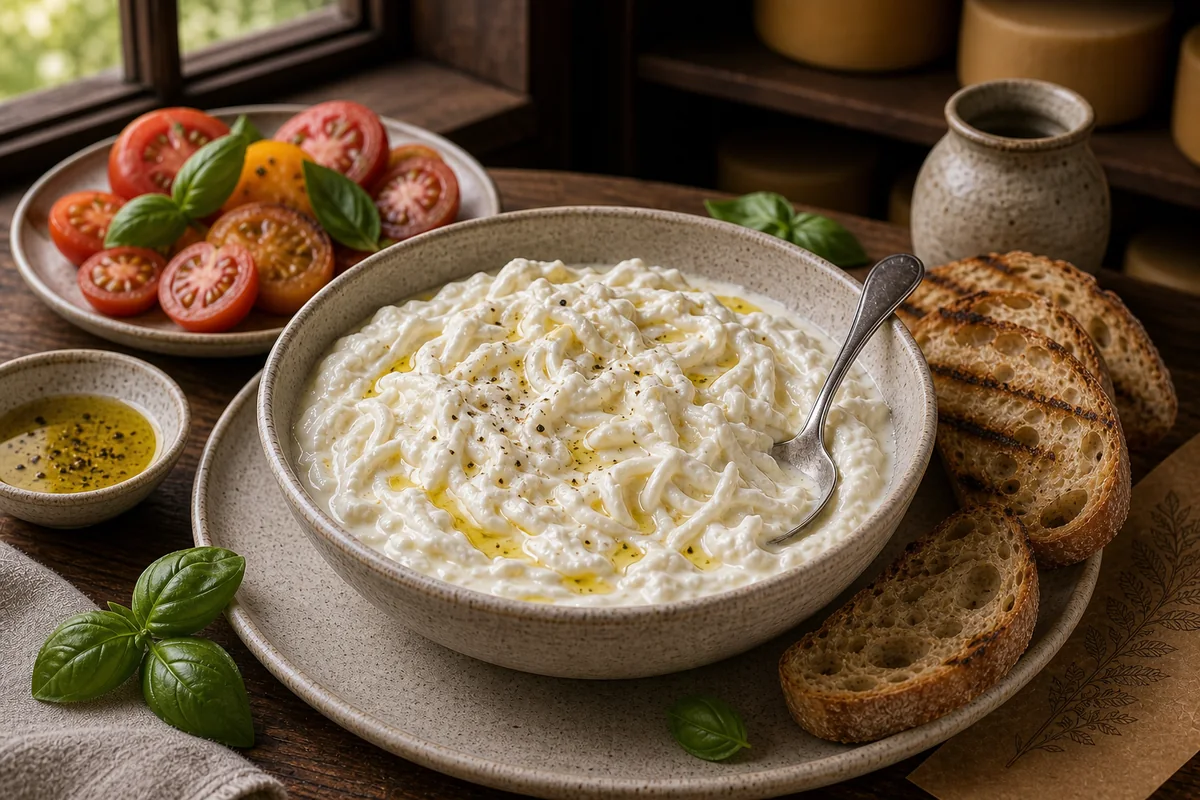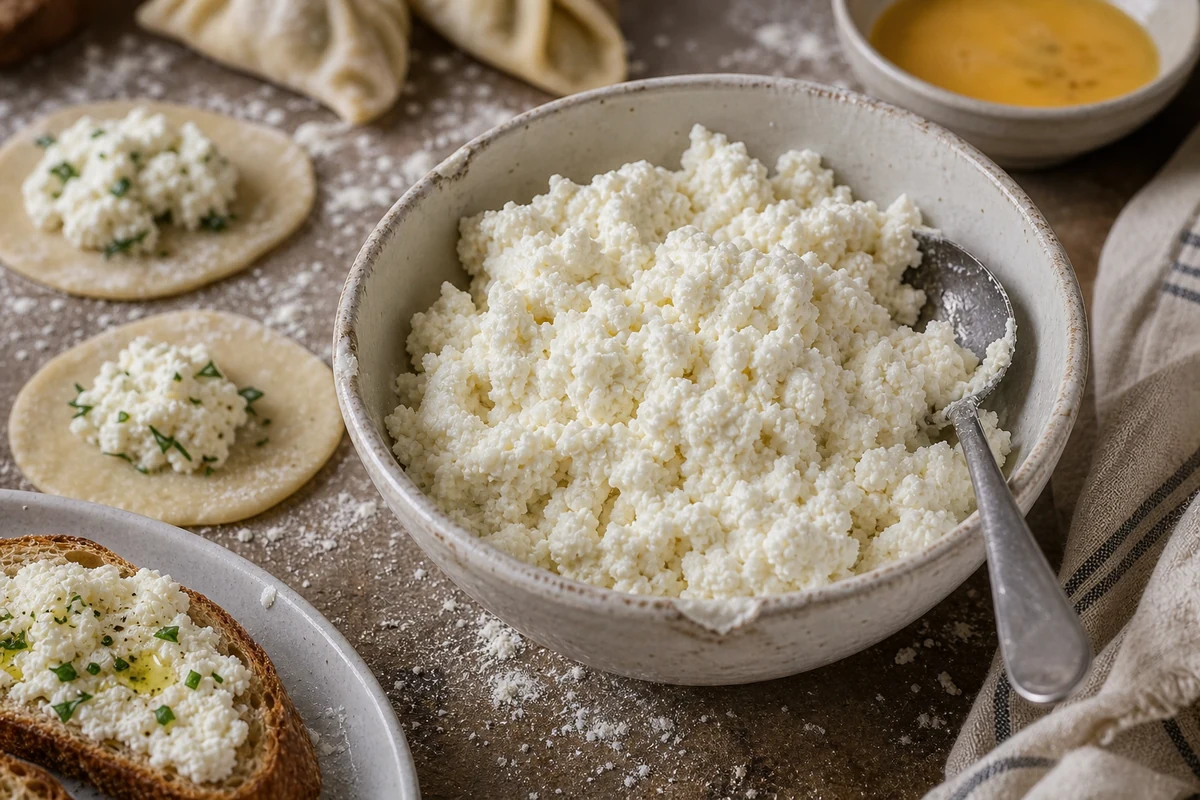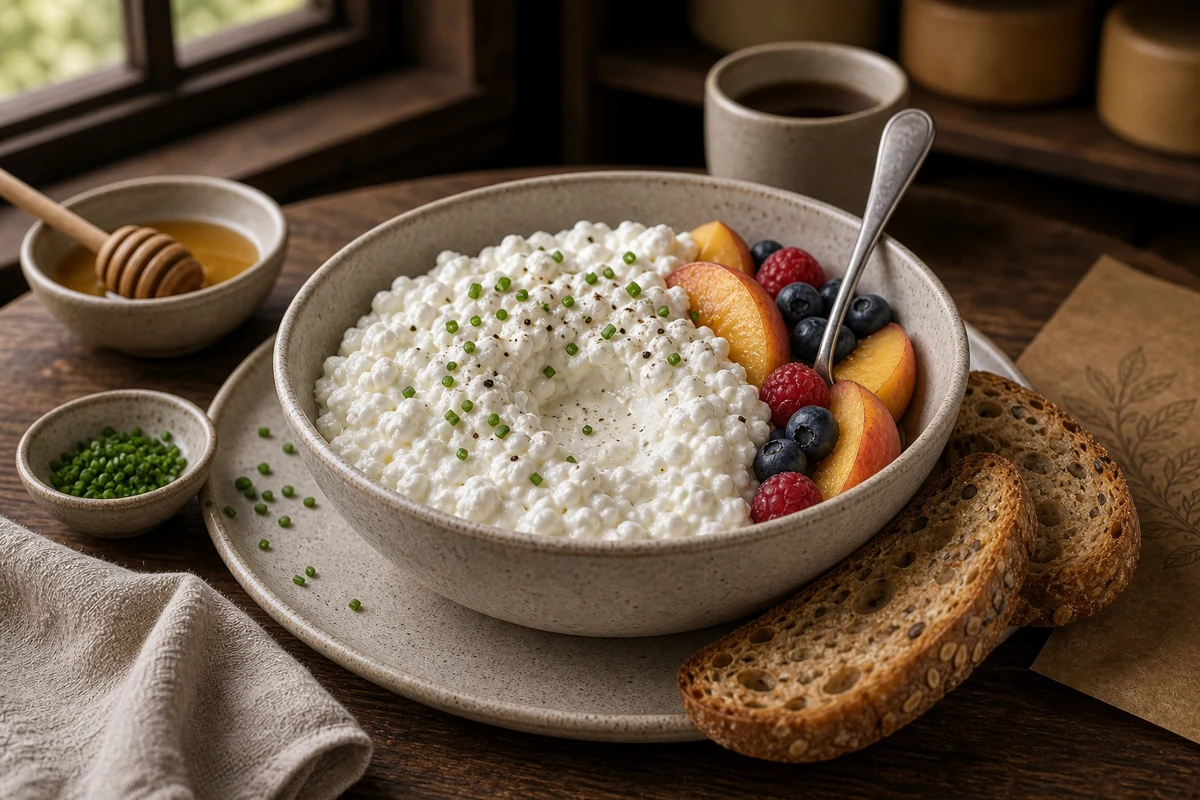
Cottage cheese is a fresh unaged cheese built around soft curds, cream dressing, and unusually high protein for the calories. It has moved beyond its old diet-food image because it works as a snack, a breakfast base, and a blended ingredient.
A half cup of full-fat cottage cheese can deliver about 14g protein for roughly 110 calories while still feeling like food instead of a supplement. The tradeoff is sodium, curd texture, and a shorter refrigerator life than aged cheese.
In This Article
What Is Cottage Cheese?
Cottage cheese is a fresh acid-set cheese made by forming soft curds from pasteurized cow's milk, then mixing those curds with a creaming mixture. Commercial production usually relies on cultured acid development, controlled cooking, curd washing, and cold packaging.
Fresh means the cheese reaches the refrigerator without a rind or ripening period, so its quality depends on curd condition, dressing, and cold storage rather than on age.
The "cottage" name comes from colonial-era American farmhouses where leftover milk was set near the fire to curdle. It was the simplest cheese any household could make: no rennet, no press, no aging room.
- Origin - American colonial farms, a simple acid-set curd cheese
- Milk - pasteurized cow's milk at various fat levels (skim, 1%, 2%, 4%)
- Method - cultured acid development, gentle cooking, curd washing, cream dressing
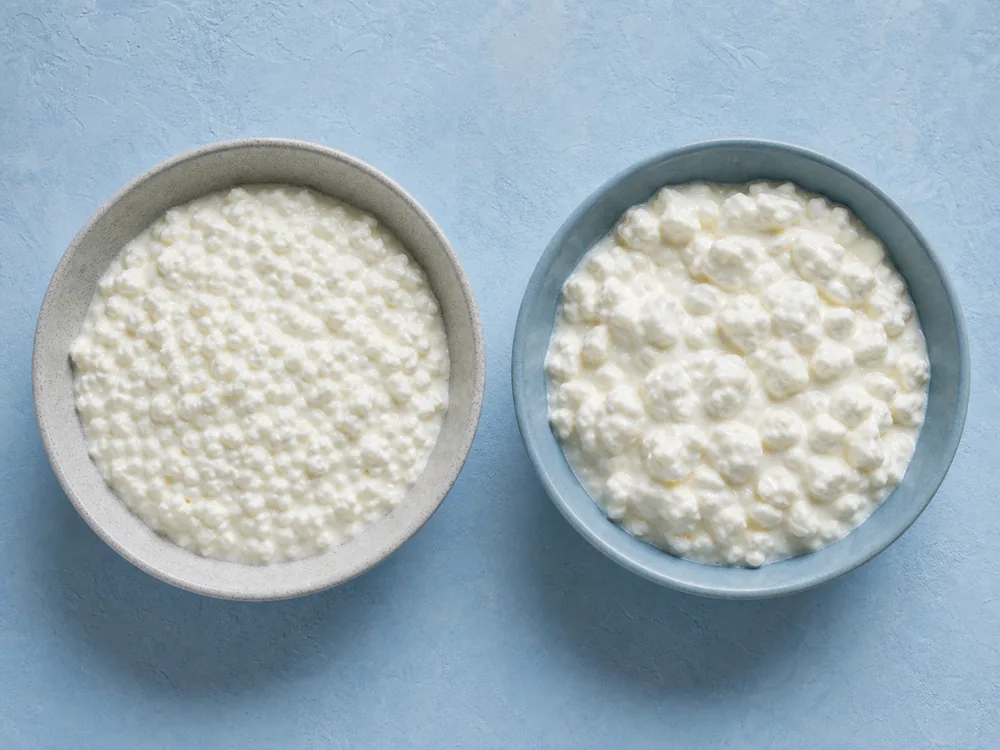
- Curd types - small curd, large curd, and whipped (smooth)
- No protection - not a controlled-origin product, made worldwide
After draining, the dry curds are dressed with a cream mixture that determines whether heavy cream produces a 4% cottage cheese or lighter cream and milk produce 1% or 2% versions.
A small amount of milky liquid around intact curds can be normal because the dressing and whey settle during storage. Stir a fresh tub gently before deciding it is watery, but do not treat an off odor, slime, or colored surface as harmless separation.
The curds themselves are nearly fat-free regardless of which fat percentage appears on the label because most of the fat sits in the dressing liquid. Draining cottage cheese through a strainer therefore removes much of that dressing and concentrates the curds and protein.
Draining also changes the amount you have for a recipe, so measure after draining when the goal is to match the weight and moisture of ricotta or another filling cheese.
This is fundamentally different from aged Cheddar structure, where fat is bound into the cheese matrix and cannot be separated after production.
Dry curd cottage cheese is sold without cream dressing, which leaves very little fat and a high concentration of protein. Look for it in the specialty dairy section, but check local naming because some regions also use farmer's cheese for related products.
Small curds give blended sauces a smoother base, while large curds keep a spoonable bite. In baked dishes, the curd behavior sits closest to soft ricotta texture after draining.
Full-fat cottage cheese tastes rounder because the cream dressing carries the flavor. The tang still stays lighter than dense cream cheese, which is why cottage cheese blends better into high-protein sauces.
Under the U.S. standard, full-fat cottage cheese contains at least 4% milkfat and no more than 80% moisture. Lower-fat and nonfat products sit in related label categories, so the nutrition panel remains the final authority for a specific tub.
The 4% number describes milkfat by product weight, not the share of calories from fat, which is why the serving panel remains the useful tool for comparing calories and saturated fat.
What Do Curd Size and Fat Level Change?
The dairy case usually separates this cheese by curd size and fat level. That combination changes the texture, flavor, and best use more than the brand name does.
Curd size is a production choice because large curds are cut into bigger pieces and handled more gently. Small curds are cut finer and stirred more during cooking, which breaks them down further.
Large curds create wider soft surfaces and more contrast with the dressing, while small curds distribute more evenly across a spoonful and disappear faster under a blender blade.
Curd labels do not guarantee identical texture across brands because cooking time, handling, stabilizers, and dressing thickness still affect firmness. Use the first tub as a texture test before buying a larger size for a recipe.
| Choice | Texture result | Best use |
|---|---|---|
| Large curd, 4% | Chunkier, creamier, more spoonable | Eating with fruit, tomatoes, pepper, or crackers |
| Small curd, 2% | Softer, easier to fold into recipes | Pancakes, bowls, pasta sauce, blended dips |
| Fat-free | Firmest and driest curds | Protein-first snacks where flavor is secondary |
| Whipped or blended | Smooth, yogurt-like body | Sauces, smoothies, dips, people who dislike curds |
- Large curd - chunky, firm pieces with distinct texture, best for eating straight or in salads
- Small curd - finer, softer pieces that blend more easily into recipes and smoothies
- Whipped - blended smooth, no visible curds, yogurt-like texture for people who dislike the lumps
Fat level determines richness and calorie count, with a 4% product tasting much creamier than a fat-free version. For straight eating, 2% or 4% usually gives the most satisfying balance of flavor and calories.
Fat-free curds can feel firmer and more separate because there is less creamy dressing to coat them, which matters more in a plain bowl than in a blended batter.
- Fat-free (0%) - driest, highest protein per calorie, slightly rubbery curds
- Low-fat (1%) - mild cream dressing, decent texture, good all-purpose option
- Reduced-fat (2%) - creamier with a better mouthfeel, the best balance of nutrition and flavor
- Full-fat (4%) - richest, most satisfying, the closest to old-fashioned homemade cottage cheese
The trend-driven cottage cheese resurgence favors full-fat. Social media recipes calling for cottage cheese in ice cream, pancake batter, and pasta sauce almost always specify 4% for the richest result.
That does not mean 4% is always best. If you are blending the cheese into a sauce with olive oil, eggs, or pasta water, 2% often gives enough body without making the dish feel heavy.
Serve a spoonful cold before judging body because cottage cheese loosens as it warms, and a product that feels pleasantly creamy from the refrigerator can become noticeably wetter on a warm counter.
What Does Cottage Cheese Taste Like?
Plain cottage cheese tastes mild, milky, lightly tangy, and noticeably salty rather than sharp or aged. The curds provide a clean fresh-dairy flavor, while the dressing supplies most of the richness and much of the seasoning.
Curd washing keeps the acidity gentler than yogurt or cultured cream cheese, so a fresh tub should taste cultured without producing a harsh sour finish.
Fat level changes how long the flavor lasts because a 4% dressing carries a round cream note across the palate, while a fat-free product exposes more of the lean curd and salt.
Cold cottage cheese tastes firmer and less aromatic, then becomes softer and more tangy as a serving warms, which is another reason to portion it instead of leaving the full tub on the table.
Flavorings can dominate this quiet base, so chive, fruit, chile, and sweetened versions should be judged as prepared foods rather than evidence of how plain cottage cheese tastes. A sharply yeasty, bitter, stale, or unusually sour note is a freshness warning.
Which Label Claims Matter?
The front of the tub hides more variation than most shoppers expect. Two plain 2% products can have similar protein and very different sodium, ingredient lists, and live-culture claims.
Start with fat level because it changes body and flavor. Then compare sodium, which determines how easily a daily serving fits beside the rest of the meal.
Compare products at the same serving weight because one label may use a half cup while another emphasizes a smaller portion, making the front-panel protein number look more different than the food actually is.
| Label item | Why it matters | Best reader move |
|---|---|---|
| Fat percentage | Controls richness, calories, and sauce body | Choose 4% for eating, 2% for balance, low-fat when calories lead |
| Sodium | Can vary enough to change a daily snack habit | Compare brands if you eat it often |
| Live cultures | Not all cottage cheese works like yogurt | Look for explicit live and active culture wording |
| Curd size | Changes spoon texture and blending speed | Use small curd for sauces, large curd for bowls |
Cream, milk, salt, cultures, and stabilizers are normal ingredient-list entries. Added fruit, sweeteners, and flavorings are not automatically bad, but they move the product from plain cottage cheese into a prepared snack or flavored spread.
For sodium, compare milligrams at the same gram weight and account for the toppings you plan to add. A savory bowl with smoked fish, olives, or seasoning mix can become much saltier than the plain tub suggests.
When protein drives the purchase, compare protein per calorie and sodium together because a tub with slightly less protein but much less sodium may fit a daily breakfast better than the highest-protein option.
A culture line deserves literal reading because cultured milk does not automatically mean live organisms remain in the finished product. Look for an explicit live and active culture statement when that feature drives the purchase.
How Is Cottage Cheese Made?
The production process is straightforward but has one unusual step that no other common cheese shares: curd washing.
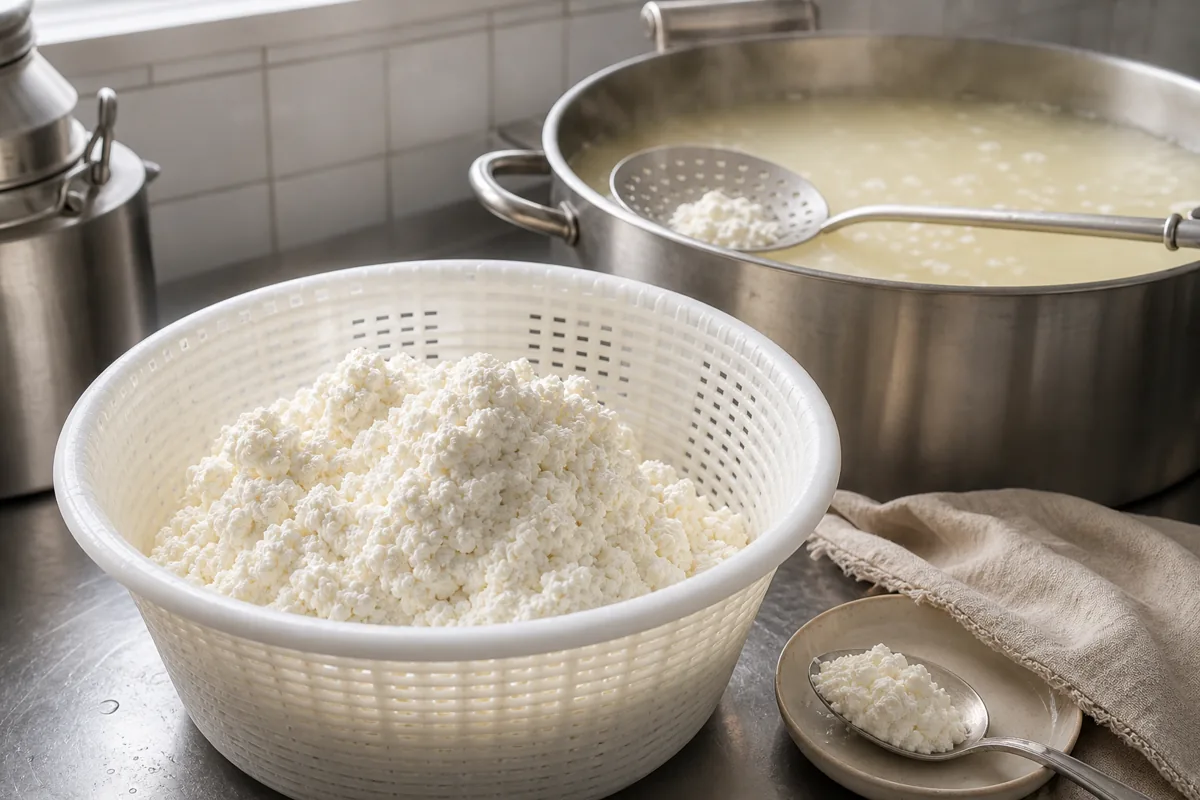
Milk is inoculated with mesophilic lactic cultures or acidified by another approved method. The acid slowly coagulates the casein proteins into a soft gel, then the curd is cut and heated gently so it firms without turning rubbery.
An acid-set gel is more delicate than the springy curd associated with many rennet-set cheeses, which is why cutting, stirring, and heating must firm the pieces without reducing them to grains.
- Acidify - lactic cultures or direct acid lower pH until milk coagulates
- Cut the curd - wire knives cut the gel into cubes (size determines final curd size)
- Cook gently - heat to 115-125 degrees F (46-52 degrees C) to firm the curds
- Wash the curds - rinse with cold water to remove acid and whey, reducing tang
- Dress with cream - mix the washed curds with a salted cream mixture
Without curd washing, cottage cheese would retain much more lactic acidity and taste sharply sour. The rinse removes acid, lactose, and whey, producing a milder, sweeter curd.
The cut size also controls drainage because smaller cubes expose more surface area and lose whey faster, while larger cubes need gentler handling to keep their shape through cooking and washing.
Curd washing is why cottage cheese tastes cleaner and less tangy than yogurt even though both rely on lactic fermentation. Yogurt keeps the acid in its gel, while cottage-cheese curds lose much of it with the drained whey and rinse water.
Cold rinse water also stops the cooking step and chills the curds before dressing, protecting a tender bite that continued heat would make firmer and more rubbery.
For a home version, use a tested fresh-cheese recipe and keep the curds refrigerated after draining. Homemade cottage cheese can be satisfying, but it does not have the same controlled pasteurization, packaging, and cold-chain safeguards as a sealed commercial tub.
After dressing, the finished cottage cheese is packaged immediately with no aging or ripening stage. Shelf life then depends on refrigeration temperature, clean utensils, seal quality, and how long the tub spends open on the counter.
The dressing is added after the curds have cooled so cream can coat the pieces without being cooked into them, and salt in that dressing supplies much of the finished product's sodium.
Cultured and direct-acid methods can reach the same broad product category, but culture choice and acid-development time influence tang while cutting and washing have more influence on the curd you feel.
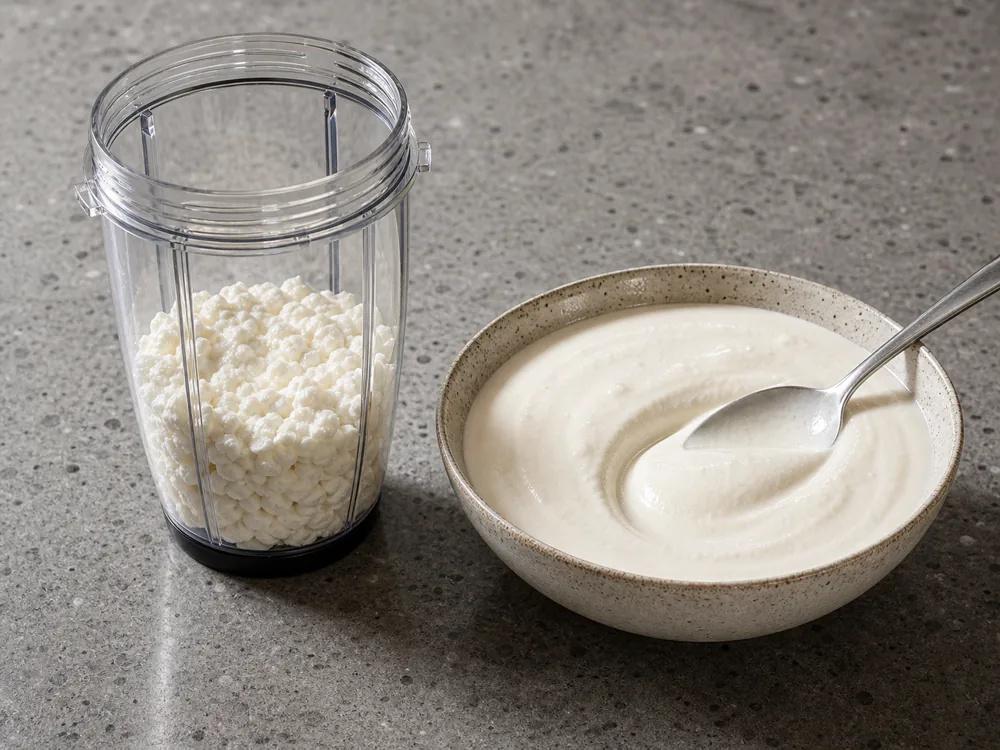
Blend it smooth for dips, pancake batter, or sauces. The result stays lighter than mascarpone cream and tangier than plain yogurt.
Large-curd cottage cheese works best when texture matters. Small-curd versions disappear more easily into creamy pasta sauces.
What Can You Use Cottage Cheese For?
The best modern uses go far beyond eating it from the tub. Its high protein content and neutral flavor make it a functional ingredient in recipes that traditionally used cream, ricotta, or yogurt.
For a cold savory bowl, pair the soft curds with at least one crisp ingredient and one acidic or peppery element, such as cucumber with tomato, radish with lemon, or herbs with pickled vegetables.
Sweet bowls need the same contrast because ripe fruit alone can make the combination feel soft and watery. Toasted nuts, seeds, firm apple, citrus zest, or a small amount of spice gives the curds a clearer role.
| Use | How It Works |
|---|---|
| High-Protein Snack | Straight from the tub with fruit, honey, everything bagel seasoning, or hot sauce. The simplest and most common use. |
| Smoothies | Blend small-curd or whipped cottage cheese into smoothies for protein without the chalky texture of powder supplements. |
| Pasta Sauce Base | Blend smooth and stir into hot pasta for a high-protein creamy sauce. Add garlic, lemon, and herbs. A viral recipe trend for good reason. |
| Pancake and Waffle Batter | Blend into batter for protein-boosted pancakes. The curds disappear during blending and the result is lighter than traditional batter. |
| Lasagna Filling | Substitute for ricotta in lasagna, stuffed shells, and manicotti. Cottage cheese is tangier and wetter, so drain it first. |
| Savory Bowls | Top with avocado, tomatoes, cucumber, and everything seasoning for a high-protein lunch bowl. The savory trend is growing fast. |
- Straight eating - with fruit, honey, nuts, or savory toppings
- Blended into recipes - smoothies, pancake batter, pasta sauces, dips
- Baking substitute - replace ricotta or sour cream in many baked dishes
- Frozen desserts - blend and freeze for a high-protein ice cream alternative
The blended cottage cheese pasta sauce deserves special mention. Blending full-fat cottage cheese with roasted garlic, lemon juice, herbs, and pasta water creates a sauce with more protein than a cream-only sauce and a cleaner tang than heavy cream.
Blend the cheese completely before it meets hot pasta, then loosen it with warm cooking water and toss off direct high heat so the proteins stay dispersed instead of tightening into tiny curds.
For baking, cottage cheese can replace drained ricotta when a slightly curdier texture is acceptable. Drain it first to approach ricotta's lower moisture level before mixing it with eggs or placing it inside pasta.
A pancake or waffle batter needs a different adjustment because the cheese contributes both protein and water. Blend it with the wet ingredients first, then judge batter thickness before adding the full amount of milk named in an untested recipe.
For stuffed shells or lasagna, drain before weighing and blend only when the filling needs a fine texture, since visible curds can be desirable in a rustic layer but distracting in a smooth piped filling.
Cottage cheese does not melt in any useful sense because its curds soften and release liquid without flowing or stretching. Its value is nutritional function, not melting performance.
Cottage cheese is mild on purpose, not by failure. It carries herbs, fruit, chile, garlic, and other flavors without overpowering them, which is why it works as a recipe ingredient.
Cottage cheese fails when a recipe needs stretch, browning, or a clean slice. Use it where blending, spooning, or filling matters, then choose another cheese when the dish needs a melted top or firm cut edge.
Frozen cottage-cheese desserts also have limits because water in the curds and dressing forms ice crystals, so a freshly blended frozen bowl can be pleasant while a deeply frozen batch may turn hard and grainy.
How Do You Cook Cottage Cheese Without Graininess?
Cooking works best when you control moisture and curd texture before the pan gets hot. Large curds can stay lumpy in a sauce, and fat-free curds can taste chalky once heated.
Decide whether the recipe needs draining, blending, or both before seasoning it because removing whey after herbs or salt have been added also removes part of the flavor you just measured.
For the smoothest result, blend small-curd or whipped cottage cheese before it reaches the pan, then add warm pasta water, lemon juice, or broth in small amounts. Warm the finished mixture gently because high heat can tighten the proteins.
When a filling already contains eggs, cooked greens, or a loose tomato sauce, drain cottage cheese until free whey no longer runs from the strainer rather than relying on extra starch to absorb an unknown amount of liquid.
Add thinning liquid a spoonful at a time because the mixture moves quickly from thick enough to coat pasta into a sauce that collects at the bottom of the bowl.
- For pasta sauce: blend first, then stir into warm pasta off direct high heat.
- For pancakes: blend with eggs before adding dry ingredients so curds disappear.
- For lasagna: drain first if the sauce is already loose or watery.
- For dips: use 4% cottage cheese when you want a fuller texture without cream cheese.
If the texture still feels grainy, use a blender, food processor, or immersion blender rather than adding more heat. Continued heating makes curd proteins firmer instead of turning them into a smooth base.
A countertop blender gives the finest result for a large batch, while an immersion blender works best in a narrow vessel where the blade stays fully covered and can pull every curd through the cutting zone.
Acid from lemon or tomato can brighten a sauce, but add it after the cheese is smooth and avoid a hard boil so flavor improves without encouraging the dairy proteins to clump.
Cottage Cheese or Yogurt?
The comparison is inevitable. Both are cultured dairy, both sit in the same refrigerator section, and both market themselves as high-protein snack options.
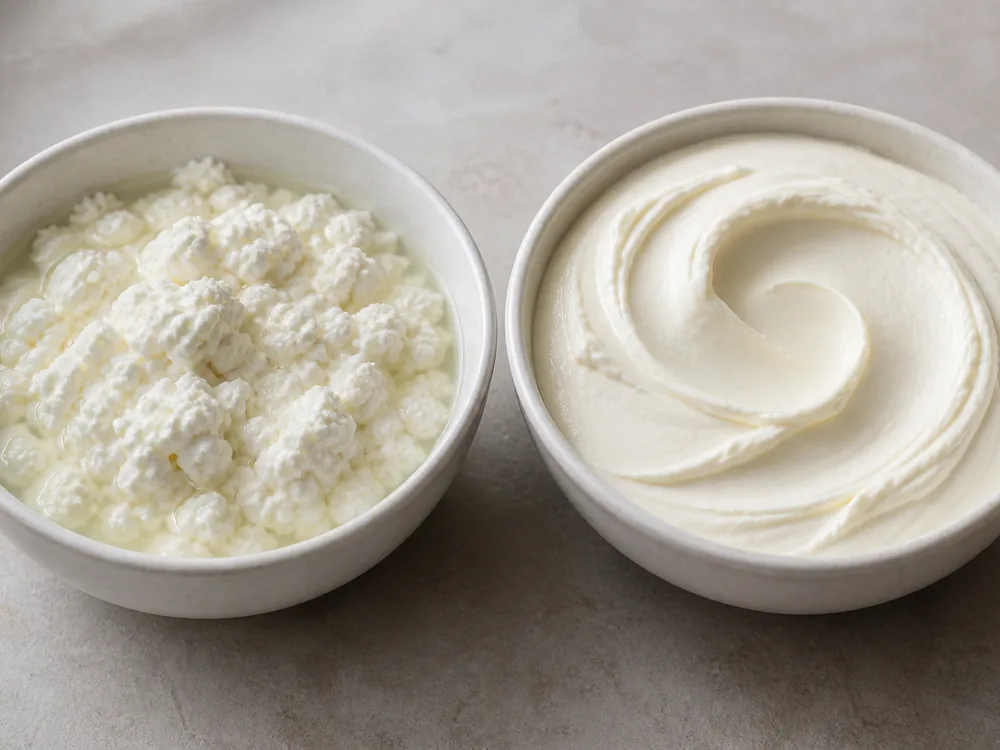
The nutritional differences are real and worth understanding.
Compare the two at the same gram weight because a yogurt cup and a cottage-cheese serving may not use the same volume, which can exaggerate the apparent difference in protein or calories.
- Protein - cottage cheese wins: 14g per half cup vs 8-10g for Greek yogurt
- Texture - yogurt is smooth and spoonable, cottage cheese has visible curds
- Sodium - cottage cheese is much higher: 350-450mg vs 50-80mg per serving
- Probiotics - yogurt contains live active cultures, most cottage cheese does not
- Cooking - cottage cheese blends into recipes better because it has less tang
If protein is your primary goal, cottage cheese is often the more efficient choice, while yogurt usually brings less sodium and more reliable live-culture claims. Cottage cheese gains an edge in cooking because its milder flavor blends into sauces without yogurt's sharper tang.
Greek yogurt contributes a smooth acidic gel, while cottage cheese contributes separate curds and dressing, so swapping one for the other changes both texture and water behavior even when the nutrition numbers look close.
Some newer brands now add live cultures to cottage cheese after production, bridging the probiotic gap. Check the label for "live and active cultures" if that matters to you.
Neither product owns every breakfast or sauce, which makes the intended texture and sodium target more useful than declaring one universally better.
Because the curds sit in dressing liquid, cottage cheese needs a sealed container rather than cheese paper. The same cold fresh-cheese storage rule applies: keep it covered, cold, and away from door-temperature swings.
How Long Does an Open Tub Last?
Fresh tubs need stricter handling than aged wedges. High moisture and near-neutral pH create conditions where bacteria can grow quickly once the seal is broken.
Spoon the amount you plan to eat into a separate bowl, close the main tub, and return it to the refrigerator instead of letting the whole container warm through breakfast or meal prep.
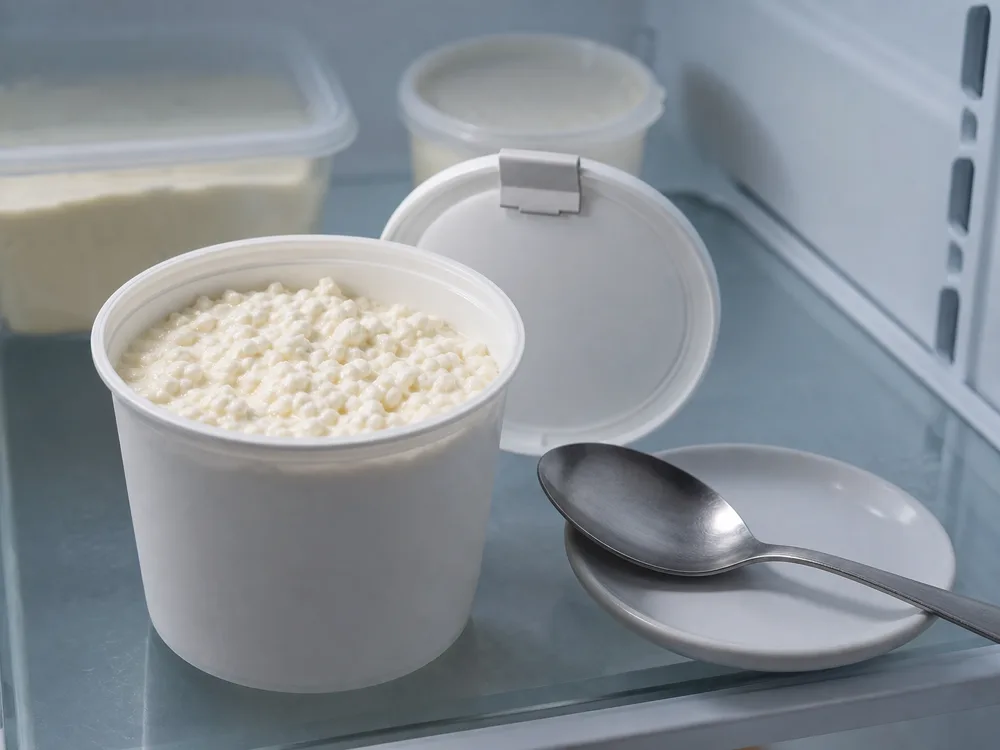
- Keep it cold - cottage cheese spoils faster than most dairy when temperature rises above 40 degrees F
- Seal tightly - exposure to air accelerates spoilage and causes surface drying
- Use clean utensils - double-dipping introduces bacteria that shorten shelf life
- Smell before eating - sour or yeasty odor means it has turned, even if within the date
The sell-by date on cottage cheese matters more than it does on an aged cheese because a fresh tub does not improve with time. Buy the freshest intact container and plan to use it within a week of opening.
Normal settling should still leave white curds and a clean cultured-dairy smell after gentle stirring. Pink, yellow, or gray patches, a yeasty odor, surface slime, gas, or a swollen package are discard cues rather than problems to scoop around.
Discard cottage cheese left at room temperature for more than 2 hours, or more than 1 hour if exposed to temperatures above 90 degrees F. Pack it for lunch in an insulated bag with a cold pack.
Freezing cottage cheese breaks down the curd structure and causes whey separation, which makes the thawed product unpleasant to eat straight. Reserve it for smoothies, pancake batter, or baked dishes where blending and other ingredients hide the texture change.
Freeze only a measured cooking portion in a closed container, mark its intended dish, and thaw it in the refrigerator so a texture-compromised batch is not mistaken for fresh snacking cheese.
For toast or open-faced sandwiches, cottage cheese should act as the spread, not the melt. Use firm sandwich cheeses when the cheese needs to slice cleanly.
For a packed lunch, keep the container beside a frozen cold pack until eating and discard any remainder that has spent too long warm rather than returning it to the main tub.
For a shared bowl, put out a smaller portion, keep the main tub refrigerated, and provide a clean serving spoon. Eating directly from the container shortens its usable life because each spoonful can introduce microbes into a high-moisture food.
Which Tub Should You Buy?
The cottage cheese section at most grocery stores has expanded from 3-4 options to a full wall of choices. Fat levels, curd sizes, flavored varieties, and protein-boosted versions compete for shelf space.
Start with the intended use rather than the brand. Texture and salt matter most for cold eating, while curd size and fat level have more influence once the cheese is blended.
Choose package size from the number of planned servings because one large open tub gives you less freshness protection than two smaller sealed tubs used on different weeks.
For a blended pasta sauce, buy full-fat, small-curd cottage cheese because it becomes smoother and richer than a low-fat or large-curd version. Use a high-speed blender when the sauce must hide every visible curd.
Do not pay extra for visually perfect large curds when the entire tub will be drained or blended, since freshness, fat level, sodium, and net weight affect that use more than spoon appearance.
For everyday breakfast bowls, compare sodium before comparing protein. Most plain brands sit close on protein, but sodium can swing enough to change the meal if you eat cottage cheese often.
Compare unit price at the same net weight rather than by tub diameter because whipped, single-serve, and large family containers can make shelf size a poor guide to how much food you are buying.
Check the surface before buying a large tub. Avoid containers with puffed lids, separated liquid leaking around the seal, or dates that force you to finish the tub too quickly after opening.
A low-sodium or live-culture product may taste tangier or have a different dressing texture than your usual brand, so test one small tub before relying on it for a large cold dish.
For cooking, plain cottage cheese keeps the seasoning under your control, while pineapple, chive, chile, or sweetened cups can introduce sugar, salt, and flavors that remain obvious after blending.
How Much Protein Is in Cottage Cheese?
For protein per calorie, few cheeses compete with a plain cottage cheese tub. A half cup can deliver about 14g protein, but exact numbers vary by fat level, brand, curd style, and whether the product is plain or flavored.
Use grams rather than the visual height of a half-cup scoop when comparing products because curd size and dressing can change how densely the cheese settles into a measuring cup.
- Protein champion - 14g per half cup at 4% fat, 12g at 1% fat
- Moderate calories - 110 cal (4%), 90 cal (2%), 80 cal (1%), 70 cal (fat-free)
- High sodium - the main nutritional drawback at 370mg per half cup
- Low calcium - only 83mg per half cup, much less than aged cheeses
Sodium is the main nutritional trade-off because a plain full-fat serving can contain around 370mg per half cup, with some brands going higher. Much of that sodium comes from the salted dressing, so compare low-sodium versions when cottage cheese is a daily food.
Changing from 4% to a lower-fat tub usually reduces calories more clearly than it changes protein, but the exact tradeoff belongs to the nutrition panel because brands do not use identical dressing formulas.
Judge sodium in the context of the whole bowl because cured meat, smoked fish, olives, crackers, and packaged seasoning can add more salt to an already seasoned dairy base.
The same weight of low-moisture mozzarella delivers more calcium but less protein per calorie. Cottage cheese is the more protein-efficient choice, while mozzarella provides more calcium.
Cottage cheese is not a concentrated calcium food in the way many pressed cheeses are because whey removal and the high water content leave less calcium in each spoonful than a dense aged piece.
Because cottage cheese is fresh and not aged, it keeps more milk sugar than hard cheeses. If lactose is your main concern, compare it with lower-lactose aged cheeses instead of assuming all high-protein dairy behaves the same.
Lactose tolerance varies, and a cultured or lower-fat label does not prove a tub is lactose-free, so use an explicit lactose-free claim when that distinction is necessary.
Flavored snack cups can add fruit puree or sweetener without changing the front-panel protein emphasis, which makes total carbohydrate and added sugar useful checks when you want plain cottage cheese.
Cottage cheese can be a useful pregnancy snack because of its high protein and moderate calorie count. The practical safety rule is the same as other fresh dairy: choose pasteurized products, keep the tub cold, and follow pasteurization and cold-holding checks before serving it from a shared dish.
How Do We Source Cottage Cheese Claims?
We use the FDA standard of identity for the full-fat definition, milkfat minimum, moisture maximum, creaming mixture, and pasteurized dairy ingredient wording. USDA FoodData Central provides the nutrition baseline.
For storage and pregnancy advice, we treat cottage cheese as a high-moisture refrigerated dairy product and use CDC, FoodSafety.gov, and NHS guidance for time limits, pasteurized-cheese wording, and cold handling.
We do not treat one brand's label as the whole category. A plain 4% tub, a low-sodium tub, a live-culture product, and a flavored snack cup can differ enough that the label should decide the final sodium, culture, and ingredient call.
The category standard establishes what full-fat cottage cheese must be, while the package owns the actual serving size, nutrition values, culture claim, ingredient list, storage direction, and printed date for the tub in your hand.
- Use FDA standards for full-fat cottage cheese identity and pasteurized dairy ingredients.
- Use USDA data for nutrition baselines and serving size.
- Use product labels for sodium, live cultures, fat percentage, and pasteurization.
- Use public-health sources for opened tubs, packed lunches, pregnancy, and party bowls.
Choose 4% large curd for a rich cold bowl, small curd for blending, and a lower-sodium tub when cottage cheese is a daily food. Keep it cold, serve it with clean utensils, and treat it as fresh dairy rather than an aged cheese.
SOURCES & REFERENCES
What Else Should You Know About Cottage Cheese?
Curd size and sodium vary more between tubs than between brands, which is why most of these answers point back at the label.
Cottage cheese has more protein per half cup, about 14g versus 8-10g, but it also has much more sodium. Choose cottage cheese for protein density and Greek yogurt for lower sodium and more reliable live-culture content.
The difference is mainly texture rather than nutrition because large curds give a chunkier spoonful that works well cold with toppings. Small curds break down faster in pancakes, sauces, dips, and smoothies.
Yes, because small-curd or whipped cottage cheese can be blended into pasta sauces, pancake batter, and baked dishes even though it does not melt or stretch like a traditional topping cheese.
Opened cottage cheese lasts about 5-7 days at 35-40 degrees F when the lid stays sealed and every serving uses a clean utensil. Discard it when it develops a sour or yeasty odor, pink discoloration, or a slimy surface.
You can freeze cottage cheese for 2-3 months, but thawing leaves grainy curds and separated liquid. Use it in smoothies, baked dishes, or blended mixtures rather than eating it straight.