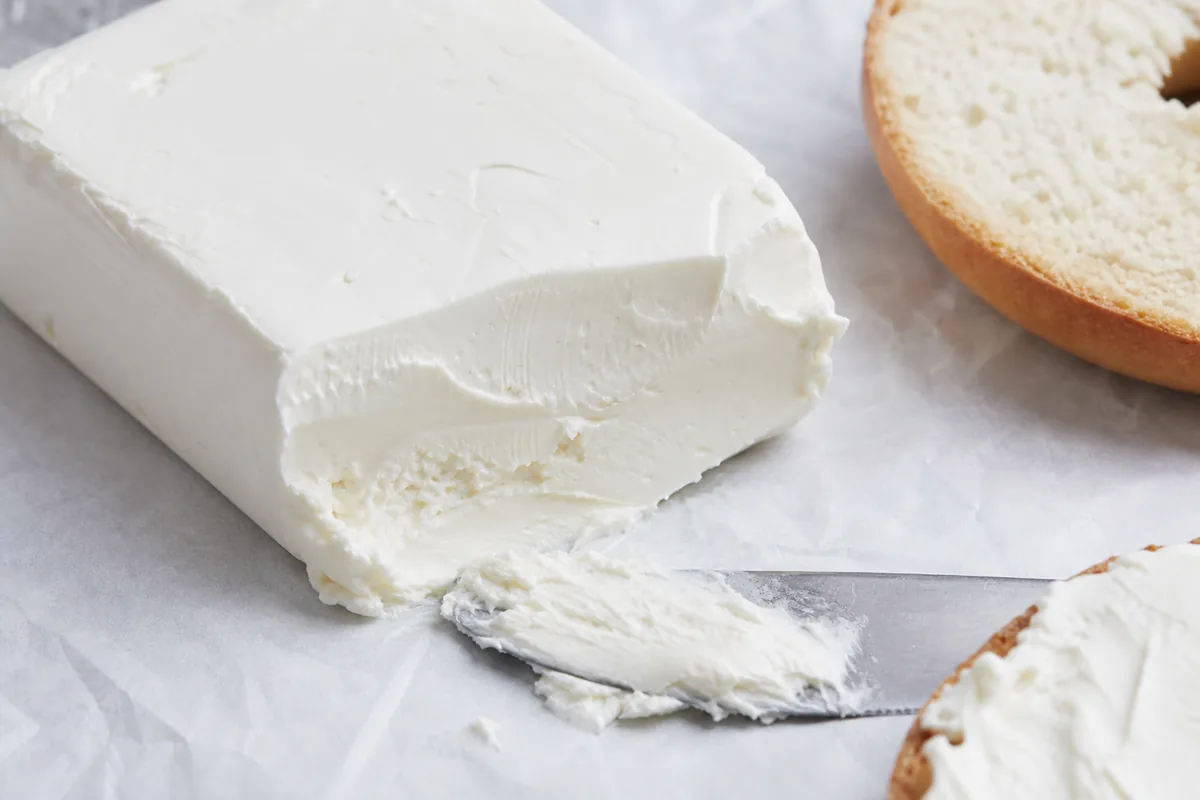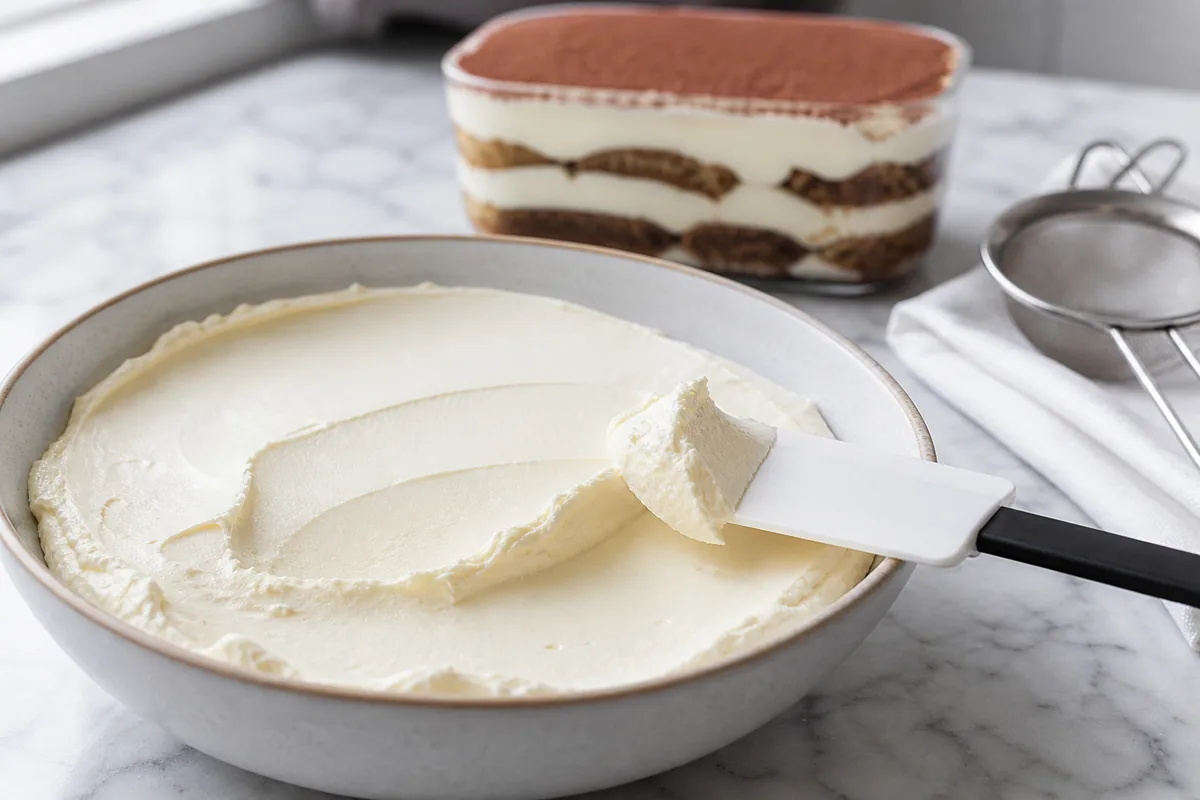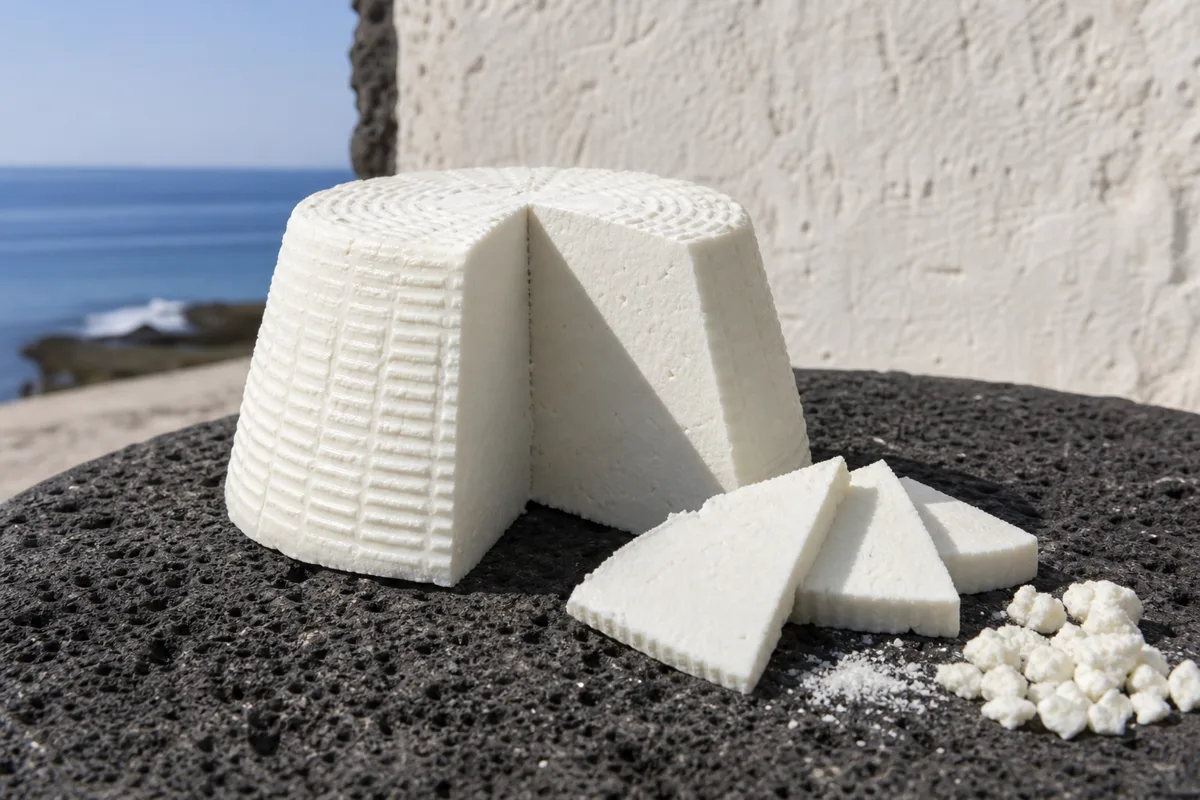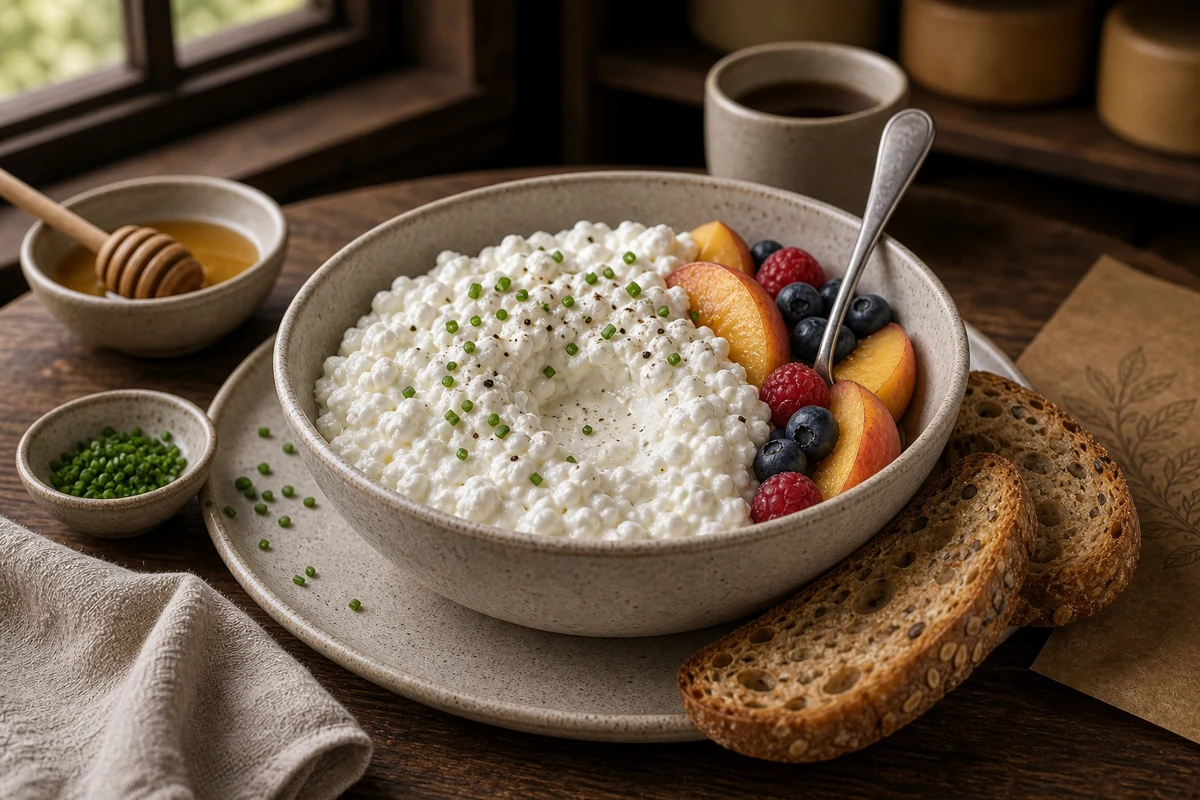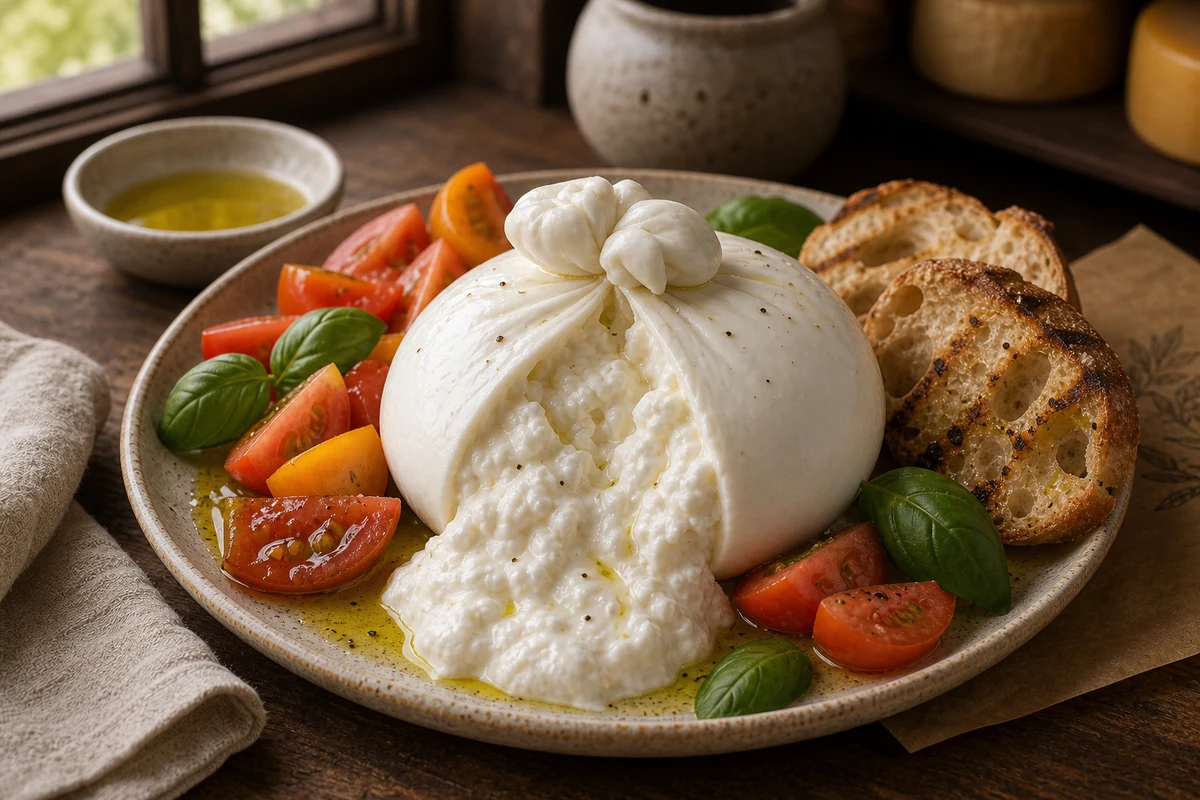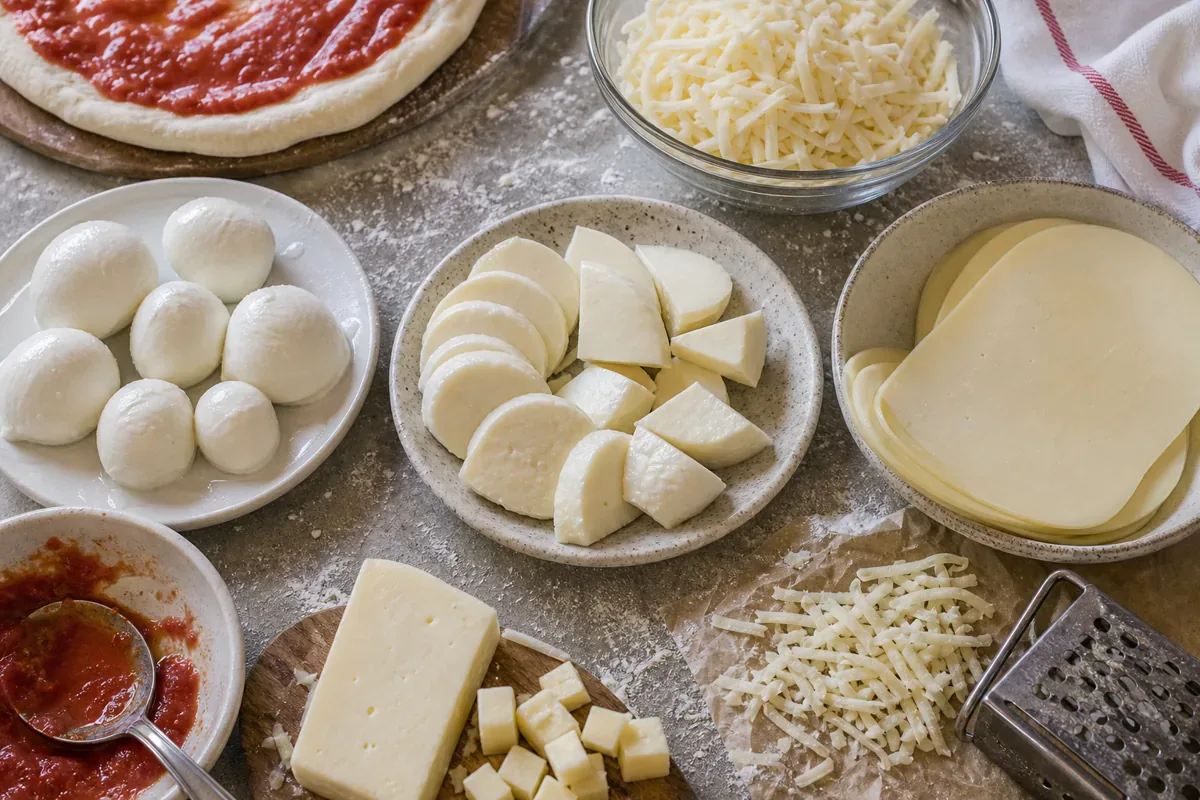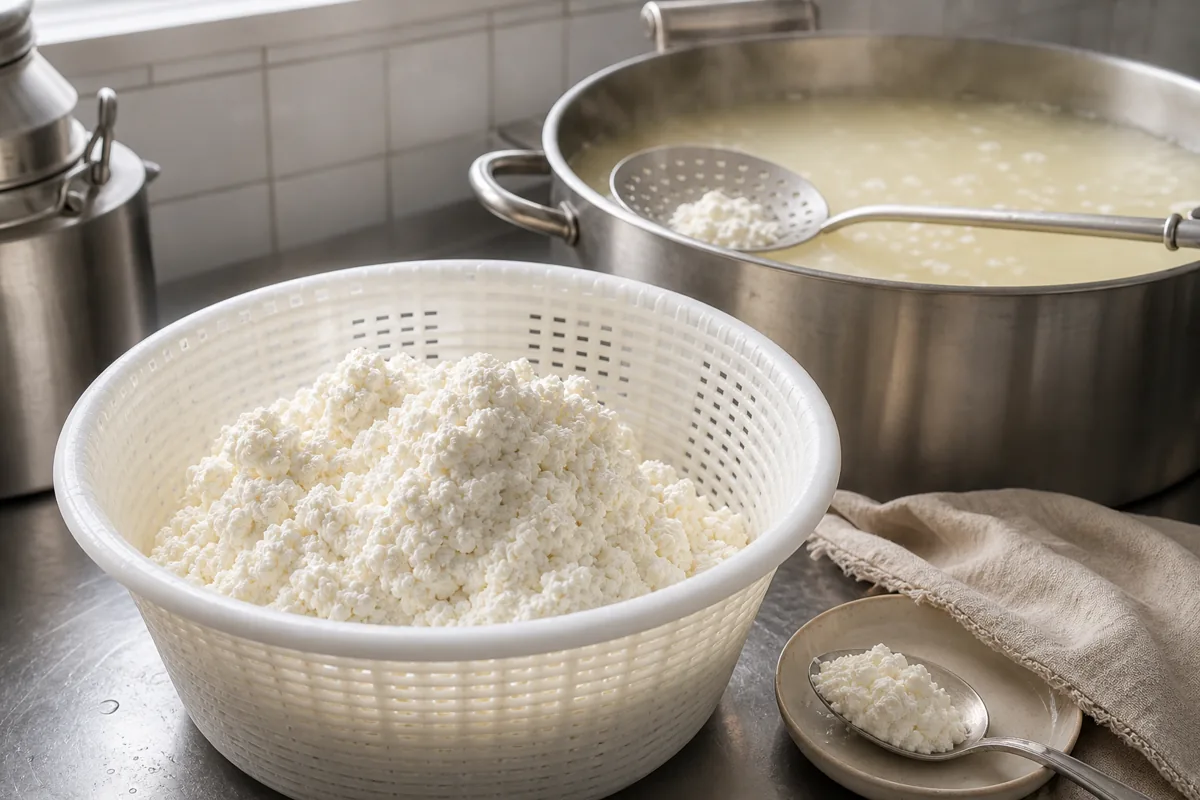
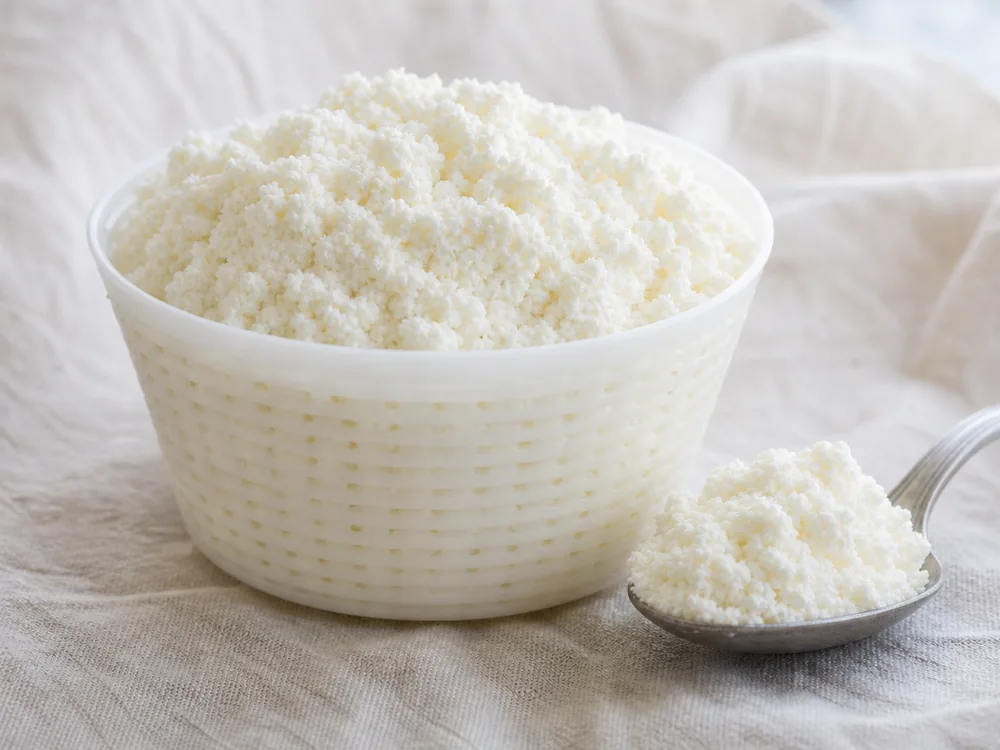
Fresh ricotta is a soft, white cheese with a fine grain and a mild, milky flavour. It works as a pasta filling, a spread or a dessert ingredient, but the moisture and ingredients vary between products.
For a recipe that simply says ricotta, you will usually need the fresh tub or basket form.
A firm block of ricotta salata is a different ingredient, better suited to crumbling or grating than making a creamy filling.
In This Article
Is Ricotta Made From Whey or Milk?
Both versions exist. Traditional whey-based ricotta recovers proteins from the liquid left after cheesemaking, while some retail ricottas are made from milk rather than whey.
For example, BelGioioso Ricotta con Latte lists pasteurised whey and milk. Organic Valley Whole Milk Ricotta lists pasteurised milk, vinegar and salt, without whey as a separate ingredient.
Heating causes proteins to gather into fine curds, which are collected and drained.
The starting liquid, added ingredients and draining help determine the finished texture, so the name alone cannot tell you how loose a particular tub will be.
The protected Italian names are more specific. Ricotta Romana DOP is based on sheep's-milk whey from Lazio, and its specification also allows an addition of sheep's milk.
Ricotta di Bufala Campana DOP is another protected ricotta, made from buffalo whey associated with Mozzarella di Bufala Campana production. Ricotta Romana is therefore not the only protected example, and neither name describes every supermarket ricotta.
What Separates Fresh Ricotta from Salata and Infornata?
The extra word on the label can change how you should use the cheese. Fresh ricotta is spoonable, while salata and infornata have undergone further processing.
| Form | What to expect | Useful buying decision |
|---|---|---|
| Fresh ricotta | Soft, moist, fine curds | Choose for filling, spreading or a recipe that calls for a tub of ricotta. |
| Ricotta salata | A salted, firmer product suitable for crumbling or grating | Choose for a finishing cheese, not as a direct replacement for a fresh filling. |
| Ricotta infornata | Baked ricotta with a browned exterior, sold at different degrees of firmness | Ask whether the particular piece is intended for eating in slices or grating. |
Age is product-specific. BelGioioso's cow's-milk Ricotta Salata is aged for 30 days, so a three-month minimum would not describe every product sold under that name.
The Sicilian regional publication Terra describes infornata ranging from softer table cheese to harder versions for grating. A browned surface does not tell you that every piece has the same texture or needs the same storage.
How Do You Cook With Fresh Ricotta?
Fresh ricotta gives you a fine-grained filling rather than the stretchy strands associated with mozzarella.
It can be used cold on bread or with fruit, or cooked in pasta dishes and desserts.
For lasagna, follow the recipe's choice of ricotta and its instructions for the filling. BelGioioso's Fresh Mozzarella Lasagna mixes its Ricotta con Latte with Parmesan and egg without a separate draining step, so draining every tub is unnecessary.
For stuffed shells or ravioli, check whether the filling holds together before you begin filling the pasta. If it is too loose, drain the ricotta in a lined sieve over a bowl in the refrigerator, then measure the amount needed for the recipe.
There is no single draining time that guarantees the right result. Starting moisture, the amount in the sieve and ingredients such as spinach all affect how wet the mixture becomes.
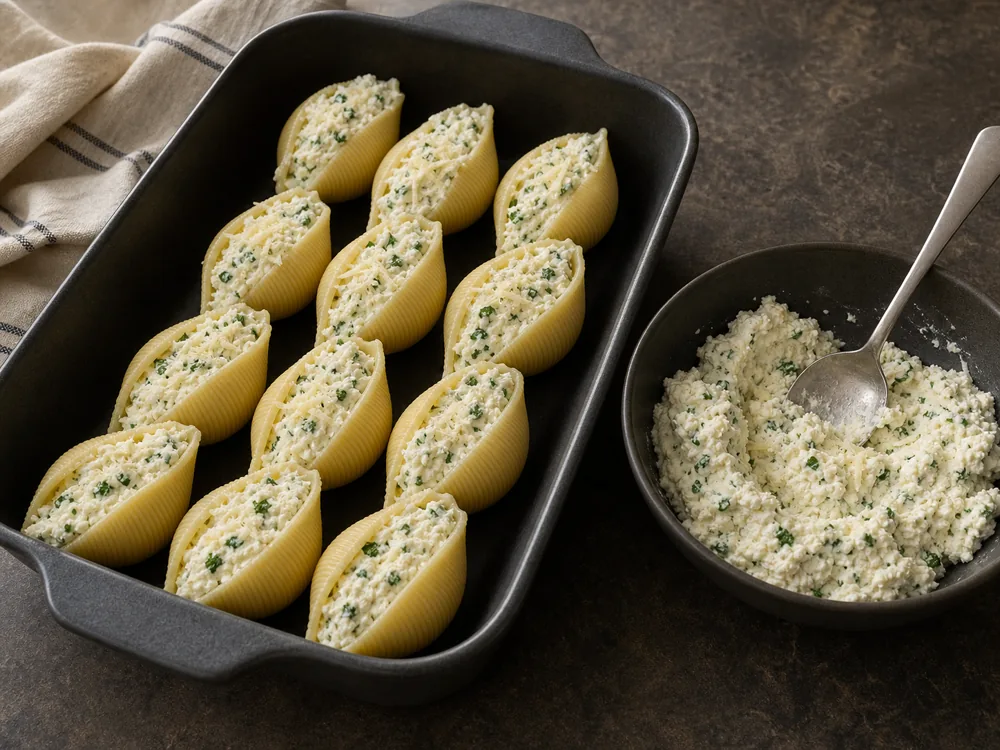
On toast, a softer ricotta may be exactly what you want. A small amount of surface liquid does not automatically mean poor quality: BelGioioso says natural separation can occur in its Ricotta con Latte and can be stirred in or drained.
If you have cottage cheese instead, swapping cottage cheese into a ricotta filling may involve leaving the curds whole or blending them, depending on the dish.
For a finished dish, use its complete recipe rather than expecting any white fresh cheese to behave identically.
Which Nutrients Does a Ricotta Label Show?
Organic Valley's US Whole Milk Ricotta label lists 100 calories, 6 g protein, 7 g total fat, 4.5 g saturated fat, 45 mg sodium and 110 mg calcium per 55 g serving. These are the manufacturer's rounded label values, checked in September 2026.
That is one named whole-milk product, not an average for fresh ricotta, sheep's-milk ricotta or ricotta salata.
Compare the same serving weight when assessing another tub, and use the current package if its information differs from the website.
A milk or whey ingredient also means this is a dairy product.
For lactose concerns, look for product-specific information rather than assuming a mild flavour or a low sugar number proves it is lactose-free.
How Long Does Opened Ricotta Last?
Follow the product's after-opening instructions instead of treating seven days as a guaranteed life for every tub. BelGioioso, for example, recommends consuming its Ricotta con Latte within three to five days of opening for best flavour.
Use a clean utensil, close the container and return it to the refrigerator promptly. FDA home-storage guidance calls for a refrigerator at 40 F (4 C) or below, with perishable foods out for no more than two hours, or one hour above 90 F (32 C).
That time limit includes preparation and serving. Draining ricotta on a warm counter does not pause it, which is why draining belongs in the refrigerator.
Discard mouldy fresh ricotta rather than scraping off the affected area, following USDA guidance for soft cheese.
Also discard food that has been held outside safe temperature limits: an ordinary smell or appearance does not prove it is safe.
Surface liquid alone is a different issue from mould or unsafe storage.
Check the package guidance and handling history instead of using separation as your only spoilage test.
For other types of cheese, wrapping and refrigeration needs can differ.
Freezing advice should also follow the maker's instructions, since keeping food frozen does not guarantee that a thawed fresh cheese will retain the texture you wanted.
Can You Eat Ricotta During Pregnancy?
In the UK, the NHS lists pasteurised ricotta among the soft cheeses that can be eaten during pregnancy. Check the packaging rather than assuming every supermarket or artisan product uses pasteurised ingredients.
The NHS also says any cheese cooked until steaming hot can be eaten. For unpasteurised soft cheese, that cooking condition matters, and slight warming or softening does not establish it.
Advice differs by country, so check the pregnancy recommendations for your country.
Refrigeration and package instructions still apply to a pasteurised product.