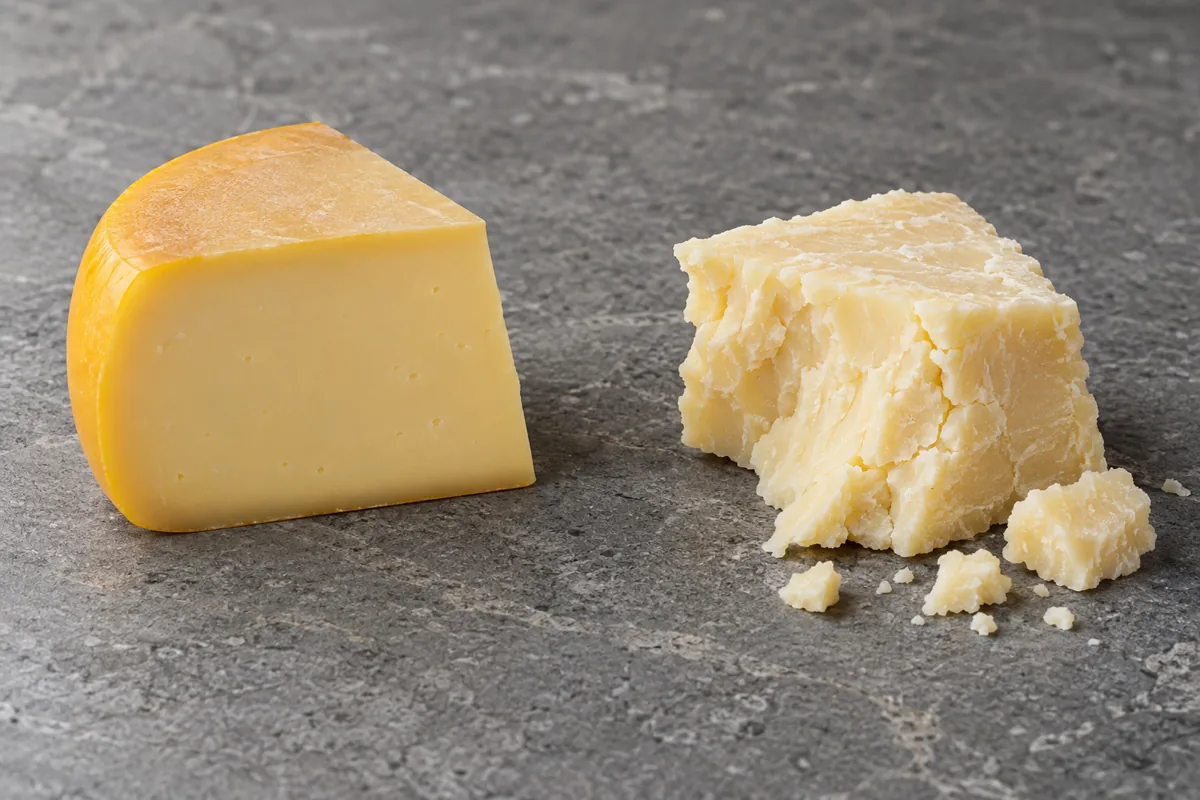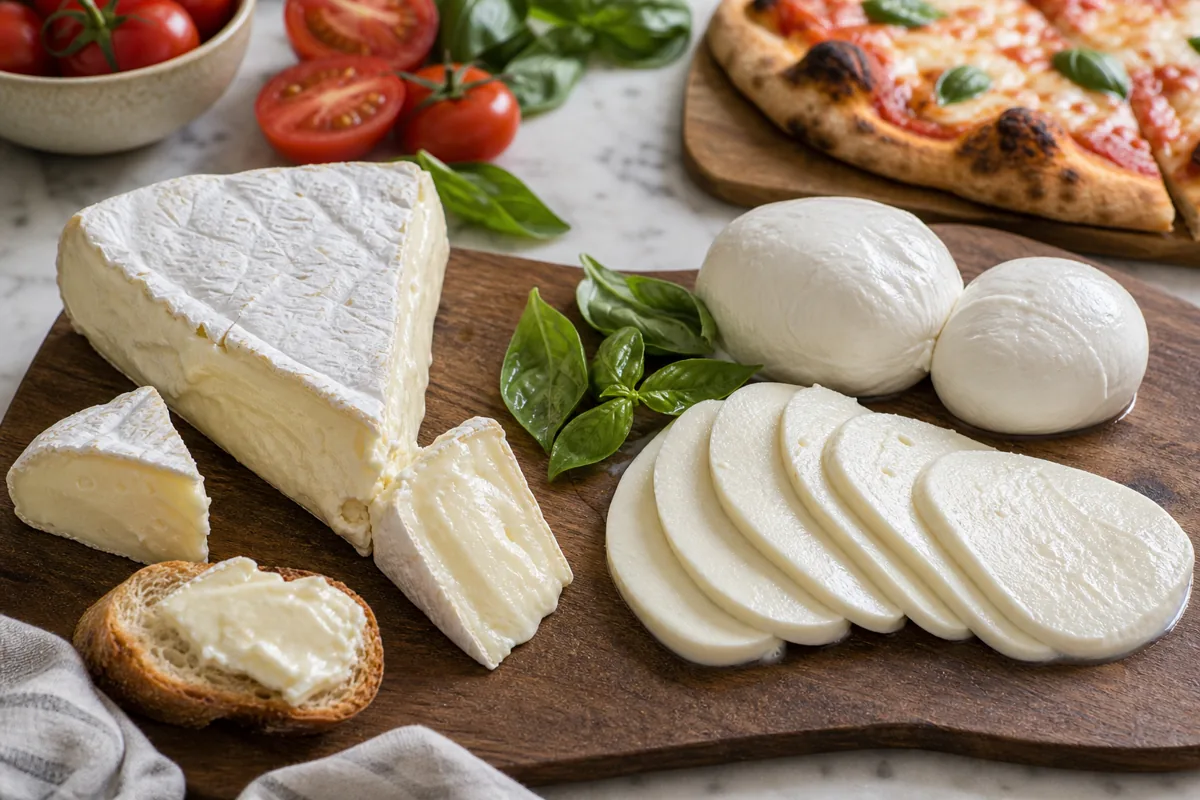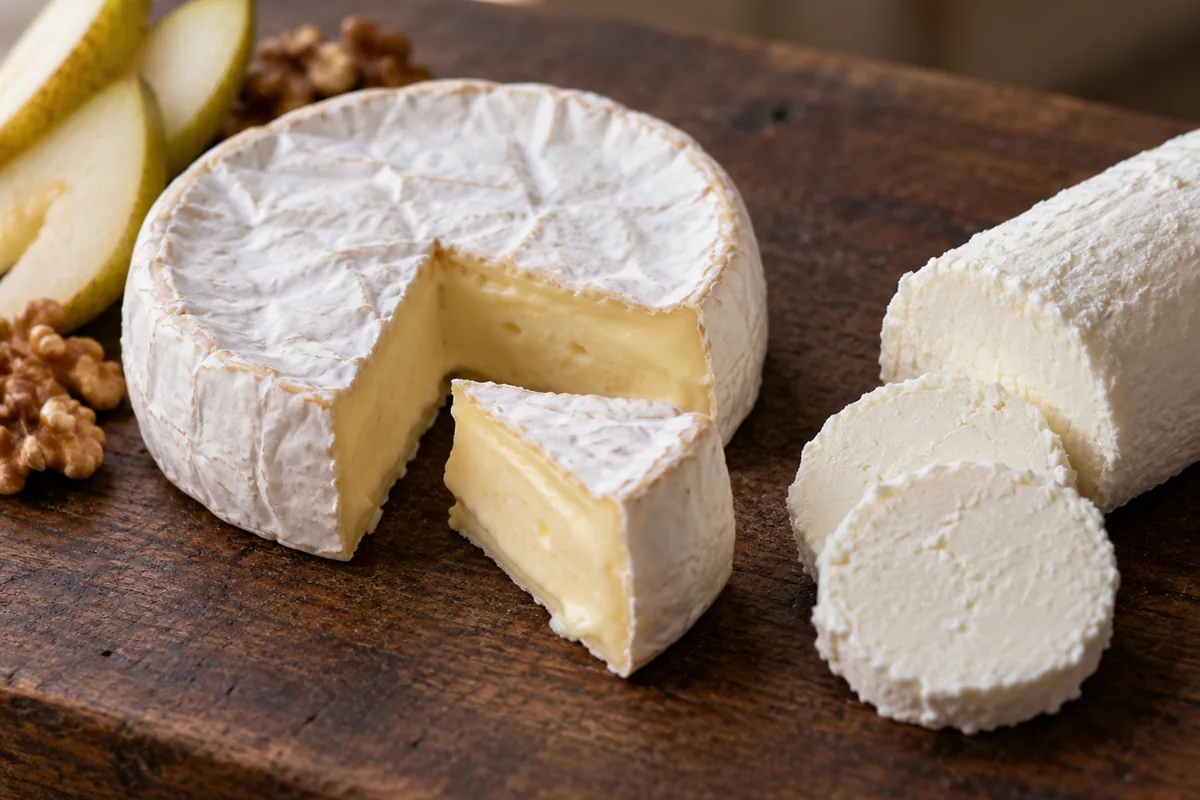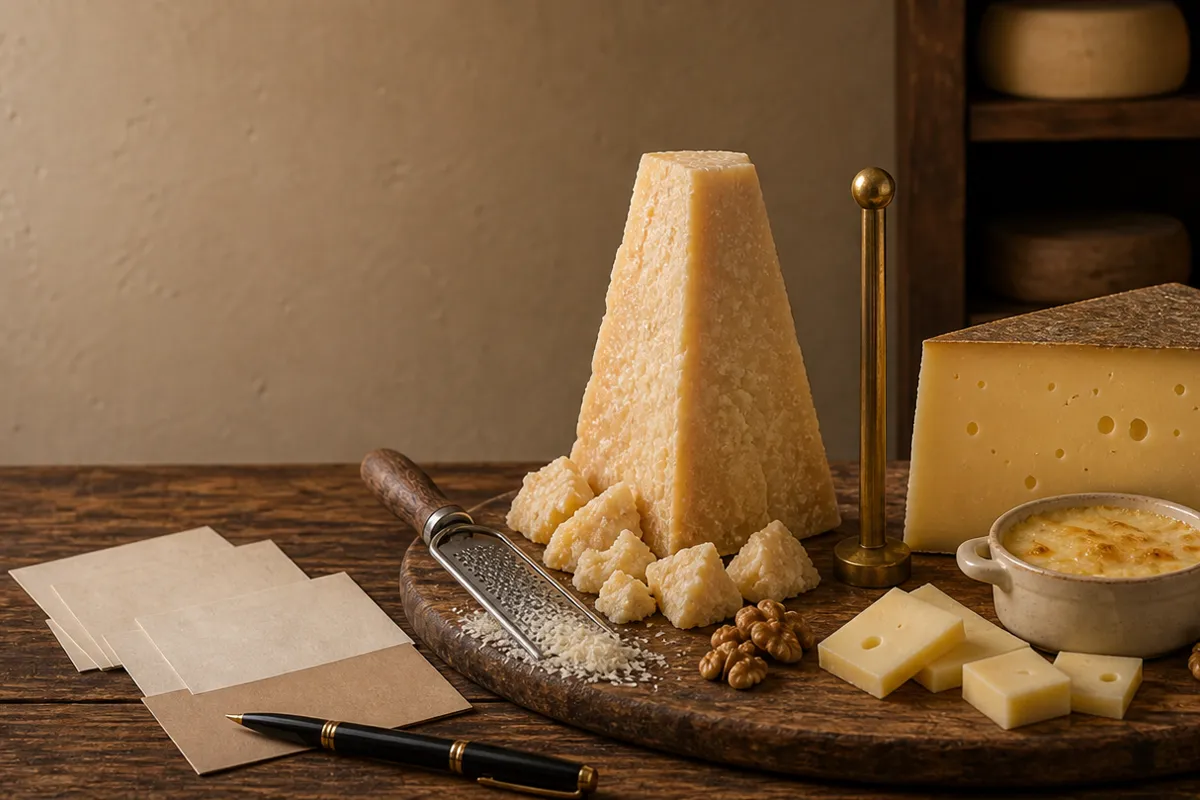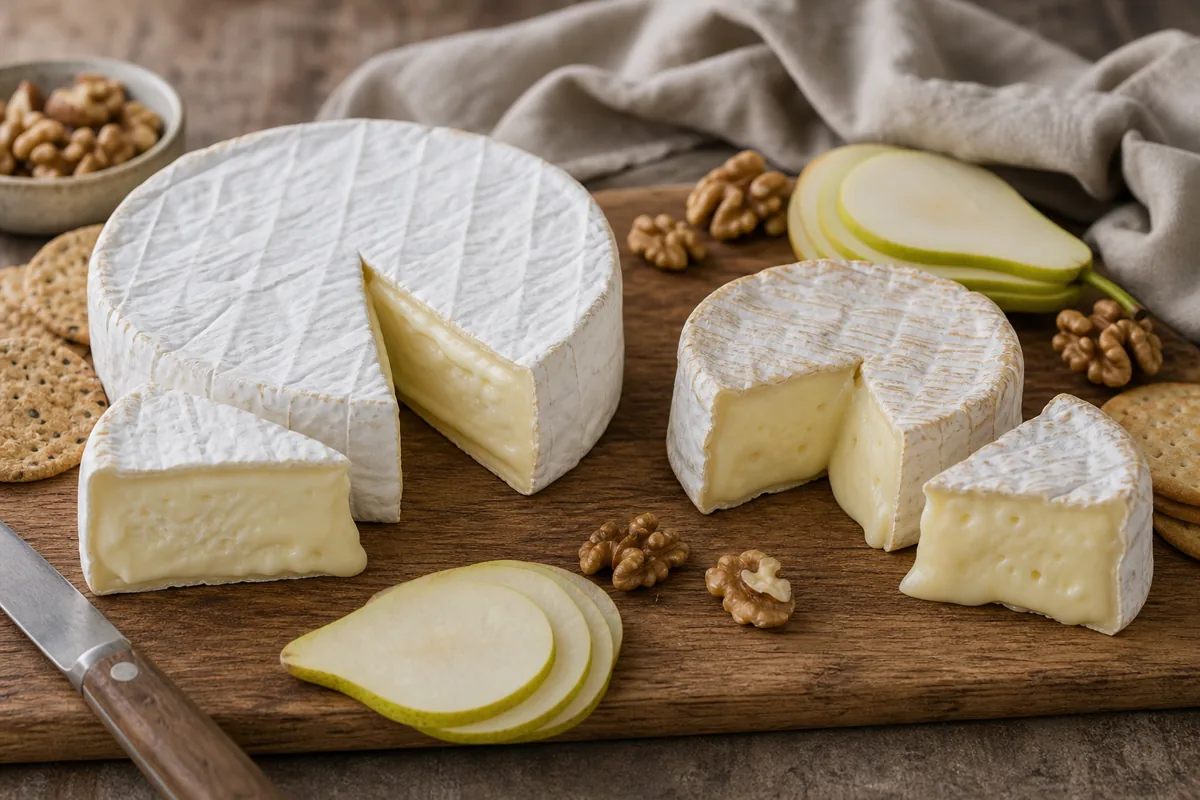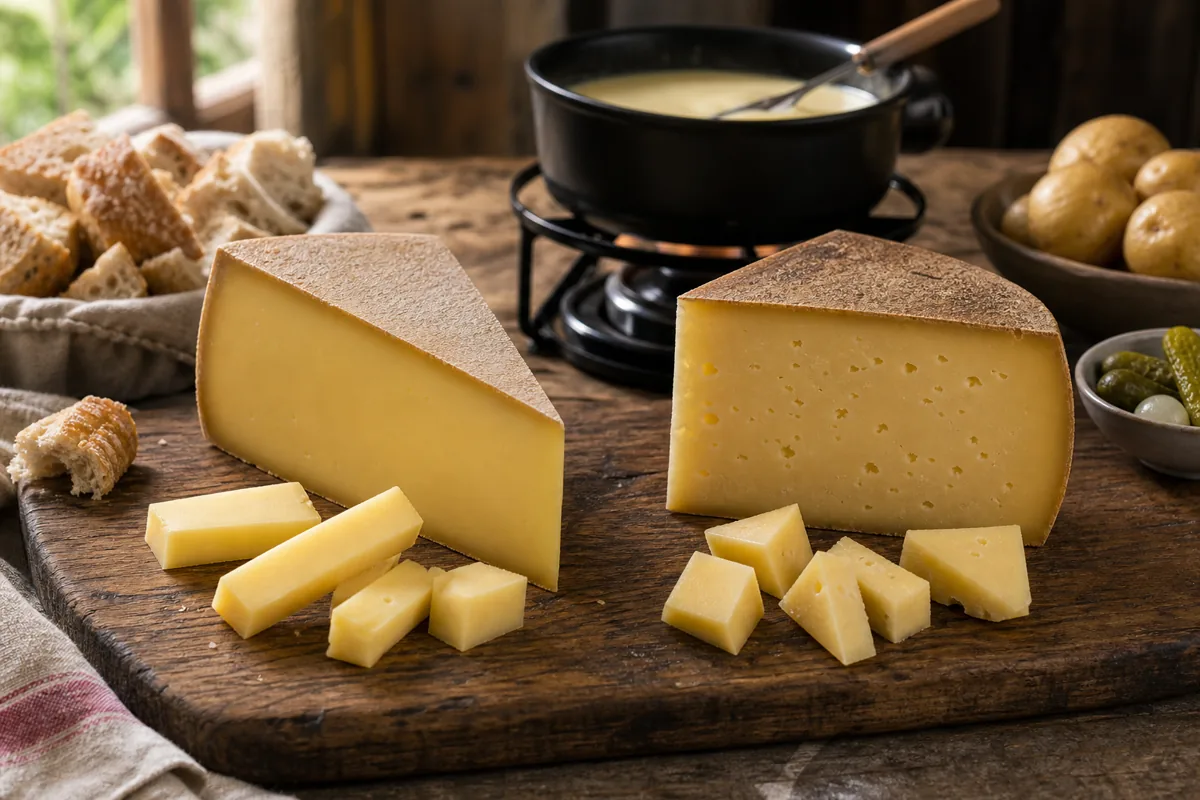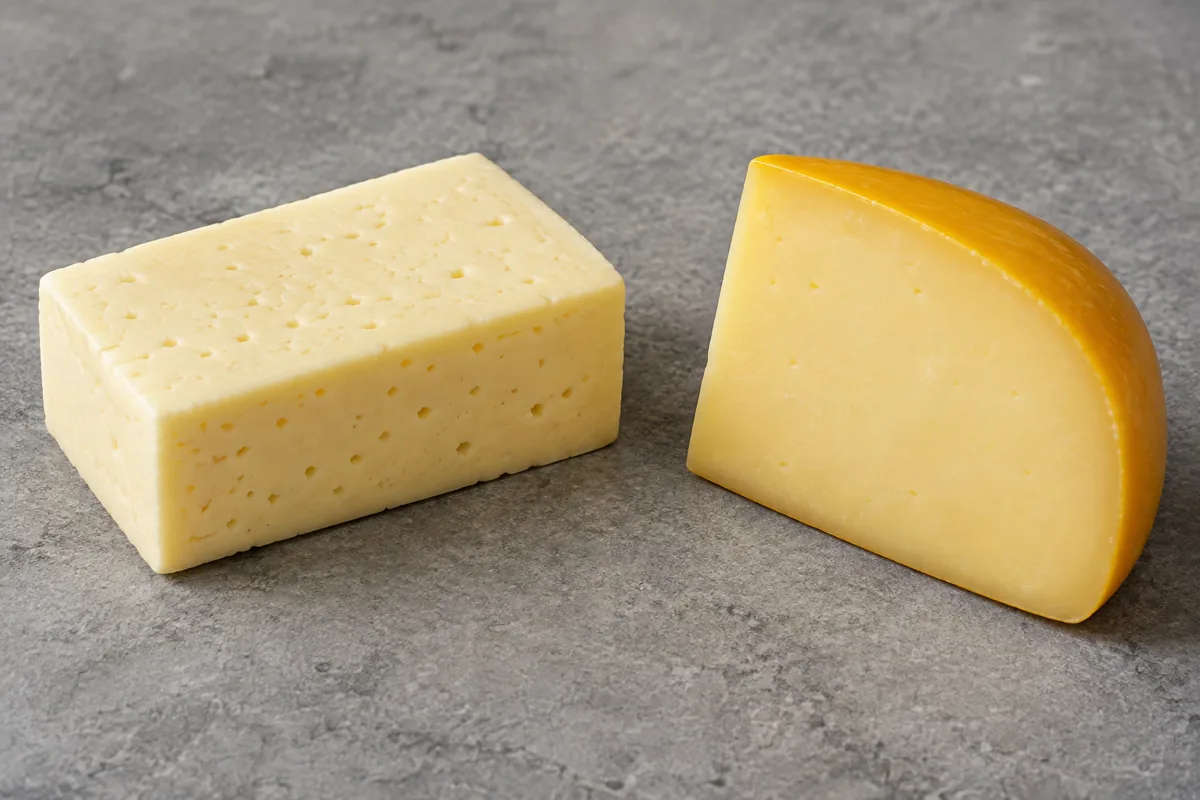
Havarti and a young Gouda share two traits: both are washed-curd cheeses, and both melt well.
Age is where they part. Havarti is aged for about three months, while Gouda Holland PGI and Noord-Hollandse Gouda PDO can take more than a year to mature fully.
In This Article
What Is the Difference Between Havarti and Gouda?
Danish Havarti is a rindless, semi-soft cheese. Gouda is Dutch, named after the city of Gouda, and runs from semi-hard when young to hard when aged.
Havarti was once called Danish Tilsiter, and Danish production began in 1921. It took its present name in 1952 from Havartigården near Holte, where the cheesemaker Hanne Nielsen worked in the 19th century.
Her part in the cheese is disputed: Cheese.com says Nielsen first crafted Havarti in the mid-19th century, while Wikipedia cites the Dansk Biografisk Leksikon as saying the modern cheese is not based on her work.
| Attribute | Havarti | Gouda |
|---|---|---|
| Origin | Denmark (Wikipedia) | The Netherlands, named after the city of Gouda (Cheese.com) |
| Milk | Cow's milk, pasteurized in most commercial versions, originally raw (Cheese.com) | Typically pasteurised cow's milk, with some artisan sheep's or goat's milk versions (Cheese.com) |
| Type | Semi-soft (Wikipedia, Cheese.com) | Semi-hard when young to hard when aged (Cheese.com) |
| Outside | Rindless, smooth and slightly bright-surfaced (Wikipedia) | Yellow wax or plastic-like coating (Wikipedia) |
| Holes | Very small, irregular eyes throughout (Wikipedia) | Often small eyes, like other washed-curd cheeses (Cheese Reporter) |
| Colour | Cream to yellow depending on type (Wikipedia) | Pale yellow interior (Cheese.com) |
| Young flavour | Buttery, somewhat to very sweet and slightly acidic (Wikipedia) | Mild, sweet and nutty (Cheese.com) |
Colour alone will not separate a young wedge of each, because Havarti runs from cream to yellow and Gouda's interior is pale yellow. The outside is the quicker cue: plain Havarti has no rind, while Gouda has a coating or, on Gouda Holland PGI and Noord-Hollandse Gouda PDO, a dry rind.
That coating comes at the end of making. Gouda is soaked in brine, dried for a few days and coated in yellow wax or a plastic-like layer so it does not dry out, and only then aged, which hardens the cheese and develops its flavour.
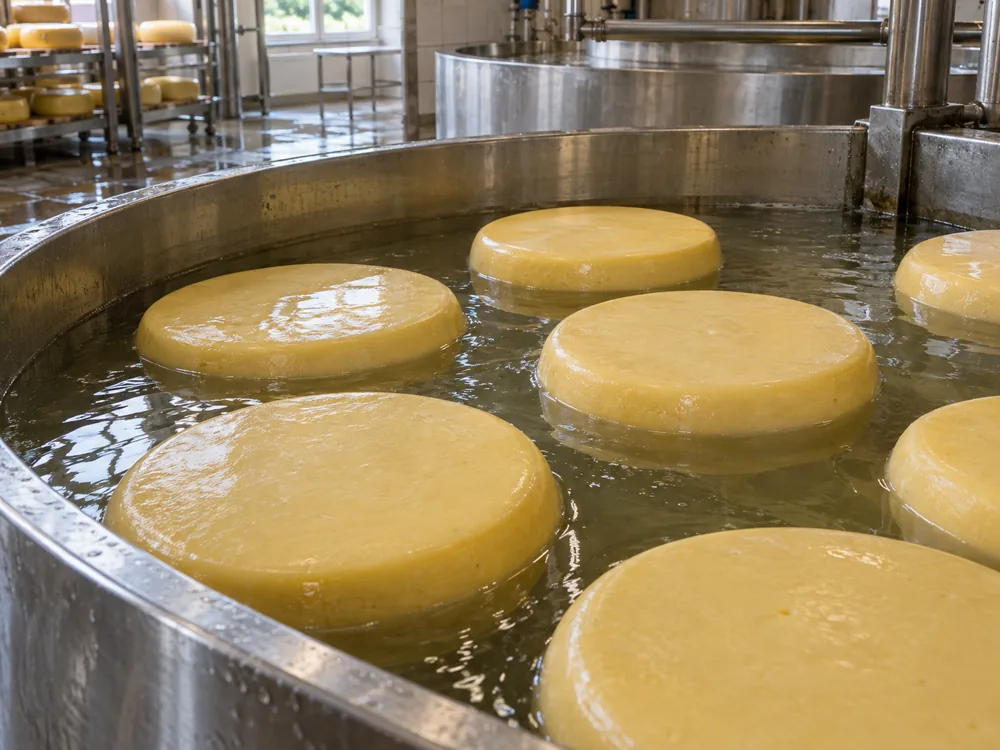
Havarti is an interior-ripened cheese with no rind. It was traditionally smear-ripened, and modern cream Havarti is not.
How Is Havarti Made Differently from Gouda?
Both start as washed-curd cheeses, and pressing is where the methods split. Dutch makers first form the curd in a press-vat, and when that pre-pressing step is left out, as in the production of Havarti, the result is an open-textured cheese.
In Gouda, washing means draining some of the whey and adding water, which removes part of the lactose. The curd then forms less lactic acid, and the cheese turns out sweeter.
In Havarti, the washing contributes to the cheese's subtle flavour.
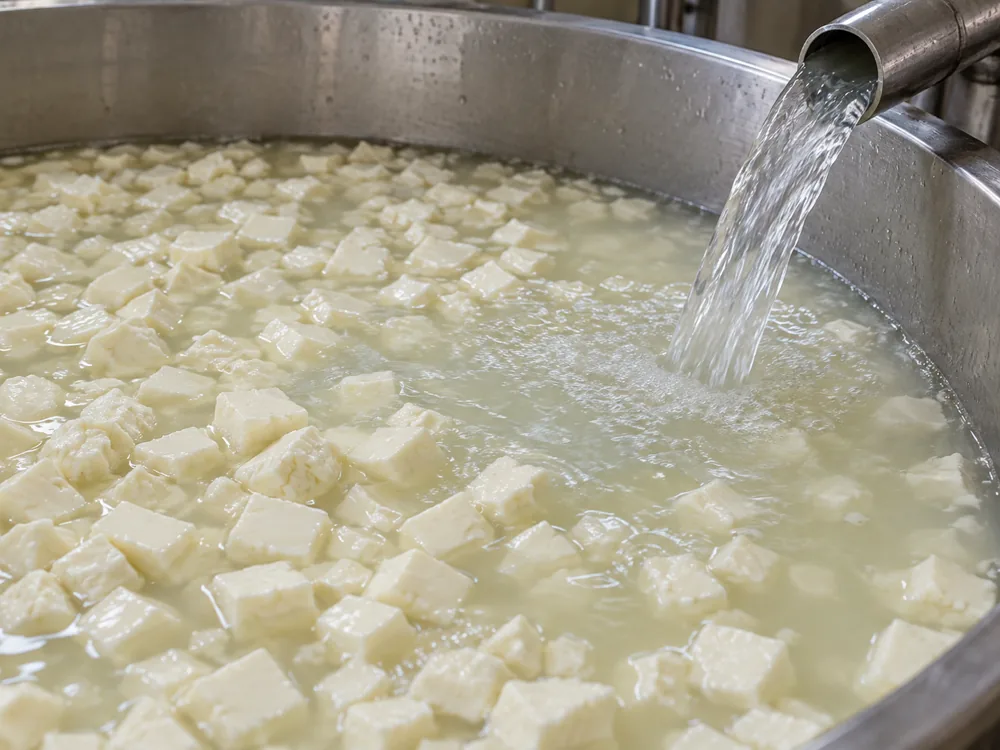
Gouda and Dutch Edam are the original washed-curd cheeses, and other European countries adopted the process for cheeses such as Havarti and Danbo. Cheeses made this way are typically mild, slow to age and sweet in body, often with small eyes, and they are brine-salted.
Gouda's curds make up only about 10% of the mixture, and they are pressed into circular moulds for several hours, which give Gouda its characteristic shape.
Which One Ages Longer, Havarti or Gouda?
Gouda ages far longer. Havarti is aged for about three months, while the six Dutch Gouda classes run from 4 weeks to 12 to 21 months.
| Cheese or class | Age | Given by |
|---|---|---|
| Havarti | About three months | Wikipedia, Cheese.com |
| Young Gouda | 4 weeks | Wikipedia |
| Young matured Gouda | 8 to 10 weeks | Wikipedia |
| Matured Gouda | 16 to 18 weeks | Wikipedia |
| Extra matured Gouda | 7 to 9 months | Wikipedia |
| Old Gouda | 10 to 12 months | Wikipedia |
| Very old Gouda | 12 to 21 months | Wikipedia |
The classes do not mark the oldest wheels. Gouda's ageing time is given as 1 to 36 months, and Wikipedia says a farmhouse Gouda aged over two years can taste close to butterscotch.
Some Goudas carry their age in years: Cheese.com's list of Dutch cheeses includes a three-year aged vintage Gouda and a four-year farmhouse Gouda.
Descriptions of older Havarti mention nuttiness. Wikipedia says it turns saltier and tastes like hazelnut, and Cheese.com describes nuttiness and a slightly tangy finish.
Cheese.com says Havarti runs from mild to sharp depending on age, and Wikipedia says the stronger varieties can be somewhat sharp, much like Swiss-type cheeses.
Gouda moves the other way, toward sweetness. Wikipedia describes a caramel sweetness and a slight crunch from cheese crystals in older cheeses, which Cheese.com calls tiny protein crystals.
A review in the Journal of Dairy Science, cited by Wikipedia, puts Gouda's flavour from mild and creamy to harsh and acidic, with extra whey, sour aromatics and a somewhat cooked or milky note marking the medium stage.
Wikipedia adds brothy and malty or nutty undertones for matured Gouda, and a finish that moves from silky to sharp as the cheese ages.
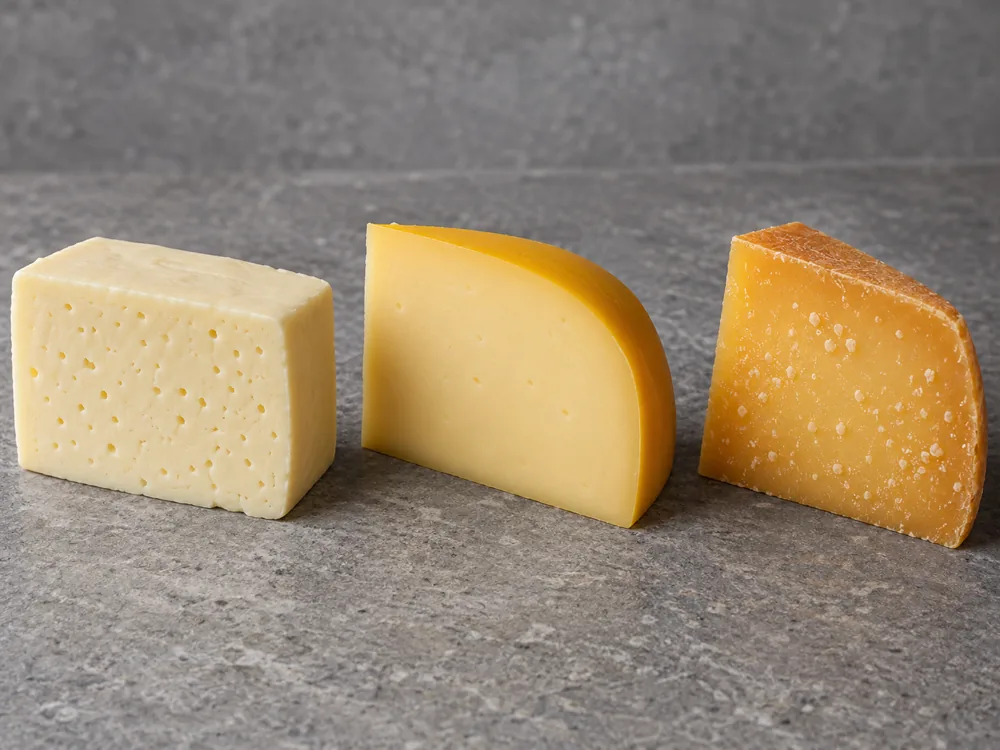
At the counter, colour and texture show a Gouda's age. The European Commission says Gouda Holland PGI and Noord-Hollandse Gouda PDO develop a firmer texture and a deeper golden colour as they age.
Wikipedia describes a young Gouda as smooth and creamy, pale ivory to light yellow, and an older one as crumbly and firm, with small crystals that may be visible.
What Is Cream Havarti, and Is It the Same Cheese?
Cream Havarti (flødehavarti) is described two ways. Wikipedia calls it different from the original, made with flash-pasteurized milk that keeps whey proteins in the curd, which raises the yield but changes the taste and texture and leaves it with minimal ripening.
Cheese.com calls it the same recipe as Havarti, enriched with extra cream, aged for a shorter period and left with a milder taste and a slightly higher moisture content.
Both accounts give it less ripening than plain Havarti, so the saltier hazelnut taste Wikipedia describes for older Havarti is the part a cream Havarti is least likely to offer.
Which One Melts Better, Havarti or Gouda?
Havarti and young Gouda both melt well, and aged Gouda is the one that struggles. Higher-fat cheeses like Havarti usually melt better than cheeses like non-fat mozzarella, and young Gouda is one of the higher-moisture good melting cheeses.
Drier cheeses like aged Gouda won't melt so well unless there is added moisture around.
Structure explains the split between young and aged Gouda. Casein proteins form a three-dimensional mesh much like a sponge, with calcium acting as the glue between the proteins and fat and water filling the holes.
More fat or water softens that mesh. Moderate acid also dissolves part of the calcium glue so the proteins can slide and stretch, and mozzarella and young Gouda belong to that group of good melters.
Age works against this. As the proteins break down over time, the cheese shows very little stretch and a lot of free oil, because the chopped-up structure can no longer stay elastic or hold on to its fat.
Gouda ranges from young and elastic to old and hard, with a moisture content anywhere from 25% to 46%, so a wedge sold only as Gouda can sit at either end of that scale.
Cheese.com says Havarti melts exceptionally well, turning oozy and creamy, and credits that to the cheese's high moisture content.
It names grilled cheese sandwiches, au gratins and cheese fondues among Havarti's uses, and also suggests the cheese for casseroles, quiches and pizzas.
The same page adds macaroni and cheese and panini, and says Havarti gives a creamy, savoury element to stuffed chicken breasts and mashed potatoes.
For Gouda, Cheese.com lists snacking, melting on sandwiches and melting on burgers, with young Gouda suited to melting and aged Gouda excellent for grating.
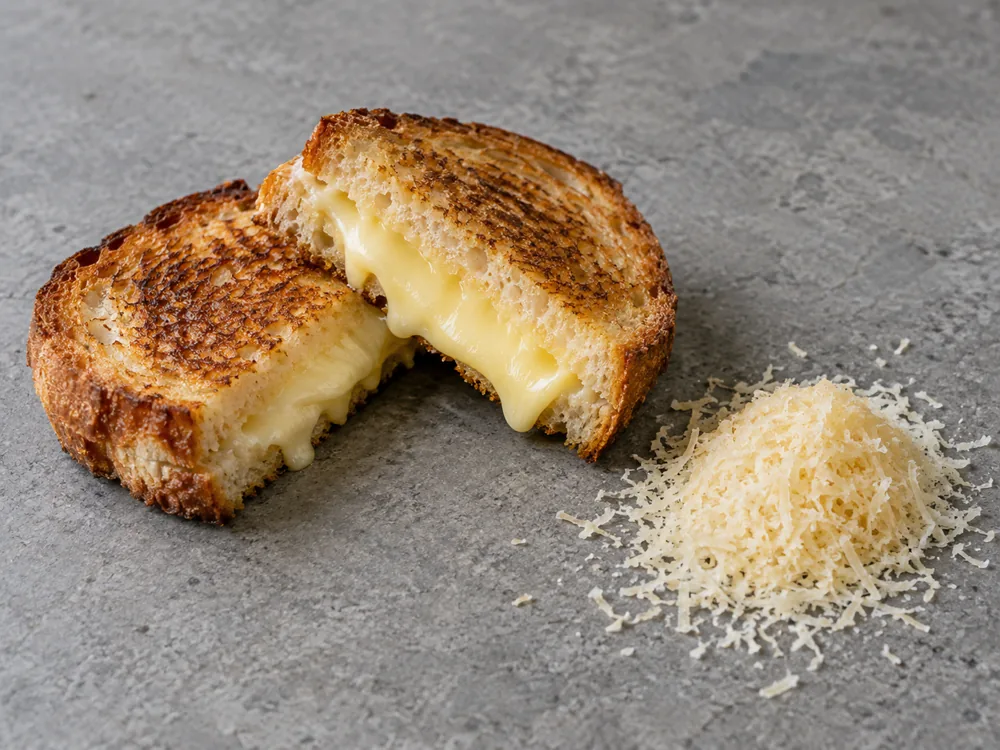
For a melted dish, pick Havarti or a young Gouda. Keep aged Gouda for grating, or add moisture around it in a hot dish.
Which One Belongs on a Cheese Board?
Both have a place in a cheese board spread, with different partners. Cheese.com pairs Havarti with fruit, cured meats and olives, and Gouda with wine and crackers.
| Pairing | Type | Why It Works |
|---|---|---|
| Apples and pears | Food | Cheese.com names both fruits as good partners for Havarti. |
| Cured meats and olives | Food | Cheese.com names both as savoury partners for Havarti. |
| Crackers and honey | Food | Cheese.com suggests them with fruit beside Havarti on a board, and crackers beside Gouda. |
| Oaked Chardonnay | Wine | Cheese.com pairs it with Gouda for the buttery richness it brings to Gouda's creamy texture. |
Cheese.com also says Havarti can be served with fruit and wine.
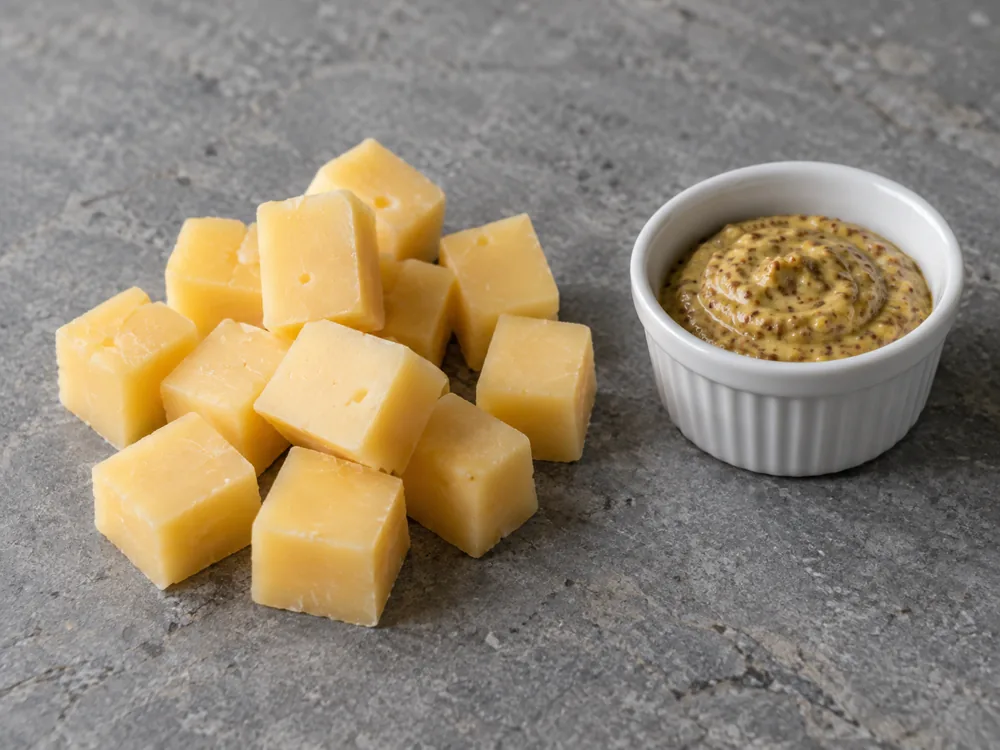
In the Netherlands, Gouda is eaten in cubes as a snack with Dutch mustard, and older varieties are sometimes topped with sugar or apple butter. Cubes of Gouda are also commonly served with beer in Dutch Bruin cafés.
Flavoured versions widen the choice. Cheese.com lists smoked Gouda with its smoky flavour and flavoured Goudas beside the plain cheese, and says cream Havarti comes in flavours such as caraway, dill and garlic, with smoked Havarti as another variety.
Which Has More Fat and Salt, Havarti or Gouda?
Neither cheese is clearly the fattier one: Havarti's figures are for one 28 g slice, while Gouda's come as ranges across the whole family of cheeses.
| Figure | Havarti, 28 g slice | Gouda, by weight |
|---|---|---|
| Energy | 120 kcal (Wikipedia); 100 to 120 kcal (Cheese.com) | No figure given |
| Fat | 11.0 g (Wikipedia); about 8 g (Cheese.com) | 21 to 49% (Wikipedia, citing a Journal of Dairy Science review) |
| Salt | No figure given | 0.9 to 2.4% (Wikipedia, citing the same review) |
Wikipedia's 11.0 g of fat in a 28 g slice works out, by our arithmetic, to about 39% by weight, and Cheese.com's figure of about 8 g to about 29%. Both fall inside the 21 to 49% span that Gouda covers.
The two Havarti figures sit about 3 g of fat apart for the same slice size, and Cheese.com notes that the exact calorie content varies by brand and type.
On salt, the European Commission calls Noord-Hollandse Gouda PDO a less salty variety of Gouda, while Cheese.com says Havarti has relatively high fat and sodium, as most dairy products do.
For a sodium figure on a particular Havarti or Gouda, read the nutrition panel on its pack.
Is Havarti or Gouda Lower in Lactose?
For anyone limiting lactose from cheese, an extra-aged Gouda is a surer choice than a three-month Havarti. The Dutch cheese seller Treur Kaas says Gouda becomes lactose-free only at the extra-aged stage, and Wikipedia gives the matching extra matured class as 7 to 9 months.
Younger Gouda is less certain. Treur Kaas says traces of lactose are typically found in Gouda younger than 16 weeks, because the cheese culture takes time to convert lactose into lactic acid.
Havarti is listed with 0.0 g of carbohydrate in a 28 g slice, but Cheese.com says it contains some lactose.
Both cheeses lose lactose as they are made. Treur Kaas explains that most of the lactose leaves with the whey when the curd is separated, and that hard cheeses keep less liquid than soft ones.
Washing reduces lactose again in washed-curd cheeses, which finish close to zero, similar to most other natural cheeses.
Can You Eat Havarti or Gouda When Pregnant?
For these two cheeses, the NHS and CDC advice on cheese in pregnancy turns on the milk and on how the texture is described. Cheese.com gives most commercial Havarti as made from pasteurized milk and Gouda as typically pasteurised, while boerenkaas is made with unpasteurised milk.
The NHS lists pasteurised or unpasteurised hard cheeses, pasteurised semi-hard cheeses and pasteurised soft cheeses as safe to eat. Wikipedia and Cheese.com describe Havarti as semi-soft.
Cheese.com describes Gouda as semi-hard when young and hard when aged, and the European Commission describes Gouda Holland PGI as semi-hard.
The NHS also says any foods made from unpasteurised milk must be thoroughly cooked, so a raw-milk Havarti, or a raw-milk Gouda not described as hard, must be thoroughly cooked.
The CDC lists hard cheese, when made with pasteurized milk, as a safer choice, and Cheese.com describes Gouda as hard when aged. Served cold, Havarti is described as a pasteurized semi-soft cheese and Gouda as a pasteurized semi-hard or elastic cheese, types the CDC list does not cover, so ask a midwife or doctor, including whether your Gouda counts as a hard cheese.
The CDC lists unpasteurized (raw) milk and dairy products made from raw milk, soft cheese made from unpasteurized (raw) milk and unheated cheese sliced at a deli as riskier choices. It notes that pregnant women are 10 times more likely to get a Listeria infection.
Cooking changes the answer. The NHS lists any cheese that's been cooked until steaming hot as safe to eat.
For Havarti, which is described as semi-soft, the CDC lists pasteurized soft cheeses heated to an internal temperature of 165°F or until steaming hot as safer. It also lists deli-sliced cheeses heated to 165°F or until steaming hot as safer.
Is Havarti or Gouda a Protected Name?
Havarti is protected in the EU, and plain Gouda is not. Since the EU granted Denmark Protected Geographical Indication rights to Havarti in October 2019, Havarti must come from Danish milk and approved dairies to be sold in the EU and in countries whose trade agreements recognise EU PGI rules on cheese, specifically South Korea.
The United States, Australia, New Zealand, Uruguay and Argentina opposed that protection, and Wikipedia reports that less than half of the world's Havarti is made in Denmark.
Denmark made 17,000 tonnes in 2019, while Wisconsin alone made 18,400 tonnes in 2018.
The Consortium for Common Food Names, which Wikipedia describes as an alliance of exporting interests, asked that only the name "Danish Havarti" be protected, and Wikipedia says Danish producers are amenable to that.
Gouda's name is not protected and has become a generic label. Two protected Dutch names carry it: Noord-Hollandse Gouda (PDO, 1996) and Gouda Holland (PGI, 2010).
What Does a Protected Gouda Name Promise?
A protected Gouda name tells you where the milk comes from. Gouda Holland PGI is a naturally matured, semi-hard cheese made from the milk of cows grazing on Dutch dairy farms, while Noord-Hollandse Gouda PDO uses milk only from the province of Noord-Holland.
Wheels of both mature naturally in the open air, are turned and checked regularly, and form a dry rind, a different finish from the wax or plastic-like coating that Wikipedia describes for Gouda in general.
The name itself goes back to a market. In 1395 the town of Gouda gained a monopoly on selling cheese in the county of Holland, so farmers could sell only in its market and the town became synonymous with their cheese.
Wikipedia lists boerenkaas as a third protected name and says about 300 Dutch farmers still make it in the traditional way with unpasteurised milk.
Havarti or Gouda: Which Should You Buy?
Buy by the job and, for Gouda, by the age on the label, because young Gouda melts well and aged Gouda grates.
- A hot sandwich: Havarti or young Gouda for a grilled cheese sandwich.
- Grating: an aged Gouda.
- Caramel sweetness and crystals: an older Gouda.
- A mild slice that turns nutty with age: Havarti.
- A milder cheese that ripens little: cream Havarti.
- An origin promised on the label: Havarti sold in the EU or South Korea, or Gouda Holland or Noord-Hollandse Gouda.
- Lactose-free, per the cheese seller Treur Kaas: an extra-aged Gouda.
- A glass of wine: Gouda, which Cheese.com matches with an oaked Chardonnay, or Havarti, which it says can be served with fruit and wine.
For everyday sandwiches, Cheese.com calls Havarti a popular choice for its creamy texture and mild flavour and says it forms a gooey layer when grilled or toasted.
SOURCES & REFERENCES
What Else Do People Ask About Havarti and Gouda?
Havarti and young Gouda both melt well, while aged Gouda won't melt so well unless there is added moisture around. Cheese.com calls aged Gouda excellent for grating.
Havarti is aged for about three months. The six Dutch Gouda classes run from 4 weeks to 12 to 21 months, and Cheese.com lists Goudas aged three and four years.
No. Havarti is Danish and Gouda is Dutch, but both are washed-curd cheeses, and other European countries adopted the Dutch washed-curd process for cheeses such as Havarti.
Accounts differ on how it is made. Wikipedia says cream Havarti uses flash-pasteurized milk and ripens very little, while Cheese.com says it is the same recipe enriched with extra cream and aged for a shorter period.
Both are described as sweet when young: Wikipedia calls Havarti somewhat to very sweet, and Cheese.com calls Gouda mild, sweet and nutty. With age, Wikipedia describes Gouda moving toward caramel sweetness while older Havarti turns saltier and tastes like hazelnut.