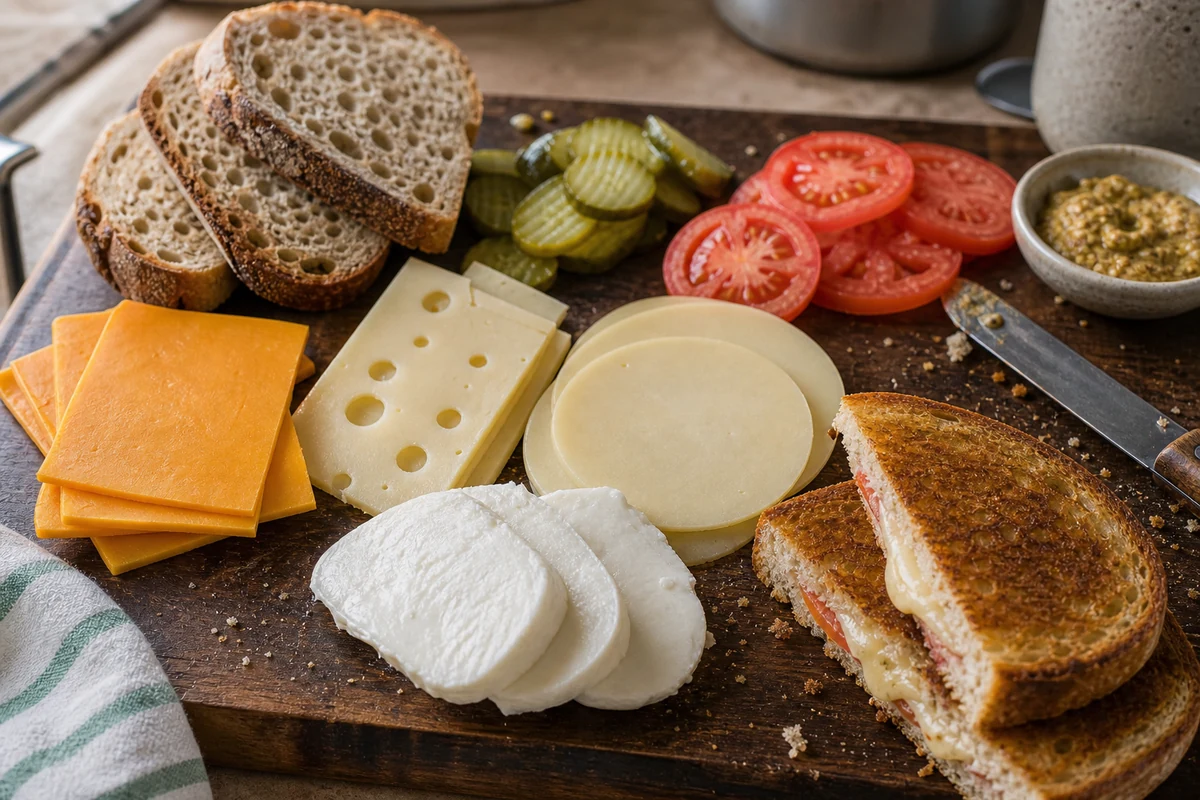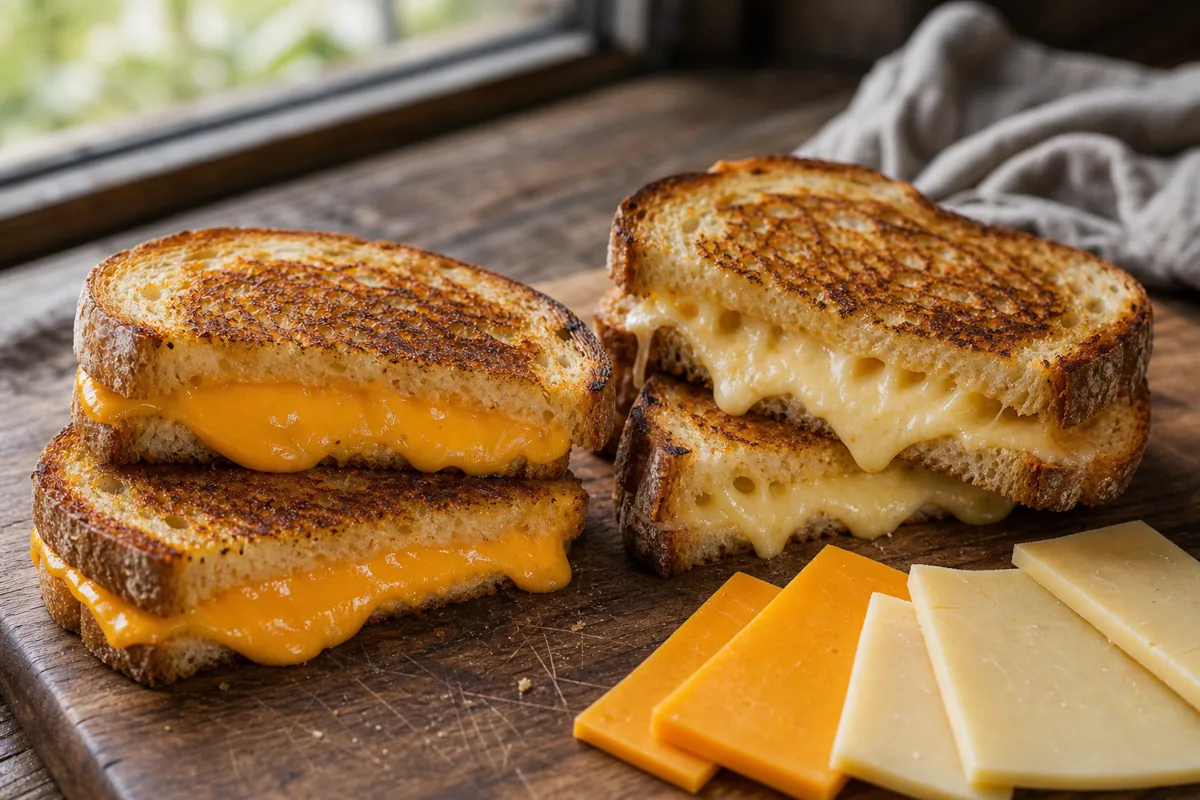
American cheese is still the safest cheese for grilled cheese because it melts edge to edge before the bread overbrowns. If you want a more natural sandwich, build around young cheddar, Gruyere, or Jack blends that keep the middle creamy while adding more flavor.
Grilled cheese is a race. The bread starts browning the moment it hits butter, and the cheese gets only a few minutes to soften, spread, and stay creamy after you cut the sandwich.
That is a narrower test than general melt behavior. A cheese can work beautifully in fondue or pasta and still miss the grilled-cheese window because it softens too slowly or throws water into the crumb.
We ranked these picks by the jobs that matter in a real skillet: melt speed, corner-to-corner coverage, stretch or recovery after the cut, flavor through toasted bread, and how forgiving the cheese is on normal home heat.
The best answer also depends on bread thickness and cheese cut. Thin sandwich bread rewards speed, while thick sourdough rewards a cheese that can keep flowing after the crust is already crisp.
A cheese that wins one version can feel wrong in the other.
In This Article
Why American Cheese Still Wins the Pan
American cheese is still the best single answer because it gives you the widest margin for error. It melts before the bread gets too dark, covers the crumb cleanly, and stays glossy instead of splitting into oil.
That matters more in grilled cheese than in almost any other sandwich. You are not melting one slice over a burger.
You are trying to fill the whole interior in a short, dry-heat window, and processed American slices were built for that exact job.
Natural cheeses can beat it on flavor, but most of them need help. If you want a sharper or nuttier sandwich, the clean fix is not to abandon American completely.
It is to pair a fast melter with a stronger second cheese.
Use deli slices when you want the lowest-risk classic. Use individually wrapped singles only if you like that softer, saltier flavor, because the texture is reliable but the sandwich can taste flatter.
For a better middle ground, layer one American slice with thin young cheddar or Jack.
The ranking looks simple on paper, but the cheeses fail in different ways. Some cheeses taste better yet melt slower.
Others melt beautifully but need a partner before the flavor feels complete.
The gap between the top tier and the middle tier is mostly about speed and recovery. Young cheddar blocks taste stronger than American, but they need thinner slices and steadier heat.
Nutty Alpine Gruyere behaves beautifully and tastes richer, yet it costs more and works best when the sandwich is thick enough to justify it.
How Do You Match Cheese to Your Sandwich Style?
The best grilled-cheese cheese changes with the sandwich on the board. A thin lunch-counter sandwich, a thick sourdough build, and a stretch-first pull do not ask the filling to do the same thing.
Start with the sandwich job, then choose the cheese lane that solves it.
- Fast diner-style melt: Use American cheese for the smoothest center and the cleanest bite on standard sandwich bread.
- Sharper classic: Use young cheddar when you want more bite but still need the middle to soften before the crust turns dark.
- Soup-night sourdough: Use Gruyere or creamy Fontina because both cheeses keep flavor even when the sandwich spends longer in the pan.
- Stretch-first pull: Use low-moisture mozzarella with young provolone or cheddar so the sandwich tastes like more than dairy fat.
- Mild family sandwich: Use a mild Jack block or Muenster when you want natural melt without the salty edge of processed slices.
A grilled cheese blend works best when one cheese handles texture and the other handles flavor. When both cheeses try to do both jobs, the sandwich usually turns greasy, bland, or slow to melt.
Thickness changes the answer too. If the bread is tall sourdough with a dry crumb, you need a cheese that keeps moving after the surface has browned.
If the bread is thin supermarket pullman loaf, speed matters more than complexity.
Grilled cheese shares some cheeses with hot sandwich picks, but cold-sandwich sliceability and deli balance do not decide it.
Browning window and interior coverage do.
| Sandwich style | Best cheese move | Why it works |
|---|---|---|
| Thin white bread | American or Jack | Fast melt before the bread overbrowns. |
| Thick sourdough | Gruyere with Havarti or Fontina | Richer flavor and enough flow for a longer pan time. |
| Pull-apart sandwich | Low-moisture mozzarella plus provolone | Stretch from mozzarella with more flavor from the partner cheese. |
| Sharp cheddar craving | Young cheddar plus American or Jack | Cheddar gives bite while the base cheese protects the melt. |
What Is the Melt Window That Decides the Winner?
Most home grilled cheese lands in a six-to-eight minute cook. That is enough time for the bread to toast deeply, but not enough time for a dry block cheese to catch up if you cut it too thick.
The winners here all soften early, settle into the crumb, and stay creamy for the minute between leaving the pan and taking the first bite. That last part matters.
Some cheeses look fine in the skillet, then seize or oil off as soon as you cut the sandwich.
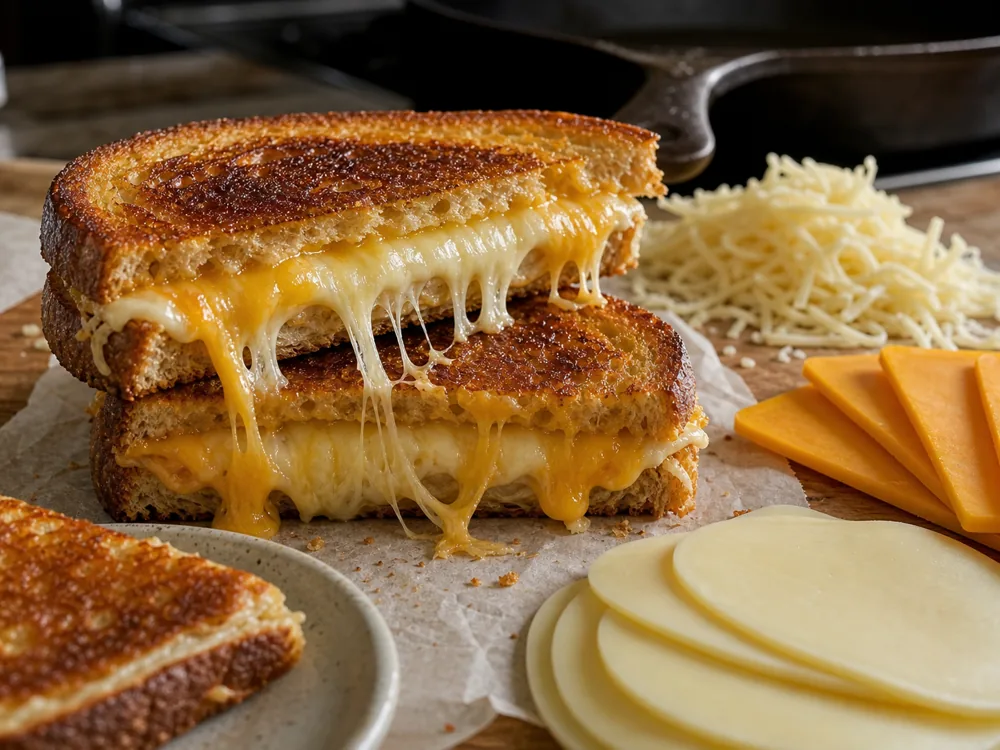
Low-moisture mozzarella shows this clearly. It gives excellent pull, but by itself it can feel too quiet and slightly rubbery once the sandwich cools for a moment.
Young cheddar shows the opposite behavior. It tastes right away, but it can turn greasy if you push the heat too hard.
Freshly cut cheese helps more than people expect. Pre-shredded bags carry anti-caking starch, and thick deli slabs take longer to relax.
For grilled cheese, loose shreds or thin hand-cut slices beat both.
Shred or slice the cheese before you butter the bread, then cover the skillet for the first 60 to 90 seconds. The trapped steam starts the center melt while the bottom crust is still pale enough to control.
If you already know a cheese melts well in casseroles, that does not end the question. A cheese can perform in a wetter dish and still lose in a skillet.
Grilled cheese is harsher because the bread keeps drying and browning while the center is still catching up.
How Much Cheese Does a Grilled Cheese Need?
A good grilled cheese usually needs about 2 to 2.5 ounces of cheese for two standard slices of bread. That is enough to fill the middle without forcing the crust to stay in the pan too long.
More cheese is not automatically better. A thick stack can leak into the pan, cool into a heavy slab, or leave the center half-melted while the outside tastes burnt.
If you want a bigger sandwich, use a wider bread slice and a slower melt plan instead of piling the middle higher.
- For thin bread: Use two thin deli slices or a loose layer of shreds that reaches the edges.
- For sourdough: Use grated cheese or overlapping thin slices so the center does not stay cold.
- For extra fillings: Reduce the cheese slightly when tomato, ham, or onions add moisture and thickness.
- For a cheese pull: Keep mozzarella as part of the filling, not the whole filling, so the sandwich still tastes seasoned.
The edge test is more useful than a scale for most cooks. Before cooking, the cheese should sit close to every crust edge without hanging far outside the bread.
Bare corners give you dry bites, while heavy overhangs turn into oily pan scraps.
Which Cheese Blends Solve Grilled-Cheese Problems?
Blending is the easiest way to make a better grilled cheese without changing pans or heat.
One cheese lays down the creamy base. The second adds the flavor or stretch you wish the base had.
The best blends are not random handfuls. They are small, practical corrections for a specific problem: too bland, too slow, too rubbery, or too rich.
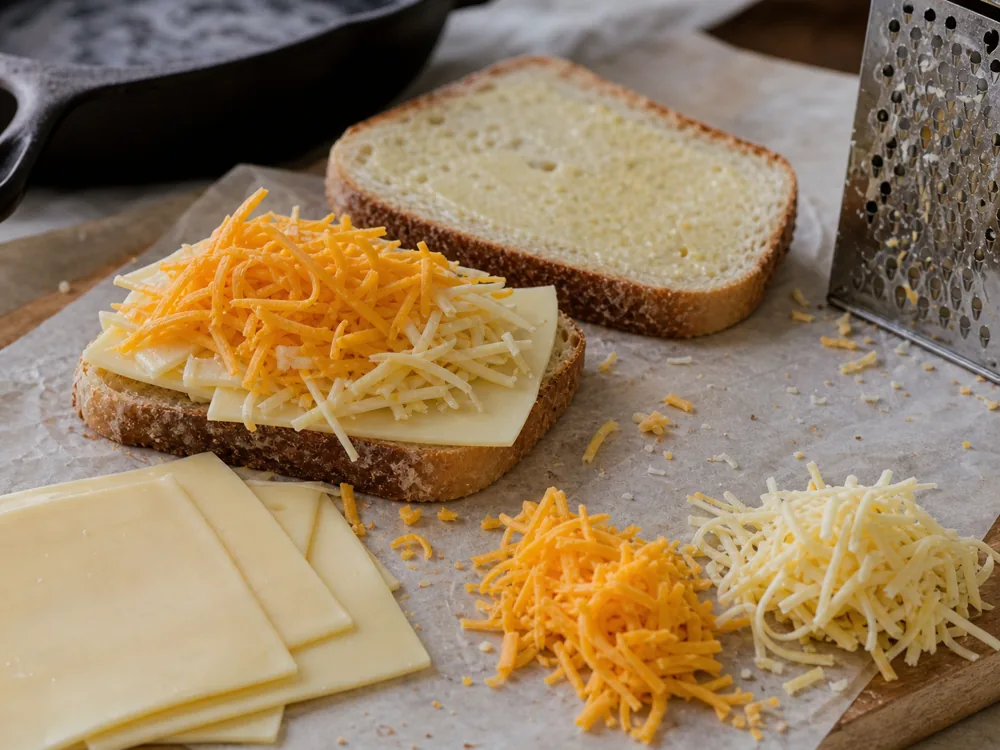
- Classic skillet blend: Two parts American to one part young cheddar. This keeps the sandwich smooth while giving it a more familiar cheddar finish.
- Sharper natural blend: Two parts Jack to one part sharp cheddar. Jack buys melt speed, while cheddar keeps the sandwich from tasting flat.
- Soup-night sourdough blend: Two parts Gruyere to one part buttery Danish Havarti or Fontina. The alpine note stands up to tomato soup, onions, or mustard without turning the middle stiff.
- Stretch-first blend: Two parts low-moisture mozzarella to one part provolone or cheddar. Mozzarella handles the pull, and the second cheese gives the sandwich a point of view.
The mistake is letting the drier or louder cheese take over. If you build a sandwich with mostly aged cheddar or mostly Gruyere, the bread can brown out before the center fully levels.
Keep the higher-risk cheese in the minority unless the slices are very thin.
Fillings change the blend too. Tomato and ham sit better with provolone than with a fully cheddar-based mix, while caramelized onions and dark sourdough reward the nuttier lane of Gruyere or Fontina.
For one sandwich, start with a small handful of grated cheese or two to three thin slices total. If the blend includes American, place it against the bread so it melts first and helps the other cheese settle.
If the blend is all natural cheese, grate at least half of it instead of stacking thick slices.
Which Cheeses Disappoint in a Grilled Cheese?
Some cheeses fail grilled cheese not because they are bad, but because they solve the wrong problem. They may brown well, taste great on a board, or soften beautifully in a wetter dish, yet still miss the short skillet window.
The common failure modes are easy to spot: too much water, too little flow, or a paste that breaks before the bread is ready.
- Fresh mozzarella: It releases water before it settles, which can leave the crumb damp and the crust uneven unless you drain it aggressively.
- Parmesan alone: It brings Parmesan flavor and crisp edges, but not the creamy center people expect from grilled cheese.
- Feta: Its brined crumbly curds warm nicely but never turn into a smooth sheet.
- Grill-proof salty slabs: They are designed to hold shape under heat, which is the exact opposite of what this sandwich needs.
- Extra-aged cheddar: It can taste fantastic, but the lower moisture raises the risk of oiling and graininess before the bread is done.
If you want one of these stronger cheeses in the sandwich, keep it to a supporting share. Let a creamier base cheese handle the melt, and use the higher-risk cheese for edge flavor only.
There are exceptions, but they are narrow. Fresh mozzarella works better in a pressed caprese sandwich after draining.
Parmesan works around the edges as a crisping accent. Neither one deserves the whole filling by itself.
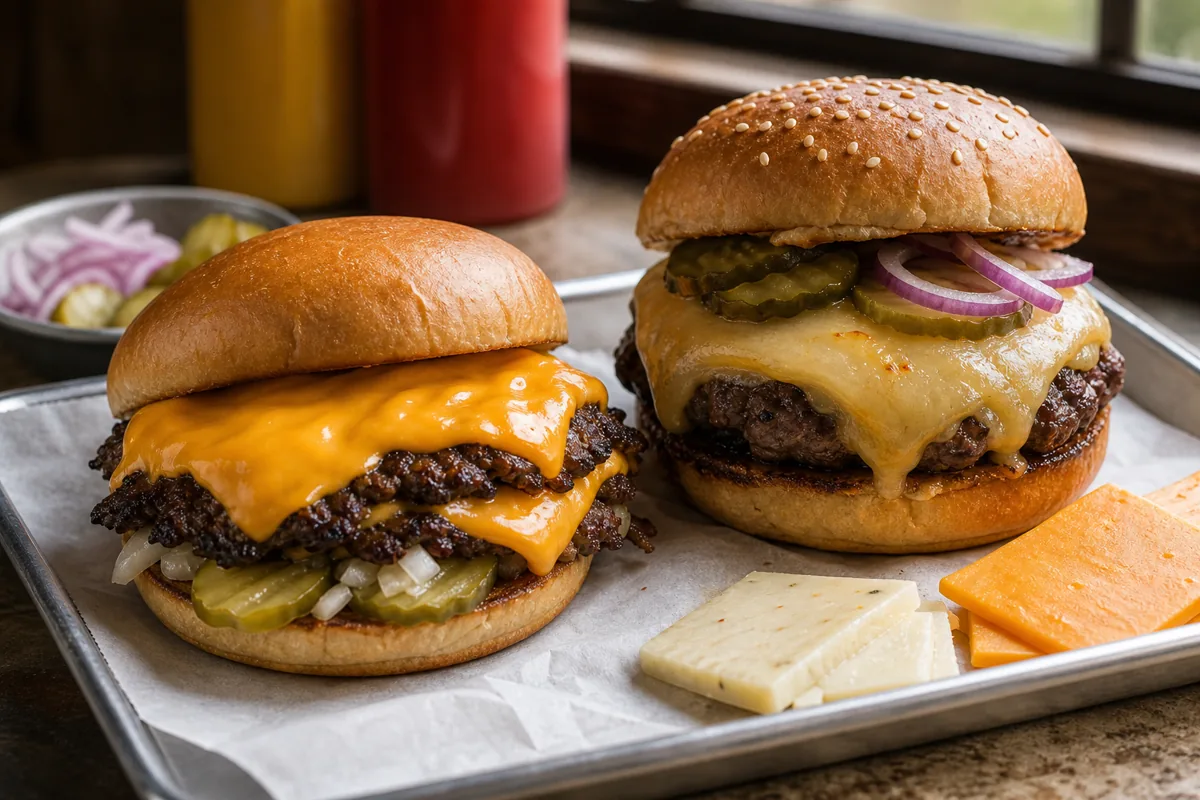
That is the same reason our burger cheese picks do not map perfectly here. A burger slice only has to melt across the top of a patty.
Grilled cheese has to fill the whole interior before the bread dries out.
What to buy at the store for tomorrow's sandwich
For most shoppers, the smartest move is not buying one heroic wedge. It is buying two reliable cheeses that cover two different lanes: one fast melter and one flavor cheese.
If you shop that way, you can make a diner-style sandwich on Tuesday and a sharper soup-side sandwich on Thursday without changing your whole fridge.
Thickness matters at the counter too. Ask for thinner deli slices if you are using American or provolone.
Thin slices lap over each other and melt more evenly than two thick slabs stacked in the center.
For cheddar, choose young or medium blocks when grilled cheese is the main plan. Extra-sharp cheddar can taste great in small strips, but it has less moisture and a higher chance of separating.
If you already bought extra-sharp, pair it with Jack or American and use it as the flavor layer.
For home blocks, cut or grate only what you need and rewrap the rest well. Good cheese storage keeps the cut face from drying, and that matters because dried corners melt worse than fresh ones even when the cheese itself is still safe.
Best practice is simple: keep one cheese for safety and one cheese for character. American plus young cheddar is the easiest pair.
Jack plus cheddar is the cleanest all-natural pair. Gruyere plus Havarti is the richer weekend pair.
If you keep two cheeses on hand instead of chasing one perfect block, grilled cheese gets much easier. Let one cheese solve the pan, and let the other make the sandwich taste like your version of grilled cheese.
SOURCES & REFERENCES
What Else Do People Ask About Grilled-Cheese Picks?
These questions cover the practical problems people run into once the skillet is hot.
American cheese is the best single answer because it melts quickly, covers the bread evenly, and stays creamy after the cut. It gives you the lowest-risk sandwich on ordinary home heat.
American is better for reliability, while young cheddar is better for sharper flavor. If you want both, blend them instead of forcing cheddar to carry the whole sandwich alone.
Low-moisture mozzarella gives the longest pull, but it tastes better when paired with cheddar or provolone. That way you keep the stretch and still get a stronger finish through the bread.
Yes, but use low-moisture mozzarella rather than fresh mozzarella. Fresh mozzarella releases too much water for a standard skillet sandwich unless you drain it very well.
The slices are usually too thick, the heat is too high, or the cheese is too dry. Slice or grate the cheese thinner, lower the heat, and cover the pan briefly so the center gets a head start.