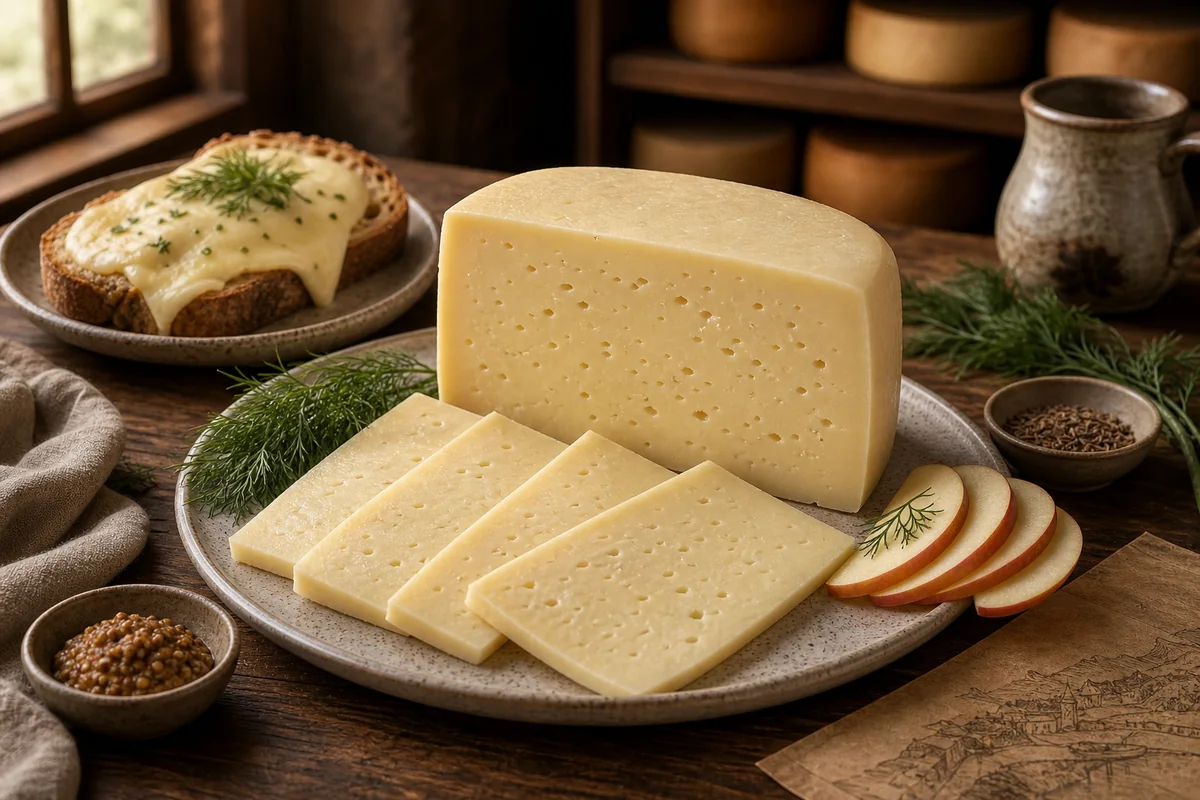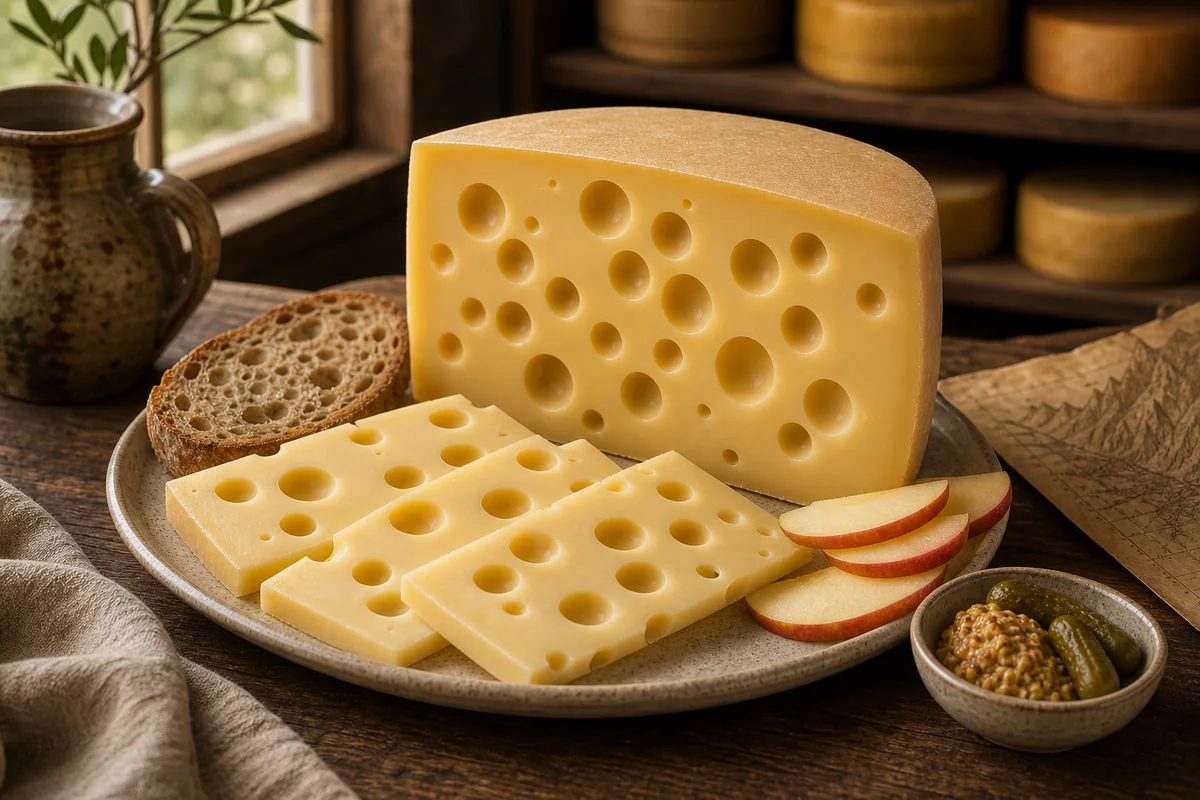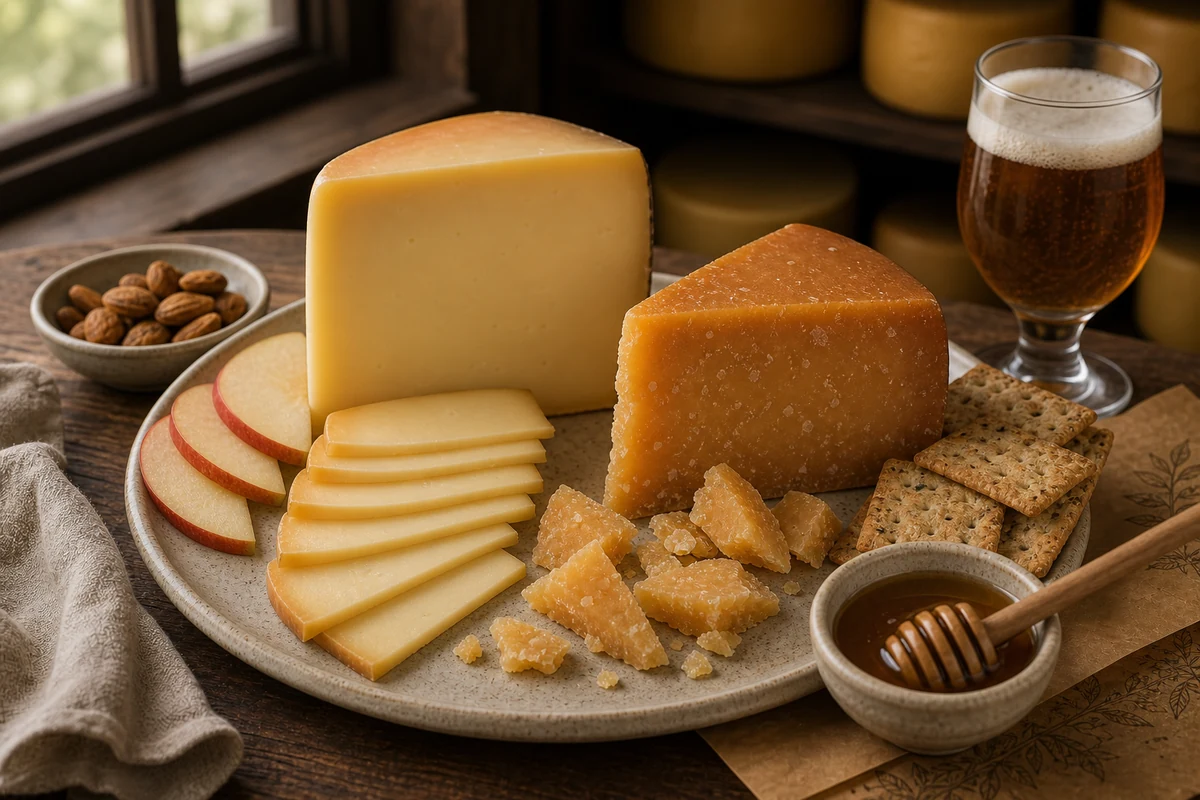
Gouda is the Dutch cow's milk cheese many shoppers meet first, but the name covers far more than mild deli slices. It ranges from soft, young, sandwich-ready wheels to dense aged wedges with caramel flavor and crystal crunch.
What most people miss is that "gouda" covers a massive range of products. A 4-week young Gouda and a 5-year aged Gouda share a name but almost nothing else in flavor, texture, or use.
In This Article
What Is Gouda Cheese?
One step in the make explains the rest. This is a washed-curd Dutch cheese made from cow's milk.
The name comes from the city of Gouda in South Holland, where farmers traded cheese at market from the 12th century onward.
The washed-curd technique is what defines Gouda's flavor profile. After the curd forms, the cheesemaker drains a portion of the whey and replaces it with warm water.
This washes out lactose and lactic acid, producing a sweeter, milder cheese than other cow's milk varieties.
- Origin -- city of Gouda, South Holland, cheese trading records from 1184
- Milk -- cow's milk, pasteurized for most commercial production, raw for artisan boerenkaas
- Method -- washed-curd technique removes lactose, yielding a sweeter base flavor
- Protected names -- Gouda Holland is PGI; Noord-Hollandse Gouda is PDO
- Global production -- made in the Netherlands, USA, Germany, Australia, and many other countries
The plain term "Gouda" is not protected globally, unlike Parmigiano-Reggiano. Anyone can make cheese and call it Gouda in many markets.
The protected names are more specific: Gouda Holland PGI and Noord-Hollandse Gouda PDO.
Dutch boerenkaas means farmer's cheese. In practice, it signals farmstead production and often raw milk, so you should judge it differently from young factory Gouda.
It can taste deeper and more individual, but the raw-milk label also matters for pregnancy cheese decisions.
Most Gouda in American grocery stores is young, factory-made, and mild. The aged versions that develop caramel depth and crystalline crunch are found in cheese shops and specialty sections.
How Does Age Change Gouda?
No other cheese has a clearer aging progression than Gouda. The Dutch classify it in named stages, and each stage behaves like a different cheese.
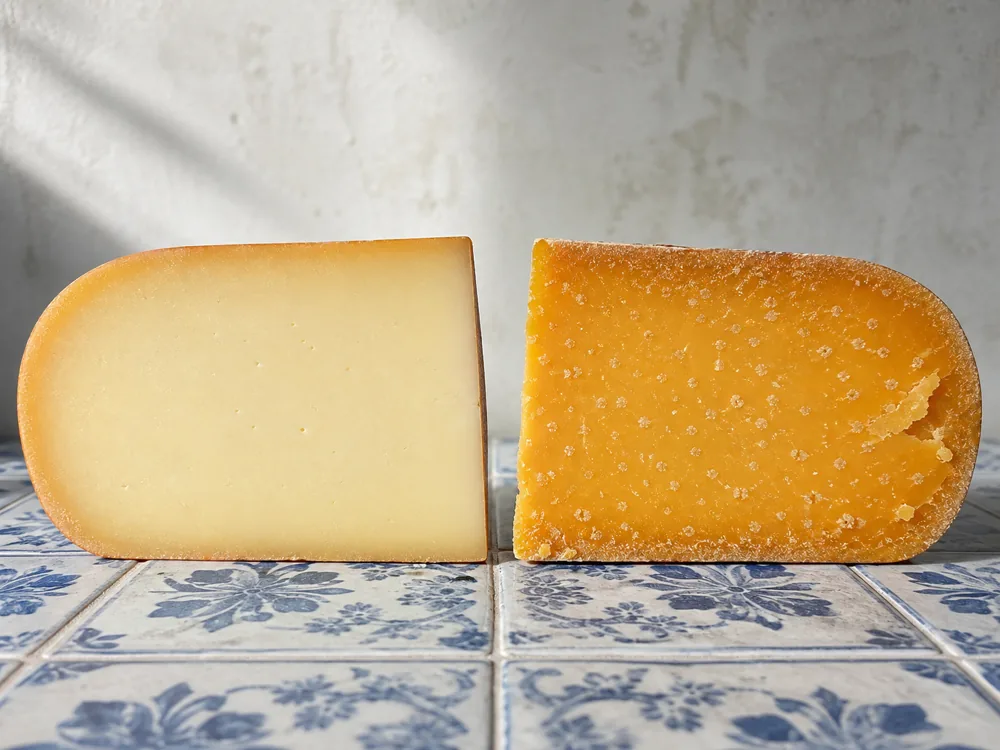
Beyond 12 months, Gouda enters the oud (old) and overjarig (extra old) categories. These aged wheels develop dense concentrations of caramel, toffee, and butterscotch flavors with abundant crunchy crystals throughout.
Names like aged Gouda, vintage Gouda, 2-year Gouda, 3-year Gouda, cumin Gouda, smoked Gouda, and producer labels such as Van Gogh, Meyer, or Mahoe are best read as age, flavoring, smoke, or producer cues inside the Gouda family. They do not need separate cheese profiles unless a producer has a distinct protected style or search results prove separate entity intent.
The crystals, like those in Parmigiano-Reggiano, are tyrosine amino acid formations. French Comte develops the same crunchy bite when it ages well.
They are a marker of quality and proper long aging.
This describes a mid-aged belegen Gouda. Notice the sweetness, which comes from the washed-curd process removing lactic acid.
This sweetness distinguishes Gouda from sharper Dutch cheeses like Leyden or aged Edam.
- Sweet base -- washed curd removes acid, leaving caramelized lactose notes
- Butterscotch with age -- Maillard reactions during aging create toffee complexity
- Increasing umami -- protein breakdown produces free glutamates in wheels over 12 months
- Crystal crunch -- tyrosine crystals become prominent at 10+ months
A 3-year-old overjarig Gouda is far more savory and barely creamy at all next to the belegen described above. The cheese becomes dry, crumbly, and intensely savory.
Tasting a young Gouda next to a 3-year wheel is the fastest way to understand what aging does to this cheese.
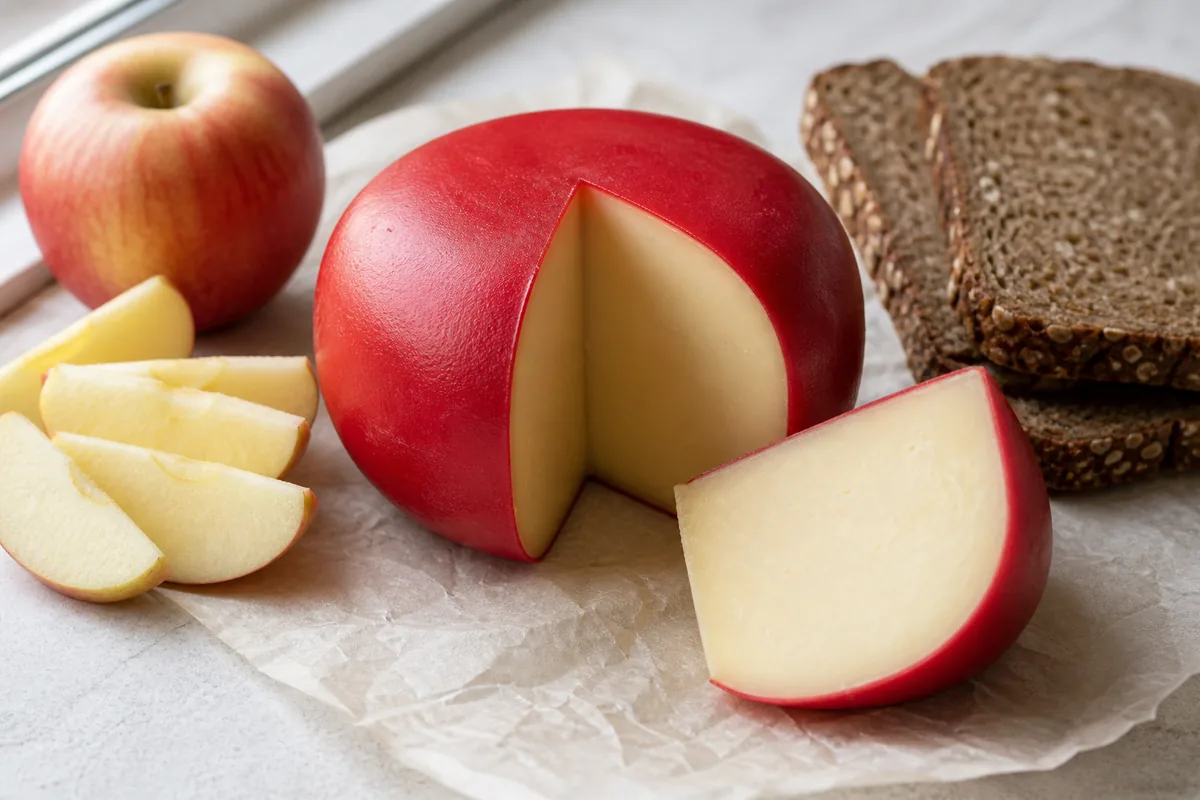
Dutch cheese shops label Gouda by age using color-coded wax: yellow or red wax for young, orange for medium, black for aged. At an American cheese counter, ask for the specific age in months. 'Aged Gouda' can mean anything from 6 months to 5 years depending on the retailer.
How Is Gouda Made?
The production technique explains almost everything about the flavour. The curd-washing step is the single most important moment in the process.
After the milk coagulates and the curd is cut, the cheesemaker drains about 30-40% of the whey. Hot water (around 140 degrees F / 60 degrees C) replaces the removed whey.
This dilutes the lactose concentration in the curd.
- Coagulate -- rennet sets the milk into a gel
- Cut and stir -- curd is cut into walnut-sized pieces
- Wash the curd -- drain whey, replace with hot water to dilute lactose and acid
- Press into molds -- weighted pressing expels remaining moisture
- Brine -- soak in saturated salt solution for 1-5 days depending on wheel size
- Wax and age -- coated in colored wax, then aged on wooden shelves
Because bacteria feed on lactose to produce lactic acid, removing lactose early means less acid develops during aging. The result is a naturally sweeter cheese compared to non-washed varieties like Cheddar or Gruyere, where all the lactose remains in the curd.
After pressing, wheels soak in a saturated salt brine. Young Gouda soaks for about a day.
Larger wheels destined for long aging may brine for up to 5 days. Salt penetration is slower through the dense pressed curd.
The colored wax coating prevents excessive moisture loss during aging and gives visual age identification. It also protects the cheese from surface mold and physical damage on the aging shelf.
Which Gouda Age Fits the Recipe?
The right application depends entirely on the age. Using 3-year Gouda in a grilled cheese sandwich wastes a tasting cheese.
Using young Gouda on a cheese board is serving an ingredient, not a feature.
| Use | How It Works |
|---|---|
| Sandwiches and Burgers | Young Gouda (4-8 weeks). Mild, smooth melt, does not overpower other toppings. Slices cleanly from a cold block. |
| Cheese Boards | Aged Gouda (12+ months). Break into irregular shards. Pair with fig jam, Marcona almonds, and dark honey. |
| Mac and Cheese | Belegen Gouda (5-9 months). Melts smoothly with enough flavor to carry a sauce without additional sharp cheese. |
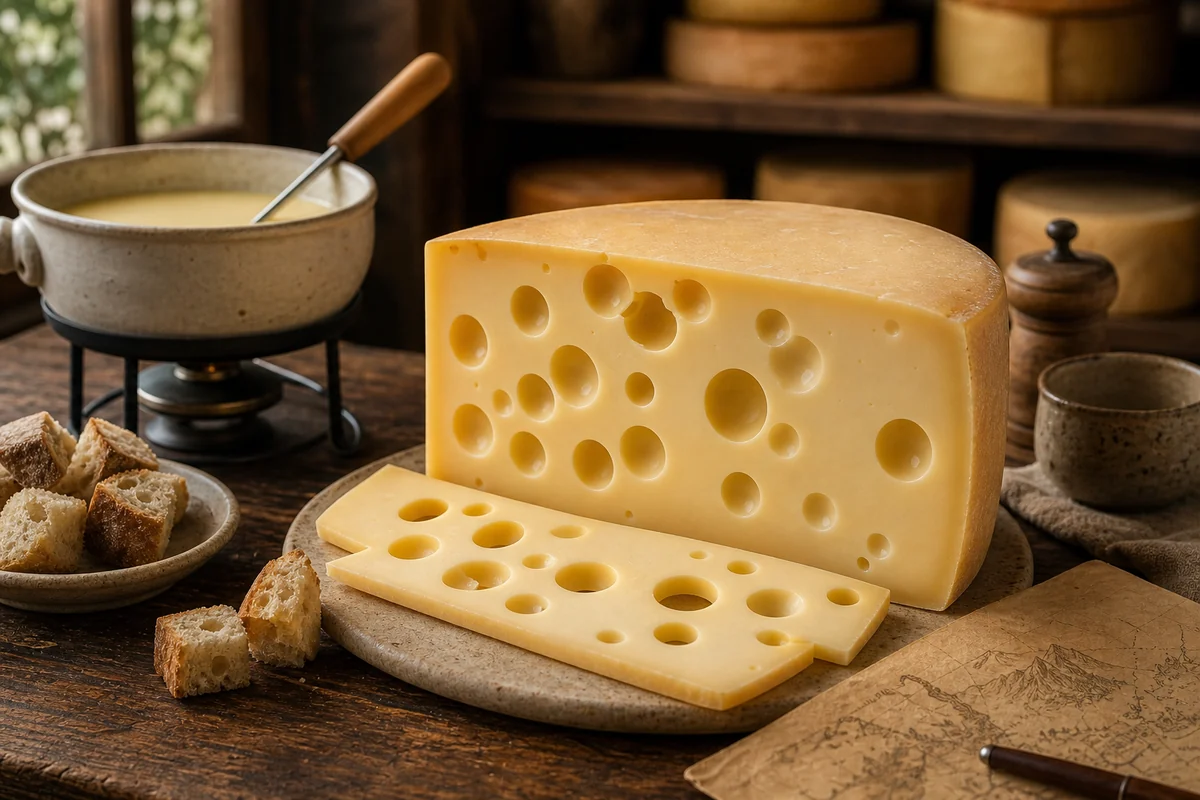
| Fondue Blend | Young or belegen Gouda adds sweetness and body to fondue. Combine with Gruyere for the classic Swiss-Dutch blend. |
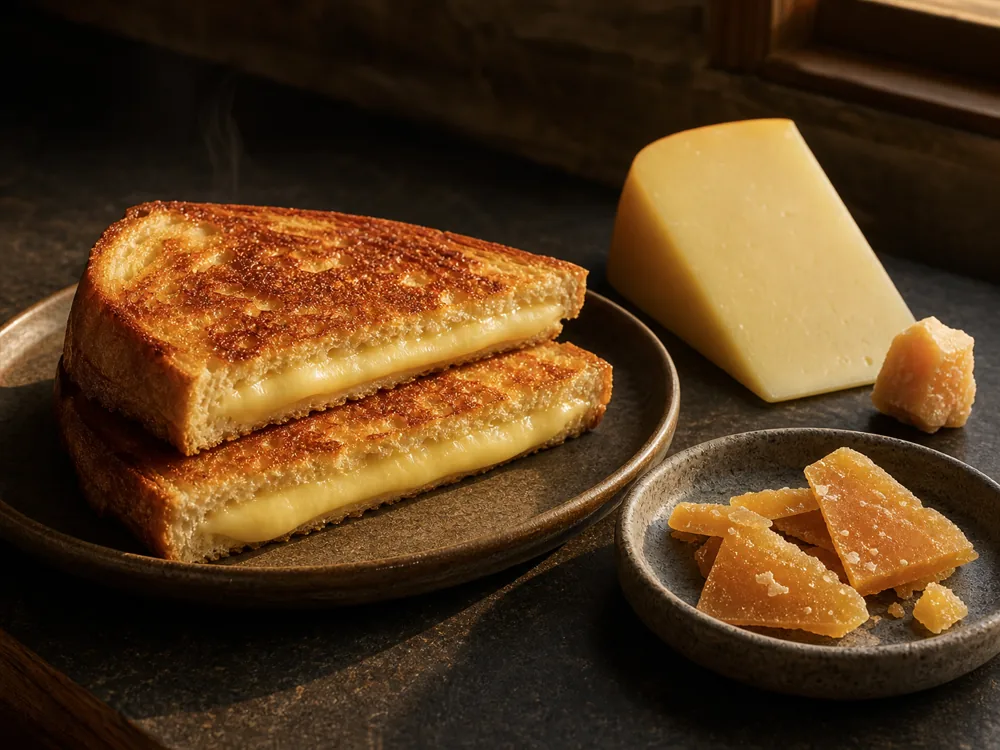
| Grilled Cheese | Jong belegen (2-5 months). The ideal melt stage: enough flavor to taste, smooth enough to stretch between bread slices. |
| Snacking and Tasting | Overjarig (3+ years). Eat in thin shards with a drizzle of aged balsamic or Dutch mustard. A dessert cheese. |
- Young (under 3 months) -- sandwiches, burgers, grilled cheese, quesadillas
- Medium (3-12 months) -- mac and cheese, fondue, baked dishes, cheese sauces
- Aged (12+ months) -- cheese boards, tasting plates, paired with wine and preserves
- Extra aged (3+ years) -- thin shards with balsamic, honey, or dried fruit
For cooking, belegen (5-9 month) Gouda is the sweet spot. It melts smoothly enough for sauces while carrying enough developed flavor to taste in the finished dish.
Younger Gouda melts well but tastes like nothing in a sauce. Older Gouda has too little moisture to melt smoothly.
For recipes built around smooth melt, smooth melting cheese is the closest cooking context for how Gouda behaves in the pan. Belegen Gouda also makes sense in creamy pasta sauces when you want sweetness and body instead of Cheddar sharpness.
If you want a nuttier alpine reference, Swiss Emmental sits closer to Gouda than cheddar does.
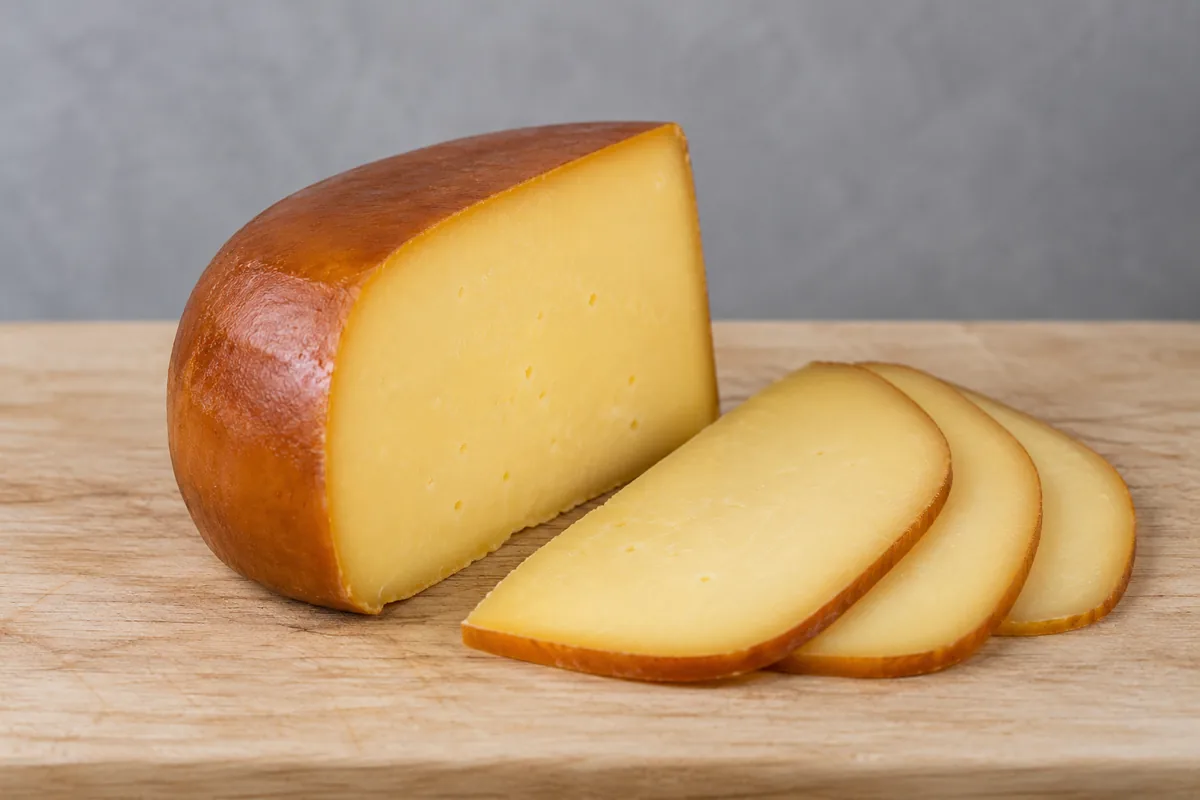
The smoked version is a separate product worth mentioning. The smoke flavor adds depth to creamy cheeses on a board and works well in omelets, quiches, and potato gratins.
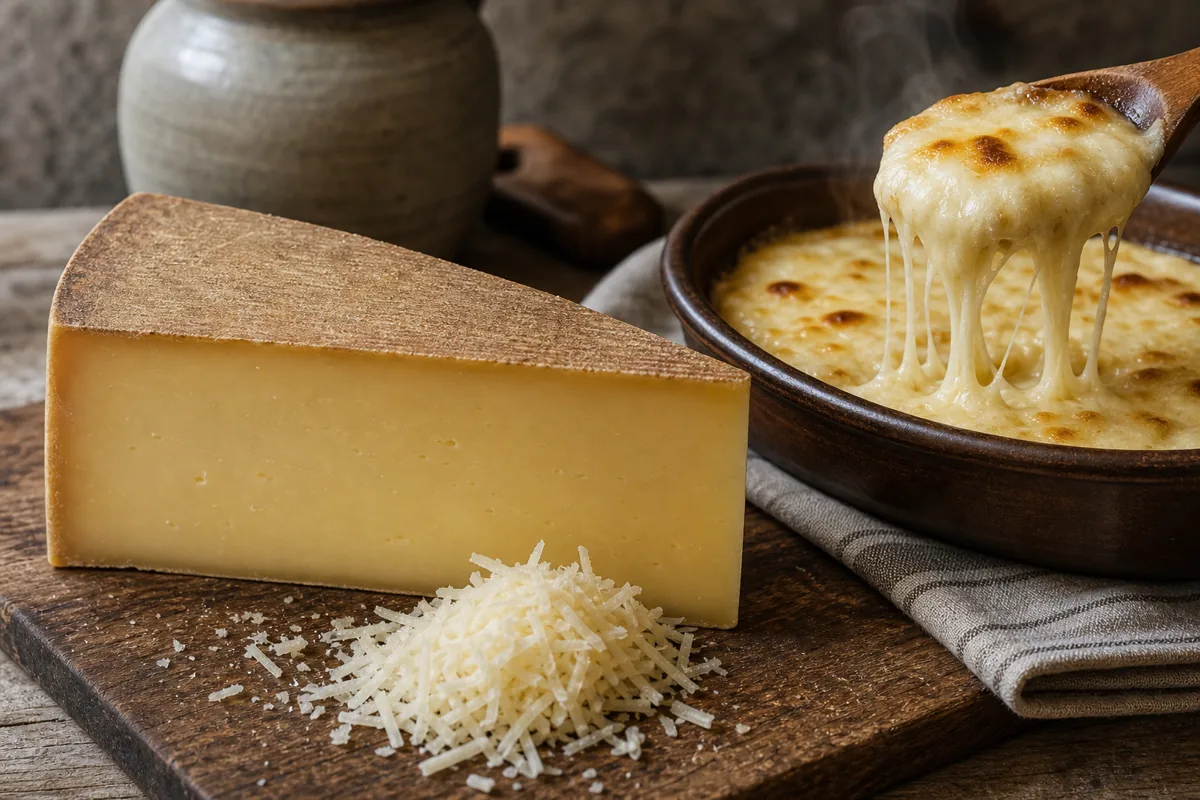
This describes belegen (6-month) Gouda. Young Gouda melts more easily and tastes considerably milder.
Aged Gouda inverts that. It barely melts, and the flavor turns intense.
That range across aging stages is what makes Gouda such a versatile purchase. One cheese family covers everything from sandwich slicing to fine dining tasting plates.
What Should You Pair With Gouda?
Pairing Gouda correctly means matching the age stage to the accompaniment. Young Gouda needs different partners than aged.
The practical split is sweetness versus intensity. Young Gouda needs acidity, crunch, or mustard to wake it up.
Aged Gouda already brings caramel, salt, and crystals, so it works better with dark beer, port, honey, dried fruit, and toasted nuts.
| Pairing | Type | Why It Works |
|---|---|---|
| Belgian Dubbel | Beer | Caramel malt and dark fruit notes in the beer mirror the butterscotch in belegen Gouda. One of the best beer-cheese pairings available. |
| Apple Slices | Food | Tart apple (Granny Smith) with young Gouda. The acid cuts through the cream and the crunch contrasts the smooth paste. |
| Aged Port | Wine | Tawny port with 2-3 year Gouda. Both share caramel, toffee, and dried fruit notes. A natural dessert pairing. |
| Dark Honey | Food | Buckwheat or chestnut honey drizzled on shards of aged Gouda. The sweetness amplifies the caramelized notes. |
| Riesling | Wine | Off-dry Riesling with young or medium Gouda. The wine's acidity and stone fruit balance the cheese's sweetness. |
| Whole-Grain Mustard | Food | Dutch mustard or whole-grain Dijon with young Gouda on crackers. The sharpness of mustard gives young Gouda the kick it lacks. |
- Young Gouda -- crisp lagers, Riesling, apples, whole-grain mustard
- Medium Gouda -- Belgian ales, Gewurztraminer, fig jam, honey
- Aged Gouda -- tawny port, barleywine, dark honey, dried figs
- Smoked Gouda -- stouts, rauchbier, dark bread, pickled onions
Avoid pairing young Gouda with full-bodied reds. The mild cheese gets flattened by tannins and oak.
Save the Cabernet for a 2-year wheel that can stand up to it.
If you only have one Gouda on the board, choose a medium-aged wedge and pair it with apple slices, mustard, and a darker beer. That setup covers enough contrast without needing separate young and aged cheeses.
How Long Does Gouda Keep?
The wax coating provides built-in protection that most cheeses lack. The wax slows moisture loss and shields the surface from air contact and mold spores.
- Leave the wax on -- it is the best moisture barrier available
- Wrap cut faces only -- wax paper first, then a loose plastic layer
- Room temperature for serving -- 30 minutes out of the fridge opens up the flavor
- Aged Gouda is forgiving -- low moisture makes it the most shelf-stable cheese in most kitchens
The wax is not edible but is food-safe. Some producers use a natural rind under the wax, which technically is edible but tastes waxy and bitter.
Cut the wax and any discolored rind off before eating or serving.
For long-term storage, waxed wedge storage keeps Gouda from drying while still letting the cut face breathe.
If mold appears on the cut surface of a Gouda wedge, cut at least half an inch beyond the visible mold and discard that section. The remaining cheese is safe.
Mold on the waxed surfaces cannot penetrate into the cheese.
Which Gouda Should You Buy at Each Price Point?
The price range for Gouda is wider than almost any other cheese. Young factory Gouda costs $5-8 per pound.
A 5-year boerenkaas can run $30-50 per pound. Both are called "Gouda."
For an entry point into quality Gouda, look for a Dutch belegen (5-9 month) wedge in the specialty cheese section. It costs less than long-aged wheels but has enough flavor development to show you what Gouda can do beyond the bland deli slices.
- For everyday slicing: buy young Gouda or jong belegen, then use it where a mild flexible slice helps.
- For toast-friendly melt: choose jong belegen so the melt stays smooth but the sandwich still tastes like Gouda.
- For tasting: choose aged Gouda with visible crystals and a darker paste.
- For swaps: use a replacement choice only after deciding whether you need melt, sweetness, or aged caramel flavor.
How Nutritious Is Gouda?
The nutritional profile sits in the middle of the cheese spectrum. It is richer than fresh cheeses like ricotta but leaner than triple-creams.
- Good protein -- 7.1g per ounce, solid for a semi-hard cheese
- Strong calcium -- 198mg per ounce covers 15% of daily value
- Very low lactose -- the washed-curd process removes most lactose before aging breaks down the rest
- Moderate sodium -- 232mg per ounce, typical for brined cheeses
The washed-curd process can make Gouda a better starting point for some lactose-intolerant people than fresh, wet cheeses. It removes some lactose early, and aging lowers the remaining lactose further.
Individual tolerance still matters, so start small if dairy symptoms are unpredictable.
Aged Gouda concentrates calories and protein as moisture decreases, so an ounce of a long-aged wheel carries more of both than the young-Gouda figures above.
Check the label for the milk first, because the NHS and CDC lines above depend on it. Raw-milk boerenkaas is the variety that deserves extra caution, especially if it was cut at a counter or served on a board where storage history is unclear.
The CDC lists unheated cheese sliced at a deli as riskier and deli-sliced cheeses heated to 165°F or until steaming hot as safer.
Gouda is the most versatile cheese family in any store. Buy young for sandwiches, belegen for cooking, and aged for tasting. The washed-curd sweetness, crystalline crunch of aged wheels, and Dutch boerenkaas tradition make Gouda worth knowing beyond the bland deli slices most people start with. Ask for it by age in months, not just by name.
Where Do Gouda's Standards and Nutrition Data Come From?
For protected-name claims, we use European Commission geographical-indication records first. Those sources separate Gouda Holland PGI from Noord-Hollandse Gouda PDO, so a wheel labelled Gouda anywhere in the world is not automatically either one.
For nutrition, lactose, and pregnancy wording, we separate cheese-process logic from health guidance. USDA FoodData Central supports the nutrition snapshot, NIDDK supports the patient-facing lactose framing, and CDC pregnancy guidance keeps raw-milk and pasteurization claims cautious.
- Use EU records first for protected-name and geographic claims.
- Use cheese process second for washed-curd sweetness, wax, aging, and texture behavior.
- Use public-health sources when the claim involves pregnancy, raw milk, or lactose tolerance.
SOURCES & REFERENCES
What Else Do People Ask About Gouda?
Most Gouda questions come down to two things: what the wax is for, and what the age on the label buys.
The wax is food-safe but not intended to be eaten. It tastes waxy and slightly bitter.
Cut the wax off before serving or eating. Some Gouda has a natural rind underneath the wax, which is technically edible but usually discarded.
Boerenkaas means "farmer's cheese" in Dutch. For shoppers, it signals a farmstead style rather than a generic factory block.
It may be raw milk, so check the label carefully if pregnancy, immune risk, or pasteurization status matters.
Young Gouda (under 3 months) melts smoothly and is excellent for grilled cheese, sauces, and fondue. Medium-aged Gouda (3-12 months) still melts well with more flavor.
Aged Gouda over 12 months does not melt smoothly because the low moisture and crystalline structure prevent it from flowing.
Gouda is usually low in lactose compared with fresh wet cheeses, especially when it is aged. The curd-washing process removes some lactose early, and aging reduces more of what remains.
It is still best to test your own tolerance with a small portion.
Both are Dutch washed-curd cheeses, but aged Edam uses lower-fat milk and is aged with less moisture. Edam is firmer, drier, and less creamy than Gouda at the same age.
Gouda has a richer, sweeter flavor. Edam works better for slicing and traveling because its lower fat content makes it more stable at room temperature.