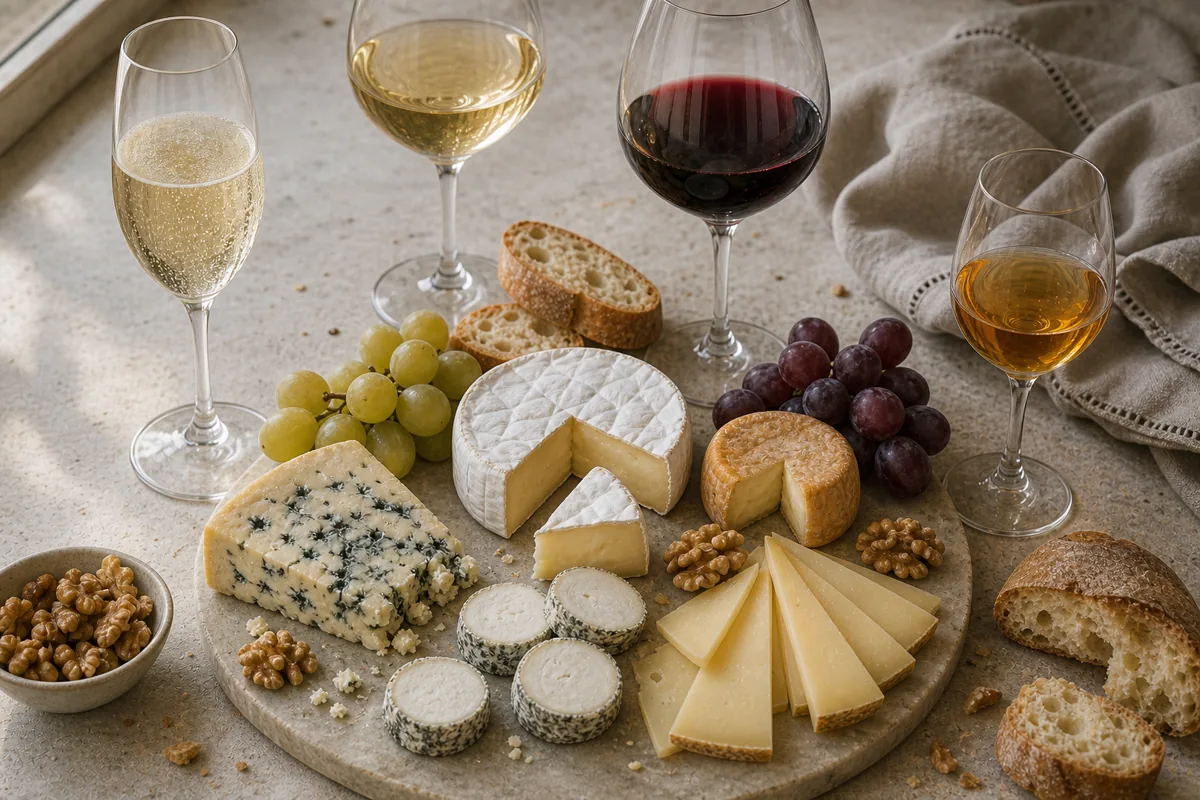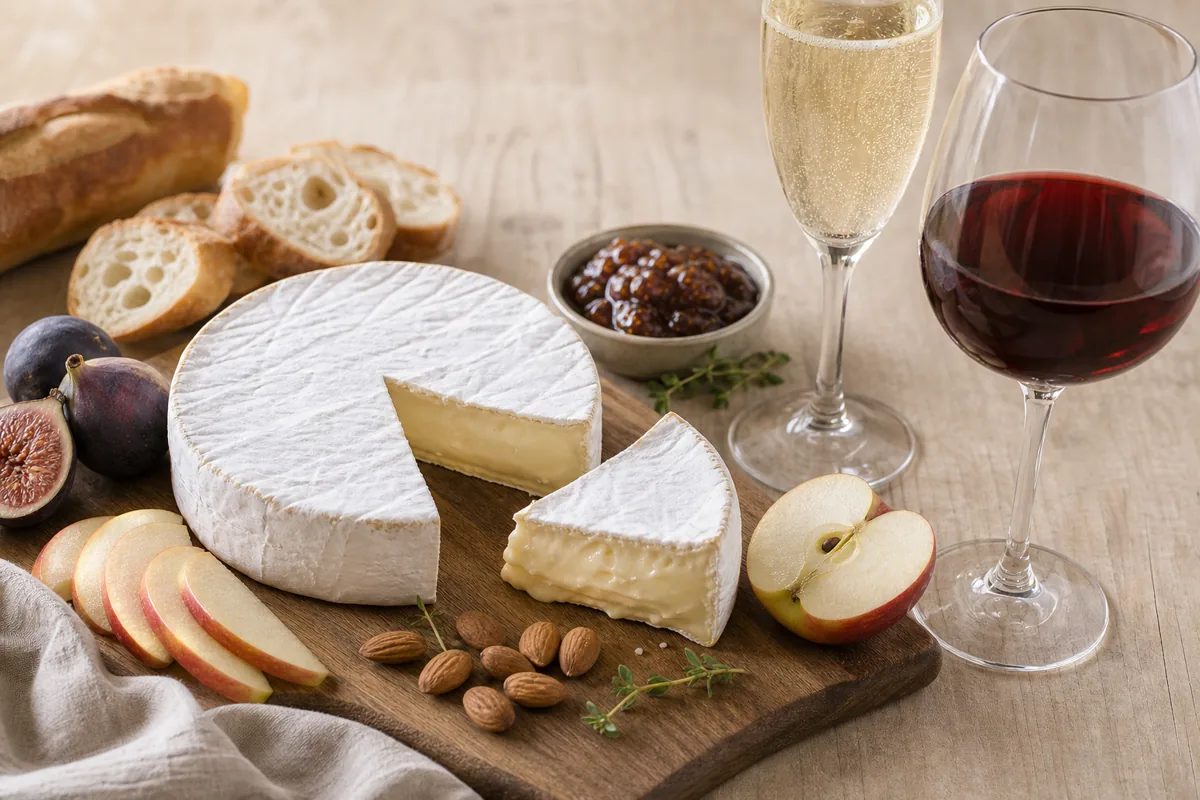
High acidity cuts through Brie's fat content. Fine bubbles lift the creamy paste off the palate and reset for the next bite. Zero tannins means no bitter clash with the bloomy rind.
Brie is one of the most forgiving cheeses to pair with wine, but not all wines work equally well. For this wine and cheese match, fat content is the key variable.
Brie has a high-fat paste that needs acidity to cut through it.
Wines with tannin clash with the bloomy rind and produce a metallic bitterness. Wines with high acidity and light body complement Brie's soft, buttery texture without fighting it.
The recommendations below cover eight wine styles across three Brie stages: young and firm, ripe at peak, and very soft. That distinction matters because a wheel needs more freshness or body as its paste softens and its rind aroma develops.
| Brie stage | Best wine lane | Why it works |
|---|---|---|
| Young and firmer | Sancerre or Chablis | Higher acid keeps the paste from feeling flat and heavy. |
| Ripe at peak | Champagne or Crémant | Bubbles and acid lift the fattest, creamiest bites cleanly. |
| Very soft and earthy | Alsatian Pinot Gris | More body handles the richer paste without adding tannin. |
In This Article
Best Wine Pairings for Brie
The eight pairings below cover still whites, sparkling, rosé, and one light red, and each earns its place for a different reason. Read the note beside a bottle rather than assuming that any crisp white will do the same job as the one above it.
French wine regions give the easiest starting point because Champagne, Burgundy, Alsace, and the Loire all offer acidity without heavy tannin.
Let the cheese decide which region to reach for because a young Brie that cuts into a neat wedge suits Sancerre or Chablis, while a soft wheel that bulges at the cut edge needs Champagne bubbles or the extra body of Alsatian Pinot Gris.
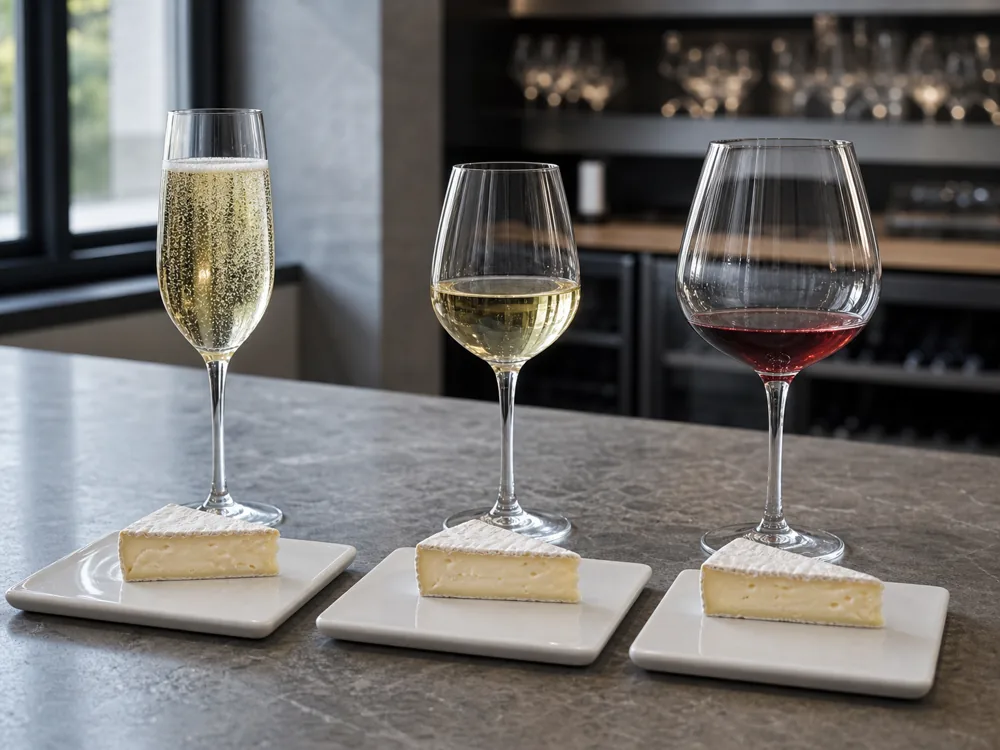
| Pairing | Type | Why It Works |
|---|---|---|
| Champagne Blanc de Blancs | Sparkling | The classic match. Usually Chardonnay based, Blanc de Blancs combines high acidity, fine bubbles, and no grape-skin tannin. Its green apple and brioche notes complement Brie's mushroomy rind while the lively texture keeps a rich bite fresh. |
| Alsatian Pinot Gris | White | Rich body matches Brie's weight without overpowering it. Stone fruit and spice notes from Alsace Pinot Gris complement the butter notes in the paste. Choose a dry, full-bodied bottling for richer, more mature Brie. |
| Sancerre (Sauvignon Blanc) | White | High acidity and grassy, mineral character make the paste feel lighter. This Loire Valley Sauvignon Blanc stays bright and refreshing without masking the cheese, especially when Brie is young and still firm. |
| Chablis (restrained Chardonnay) | White | Mineral, lean Chablis works where heavily oaked Chardonnay can feel broad and sweet. A restrained village wine suits younger Brie, while Chablis Premier Cru offers enough body to match a ripe wheel. |
| Dry Rosé (Provence) | Rosé | Crisp Provence rosé has the acidity of a white wine with a hint of red fruit that pairs well with Brie served alongside strawberries or prosciutto. Avoid rosés with residual sweetness, which can make the rind taste bitter. |
| Crémant d'Alsace | Sparkling | An affordable sparkling alternative to Champagne with comparable acidity and bead. Made from Pinot Blanc or Auxerrois, it brings similar bubble texture and clean citrus notes. A practical choice for everyday Brie occasions. |
| Viognier (cool-climate) | White | A less obvious match that works well with a ripe wheel. The floral, apricot character of Viognier from the Northern Rhône or a cool California site complements the earthy, slightly funky edge of near-ripe Brie. Avoid warm-climate Viognier, which is too alcoholic. |
| Pinot Noir (Burgundy, light-bodied) | Red | The one red that works. Burgundy Pinot Noir has low tannin and high acidity. At the village level, it pairs with a firmer, younger Brie without the metallic clash that heavier reds produce. Avoid anything above 13.5% alcohol. |
The pattern across every pairing that works: high acidity, low or zero tannin, moderate alcohol. Any wine that checks those three boxes has a reasonable chance alongside Brie.
Wines that fail share the opposite profile: high tannin, low acidity, high alcohol. Understanding that logic lets you improvise when the specific bottles above are unavailable.
For sparkling wine, Brut or Extra Brut is the most dependable label cue because a dry finish keeps the rind from tasting flat. Blanc de Blancs Champagne is usually Chardonnay based, while Crémant d'Alsace may use Pinot Blanc or Auxerrois and often costs less.
Still wines require a closer look at style than grape name because a lean, unoaked Chardonnay can work beautifully, while an example with obvious oak, high alcohol, and a broad buttery finish can make both the wine and Brie feel heavy.
- Use sparkling wine when the Brie is fully ripe and the board feels rich.
- Use crisp still white when the cheese is younger, firmer, and less runny.
- Use light red only carefully when the bottle stays low in tannin and alcohol.
Why These Brie Wine Pairings Work
The fat in Brie coats the palate. That coating needs to be cut and reset with each sip, or flavors pile up and the meal becomes heavy.
Acidity makes a rich bite feel less heavy by adding contrast and stimulating saliva. That fresh sensation restores your ability to notice the rind and paste after each bite, much as lemon sharpens the taste of a buttery sauce.
Tannins bind with salivary proteins and create the dry, grippy sensation you notice after a sip of young red wine.
Against Brie's creamy paste and soft rind, strong astringency can read as bitterness or a metallic edge. Cabernet Sauvignon makes that conflict easier to notice than low-tannin Pinot Noir.
Carbonation adds a lively texture that keeps a creamy pairing from feeling static. Together with the wine's acidity, that lift is why Champagne works with many cheeses, including fatty, creamy Brie.
The mushroom and earth notes in Brie's rind also respond well to wines with similar earthy or mineral characters. Sancerre and Chablis carry a chalky mineral quality from their limestone soils that echoes the terroir note in a well-aged Brie rind.
Keep the rind on each tasting portion because removing it strips away the mushroom aroma that makes Chablis and Sancerre relevant, while also making the cheese seem milder and more buttery than the wheel you will actually serve.
Camembert's stronger rind can take earthier wines than Brie, so keep Brie pairings cleaner and brighter.
Ripeness changes the balance even within one wheel. As Brie softens, its paste becomes fuller and its rind aroma becomes more pronounced, so the pairing must provide either more freshness through sparkling acidity or more body without adding harsh tannin.
Which Brie Wine Pairings Should You Avoid?
The wines below show the structural clashes to avoid when Brie is the main cheese on the plate. Each of them fails for a reason you can feel in the mouth rather than a matter of taste, which means the same logic rules out plenty of bottles that are not named here.
- Cabernet Sauvignon: High tannin clashes with the bloomy rind. The combination produces a metallic, bitter aftertaste that lingers through the next bite.
- Barolo and Barbaresco: Nebbiolo is one of the highest-tannin grapes in Italy. Even with age, it is too grippy for Brie's delicate fat and rind structure.
- Syrah and Shiraz: Bold tannin and high alcohol overwhelm the cheese. The spice notes in Syrah also fight with the mushroomy, earthy character of the rind.
- Oaked Chardonnay (New World): Oak tannins from heavy barrel aging create the same clash as red wine tannins. The vanilla and butter from oak can also mask the subtle flavor differences in a good Brie.
- Sweetened or off-dry wines: Brie is not sweet, and pairing it with a sweet wine makes the cheese taste sour by contrast. Avoid Riesling Spätlese or off-dry Gewürztraminer unless the Brie is served with sweet accompaniments.
The simplest version of this rule: if you would not drink the wine before eating, it probably does not pair with a creamy, mild cheese. Bold, tannic reds work better with aged hard cheeses where tannin has something structural to match against.
Do not reject every Chardonnay or red solely by category. A restrained, unoaked Chardonnay and a light Pinot Noir can work, while a heavily toasted Chardonnay or concentrated Pinot Noir may fail because the oak, alcohol, or tannin overwhelms the cheese.
Sweet accompaniments also change the decision. Honey or fig jam can make a bone-dry wine seem severe, so use only a small amount or move to a gently off-dry white that remains acidic enough to refresh the paste.
- Skip high-tannin reds when the Brie rind tastes earthy or mushroomy.
- Skip sweet dessert wines unless the plate includes fruit paste or honey.
- Skip heavily oaked Chardonnay when the Brie is young and mild.
Blue cheese salt handles sweet wine better than Brie because the salt and mold bite balance sugar.
When choosing at a restaurant or party, take a dry sparkling wine over a tannic still red. Champagne, Crémant, Cava, or Brut Prosecco will usually keep Brie fresher, though Champagne and Crémant offer the most dependable acidity.
How Do Brie Wine Pairings Change by Season?
The right pairing shifts with the season, occasion, and what else is on the table alongside the Brie. A November board carrying nuts and cured meat asks for more body than the same cheese served with radishes in April.
One practical note for seasonal service: temperature matters more in summer than in winter. Brie softens faster when the ambient temperature is high.
At a summer outdoor gathering, keep the wheel in a cool spot until about 20 minutes before serving. Set out a smaller portion first and replenish it rather than leaving the whole wheel in the heat.
Over-ripe Brie can develop an ammoniated edge that clashes with every wine. High acidity may make a mildly ripe wheel feel fresher, but it cannot rescue cheese with a sharp ammonia smell or a broken, oily paste.
Goat cheese wine pairings lean sharper and more mineral, which is useful when your board needs contrast beside Brie.
How Should You Serve Brie with Wine?
Even the right wine pairing fails if the cheese and wine are served at the wrong temperature. Cold Brie tastes mostly of fat, and a sparkling wine that has warmed in the glass loses the lift that made it the match to begin with.
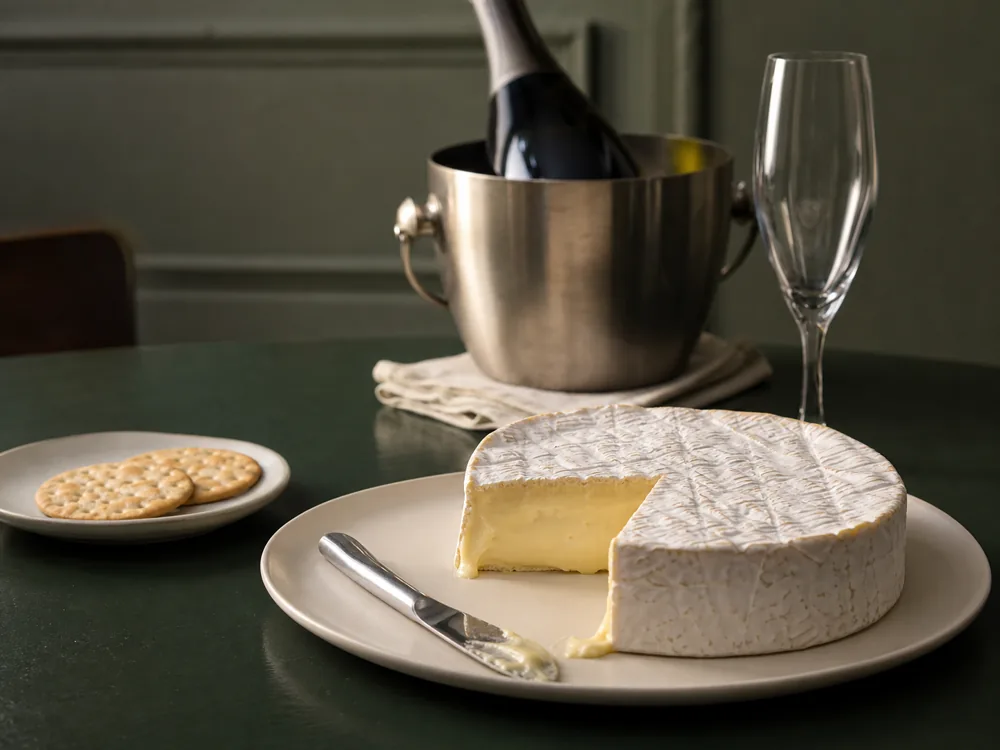
Brie serving temperature: Aim for about 65-70°F (18-21°C) at the table. Remove a small wedge from the refrigerator 30-45 minutes before serving, while a whole wheel may need longer depending on its size.
Use texture as the final test because the center should yield when pressed through the wrapper without collapsing into an oily puddle when cut.
Sparkling wine serving temperature: Keep Champagne and Crémant around 45-48°F (7-9°C). Use an ice bucket and pour smaller servings so the last sip remains lively rather than warming flat in the glass.
Still white wine serving temperature: Serve Sancerre and Chablis around 48-54°F (9-12°C). If the wine is refrigerator-cold, give it a few minutes in the glass so aroma returns before judging the pairing.
For a deliberate comparison, taste the wine first, then the cheese, then the wine again to learn whether the second sip tastes brighter and longer or exposes bitterness, heat, or sweetness.
Tasting order matters when several wines share the table. Move from Champagne to Chablis, then Pinot Gris, and finish with a light red so the fullest wine does not mute the subtler matches.
Room-temperature cheese timing matters because over-warmed Brie can leak fat before the wine reaches the table. Return unused cheese to cool storage promptly rather than letting a softened wheel sit through the entire evening.
Cheese board balance improves when you add crisp fruit, toasted nuts, and one firmer cheese beside Brie. Keep jam and honey in separate dishes so each taster can judge the wine with plain Brie before adding sweetness.
Camembert's smaller wheel and stronger rind shift the pairing slightly earthier, which is why Brie stays the cleaner soft-rind wine match.
Blue cheese with sweet wine follows a very different logic from Brie, because salt and blue mold can absorb sugar that Brie cannot.
SOURCES & REFERENCES
What Else Do People Ask About Brie and Wine?
The questions below cover the most common pairing decisions around Brie and wine.
Champagne Blanc de Blancs is the best pairing for Brie. Its high acidity provides contrast, fine bubbles add a lively texture, and low tannin avoids a clash with the bloomy rind.
Alsatian Pinot Gris and Sancerre are the best still-wine alternatives.
Yes, but only with low-tannin reds. A light Burgundy Pinot Noir at the village level is the one red wine that pairs reliably with Brie.
Avoid Cabernet Sauvignon, Syrah, Barolo, and any high-tannin red. Tannins from those wines clash with Brie's rind and create a bitter, metallic aftertaste.
Prosecco works as a casual pairing. The bubbles and light acidity complement Brie's fat content adequately.
Prosecco is sweeter and lower in acidity than Champagne or Crémant, so it is not the best match, but it is a practical choice when other options are not available. Choose a Brut Prosecco rather than Extra Dry or Dry styles, which are too sweet.
Sancerre, Chablis, and Alsatian Pinot Gris are the three best white wines with Brie. Sancerre and Chablis bring high acidity and mineral character that complement the earthy rind.
Pinot Gris has enough body to match a fully ripe, runny wheel. Avoid heavily oaked Chardonnay, which adds tannin and masks the cheese's subtle flavor.
Baked Brie intensifies the cheese's richness and releases more of its earthy, mushroomy character. Champagne or Crémant d'Alsace works well because acidity and carbonation keep the melted cheese from feeling heavy.
If baked with honey or fruit, a gently off-dry Riesling can match the sweet topping while retaining enough acidity for the cheese.