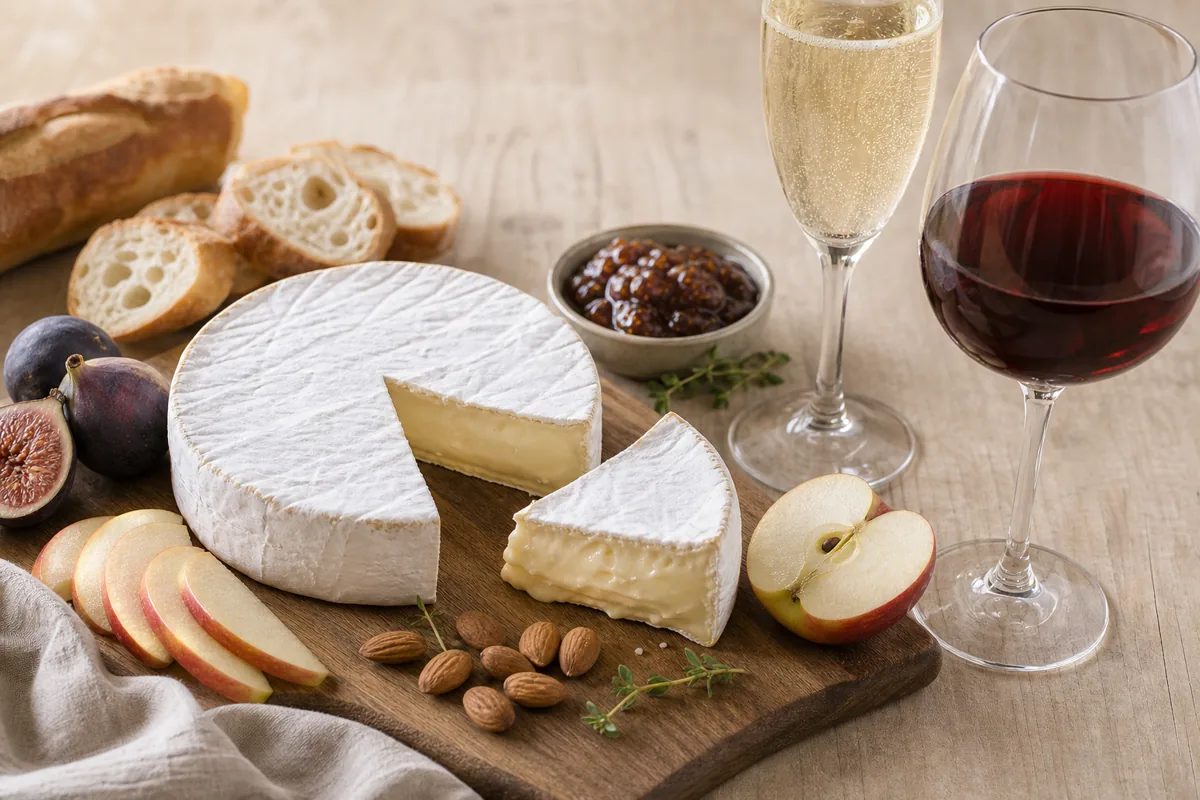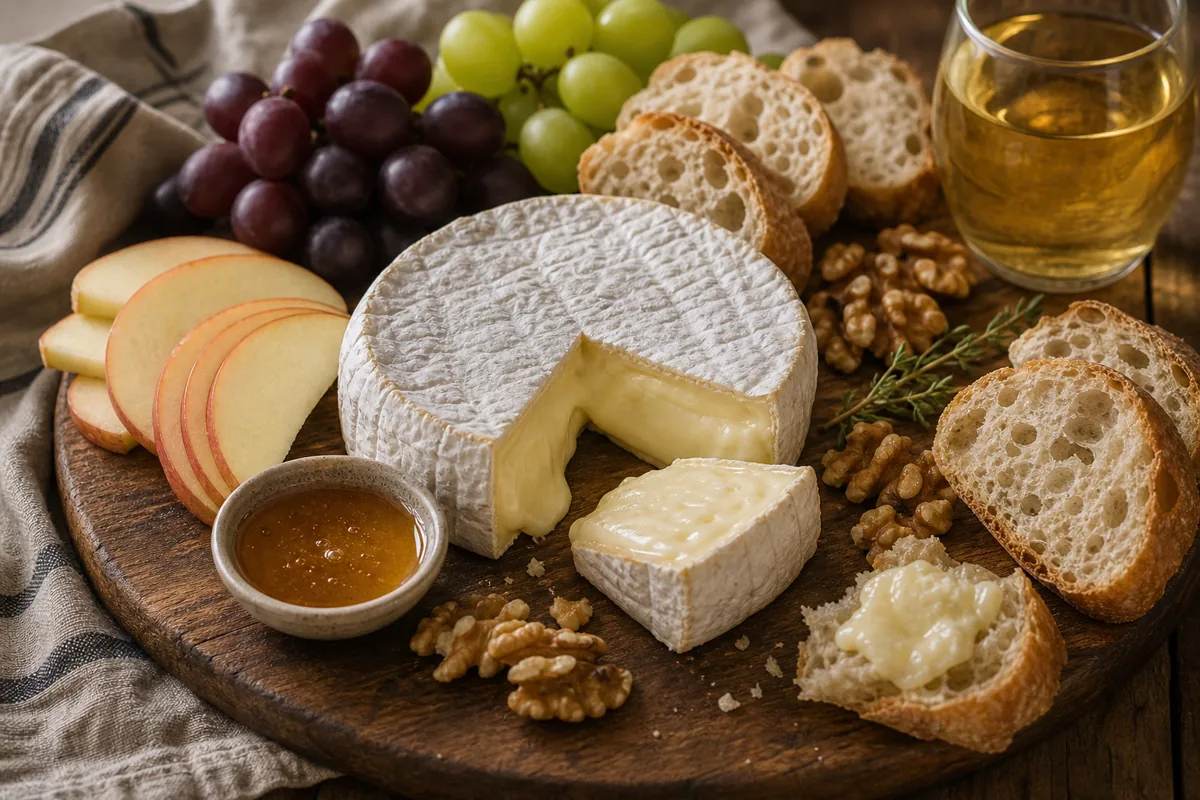
If you are serving a soft Normandy-style bloomy wheel, start with lift and softness, not brute force. The same acid-first logic shapes the broader pairing approach.
That is why dry cider, sparkling wine, apples, and bread keep showing up around it. The cheese is already rich, creamy, and a little earthy.
The best match clears the cream and respects the rind. The wrong one turns the wheel heavy or bitter.
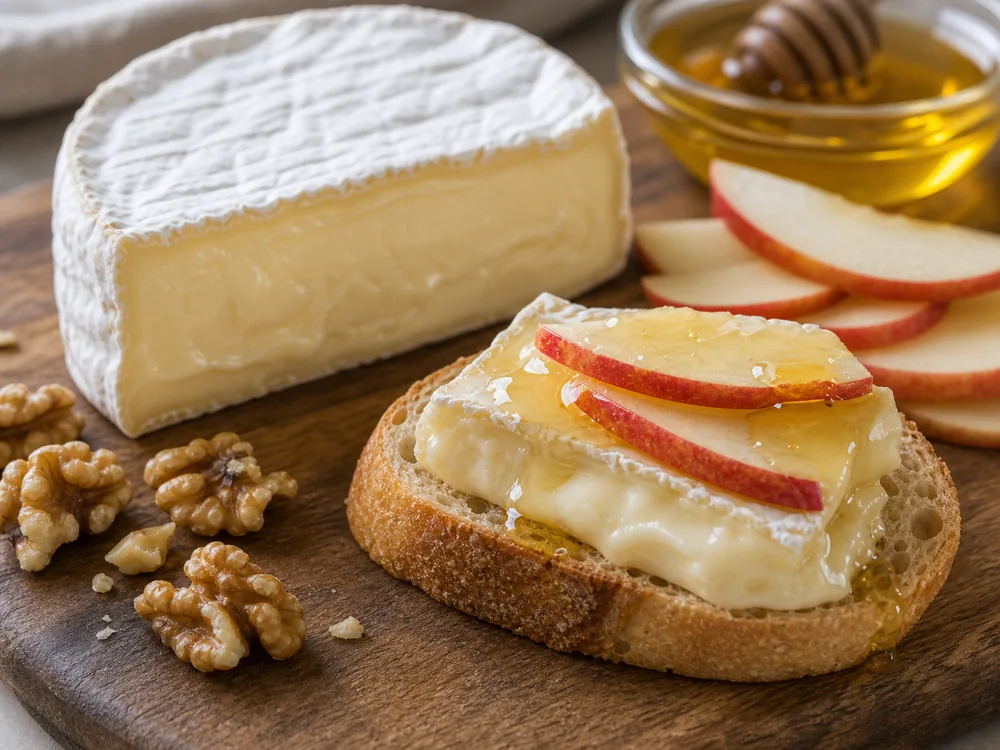
Ripeness changes Camembert quickly. A young chalky wheel can handle a crisper sharper partner, while a fully ripe runny wheel needs gentler acidity and less tannin.
In This Article
Why Start With Dry Cider, Champagne, Apple, and Bread?
Dry cider is the best all-around answer because it brings acid, orchard fruit, and regional fit without overwhelming the rind. Champagne and light Pinot Noir follow closely when the service leans more formal.
On the food side, keep the accompaniments simple and textured. Camembert does not need much help to feel luxurious.
Dry cider is the easiest first pick because apple acid, light tannin, and Normandy logic all point in the same direction. It clears the paste without making the rind taste bitter.
Champagne works when you want the same lift in a more formal glass.
Food should do one job at a time. Apple brings water and acid, baguette gives the cream a clean base, and walnuts add a little bitterness.
A spoon of preserves can work, but it should stay thinner than the cheese.
| Pairing | Type | Why It Works |
|---|---|---|
| Dry Normandy Cider | Cider | The best all-around match. Apple fruit, fizz, and bright acid clear the creamy paste and suit the rind's earthy side. |
| Champagne Brut | Sparkling wine | Fine bubbles and sharp acid make Champagne a strong choice for ripe Camembert when you want a cleaner finish. |
| Pinot Noir | Red wine | Use a light low-tannin style if the wheel is ripe and mushroomy. Heavy red wine is usually too much. |
| Chenin Blanc | White wine | A dry or gently off-dry Chenin keeps enough acid for Camembert while still feeling round. |
| Apples and Pears | Food | Fresh fruit adds moisture and soft sweetness that keeps the rind from feeling too earthy. |
| Walnuts and Baguette | Food | Crunch and plain bread give the creamy wheel structure without distracting from the cheese itself. |
- Best drink: Dry cider gives the most reliable acid and regional harmony.
- Best sparkling option: Champagne keeps a ripe wheel from feeling too rich.
- Best red choice: Light Pinot Noir works only if tannin stays modest.
- Best food support: Apples, walnuts, and baguette keep the board balanced.
All six pairings solve the same issue. They refresh the cream while leaving room for the rind to speak.
The larger rule set behind wine and cheese balance still helps here, but Camembert depends even more on ripeness than most cheeses do.
How Does Acid Clear Cream Without Fighting the Rind?
Camembert is rich, but it is not neutral. The rind adds mushroom, cellar, and mild brassica notes that react badly with hard tannin and too much oak.
Good pairings use acid to clear the cream and gentle fruit to keep the rind feeling earthy rather than bitter.
The rind is the sensitive part. Hard tannin, heavy oak, and bitter beer can make the mushroom note taste cabbage-like.
Bright cider, Champagne, Chenin Blanc, or light Pinot Noir keeps the rind savory instead of harsh.
Fat also changes the drink. A very ripe wheel coats the mouth, so bubbles and acid become more important.
A younger wheel has a chalkier center and can take sharper apple, dry cider, or a lean white wine.
- Cream needs cut: cider and sparkling wine keep the mouthfeel from turning pasty.
- Rind dislikes grip: hard tannin can turn the finish bitter or metallic.
- Soft fruit helps: apple and pear keep the wheel feeling open and fresh.
- Oak can crowd it: too much vanilla or toast makes the pairing clumsy fast.
This is where Camembert separates from its milder bloomy cousin. The wheel is often smaller, earthier, and more assertive once fully ripe.
The clearest explanation of that gap sits in Brie and Camembert texture, which changes the bottle before you pour.
How Does Ripeness Change the Best Camembert Pairing?
A young wheel and a runny ripe wheel do not want the same company. Ripeness changes the texture first, then the aroma, and finally the best drink.
Check the center before you pour. A firmer chalky core points one way, while a fully supple wheel points another.
A young Camembert with a chalky center needs brighter, cleaner partners. Use dry cider, tart apple, baguette, or Champagne.
The acidity wakes up the paste and keeps the rind from dominating.
A ripe wheel needs restraint. When the center is supple and creamy, avoid piling on jam, honey, rich meat, and oaky wine.
Use smaller wedges, plain bread, walnuts, and a drink with lift.
If the wheel smells strongly ammoniated, pairing will not fix it. Trim the expectation, serve a smaller amount, or choose another cheese.
A stale rind makes even good cider taste rough.
When you cannot cut the wheel before guests arrive, use touch and smell. A young wheel feels springy and smells milky.
A ready wheel gives slightly under gentle pressure and smells mushroomy. A wheel that smells sharp before cutting needs smaller portions and more bread.
- Young and chalky: use dry cider or crisp Chenin Blanc because the cheese still feels tighter and more lactic.
- Middle ripe: Champagne or cider works well once the paste starts loosening under the rind.
- Fully ripe: light Pinot Noir or rounder sparkling wine fits the earthier softer wheel better.
- Baked Camembert: stay with acid and bubbles because the heat makes the cheese richer, not lighter.
| Camembert stage | Best bottle | Why it works |
|---|---|---|
| Young and chalky | Dry cider | Higher acid keeps the lactic core from reading flat. |
| Middle ripe | Champagne Brut | Bubbles lift the softening paste without adding sweetness. |
| Fully ripe | Light Pinot Noir | Gentle fruit meets mushroom notes without hard tannin. |
| Baked | Dry cider or sparkling wine | Extra richness needs refreshment, not more weight. |
Serving cut matters too. Center-out wheel cuts keep each portion balanced with rind and core.
If the wheel smells strongly mushroomy and feels loose to the touch, pour cider or Champagne before you reach for still red wine. Bubbles handle peak ripeness especially well.
That move keeps the cheese tasting elegant instead of heavy. It is the safest one-bottle choice for a ripe wheel.
Why Should You Avoid Oak, Tannin, and Sweet Preserves?
Heavy oak and hard tannin are the main mistakes here. Too much jam or syrup can also flatten the rind until the cheese tastes merely rich.
Camembert needs support, not a spotlight battle.
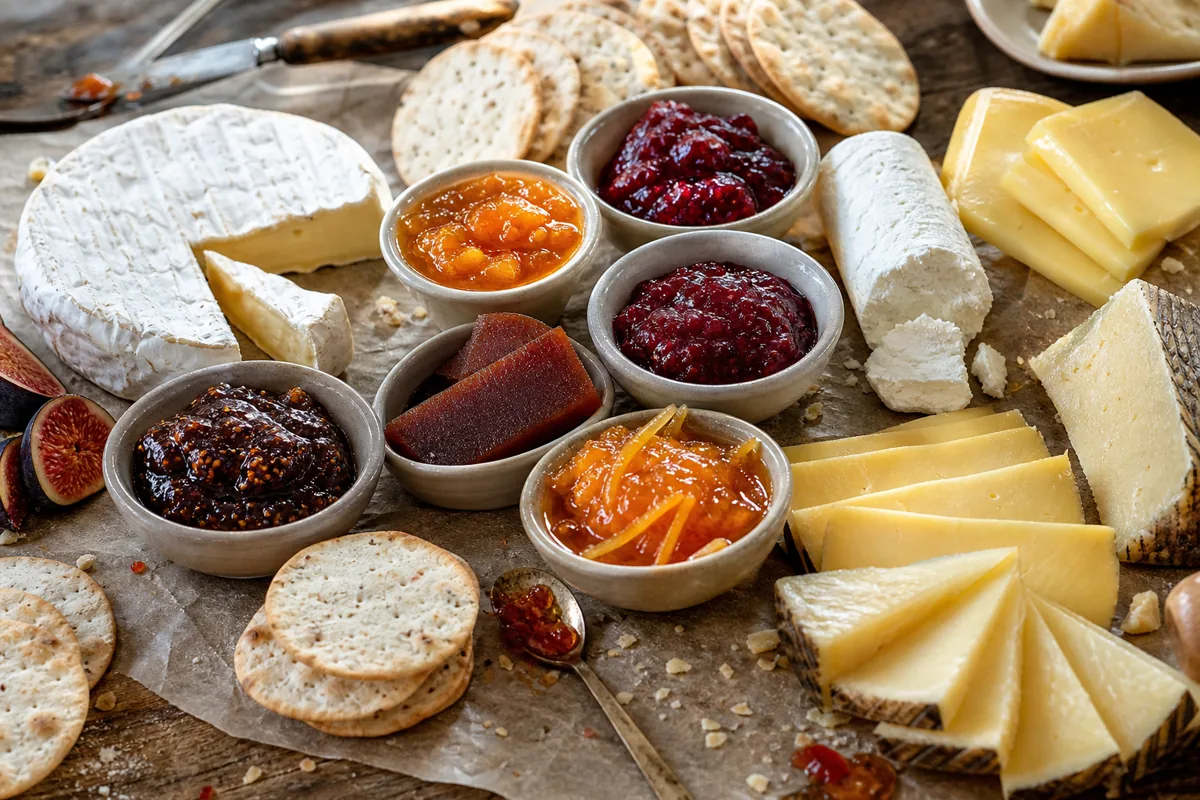
Jam is the sneaky problem. A small amount of apricot, apple, or berry preserve can lift a young wheel, but a thick spoonful covers the rind and turns the cheese into cream plus sugar.
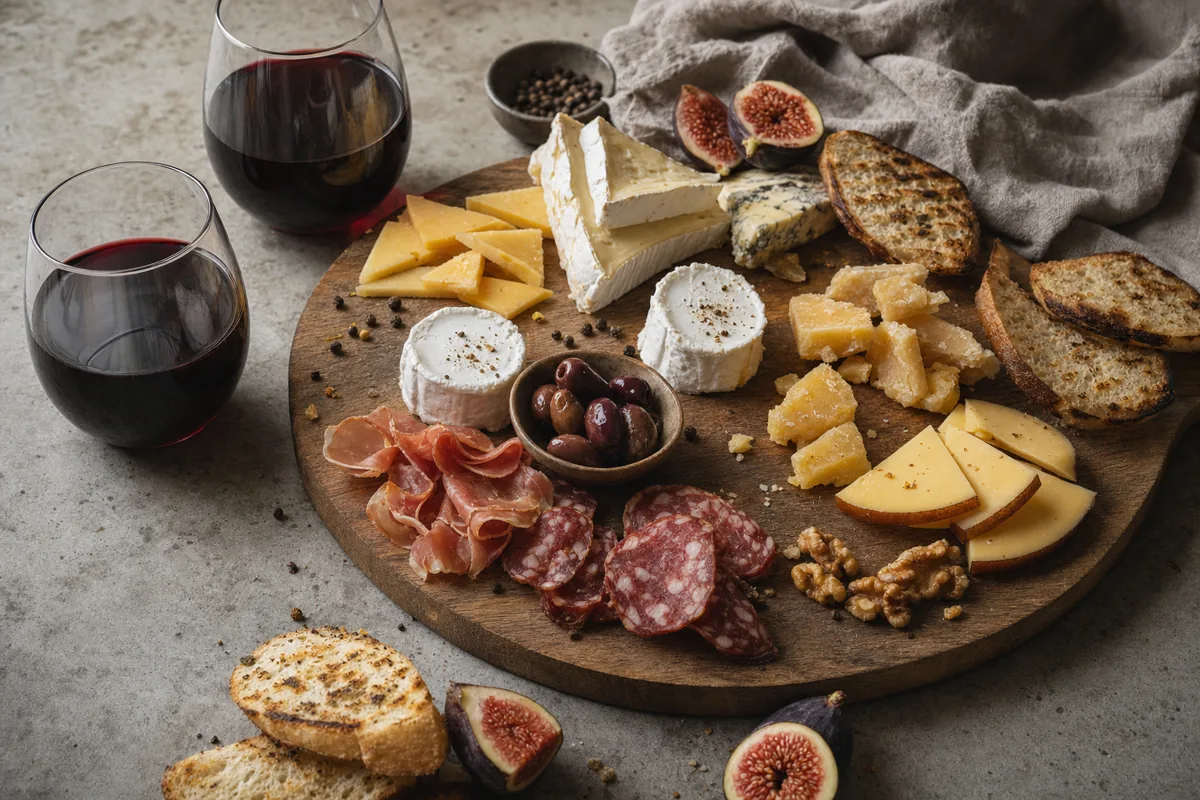
Smoked meat can also crowd the wheel. If charcuterie is on the board, keep it thin and salty rather than smoky and fatty.
Camembert should stay the soft-rind center, not the background for sausage.
Strong washed-rind cheese is another avoid pairing on the same plate. It can make Camembert taste timid and can make cider feel confused.
If both cheeses are served, put Camembert first with apple and bread, then move to the louder rind later.
Avoid big Cabernet, heavily oaked Chardonnay, and sticky sweet condiments with Camembert. They make the rind feel more bitter and the cream feel heavier than it should.
- Big Cabernet: tannin and bloomy rind rarely cooperate.
- Oaky Chardonnay: butter plus oak makes the wheel feel thick, not graceful.
- Heavy jam: too much sugar buries the mushroom and lactic notes.
- Aggressive smoked meat: smoke can wipe out the subtle rind aroma.
If the board includes several cheeses, fresh-to-bold sequencing matters a lot. Camembert should appear before strong blue or washed-rind wedges.
That one sequencing choice protects the exact softness you are trying to pair.
For the regional serving context behind cider and soft-rind boards, Normandy and French cheese traditions explain why this pairing feels so natural.
How Do Seasons Change Your Camembert Board?
Camembert is easy to steer by season because apples, pears, nuts, and bread work all year. What changes is the ripeness and the drink.
Warm weather usually calls for cider and fruit. Cooler months can handle a riper wheel and a slightly darker drink.
Spring and summer boards should keep Camembert slightly cooler and brighter. Apple, pear, radish, plain bread, cider, and sparkling wine help the wheel feel fresh instead of sticky.
Autumn and winter boards can use walnuts, baked apple, mushroom toast, or a little Calvados-style warmth, but the same rule holds: keep sweetness and oak controlled so the rind still tastes clean.
For mixed platters, a mixed charcuterie board works better when Camembert fills the soft-rind slot without too many rich cheeses beside it.
How Should You Serve and Cut Camembert for Pairing?
Bring Camembert out long enough to soften, but not so long that the rind starts smelling hot or stale. The wheel should feel supple, not slumped.
Cut it radially, give it plain bread, and keep stronger cheeses away until later in the tasting.
After serving, soft-rind wrapping keeps the remaining pieces from turning harsh before another board.
Camembert rewards gentle handling at every stage. The pairing gets easier once the cheese stays in good shape.
Cut from the center outward so every serving gets rind, edge, and core. Scooping only the middle makes the remaining rind too strong for later guests and makes the pairing less balanced.
Put wet fruit beside the cheese, not on top of it. Camembert can absorb moisture quickly once cut.
A little spacing keeps crackers crisp and lets guests control how much fruit meets the rind.
For baked Camembert, keep the pairing sharper than the cheese. Heat makes the paste richer, so cider, Champagne, pickled apple, cornichons, or bitter greens matter more than honey.
The warmer the wheel gets, the less sweetness it needs.
If you serve Camembert with wine and cider together, pour cider first. It shows the rind and apple logic clearly before Champagne or Pinot Noir enters.
That order helps guests understand the cheese instead of treating every drink as interchangeable.
Buy a whole small wheel when Camembert is the main cheese. A pre-cut wedge dries faster and gives you less control over rind-to-center balance, which is the exact thing the pairing depends on.
SOURCES & REFERENCES
What Else Do People Ask About Camembert Pairing?
These are the questions that come up most when a soft bloomy wheel moves from grocery cheese to centerpiece status.
Dry cider is the best all-around Camembert pairing. It brings acid, apple fruit, and a clean finish that fits the cheese's cream and rind.
Yes, but only if the red is light and low in tannin. Pinot Noir is the safest choice once the wheel is fully ripe.
Apple adds moisture, gentle sweetness, and acid. That mix keeps the rind from feeling too earthy and the paste from feeling too heavy.
Avoid hard tannic reds, heavily oaked Chardonnay, and very sugary jam. They make the cheese feel heavier and the rind more bitter.
Yes. A younger wheel likes crisper sharper partners, while a very ripe wheel often works better with cider, Champagne, or a gentle red.