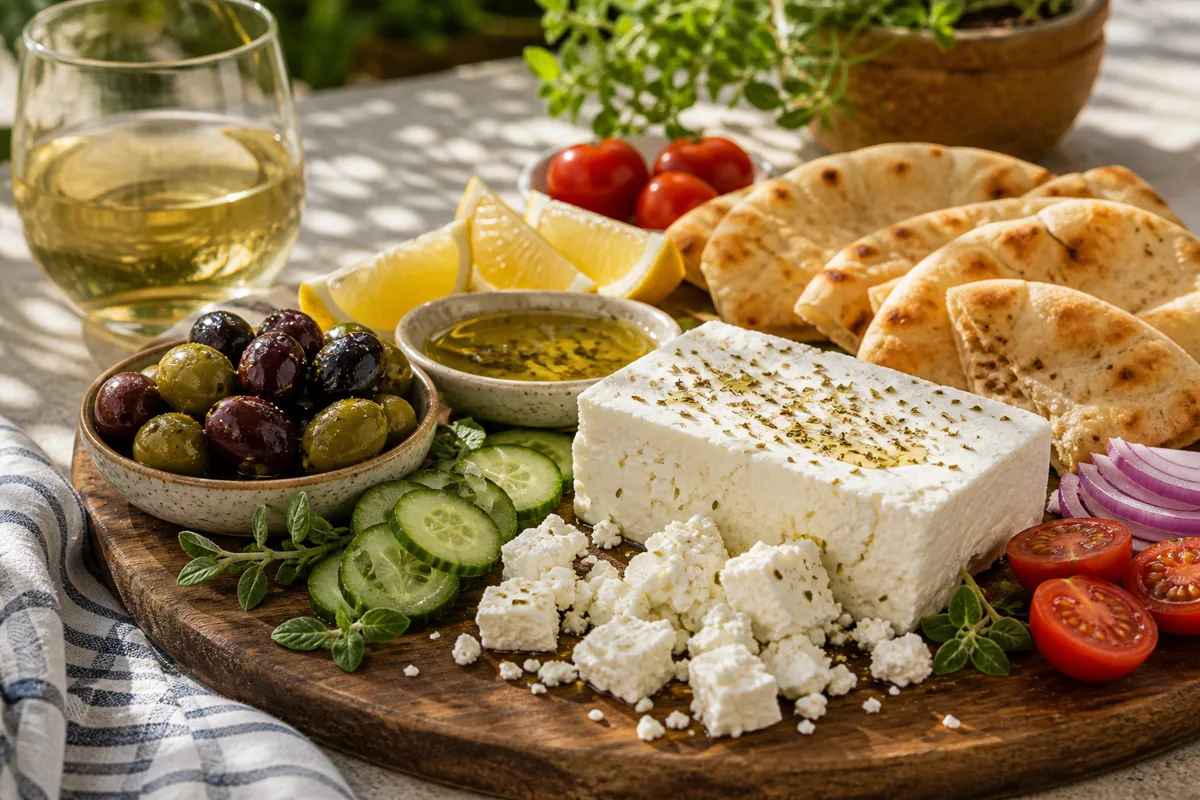
If you are serving a brined Greek-style block, choose lift, moisture, and clear acid over power. The same freshness rule shapes the broader pairing approach.
That is why tomatoes, cucumber, olives, herbs, and crisp drinks fit so naturally. The cheese already brings enough salt and tang on its own.
The best pairing cools the bite or rounds it slightly. The wrong one makes feta taste sharper, drier, or oddly metallic.
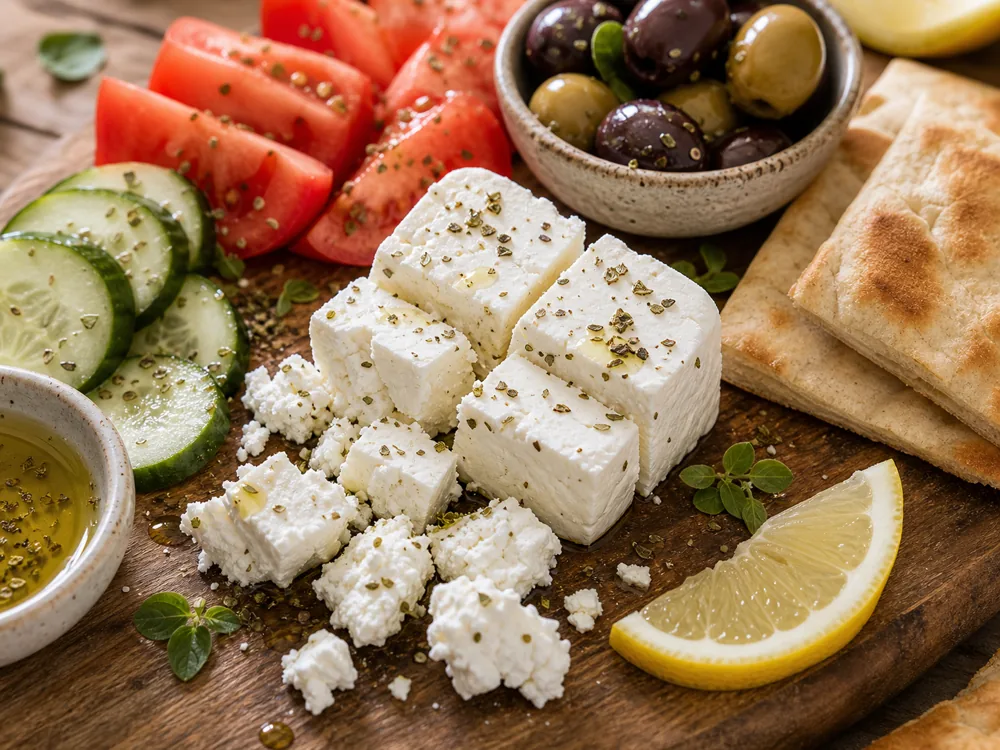
Block feta in brine pairs better than pre-crumbled feta in most situations. It tastes creamier, less dusty, and much more alive beside wine or cold food.
In This Article
Why Start With Assyrtiko, Pilsner, Tomatoes, and Herbs?
Assyrtiko is the best wine match because it brings acid, mineral lift, and Greek table logic in one glass. Dry rose and light beer follow closely when you want something easier or broader.
On the food side, juicy produce matters as much as the drink. Feta likes moisture beside it.
Assyrtiko works because it has acid, mineral edge, and Greek table fit. It keeps feta's brine clean instead of making the cheese taste sharper.
Dry rosé works when tomatoes, herbs, or grilled vegetables join the plate.
Beer should stay crisp. Pilsner, kölsch, and light lager clear salt quickly without adding smoke or caramel.
Heavy malt makes feta taste drier, especially when the cheese is crumbled small.
| Pairing | Type | Why It Works |
|---|---|---|
| Assyrtiko | White wine | The best all-around feta wine. It stays saline, citrusy, and sharp enough for brine without losing body. |
| Dry Rose | Wine | A clean dry rose works well with salads, mezze, and warm-weather boards because it keeps fruit light and crisp. |
| Pilsner | Beer | A pale lager or pilsner clears salt fast and suits casual feta spreads better than heavy malt beer does. |
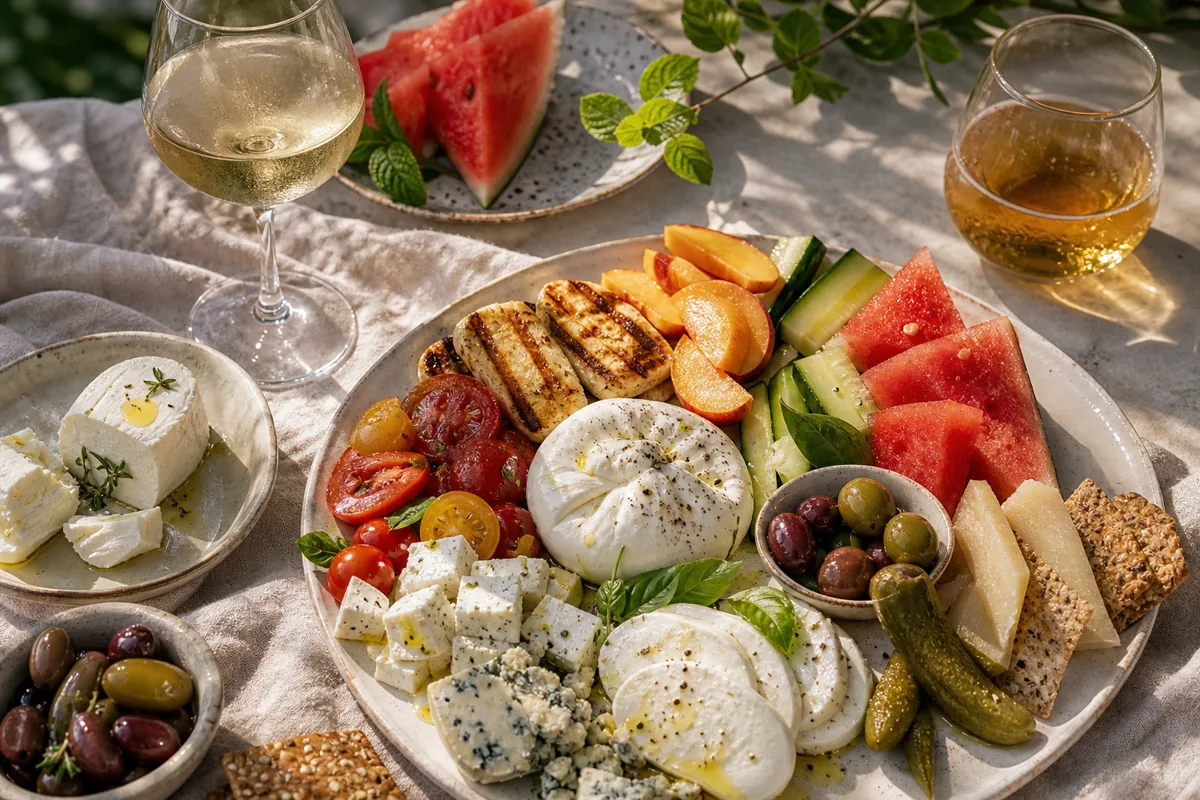
| Watermelon | Food | Juicy sweet fruit gives the cheese instant contrast and keeps the board refreshing in hot weather. |
| Tomatoes and Cucumber | Food | These bring water, acid, and crunch, which is exactly what crumbly brined cheese wants. |
| Olives and Herbs | Food | Olives, mint, dill, and oregano make feta taste more rooted and more Mediterranean without overwhelming it. |
- Best wine: Assyrtiko handles feta's brine better than softer whites do.
- Best easy drink: Dry rose or pilsner keeps the pairing casual and clean.
- Best produce match: Watermelon, tomatoes, and cucumber bring the moisture feta lacks.
- Best savory add-on: Olives and herbs support the cheese without making it heavier.
These pairings all solve the same problem. They stop feta from feeling dry, blunt, or overly salty on the palate.
The broader logic in wine and cheese balance still applies, but feta leans harder into acid and freshness than richer cheese types do.
Why Does Feta Need Moisture in Its Pairings?
Feta is salty, crumbly, and acidic at the same time. It does not coat the palate like Brie, and it does not sit dense and dry like Parmesan.
Because of that, the best partners either add moisture, echo the acid, or bring a little gentle sweetness from fruit.
Tomatoes and cucumber are not just Greek-salad defaults. They add water, acid, and crunch, which stop feta from feeling chalky.
Watermelon works for the same reason, with enough sweetness to soften salt without becoming jam.
Herbs matter because feta has a blunt salty edge. Mint, dill, oregano, basil, and parsley give the bite aroma so the cheese does not taste only like brine.
- Brine needs water: juicy fruit and vegetables keep the cheese from feeling chalky.
- Acid likes acid: crisp wine and clean beer keep the pairing bright instead of flat.
- Salt needs relief: fresh produce and bread spread the intensity across the bite.
- Texture matters too: crunchy vegetables and crusty bread make crumbly cheese easier to eat.
This is one reason feta behaves differently from fresh tangy goat cheese. Goat cheese can turn creamy and spreadable, while feta stays brined and fractured.
It is also why feta needs a different treatment from the hotter grilling job that separates it from seared Halloumi slices.
When the platter includes a grill mark or warm skillet course, Cypriot grilling cheese handles heat while feta keeps the cold briny role beside olives, tomatoes, and herbs.
How Do Brine, Block Size, and Temperature Change Feta Pairing?
Context changes the best pairing more than many people expect. Cold salad feta wants one thing, while a warm baked block wants another.
Picture the final texture before you pour the bottle or set the board.
Cold block feta can handle the sharpest partners. Use crisp white wine, pilsner, cucumber, tomato, olives, and herbs.
Keep the block in larger pieces so the inside stays creamy.
Crumbled feta needs more moisture because every small piece exposes more salty surface. Use it over juicy vegetables, melon, beans, or grain salad rather than dry crackers alone.
Baked feta turns richer and softer. It needs lemon, tomatoes, peppers, dry rosé, Assyrtiko, or light beer to keep the dish from feeling salty and oily.
The packaging matters too. Block feta in brine usually has a creamier center and cleaner salt than dry pre-crumbled feta.
If you only have crumbles, use them where moisture already exists, such as tomato salad, beans, watermelon, or yogurt-herb dip.
| Feta situation | Best pairing approach | Why it works |
|---|---|---|
| Cold block feta | Assyrtiko, cucumber, tomato, olives, and herbs | Acid and moisture keep the brine clean. |
| Crumbled feta | Beans, melon, grain salad, tomato, or yogurt-herb dip | Wet ingredients protect the cheese from tasting dry. |
| Baked feta | Dry rosé, lemon, peppers, tomatoes, or light beer | Heat makes the cheese richer, so the plate needs lift. |
- Greek salad: Assyrtiko, dry rose, cucumber, tomato, and olives keep the whole plate sharp and cooling.
- Mezze board: Pilsner, dry white wine, herbs, and flatbread give the cheese room to crumble and season several bites.
- Baked feta: use a crisp white or rose because roasting softens the cheese and increases the richness.
- Watermelon plate: keep the drink very dry and cold so the fruit handles the sweetness alone.
If the board includes more cheeses, fresh-to-bold sequencing helps place feta where its brine reads bright instead of abrasive.
Keep feta in larger chunks when serving it with drinks. Tiny crumbles dry out faster on the plate and make the salt feel harsher than it really is.
That is a small serving detail, but it changes the pairing a lot. Bigger pieces stay creamier inside.
What Should You Avoid Pairing With Feta?
Heavy oak, big tannin, and sticky sweetness usually push feta in the wrong direction. The cheese gets meaner instead of rounder.
Dense smoky meats can do the same thing unless the rest of the plate stays very fresh.
Oaked Chardonnay is a common miss because butter and vanilla do not solve feta's brine. They make the cheese seem sharper and the wine seem softer.
If you want white wine, choose acid first.
Dry crackers alone also fail. Feta already has salt and crumble, so a dry carrier can make the bite feel dusty.
Add tomato, cucumber, olive oil, herbs, or melon if crackers are on the board.
Very bitter greens can also make feta seem harsher. If arugula, radicchio, or chicory is on the plate, add lemon, olive oil, tomato, or fruit so the brine does not stack with bitterness.
Avoid buttery oaked Chardonnay, hard Cabernet, and sugary chutney with feta. They make the cheese taste drier, sharper, and less refreshing than it should.
- Oaky Chardonnay: too much wood and butter for a brined cheese.
- Tannic red wine: the salt and acid can turn the finish metallic.
- Sugary jam: too much sweetness makes feta feel oddly harsh.
- Very smoky meat: smoke can bury the clean herbal side that makes feta useful.
If you are cooking rather than pairing at the table, low-melt pizza cheeses show why feta behaves so differently under heat.
That same non-melting structure is one reason feta tastes better with freshness than with heavy sauce.
How Do Seasons Change Your Feta Pairings?
Feta is one of the easiest cheeses to steer by season because it naturally likes fruit, herbs, and vegetables. Warm weather makes that obvious, but colder months can still work if you switch the produce.
Keep the drinks cold and the accompaniments juicy. Feta almost always tastes better that way.
Summer is the easy lane: watermelon, tomato, cucumber, mint, dill, olives, Assyrtiko, rosé, or pilsner. The cheese should taste salty and refreshing, not heavy.
Cooler months need a different kind of freshness. Roasted peppers, lemony beans, herbs, pickled onions, and warm bread can keep feta useful without pretending it is a melting cheese.
For larger platters, a mixed charcuterie board can use feta as the bright salty slot instead of another soft cow's-milk cheese.
Between meals, brine and wrap choices keep the cut block moist enough for a later round.
How Should You Serve Feta for the Best Pairing?
Serve feta cool, not ice-cold. Let it lose the hard refrigerator edge, but do not leave it out so long that the surface dries.
Break it by hand or cut larger cubes instead of turning it all into crumbs. That keeps the interior creamier and more forgiving with wine.
That last point matters at the table. Feta is best when you let it stay brined, bright, and slightly crumbly instead of trying to soften it into something else.
Once you lean into that identity, the pairing choices become much easier.
If the block tastes too sharp, rinse it briefly or add olive oil and herbs rather than burying it under sweet toppings. The goal is to control brine while keeping feta's clean edge.
Keep some brine for storage and leftovers. A dried-out block tastes saltier and pairs worse the next day.
Moist feta gives wine, beer, and produce more room to work.
Serve feta near the bright side of a mixed board. Put it before blue cheese, smoked cheese, and aged hard cheeses.
That order lets the brine taste fresh instead of thin after louder flavors.
If feta is part of a dinner plate, pair the whole plate but keep the feta job clear. Lemon potatoes, grilled vegetables, beans, and tomato salads all need crisp drinks because the cheese seasons the dish instead of melting into it.
Buy block feta when pairing matters. Pre-crumbled tubs are convenient, but they expose more surface area, dry faster, and need more olive oil, herbs, or juicy produce to taste balanced.
That buying choice changes the whole board. A brined block can sit in larger pieces beside wine or beer, while dry crumbles need a dish or salad around them.
SOURCES & REFERENCES
What Questions Come Up Most About Feta Pairing?
These are the questions we hear most when people want to move beyond the usual salad default.
Assyrtiko is the best all-around wine for feta. It has the acid, mineral edge, and freshness that brined sheep's-milk cheese needs.
Yes. Light lager and pilsner work well because they clear the salt fast and stay crisp beside salads or mezze.
Tomatoes, cucumber, olives, herbs, watermelon, and bread are the safest partners. They add moisture, freshness, and relief from the brine.
Avoid hard tannic reds, buttery oaked Chardonnay, and overly sugary jam. Those pairings make feta feel sharper and less balanced.
Yes. Baked feta turns richer and softer, so a crisp white or dry rose works better than a simple cold salad pairing.