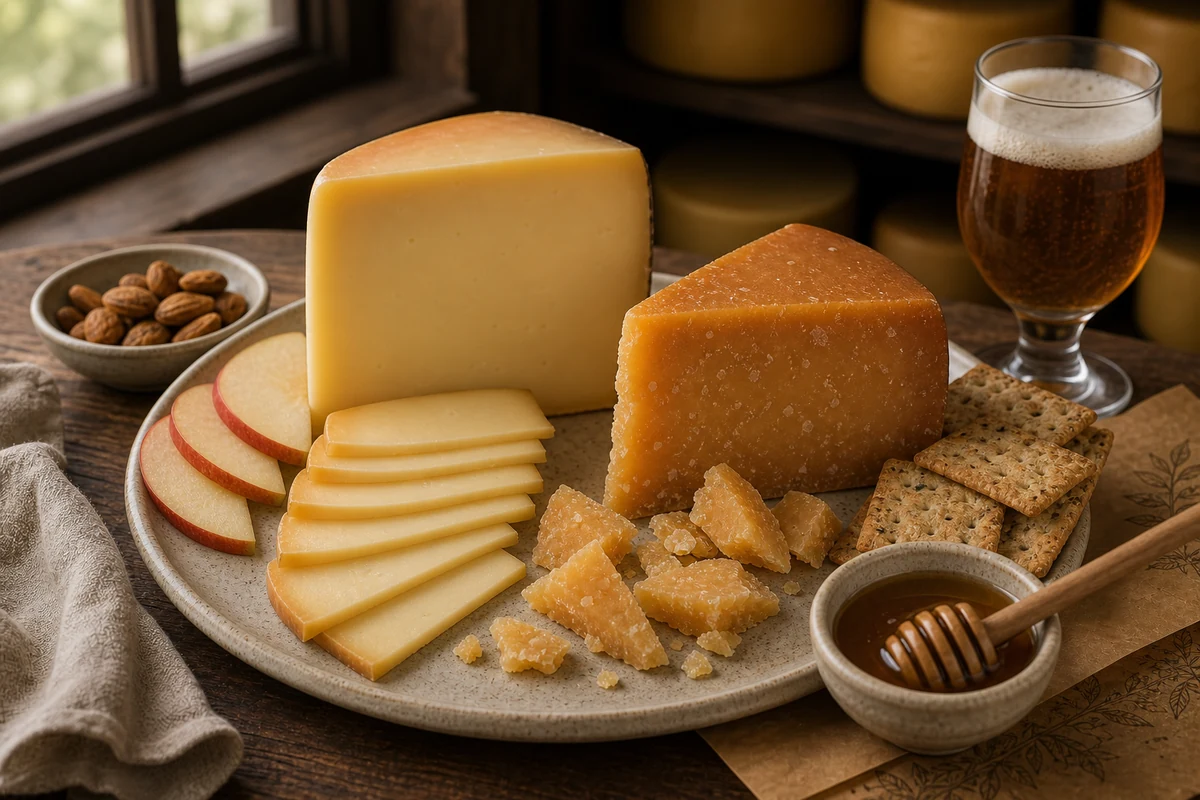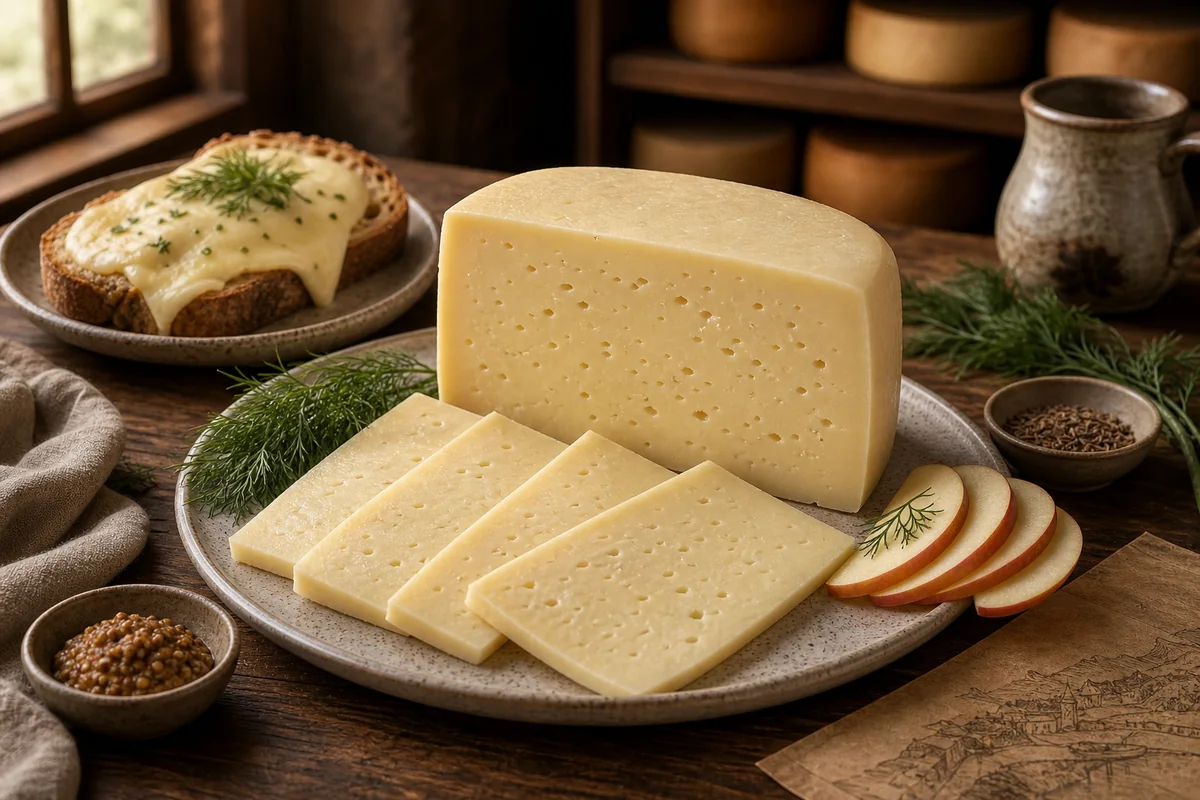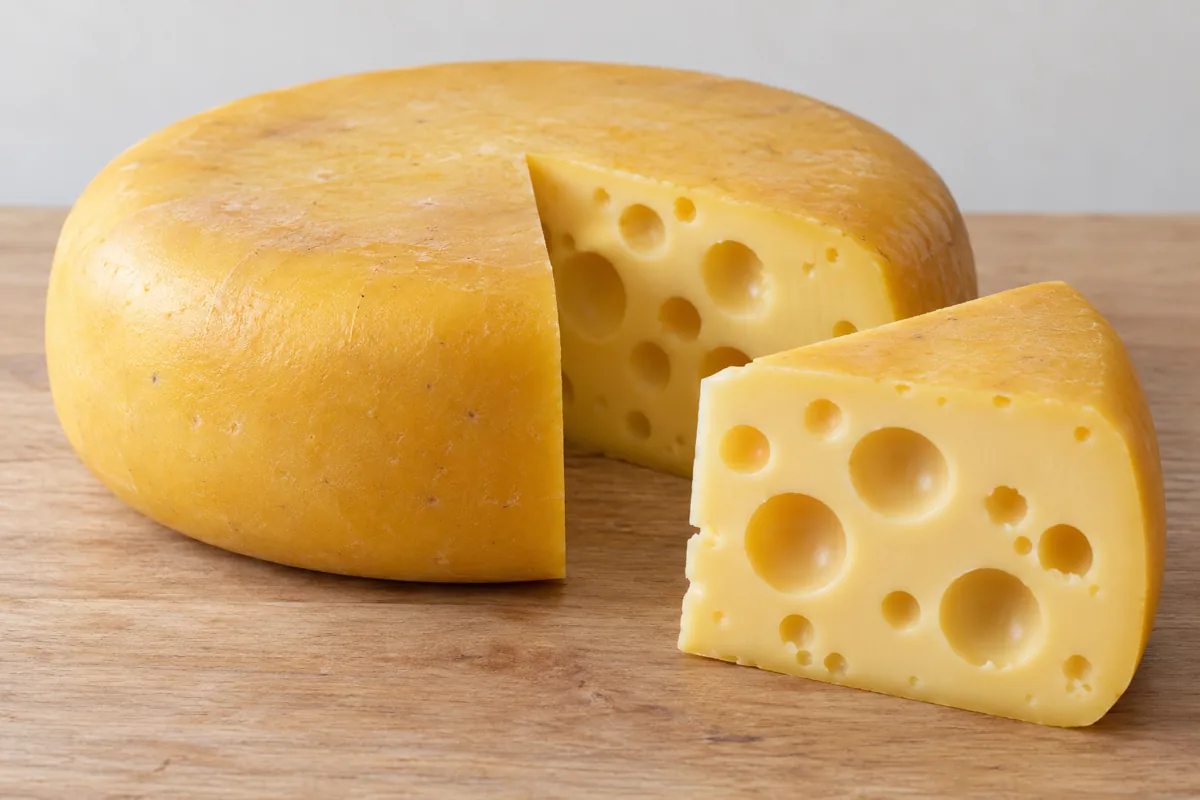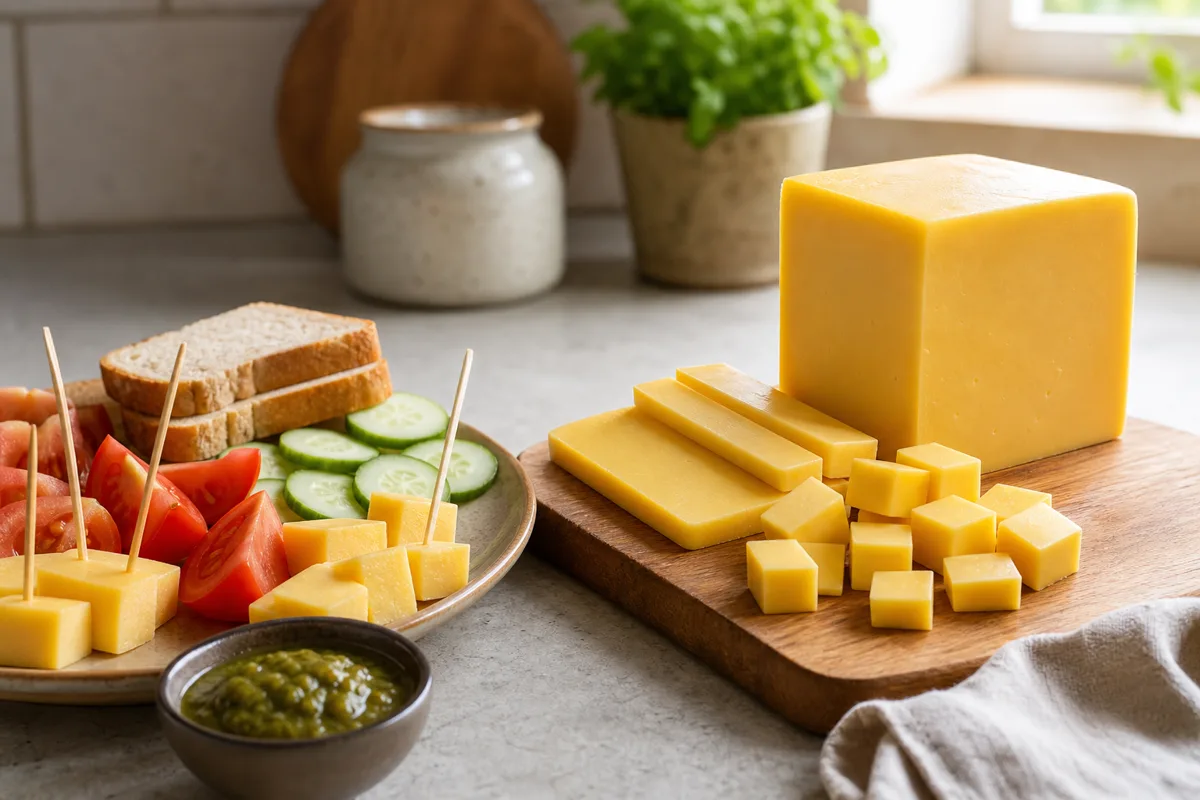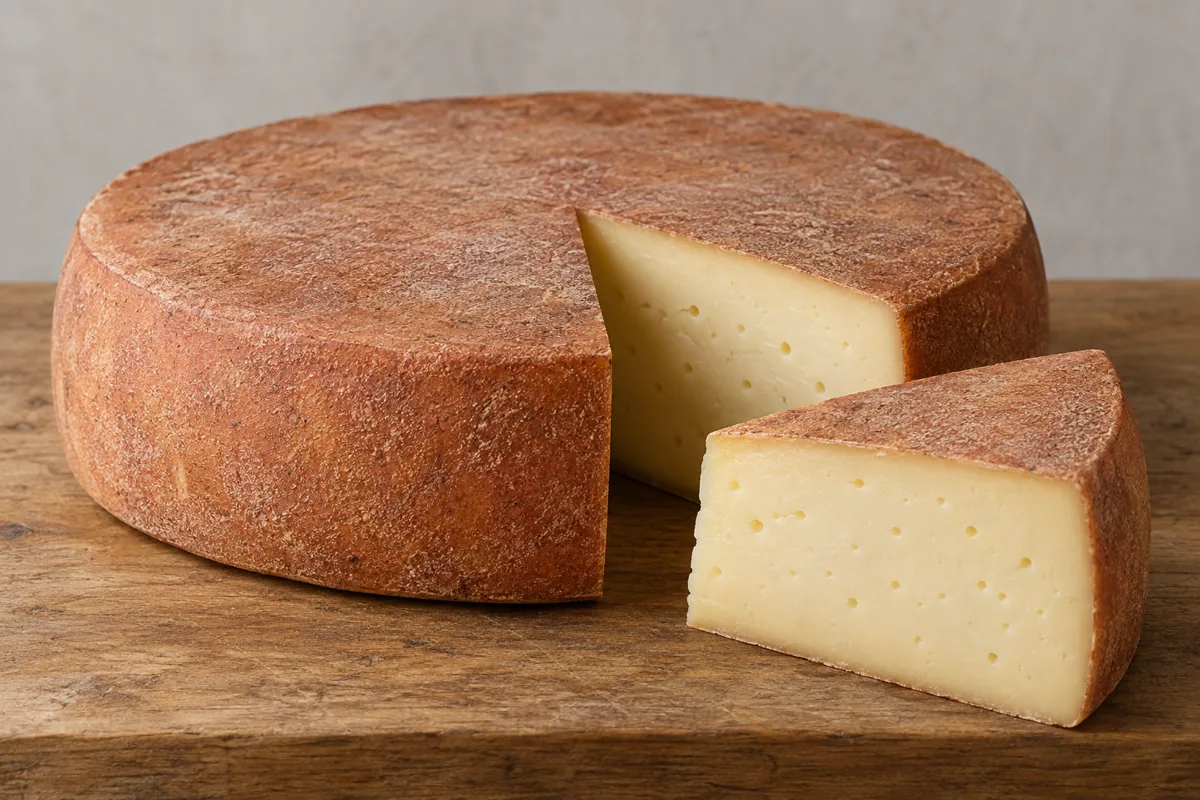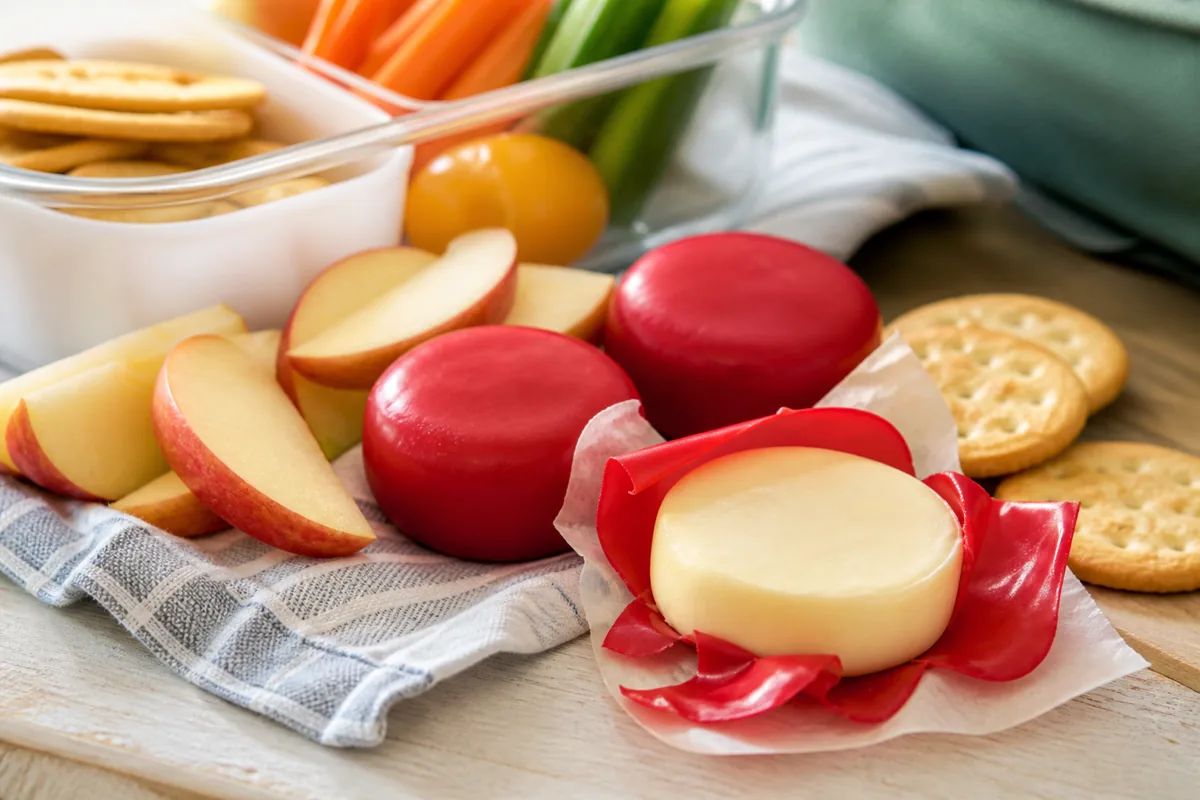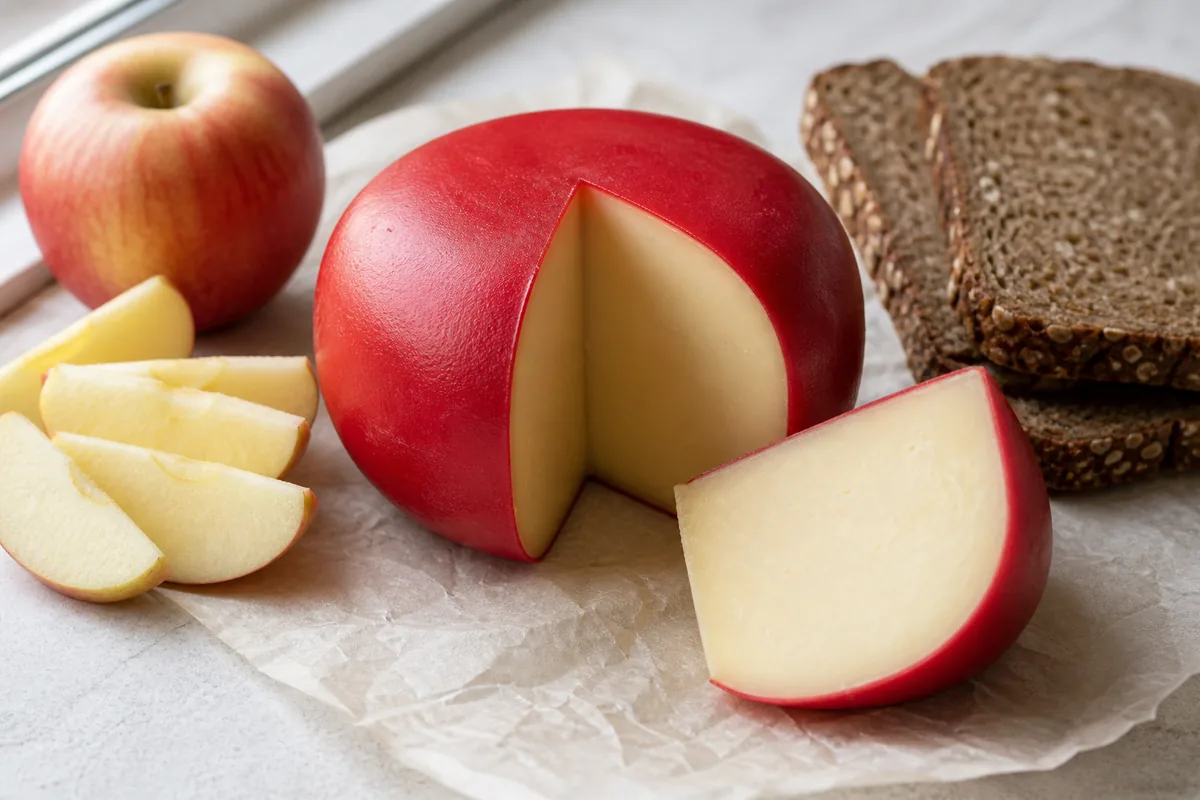
Edam is a semi-hard Dutch cheese made from cow's milk and named after the town of Edam in North Holland. Wikipedia says most of the young Edam sold in stores has a very mild flavor.
Age is what changes it: as Edam matures, its flavor sharpens and the cheese turns firmer.
That keeping quality made its name. Wikipedia says Edam ages and travels well and hardens instead of spoiling, which helped make it the world's most popular cheese between the 14th and 18th centuries, at sea and in remote colonies.
In This Article
How Does Age Change Edam's Flavor and Texture?
Young Edam is the mild one: Wikipedia describes a very mild, slightly salty or nutty flavor with almost no smell, and CooksInfo calls its texture very supple.
Older Edam loses that softness. Cheese.com says the paste turns drier and crumblier with age, and CooksInfo calls aged Edam drier and saltier, with a more complex flavor.
The Edam Holland specification puts the same change in legal terms: young cheese must be firm enough to cut, and further maturing makes it firmer and tighter, with a flavor that runs from mild to piquant depending on age and type.
| Source | Shortest | Longest | Note |
|---|---|---|---|
| Wikipedia | 4 weeks | 10 months | Aging time in the article's summary box |
| Edam Holland PGI | 28 days (21 days for Baby Edam Holland) | More than a year | Minimum maturing period; no upper limit |
| CooksInfo | Within weeks for Baby Edams | Not given | Baby Edams are generally under 1 kg and meant to be eaten young |
| Cheese.com | A few weeks | A few months | Around two months to develop its flavor |
The PGI sets a minimum and says Edam Holland can take more than a year to mature, depending on the flavor the maker wants.
Cheese.com ties ageing to the maker's goal in the same way: its few weeks to few months depends on how intense a flavor the cheesemaker is after. A long-aged Edam is therefore one maker's choice, not a stage every Edam reaches.
The two Baby Edam weights can both be true, because the specification sets 1.5 kg only as a ceiling and so leaves room for the under-1-kg cheeses CooksInfo describes. Weight alone does not show whether a small Edam follows the Edam Holland rules.
Holes are a smaller clue. The specification allows a few small round holes in an ivory to yellow paste, while Edam Holland Bros, the hard type, has a large number of small holes.
What Does Edam Holland on the Label Mean?
Edam Holland has been a protected geographical indication in the EU since December 2010, under Commission Regulation (EU) No 1121/2010. The protection covers the two-word name as a whole.
The bare word Edam stays free: the same regulation says the name Edam may continue to be used in the EU, as long as EU rules are respected.
The ruling records why: the Czech Republic, Germany, Finland, Austria, Slovakia, the United States and New Zealand were among those who objected that Edam is a generic name, and the Commission answered by protecting the two words only together.
Plain Edam is therefore a style that CooksInfo says can be made anywhere in the world from pasteurized milk. Market research quoted in the specification found that almost half of consumers surveyed in the six EU countries that eat the most Edam and Gouda believed all Edam is produced in the Netherlands.
To carry the protected name, the cheese must be made from milk from Dutch dairy farms and matured in Dutch maturing rooms, and every type must hold 40 to 44 percent fat in dry matter. Wikipedia notes that Edam in general may have as little as 28 percent.
The specification also fixes the method. The cheese milk is pasteurised at 72 °C or more for 15 seconds, only calf rennet is used except in special cases such as animal disease, and the cheese must mature naturally in open air, never in foil.
| Type | Weight | Maximum moisture | Maximum salt in dry matter |
|---|---|---|---|
| Baby Edam Holland | Up to 1.5 kg | 46.5% | 5.4% |
| Edam Holland (ball) | 1.5 to 2.5 kg | 45.5% | 5.0% |
| Edam Holland Bros (hard) | 1.5 to 2.5 kg | 47.5% | 5.3% |
| Edam Holland Stip (speckled) | 1.5 to 2.5 kg | 45.5% | 6.0% |
| Edam Holland (block-shaped) | Up to 20 kg | 46.0% | 4.6% |
| Edam Holland (large loaf-shaped) | 4 to 5 kg | 46.0% | 4.6% |
| Edam Holland (small loaf-shaped) | 2 to 3 kg | 47.0% | 4.8% |
The moisture ceilings apply 12 days after the cheese is made, or 5 days for Baby Edam Holland, so they cap a young cheese rather than describe an aged one. That timing squares with Bros carrying the highest ceiling, 47.5 percent, yet still being the type the specification calls sufficiently firm and hard.
Each Edam Holland cheese gets a casein mark before the curds are pressed, carrying the name and a code unique to that cheese. The Dutch dairy inspection institute COKZ keeps a register of those codes, and anyone who cuts and pre-packs Edam Holland must be able to trace each piece back to its mark.
On a whole cheese the specification wants the name Edam Holland in a prominent position on the label on the flat side or on the band around it. Pre-cut, pre-packaged pieces carry it on the packaging instead, together with the EU PGI symbol and a distinguishing mark meant to set them apart from other Edam.
The regulation also treats Noord-Hollandse Edammer, a name that was already registered, as a separate product from Edam Holland.
CooksInfo says vegetarian and lower-fat versions of Edam exist. Edam Holland's fixed fat range and calf rennet rule suggest that a buyer after either should expect plain Edam rather than Edam Holland.
Edam Holland on the label, band or packaging means Dutch milk, Dutch maturing rooms, 40 to 44 percent fat in dry matter and at least 28 days of maturing. Plain Edam can be made anywhere, and the vegetarian or lower-fat versions are plain Edam.
How Is Edam Made?
CooksInfo gives the general method for Edam made anywhere: partially skimmed pasteurized cow's milk is warmed to 30 °C (86 °F) and given bacteria, then rennet makes curd. The curds are cut small, heated to 40 °C (104 °F), drained of whey, moulded, pressed into balls or wheels, salted, and left to ripen at 10 °C (50 °F).
The Edam Holland specification begins on the farm, where milk is cooled to 6 °C or less and must reach the cheese factory within 72 hours. There it is either used at once or lightly heat-treated, which the specification calls thermising, and held cold for a short time before it becomes cheese milk.
Pasteurisation follows immediately before cheesemaking, and the specification asks for it to be gentle: the undenatured whey protein content must stay the same as in unpasteurised milk of a similar type, or deviate only slightly. The maker also standardises the milk's fat-to-protein ratio so the cheese finishes inside the fat range above.
The curds are separated from the whey and washed so that moisture and pH reach the desired levels, then pressed in vats and put in a brine bath that CooksInfo describes as a short soak.
Only non-genetically modified starter cultures are allowed, mesophilic Lactococcus and Leuconostoc, sometimes combined with thermophilic Lactobacillus or Lactococcus, and the specification says these cultures play a very important role in the maturing process and in forming the typical taste and aroma.
For cheeses that are regularly turned and checked, the specification sets a minimum maturing temperature of 12 °C and says time and temperature give the enzymatic and ageing processes the chance to build the flavor and texture that mark Edam Holland.
CooksInfo's recipe for generic Edam ripens at 10 °C, below that floor, which fits the point that the 12 °C minimum binds only Edam Holland.
CooksInfo says Edam began as an aged farmhouse cheese with a stronger flavor and is now a commercial cheese made in factories. The specification describes the same path, from farm-based production through local factories to a national product with a worldwide reputation.
What Do the Wax Colors on Edam Mean?
Wikipedia describes Edam as traditionally sold in flattened spheres with a pale yellow interior and a coat of red paraffin wax. CooksInfo says the shiny red wax goes on Edam exported from the Netherlands, while Edam sold inside the country usually comes without wax.
CooksInfo says the wax originally kept surface mould from forming and still does, and now also gives the cheese a distinctive look at the cheese counter. Cheese.com adds that the coating seals in moisture.
In the Netherlands itself, CooksInfo says, waxed Edam may still appear in high tourist season, coated so that visitors can take it home more easily.
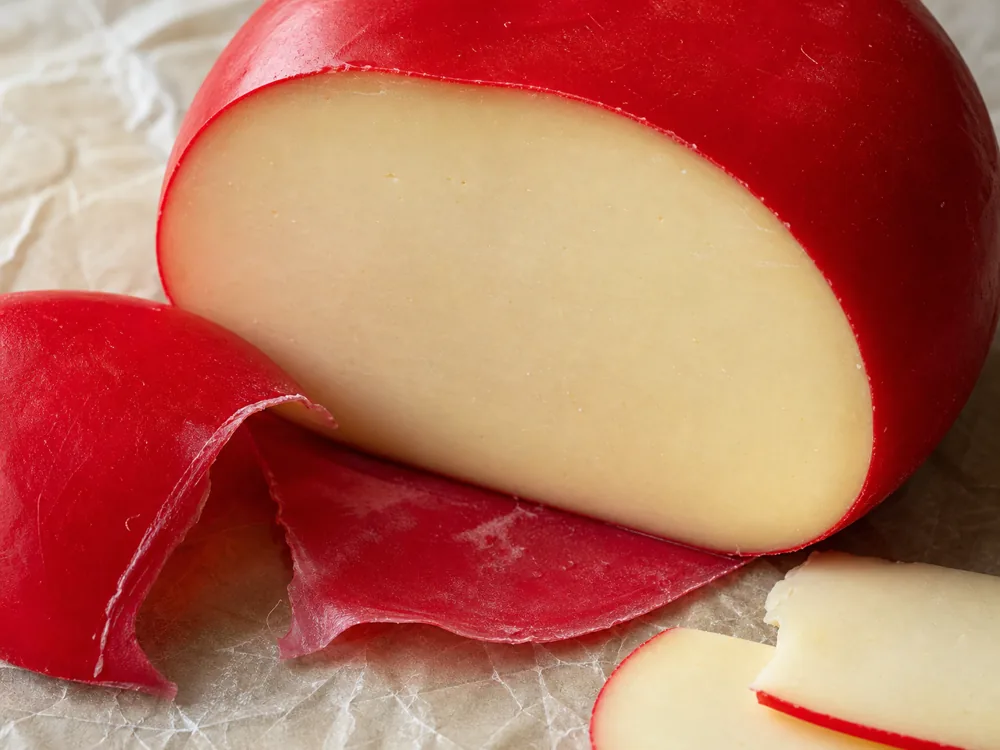
Other colors carry other messages, and CooksInfo lists six in all:
- Red: the usual coating on exported Edam.
- Yellow: seen occasionally.
- Black: Edam aged for at least 17 weeks.
- Green: flavored with herbs.
- Brown: flavored with peppercorns.
- Orange: flavored with cumin.
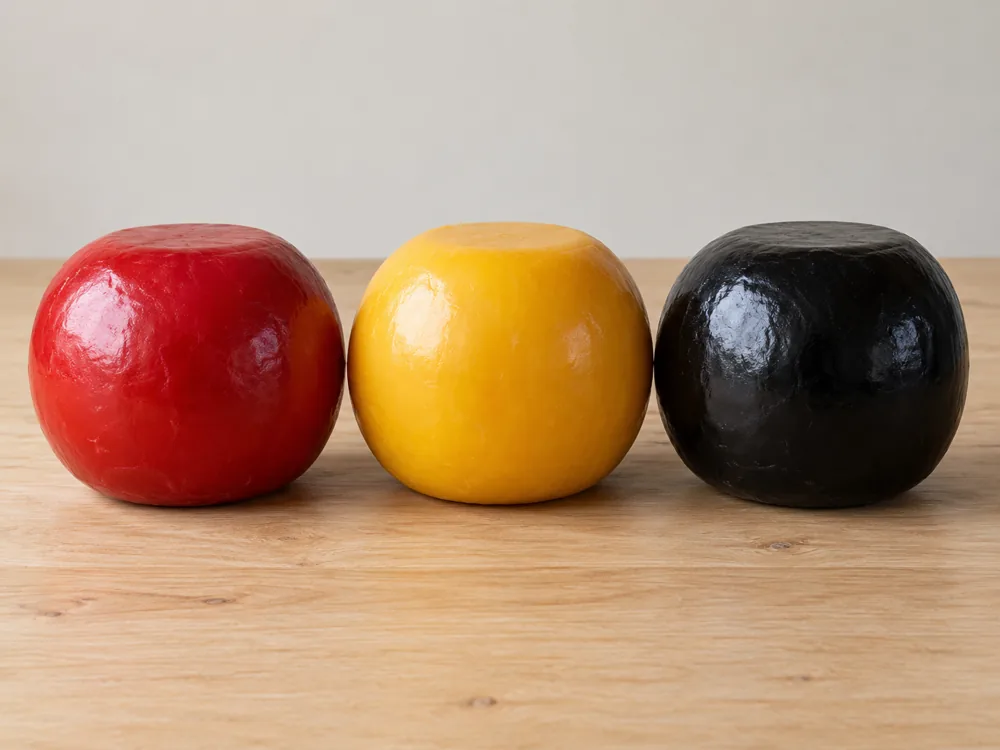
The black, green, brown and orange meanings come from CooksInfo alone, and the Edam Holland specification never mentions wax, so a wax color is no part of what the Edam Holland name guarantees. CooksInfo also places the Edam Holland indicator on the wax coating, a place the specification does not name.
Wikipedia calls the red wax a coat, or rind, but the specification uses the word for the dry surface the cheese forms itself while it matures.
The Edam Holland specification describes a firm, smooth, dry, clean rind with no fungal flora that forms as the cheese dries while it matures. CooksInfo says to remove and discard any wax from the pieces you use.
Edam vs Gouda: Fat, Salt and Nutrition
Edam and Gouda are both Dutch semi-hard cheeses made from cow's milk, and their protected versions differ most in fat. Gouda Holland must hold 48 to 52 percent fat in dry matter, against 40 to 44 percent for Edam Holland.
| Edam Holland | Gouda Holland |
|---|---|
| Fat in dry matter 40.0 to 44.0% | Fat in dry matter 48.0 to 52.0% |
| Ball with a flattened top and bottom, loaf or block | Flattened cylinder, block or loaf |
| Up to 1.5 kg (Baby) to 20 kg (block) | 2.5 to 20 kg |
| Maximum moisture 45.5 to 47.5%, by type | Maximum moisture 42.5% |
| Maximum salt in dry matter 4.6 to 6.0%, by type | Maximum salt in dry matter 4.0% |
| Flavor mild to piquant, by age and type | Flavor aromatic, mild to strong by age; cumin may be added |
| Matured at least 28 days (21 for Baby) | Matured at least 28 days |
The cut face separates the two as well: Edam Holland's paste must be uniform with a few small round holes, while Gouda Holland's holes are visible but may not be evenly spread.
Texture differs while young, too. At four weeks Gouda Holland is described as slightly soft to pliable, where young Edam Holland must be firm enough to cut.
Per 100 grams, the gap almost disappears. USDA FoodData Central reference values, which describe Edam and Gouda in general rather than the Dutch protected versions, put their fat within about 1 g of each other.
| Nutrient | Edam | Gouda |
|---|---|---|
| Energy | 357 kcal | 356 kcal |
| Protein | 25 g | 24.9 g |
| Fat | 28.6 g | 27.4 g |
| Saturated fat | 18.7 g | 17.6 g |
| Sodium | 973 mg | 819 mg |
| Calcium | 731 mg | 700 mg |
| Water | 41 g | 41.5 g |
USDA staff back-calculated the Edam fat, saturated fat and sodium figures from a product label, so a brand's own Nutrition Facts panel can differ.
CooksInfo gives other per-100 g values for Edam, 333 kcal, 25.4 g fat (15.9 g saturated) and 770 mg calcium, and says the fat content varies with who made the cheese and where. Its remark that Edam in the Netherlands is generally about 40 percent fat matches the Edam Holland range, though it does not say whether that is measured in dry matter.
The two measures are different things: the PGI percentages count fat against dry matter, while USDA's grams are per 100 g of whole cheese, which includes 41 g of water. The 28.6 g USDA figure and the 28 percent Wikipedia gives as the least fat in dry matter in Edam are separate numbers that happen to land close together.
On salt the two kinds of evidence agree: USDA lists 973 mg of sodium per 100 g for Edam against 819 mg for Gouda. The PGI caps salt in dry matter higher for every Edam Holland type (4.6 to 6.0 percent) than for Gouda Holland (4.0 percent), so both point to Edam as the saltier of the two.
Cheese.com says Edam is generally lower in lactose than fresh cheeses but still contains some.
Wikipedia also says modern Edam is softer than other cheeses such as cheddar because of its low fat content.
When Edam is missing, Cheese.com lists Gouda, cheddar and Gruyère as substitutes.
CooksInfo's own list is Gouda, fontina or a mild cheddar, which leaves Gouda as the one both sources name.
How Should You Serve and Cook Edam?
CooksInfo says Edam shreds and slices easily and melts well when cooked. Well-aged Edam, it adds, can be grated.
Cheese.com's list of cooked uses is longer: melted into sandwiches and burgers, casseroles, gratins and baked pasta, and grated or sliced over salads, pasta and pizza.
Wikipedia matches the fruit to the age. Mild Edam goes with peaches, melons, apricots and cherries, while aged Edam is often eaten with pears and apples, the traditional cheese fruits.
| Pairing | Type | Why It Works |
|---|---|---|
| Peaches, melons, apricots and cherries | Food | Wikipedia's fruit for mild Edam. |
| Pears and apples | Food | Wikipedia's fruit for aged Edam. |
| Sliced apple or grapes | Food | Ian Jackson's pairing, writing on Cheese.com; he also cubes Edam over a crisp salad. |
| Crackers and bread | Food | Wikipedia says Edam is commonly eaten on both, including as cheese and biscuits after a meal. |
| Pinot gris or dry or semidry Riesling | Wine | On Wikipedia's list of wines for Edam. |
| Sparkling wine or Chardonnay | Wine | On Wikipedia's list of wines for Edam. |
| Shiraz or Syrah | Wine | On Wikipedia's list of wines for Edam. |
Wikipedia names only one red wine for Edam, Shiraz or Syrah; the rest of its list is white or sparkling.
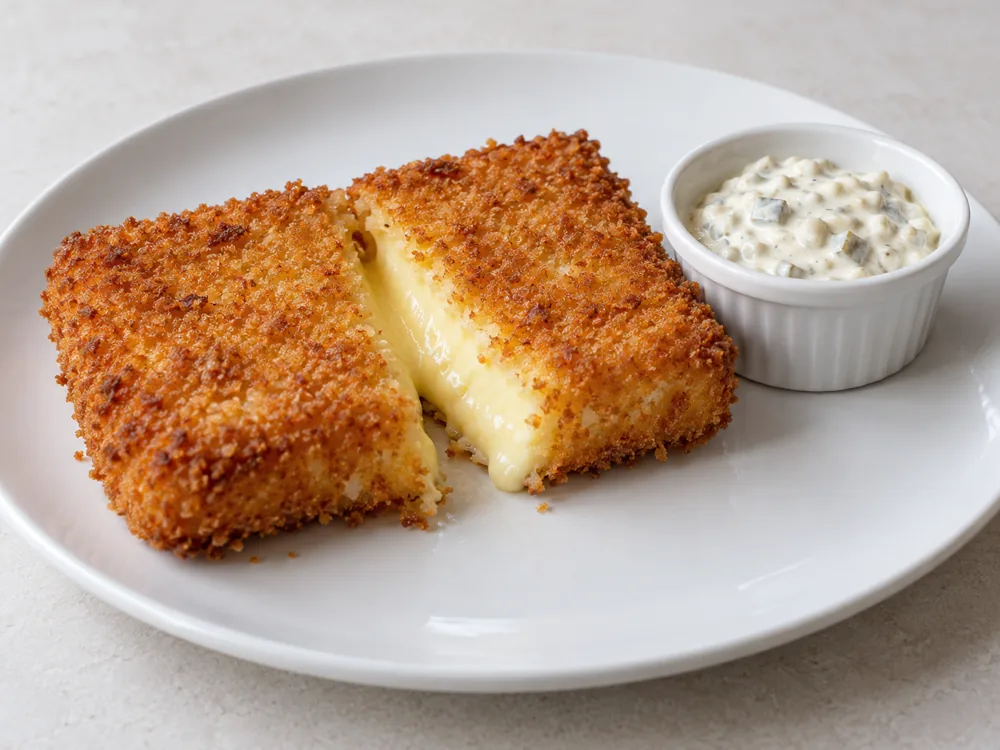
In Czechia, where Wikipedia calls Edam the most common cheese and it is sold as eidam, it is often the base of smažený sýr, breaded fried cheese. In neighbouring Slovakia the same dish may come with a slice of ham, and it always comes with tartar sauce or mayonnaise.
In Spain and some of its former colonies, Wikipedia says, Edam goes by the name queso de bola, meaning ball cheese, and was long considered a delicacy. It records more regional uses, though it flags that section as needing more citations:
- Yucatán, Mexico: queso relleno, a hollowed-out ball of Edam stuffed with seasoned ground meat, raisins, capers and olives, then braised in chicken stock.
- Philippines: queso de bola, served with jamón and pandesal at the Noche Buena feast on Christmas Eve.
- Indonesia: keju edam, the usual cheese for kaasstengels, a snack served at Eid ul-Fitr, Christmas and Chinese New Year; roti bakar, kue cubit and pannenkoek can also carry it as a topping.
- Sweden and Norway: a Christmas cheese on the Julbord buffet, linked to its red color.
- Belize: usually eaten well aged and sharp, with bread and coffee, and also known as queso de calavera, queso de colorado or Dutch cheese.
How Should You Store and Freeze Edam?
CooksInfo says to store Edam wrapped in plastic wrap in the fridge, with the wax left on any surface you have not cut.
Edam can also be frozen: CooksInfo suggests cutting it into 225 g (half-pound) chunks, wrapping them air-tight, and using the thawed cheese for cooking.
Cheese.com says refrigerated Edam can last several weeks or even months, and that once cut it belongs in an airtight container or tight plastic wrap so it does not dry out.
Cheese.com also says freezing may slightly change the texture after thawing, which fits CooksInfo's advice to use thawed Edam for cooking.
Is Edam Safe to Eat During Pregnancy?
Under NHS advice, yes, when it is pasteurised. The NHS names Edam in its list of foods that are safe in pregnancy, under pasteurised semi-hard cheeses.
Wikipedia and Cheese.com both describe Edam as made from pasteurised milk, and the Edam Holland specification requires the cheese milk to be pasteurised. The NHS adds that any cheese cooked until steaming hot is safe.
The CDC lists unheated cheese sliced at a deli as a riskier choice and deli-sliced cheeses heated to 165°F or until steaming hot as safer, and it says pregnant women are 10 times more likely to get a Listeria infection. Eaten cold, a pasteurized semi-hard cheese such as Edam is a type the CDC list does not cover, so ask a midwife or doctor.
The Edam Holland specification calls its Bros type hard, and the CDC lists hard cheese, when made with pasteurized milk, as a safer choice.
SOURCES & REFERENCES
What Are the Most Common Edam Questions?
Young Edam tastes very mild, slightly salty or nutty, with almost no smell, according to Wikipedia. As it ages, the flavor sharpens and the cheese gets firmer.
No. CooksInfo says to remove and discard any wax from the pieces you use.
No. Both are Dutch semi-hard cheeses made from cow's milk, but Edam Holland holds 40 to 44 percent fat in dry matter and Gouda Holland 48 to 52 percent.
Yes. CooksInfo says Edam melts well when cooked, and that well-aged Edam can be grated.
CooksInfo says black wax marks Edam that has aged for at least 17 weeks.