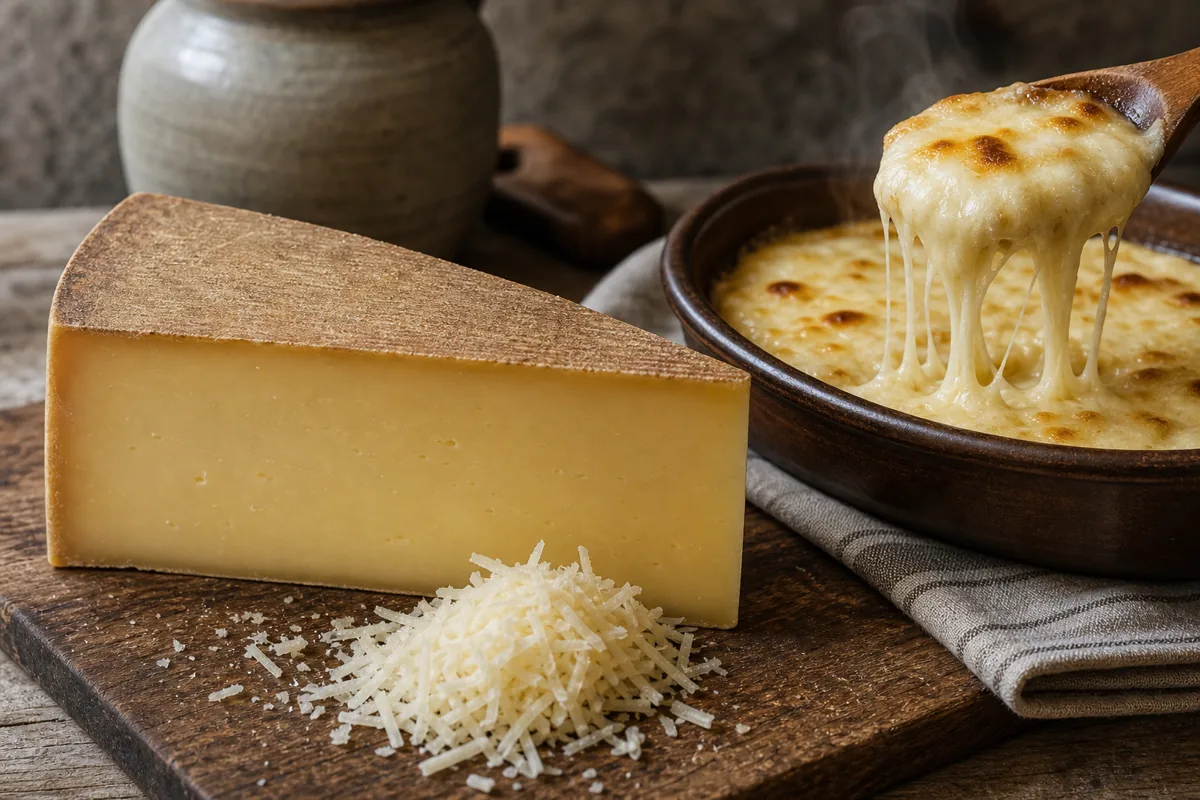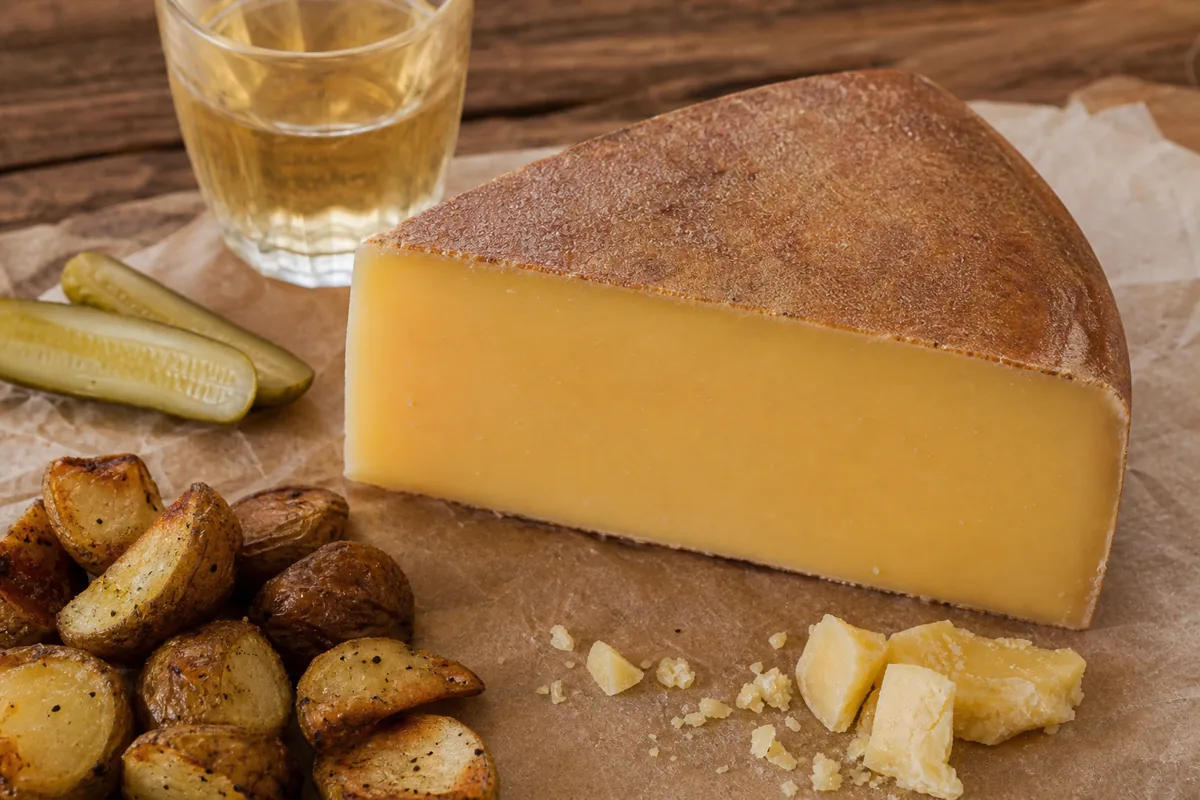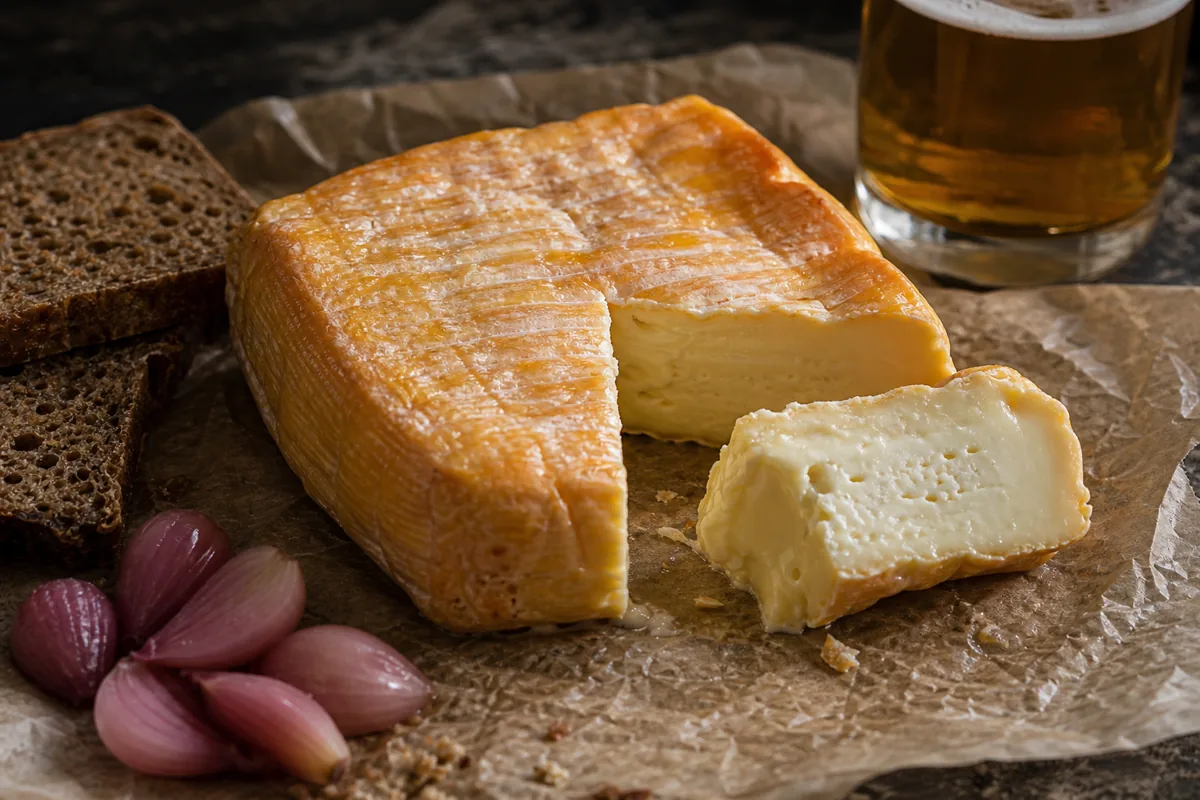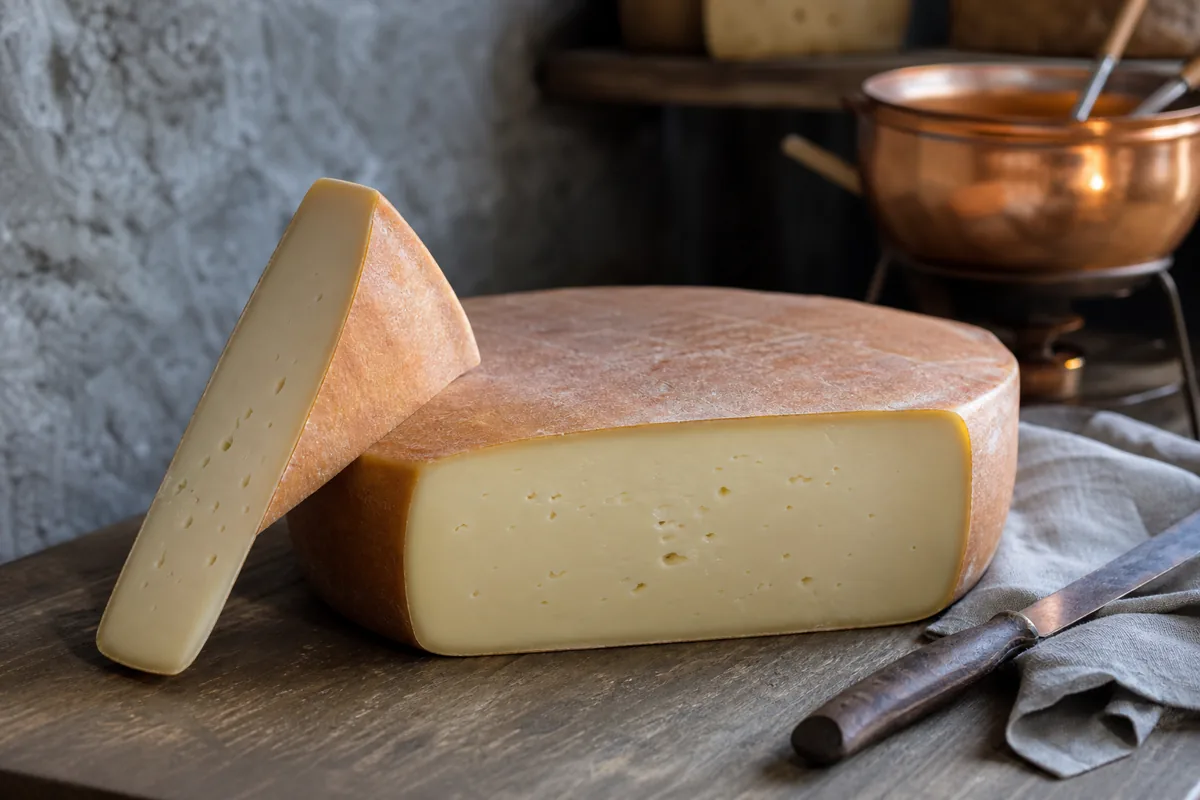
In the cheese case, a Fontina label can mean mountain milk and cellar aroma, or it can mean a mild block made for everyday melting. That split matters when a dish needs a supple melt with more flavor than mild mozzarella and less force than aged Gruyere.
The name Fontina has no worldwide protection outside Italy's DOP designation. Producers in Scandinavia, Argentina, and the United States sell cheeses labeled "fontina" that share almost nothing with the original beyond the name.
If the label does not carry the DOP seal and the Consorzio Produttori Fontina stamp, you are buying a different cheese entirely.
In This Article
Is the Fontina Label From Val d'Aosta?
The DOP seal narrows the purchase to one valley and one milk culture. Val d'Aosta sits between Mont Blanc and the Matterhorn, and its summer pastures climb above 2,000 meters.
DOP regulations require raw whole milk from a single milking, processed within two hours of collection. The milk is never skimmed, never pasteurized, and never blended across farms.
Each wheel traces back to one herd on one day. This traceability is rare even among DOP cheeses and gives Fontina a seasonal variation that industrial producers eliminate through standardization.
The Consorzio Produttori Fontina has overseen production since 1957. Every wheel is inspected, graded, and stamped before receiving the DOP mark.
Wheels that fail inspection are sold without the Fontina name. The Consorzio estimates that around 400,000 wheels are produced each year, almost entirely consumed within Italy.
- Origin -- Val d'Aosta, Italy's smallest region, tucked between Mont Blanc and the Matterhorn
- Milk -- raw whole cow's milk from a single milking, processed within 2 hours
- DOP since 1955 -- one of Italy's earliest protected-name cheeses
- Production -- around 400,000 wheels per year, mostly consumed domestically
- Key trait -- melts more smoothly than any other semi-soft cheese at comparable fat content
Summer wheels, called Fontina d'alpeggio, come from cows grazing above 1,800 meters. The milk is richer and more aromatic than winter milk from hay-fed valley herds.
Affineurs prize d'alpeggio wheels for their floral, herbaceous notes and deeper golden paste. These wheels are seasonal and sell out quickly in Italian cheese shops each fall.
What Does Real Fontina Taste Like?
At 3 months, the paste is buttery, mild, and supple. It gives under a thumb press and springs back slowly.
The flavor carries a clean lactic sweetness with a faint grassy edge that marks it as alpine cheese even before you see the label.
As Fontina ages past 6 months, the paste firms slightly and the flavor deepens toward earthy, mushroomy, and nutty. The rind develops a stronger aroma that some find pungent, though the paste itself stays mellow.
At 9 to 12 months, the cheese enters territory closer to aged alpine Gruyere in intensity, though it remains softer and more elastic.
This describes a standard 4-month DOP wheel. Creaminess dominates because the high fat content and elastic protein structure keep the paste supple.
Umami builds steadily with age as proteins break down, but Fontina never reaches the savory intensity of hard aged cheeses like Parmesan.
- 3-4 months: Buttery, mild, lactic sweetness with a grassy note. Very elastic, supple paste.
- 5-7 months: Earthy and nutty flavors emerge. Slightly firmer. The rind's aroma strengthens.
- 8-12 months: Full, mushroomy depth. Firmer paste with small eyes. Approaching Gruyere territory.
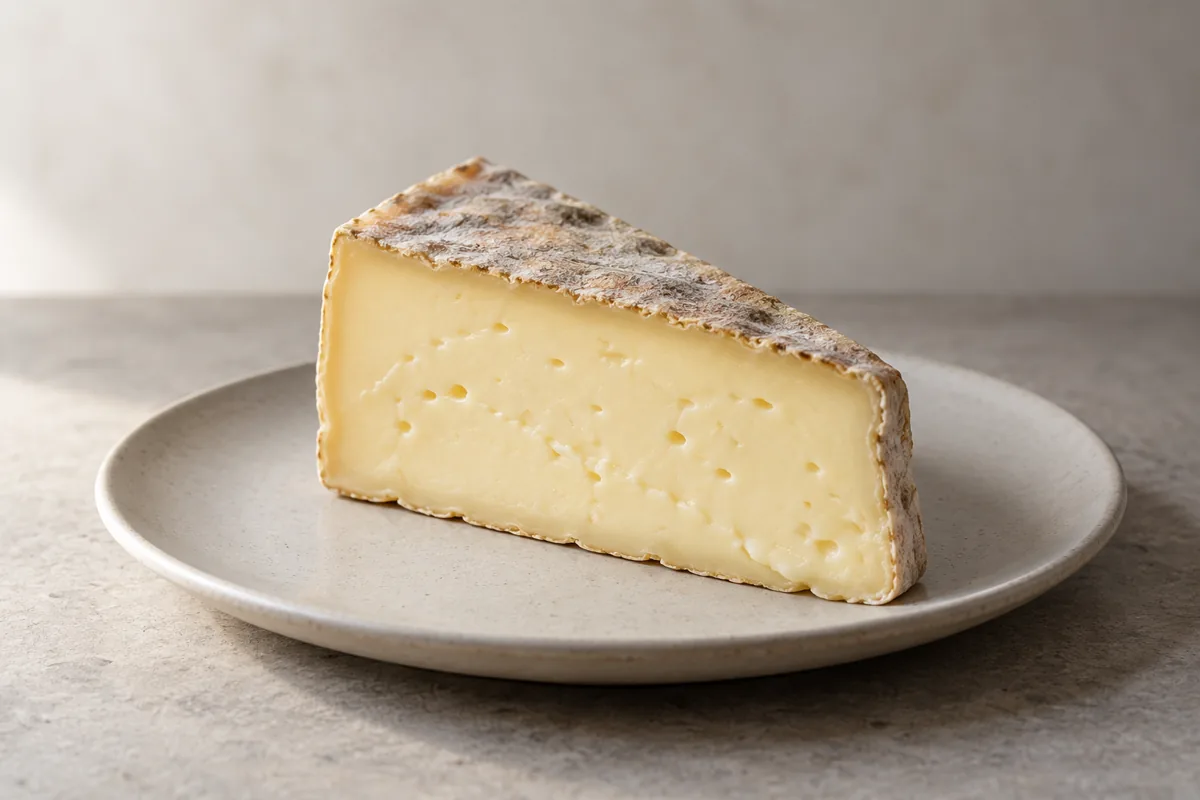
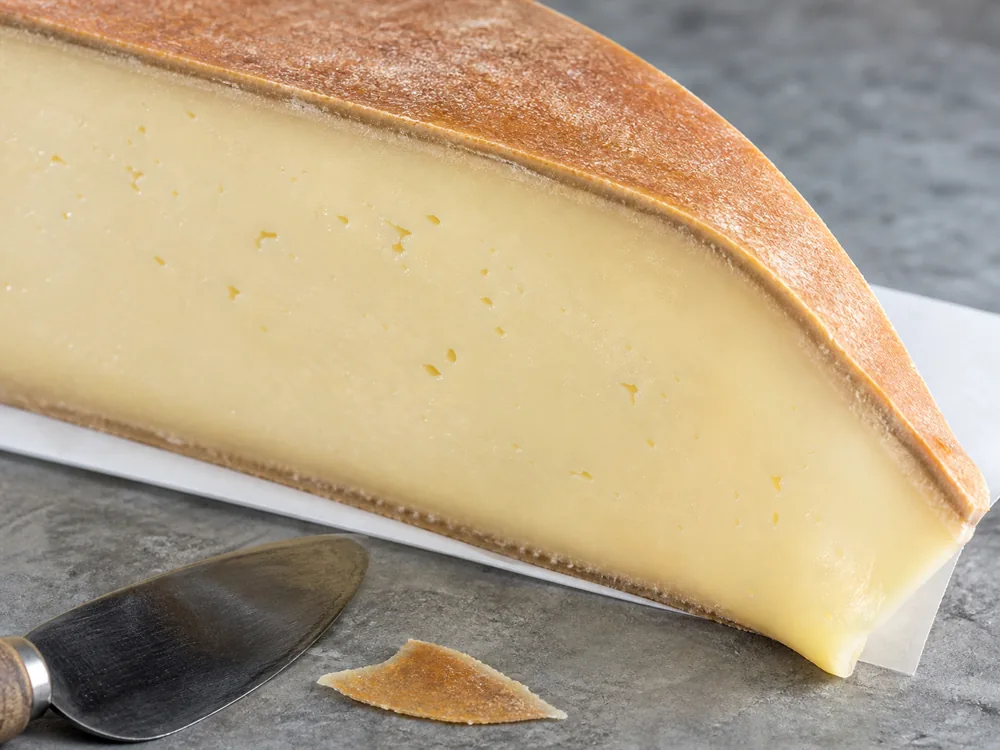
The small, irregular eyes scattered through Fontina's paste form during aging as carbon dioxide produced by bacterial cultures gets trapped in the elastic curd. These eyes are a quality marker.
Wheels with no eyes or with large, uniform holes indicate a production issue or a non-DOP imitation.
Non-DOP 'fontina' from Denmark, Sweden, or the US is typically made from pasteurized milk and aged for less than 60 days. It melts adequately but tastes bland and rubbery compared with Val d'Aosta DOP. The two products share a name but almost nothing else.
Why Does Fontina Smell So Savoury?
In the alpine dairies called latterie turnarie, production follows a method refined over centuries. Raw whole milk arrives within two hours of milking and goes into copper vats heated over a wood fire.
The cheesemaker adds natural whey starter from the previous day's production, not a commercial freeze-dried culture. This perpetuates a local bacterial population unique to each dairy.
- Heat and inoculate -- raw milk warmed in copper vats with natural whey starter
- Coagulate -- liquid calf rennet sets the curd in about 40 minutes
- Cut and cook -- curd cut to hazelnut size, then heated to 48 degrees C (118 degrees F)
- Mould and press -- curd packed into cloth-lined moulds, pressed for 12 hours
- Brine and age -- wheels salted in brine for 12 hours, then aged 3 months minimum in caves or cellars
Copper vats are not decorative tradition. Copper ions inhibit certain spoilage bacteria while encouraging the thermophilic cultures that give alpine cheeses their clean, sweet flavor.
Stainless steel, used in most modern dairies, does not provide this selective effect.
After pressing, wheels enter natural caves or temperature-controlled cellars at 10 to 12 degrees C and 90% humidity. During the minimum 3-month aging period, each wheel is brushed and turned every other day.
The brushing distributes surface moisture, prevents unwanted mold from colonizing, and builds the thin, brownish-orange natural rind that protects the paste without sealing it.
Copper releases trace ions during heating that selectively suppress undesirable bacteria while supporting the thermophilic lactic cultures responsible for Fontina's clean, sweet flavor. Stainless steel vats require added calcium chloride and commercial cultures to achieve a similar bacterial balance. This is one reason DOP Fontina made in traditional copper vats tastes noticeably different from factory versions.
Summer production in high-altitude alpeggio dairies follows the same method but uses milk from cows grazing on diverse alpine flora. The resulting wheels carry floral and herbaceous notes absent from winter production.
D'alpeggio wheels are marked with a specific Consorzio stamp and command higher prices across Italian cheese regions.
Why Does Fontina Melt So Smoothly?
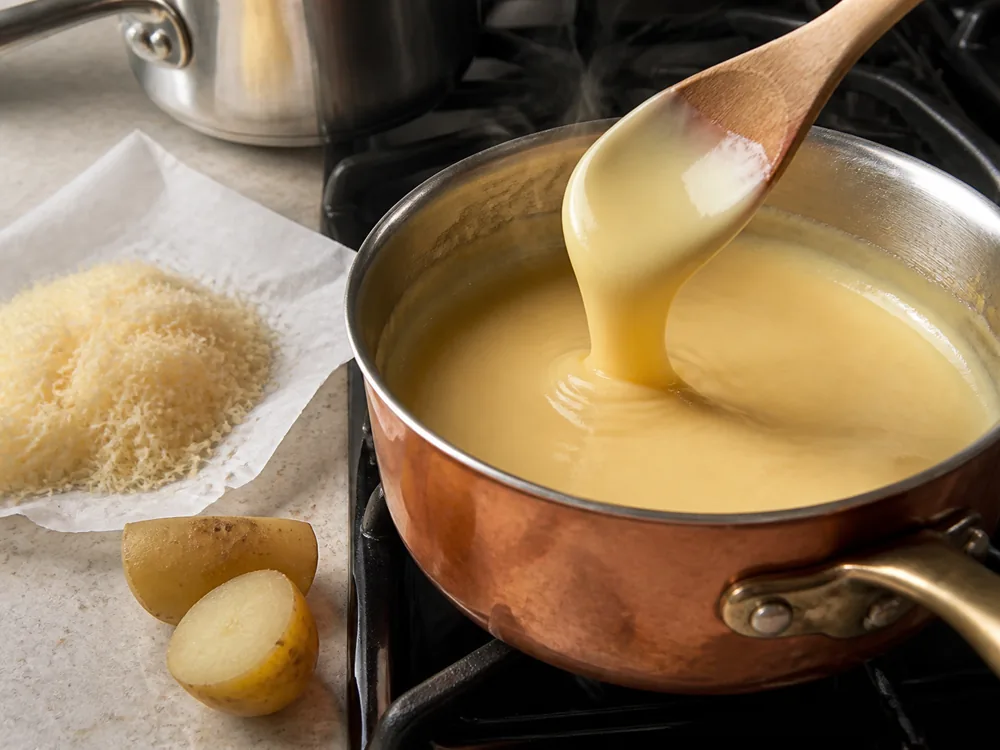
Fonduta explains why cooks chase real Fontina. The combination of high fat, moderate moisture, and elastic protein structure makes the cheese flow into a smooth, cohesive pool without separating or turning stringy.
| Use | How It Works |
|---|---|
| Fondue | Fontina is the base of fonduta, Italy's answer to Swiss fondue. It melts cleaner than Gruyere with less stirring. |
| Pizza | Cubed Fontina on pizza creates pockets of creamy melt between the crust and toppings. |
| Gratin | Sliced Fontina layered into potato or vegetable gratins delivers even melt without greasiness. |
| Risotto | Stir cubed Fontina into hot risotto just before serving for a creamy finish without flour-based sauce. |
| Sandwich | Fontina grilled cheese: the melt is smoother and richer than mozzarella with more flavor depth. |
| Cheese Board | Aged Fontina (8+ months) holds its shape at room temperature and pairs well with honey and walnuts. |
- Fonduta -- the classic Piedmontese fondue, Fontina melted with egg yolks and white truffle
- Pizza and flatbreads -- cubed Fontina creates creamy melt pockets between toppings
- Gratins -- even melt without greasiness makes it ideal for layered baked dishes
- Risotto finisher -- stir into hot rice for a creamy texture without flour or heavy cream
For any melting application, cut Fontina into small cubes rather than shredding. The paste is too soft and elastic to grate cleanly, and cubing preserves more moisture during cooking.
The cubes melt into each other and create a smoother result than shredded cheese, which can clump.
For aged board service, choose wheels aged 8 months or longer. Younger Fontina softens too quickly at room temperature and can become sticky.
Aged Fontina holds its shape, slices cleanly, and pairs with walnuts, dark honey, and dried figs without losing structure.
What Should You Pair With Fontina?
Pairings should make the cellar note useful rather than heavier. Fontina does not fight tannins the way sharp, acidic cheeses do, but it also does not disappear behind bold flavors the way bland melters can.
| Pairing | Why It Works |
|---|---|
| Nebbiolo (Barolo or Barbaresco) | The classic regional pairing. Nebbiolo's firm tannins cut through Fontina's fat, and the wine's rose and tar notes complement the cheese's earthy depth. |
| White Truffle | Fonduta with shaved white truffle is Val d'Aosta's signature dish. The truffle's pungent aroma merges with Fontina's earthy richness. |
| Walnuts and Dark Honey | Chestnut or buckwheat honey against aged Fontina creates a sweet-savory contrast. Walnuts add bitterness that completes the trio. |
| Cured Bresaola | Lean, air-dried beef from neighboring Valtellina. The salt and iron of bresaola balance Fontina's fat cleanly. |
| Arneis or Erbaluce (White Wine) | Light Piedmontese whites with crisp acidity cleanse the palate between bites of young, creamy Fontina. |
- Regional reds -- Nebbiolo from Barolo or Barbaresco, the classic local match
- White truffle -- the signature pairing in fonduta, Val d'Aosta's most famous dish
- Honey and nuts -- chestnut honey and walnuts against aged Fontina on a board
- Light whites -- Arneis or Erbaluce cleanse the palate after each creamy bite
Avoid pairing young Fontina with heavily oaked Chardonnay. The butteriness of both creates a cloying richness with no contrast.
A crisp, unoaked white or a light red gives the cheese room to show its grassy, alpine character.
Fontina also pairs well with French alpine cheese on a mixed board. Serve it alongside Gruyere and holey Swiss alpine cheese so guests can taste the alpine family side by side.
How Should You Store Cut Fontina?
A semi-soft paste punishes bad wrapping quickly. The exposed face dries out within days if left unwrapped, forming a tough skin that tastes bitter and chalky.
- Wax paper first -- lets the paste breathe and prevents moisture buildup
- Plastic wrap second -- loose outer layer holds shape and limits fridge odor absorption
- Rewrap after every cut -- fresh-cut surfaces dry fastest and need fresh wrapping
- Cheese drawer -- the most stable temperature zone in most refrigerators
Do not freeze Fontina. The elastic protein network that gives it smooth melt quality breaks down during freezing.
Thawed Fontina becomes crumbly and dry, losing the supple texture that makes it worth buying. If you have more than you can use in 3 weeks, cook with it: fonduta, gratins, and risotto all use large amounts quickly.
Surface mold on Fontina appears as white or blue-gray spots. On DOP wheels with a developed rind, this is normal.
Trim half an inch around the spot and use the rest. If the paste beneath the mold smells of ammonia or is discolored, discard the piece.
Washed-rind mold checks depend on smell, paste color, and how far the spot has moved inward.
Fontina DOP, Fontal, or Danish Fontina?
The single most important word on the label is the DOP seal. Without it, you are buying a cheese that shares the name Fontina but not the milk, method, or flavor.
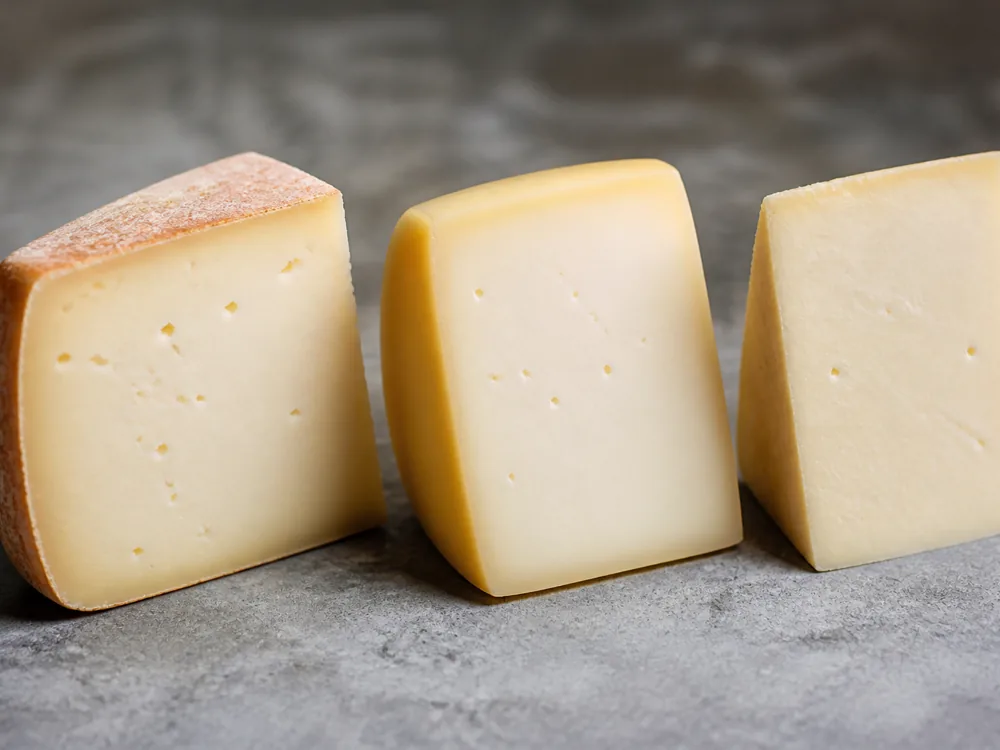
Extra-aged or reserve Fontina is an age and producer cue, not a separate cheese. Buy it when you want a firmer board wedge with more nutty depth.
For fonduta or smooth melting, a standard DOP wheel is usually the better choice.
- DOP seal -- confirms Val d'Aosta origin, raw milk, and minimum 3-month aging
- Small irregular eyes -- scattered through the paste, a sign of proper fermentation
- Pale gold paste -- deeper gold in summer d'alpeggio wheels, lighter in winter production
- Supple texture -- the paste should give under thumb pressure and spring back slowly
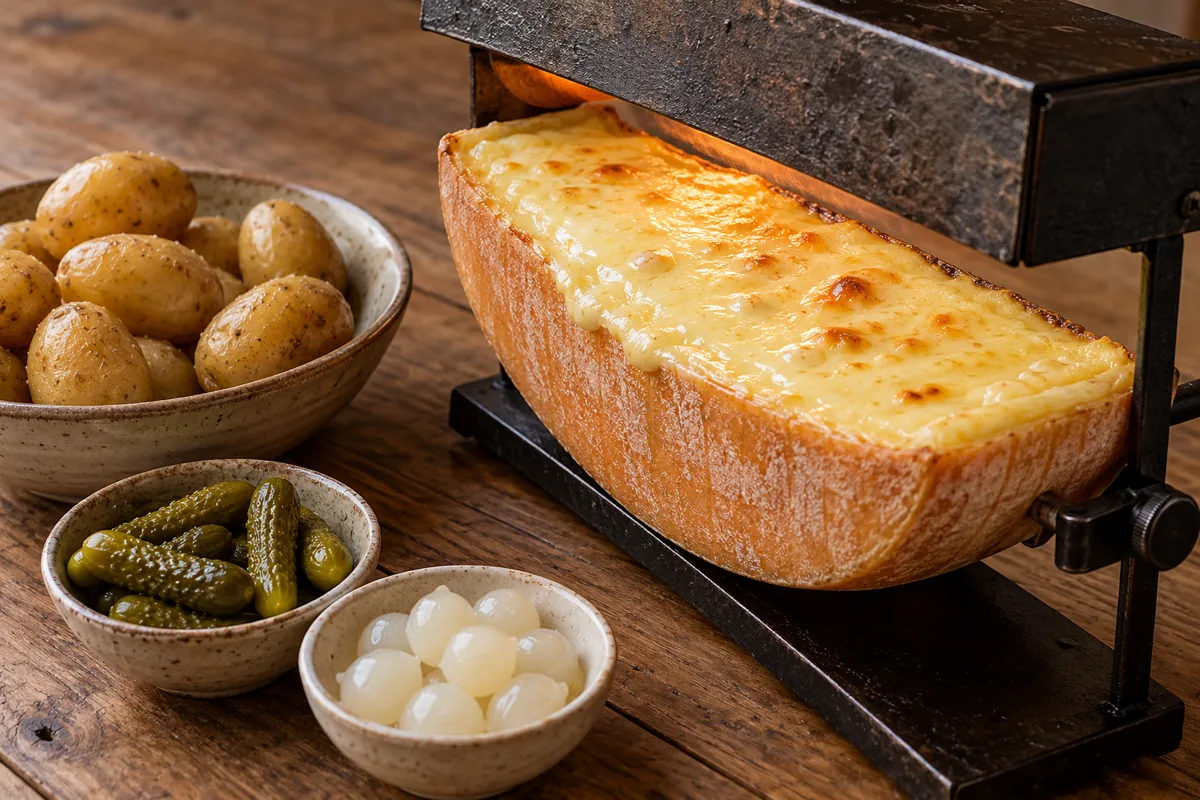
If your local store only carries non-DOP fontina, smooth-melting Raclette is a better substitute for cooking than fake fontina is. It melts almost as smoothly and has far more flavor than the Scandinavian imitations.
Which Fontina Substitute Matches the Melt?
For melting, young Gruyere (5-7 months) comes closest to Fontina's smooth, cohesive flow. It melts slightly differently because the protein structure is denser, but the flavor profile overlaps in the buttery-nutty range.
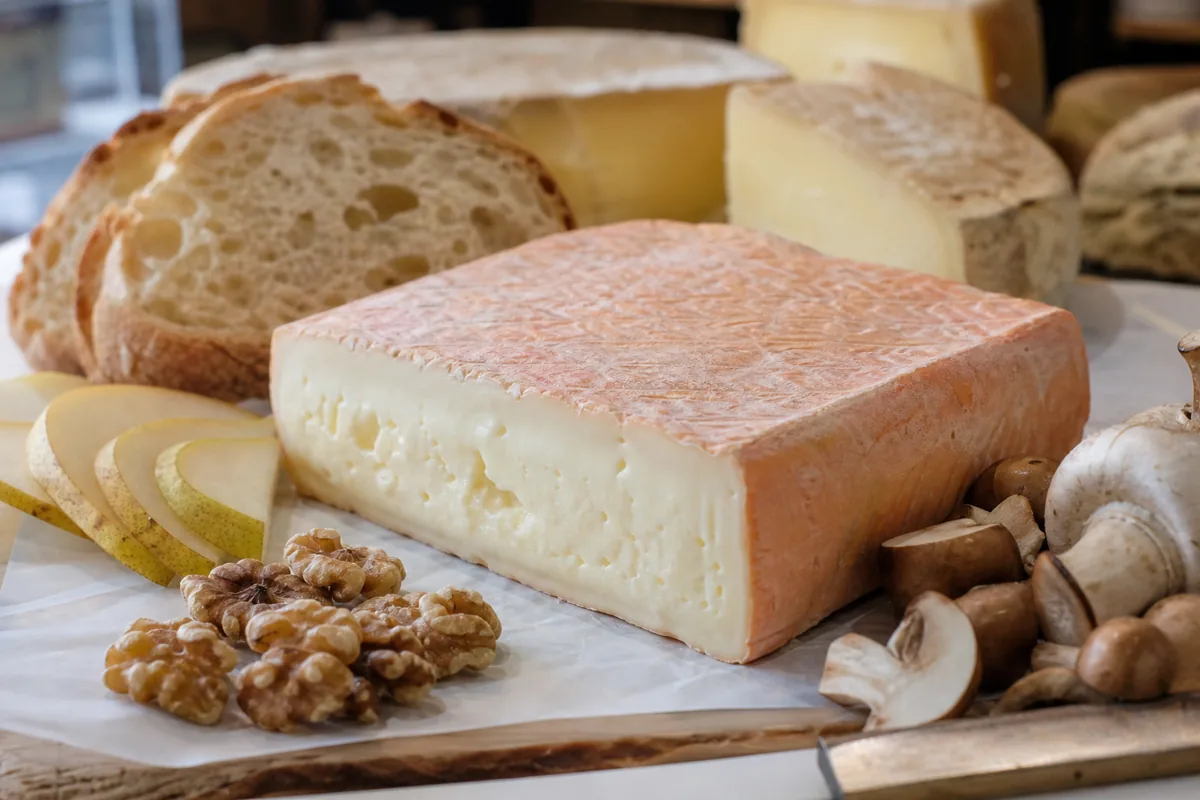
For eating on a board, washed-rind Taleggio matches Fontina's supple texture and earthy aroma more closely than Gruyere does. Taleggio is softer and more pungent, but the flavor family is similar enough that they work as stand-ins on a northern Italian cheese plate.
- Young Gruyere (5-7 months) -- closest melt quality, similar buttery-nutty flavor
- Taleggio -- matches the supple texture and earthy depth for board eating
- Raclette -- melts smoothly with a slightly stronger aroma and more salt
- Mild Gouda (3-4 months) -- creamy melt, less flavor depth but widely available
None of these replicate the specific grassy, alpine character that DOP Fontina gets from Val d'Aosta's mountain pastures. For fonduta specifically, we recommend sourcing DOP Fontina rather than substituting, because the dish has only four ingredients and the cheese carries the entire flavor.
How Much Fat Is in Fontina?
The calorie load comes from whole raw milk and a rich semi-soft paste. The fat delivers the smooth melt and full mouthfeel that define the cheese.
Because the flavor is moderately intense, portions on a board tend to be reasonable, and melted Fontina spreads further in cooking than its calorie count suggests.
- Low lactose -- aging reduces lactose to trace levels tolerated by most sensitive individuals
DOP Fontina aged 3 months or longer contains very low lactose because the extended aging gives bacteria time to consume most of the milk sugar. People with mild lactose intolerance often handle aged Fontina without symptoms.
The high fat content makes Fontina a concentrated energy source. For cooking, a little goes a long way because it melts into a smooth, coating consistency rather than sitting in distinct pieces.
A 2-ounce portion can coat a full pan of potatoes in a gratin.
SOURCES & REFERENCES
Is There More to Know About Fontina?
Most Fontina questions come down to which of the three cheeses sold under the name you actually have.
DOP Fontina Val d'Aosta is made from raw whole cow's milk in a single Italian alpine valley, aged at least 3 months, and inspected by the Consorzio. Non-DOP "fontina" is typically made from pasteurized milk in Scandinavia, the US, or Argentina, aged less than 60 days.
The flavor, texture, and melting behavior are substantially different. DOP Fontina is buttery, grassy, and melts into a smooth pool.
Non-DOP versions tend to be bland and rubbery.
Yes. Fontina is the base of fonduta, the Piedmontese fondue traditionally made with Fontina, egg yolks, butter, and shaved white truffle.
It melts more smoothly than Gruyere with less stirring required. For Swiss-style fondue, you can blend Fontina with Gruyere and Emmental for a richer, creamier result than the traditional all-Swiss recipe.
DOP Fontina is one of the best melting cheeses available. Its combination of high fat content, moderate moisture, and elastic protein structure produces a smooth, cohesive melt without separation or stringiness.
It outperforms most semi-soft cheeses in fondue, gratins, and pizza applications. Non-DOP fontina melts adequately but tends to be oilier and less cohesive.
DOP Fontina is made from raw milk and aged a minimum of 3 months (90 days). The NHS says foods made from unpasteurised milk must be thoroughly cooked, and the CDC lists unpasteurized (raw) milk and dairy products made from raw milk as riskier.
The NHS lists pasteurised semi-hard and pasteurised soft cheeses, and any cheese that's been cooked until steaming hot, as safe to eat. Eaten cold, pasteurized non-DOP fontina is a semi-soft to semi-hard cheese the CDC list does not cover, so consult your healthcare provider.
Properly wrapped in wax paper and then loosely in plastic, cut Fontina lasts 2 to 3 weeks in the cheese drawer at 35-40 degrees F. Rewrap after every cut to protect the fresh surface. If the edges dry out and harden, trim them off and use the interior.
Do not freeze Fontina, as the elastic texture breaks down permanently.