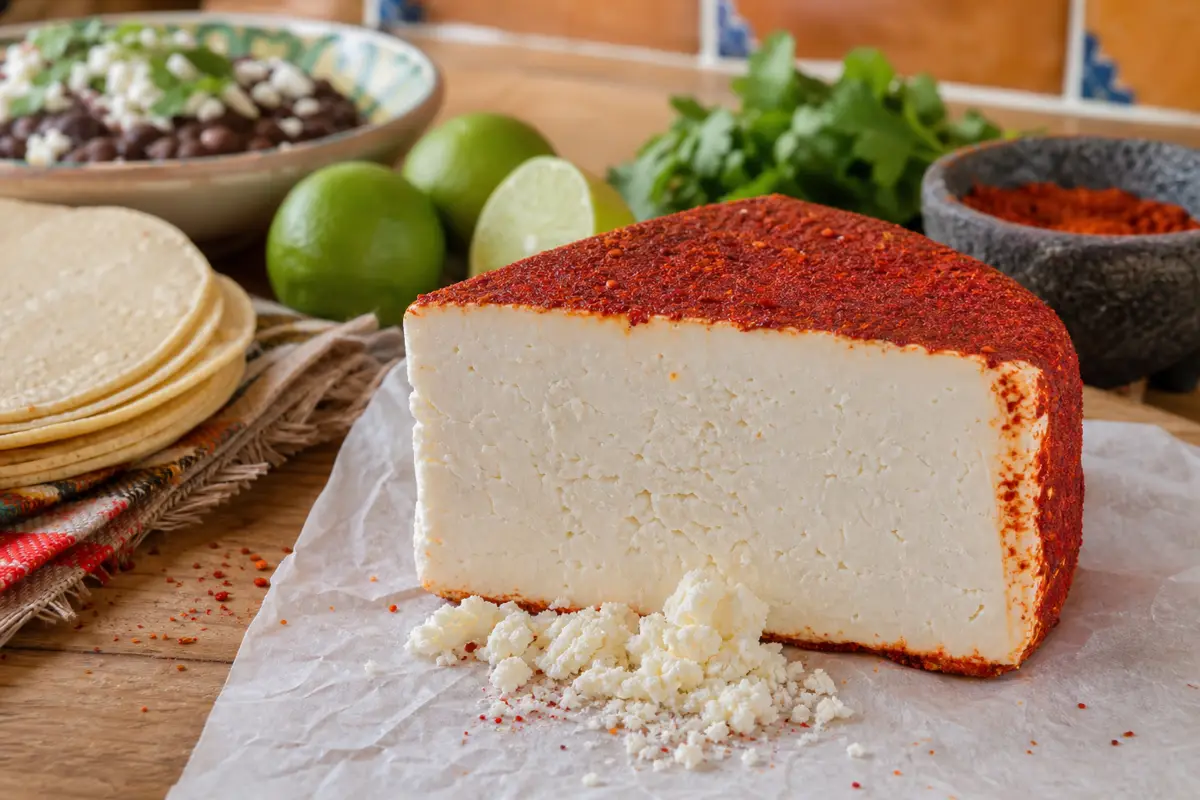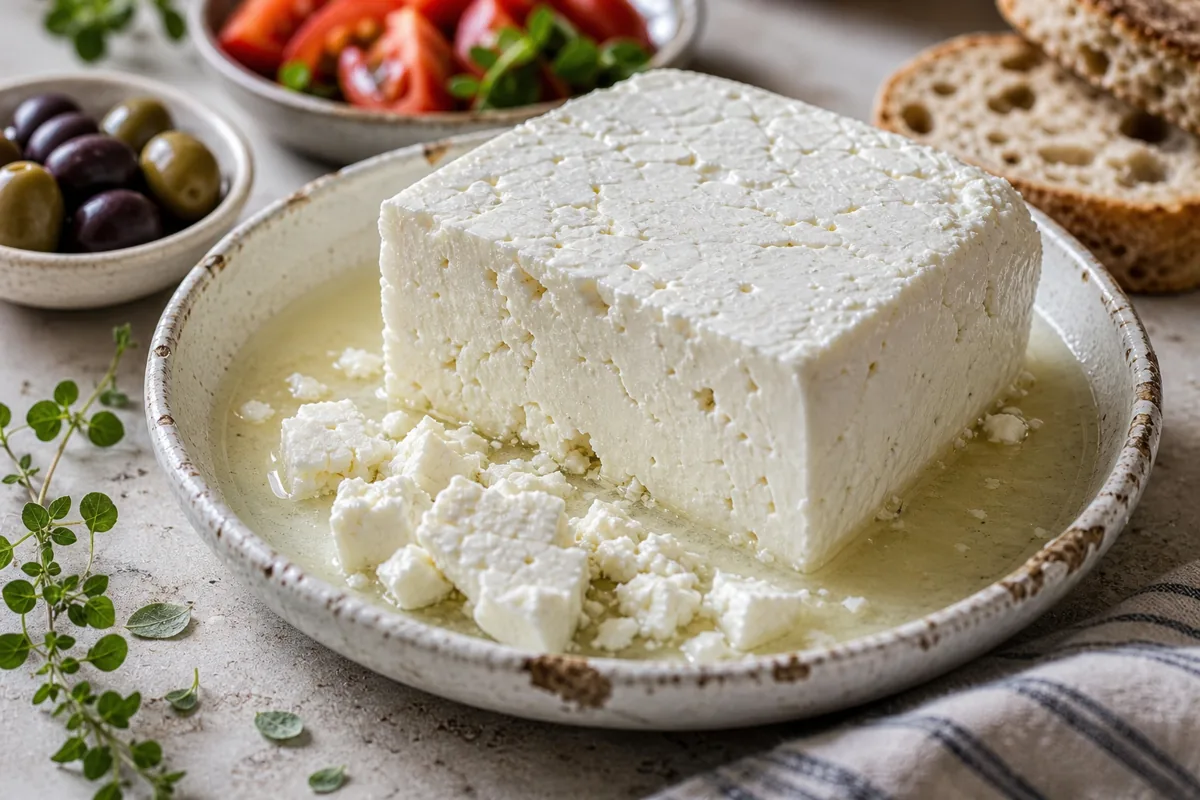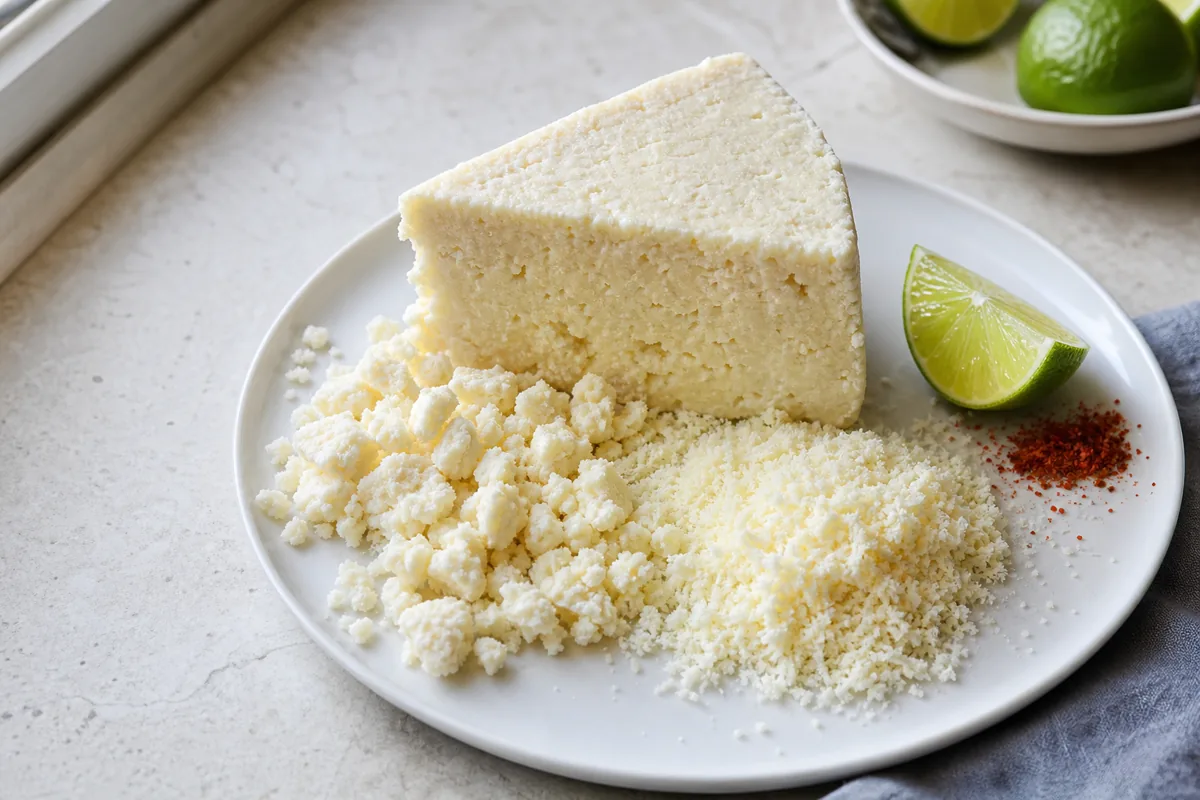
Cotija is a salty Mexican cow's milk cheese you crumble or grate over finished food, because it softens with heat without melting into a smooth sauce. The name covers both raw-milk mountain wheels aged for months and different pasteurised supermarket products such as Cacique.
Before cooking, decide if you want a moist young crumble or a dry aged grating cheese.
The handmade mountain wheel comes from the Sierra Jalmich. A US supermarket version has its own cultured pasteurised milk formulation, so its label matters for ingredients and pregnancy advice.
In This Article
How Does Age Change The Taste And Texture?
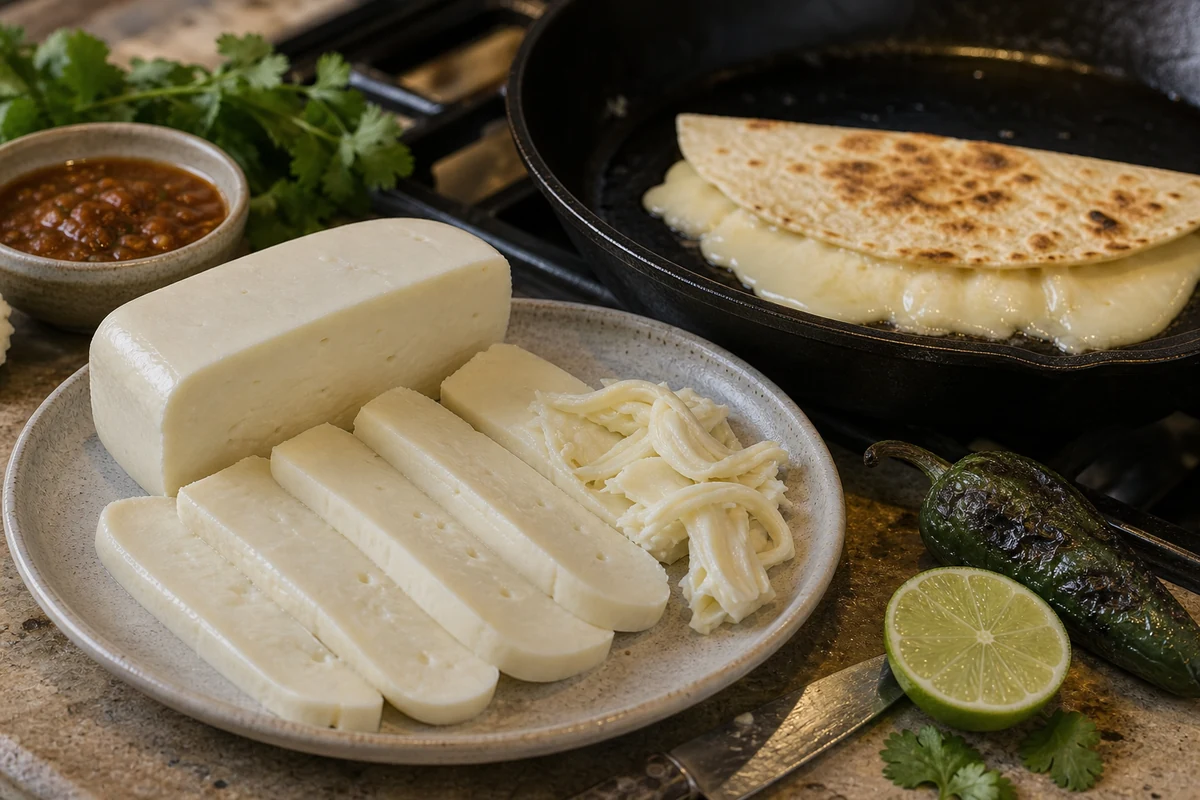
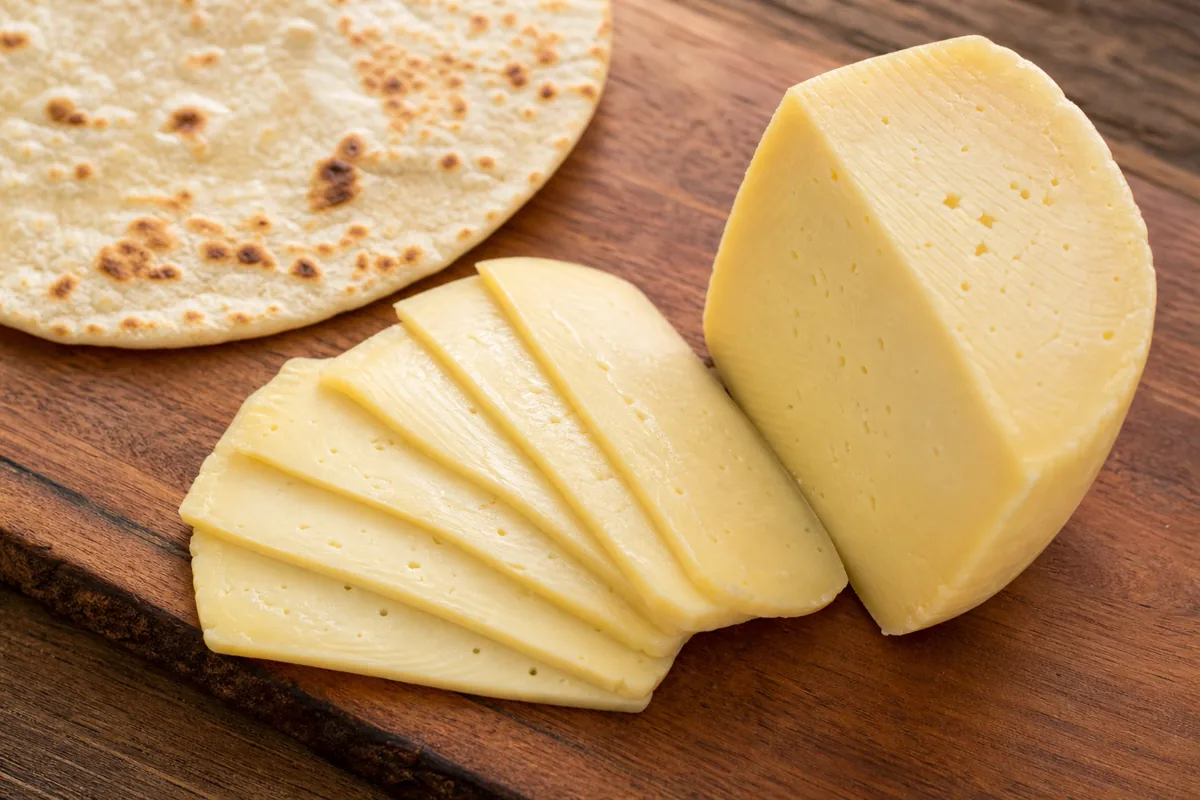
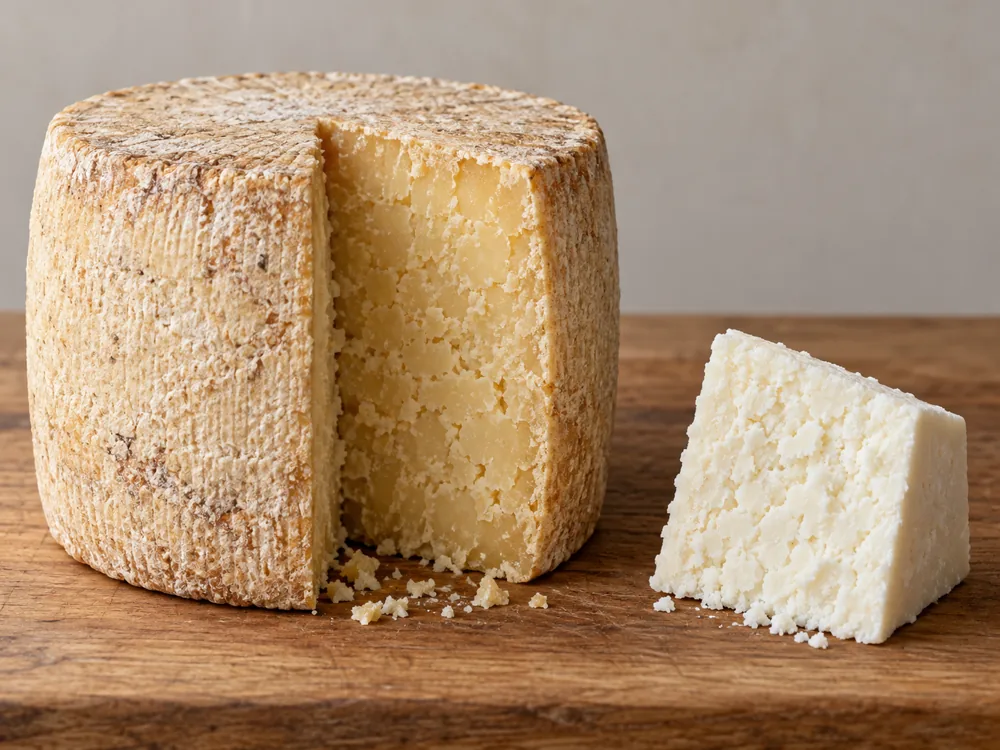
A young piece is moist and crumbly like a mild feta, while an older one becomes firmer and sharper, approaching Parmesan.
The Spanish names mark the stages: a cheese aged three to six months is queso añejo, and one aged beyond six months is queso rendido.
In mountain wheels, you can encounter tangy, salty flavors with pineapple in some seasons. Age reduces creaminess and increases sharpness and the impression of salt.
Past three months, the firm, crumbly cheese can be intensely salty and tangy.
For Rancho Cabras producer Rafael Torres-Torres's opened wheels, the aroma record includes pineapple, green apple and banana skin. These fruit notes describe his cheese rather than every Cotija.
For the separate Cacique supermarket product, the ingredients are cultured pasteurised Grade A milk and skim milk, sea salt and enzymes.
If you find tajo, expect a moister, less salty variety that holds its shape when cut.
A block lets you break or shave pieces to the size your dish needs, while a pre-grated product saves that preparation.
Why Do The Crumbs Keep Their Shape?
Cotija softens with heat but does not melt, so cooked pieces keep their shape. In your mouth, the dry cheese breaks into sandy, grain-like crumbs.
It does not belong in an emulsified pasta sauce. The dry crumbs stay as grains instead of dissolving into the liquid.
That dryness can help inside a mushroom and black bean veggie-burger mixture, where you want the patty to retain its consistency.
Use the crumbs as a topping or stir them into a sauce when you want distinct grains through the liquid. In a recipe calling for Cheddar, make that texture choice before substituting Cotija.
When Should You Add It To Elote Or Tacos?
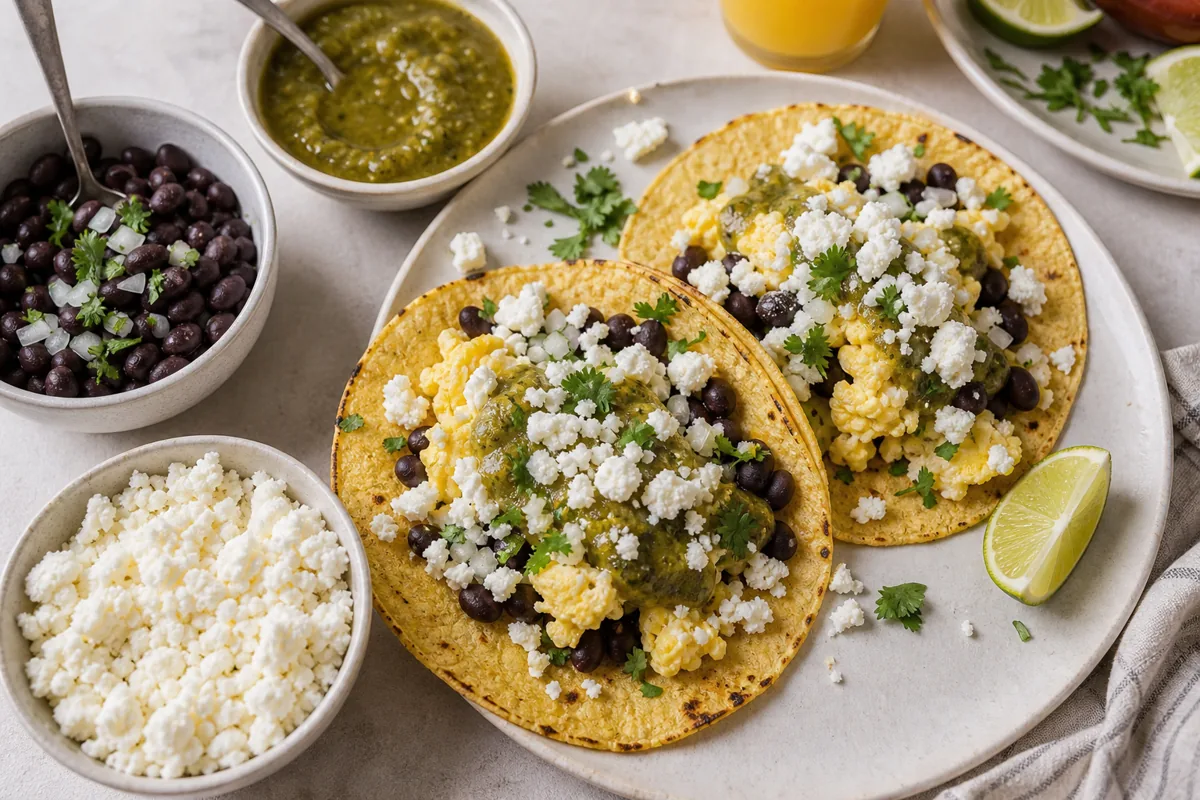
Add Cotija at the end, after turning off the heat, when you want a salty crumble or grating on the finished dish.
On elote, the Cotija topping balances the sweet kernels against the tang of sour cream. One esquites recipe calls for 6 ears of corn grilled at 400°F for 15 minutes and half a cup of Cotija split between mixing into the corn and scattering over the top.
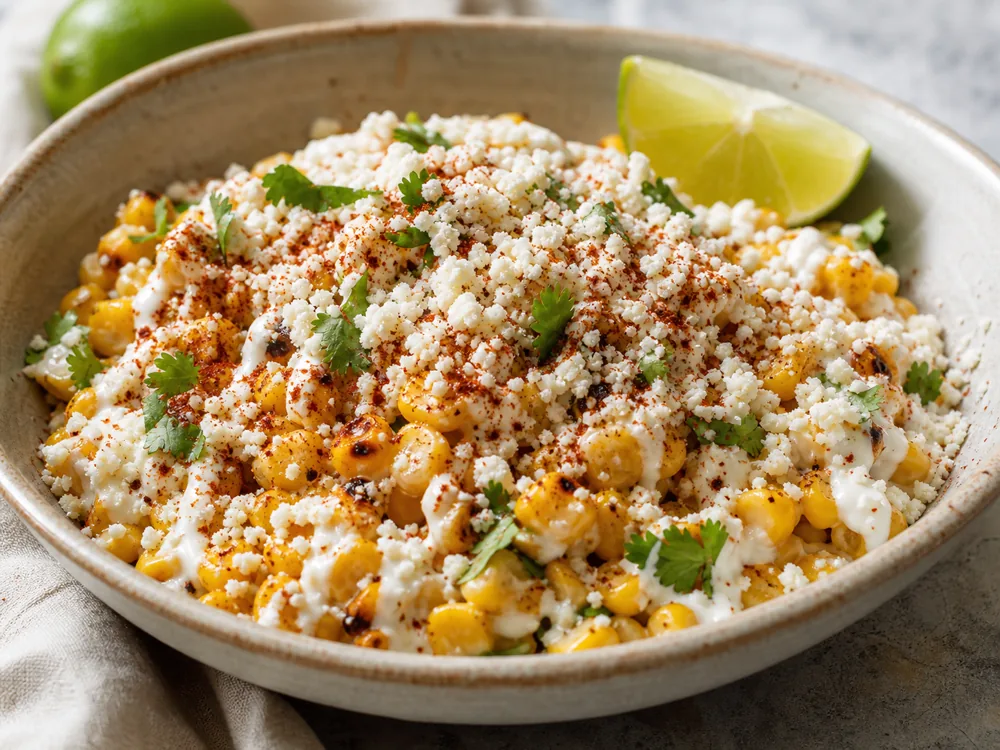
Its saltiness and tang work best when the dish needs both.
The uses below give you alternatives to corn while keeping that finishing role.
| Use | How It Works |
|---|---|
| Beans and soups | Crumbled or grated over pinto beans, soups and posole. |
| Tacos, tostadas and burritos | Crumbled over tacos, tostadas and burritos. |
| Enchiladas and chilaquiles | Scattered over enchiladas and chilaquiles after the heat is off. |
| Tamales | Mountain Cotija's concentrated flavour suits tamales more than a cheese board. |
| Salads | Grated over a watermelon-lime salad, or tossed into plum and Napa cabbage salads. |
Cotija also turns up on nachos and the Venezuelan sticky buns called golfeados, and works on a frittata, on smashed crispy potatoes and inside a stuffed pork chop adobo.
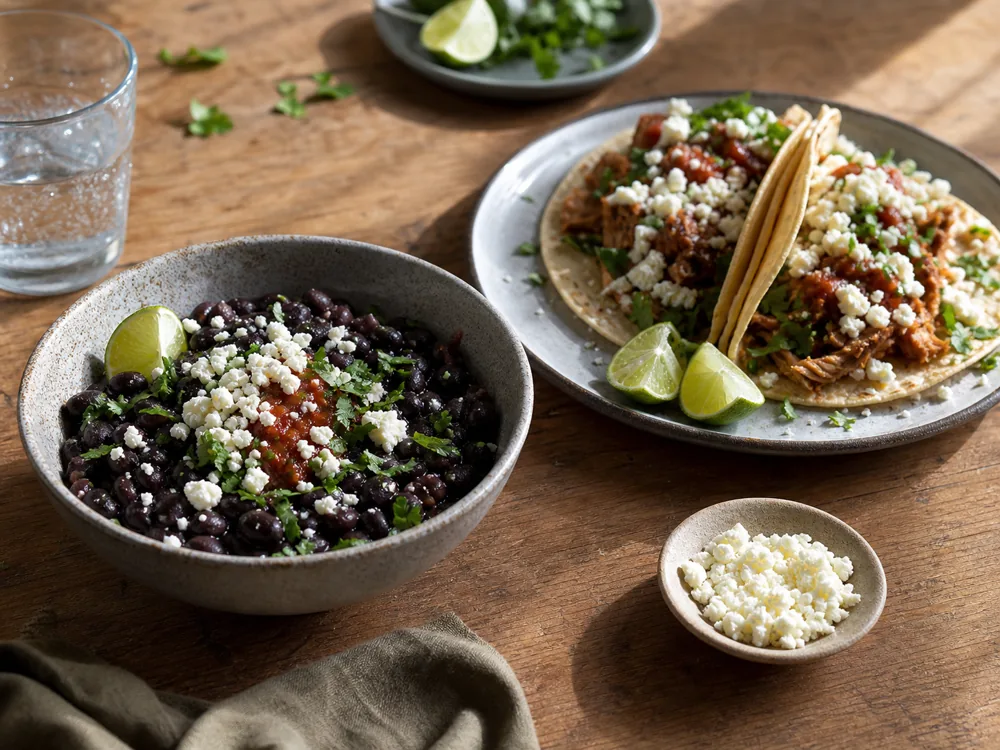
In Mexico, mountain Cotija is also eaten plain, sometimes with a sip of mezcal.
Which Substitute Fits Young Or Aged Cotija?
Match the replacement to the expected age and the job it does in your recipe.
For young Cotija, feta or queso fresco match the moist, crumbly texture. The swap runs the other way too: younger Cotija can stand in for Greek feta.
For aged Cotija, ricotta salata, Parmesan or Romano are closer matches.
Ricotta salata matches the texture, but the distinct Cotija funk is not so easily copied.
Grated Romano is a fair match when the recipe wants aged Cotija, because both cheeses share a sharp, salty bite.
Using A Swap In A Recipe
In some dishes the three are interchangeable. A corn salad can take Cotija, feta or Parmesan depending on what is in the kitchen, and a feta meatball recipe works with Cotija instead.
When replacing Parmesan, keep older Cotija to recipes where the cheese need not emulsify into a sauce.
The swap crosses borders: Cotija can stand in for queso duro in the Salvadoran quesadilla, a sweet bread similar to pound cake.
How Does Its Sodium Compare With Other Crumbles?
Solid Cotija carries 1,620 mg of sodium per 100 g, about two and a half times the 626 mg in queso fresco.
Cotija also holds less water: 40.0 g per 100 g against 51.4 g for queso fresco and 51.9 g for crumbled feta.
| Cheese (USDA Foundation record) | Sodium | Water | Fat |
|---|---|---|---|
| Cotija, solid | 1,620 mg | 40.0 g | 27.2 g |
| Queso fresco, solid | 626 mg | 51.4 g | 23.4 g |
| Feta, whole milk, crumbled | 1,030 mg | 51.9 g | 19.1 g |
| Parmesan, grated, refrigerated | 1,050 mg | 30.8 g | 29.5 g |
| Parmesan, grated | 1,750 mg | 22.8 g | 28.0 g |
The two grated Parmesan records fall on opposite sides of Cotija's sodium value. These samples therefore do not establish that Cotija is always saltier than Parmesan.
The mountain cheese is usually several times saltier than typical cheese, traditionally so that it keeps better.
Against feta, the recorded sodium difference is about 1.6-fold, smaller than the gap with queso fresco.
A Cacique serving (28 g) carries 490 mg of sodium, 21 percent of the Daily Value.
In a substitution, that gap affects the rest of your seasoning: replacing Cotija with queso fresco more than halves the sodium in the cheese portion.
What Distinguishes Mountain Cotija On A Label?
Look for its milk treatment, stated age and place of production before choosing a mountain wheel over a Cotija-style product.
Traditional mountain production uses raw milk and no freeze-dried starter cultures. That process is separate from the pasteurised cultured-milk Cacique formulation above.
The age threshold is at least two to three months: the Región de Origen mark and the broader tradition use different minimums. Read the basis alongside any stated age.
Check the origin as well as the name, because products made outside the mountain region are sold under Cotija across Mexico and the US.
Origin Marks And Visible Differences
Independent producers in the zone sell under their own marks, each setting the traits a cheese needs to count as Cotija. Many large, dry cheeses take the name without those traits.
A wheel can have a white or golden paste, with texture differences between producers.
On a mountain wheel you can inspect the natural, cream-colored crust, which is absent from a pre-grated pack.
Mountain Cotija is raw-milk, aged at least two to three months depending on the source, and carries a crust described as natural. A pasteurized ingredient list, as on Cacique's, marks the supermarket kind.
Which Milk And Texture Matter In Pregnancy?
Confirm the actual product: traditional mountain Cotija uses raw milk, while Cacique lists cultured pasteurised Grade A milk. Neither agency names Cotija, and a commercial pack should not inherit a mountain wheel's classification.
The hard reading allows raw or pasteurised hard cheese on the NHS safe list, while a semi-hard reading allows it only when pasteurised. For a raw semi-hard or unclassified piece, thorough cooking until steaming hot is required by the NHS.
For a commercial pasteurised version without an explicit agency class, the NHS cooked-cheese route remains available rather than inferring a class from its dry texture.
The CDC clears pasteurized hard cheese such as Cheddar and Parmesan, so confirmed pasteurised hard Cotija is safer. In the US, cold pasteurised Cotija of unconfirmed class falls in neither CDC column, and any raw or unlabelled piece has no safer route even cooked, as our cheese in pregnancy guide explains.
Why Does A Mountain Cheese Take A Town Name?
The cheese carries the name of Cotija, Michoacán, but it was born in the Sierra de Jalmich, a mountain range on the border of Jalisco and Michoacán. Ranchers carried the wheels by mule to the town of Cotija to sell them, and the town's name stuck to the cheese.
Production in the region dates back about 400 years. Cheesemaking arrived with Spanish settlers and their cattle in the sixteenth century, and the hard, salty cheese was once traded as currency.
The historical area lies in the Sierra Jalmich, in and around Santa María del Oro, Jilotlán de los Dolores, Tamazula, Valle de Juárez and Quitupan in Jalisco, and Cotija, Tocumbo, Los Reyes, Peribán, Tancítaro and Buena Vista Tomatlán in Michoacán.
The makers live in the mountains as high as 1,700 metres (about 5,600 feet), which is why the cheese is called a queso de montaña.
In 2003 producers and academics asked Mexico for a denomination of origin. Mexico's industrial property institute refused and in 2005 granted the collective trademark Queso Cotija de la Región de Origen instead, the first granted to a Mexican heritage food.
The registration sets standards for where the cheese can be made and how long it must be aged, but the mark has not kept the name to the region. Mass-produced "Cotija-style" cheese made outside the designated area is common.
Why Is Mountain Production Seasonal?
The wet-season make runs from July to October in the main records, with one stopping at September. New pasture feeds the cows, while humid air reduces cracking as the wheels age.
The season also explains the cheese's colour and flavour. The cows eat only the rich grass that grows on the mountains in the rains, and the feed gives the milk its character.
Rain forced the cheese into existence as an aged product. Washed-out roads kept ranchers from selling fresh, so the cheese sat through the wet months and aged by necessity.
The herd is a mixed breed, mostly Holstein crossed with Zebu and Brown Swiss. The Zebu brings heat tolerance for the mountain pastures.
The milking, setting and pressing steps below turn that seasonal milk into a wheel for aging.
- Milk: cows are milked by hand, and the milk is pooled and skimmed.
- Acidity: no freeze-dried starter cultures. The lactic bacteria already in the milk do the work.
- Rennet: calf rennet or animal rennet sets the milk.
- Salt: the curd is mixed with rock or sea salt from the Colima coast.
- Moulding: the curd is held in bands of maguey or agave fibre, sometimes within a wooden belt.
- Pressing and turning: about 24 hours in the press, then each wheel is cleaned and turned through its first 15 days until a rind forms.
The time between milking and renneting is often less than three hours, so the cheese is set from very fresh milk.
The timing of the salt varies: in one method the milk is salted before fermentation and the curds are milled into small pieces before pressing, while in the other, the curd receives the salt after it forms.
Mountain Cotija is also called a grain cheese, a name that fits the milled curd and the crumble.
When comparing wheel weights, check the age too. The recorded sizes and minimum ages below refer to different production descriptions.
| Source | Season | Wheel weight | Ageing |
|---|---|---|---|
| Slow Food Ark of Taste | July to October | About 20 kg | At least 2 months to carry the Región de Origen name, up to 1 year |
| English Wikipedia | July to October | 28 kg cylinders | 100 to 365 days |
| Spanish Wikipedia | July to September | About 23 kg fresh, about 18 kg after 3 months | At least 3 months |
| Culture magazine | Late-summer rainy season | Not given | At least 3 months |
A fresh 23 kg wheel loses about 5 kg in its first three months in the Spanish record, leaving about 18 kg.
That loss is about a fifth of the 23 kg starting weight. Wheels range from 18 to 40 cm in diameter, so they differ in size as well as in age.
Historical descriptions allow years of keeping for a well-made whole wheel, while the recorded aged examples stop around a year. Neither gives you a safe shelf life for an opened retail wedge.
Analysis of the cheese has found more than 500 types of moulds, bacteria and yeasts.
Why Is Traditional Mountain Cotija Harder To Find?
In the producer group studied by María Patricia Chombo Morales, about 100 families made the cheese when her work began nearly 30 years earlier. Her estimate puts the subsequent decline at at least 20 percent.
The roads to the villages are poorly kept and often impassable in the rainy season when the cheese is made. Climate change brings hotter, less predictable weather, and cartel violence has pushed many residents out over almost two decades.
Production has fallen since the early 2000s through weak demand, pressure to clear land and families leaving. Few young people are learning to make or age the cheese.
The town's annual Cotija festival, once a market where makers sold their cheese in the main square, has been fading.
Makers have built institutions around the cheese: a regional fair held since 2000, a producers' association founded in 2001 and a collection, ageing and quality-control centre called El Mesón del Queso Cotija.
Some mountain Cotija still reaches the United States by hand. As of October 2026, producer Rafael Torres-Torres at Rancho Cabras made 3,300 to 4,400 pounds a year from 50 cows, and most went north of the border with visitors heading home.
SOURCES & REFERENCES
Añejo Enchilado is queso añejo rolled in paprika or chile, and one wedge may crumble while another grates.
Pronunciation And Other Cotija Names
The pronunciation is koh-TEE-hah.
You may also find Cotija called Queso Cincho or Queso Seco.