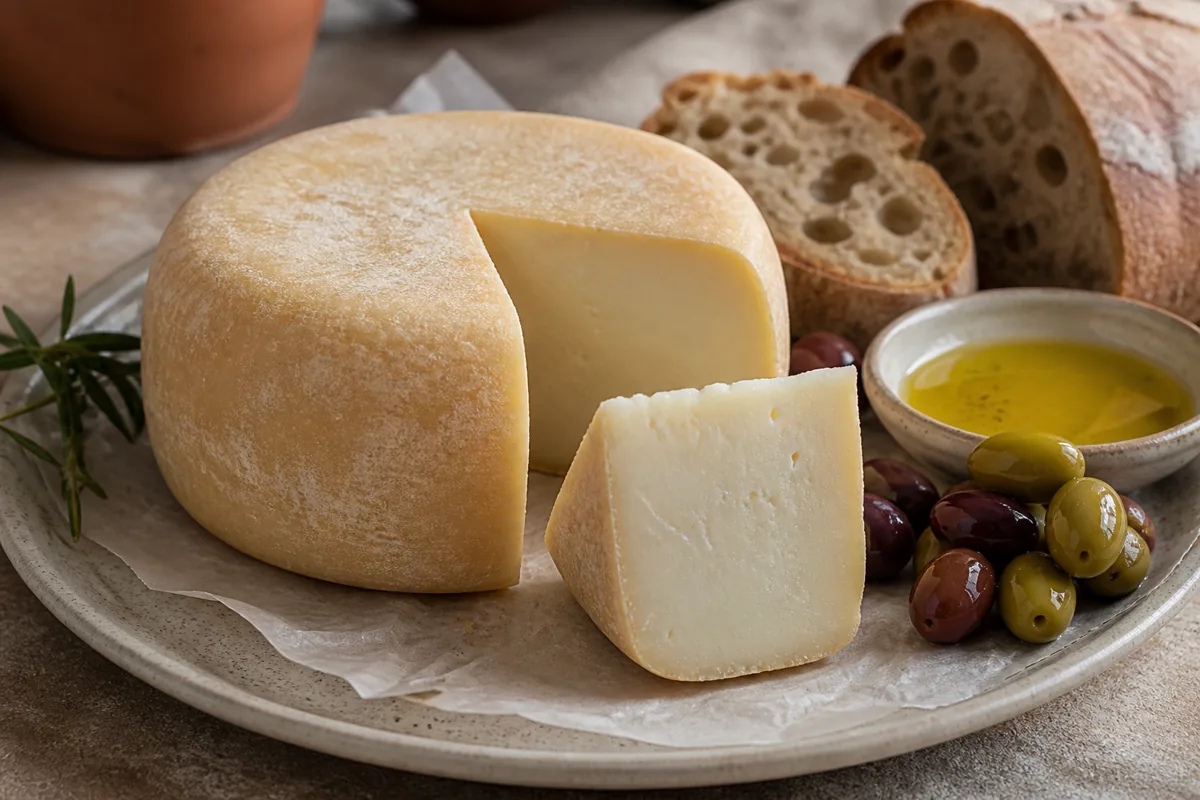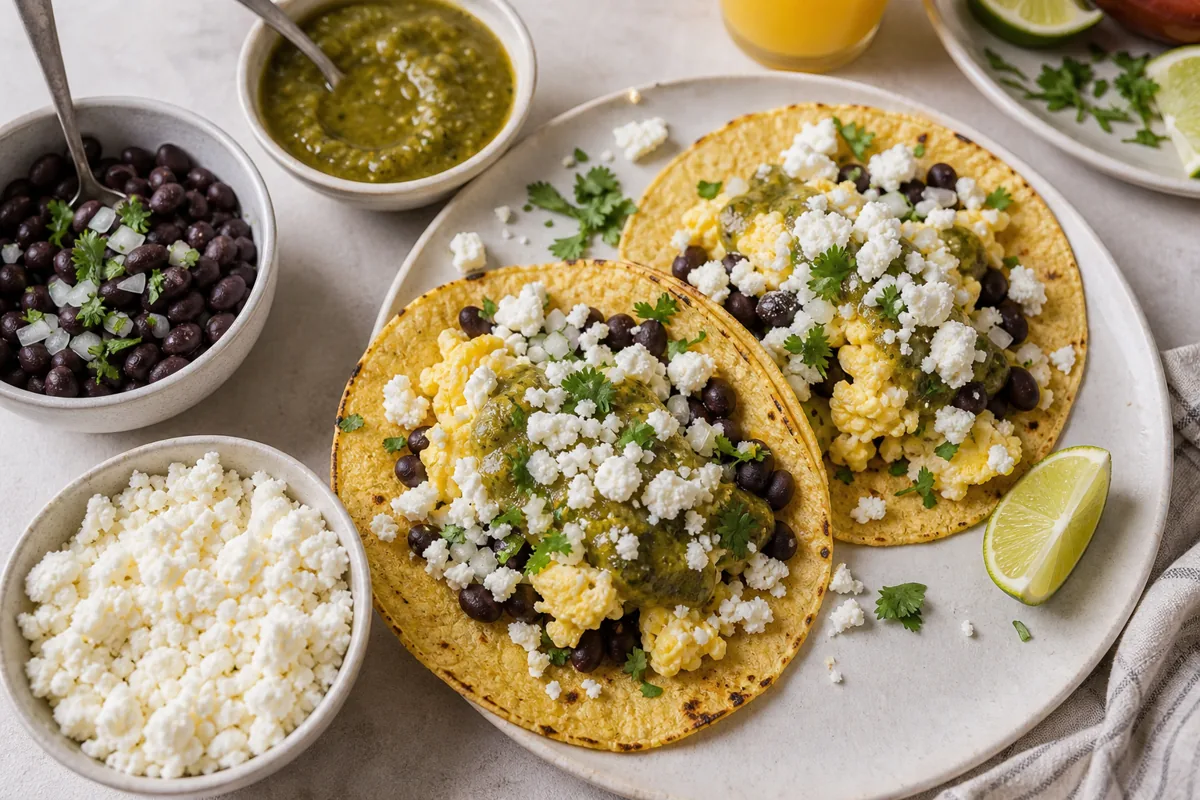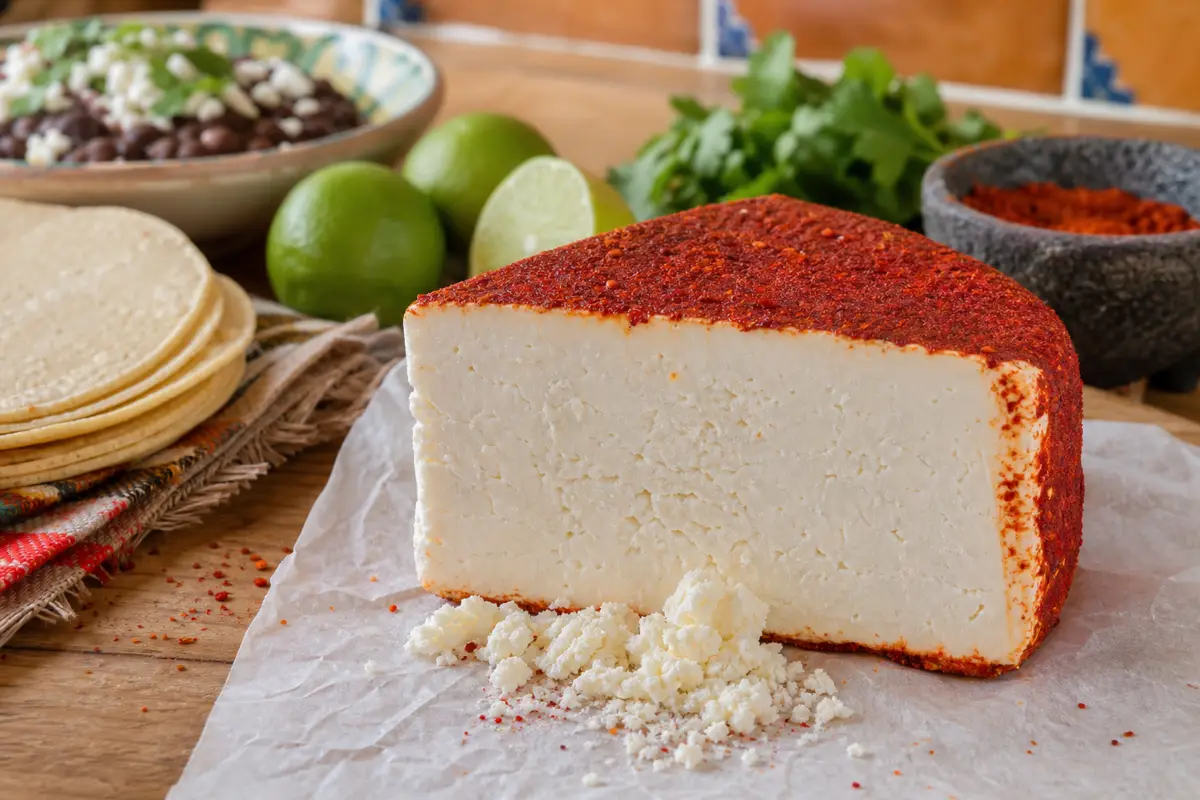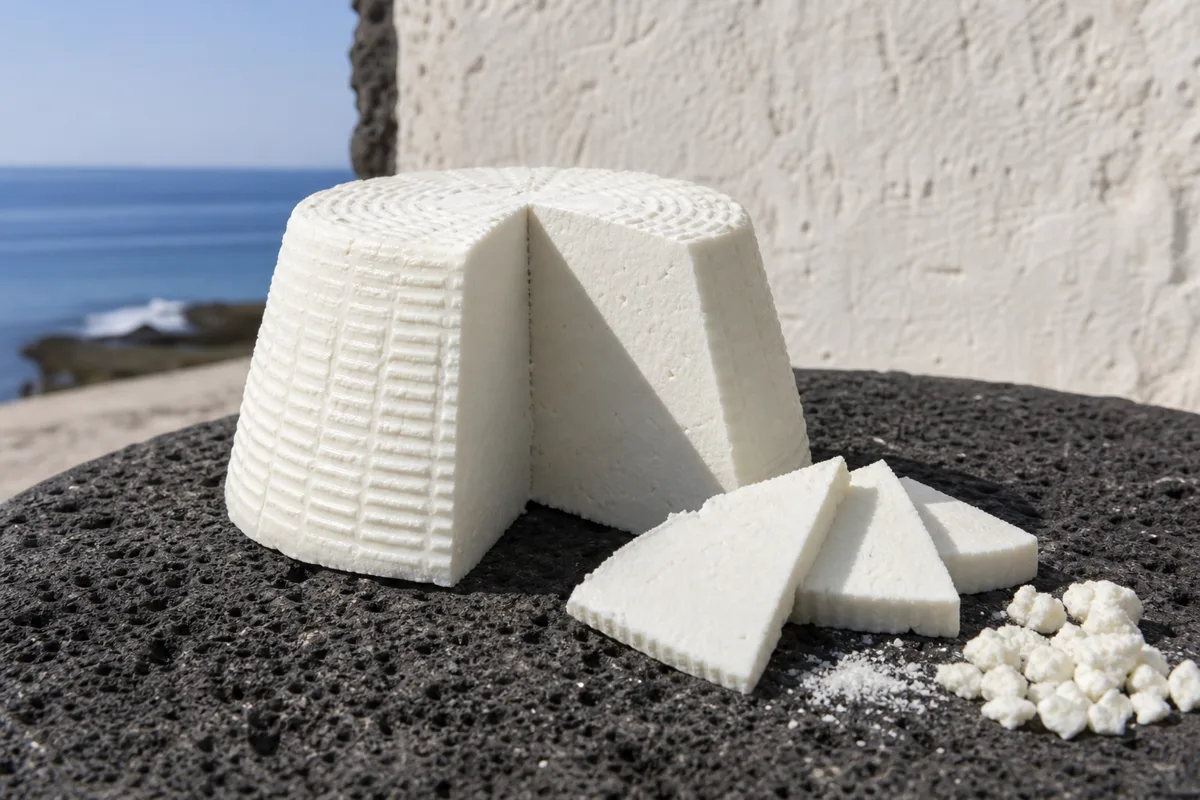
Ricotta salata is ricotta that has been pressed, salted and left to age. Cheese.com calls it a semi-hard whey cheese from Italy, traditionally from Sicily and Sardinia.
In This Article
What Is Ricotta Salata?
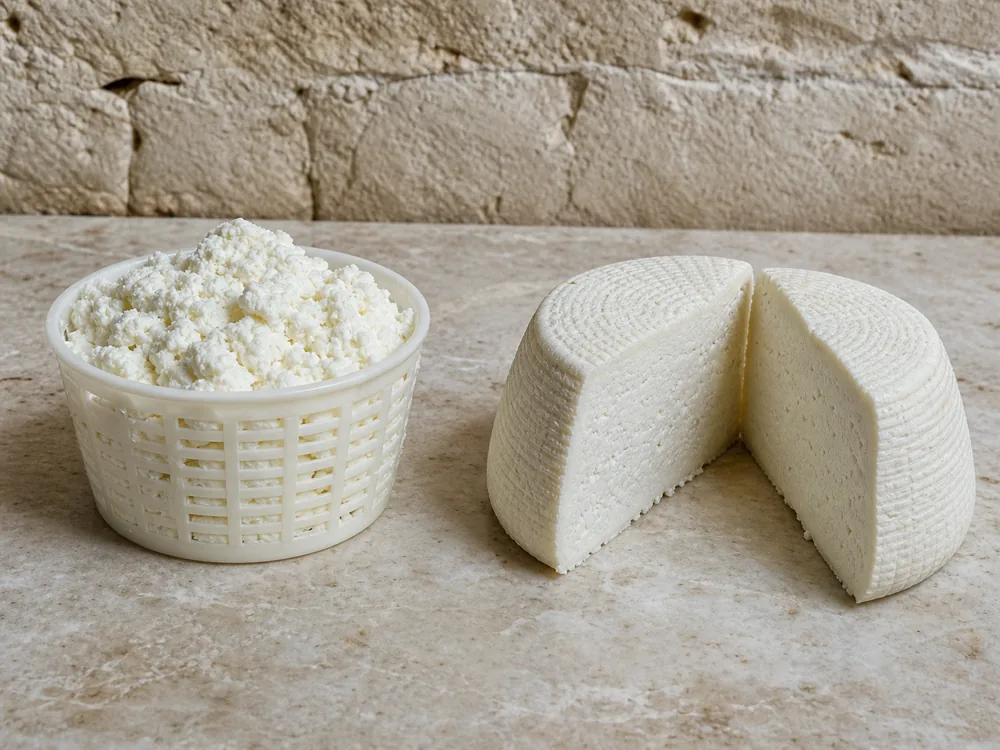
Ricotta salata is a firmer, drier form of fresh ricotta. Cheese.com sets the two side by side: ricotta is soft and creamy, while ricotta salata is a firm, aged cheese with less moisture.
The Italian National Research Council (CNR) describes ricotta salata as a way to preserve fresh ricotta, which spoils quickly, and as typical of almost every region of southern Italy. Italian Wikipedia likewise places production in the south, and CNR's own record comes from the Avellino area.
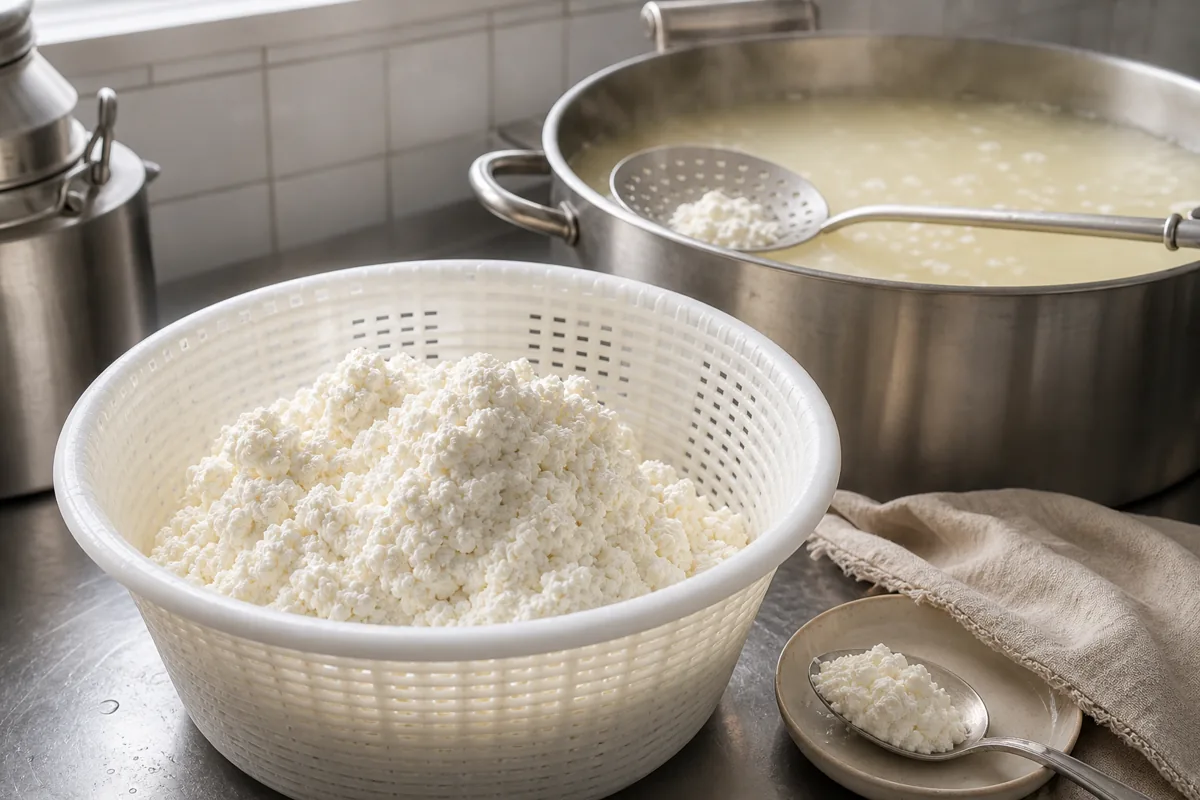
Both cheeses start as whey, the liquid left over after another cheese is made. Cheese.com says the whey for ricotta salata comes from cheeses such as Pecorino Romano or Parmesan, and that it is heated and cooked again until curds form.
Cheese.com adds that ricotta salata is not made from finished ricotta but from the leftover whey, while Italian Wikipedia and CNR describe the same cheese from the other end: freshly made ricotta drains and is then salted. The accounts agree because ricotta is the curd lifted from the whey, and ricotta salata is that curd salted and matured.
Italian Wikipedia gives three names for the same cheese: ricotta secca (dry), ricotta salata (salted) and ricotta stagionata (aged). It says the cheese sold in shops is made mainly from sheep's milk whey, and that Sardinia also makes it from goat whey.
Ingredient lists show how far the recipe can move:
- Auricchio: 97 percent sheep's milk whey and 3 percent salt.
- CNR record, Avellino: sheep's milk whey, sheep's milk and salt.
- Latterie di Sardegna, Prejàda: goat's milk whey and salt.
- BelGioioso: pasteurized whey and milk from cows, vinegar and salt.
The name alone does not tell you the animal. Those four lists cover sheep, goat and cow, and two of them add milk to the whey.
CNR also records a Cilento cheese made the same way from the whey of a pecorino made with sheep's and goat's milk, so mixed-animal versions exist too.
How Is Ricotta Salata Made?
The whey is heated first. Italian Wikipedia gives about 85°C in wide pots called doppifondi, where the proteins clump and rise to the surface to be lifted off.
Cheese.com gives the same heat in Fahrenheit, 185°F.
Acid is part of the recipe too. Cheese.com says the whey is heated and acidified, BelGioioso's ingredient list names vinegar, and CNR adds 0.5 to 1 percent acid whey, kept from the previous batch and left to sour by itself, so the flakes surface more easily.
Draining and salting come next. Italian Wikipedia says the curd drains for several days before it is salted, almost always by hand with coarse sea salt.
CNR records one regional method step by step, drawn from five producers around Avellino who make the cheese seasonally from the whey left by Pecorino irpino:
- The whey is mixed with 3 to 5 percent sheep's milk and heated over a direct gas or wood flame to 85 to 90°C.
- After a few more minutes of cooking, the flakes are skimmed into wicker or plastic baskets, given light hand pressure and left to drain on sloping tables until fully cool.
- Fine salt is sprinkled over the cheeses by hand, then again one or two days later, in a quantity CNR calls considerable but not precisely defined.
- The cheeses stay in their baskets for 10 days, then are turned out to mature.
The finished Avellino cheese is a truncated cone 10 to 12 cm across and 5 to 6 cm high, weighing about 500 g, according to the same record. The baskets it drains in measure 15 cm across and 10 cm high, so the cheese shrinks clearly between basket and shelf.
How Long Is Ricotta Salata Aged?
There is no single answer, because each source gives a different window. Latterie di Sardegna says its goat's whey cheese needs no ageing at all, while Cheese.com gives the longest figure, at least three months, though the same page also says several weeks.
| Source | Cheese it describes | Ageing |
|---|---|---|
| Latterie di Sardegna | Prejàda, goat's whey | No ageing needed |
| Italian Wikipedia | Ricotta secca in general | 10 to 30 days |
| BelGioioso | Cow's whey and milk | 30 days |
| CNR record | Avellino, sheep's whey and milk | 1 to 3 months |
| Cheese.com | Ricotta salata in general | At least 3 months in one passage, several weeks in another |
Cheese.com says longer ageing gives a more pronounced taste. CNR classes its one to three months of maturing as proteolytic and lipolytic, the type in which proteins and fats break down, and says the wheels end up hard.
Those wheels mature on wooden boards in cool, dimly lit rooms, the same ones that age Pecorino irpino, and CNR says they get no surface cleaning along the way.
The texture descriptions line up with the ageing: the goat's whey cheese with no ageing is semi-soft, BelGioioso's 30-day cheese is semi-firm, and CNR's cheese matured for one to three months is hard. The same name therefore covers a semi-soft table cheese and a hard grating cheese.
What Does Ricotta Salata Taste Like?
Most descriptions are of a mild, milky cheese with salt behind it. Cheese.com calls the flavour slightly salty and tangy, balanced by a subtle sweetness.
Each source describes its own cheese a little differently:
| Cheese.com | Slightly salty and tangy with a subtle sweetness; firm and crumbly |
| BelGioioso, 30 days | Milky and nutty with a hint of salt; semi-firm and rather dry |
| Auricchio | Pleasant and tasty; a compact paste that tends to flake |
| CNR, Avellino | Salty and slightly piquant; hard |
| Latterie di Sardegna, goat | Pleasant milky flavour with a hint of salt; delicate and semi-soft |
Colour varies as well. Auricchio, BelGioioso and Latterie di Sardegna describe a white cheese, while the CNR record calls the Avellino cheese cream-yellow, more or less intense.
Which Ricotta Salata Should You Buy?
The animal behind the whey changes how the cheese is used. Italian Wikipedia says the goat's whey cheese made in Sardinia has a softer texture, so it is a table cheese rather than a grating one, and Latterie di Sardegna's sheet lists it as a table cheese to eat as it is and also as a condiment.
The sheep's whey cheese sold in shops is, in Italian Wikipedia's account, often used grated, and CNR says its hard Avellino cheese is used mainly as a grating product.
The outer surface differs from label to label. Auricchio lists an edible, smooth rind, Latterie di Sardegna says its cheese has no rind and no rind treatment, and CNR says its Avellino wheels are not cleaned on the surface while they mature.
On a matured Avellino wheel, CNR describes a glossy surface where fat has come out, and white spots where salt has risen to the surface.
Size changes the purchase as well. Auricchio lists a 500 g format, in line with the Avellino cone, while Latterie di Sardegna's cylinder is 16 to 22 cm across and weighs 3 to 4 kg on average.
Grating suits the hard sheep's whey cheese, the table suits the softer goat's whey version, and size runs from about 500 g to 3 to 4 kg.
Why Does Ricotta Salata Crumble Instead of Melting?
Ricotta salata does not melt the way mozzarella or cheddar does.
Cheese.com says it softens when heated, so a dish that needs a creamy layer calls for a good melting cheese instead.
Its firm, crumbly body is what makes it useful, and Cheese.com recommends grating or crumbling it over salads, pasta and vegetables. It credits ageing for the firmer, more crumbly texture, which makes the cheese a popular choice for grating over pasta or salads.
The same page also says the cheese melts slightly when grated over a hot bowl of pasta, coating each strand with creaminess. Read together, the two statements describe a slight softening of grated cheese, not a melt like mozzarella's.
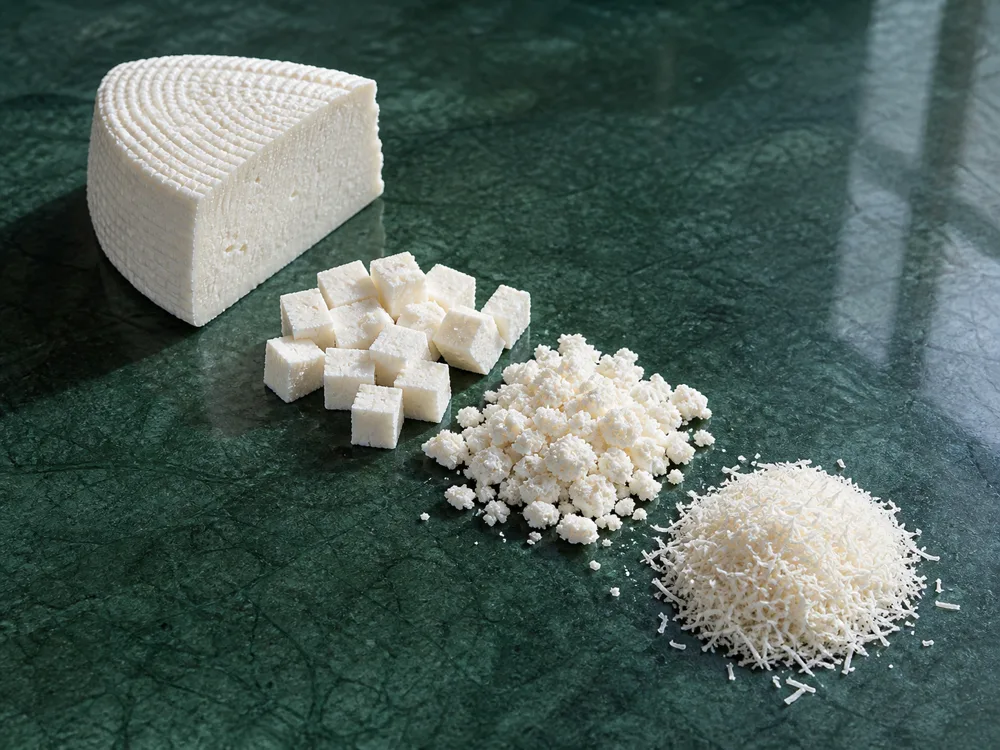
The makers' serving notes follow the same line. BelGioioso suggests cutting it into chunks or crumbling it, and Latterie di Sardegna says its goat's whey version can be grated or flaked.
How Should You Use Ricotta Salata?
Italian Wikipedia calls ricotta salata a key ingredient of Sicilian dishes such as pasta alla Norma, and Cheese.com says Sicilian cooks often use it there for a rich, savory element.
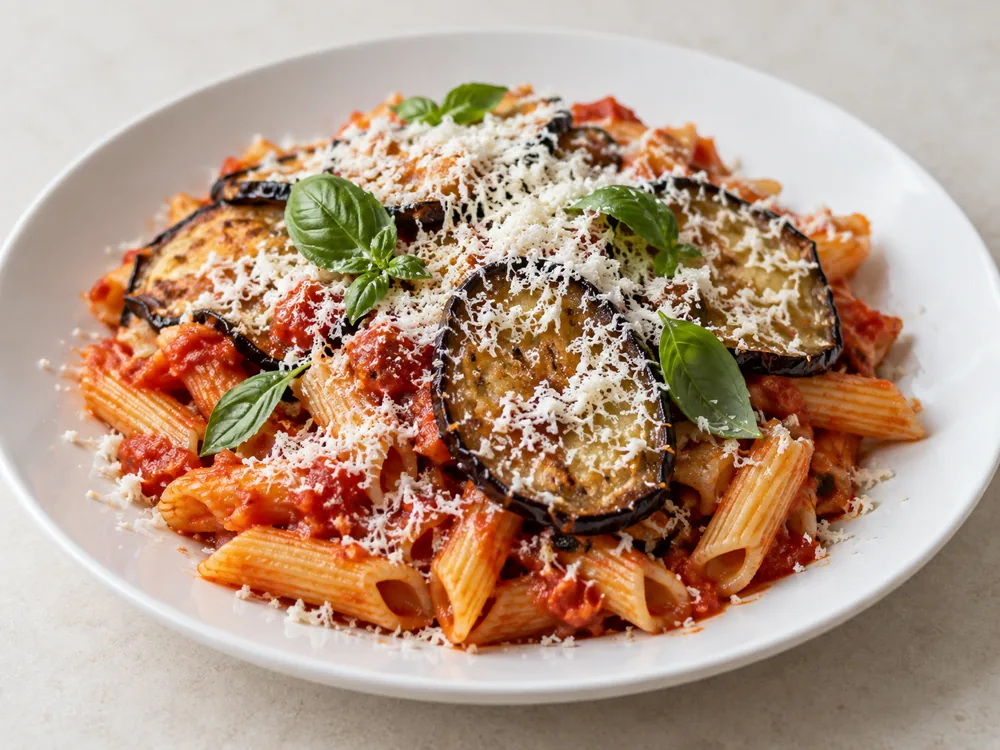
Auricchio suggests its cheese as a table cheese, as an ingredient in first and second courses, or grated onto pasta.
BelGioioso cuts its cheese into chunks for snacks, cheeseboards and antipasto. It also crumbles it over salads and grilled fruit and vegetables.
Two other uses sit outside the grater. Italian Wikipedia notes a version with red chilli added as the curd goes into the basket, used in some Calabrian and Apulian dishes, and CNR says that around Easter in Irpinia the cheese, combined with cacioricotta, goes into savoury pizza chiena pies filled with eggs and diced salami or ham.
Cheese.com says the cheese adds texture to a dish without overpowering the other ingredients, and it explains its pairings by contrast: the saltiness lifts the ingredients around it, while the subtle sourness balances rich or creamy dishes.
For pasta, Cheese.com says tomato-based sauces or pesto pair well, with the cheese tossed in shortly before serving.
Between them, BelGioioso and Cheese.com name these partners:
| Pairing | Type | Why It Works |
|---|---|---|
| Fresh fruit | Food | First on BelGioioso's pairing list; Cheese.com says the cheese's own sweetness comes out against ripe figs or honey. |
| Grilled vegetables | Food | BelGioioso also suggests crumbling the cheese over them. |
| Roasted beets | Food | Named by BelGioioso. |
| Olives | Food | Named by BelGioioso. |
| Arugula salad | Food | Cheese.com says the cheese's salt mingles with the peppery greens. |
| Creamy risotto | Food | Cheese.com says the tang cuts through the richness. |
| Light wine | Wine | BelGioioso's only drink suggestion, with no grape named. |
Cheese.com adds grain bowls, roasted vegetables such as eggplant or zucchini, and appetizers such as bruschetta.
What Can You Use Instead of Ricotta Salata?
The closest match is Greek mizithra in its aged form, called xynomizithra. Wikipedia says that salted, aged mizithra is drier, denser, saltier and more sour than the fresh cheese, and that it resembles ricotta salata.
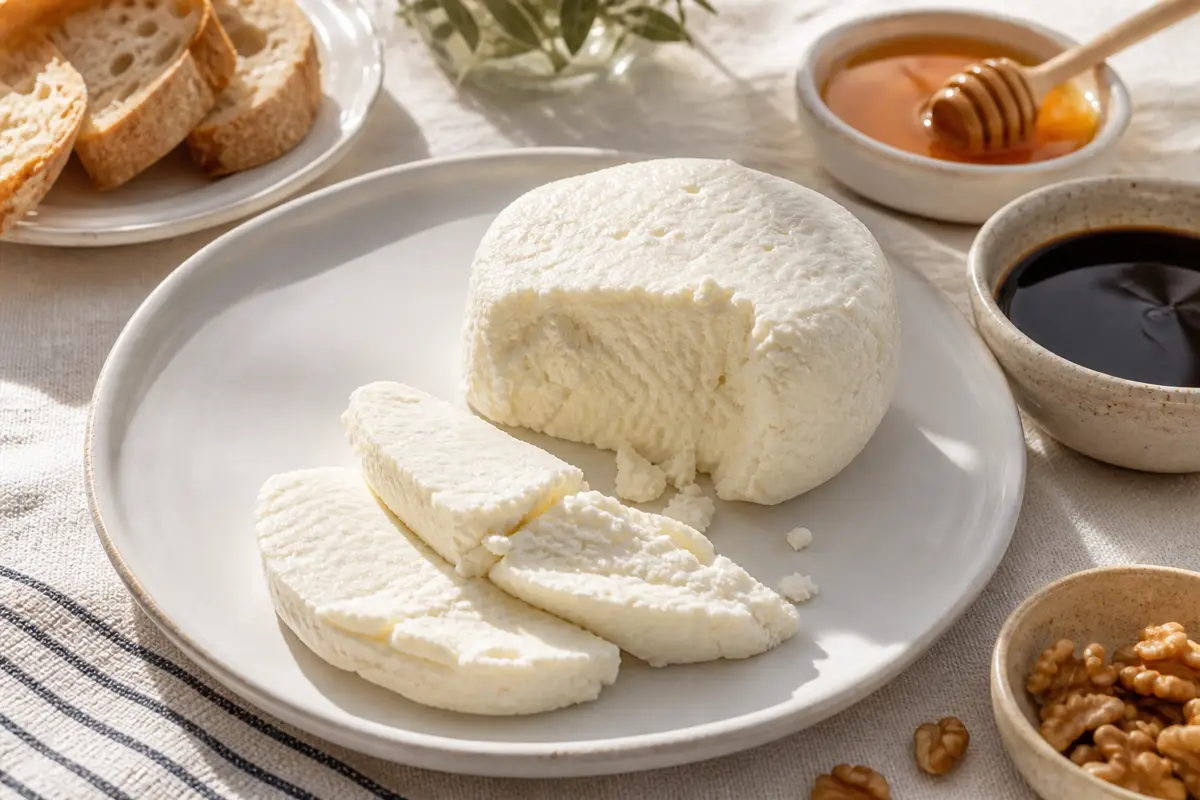
Fresh mizithra is a different cheese: Wikipedia calls it soft, snow-white and moist, with an almost sweet, milky taste because no salt is added, so only the aged form stands in.
Wikipedia also calls aged mizithra the grating cheese of Greek cuisine, suited to sprinkling over hot pasta, and says of mizithra in general that Cyprus has a similar cheese called anari.
Italian Wikipedia shows the swap working the other way: cooks in Basilicata use ricotta salata in pasta with peperoni cruschi as an alternative to pecorino.
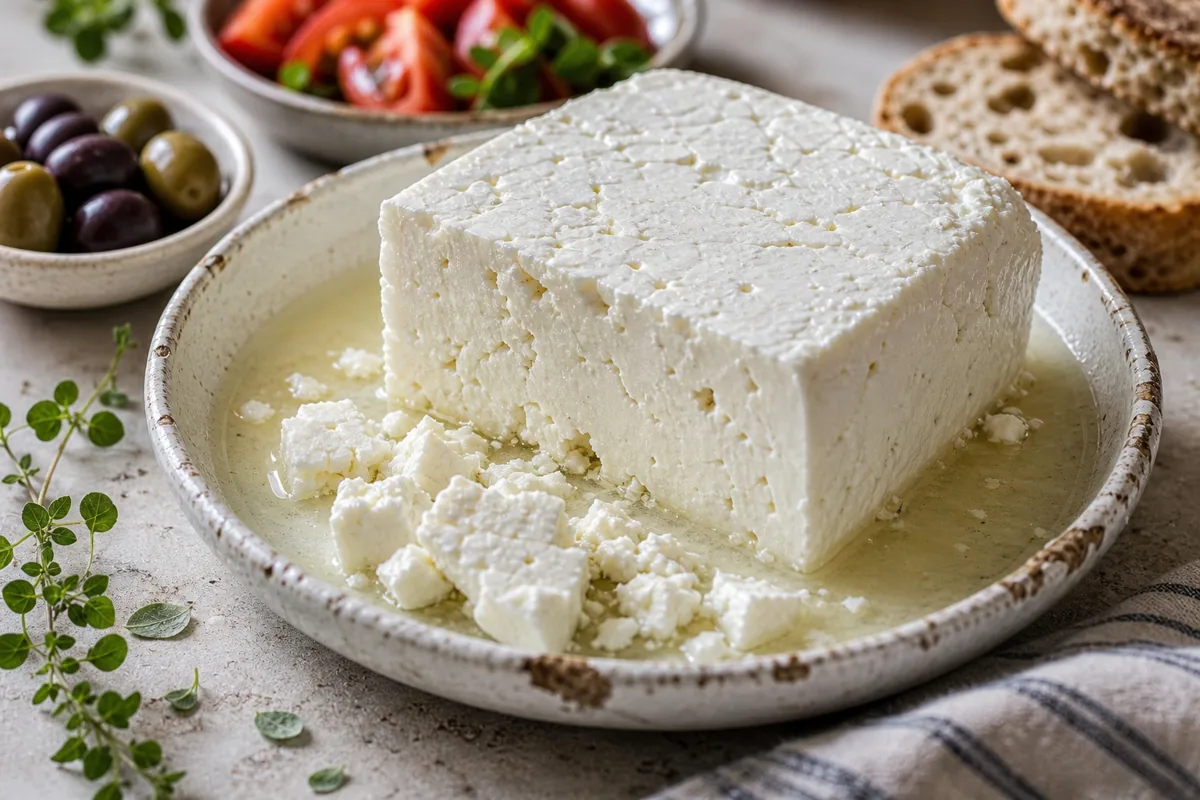
Cheese.com names three other cheeses as similar to ricotta salata: Asiago DOP, Cotija and feta. BelGioioso sells its version as Ricotta Salata, The Italian Feta, which puts the comparison with feta in the product name.
How Much Fat and Lactose Does Ricotta Salata Have?
Fat and calories differ widely between makers, while protein stays close. Two current labels show the spread per 100 g:
| Label | Energy | Fat | Protein | Salt |
|---|---|---|---|---|
| Auricchio, sheep's whey | 211 kcal | 15 g | 17 g | 3.5 g |
| Latterie di Sardegna, goat's whey | 259 kcal | 20 g | 16 g | 2 g |
Latterie di Sardegna's label shows 20 g of fat per 100 g against Auricchio's 15 g, a third more from two cheeses sold under the same name. Auricchio's label puts 11 g of its 15 g of fat as saturated.
Salt shows a similar gap, 3.5 g per 100 g against 2 g, and Auricchio lists 3 percent salt as an ingredient.
Ricotta salata is not lactose-free. Cheese.com says it contains lactose, and Auricchio and Latterie di Sardegna both list milk and milk products, including lactose, as allergens.
How Should You Store Ricotta Salata?
Latterie di Sardegna gives below 4°C as the storage temperature for its cheese. The CDC says to keep a refrigerator at 40°F (4°C) or below.
A sealed pack lasts a long time, with 180 days for Latterie di Sardegna's vacuum-packed cheese. Once the pack is open, the window is short.
Latterie di Sardegna says to eat its cheese within 5 days of opening.
The CDC lists dairy among the perishable foods that should be refrigerated within 2 hours, or within 1 hour when the air is above 90°F.
Is Ricotta Salata Safe in Pregnancy?
It depends. The NHS lists pasteurised semi-hard cheeses and pasteurised ricotta as safe to eat in pregnancy, along with any cheese cooked until steaming hot, but neither the NHS nor the CDC names ricotta salata, so their lists do not settle it.
The NHS does not name ricotta salata or put it on its list of hard cheeses. For unpasteurised milk, it says that any foods made from it must be thoroughly cooked.
The CDC does not name ricotta salata either, but it lists hard cheese made with pasteurized milk as safer, along with feta and mozzarella made with pasteurized milk.
It lists soft cheese made from unpasteurized milk as riskier, along with any queso fresco-type cheese, pasteurized or not, such as queso fresco, queso blanco, requesón or similar fresh, soft cheeses. It says pregnant women are 10 times more likely to get a Listeria infection.
Pasteurisation depends on the maker. Cheese.com says most ricotta salata sold commercially is made from pasteurized milk, and BelGioioso's ingredient list starts with pasteurized whey and milk.
SOURCES & REFERENCES
What Else Do People Ask About Ricotta Salata?
No. Ricotta salata is ricotta that has been pressed, salted and aged, and Cheese.com describes it as firm with less moisture, where fresh ricotta is soft and creamy.
No. Cheese.com says it does not melt like mozzarella and softens when heated, so it is grated or crumbled over food instead.
Ageing times range widely: 10 to 30 days in Italian Wikipedia, 30 days at BelGioioso, one to three months in the CNR record, and several weeks or at least three months on Cheese.com. Latterie di Sardegna says its goat's whey cheese needs no ageing.
Mostly sheep's milk whey. Latterie di Sardegna makes a goat's whey version and BelGioioso a cow's whey and milk version.
Wikipedia says aged, salted mizithra resembles ricotta salata. Cheese.com lists Asiago DOP, Cotija and feta as similar cheeses.
It varies by maker: Auricchio's label shows 3.5 g of salt per 100 g and Latterie di Sardegna's shows 2 g.
Latterie di Sardegna says to eat its cheese within 5 days of opening.
Cheese.com says most ricotta salata sold commercially is made from pasteurized milk, but it depends on the maker, so the label decides.