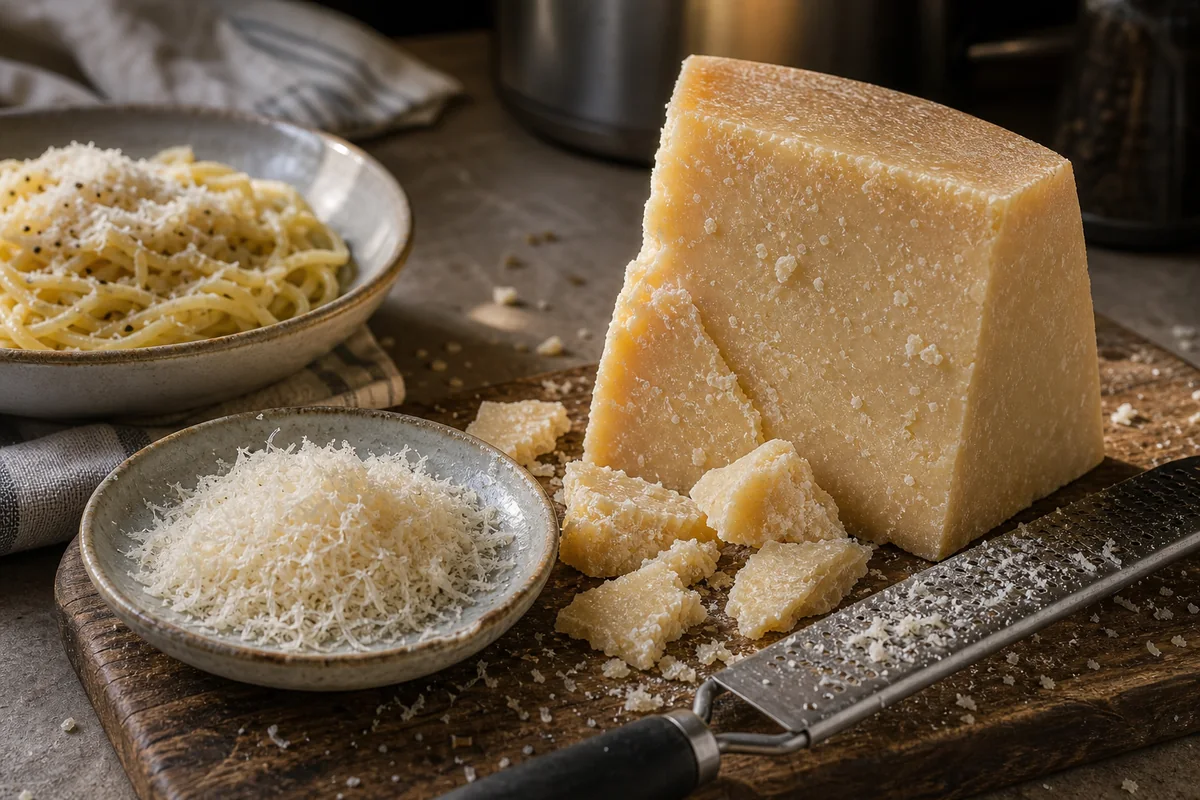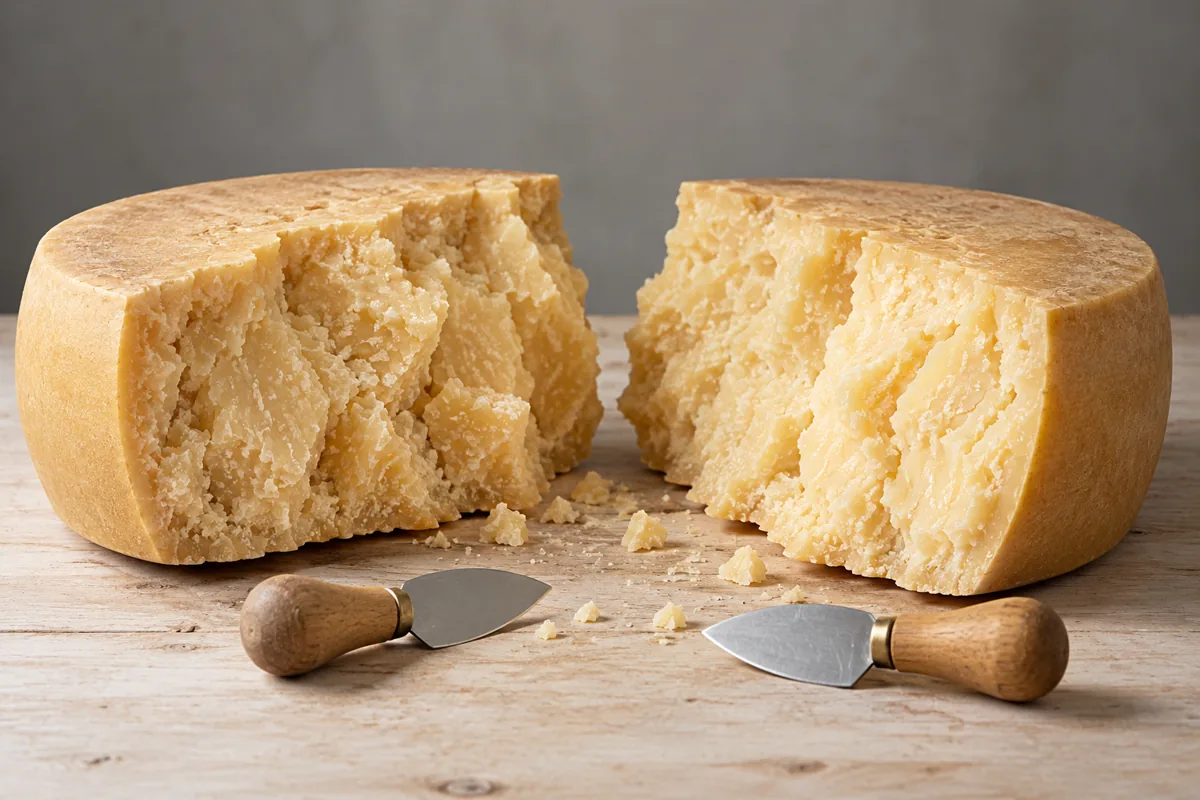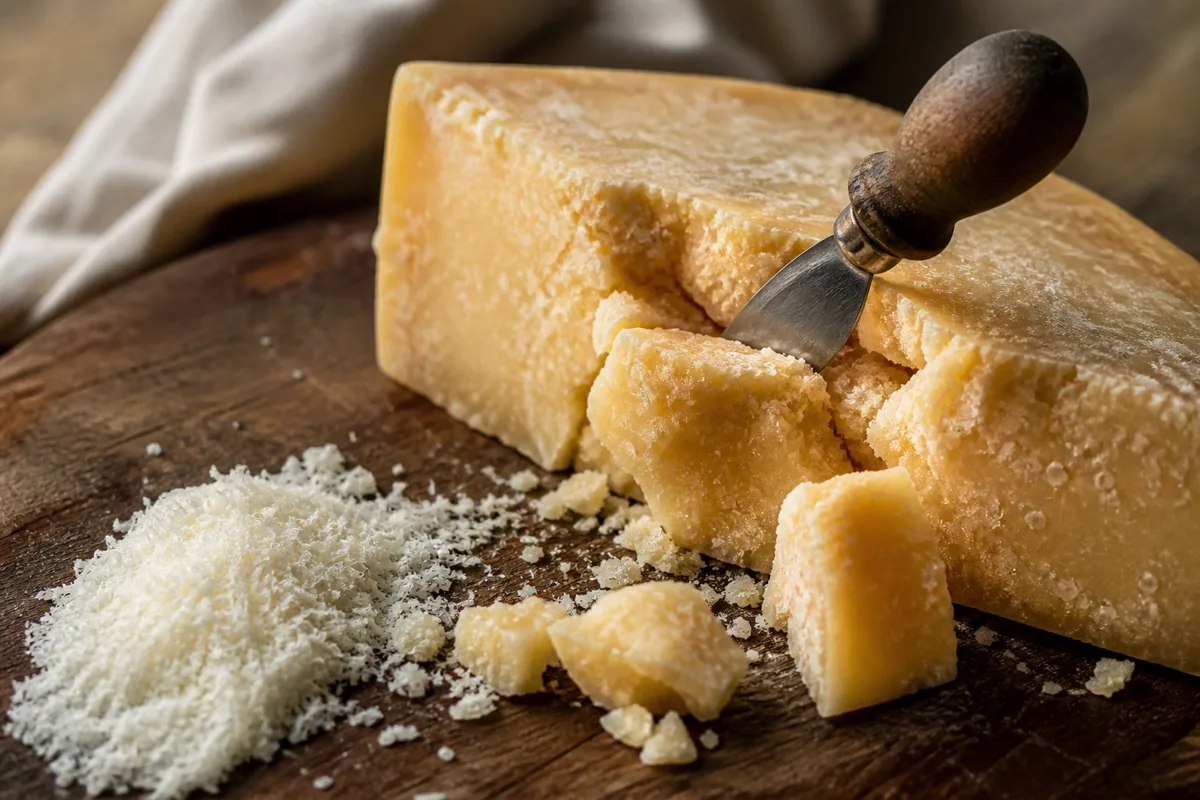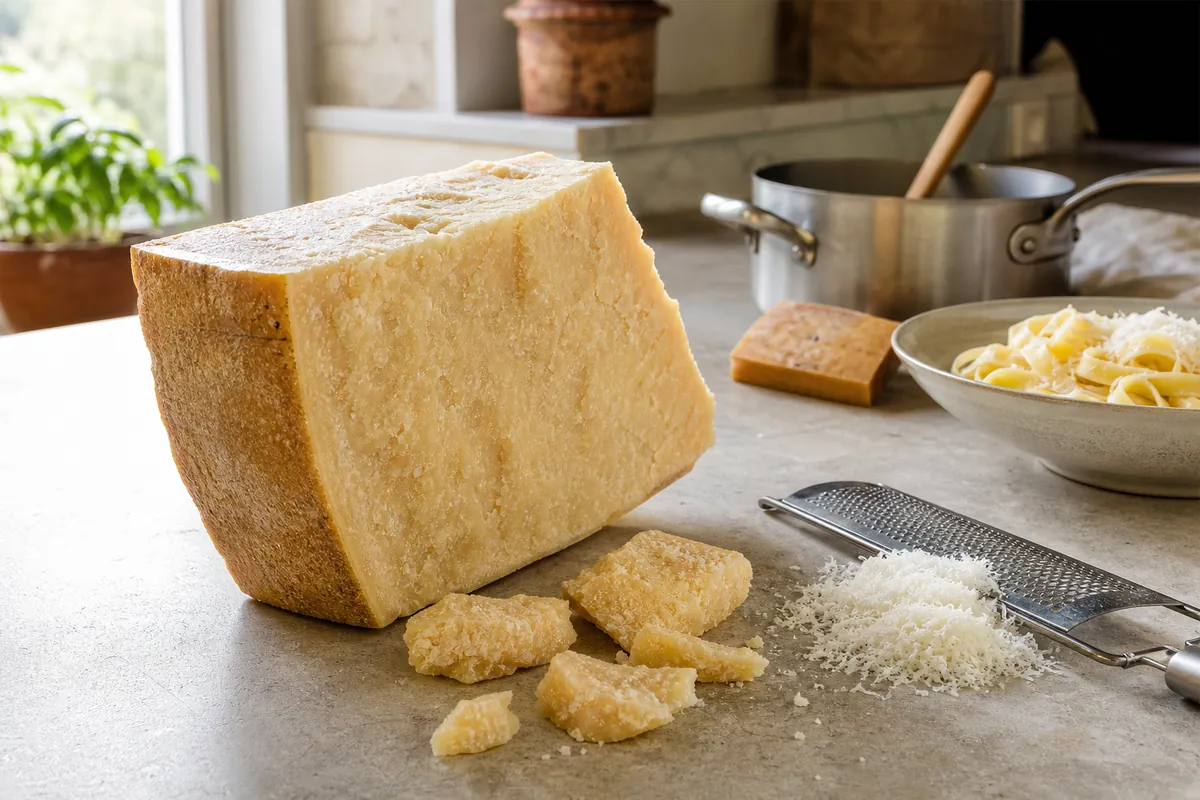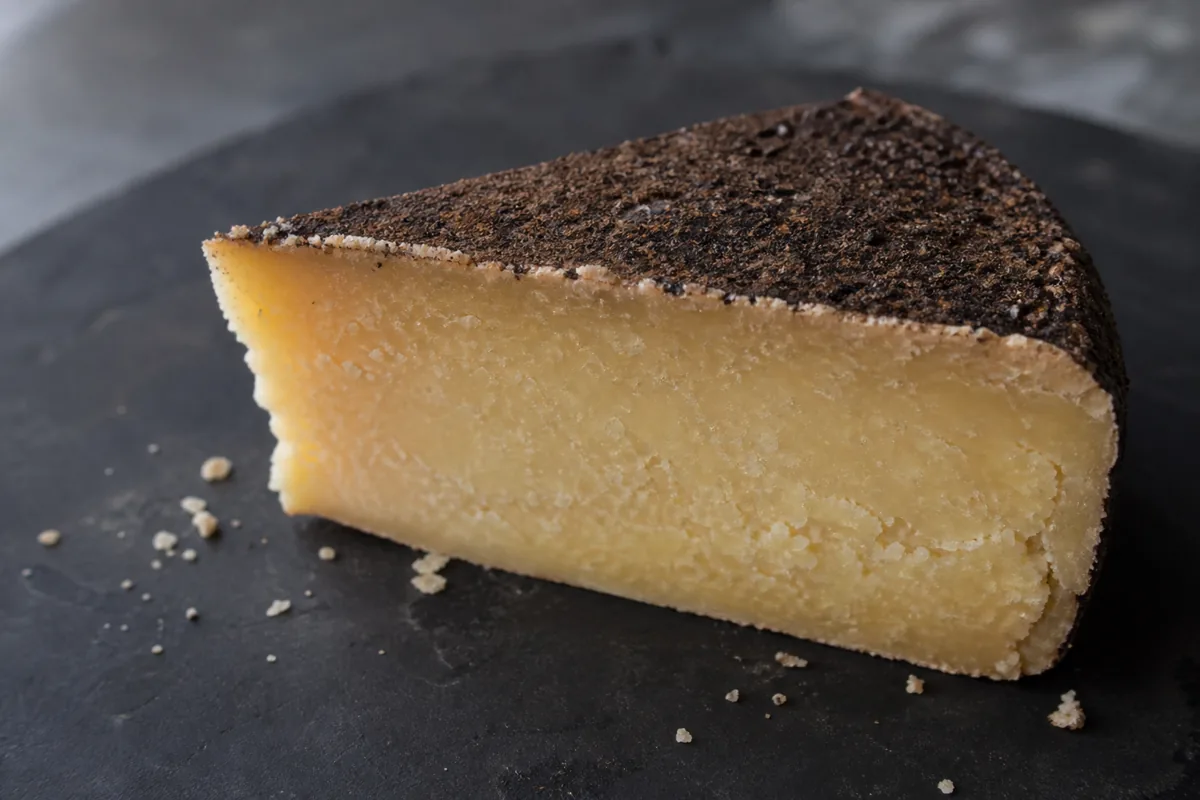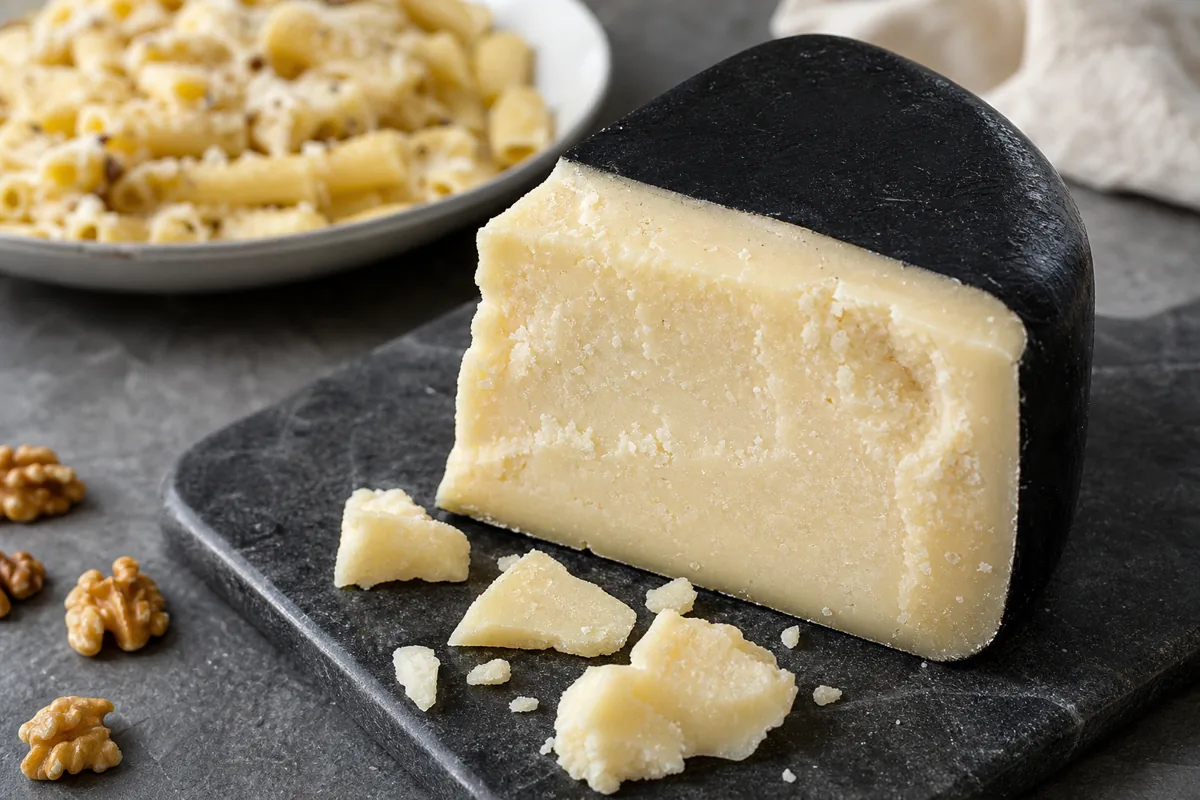
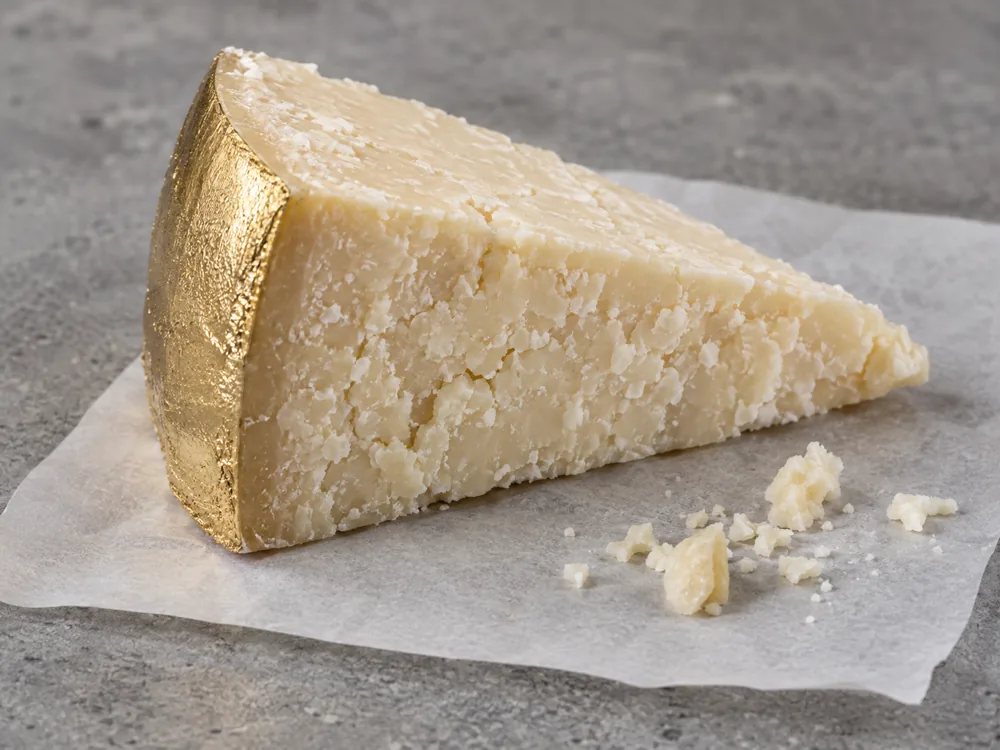
Bella Lodi is a hard cheese from the Lodi area of Lombardy, sold with a black-coated rind around white, grainy paste. Cheese.com files it in the Parmesan family, and the producer, Pozzali Lodigrana, describes the Classico as an aged cheese with a black rind.
Sources disagree on age. The producer says over a year and a half, Cheese.com says 18 months, and Saputo's imported wedge states a 16-month minimum.
In This Article
Where Does Bella Lodi Fit Among the Granas?
The producer says Bella Lodi comes from a single dairy more than 100 years old, in a municipality of the protected Adda Sud Park reserve. It sells the Classico "from the recipe for Granone Lodigiano P.A.T.," a traditional agri-food product listing under Italian Ministerial Decree no. 350 of 1999.
If you see Granone Lodigiano for sale, it is a different product: the producer lists that wheel separately in its range, at 50 kg and matured for at least two years.
Cheese Connoisseur reported in 2012 that the Pozzali family made Grana Lodigiano, then Grana Padano wheels, and returned to the Lodi style under the Bella Lodi name. The magazine calls Bella Lodi neither Grana Padano nor Parmigiano Reggiano wheels but a cheese from the older Grana Lodigiano line.
Granas take their name from a grainy paste. They are best known as grating cheeses but have become more popular as table cheeses, especially when young.
What Is in the Black Rind Coating?
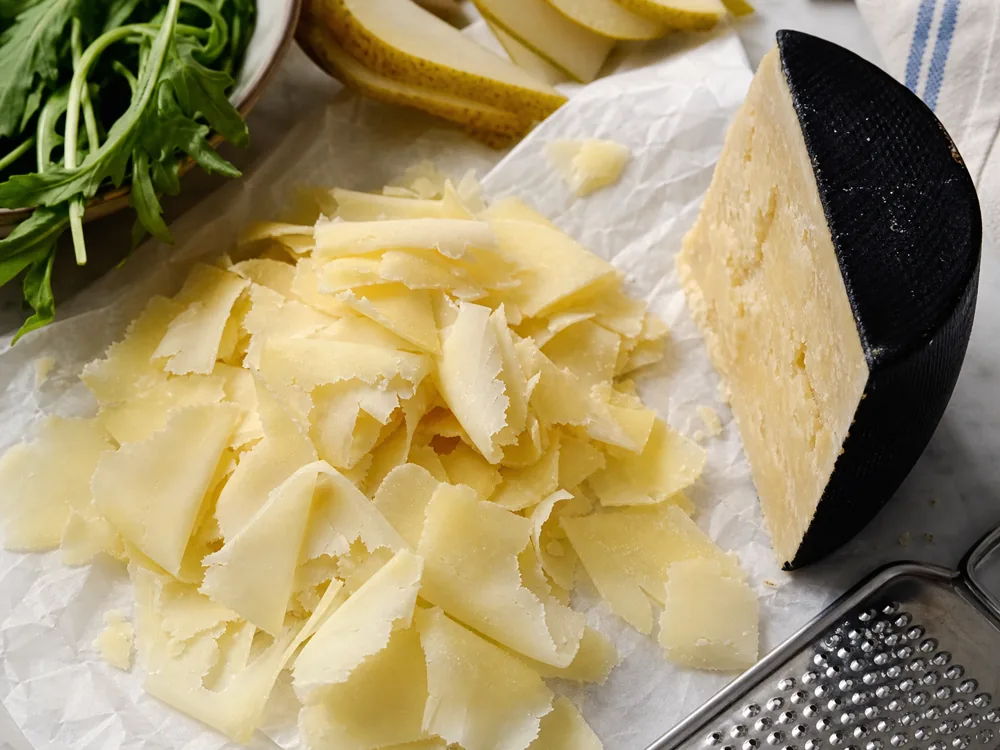
Every source mentions the black rind. Cheese.com says wheels are hand-coated with a mixture of umber clay, grape seed oil, and carbon black.
The coating also tells you the wheel passed selection. The producer says a cheese becomes a Bella Lodi with its black rind only after checks on colour, texture, smell, and taste, and its production notes place the coating after maturation.
Cheese Connoisseur adds that black rinds were common on early granas, first rubbed with oil-based mixtures. Bella Lodi's rind is now painted with a food-safe black finish that recalls the Black Grana of Lodi.
Ask the seller whether the black coating is meant to be eaten before you grate it. Cheese Connoisseur calls it a food-safe finish.
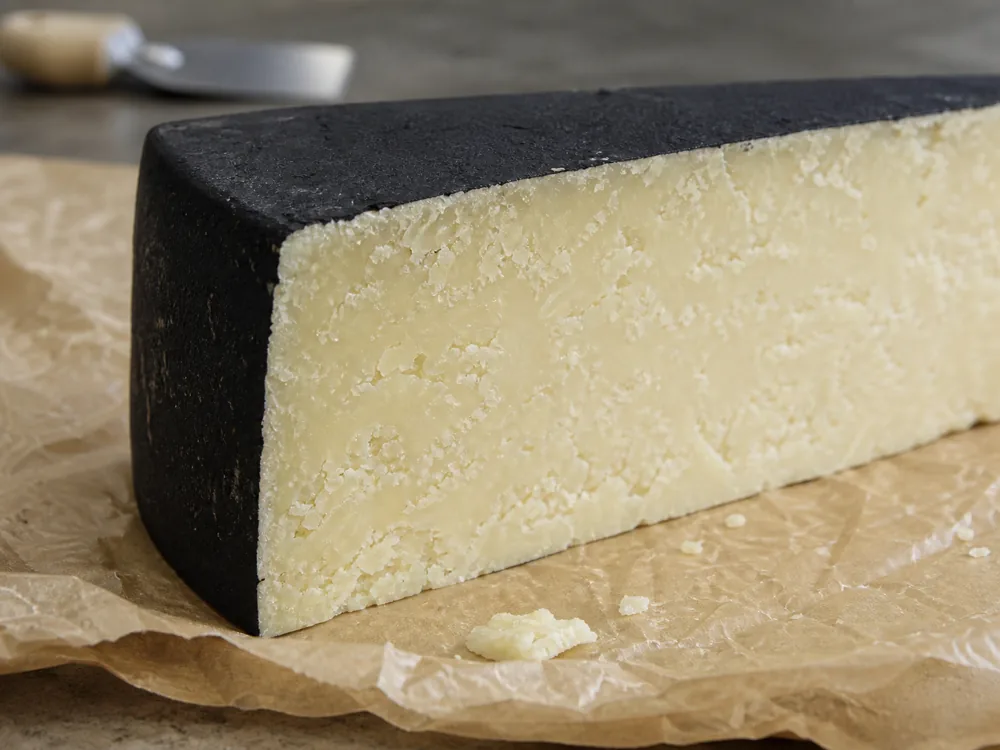
On a cut face, white is the colour to hold the paste against. The producer, Cheese.com, and Cheese Connoisseur all describe white paste, the magazine calls it unusually white with little seasonal variation, and the producer credits its selection of lactic ferments for that white colour.
What Does Bella Lodi Taste Like?
Sources agree that Bella Lodi is full-flavoured without being sharp. The producer describes an intense aroma and a full flavour "never piquant or overly salty," and Cheese Connoisseur says the taste is neither too salty nor too sharp, which makes it an excellent table cheese.
| Source | Colour | Texture | Flavour and aroma |
|---|---|---|---|
| Producer (Classico) | White | Not stated | Intense aroma, full flavour, never piquant or overly salty |
| Cheese.com | White | Crumbly, flaky, and grainy | Full flavour, not too sharp or salty, intense and fragrant smell |
| Saputo (imported wedge) | Not stated | Delightfully crumbly | Nutty and creamy |
| Cheese Connoisseur | Unusually white | Not stated | Warm, intense aroma, neither too salty nor too sharp |
Of these four sources, only Saputo calls the cheese nutty and creamy, so if you see a wedge sold as nutty, that is a retailer's description and not a producer claim.
How Local Raw Milk Becomes Bella Lodi
The producer says the Classico milk comes from selected herds in the provinces of Lodi and Crema, from cows milked within 50 km of the dairy. Cheese Connoisseur, reporting in 2012, put the maximum at 100 km, with most of the milk collected inside a 50 km radius.
Cheese.com, Saputo, and Cheese Connoisseur all describe raw milk, and Cheese Connoisseur adds that the milk rests so the cream rises and can be skimmed off.
- Rest and preheat: milk stands in shallow vessels, and the partially skimmed milk is preheated with starter culture
- Set the curd: traditional copper boilers and natural rennet start coagulation
- Cut and cook: a spino cuts the curd by hand into rice-size pieces, then the temperature rises, the curd cools for about an hour, and it drains
- Brine: the formed cheese stays a month in water and kitchen salt
- Mature: dark warehouses at constant temperature for over a year and a half
- Coat: selected wheels receive the black rind after the final check
During maturation the wheels are brushed and checked by smell and with the traditional hammer, which the producer says is used "to beat the cheese like a drum."
| Source | Product | Stated age |
|---|---|---|
| Producer | Classico | Over a year and a half |
| Cheese.com | Bella Lodi | 18 months |
| Saputo | Imported wedge | Minimum of 16 months |
| Producer | Riserva Oro | Sold as aged 24 months; ripened for over 24 months |
| Producer | Granone Lodigiano P.A.T. | Minimum of two years |
The age printed on the wedge in your hand is the figure to trust.
What Are the Classico, Raspadura, and Riserva Forms?
The producer's range includes Classico, Raspadura, Riserva Oro, Riserva Verde, and Riserva Bianca. They differ in age, rennet, and even milk, so check which form the label names before you buy.
| Classico | The black-rind cheese the producer calls the oldest Bella Lodi. |
| Raspadura | Very fine flakes scraped from the cheese with a special knife. |
| Riserva Oro | Gold rind; well-ripened, drier, crumbly, and granular, with a stronger yet subtle flavour. |
| Riserva Verde | Made with vegetarian rennet, which the producer says suits vegetarians and Kosher and Halal certification. |
Raspadura is a Lodi-dialect term for scraping the cheese into very fine flakes. Cheese Connoisseur says the practice began with wheels that were imperfect or not fit for long ageing, which were cut open and scraped with a long, curved, flexible blade.
Riserva Bianca is the exception to cow's milk: the producer says it combines cow's and buffalo's milk and describes the flavour as enveloping and persistent, rich in the aromas of forage herbs.
How to Serve Bella Lodi
What you do with it, and what the producer suggests you drink with it, depend on the form you buy. For a wedge, Saputo's product page points to pastas, salads, and gourmet sandwiches, as well as a cheese board.
For Raspadura, the producer names carpaccio, risotto, and polenta as garnishes, says the flakes also fill sandwiches and rolls, and describes Raspadura as an aperitif nibble. Cheese Connoisseur calls risotto and polenta the traditional dishes of Lodi.
| Pairing | Type | Why It Works |
|---|---|---|
| Cold or cured meats | Food | The producer and Cheese Connoisseur both name them with Raspadura. |
| Nuts | Food | Named by both the producer and Cheese Connoisseur for Raspadura. |
| Mushrooms | Food | The producer names them with Raspadura. |
| Still red wine | Wine | The producer's first suggestion for Riserva Oro. |
| White raisin wine | Wine | The producer's other suggestion for Riserva Oro. |
| White wine | Wine | The producer pairs Riserva Bianca with white wines, fig jams, and wholemeal bread. |
Does Bella Lodi Contain Egg or Animal Rennet?
If you avoid egg, Saputo and Cheese.com give different answers. Saputo's ingredient line for its 150 g imported wedge reads unpasteurized milk, salt, rennet, lysozyme (egg), and bacterial culture, while Cheese.com says Bella Lodi has no added allergens.
If you need vegetarian rennet, the producer's Riserva Verde is its vegetarian-rennet form, and its Riserva Bianca page describes that cheese's rennet as "ethical" and not sourced from animals. Cheese.com also mentions a version made with GMO-free vegetarian rennet.
Is Bella Lodi Lactose Free?
The producer states Bella Lodi is naturally lactose free, with lactose below 0.01 g per 100 g, and says SGS certifies the absence of lactose. It credits selected ferments that convert lactose into lactic acid during fermentation and ageing.
The producer adds that it set 0.01 g per 100 g as its own maximum after EFSA's 2010 opinion on lactose thresholds, and that analyses never reach the limit. Its panel lists carbohydrates and sugars both below 0.01 g per 100 g.
The lactose figure is the producer's own claim, so if you have a medical reason to limit lactose in a serving of cheese, still ask a clinician.
Can You Eat Bella Lodi While Pregnant?
How eating cheese while pregnant is judged depends on the type: the NHS says pasteurised or unpasteurised hard cheeses, such as cheddar, gruyère, and parmesan, are safe.
The CDC lists hard cheese made with pasteurized milk, such as Parmesan, among safer choices and soft cheese from unpasteurized milk among riskier ones. It also says pregnant women are 10 times more likely to get a Listeria infection.
Bella Lodi is a hard cheese, but Cheese.com, Saputo, and Cheese Connoisseur describe it as raw milk, which is where the NHS and CDC wording diverge.
SOURCES & REFERENCES
What Else Do People Ask About Bella Lodi?
Ask the seller whether it is meant to be eaten. Cheese Connoisseur calls it a food-safe black finish and Cheese.com lists umber clay, grape seed oil, and carbon black.
Cheese.com files it in the Parmesan family under the nickname Black Parmesan, while Cheese Connoisseur says it is neither Grana Padano nor Parmigiano Reggiano but a cheese from the older Grana Lodigiano line.
For Bella Lodi, the producer says the cheesemaker checks a maturing wheel by smell and above all with a hammer used to beat the cheese like a drum.
Yes. The producer's Riserva Verde uses vegetarian rennet, its Riserva Bianca uses rennet it says is not sourced from animals, and Cheese.com also mentions a version made with GMO-free vegetarian rennet.