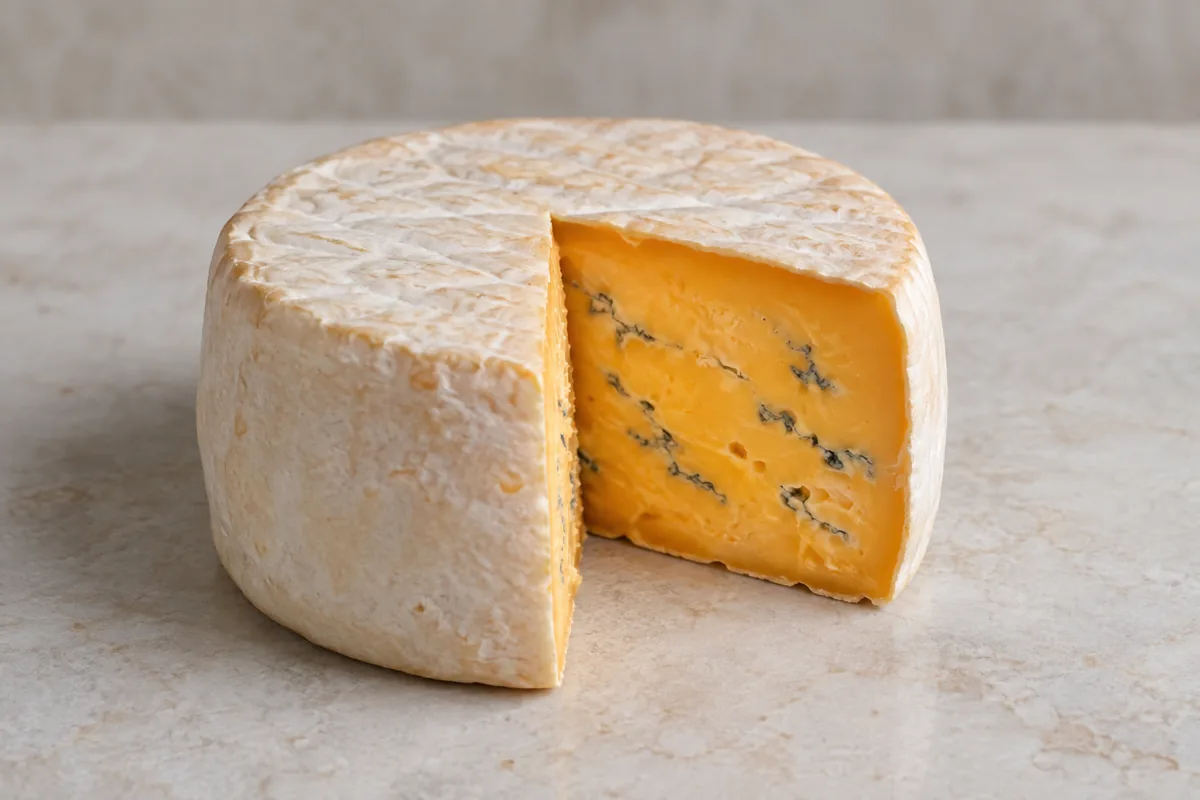
Blacksticks Blue is a pasteurized cow's-milk blue cheese made by Butlers Farmhouse Cheeses at its family Lancashire dairy, and Butlers calls it "the original contemporary farmhouse blue." The paste is orange, soft and creamy.
The blue is mild by its maker's account, and Great Taste judges called the cheese "a great introductory blue cheese," a fair place to start if you are new to blue cheese.
In This Article
Why Is Blacksticks Blue Orange, and Who Makes It?
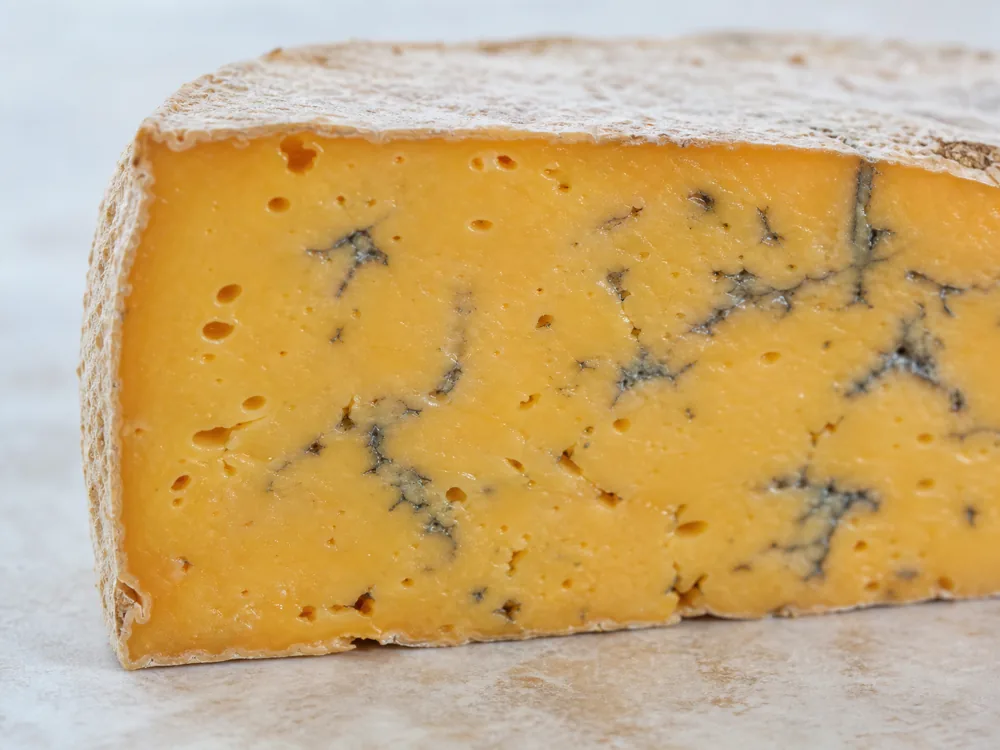
Butlers says the orange comes from annatto, made from the seeds of the achiote tree, and that it gives the cheese an all-year-round tan and "a subtle flavour."
Annatto is the one colour in the ingredients that Bowes Dairy's listing gives: "Full Fat Coloured Blue Veined Cow's Milk Cheese, Colour (Annatto)."
Great British Chefs calls the colour a golden orange hue. The Great Taste judges in 2023 described "a good-looking piece of cheese with an artisanal farmhouse rustic edge," with the blue "evenly distributed."
Butlers introduced Blacksticks in 2004 as a contemporary addition to British cheesemaking, and it is made by traditional handmade methods. Butlers says the milk comes from herds within 10 km of the dairy, arrives each morning, and is pasteurized on site before it goes into the vats.
- Maker: Butlers Farmhouse Cheeses, a fourth-generation family business
- Place: A farmhouse dairy in Lancashire, England
- Milk: Local, freshly pasteurized cow's milk
- Color: Orange from annatto
- Rind: Butlers says it is safe to eat and adds to the flavour
- Diet: Listed as suitable for vegetarians
How Mild Is Blacksticks Blue?
Butlers says many people are surprised that Blacksticks "doesn't have a harsh blue flavour," because it is quite mild. The intensity is there, but Butlers puts it "at the back."
| Source | What it says |
|---|---|
| Butlers Farmhouse Cheeses | Not a harsh blue flavour, quite mild, with an intensity you can taste at the back |
| Great Taste judges (2023) | A "surprising amount of buttery rich flavour and melt in the mouth-feel," with a blue that is "very light and adds a mild tang" |
| Great British Chefs | Mild and creamy, with a salty tang |
| Bowes Dairy (retailer) | Soft, buttery texture with a subtle blue bite |
| Cheese.com | Soft, creamy and spreadable; creamy and tangy |
Mild, light or subtle is how Butlers, the Great Taste judges, Great British Chefs and Bowes Dairy each describe it, while Cheese.com calls the cheese creamy and tangy. The judges also liked the "moderate level of salt," and wrote that the cheese would be "a crowd pleaser."
If you plan to cook with it, Great British Chefs prefers it to stronger blues such as Stilton, because the blue adds complexity without a bitter tang taking over.
Which Formats Does Blacksticks Blue Come In?
You can buy Blacksticks from Butlers as a 150 g wedge, a whole baby truckle, a whole cheese or Mega Melts slices.
| Format | Size | What Butlers says |
|---|---|---|
| Wedge | 150 g | The standard pack, with ingredients, nutrition and vegetarian status listed |
| Whole baby truckle | Not stated | Listed on the range page |
| Mega Melts | 4 rounds, 160 g | Thick-cut rounds with edible rind for burgers and grilled sandwiches |
| Whole cheese | 2.5 kg | About 21 cm across and 7 cm high |
Butlers also sells a 500 g Mature Your Own version, which it describes as a way to watch the cheese "grow those beautiful blue veins" at home. That is a different product from the standard wedge, and its blue develops after you buy it.
What Are the Calories, Fat and Salt in the Wedge and Mega Melts?
Butlers lists the same panel for its wedge and whole cheeses, and the Mega Melts panel differs in five figures.
| Per 100 g | Wedge and whole cheese | Mega Melts |
|---|---|---|
| Energy | 1620 kJ / 391 kcal | 1643 kJ / 397 kcal |
| Fat | 33.5 g | 33.5 g |
| Saturates | 21.0 g | 22.2 g |
| Carbohydrate | 0.1 g | 2.4 g |
| Protein | 22.3 g | 21.1 g |
| Salt | 2.0 g | 1.25 g |
If you cut a 30 g piece from the wedge, it works out to about 117 kcal and 0.6 g of salt, which is our arithmetic from the 100 g figures.
For anyone checking allergens, milk is the only allergen Butlers lists on the wedge page.
Can You Cook with Blacksticks Blue?
Butlers says it "melts brilliantly, just like cheddar or any other cheese you may use on a daily basis," and names toasties, jacket potatoes, beans on toast and pasta dishes.
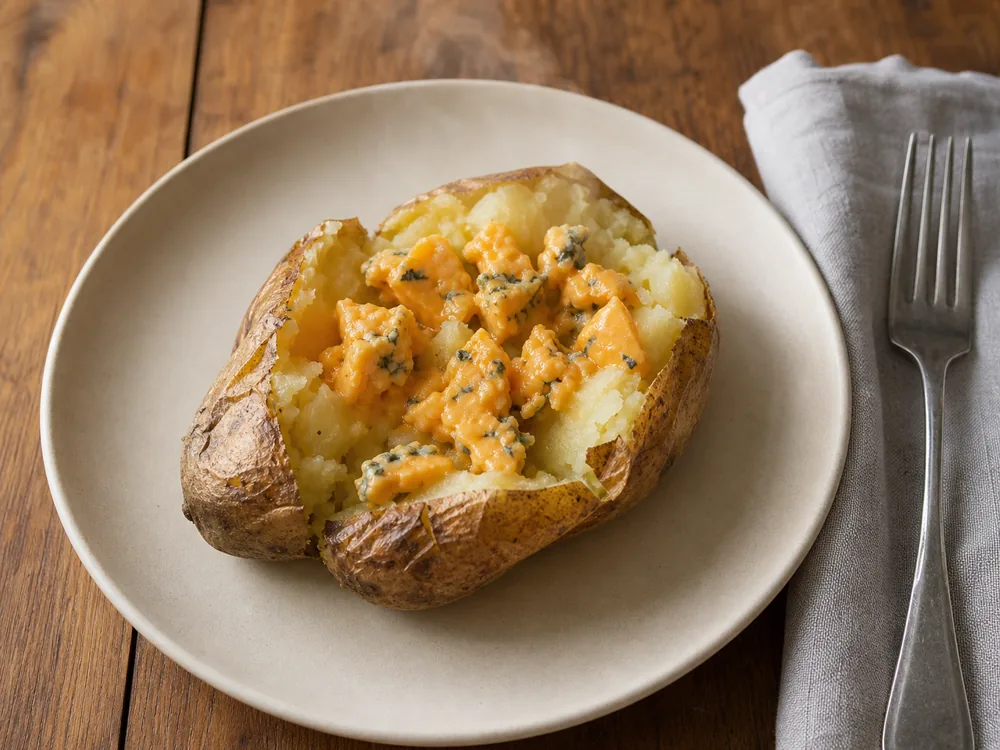
The Mega Melts are sold for topping burgers, vegetarian burgers or grilled sandwiches. To cook them, put them under a hot grill for a couple of minutes, or close the barbecue lid so the heat reaches all the way around the slice.
Beyond those uses, Butlers' blog suggests stirring, crumbling or topping it into a wider range of everyday dishes.
- Nachos: Switched in for nachos with salsa, guacamole and jalapeños
- Cheese straws: Puff pastry and Blacksticks, about 20 minutes in all
- Blue cheese sauce: Cream, butter, seasonings and Blacksticks
- Mac and cheese: Crumbled into the bechamel for mac and cheese or sprinkled on top
- Pizza: Added to a pizza before baking
- Bolognese: A little stirred in while cooking for a rich tang
Other uses include soups made with broccoli, parsnip, cauliflower, potato or mushroom, plus salads, and it can be melted over steak.
Should You Pair Blacksticks Blue with Sweet or Sharp Flavours?
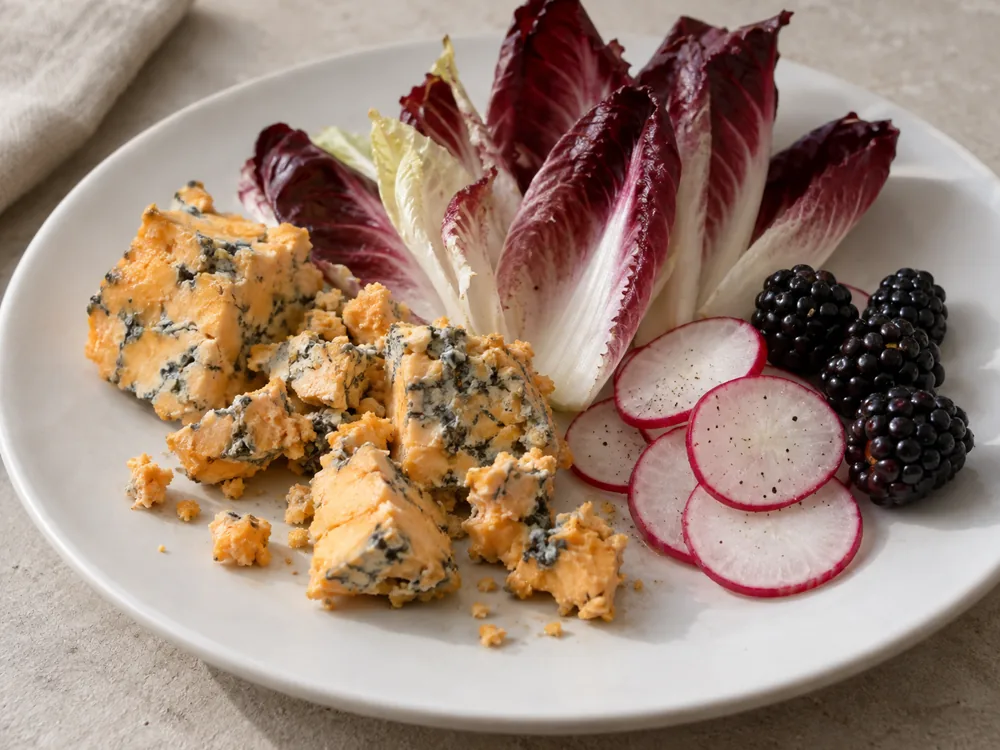
Butlers says Blacksticks is as comfortable on a cheeseboard as in a sandwich, and that it pairs it with "sweet or sharp flavours to create a real contrast."
| Pairing | Why It Works |
|---|---|
| Sweet flavours | Butlers pairs it with sweet flavours for contrast. |
| Sharp flavours | Butlers pairs it with sharp flavours for contrast. |
| Blackberries | Named by Great British Chefs. |
| Bitter chicory leaves | Named by Great British Chefs. |
| Crunchy radishes | Named by Great British Chefs. |
| Beef and steak | Great British Chefs says the salty tang suits beef and is mild enough not to overpower it. |
Is Blacksticks Blue Safe in Pregnancy?
The answer turns on two facts about the cheese: Butlers says Blacksticks is made with pasteurized milk, and Cheese.com classes it as a soft, blue-veined cheese.
The NHS says pasteurised or unpasteurised soft blue-veined cheeses "must be thoroughly cooked" in pregnancy, and it gives Danish blue as one example alongside gorgonzola and roquefort.
The CDC lists soft cheese made from unpasteurized (raw) milk, blue-veined types included, as riskier, and pasteurized soft cheeses heated to an internal temperature of 165°F or until steaming hot as safer. It adds that pregnant women are 10 times more likely to get a Listeria infection.
Butlers makes Blacksticks Blue with pasteurized milk and Cheese.com classes it as soft and blue-veined, so the NHS line above applies and it must be thoroughly cooked. Served cold, Blacksticks Blue is described as a pasteurized soft, creamy and spreadable blue-veined cheese, a type the CDC list does not cover, so ask a midwife or doctor and check current guidance for eating cheese while pregnant.
How Long Does Blacksticks Blue Keep Once Opened?
Once you have opened it, cover it, keep it refrigerated and use it within 7 days, as Bowes Dairy's listing says, and the same listing says to store it between 0 and 8°C.
The date and storage line printed on your own pack come first, because they were set for that exact product. The general rules for storing cheese fill in only what the label leaves out.
SOURCES & REFERENCES
What Else Do People Ask About Blacksticks Blue?
Butlers says the orange comes from annatto, made from the seeds of the achiote tree. A retailer's ingredient list names only the cheese and annatto as colour.
Butlers calls it quite mild, with intensity you notice at the back. Great Taste judges found the blue very light and recommended it as an introductory blue.
Butlers says the rind is safe to eat and adds to the flavour.
Yes. Butlers says it pasteurizes the milk on site, and lists the cheese as suitable for vegetarians.
The NHS says pasteurised or unpasteurised soft blue-veined cheeses must be thoroughly cooked. Served cold, Blacksticks Blue is described as a pasteurized soft, creamy and spreadable blue-veined cheese, a type the CDC list does not cover, so ask a midwife or doctor.