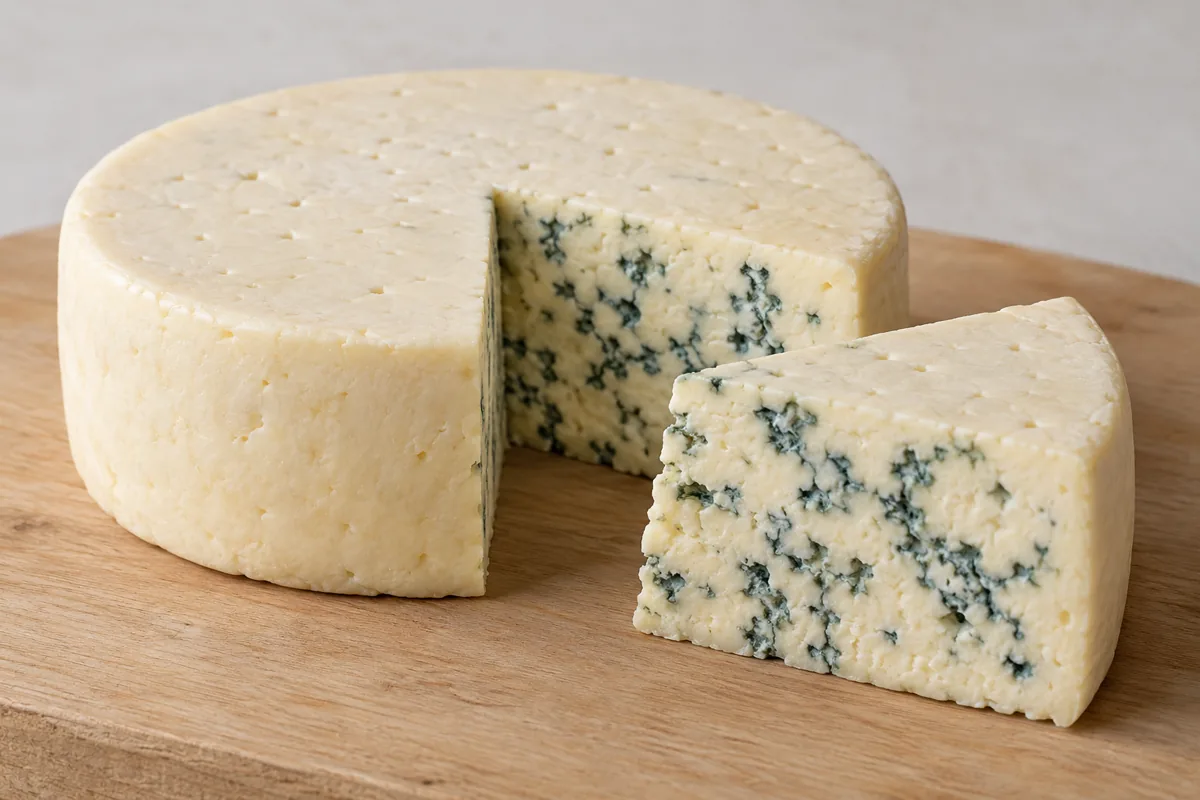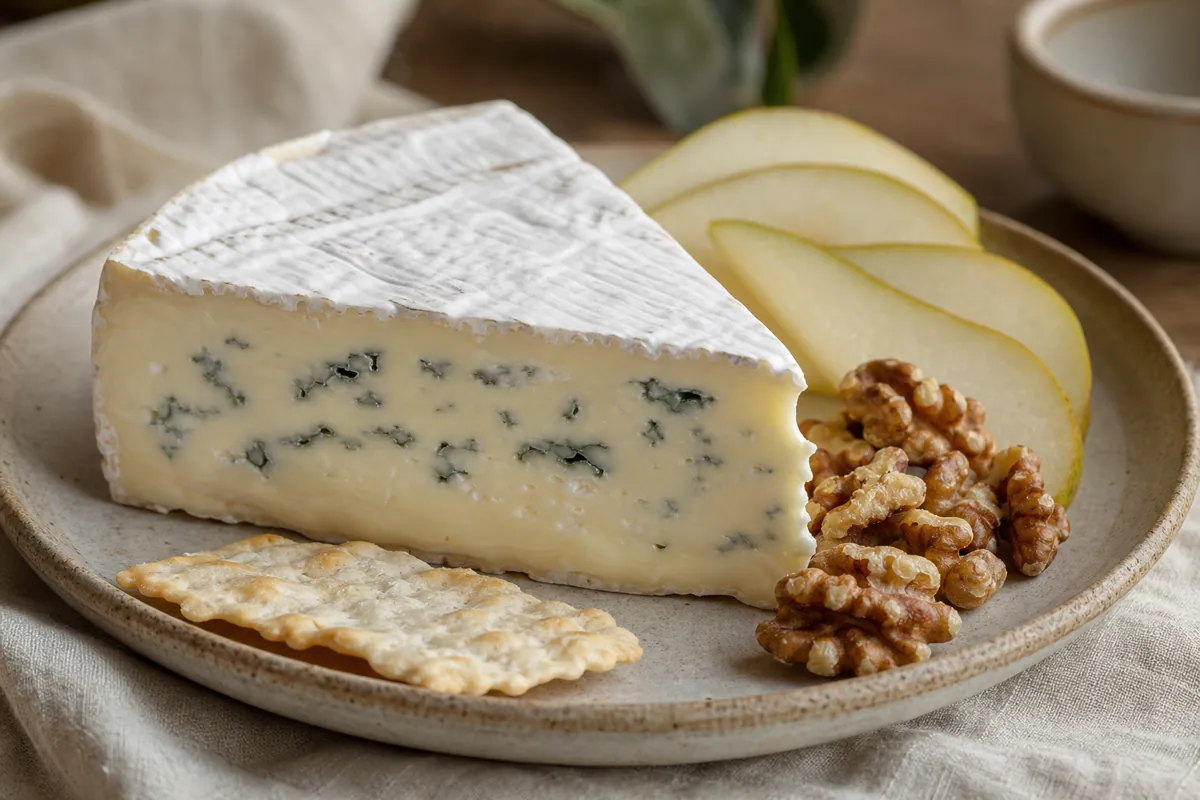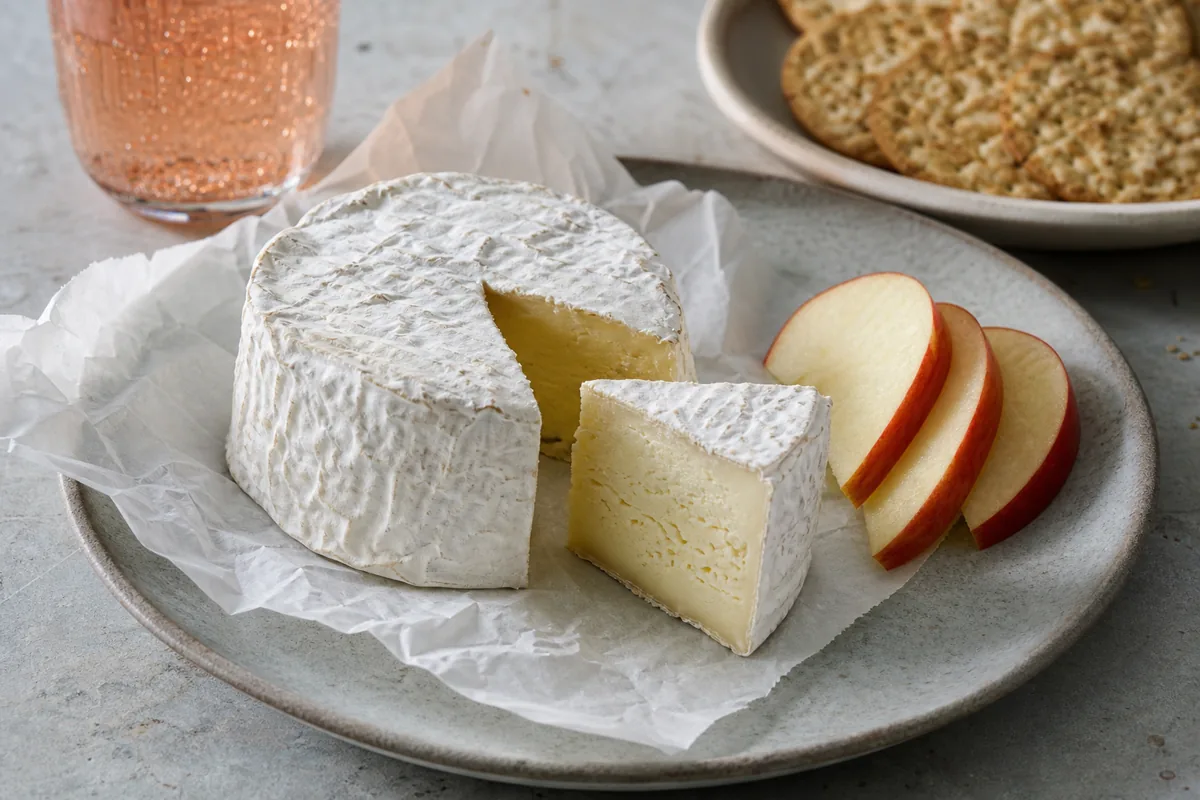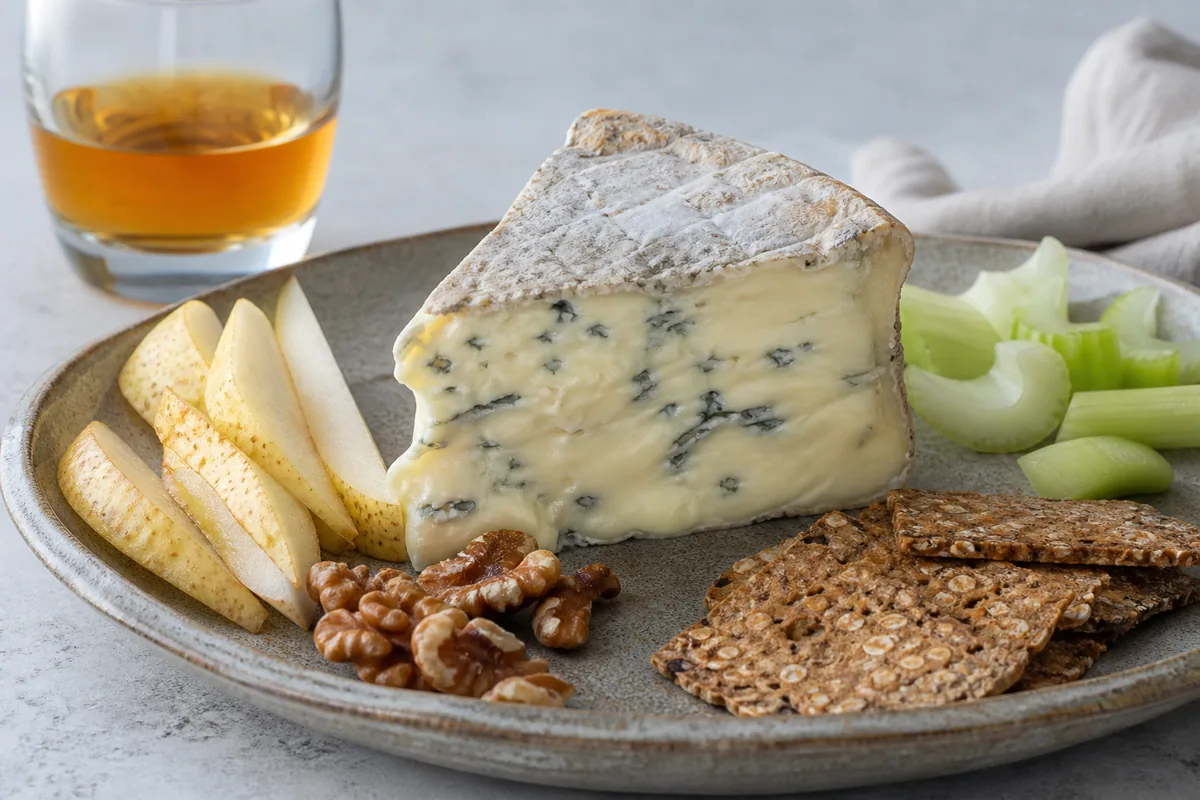
Beauvale is a soft blue cheese that Cropwell Bishop Creamery in Nottinghamshire makes from pasteurised cow's milk. The creamery describes it as creamy and spreadable with a mellow flavour, and says it suits both Stilton fans and people who prefer a milder blue.
Stilton is a protected name with fixed rules, so the comparison below sets Beauvale's texture, ageing time, and make beside them, with a named source for each point. Like other blue cheeses, Beauvale gets its veining from Penicillium roqueforti, which the creamery's specification sheet lists among its cultures.
In This Article
Who Makes Beauvale, and Does It Contain Animal Rennet?
The creamery credits Robin Skailes and Howard Lucas with developing Beauvale, and its page says the milk comes from Peak District farmers. Cheese blogger Jonathan Broomfield says the name comes from the Vale of Belvoir, the area around the creamery.
According to Cropwell Bishop, the curd is hand-ladled into moulds and the cheese is turned by hand during seven weeks of maturing, when it develops a thin edible crust.
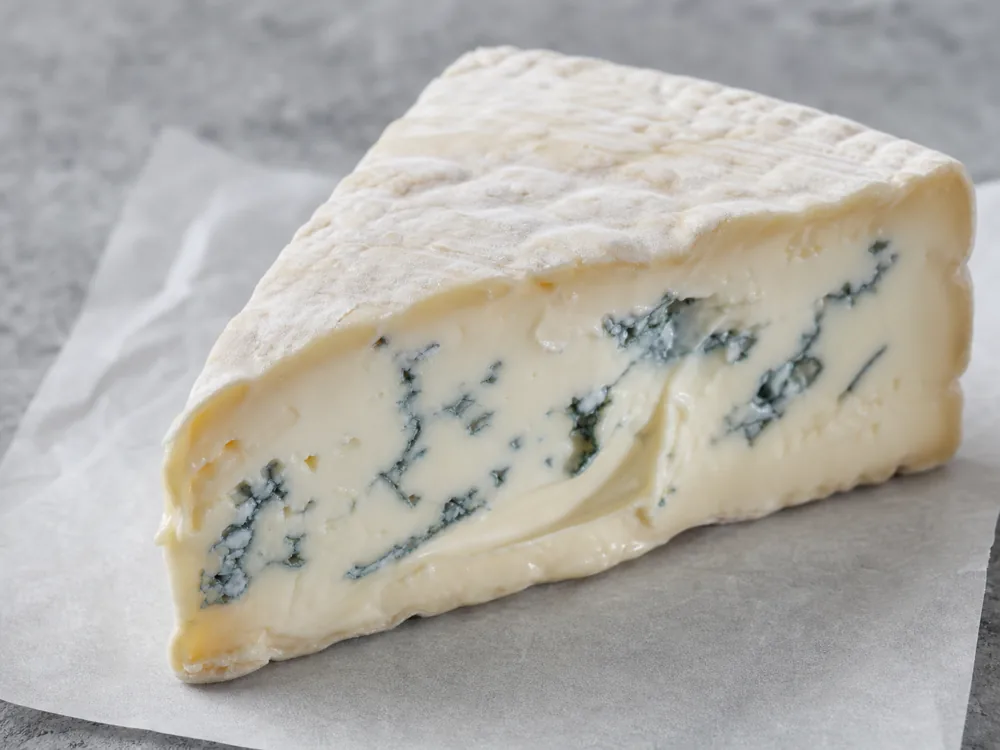
Cheese.com lists the paste as pale yellow and the rind as a natural thin coat, and the creamery's specification sheet calls it a soft, creamy, mellow blue with a natural thin coat made from full fat milk.
Rennet is where the sources disagree, and it decides whether a vegetarian can eat the cheese.
| Source | Rennet statement |
|---|---|
| Cropwell Bishop specification sheet | Animal rennet |
| Marks and Spencer | Contains rennet; not suitable for vegetarians |
| Cheese.com | Animal rennet; not vegetarian |
| La Fromagerie | Animal rennet; not suitable for vegetarians |
| Cheese Etc. | Vegetarian rennet |
| Jonathan Broomfield (blog, 2014) | Non-animal rennet |
The maker's own specification sheet lists animal rennet, and Marks and Spencer says the cheese is not suitable for vegetarians, so we treat Beauvale as containing animal rennet. The two vegetarian claims come from a specialist shop and a 2014 blog post, and neither is the maker.
How Does Beauvale Differ from Stilton?
Wikipedia says Stilton's protected designation of origin status limits it to Derbyshire, Leicestershire, and Nottinghamshire and requires pasteurised local milk.
| Point | What the sources say |
|---|---|
| Texture | Beauvale is soft and spreadable (Cropwell Bishop); Stilton is semi-soft and crumbly (Wikipedia). |
| Ageing | Beauvale is matured seven weeks (Cropwell Bishop); Stilton needs at least nine (Wikipedia). |
Cropwell Bishop is also one of the six creameries that make Stilton, according to Wikipedia, so its own page pitches Beauvale to Stilton fans and to people who want something milder. Broomfield suggests using Beauvale as a different cheese from Stilton or as a replacement for continental blues.
What Does Beauvale Taste Like?
Cropwell Bishop describes a soft, spreadable texture and a mellow, melt-in-the-mouth flavour, and Marks and Spencer calls the flavour buttery.
Broomfield compares the paste to clotted cream. Cheese Etc. lists sweet cream and butter, gentle saltiness, savoury depth, a little pepper spice, and a nutty finish as the blue builds.
La Fromagerie cellars Beauvale beyond the creamery's seven weeks and says the extra time brings savoury, almost meaty tones.
The creamery's specification sheet says to serve the cheese at room temperature so the flavour can develop.
What Two Labels Say About Fat and Salt
The creamery's specification sheet and the Marks and Spencer product page give almost the same figures per 100 g, and both put salt at 1.9 g.
| Energy | 364 kcal on the creamery sheet; 362 kcal at Marks and Spencer. |
| Fat | 31.0 g on both, of which saturates 19.5 g. |
| Protein | 19.9 g on both. |
| Salt | 1.9 g on both. |
The creamery sheet also lists a 30 g serving at 109 kcal, 9.3 g fat, and 0.6 g salt.
Where Can You Buy Beauvale, and in What Sizes?
The creamery sells Beauvale as an 850 g cheese, a quarter, a half, a whole cheese, and a Taste of Beauvale gift box, and Marks and Spencer lists a 150 g pack.
What Should You Serve and Pair with Beauvale?
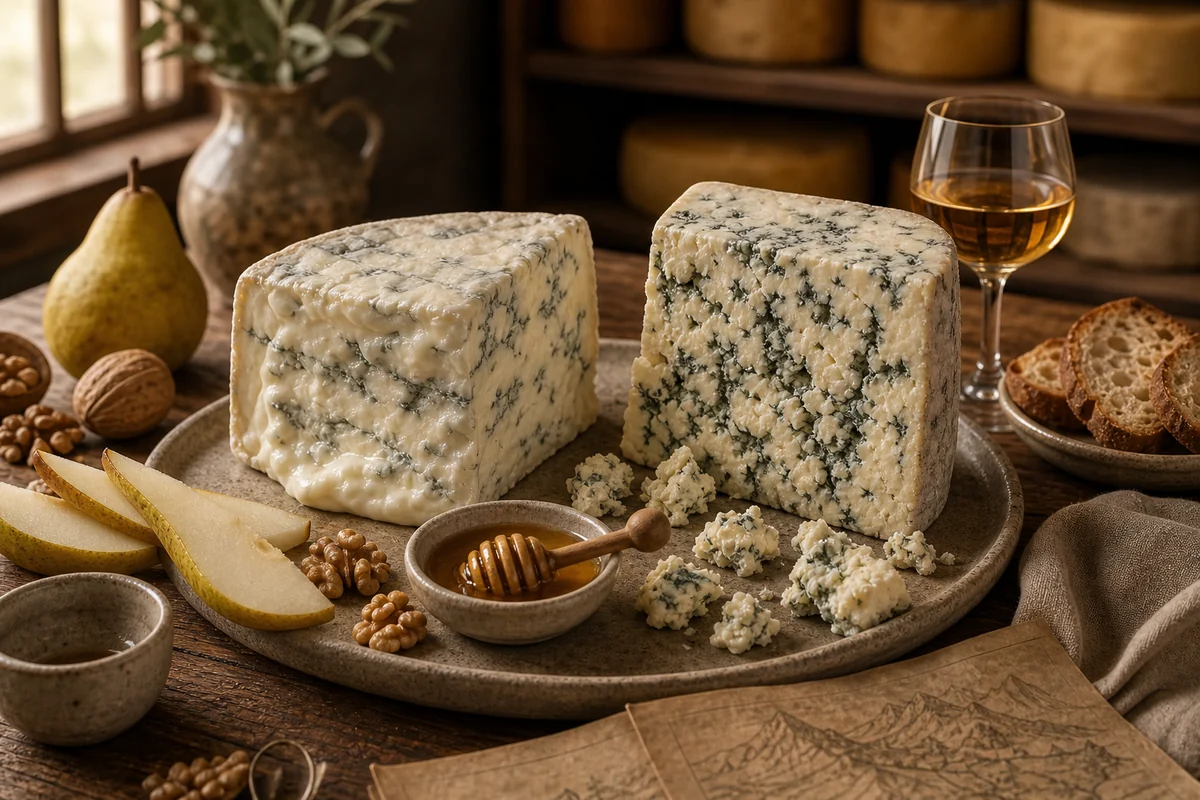
La Fromagerie calls Beauvale a way to finish a British cheese board without going directly for a Stilton, and suggests port or a Valpolicella with it.
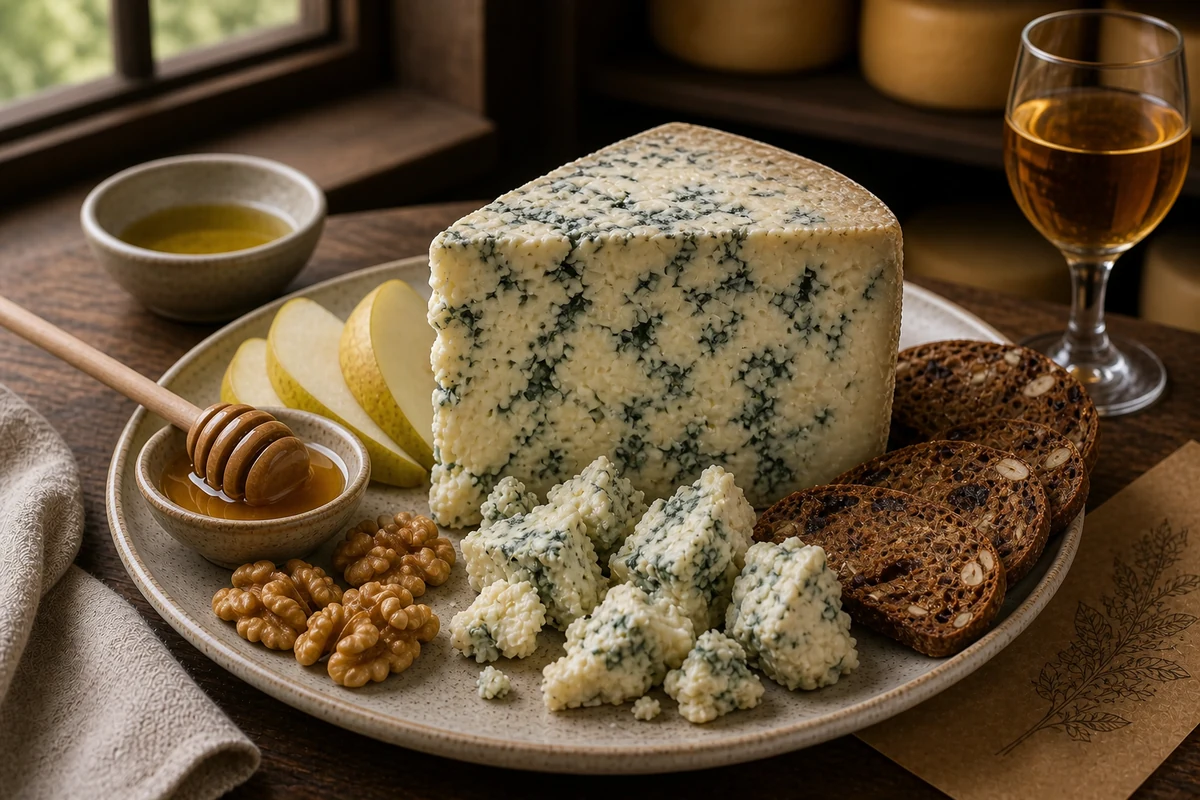
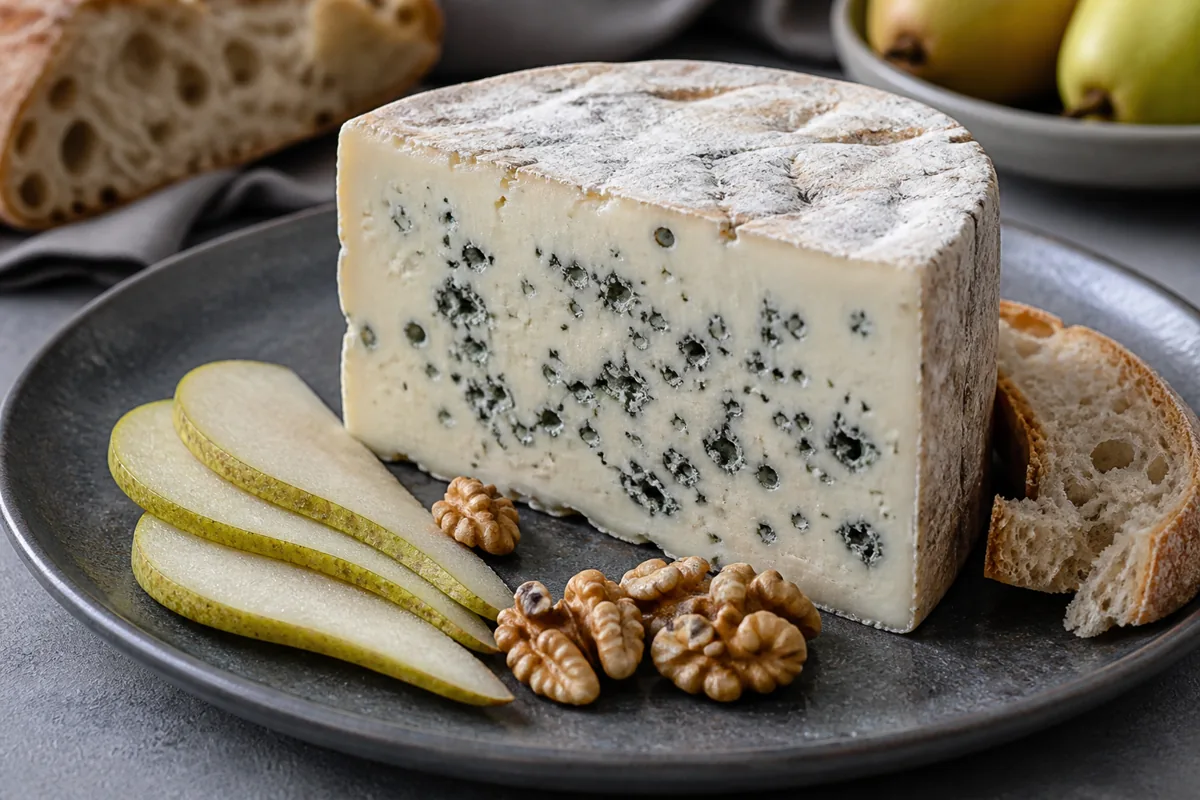
Cheese Etc. pairs it with sweet wines such as Sauternes and Tokaji, and also lists sloe gin, honey, and toasted walnuts. Marks and Spencer names port, sherry, crackers, pears, and walnuts or pecans.
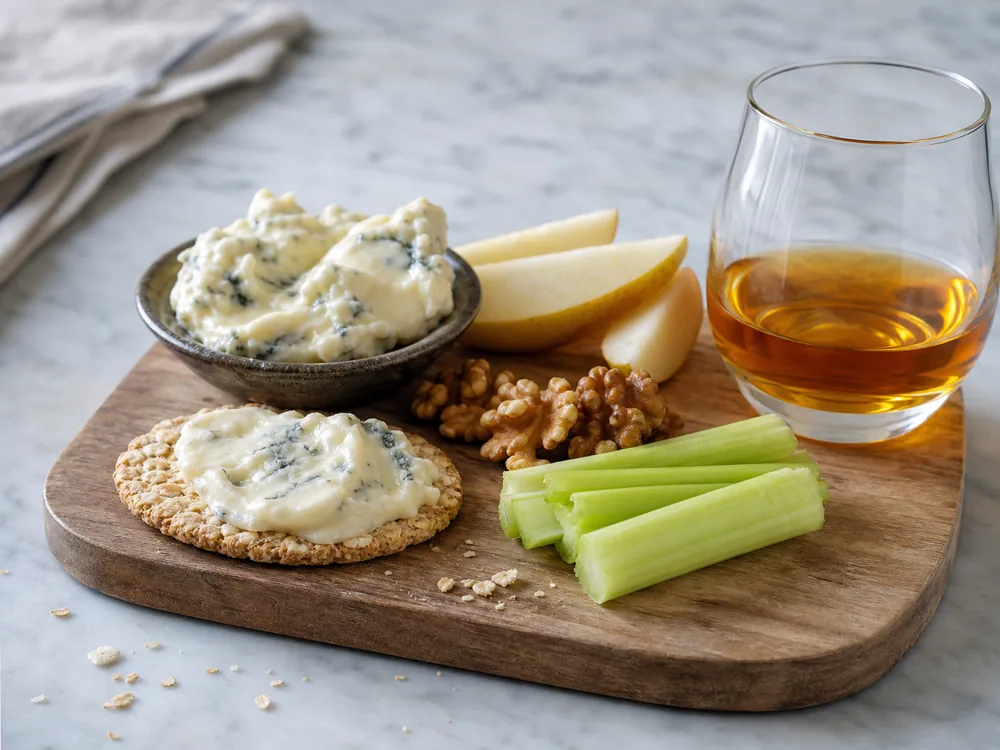
Cheese Etc. also lists figs and fresh pear, plus warm crusty bread.
For cooking, Cheese Etc. lists pasta dishes, risotto, and steak sauce, Cheese.com lists salad, pasta, and grilled meat, and Broomfield suggests mixing it into pasta.
How Long Does Opened Beauvale Keep?
The sources agree on the refrigerator and the freezer, and split on how long an opened piece lasts.
- Fridge: below 5°C (creamery) or 0 to 5°C (Marks and Spencer).
- Freezer: Marks and Spencer says the cheese is not suitable for freezing.
- Wrapping: an airtight container (Marks and Spencer), wax paper in the vegetable drawer (La Fromagerie's general advice for all its cheeses), or waxed paper or cling film (Cheese Etc.).
The creamery's specification sheet and Marks and Spencer both say to eat Beauvale within 3 days of opening, and Cheese Etc. says 10 to 14 days. This article follows the maker's figure.
Is Beauvale Safe in Pregnancy?
The creamery's sheet lists pasteurised milk. The NHS still puts soft blue-veined cheeses such as Danish blue, gorgonzola, and roquefort in a group that must be thoroughly cooked, whether they are pasteurised or unpasteurised.
The NHS does not name Beauvale, but it is a soft blue cheese, so that guidance is the closest match.
The CDC lists soft cheese made from unpasteurized (raw) milk, including blue-veined cheese, as riskier, and lists pasteurized soft cheeses heated to an internal temperature of 165°F or until steaming hot as safer. It adds that pregnant women are 10 times more likely to get a Listeria infection.
Served cold, Beauvale is described as a pasteurized soft, creamy and spreadable blue cheese, a type the CDC list does not cover, so ask a midwife or doctor.
SOURCES & REFERENCES
What Else Do People Ask About Beauvale?
Beauvale is a soft blue cheese that Cropwell Bishop Creamery in Nottinghamshire makes from pasteurised cow's milk and matures for seven weeks.
No. Cropwell Bishop makes both, but Wikipedia describes Stilton as a protected, semi-soft, crumbly cheese aged at least nine weeks, while the creamery describes Beauvale as soft and spreadable and matured for seven.
Probably not. The creamery's specification sheet lists animal rennet, and Marks and Spencer, Cheese.com, and La Fromagerie agree, although Cheese Etc. and a 2014 blog describe vegetarian rennet.
The creamery and Marks and Spencer say to eat it within 3 days of opening. Cheese Etc. gives 10 to 14 days.
Retailers list pears, walnuts, crackers, figs, honey, port, sherry, Sauternes, and Tokaji.
It is pasteurised, but the NHS says soft blue-veined cheeses must be thoroughly cooked whether pasteurised or unpasteurised, so ask your midwife or doctor before eating it uncooked.