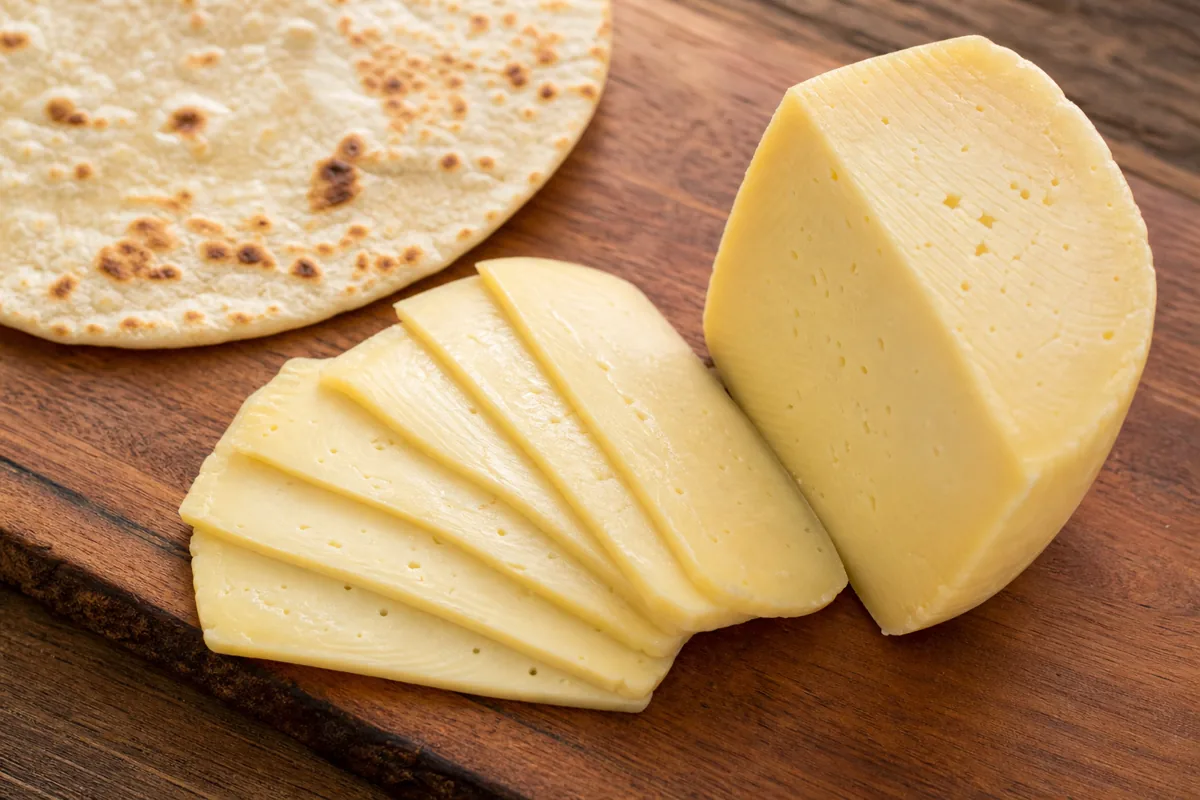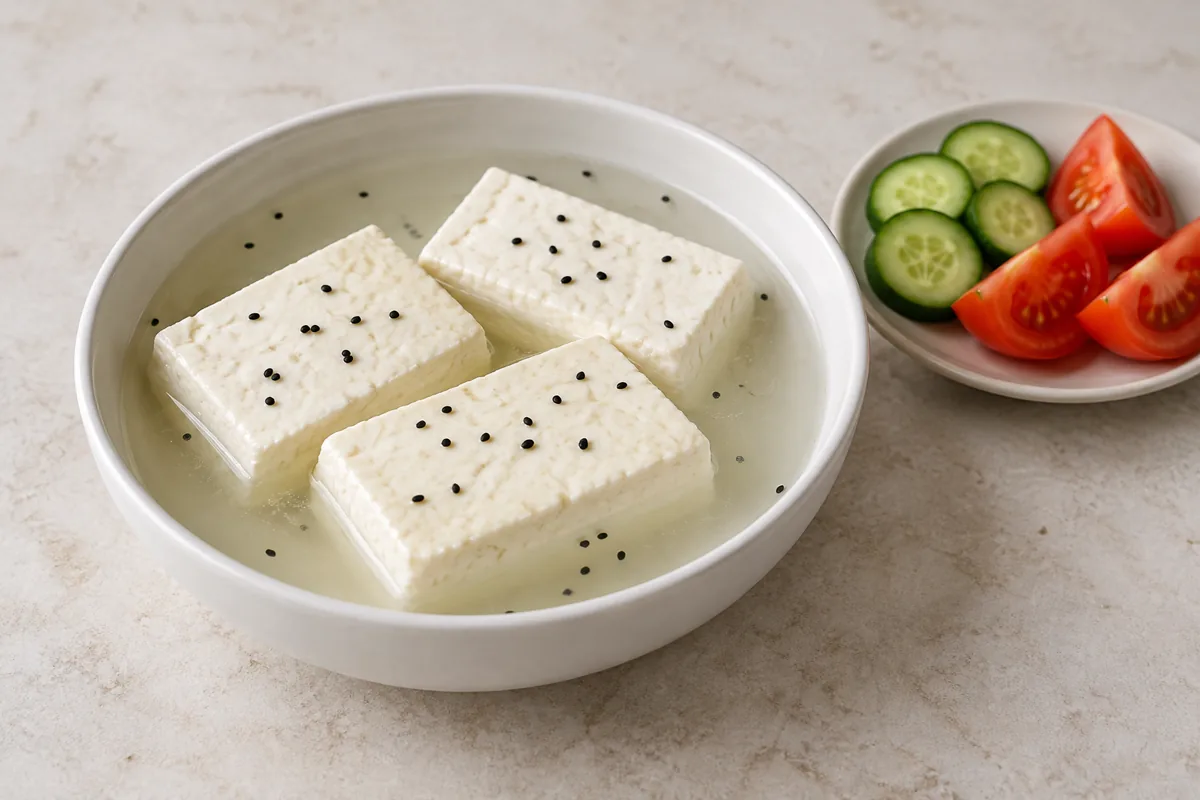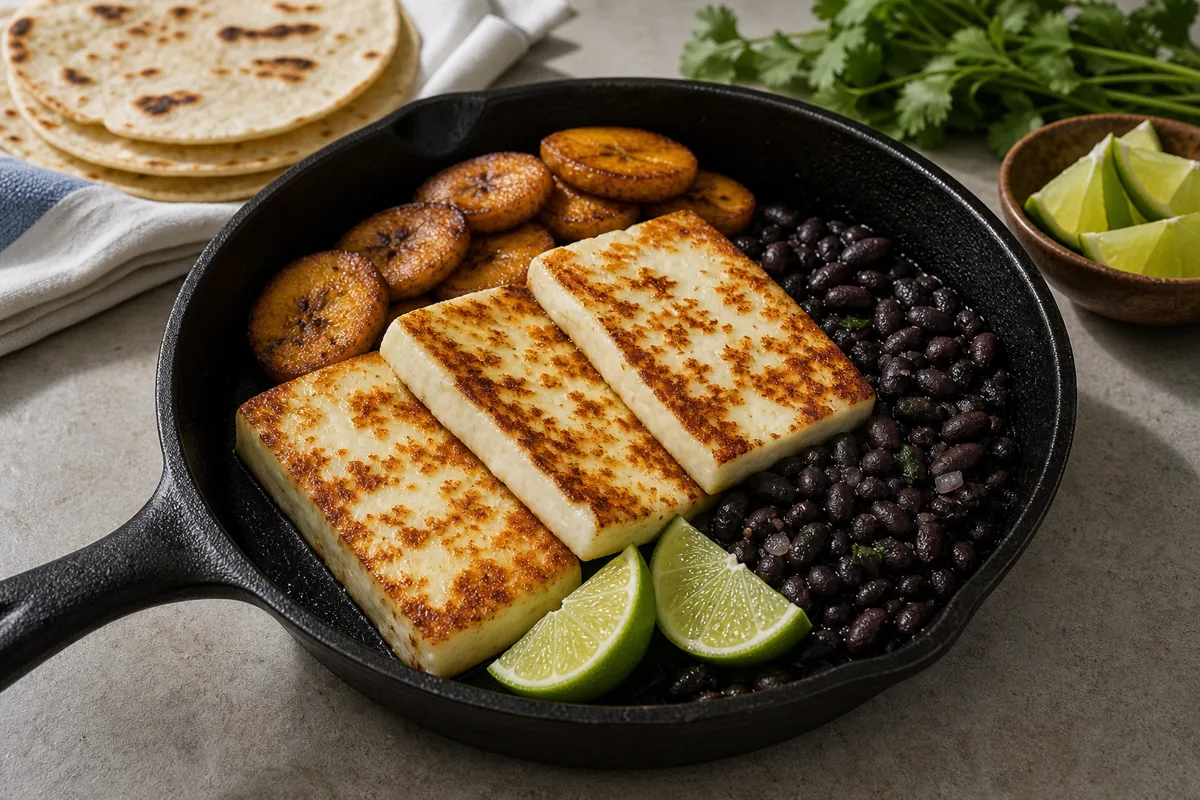
Queso Blanco is a fresh cooking cheese that solves a different problem from the stretchy Mexican melting cheeses. It softens, browns, and stays in visible pieces instead of pulling into strands.
That makes it useful when beans, eggs, arepas, plantains, soups, or grilled vegetables need mild dairy body without becoming a melted blanket. Choose the firm cooking style when shape matters more than stretch.
In This Article
Why Does Queso Blanco Hold Shape Instead of Stretching?
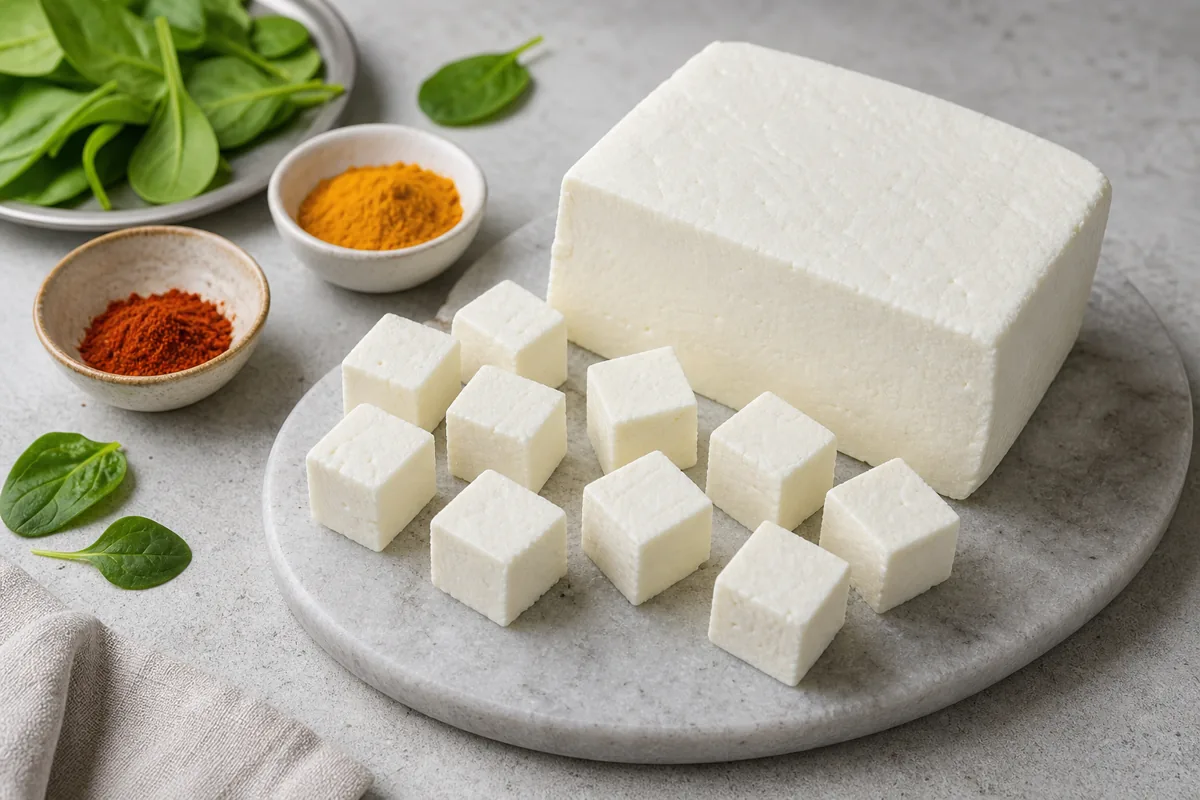
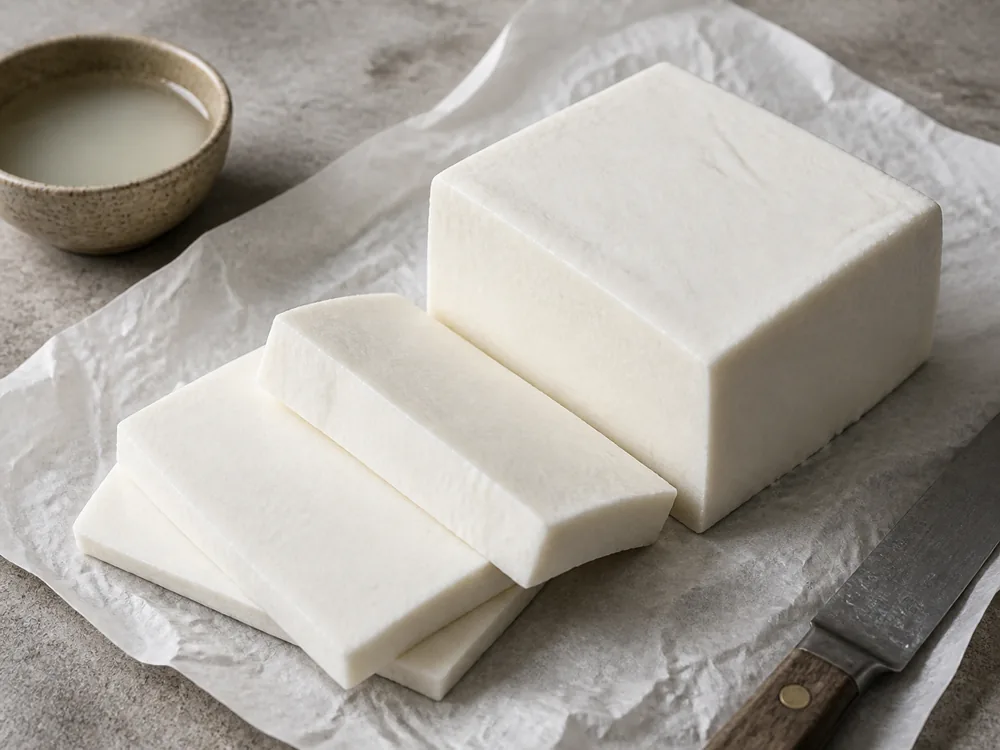
Queso blanco literally means white cheese, so labels can vary by country and producer. In practical cooking, the useful style is a firm fresh block that can be sliced, cubed, browned, or warmed without disappearing.
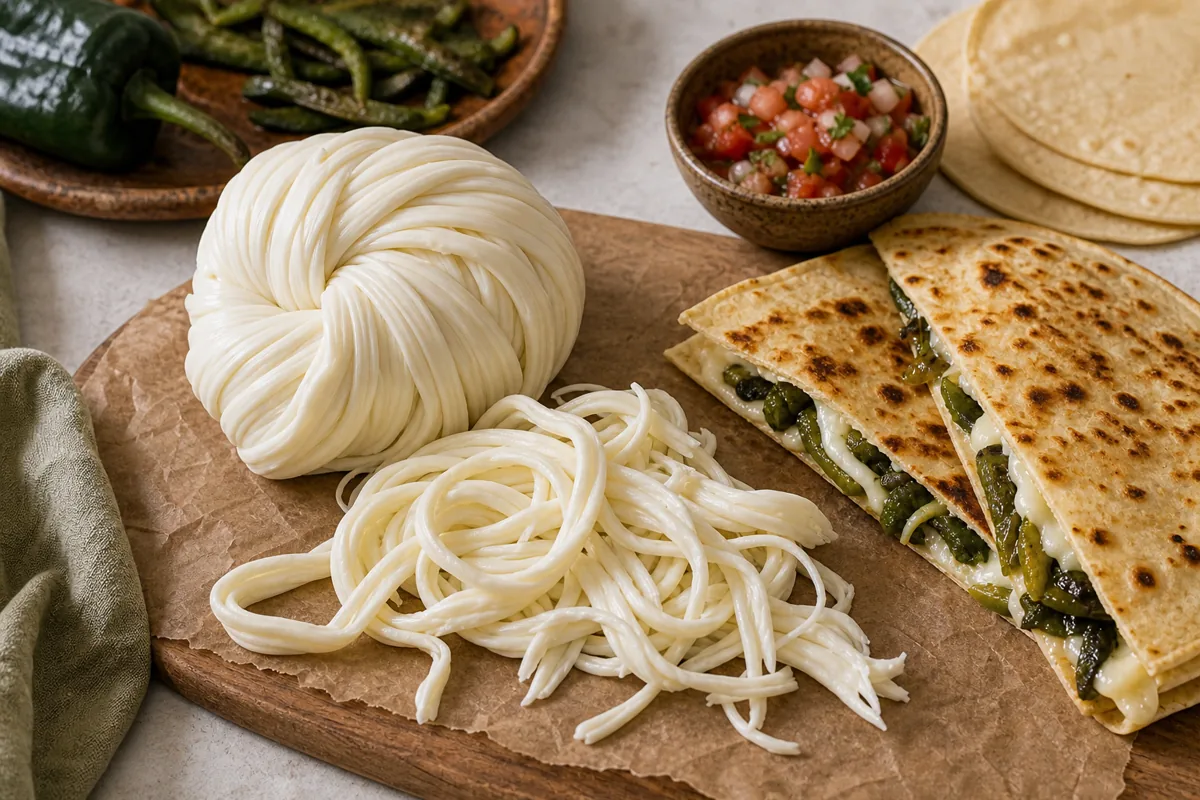
This makes it closer in kitchen job to firm heat-holding cubes than to Oaxaca or mozzarella. It can sit on beans or plantains and remain part of the bite.
The name is broad, so do not buy only from the words on the package.
Check whether the label or texture suggests frying, grilling, or cooking. A softer white cheese may taste fine cold but break apart in the pan.
- Main behavior: softens and browns while holding shape
- Common texture: firm, fresh, sliceable, and rindless
- Best role: warm dairy contrast in beans, arepas, eggs, and plantains
- Wrong expectation: long stretch or a cheese pull
The best version tastes clean and milky, with enough salt and tang to avoid blandness. It should not taste sour, fizzy, or like wet curd that needs sauce to hide it.
What Heat Does to Queso Blanco
Heat is the reason to choose queso blanco.
A good slab browns at the surface, softens inside, and stays visible on the plate. That gives you dairy flavor plus texture, not just richness.
Drying the surface matters.
Wet pieces steam before they brown, then stick to the pan. Pat slabs dry, use medium-high heat, and give each piece room so the surface can color.
Queso blanco does not stretch, and that is not a flaw.
It is the point.
If the recipe asks for melted strands, use a Mexican pulling cheese. If it asks for a browned fresh piece, queso blanco is in the right lane.
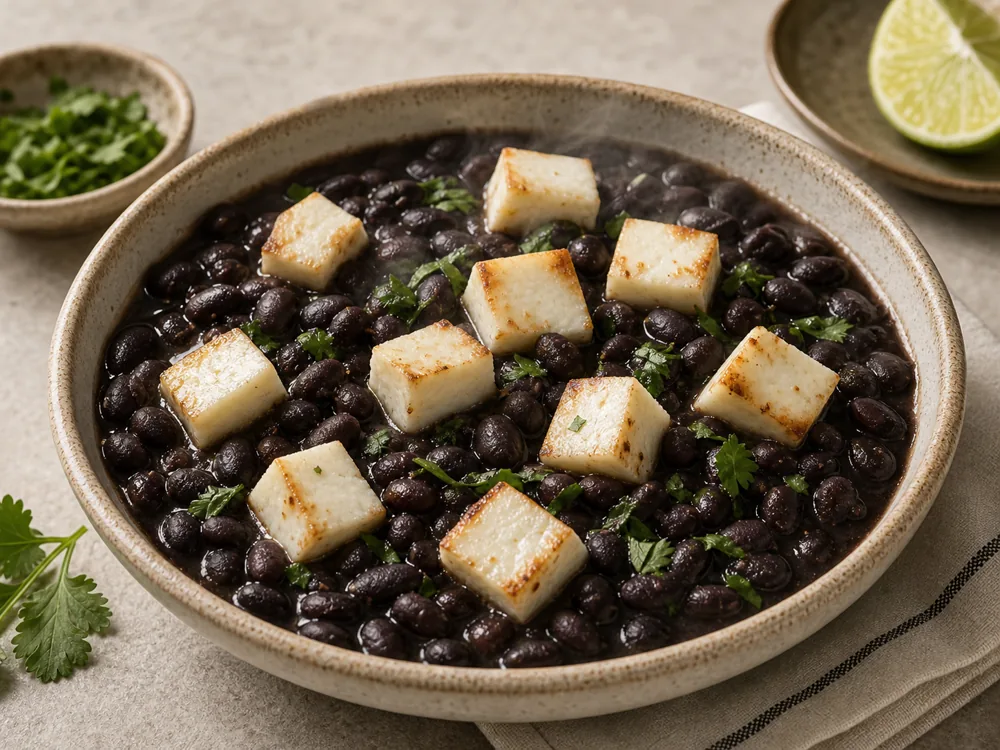
Cook one test slice before committing the whole package. If it weeps or breaks, use the cheese as warm cubes in beans instead of forcing a fried presentation.
That test saves the meal because queso blanco is not standardized like a protected-origin cheese. Two packages with the same name can behave differently in a hot pan.
Why It Refuses to Melt
The heat-holding version described by New Mexico State University is made by adding diluted vinegar to heated milk, then draining and pressing the curd. It can be fried or grilled without flowing into a sauce.
That publication also describes a rennet-set queso blanco, so the name alone cannot promise the same behavior for every block. If your dish depends on browning intact pieces, check the maker's description or try one small piece first.
Is Queso Blanco the Same as Queso Fresco?
These two names sit on very similar looking blocks, and the difference that matters is invisible in the case.
One common queso blanco recipe uses heated milk and acid, while a New Mexico State University queso fresco recipe uses cultured buttermilk, vinegar and rennet. Those are recipes, not legal definitions of either name.
Both names cover fresh white cheeses, and individual blocks can differ in moisture and firmness. A small cooking test can show whether a particular block holds together, but it cannot identify the production method or prove that it is safe to serve undercooked.
If a recipe depends on the cheese surviving heat, buy from a producer whose block you have already tested rather than from whichever label matches the recipe wording.
What Dishes Work Best with Firm Queso Blanco?
Use queso blanco where the cheese should remain visible. It is especially good with black beans, rice, plantains, eggs, arepas, roasted peppers, and vegetable bowls.
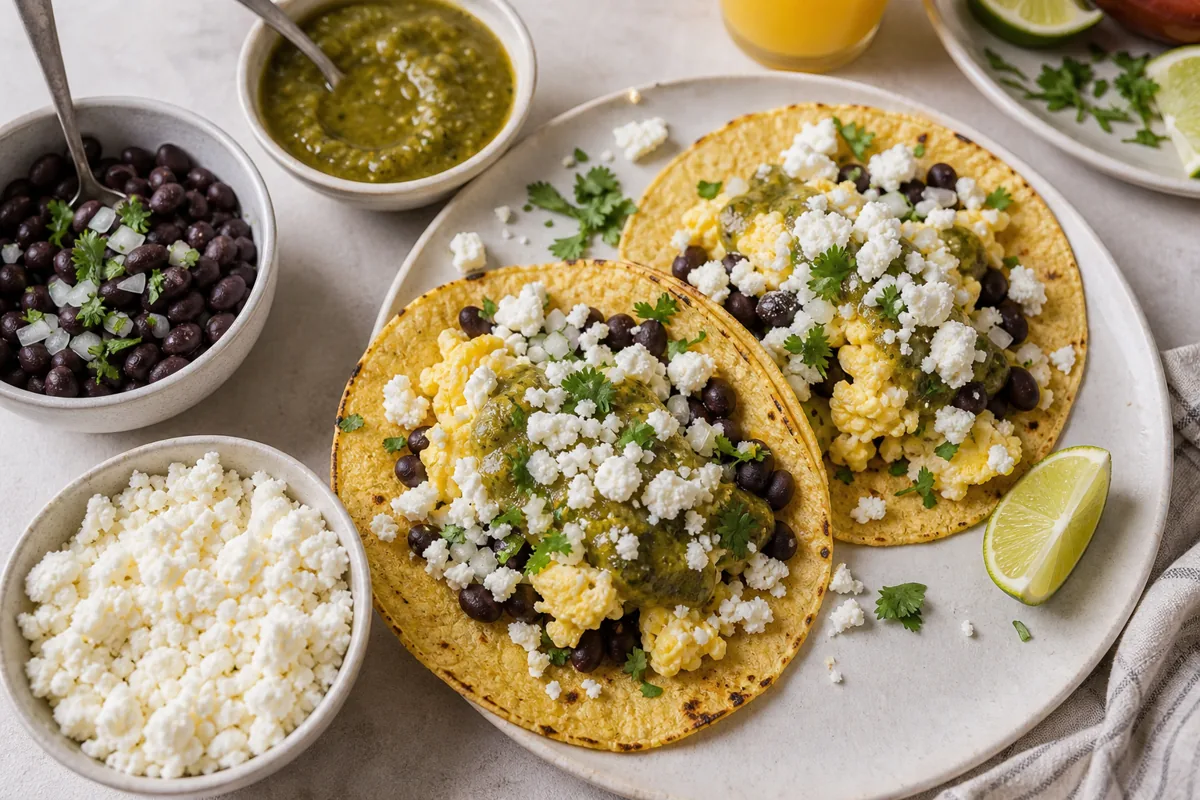
For breakfast plates, browned slabs add body beside eggs and salsa.
For arepas, a warm slice gives the pocket a clean dairy center without soaking the corn. For soups and stews, add cubes near serving so they warm through but keep a distinct bite.
| Use | How It Works |
|---|---|
| Fried slabs | Browned surfaces give mild cheese a savory edge. |
| Beans and rice | Warm cubes stay separate and make each spoonful richer. |
| Arepas | Sliceable cheese fits the pocket and keeps its shape. |
| Plantains | Sweetness makes the mild salt and milk flavor clearer. |
Compared with a cool crumbling cheese, queso blanco is less about finishing a hot dish and more about surviving heat. Compared with a saltier grill cheese, it is usually milder, less salty, and less squeaky.
Cut even slabs so they warm at a similar rate. A browned surface does not show whether the center is hot enough for someone at higher risk from Listeria.
The CDC lists pasteurized soft cheeses heated to an internal temperature of 165°F (74°C) or until steaming hot as safer, and a food thermometer shows whether the center of a pasteurized block reached it.
- Fry: pat dry, cut even slabs, and keep the pan uncrowded.
- Warm: add cubes near serving so they do not toughen.
- Stuff: slice to match arepas or pockets instead of using thick chunks.
- Season: use salsa, lime, herbs, or chile because the cheese is intentionally mild.
Which Flavors Keep Queso Blanco from Tasting Plain?
Queso blanco needs contrast.
Beans give earthiness, plantains give sweetness, lime gives lift, and roasted peppers give soft heat. Without those partners, the mild dairy flavor can feel too quiet.
It also works with avocado, eggs, corn, tomato, cilantro, pickled onion, and mild chile sauces. The trick is to season the plate around the cheese instead of expecting the cheese to season the whole meal.
| Pairing | Why It Works |
|---|---|
| Black beans | Earthy beans make the mild cheese taste fuller. |
| Sweet plantains | Sweetness turns the light salt into contrast. |
| Lime | Acidity keeps the fresh dairy from feeling flat. |
| Roasted peppers | Soft heat gives the cheese a savory frame. |
| Arepas | Corn pockets make the sliceable texture useful. |
Salt the plate rather than the cheese. Flaky salt scattered on a warm slab dissolves into the surface and disappears, while the same salt in the salsa or on the beans reaches every forkful.
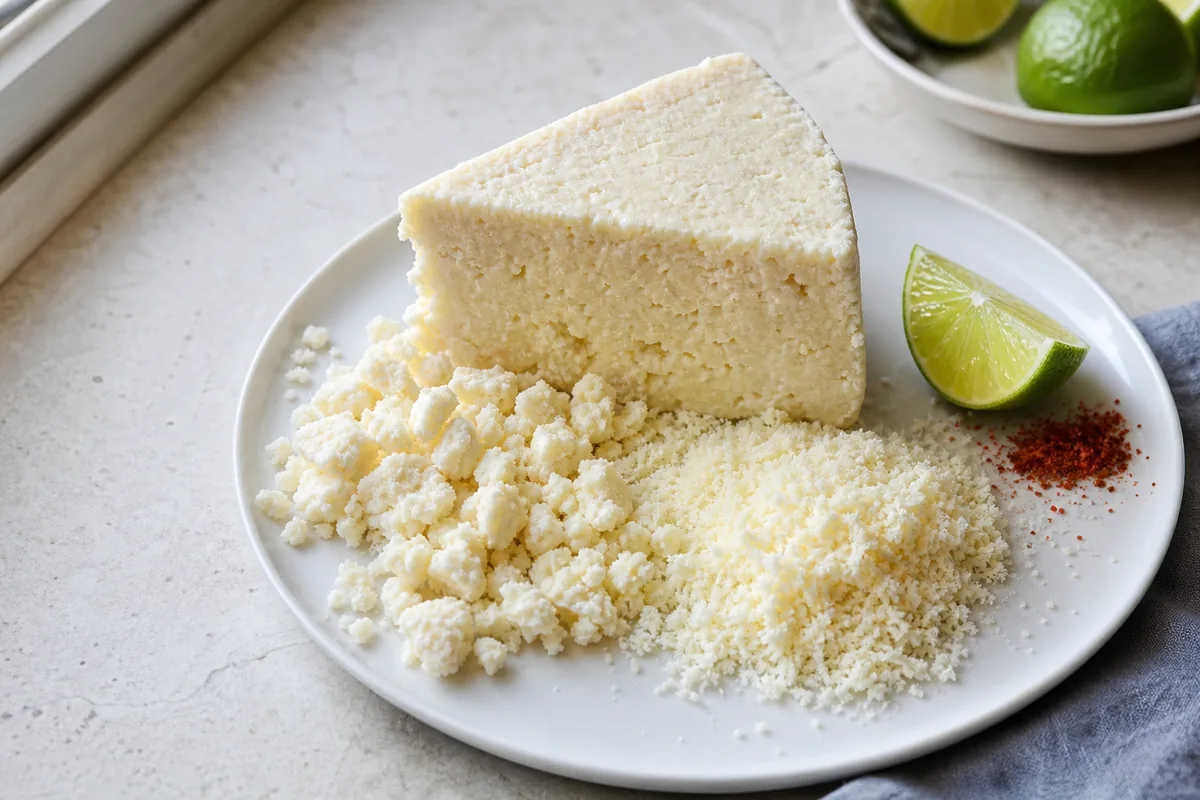
If you want a saltier finishing accent instead, a dry Mexican topping cheese is a better fit. Queso blanco should be eaten as a piece, not treated as a salty dusting.
How Do You Buy Queso Blanco Without Guessing?
The best package is cold, sealed, firm, and clearly dated. The block should look white and clean, with little loose liquid.
Swollen plastic, cloudy liquid, sour aroma, slime, or a soft collapsing texture are warning signs.
Fast-turnover Latin markets often beat slow dairy cases because this is a fresh cheese. Freshness matters more than brand loyalty or decorative packaging.
In the United States, CDC advises pregnant people, adults 65 or older, and people with weakened immune systems to avoid unheated queso blanco even when its milk was pasteurized. For pregnancy, the CDC lists pasteurized soft cheeses heated to an internal temperature of 165°F (74°C) or until steaming hot as safer, so heat a pasteurized block that way rather than serving cold slices.
Weigh the block in your hand through the packaging before you decide. A block built for frying feels dense for its size, while one that gives under thumb pressure will fall apart in the pan whatever the front of the pack claims.
- For frying: choose the firmest block available.
- For beans: a slightly softer cube can still work.
- For higher-risk guests: do not serve it unheated.
- For flavor: buy from a case with quick turnover.
How Should You Store a Fresh Queso Blanco Block?
Queso blanco has no rind and little aging protection, so storage is part of quality.
FDA's queso fresco-type guidance includes queso blanco. Keep the original package unopened at or below 40°F (4°C) and use it promptly.
The FDA advises against keeping opened leftovers to reduce Listeria risk.
Opened fresh cheese can spoil before it looks dramatic. Sour smell, slime, gas in the package, cloudy liquid, or unexpected mold means the package should go.
For broader handling, fresh cheese storage rules are stricter than aged-wedge habits. Moist rindless cheese absorbs refrigerator odors and spoils faster when the surface stays wet.
Cut only what you need from a newly opened package. Wash hands and utensils after handling it, especially before preparing food that will be eaten cold.
What Can Replace Queso Blanco by Heat Resistance and Salt?
Paneer is the closest structural substitute when the dish needs firm pieces under heat. It may be less salty, so taste the finished dish before adding more seasoning.
Halloumi also holds shape and browns, but it brings much more salt and a squeakier bite. Use it when that firmer, brined texture is welcome.
If the dish is cold or only needs a gentle crumble, queso fresco can work. If the dish needs briny salt, crumbly brined swaps move closer to feta than to queso blanco.
If the missing quality is cheese pull rather than shape, use stretch-focused melt choices instead of forcing queso blanco into a job it is not built to do.
Is Queso Blanco Safe During Pregnancy?
Queso blanco provides dairy protein, calcium, fat, and sodium, with brand-to-brand variation. Because it is fresh and moist, safety depends more on pasteurization and refrigeration than it does for hard aged cheese.
A pasteurized label does not make cold queso blanco a safer choice during pregnancy. The CDC lists all unheated queso fresco-type cheeses as riskier, including queso blanco.
For this group, the CDC lists pasteurized soft cheeses heated to an internal temperature of 165°F (74°C) or until steaming hot as a safer option.
The NHS lists pasteurised soft cheeses as safe to eat and any cheese that's been cooked until steaming hot as safe to eat, and it says foods made from unpasteurised milk must be thoroughly cooked.
Milk can also be treated and the finished cheese contaminated later during production. Pasteurized feta or mozzarella belongs to a different category when choosing cheese during pregnancy.
If you fry queso blanco, the oil and portion size matter more than the cheese label. Treat browned slabs as a rich part of the plate, then balance them with beans, vegetables, acid, and herbs.
Fried pieces carry oil on their browned faces rather than soaking it up through the paste. A minute on paper before the slabs reach the plate takes most of that back off.
SOURCES & REFERENCES
What Else Do People Ask About Queso Blanco?
Queso blanco usually softens and browns rather than melting into stretchy strands. That shape-holding behavior is the reason to use it.
It is best for fried slabs, beans, arepas, plantains, eggs, warm bowls, and dishes where the cheese should remain visible.
Paneer is closest when the dish needs firm pieces that hold shape under heat. Halloumi also holds shape but tastes saltier.
The CDC lists any queso fresco-type cheese, including queso blanco, as riskier whether it is made with pasteurized or unpasteurized (raw) milk. It lists pasteurized soft cheeses heated to an internal temperature of 165°F (74°C) or until steaming hot as safer, so heat a pasteurized block that way for a cooked dish.