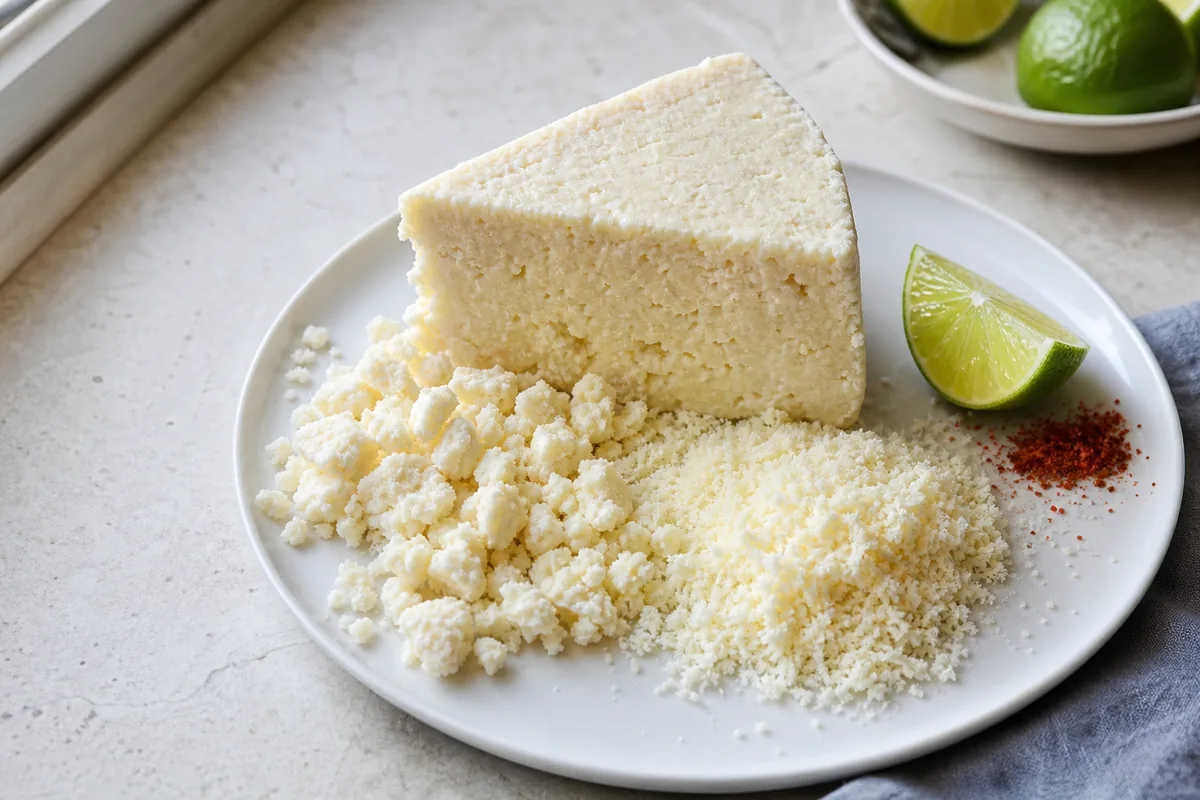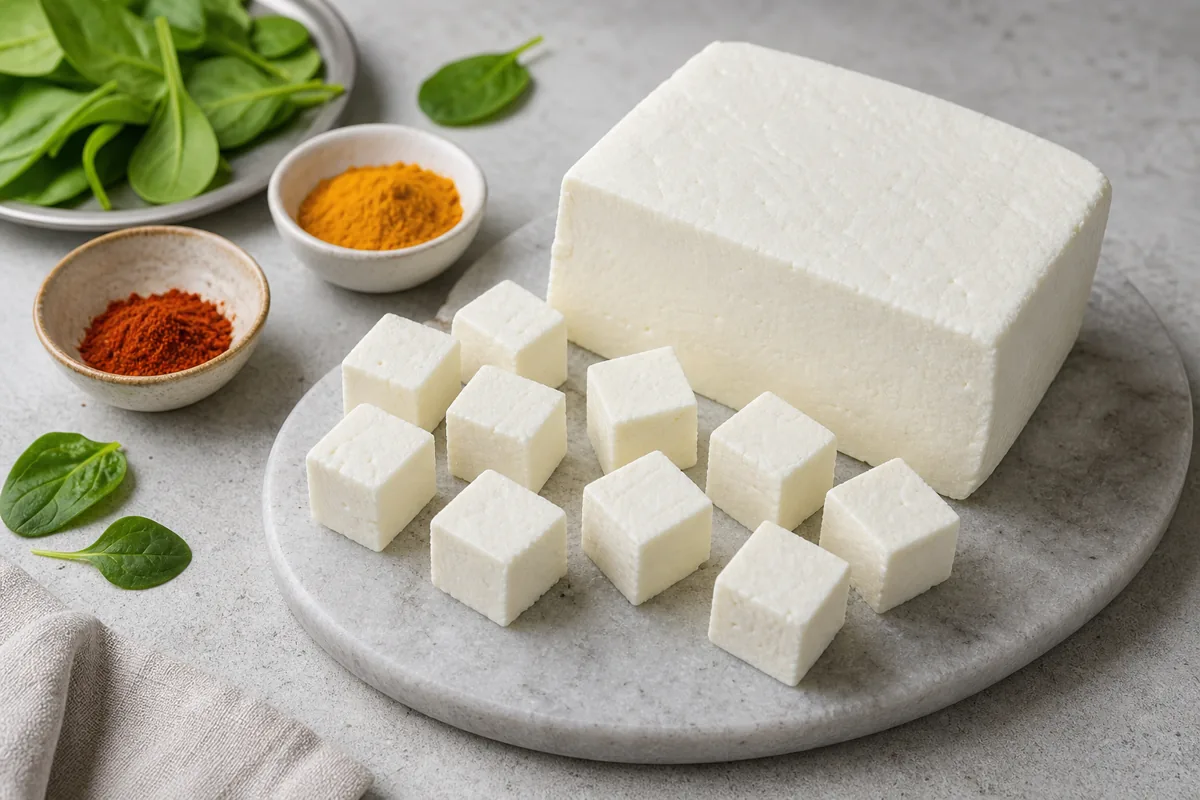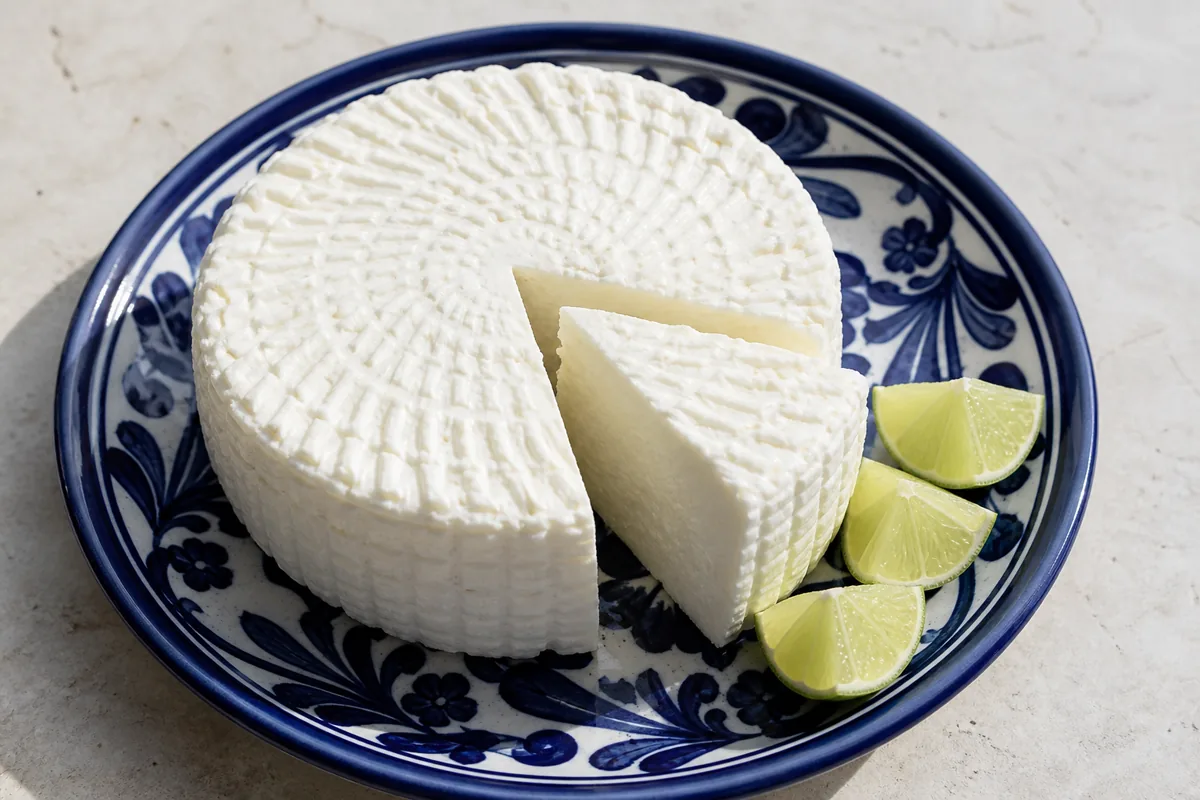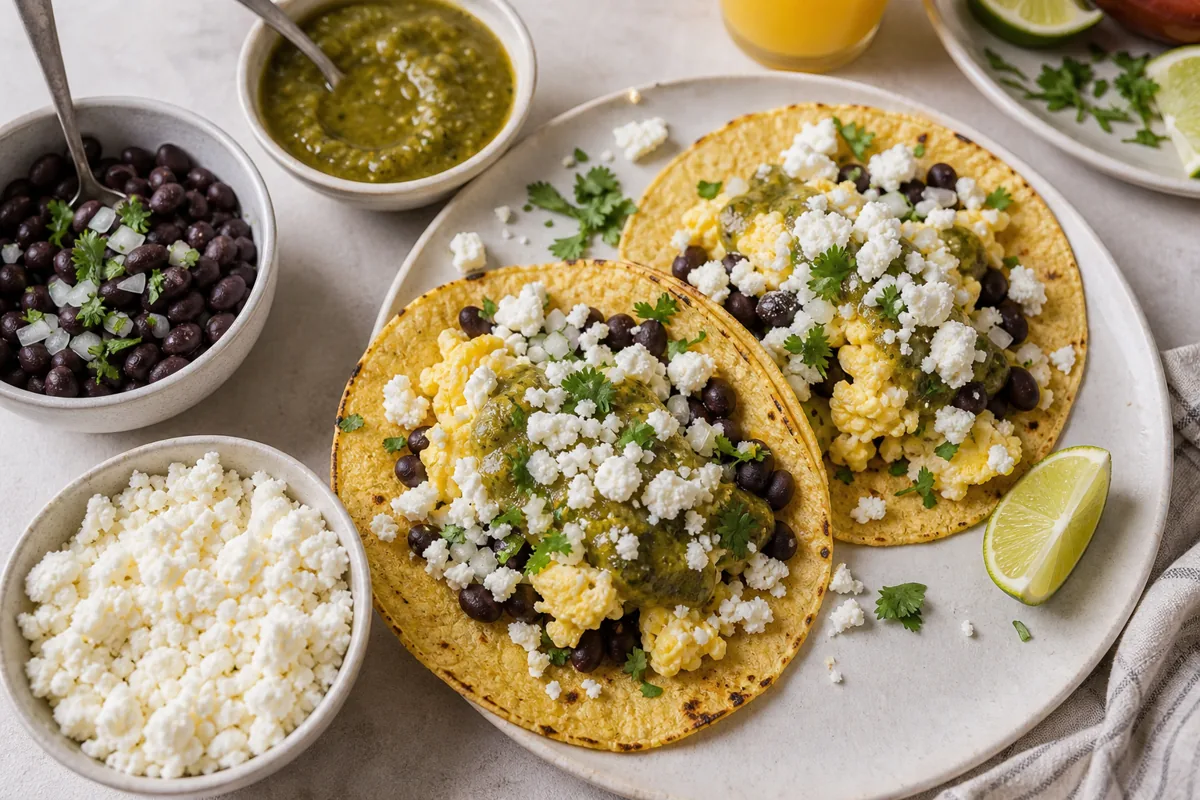
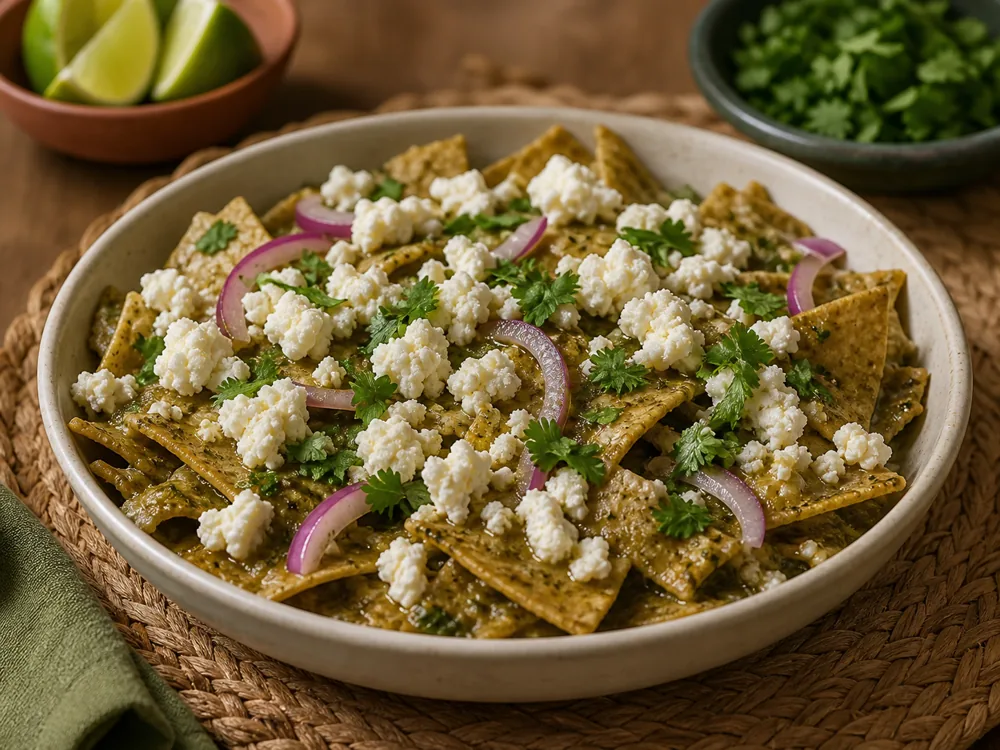
Queso Fresco is a Mexican fresh cheese that works as cooling contrast rather than as melt. It crumbles over hot food, softens slightly, and keeps visible white pieces on tacos, beans, eggs, chilaquiles, and salads.
Add it after cooking when you want fresh milk flavor against chile, tomato, lime, or roasted vegetables.
If you need stretch, choose a different cheese. If you are pregnant or at higher risk from Listeria, skip the unheated crumble, even when the milk was pasteurized.
In This Article
Why Is Queso Fresco a Finishing Cheese?
Queso fresco means fresh cheese. It is usually a young cow milk cheese, sometimes made with mixed milk, that is lightly pressed, moist, rindless, and ready to eat without aging.
Its place on the plate is late. It goes on hot food after the cooking is done, so the crumbles soften but do not vanish.
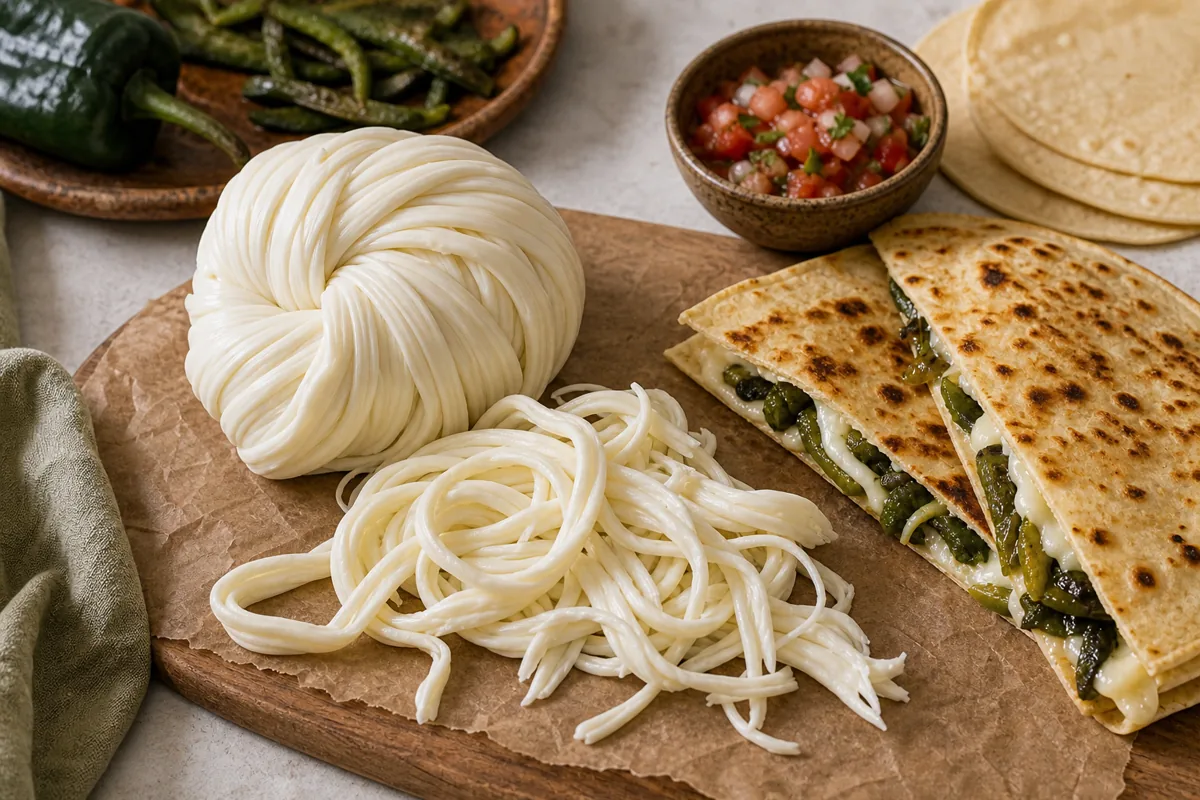
That separates it from a stringy Mexican melt, which belongs inside quesadillas and tortas.
It also separates it from a dry salty topping, which seasons like a grating cheese.
- Main role: cool fresh crumble over cooked food
- Texture: moist, hand-crumbly, and not stretchy
- Flavor: clean milk, light salt, gentle tang
- Timing: best added after the heat is off
That timing is why queso fresco can make spicy food taste more balanced. It does not need to dominate the dish.
It needs to interrupt heat with fresh dairy.
Think of it as the last seasoning move, not the main cooking cheese. The dish should already taste complete before the crumbles land, then the cheese adds coolness and texture.
What Should Good Queso Fresco Taste and Feel Like?
Good queso fresco tastes milky, lightly salty, and gently tangy.
It should feel fresh and cooling, not sour, fizzy, bitter, or yeasty.
The crumble should be irregular and moist. Pieces should break by hand but still hold enough shape to sit on saucy food.
If it smears into paste, it is too wet for clean finishing. If it breaks into dry dust, it has lost the fresh texture that makes it useful.
The mild profile explains the pairing logic. Queso fresco needs bold food around it: salsa, black beans, eggs, roasted peppers, corn, lime, avocado, and tomato all give the cheese a clear job.
Break off a small piece before serving. It should crumble into soft uneven chunks, not smear like a spread or shatter like a dry grating cheese.
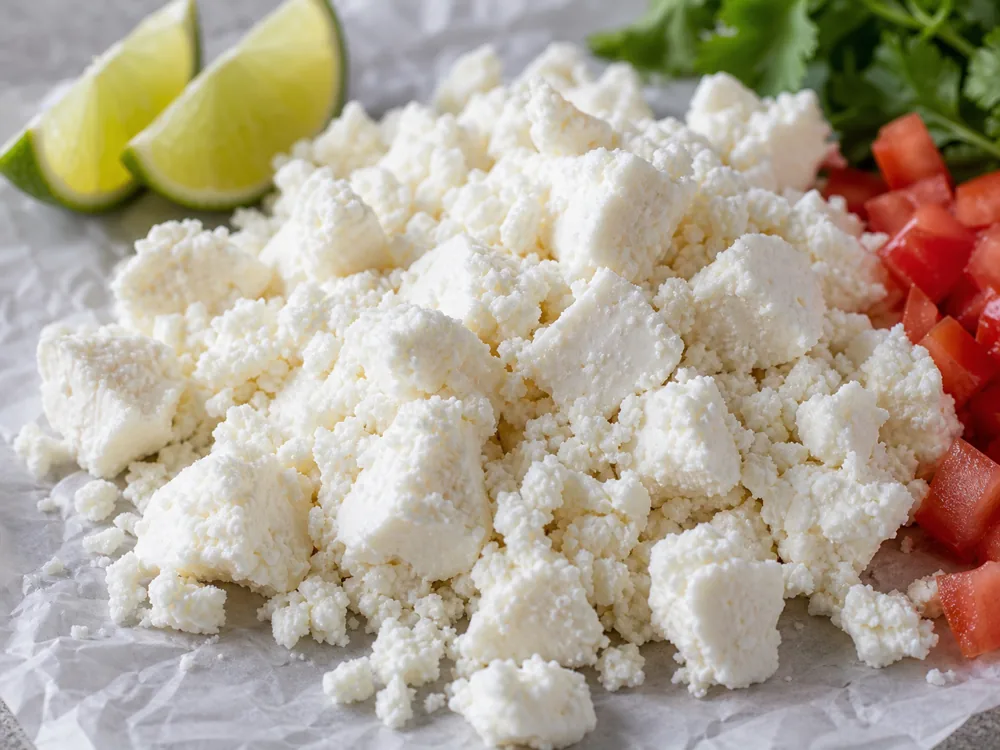
Compared with brined white crumbles, queso fresco is less salty and less acidic. That makes it easier to use by the handful, but it also means the dish must bring enough seasoning.
Does the Name Queso Fresco Mean One Cheese or a Whole Family?
Two tubs labelled queso fresco can behave differently, and that is not a quality problem. The name describes an age and a style rather than a single recipe.
Fresh white cheeses across Mexico and Central America carry overlapping names, and producers do not use them consistently.
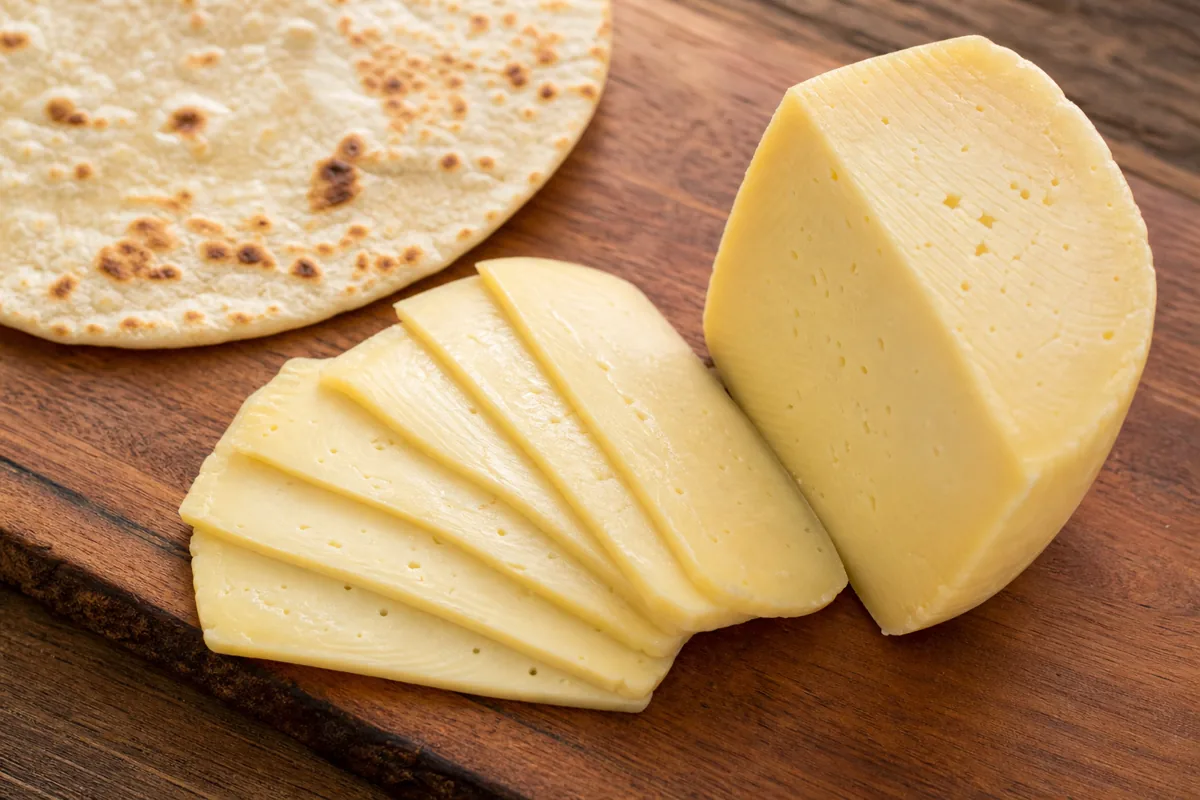
Queso blanco is firmer and built to hold its shape under heat, which is a different job from crumbling over a finished plate.
Queso ranchero is the name you meet most often for the farmhouse-style crumbly version, and in practice it sits closest to what most shops sell as queso fresco.
The name alone cannot tell you how salty or firm a particular block will be. Compare the product label and the texture you need for the dish.
Queso panela is often sold as a firmer block for slicing, but the package and planned cooking method still matter more than its name.
Judge the block in front of you by moisture, salt and crumble rather than by the word on the label.
How Does Acid-Set or Rennet-Set Change the Crumble?
Recipes and moisture levels both affect how a fresh cheese breaks. The name queso fresco does not tell you which curd-setting method a producer used.
Some fresh-cheese recipes add vinegar or lemon juice to hot milk. Others use cultures and rennet, and the New Mexico State University recipe for queso fresco uses vinegar, cultured buttermilk and rennet together.
Other recipes use a starter culture and rennet to set the milk before the curds are drained and pressed. A published queso fresco recipe from Cheese Making Supply follows that route, so the name does not identify one setting method.
The result also changes with draining and pressing. A moist block may break into soft pieces, while a drier or firmer one can be easier to slice, so check the product rather than predicting texture from one ingredient.
Can You Make Queso Fresco at Home?
Home recipes vary. The Cheese Making Supply version starts with pasteurized milk, cultures and rennet, then drains and presses the curd rather than aging the finished cheese.
Follow a tested recipe and its food-safety instructions, including clean equipment and prompt refrigeration. The short process does not make homemade cheese a safe cold choice for someone at higher risk from Listeria.
Where to Use It After Cooking
Use queso fresco on food that is already seasoned and hot. Tacos, enchiladas, chilaquiles, tostadas, black beans, eggs, roasted corn, soups, and tomato salads all benefit from a cool dairy finish.
For tacos, crumble it just before serving so each bite gets soft white pieces instead of melted dairy.
For chilaquiles, add it after the chips and sauce are hot. For beans, finish the bowl at the table so the cheese stays distinct.
It also helps when the sauce is sharp or spicy. A spoonful of crumbles can make tomatillo, chile rojo, or roasted tomato taste rounder without muting the sauce.
Size the crumbles to the dish. Large pieces survive a saucy bowl of chilaquiles, while a taco wants a finer scatter so the cheese reaches every bite instead of landing in two of them.
Let the hot food do the softening. Crumbles that have been standing out on the counter have already given up the cold contrast that makes the whole move work.
| Use | How It Works |
|---|---|
| Tacos and tostadas | Adds cool contrast after meat, beans, or vegetables are cooked. |
| Chilaquiles | Softens over hot sauce without disappearing. |
| Beans and eggs | Fresh dairy balances earthiness, chile, and yolk. |
| Corn and salads | Moist crumbles add dairy without feta-level brine. |
For a dish that needs melted structure, move to a different cheese. A chile-studded Jack melt brings heat and flow, while queso fresco brings cooling crumble.
- Add late so the crumbles stay visible.
- Crumble by hand for uneven pieces that catch salsa.
- Use acid nearby because lime and tomatillo wake up the mild flavor.
- Avoid long baking when the cheese is supposed to taste fresh.
What Queso Fresco Does Not Do
Queso fresco is not a melting cheese. It softens on hot food, but it does not stretch into strands or blanket a pan like Jack, Chihuahua, or mozzarella.
It is also not a salty dry grater.
If you need a cheese to act like seasoning on elote or beans, Cotija gives a sharper, drier finish. Queso fresco tastes gentler and wetter.
Long baking fails for a different reason than melting does. Held under sustained heat the cheese dries and tightens rather than browning, so a topping added before the oven comes out chalky.
When the recipe needs flow instead of cool contrast, use smooth melt options and keep queso fresco for the finish.
Queso fresco finishes a dish, queso blanco holds its shape under heat, and Oaxaca stretches. Those are three different jobs, so the three names are not interchangeable.
How Should You Buy Fresh Queso Fresco Safely?
For a refrigerated queso fresco, FDA advises choosing a sealed package that names the producer, shows a use-by date and states that the milk was pasteurized. Reject a warm or swollen package.
The label and cold case tell you more about safe handling than a guess based on color or the weight of the block. Pasteurization lowers one risk, but contamination can still happen after the milk is treated.
In the United States, CDC says people who are pregnant, 65 or older, or have weakened immune systems should avoid unheated queso fresco-type cheeses made with either pasteurized or raw milk. For pregnancy, the CDC lists pasteurized soft cheeses heated to an internal temperature of 165°F (74°C) or until steaming hot as safer, so heat a pasteurized cheese that way if serving it to someone in these groups.
- On the label: producer, use-by date and pasteurized milk
- In the case: sealed, cold and not swollen
- For higher-risk guests: avoid an unheated serving
How Should You Store Queso Fresco After Opening?
Keep the unopened package at or below 40°F (4°C) and use it promptly. Refrigeration slows many germs, but Listeria can grow in the cold, so the printed date is not a reason to leave queso fresco open for days.
FDA advises preparing queso fresco from its original unopened package and not keeping opened leftovers. Wash hands and food-contact surfaces after handling it, especially before preparing food that will be eaten without cooking.
Discard cheese left between 40°F and 140°F (4°C and 60°C) for more than 2 hours (or 1 hour if exposed to temperatures above 90°F). A sour smell or swollen package also warrants discarding it, but the absence of spoilage signs cannot prove the cheese is free of Listeria.
The general cheese storage advice gives more context for other styles. Follow the queso fresco-specific FDA precautions for this high-moisture cheese.
What Heat Actually Does to It
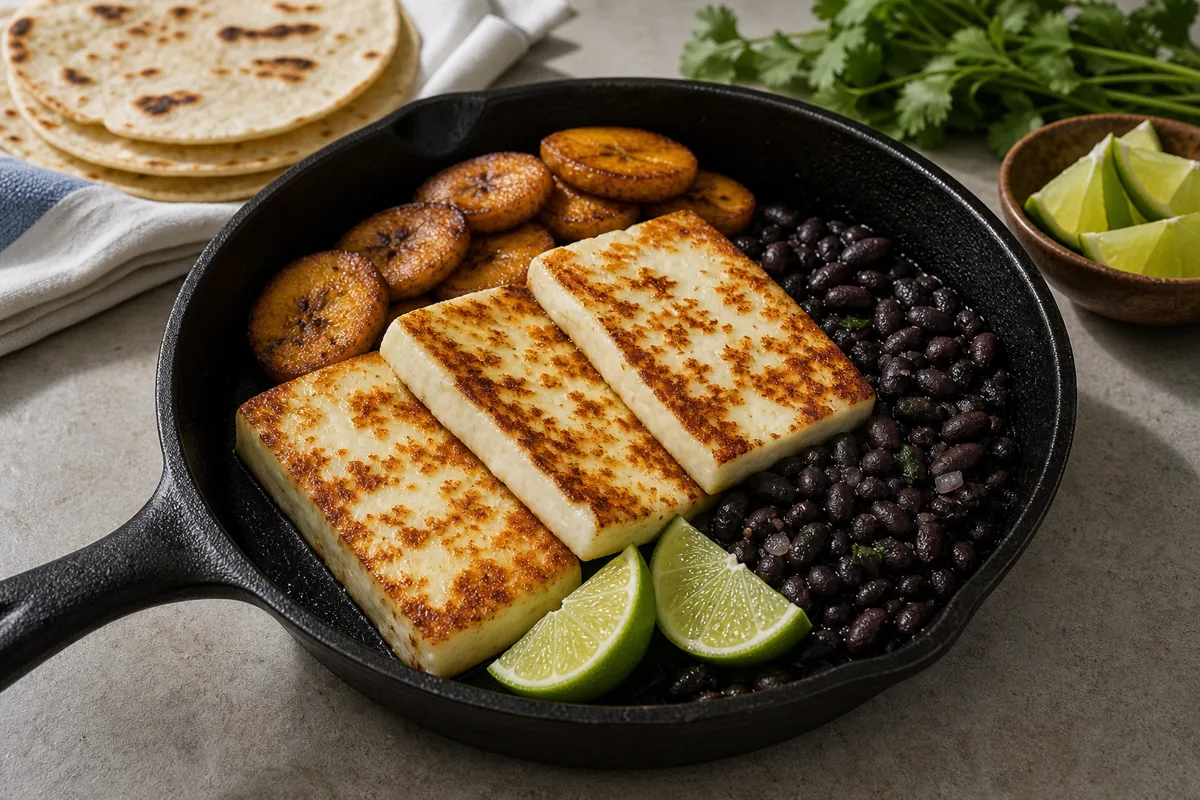
Queso fresco softens rather than making the stretchy strands of Oaxaca cheese. FDA notes that queso fresco-type cheeses are also served pan-fried.
Dropped into a sauce it goes soft and slightly chewy rather than dissolving, closer to how paneer behaves than to how mozzarella behaves.
A firmer block may brown in a pan and become part of the dish rather than a garnish. Browning alone does not show that its center reached an internal temperature of 165°F (74°C), the CDC's condition for pasteurized soft cheeses, or that it is steaming hot.
Frying it wants a hot dry pan and some patience. The cubes stick at first and release once a crust has formed, so turning them early tears the surface and leaves the colour behind in the pan.
Salt the cubes after they come out rather than before they go in. Salt on the surface pulls moisture outward, and that water has to boil off before any browning starts.
What Can Replace Queso Fresco by Moisture, Salt, and Crumble?
If you need cool crumbles, mild feta, ricotta salata, farmer cheese, or goat cheese can work, but each changes the result. Feta is saltier and brinier.
Ricotta salata is drier. Goat cheese is tangier and softer.
If you need firm cooking pieces, use a heat-holding white block or paneer instead.
They are closer when the recipe needs shape under heat.
Salt is the first thing to correct for. Feta and ricotta salata both reach the plate saltier than queso fresco, so season the dish lighter and taste it once the cheese is already on.
Moisture is the second. A drier substitute sits on hot food without softening at all, so break it into smaller pieces than you would break queso fresco to get the same coverage.
For Mexican dishes, start with the mildest workable substitute and add salt, lime, or salsa after tasting.
Is Queso Fresco Safe During Pregnancy?
Queso fresco usually brings dairy protein, calcium, fat, and sodium in a mild fresh-cheese package. Sodium varies enough that label reading matters if salt is a concern.
During pregnancy, the CDC lists any queso fresco-type cheese, made with pasteurized or unpasteurized (raw) milk, as riskier, so do not serve queso fresco as a cold crumble even when its milk was pasteurized. It lists pasteurized soft cheeses heated to an internal temperature of 165°F (74°C) or until steaming hot as safer.
The NHS lists pasteurised soft cheeses as safe to eat and any cheese that's been cooked until steaming hot as safe to eat, and it says foods made from unpasteurised milk must be thoroughly cooked.
Pasteurized feta and mozzarella belong to a different category when choosing cheese during pregnancy.
For everyday eating, portion it as a finishing ingredient. A few tablespoons can change a bowl of beans or chilaquiles because the cool texture reaches many bites.
SOURCES & REFERENCES
What Else Do People Ask About Queso Fresco?
Queso fresco softens on hot food but does not melt into stretchy strands. It is best used as a finishing crumble.
It is best for tacos, beans, eggs, chilaquiles, tostadas, enchiladas, corn, salads, and saucy dishes that need cool dairy contrast.
No.
Queso fresco is fresher, wetter, milder, and less salty. Cotija is drier, saltier, and better as a seasoning-style topping.
Mild feta or ricotta salata can replace the crumble, but both change the salt and tang. Queso blanco or paneer is better when heat-holding structure matters.
The CDC lists any queso fresco-type cheese as riskier whether it is made with pasteurized or unpasteurized (raw) milk. It lists pasteurized soft cheeses heated to an internal temperature of 165°F (74°C) or until steaming hot as safer, so heat a pasteurized cheese that way for a cooked dish.